
In the high-stakes environment of the Panama Canal, a single miscalculation can lead to costly delays. The choice between the original Panamax locks and the newer Neopanamax system is a critical decision, but the different rules, costs, and operational requirements can be overwhelming. This comprehensive panamax vs neopanamax transit guide is designed to eliminate that confusion and empower you to plan a seamless, cost-effective passage for your vessel.
We understand the frustration of translating complex regulations into a practical plan and the fear of unexpected costs. As your trusted partner at the Canal, we’ve laid out a clear, side-by-side comparison of everything you need to know-from maximum dimensions and toll structures to tug requirements and booking procedures. This guide will give you the confidence to anticipate challenges and make the right decisions, ensuring every transit is smooth, compliant, and efficient.
Key Takeaways
- Grasp the critical vessel dimension limits for both Panamax and Neopanamax locks to determine your ship’s eligibility and avoid costly rejections.
- Learn the distinct operational procedures, including tugboat requirements and mooring arrangements, that differ significantly between the old and new lock systems.
- Understand how the Panama Canal Authority (ACP) calculates tolls for each vessel type, allowing you to accurately forecast transit expenses and optimize your voyage budget.
- This complete panamax vs neopanamax transit guide provides an actionable checklist to ensure your vessel meets all requirements for a smooth and efficient passage.
The Evolution of Canal Passage: From Panamax to Neopanamax Locks
For over a century, the Panama Canal has served as a vital artery for global commerce, dramatically shortening trade routes and connecting the world’s two largest oceans. Its history is one of constant evolution, driven by the ever-increasing scale of international shipping. The journey from the original locks to the modern expanded canal created two distinct classes of transit: Panamax and Neopanamax. Understanding this history is the first step in any effective panamax vs neopanamax transit guide, as it dictates the very feasibility of a vessel’s passage.
The Original Panamax Locks: A Century of Service
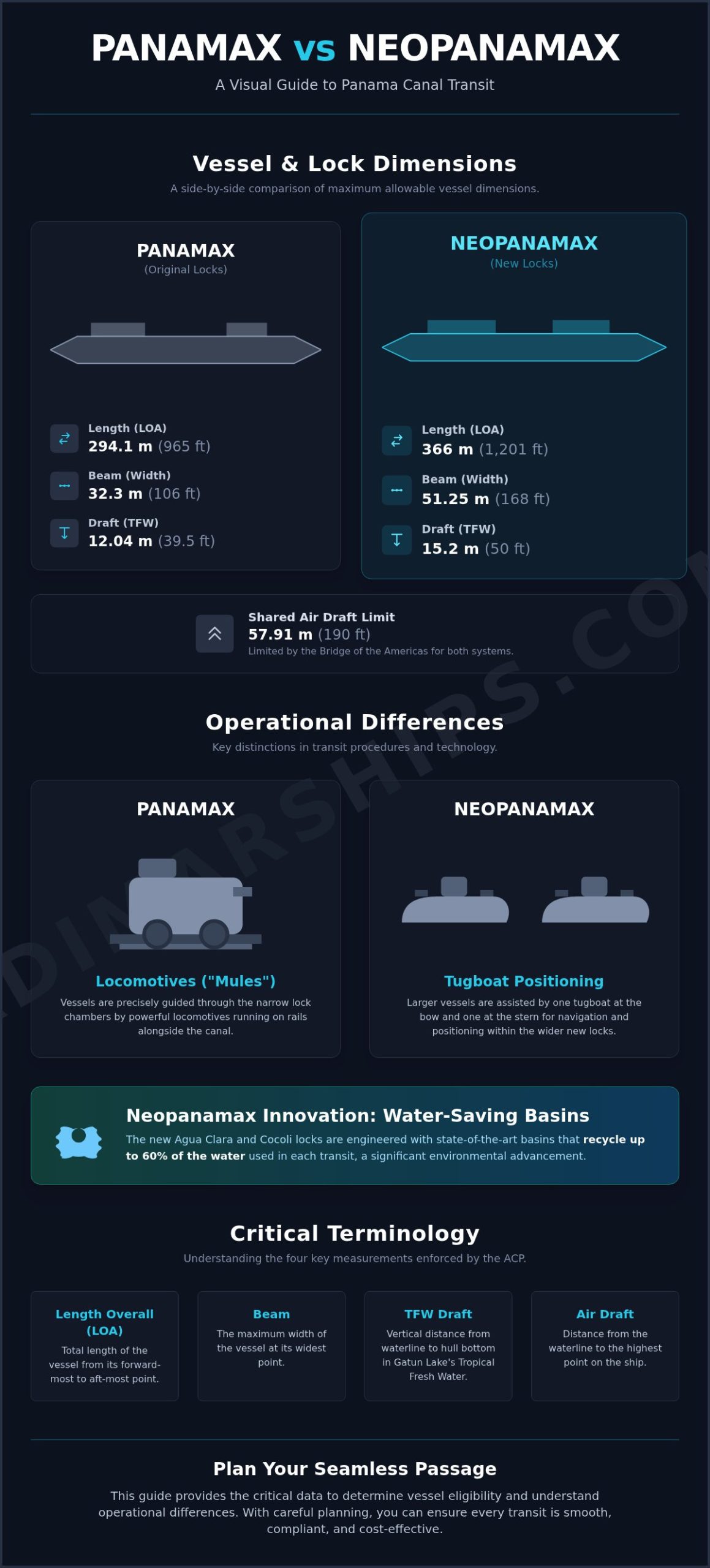
When the Panama Canal opened in 1914, its locks were an engineering marvel that reshaped maritime logistics. For decades, their physical dimensions dictated the maximum size for thousands of vessels, creating a ship classification known as ‘Panamax’. Shipbuilders worldwide designed vessels specifically to meet these limitations. These historic locks utilize powerful locomotives, known as ‘mules’, that run on rails to precisely guide ships through the narrow chambers, a practice that continues to ensure safe passage today.
The 2016 Expansion: The Birth of the Neopanamax Locks
As global trade boomed, the shipping industry began building larger ‘Post-Panamax’ vessels that simply could not fit through the original locks. To maintain its competitive edge, the Panama Canal Authority undertook a monumental expansion project, culminating in the 2016 inauguration of a third lane of traffic. This new lane features two new lock complexes, Agua Clara on the Atlantic side and Cocoli on the Pacific, which are significantly larger and define the ‘Neopanamax’ standard. A key innovation is their use of water-saving basins, which recycle up to 60% of the water used in each transit.
Key Terminology for Canal Transit
Navigating the Panama Canal requires strict adherence to vessel dimension requirements. Misunderstanding these terms can lead to costly delays or denial of transit. As your trusted agent, we ensure your vessel is fully compliant by verifying these critical measurements:
- Length Overall (LOA): The total length of the vessel from its forward-most point to its aft-most point.
- Beam: The maximum width of the vessel.
- Tropical Fresh Water (TFW) Draft: The vertical distance from the waterline to the bottom of the hull when in the tropical fresh water of Gatun Lake. This is different from a vessel’s saltwater draft.
- Air Draft: The distance from the waterline to the highest point on the ship. This is crucial for safely passing under the Bridge of the Americas and the Centennial Bridge.
These precise measurements are strictly enforced by the Panama Canal Authority (ACP). For a detailed technical breakdown, you can review the official Panamax and Neopanamax dimensions, but our team handles the complex compliance work so you can focus on your business. This careful management is central to a successful panamax vs neopanamax transit guide.
Vessel & Lock Dimensions: A Side-by-Side Comparison
In the world of maritime shipping, size dictates everything-from cargo capacity to route selection. The fundamental difference between Panamax and Neopanamax vessels is a matter of pure scale. These are not mere guidelines; the Panama Canal Authority (ACP) enforces these maximum dimensions with absolute precision to ensure safe and efficient passage. Understanding these limits is the first step in any successful panamax vs neopanamax transit guide, as they directly impact a vessel’s commercial viability.
Maximum Permitted Vessel Dimensions
The transition from the original locks to the new Cocoli and Agua Clara locks represented a monumental leap in capacity. The table below provides a clear, at-a-glance comparison of the maximum allowable dimensions for each vessel class. Note that the Air Draft (height from the waterline to the highest point) remains the same for both, limited by the Bridge of the Americas.
| Dimension | Panamax (Original Locks) | Neopanamax (New Locks) |
|---|---|---|
| Length Overall (LOA) | 294.1 meters (965 ft) | 366 meters (1,201 ft) |
| Beam (Width) | 32.3 meters (106 ft) | 51.25 meters (168 ft) |
| Draft (TFW) | 12.04 meters (39.5 ft) | 15.2 meters (50 ft) |
| Air Draft | 57.91 meters (190 ft) | 57.91 meters (190 ft) |
| Typical TEU Capacity | ~5,000 TEU | ~14,000 TEU |
Lock Chamber Dimensions and Water Usage
The physical lock chambers are the source of these limitations. The original Panamax locks are 305 meters long and 33.5 meters wide. In contrast, the Neopanamax locks are a massive 427 meters long and 55 meters wide. A key innovation in the new locks is the use of water-saving basins, which recycle up to 60% of the water used per transit. This is critical, as the Canal’s operation depends entirely on the freshwater levels of Gatun Lake. During dry seasons, the ACP may impose draft restrictions to conserve water, which primarily affects the deeper-draft Neopanamax vessels. Ship owners must stay updated on the latest advisories, as the maximum allowable draft can change. The most reliable information is always found in the Official Panama Canal transit requirements published by the ACP.
Impact on Global Shipping Fleets
The 2016 expansion did more than just accommodate larger ships; it created an entirely new class of vessel known as “Neopanamax.” Shipbuilders immediately began constructing vessels optimized for these new dimensions. This shift fundamentally changed global logistics, most notably for:
- Container Ships: Capacity jumped from ~5,000 TEU to over 14,000 TEU, making the Canal a far more economical route for trade between Asia and the U.S. East Coast.
- LNG Carriers: For the first time, the majority of the global LNG fleet could transit the Canal, opening new energy trade routes.
- Large Bulkers & Tankers: Vessels previously too wide for the Canal gained a critical shortcut, avoiding the longer journey around Cape Horn.
Operational Differences: Navigating the Two Transit Systems
A successful transit is about more than just fitting within the lock dimensions. The day-to-day operational procedures for Panamax and Neopanamax locks are distinct, and understanding them is key to an efficient, cost-effective passage. Misjudging these differences can lead to delays and unforeseen costs. This practical section of our panamax vs neopanamax transit guide highlights where an experienced local agent provides immense value, transforming a complex process into a smooth, predictable operation.
Tugboat Requirements: Mules vs. Assisted Tugs
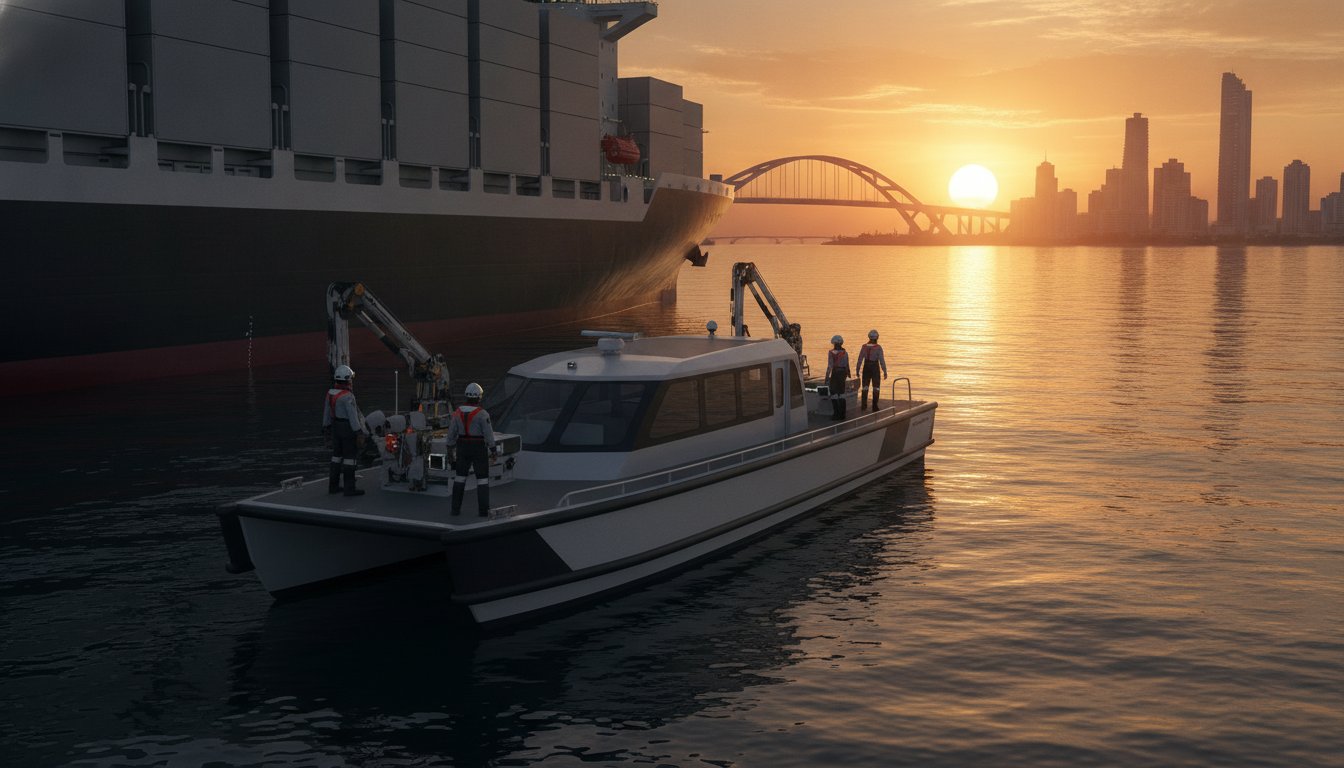
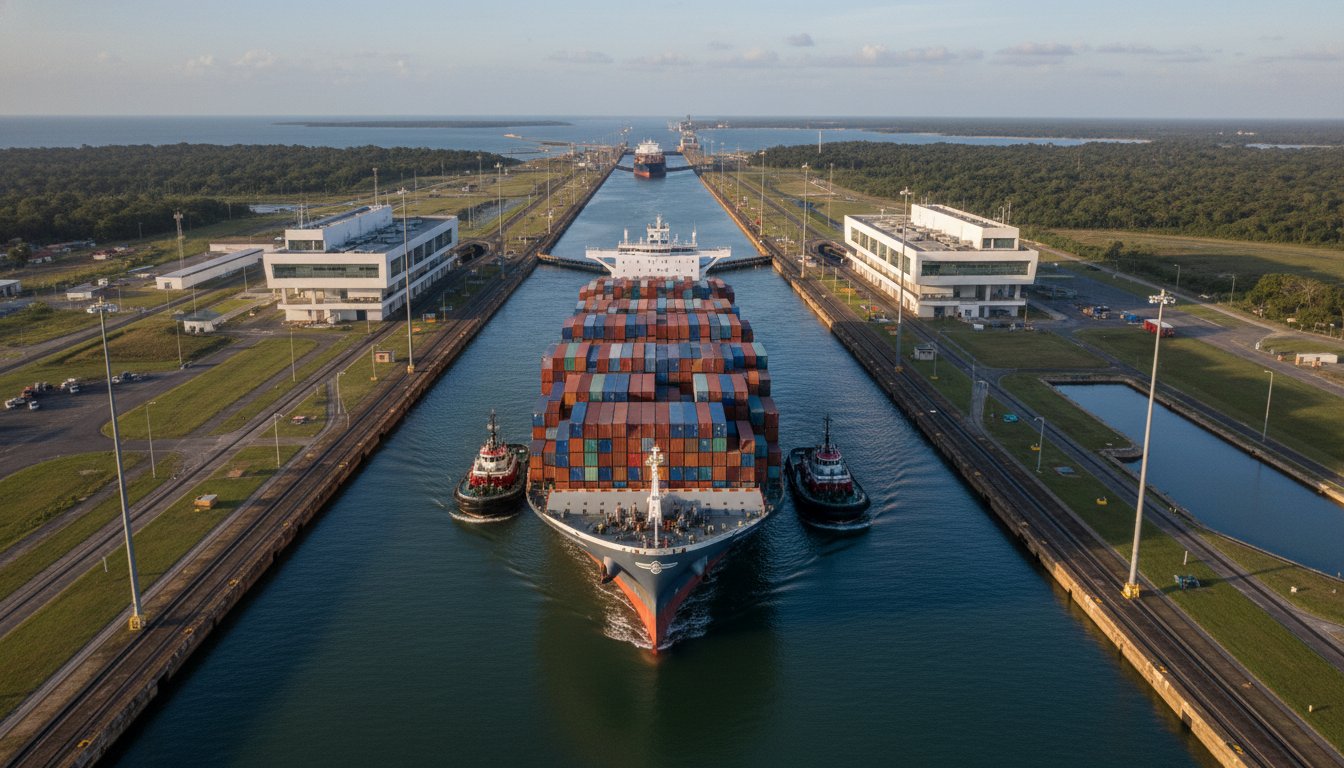
The original Panamax locks utilize a time-tested system of powerful locomotives, known as ‘mules’, running on rails to precisely guide vessels. In contrast, a Neopanamax transit relies on the skill of two dedicated tugboats-one at the bow and one at the stern-to maneuver the massive vessel. This modern approach demands a higher degree of real-time coordination between the Canal pilot, tug captains, and the ship’s own bridge team.
Booking, Arrival, and Slot Reservation
While both systems use the Canal’s Transit Booking System, competition for slots differs significantly. Neopanamax slots are fewer and highly sought after, especially by large container ships and LNG carriers, which can lead to higher auction prices for last-minute bookings. Meticulous pre-arrival checks and flawless documentation are non-negotiable for either transit. Ensuring your vessel complies with all Official Panama Canal Vessel Requirements well in advance is crucial to securing your slot and avoiding costly delays.
Pilotage and Maneuverability
A certified Panama Canal pilot takes navigational control for every transit, but their role adapts to the lock system. Navigating the original locks is a highly standardized process refined over a century. However, maneuvering a Neopanamax vessel through the wider Agua Clara or Cocoli locks is a more dynamic task. It demands intricate ship-handling skills and constant communication with the assisting tugs, placing a greater emphasis on the active involvement and collaboration of the vessel’s bridge team.
Cost Implications: Comparing Tolls, Fees, and Expenses
In the high-stakes world of maritime logistics, where time is money, understanding the full cost of a Panama Canal transit is critical for successful voyage planning. The financial differences between the two types of passage are significant and go far beyond the base toll. This section of our panamax vs neopanamax transit guide breaks down the essential expenses to help you budget with confidence.
Working with an experienced local agent is the most effective way to navigate these complex costs. We eliminate the confusion by providing transparent, all-inclusive estimates, ensuring you are never caught off guard by unexpected fees. At Adimar Shipping, Inc., we act as your eyes at the Panama Canal, protecting your interests and your bottom line.
Toll Structure and Calculation (PC/UMS)
The foundation of all transit costs is the toll, calculated using the Panama Canal Universal Measurement System (PC/UMS). This system bases the fee on a vessel’s total earning capacity (measured in PC/UMS net tons), not the specific amount of cargo on board. Neopanamax vessels, with their larger capacity, naturally face higher base tolls and may be subject to additional surcharges related to booking slots and water usage, making their calculations more intricate.
Ancillary Service Costs
Beyond tolls, a range of mandatory services contributes to the final invoice. A key difference lies in vessel handling: Panamax ships are guided by locomotives (mules), while Neopanamax vessels require the dedicated assistance of two powerful tugboats for their entire transit, a considerably more expensive service. Other essential costs include:
- Line handler services
- Security and inspection fees
- Vessel admeasurement fees
- Potential anchorage costs resulting from delays
The Financial Impact of Draft Restrictions
Recent drought conditions have made draft restrictions a major financial risk, primarily affecting the larger Neopanamax vessels. When the Canal’s water levels are low, the Panama Canal Authority (ACP) must limit the maximum allowable draft. This can force a vessel to either load less cargo from its origin-resulting in lost revenue-or offload cargo before transiting, incurring significant extra costs and delays. This operational uncertainty makes expert, on-the-ground planning more critical than ever to mitigate financial exposure.
To avoid costly surprises and ensure your budget is accurate from the start, partner with an agency that prioritizes integrity and transparency. Get a transparent cost estimate for your next transit.
Ensure a Smooth Transit: How to Prepare Your Vessel
Understanding the differences between Panamax and Neo-Panamax vessels is the first step; ensuring your vessel is fully prepared is what guarantees a smooth, efficient, and cost-effective transit. The stricter dimensional tolerances and operational procedures for Neo-Panamax ships, in particular, demand an even higher level of diligence. In the world of Canal transits, time is money, and proactive planning is your best investment against costly delays.
This final section of our panamax vs neopanamax transit guide provides an actionable framework for preparation, positioning your ship agent as the central coordinator for a successful crossing.
Vessel Compliance and Documentation
The Panama Canal Authority (ACP) operates on a foundation of precise data. Any discrepancy between your submitted documents and the vessel’s actual specifications can trigger mandatory re-inspections, leading to significant delays. Before arrival, ensure your vessel is in full compliance.
- Accurate Vessel Data: Double-check that the submitted Length Overall (LOA), extreme beam, and tropical fresh water (TFW) draft are perfectly accurate.
- Essential Certificates: Have a valid Ship’s Registry and a Panama Canal/Universal Measurement System (PC/UMS) Tonnage Certificate ready for your agent.
- ACP-Specific Requirements: Confirm your vessel meets all ACP visibility standards from the navigation bridge. All mooring equipment-including winches, lines, and chocks-must be in excellent condition and certified for Canal operations, with Neo-Panamax vessels facing particularly stringent requirements.
The Critical Role of Your Ship Agent
While your crew manages the vessel, your ship agent manages the Canal. Think of them as the central nervous system of your transit operation-your trusted partner on the ground in Panama. An effective agent eliminates confusion by serving as the single, reliable point of contact for all Canal-related matters.
A proactive agent is your greatest asset. They are your eyes and ears at the Canal, managing direct communication with the ACP, coordinating pilots, tugboats, and line handlers, and handling all financial arrangements like the pre-payment of tolls. More importantly, they anticipate potential issues-from scheduling conflicts to urgent husbandry needs-and implement quick, cost-conscious solutions to keep your transit on schedule. They are an extension of your team, dedicated to protecting your interests with integrity.
Ultimately, a successful Canal crossing is the result of flawless preparation and expert coordination. By entrusting these critical tasks to a trusted local partner, you ensure your vessel’s transit is managed with the efficiency and professionalism it deserves.
Your Partner for a Flawless Panama Canal Transit
Navigating the Panama Canal successfully hinges on understanding the critical distinctions between the original and expanded locks. As we’ve detailed, the choice involves more than just vessel dimensions; it encompasses unique operational protocols, cost structures, and preparation requirements. This panamax vs neopanamax transit guide provides the essential framework, but turning that knowledge into a smooth, on-schedule passage requires on-the-ground expertise.
This is where Adimar Shipping becomes your most valuable asset. With over 20 years of specialized Panama Canal experience, we are your eyes on the ground, serving as experts in both Panamax and Neopanamax transit coordination. We pride ourselves on delivering transparent, cost-conscious service with the unwavering integrity your operations demand. We are the experts so you don’t have to be.
Ensure a seamless transit. Nominate Adimar as your trusted Panama Canal agent. Let us handle the complexities, so you can focus on your destination.
Frequently Asked Questions
Can a Panamax-sized vessel use the Neopanamax locks?
Yes, a Panamax vessel has the flexibility to use either the original Panamax locks or the newer Neopanamax locks. The final decision often depends on daily traffic, scheduling, and the specific booking slot secured. While Neopanamax locks are built for larger ships, they regularly accommodate smaller vessels. An experienced ship agent can help determine the most efficient and cost-effective option for your specific transit based on real-time conditions at the Canal.
What are the main reasons for transit delays in the Panama Canal?
Transit delays are a major concern, as time is money in the shipping industry. The most common causes include high vessel traffic, scheduled lock maintenance, and adverse weather like dense fog, which can halt operations. Unforeseen mechanical issues with a vessel or the locks can also create significant backlogs. Proactive planning and working with a local agent who provides constant updates are crucial for mitigating the impact of these potential delays on your schedule.
How have recent water level issues in Gatun Lake affected Neopanamax transits?
Gatun Lake’s water levels directly impact the maximum allowable draft for vessels, particularly in the Neopanamax locks which use more water per transit. During periods of drought, the Panama Canal Authority (ACP) often imposes draft restrictions and reduces the number of daily transit slots to conserve water. This has led to longer waiting times for un-booked vessels and required some ships to lighten their cargo load to meet the new, stricter draft limits.
What is the average transit time difference between the Panamax and Neopanamax locks?
Under ideal conditions, the “in-water” transit time is similar for both lock systems, typically ranging from 8 to 10 hours. However, the total time, including waiting at anchorage, can vary significantly based on booking status, traffic, and any restrictions in place. This complete panamax vs neopanamax transit guide emphasizes that total duration depends more on logistical planning and Canal conditions than the physical time spent in the locks themselves.
Are there different safety or manning requirements for Neopanamax vessels?
Yes, the requirements for Neopanamax transits are more stringent. Due to their immense size, these vessels require the assistance of two tugboats-one at the bow and one at the stern-for the entire transit to ensure precise control. This is different from Panamax vessels, which are guided by locomotives on the lock walls. Vessels must also meet specific visibility and maneuverability standards set by the ACP to guarantee a safe passage through the larger lock chambers.
How far in advance should a Panama Canal transit be booked?
Booking well in advance is critical to securing your preferred transit date and avoiding costly delays. The Panama Canal Authority (ACP) booking system opens up to 365 days in advance. For routine planning, we recommend securing a slot at least 21 to 30 days prior to arrival. During peak seasons or periods with transit restrictions, booking even earlier is essential to ensure a timely and efficient passage without paying premium auction slot fees.