
In the world of shipping, time is money-and nowhere is that truer than at the Panama Canal. You’ve heard the official 8-10 hour transit time, but as an owner or charterer, you know the reality from anchor to anchor is far more complex. Relying on a simple average or a basic panama canal transit time estimator often fails to account for the critical variables that lead to costly delays and disrupted schedules, turning a routine passage into a frustrating and expensive ordeal.
This guide is designed to eliminate that uncertainty. We are your eyes at the Canal, and we will move beyond the misleading averages to give you a clear, data-driven framework for forecasting your vessel’s complete transit duration. You will learn how the booking system truly impacts waiting times, the operational nuances of the locks, and how factors like vessel size and canal traffic can dramatically alter your schedule. Our goal is to empower you to plan your voyage with the confidence and expert precision your business demands.
Key Takeaways
- Your vessel’s total transit time is typically over 24 hours, a figure that includes critical waiting periods not covered by the 8-10 hour “in-canal” passage estimate.
- The most significant and unpredictable variable in your schedule is the waiting time at the Atlantic or Pacific anchorage, which can dramatically impact voyage costs.
- An effective panama canal transit time estimator must account for real-time variables like booking status, canal maintenance, and traffic density-not just static averages.
- Working with a local ship agent provides the on-the-ground coordination needed to navigate the booking system and secure the most efficient transit slot for your vessel.
Panama Canal Transit Time: The 10-Hour Myth vs. The 24-Hour Reality
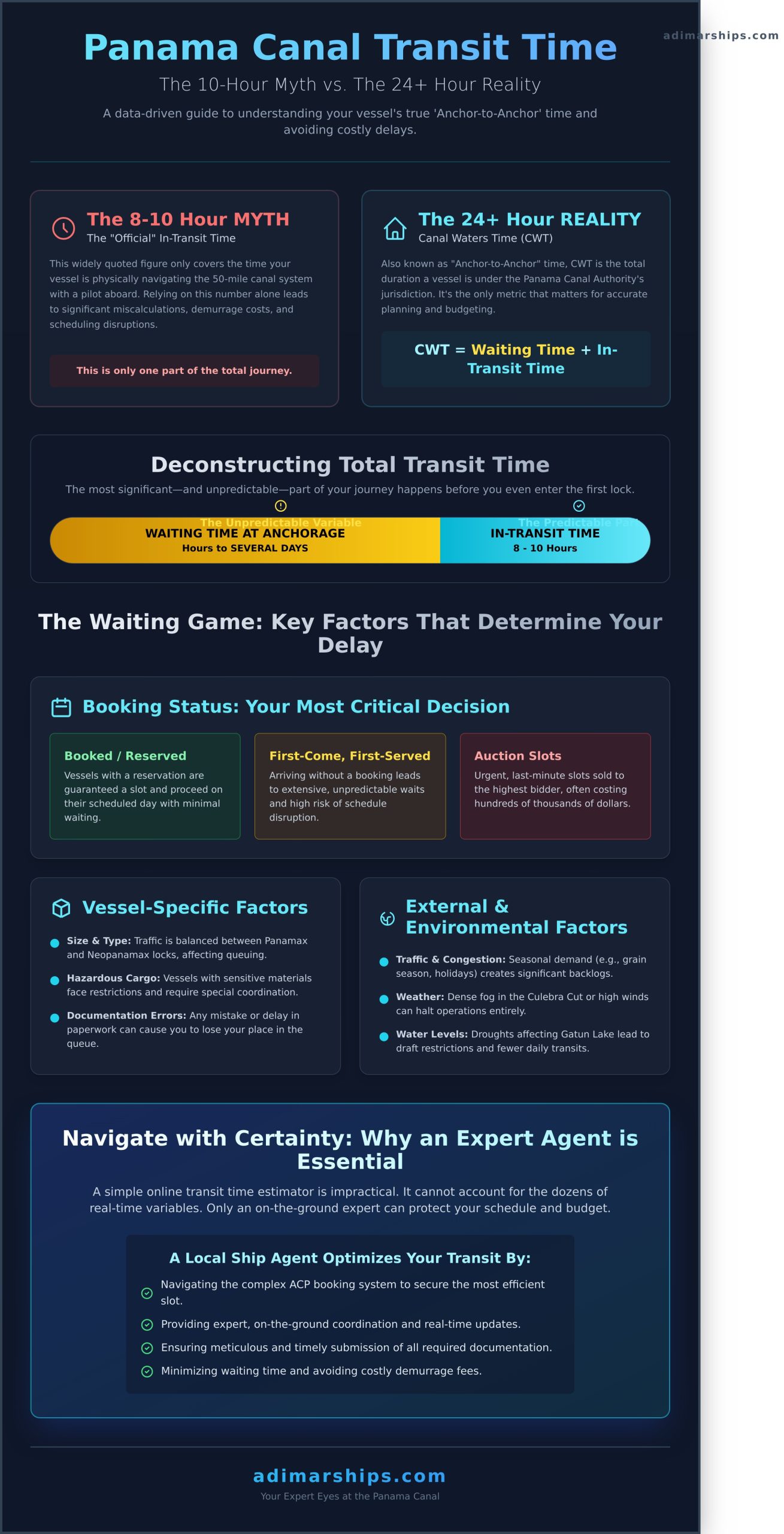
Misjudging your Panama Canal transit time can lead to significant demurrage costs and scheduling disruptions. The root of this miscalculation is often the widely quoted 8-10 hour figure. This number, while technically correct for the 50-mile journey, only covers the time your vessel is “in motion” within the canal system. Relying solely on this popular 8-10 hour transit figure ignores the most unpredictable and costly part of the process: waiting.
A useful analogy is commercial air travel. The 10 hours is your “wheels-up to wheels-down” flight time. The 24-hour reality is the total airport experience-from arriving at the terminal to collecting your bags. For a vessel, the average total time from arrival in Panamanian waters to final exit is much closer to a full day, and can fluctuate dramatically based on real-time conditions.
What is ‘Canal Waters Time’ (CWT)?
To plan with integrity and efficiency, the only metric that matters is Canal Waters Time (CWT). CWT, or “anchor to anchor” time, is the total duration a vessel spends under the Panama Canal Authority’s (ACP) jurisdiction. It begins the moment the vessel arrives at the anchorage area and ends upon clearing the final sea buoy. Miscalculating CWT directly impacts your bottom line. It comprises two main components:
- Waiting Time: The variable period spent at anchor awaiting a transit slot. This can range from a few hours to several days depending on congestion and booking status.
- In-Transit Time: The more predictable 8-10 hours spent physically navigating the locks and lakes with a pilot aboard.
Why a Simple Estimator Tool Doesn’t Exist
The dynamic nature of canal operations makes a fixed online panama canal transit time estimator impractical. Every day presents a unique operational picture influenced by dozens of factors: traffic volume, vessel mix (Neopanamax vs. Panamax), scheduled maintenance, water levels, and even fog in the Culebra Cut. Because these conditions are in constant flux, a static calculator would be misleading. This guide is your human expert, providing the critical context that no simple tool can offer, allowing you to anticipate variables and make informed decisions.
The Biggest Factor: Deconstructing Transit Waiting Time
While the physical crossing of the Panama Canal takes 8-10 hours, the real variable in your total journey is waiting time. Upon arrival at the Atlantic or Pacific entrance, your vessel joins a queue at an anchorage area managed by the Panama Canal Authority (ACP). This wait can be a few hours or, during peak congestion, stretch for several days. Any reliable panama canal transit time estimator must first account for this unpredictable period. Securing a confirmed transit slot is the single most important action that optimizes your transit time and protects your schedule from costly delays.
The Transit Reservation (Booking) System Explained
The ACP offers three booking periods to reserve a transit slot, allowing for planning months in advance. Vessels with a reservation are guaranteed a slot and proceed on their scheduled day. Those arriving without a booking are designated ‘first-come, first-served’ and face extensive, unpredictable waits. For urgent needs, the ACP occasionally offers last-minute slots via a high-stakes auction system, where bids can reach hundreds of thousands of dollars.
Vessel-Specific Factors Affecting Your Place in Line
Your vessel’s characteristics directly impact scheduling. The ACP must balance traffic between the different lock systems for Panamax and the larger Neopanamax vessels. Ships carrying hazardous materials or those with unique dimensions face further restrictions and require special coordination. Critically, any error or delay in submitting the required documentation can result in losing your place in the queue, underscoring the need for meticulous, expert preparation.
External Factors: Traffic, Weather, and Water Levels
The Canal operates in a dynamic environment where external factors can cause sudden disruptions. Seasonal demand, such as the U.S. grain export season or pre-holiday shipping rushes, can create significant backlogs. Operations can be halted entirely by dense fog in the Culebra Cut or by high winds. More recently, droughts affecting Gatun Lake’s water levels have led the ACP to impose draft restrictions and reduce the number of daily transits, creating unprecedented congestion and making expert navigation of the booking system more critical than ever.
Mismanaging these variables leads to significant financial losses. A simple online panama canal transit time estimator cannot navigate this complexity. Let our experts manage your booking to minimize waiting time.
Inside the Canal: A Step-by-Step Timeline of the 8-10 Hour Transit
While a digital panama canal transit time estimator provides a high-level overview, the physical passage is an intricate, multi-stage process managed with military precision. For ship owners and operators, understanding this timeline is key to appreciating the value of expert coordination. Here is a step-by-step breakdown of the typical 8-to-10-hour journey from ocean to ocean.
Phase 1: Entry and Ascent (Approx. 3-4 Hours)
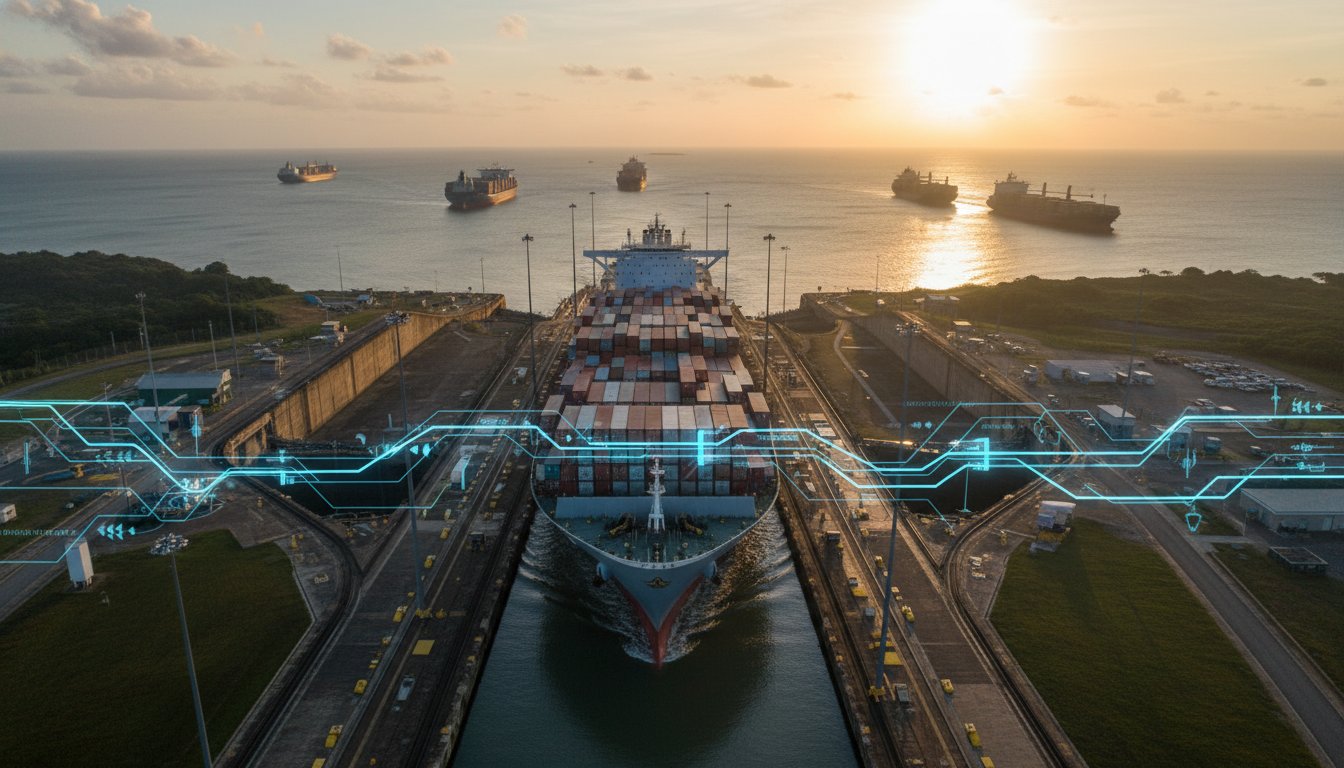
The transit begins long before reaching the first lock. A specialized Panama Canal pilot boards your vessel at the designated anchorage area to take navigational control. The ship then proceeds toward the first lock system-either the Gatun Locks on the Atlantic side or the Miraflores Locks on the Pacific. Here, the vessel enters a series of three massive lock chambers, which act like a water elevator, lifting the ship a total of 85 feet (26 meters) to the level of Gatun Lake.
Phase 2: Crossing Gatun Lake and the Continental Divide (Approx. 4-5 Hours)
Once elevated, the vessel navigates a 24-mile channel across the vast, man-made Gatun Lake. This section offers the longest stretch of steady sailing. The journey then enters its most demanding stage: the Culebra Cut. This narrow, 8-mile channel was carved directly through the rock of the Continental Divide. It is the busiest and most tightly controlled part of the canal, where factors like vessel size, weather, and water levels can significantly impact schedules. Official Panama Canal transit statistics often reflect the complexities of managing traffic through this critical passage.
Phase 3: Descent and Exit (Approx. 2-3 Hours)
After clearing the Culebra Cut, the vessel begins its descent. For a southbound transit, this involves passing through the single-step Pedro Miguel Locks and then the two-step Miraflores Locks. In a mirror image of the ascent, the chambers slowly drain, lowering the ship back down to sea level. Once the final gate opens, the pilot disembarks, and the vessel proceeds past the sea buoy, officially completing its Panama Canal transit and entering the open ocean.
This intricate ballet of engineering and navigation highlights why precise coordination is not just beneficial-it’s essential. A simple panama canal transit time estimator cannot account for the on-the-ground realities that an experienced agent can. As your trusted partner, Adimar Shipping manages these complexities to ensure your transit is as efficient and predictable as possible.
How a Ship Agent Optimizes Your Transit Time Estimate
While online tools and historical data provide a starting point, they cannot account for the dynamic, real-time variables of a Panama Canal transit. This is where the expertise of a dedicated ship agent becomes your most valuable asset. A trusted agent is more than a coordinator; they are your eyes and ears on the ground, transforming a complex process into a smooth, predictable, and cost-effective passage. Their primary goal is to eliminate confusion and protect your schedule.
An experienced agent is the most reliable panama canal transit time estimator because they combine official data with invaluable on-the-ground intelligence.
Proactive Planning and Booking Management
An elite agent doesn’t just react; they anticipate. They advise on the optimal time to book a slot based on your vessel’s schedule and current Canal conditions. From there, they manage the entire booking process to secure the most favorable transit date and handle all pre-arrival documentation meticulously. This proactive approach prevents the common administrative errors that lead to costly delays at clearance, ensuring your vessel is ready for transit the moment it arrives.
Real-Time Coordination and Problem Solving
Your agent acts as your single point of contact, ensuring seamless operations by liaising directly with all key parties on your behalf. This includes:
- Constant communication with the Panama Canal Authority (ACP), pilots, and tugboat operators.
- Coordinating essential husbandry services like crew changes, supplies, or repairs without impacting the transit schedule.
- Quickly and efficiently resolving any issues that may arise during pre-transit inspections or approach.
Using Data and Local Knowledge for Accurate Estimates
Publicly available data provides a baseline, but an agent’s true value lies in their ability to interpret it. We combine live traffic information and official advisories from the ACP with our deep local knowledge of current backlogs, weather patterns, and operational nuances. This expertise is the critical difference between a rough guess and a truly actionable panama canal transit time estimator, giving you the clarity needed for effective voyage planning.
This hands-on, expert-driven approach ensures your transit is not just estimated, but actively managed for maximum efficiency. Put your transit in our hands. Request a quote from Adimar Shipping.
Navigate Your Transit with Confidence and Clarity
As we’ve explored, a successful Panama Canal crossing hinges on understanding the complete picture. The widely cited 8-10 hour transit is only the active passage; the true journey, from arrival to exit, is often closer to 24 hours or more, with waiting time being the most significant and unpredictable variable. An accurate forecast requires more than a simple calculation-it demands real-time, on-the-ground intelligence.
This is why a generic panama canal transit time estimator can fall short. To truly optimize your schedule and budget, you need a partner who navigates the complexities for you. With over 20 years of dedicated experience, Adimar Shipping acts as your local office at the Canal, providing the expert coordination and transparent communication necessary to minimize delays and control costs.
Put your transit in our hands and let our personalized, 24/7 service eliminate the uncertainty. Nominate Adimar as your trusted partner for a smooth Panama Canal transit. We’ll manage the details, so you can focus on what matters most: your voyage ahead.
Frequently Asked Questions
What is the average waiting time for a non-booked vessel at the Panama Canal?
The waiting time for a non-booked vessel can fluctuate significantly, from just a few days to over two weeks during periods of high congestion or maintenance. This variability is a major challenge for charterers, as “time is money.” Relying on an experienced local agent provides real-time updates and strategic advice to minimize these costly, unpredictable delays at the anchorage and ensure a more efficient transit.
How much time does a Neopanamax vessel save compared to a Panamax vessel?
While the physical transit time through the locks is comparable for both vessel types-typically 8 to 10 hours-the real time-saving is economic. A Neopanamax vessel carries significantly more cargo per transit, reducing the number of voyages needed to move the same amount of goods. This operational efficiency, rather than a faster canal crossing, is the primary advantage that leads to substantial long-term time and cost savings for shipping lines.
Can you pay extra to get a faster transit through the Panama Canal?
Yes, vessels can secure a faster transit by purchasing a slot through the Panama Canal Authority’s auction system. This allows a vessel to bypass the standard waiting queue for a guaranteed transit day. The cost for these auction slots varies dramatically based on demand and canal congestion, often ranging from tens of thousands to over a million dollars. It is a significant investment used to avoid even more costly commercial delays.
How do recent droughts and water level restrictions affect transit times?
Droughts directly impact Gatun Lake, the main water source for the locks. To conserve water, the Panama Canal Authority (ACP) often reduces the number of daily transit slots available. This reduction in capacity creates a backlog, significantly increasing waiting times for all vessels. These restrictions make accurate planning and having a vigilant agent on the ground more critical than ever to navigate the extended queues and potential for delays.
What are the most common reasons for unexpected delays during a transit?
Beyond canal-wide congestion, unexpected delays often stem from vessel-specific issues like engine or winch problems discovered during pre-transit inspections. Thick fog in the Culebra Cut can also temporarily halt all traffic for safety reasons. A reliable panama canal transit time estimator must account for these potential operational and environmental variables to provide a realistic projection and help mitigate the impact of such unforeseen events.
Does transit time differ between the Atlantic-to-Pacific and Pacific-to-Atlantic routes?
The physical time spent crossing the canal, from entering the first lock to exiting the last, is nearly identical for both directions-roughly 8 to 10 hours. However, the total time including waiting can differ. One side may experience higher traffic and longer queues depending on global shipping patterns and seasonality. Using a dynamic panama canal transit time estimator helps account for these directional traffic imbalances when planning your voyage.