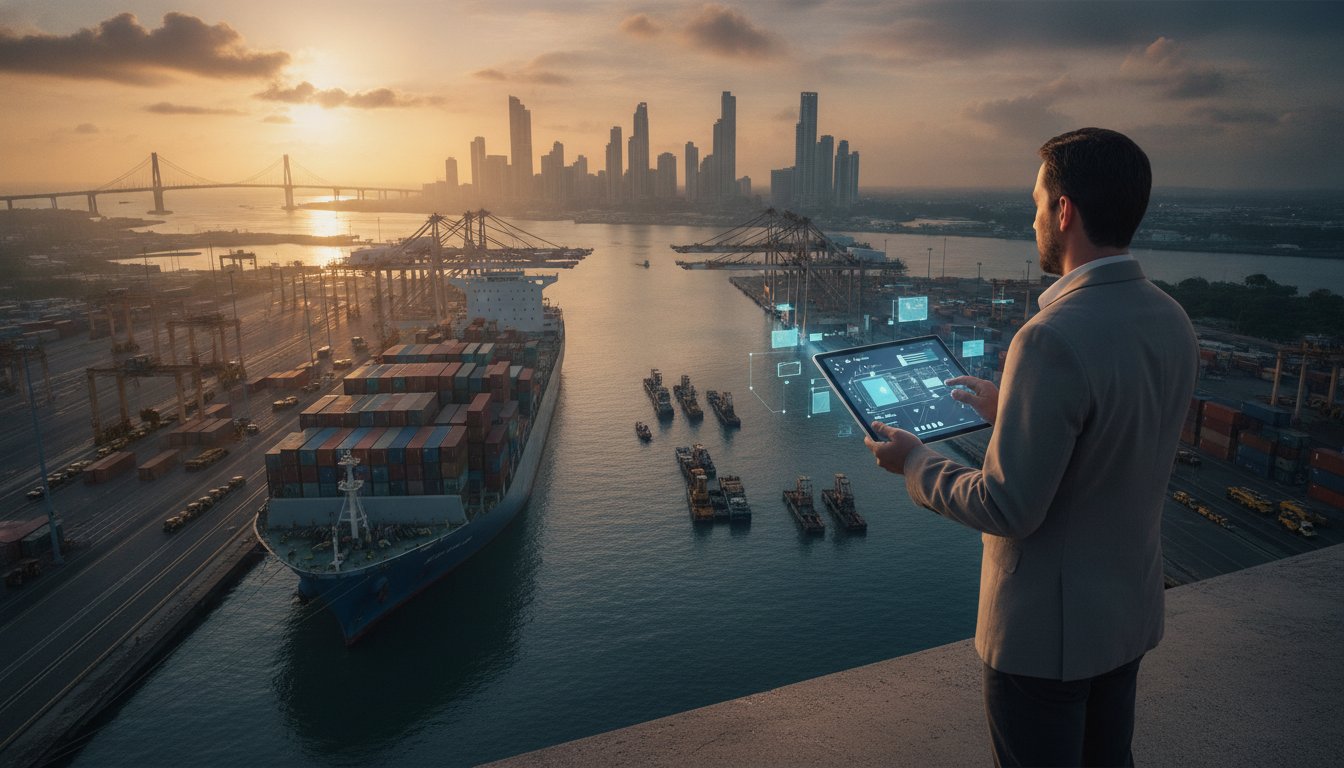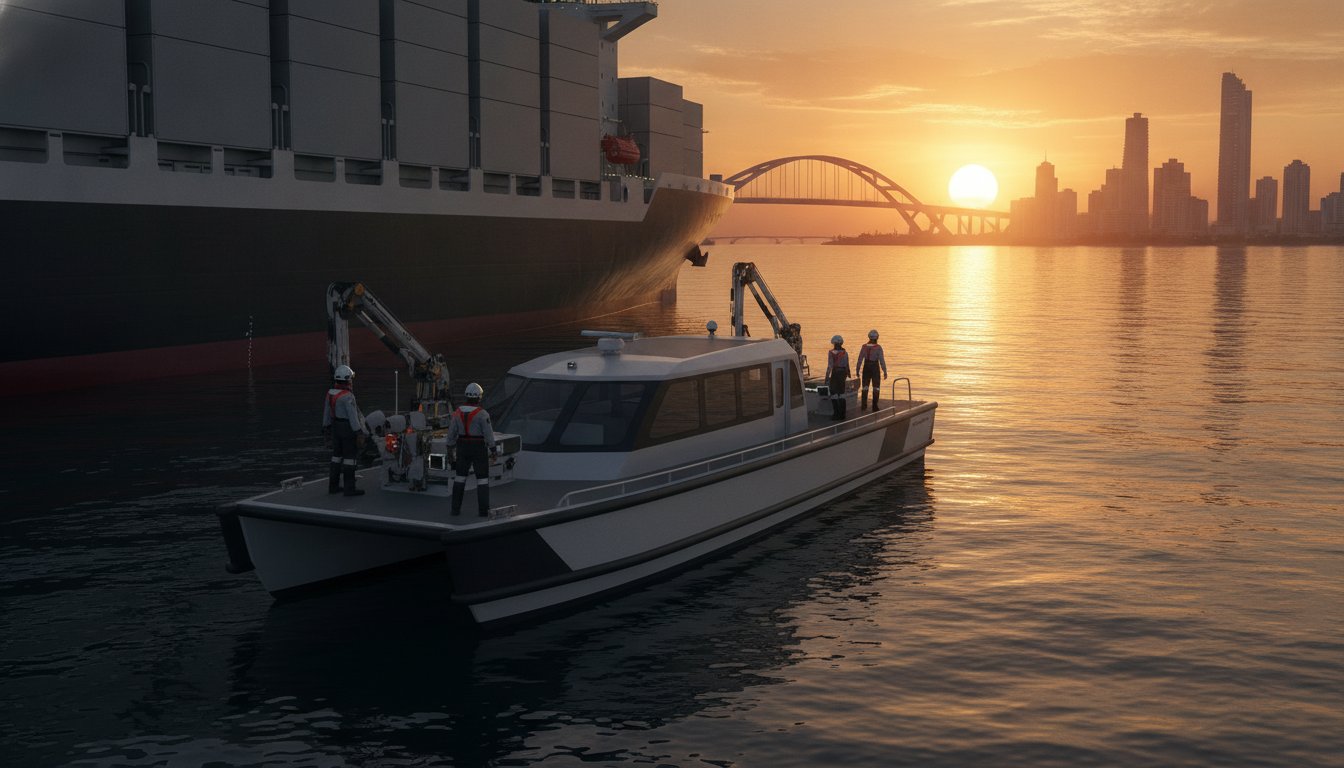

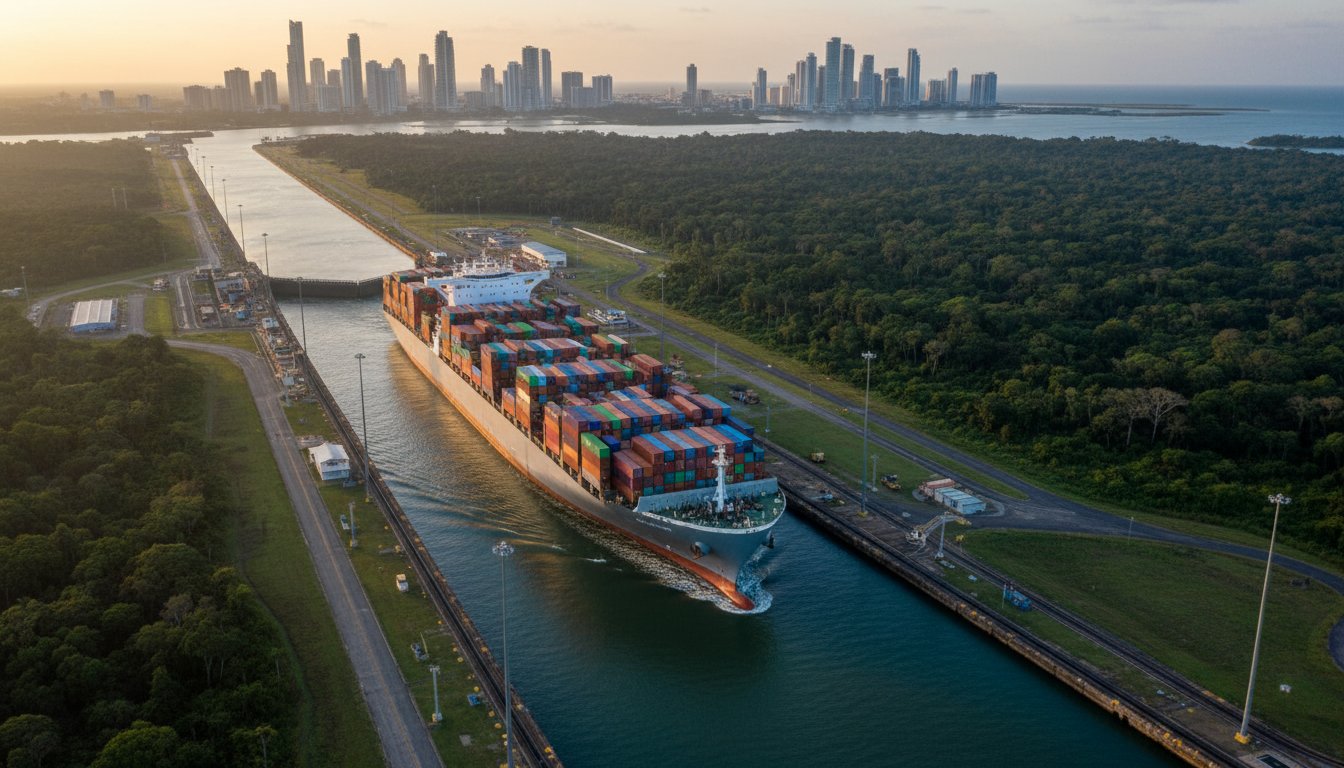
Misjudge your timing and you lose. For any liner service, a predictable panama canal transit for container ships is the difference between profit and loss. Yet, operators are constantly battling frustrating delays from congestion or low water levels, navigating a complex toll structure with unexpected fees, and struggling with a confusing booking system. Ensuring your vessel meets every Panama Canal Authority (ACP) regulation adds another layer of stress, turning a vital waterway into a source of operational anxiety.
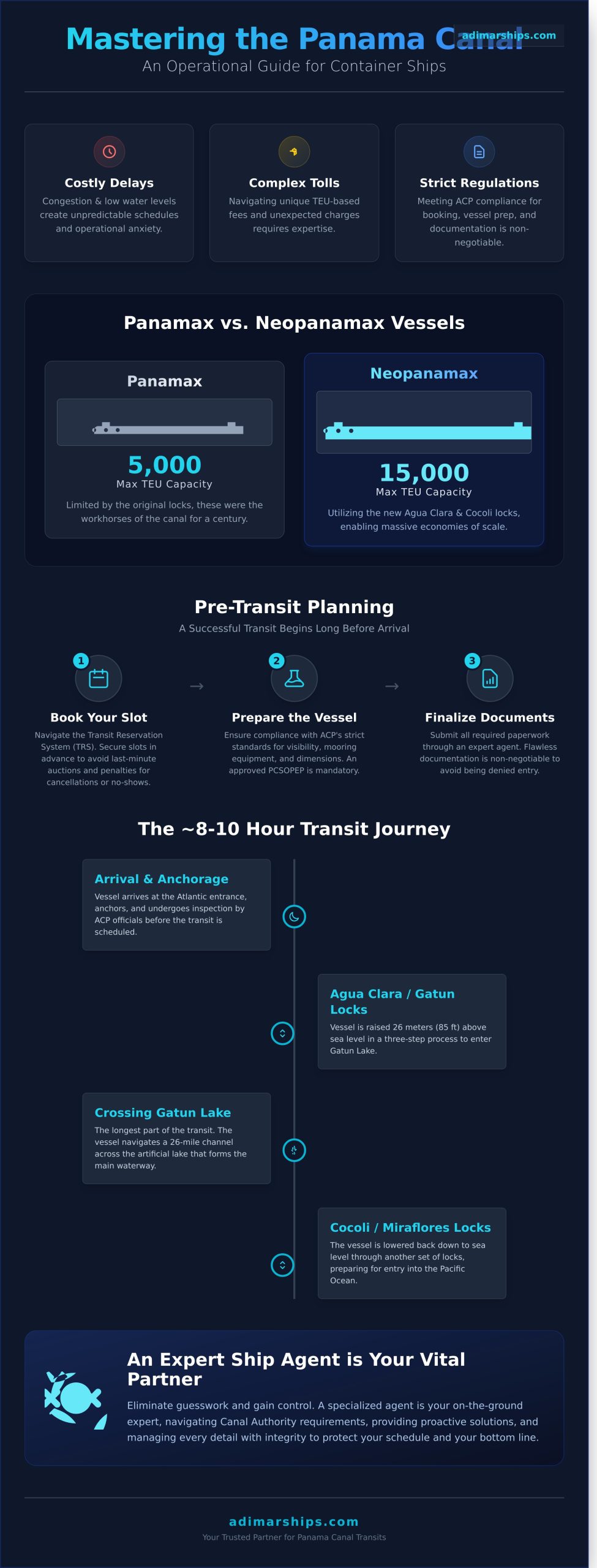
It’s time to eliminate the guesswork and take control. This complete operational guide is your trusted partner for mastering the canal. We provide the clarity you need, breaking down everything from pre-booking requirements and accurate toll forecasting to on-the-ground operational challenges. By the end, you’ll have the expert knowledge to ensure every transit is smooth, on-schedule, and cost-effective, protecting your service integrity and your bottom line.
Key Takeaways
- A successful transit begins long before arrival. Master the critical pre-transit steps, from booking your slot to vessel preparation, to ensure a seamless passage.
- Understand the key stages of the 8-10 hour journey through the Canal to anticipate operational requirements and prevent costly delays.
- A successful Panama Canal transit for container ships requires managing key cost variables and operational challenges that go beyond standard tolls.
- An expert ship agent is your vital partner on the ground, navigating Canal Authority requirements and providing proactive solutions to protect your schedule and budget.
Container Ship Transits: Why They Are Unique at the Panama Canal
Container ships are the backbone of global trade, and they represent the largest and most critical segment of traffic for the Panama Canal. For these vessels, time is money, and schedule integrity is paramount. A successful Panama Canal transit for container ships isn’t just about passage; it’s about precision, reliability, and maintaining the strict timetables of liner services. Understanding this unique dynamic led to the Canal’s most significant transformation and a specialized toll structure.
The Canal Authority recognizes the high-value cargo and time-sensitive nature of container shipping. Unlike other vessels that are charged based on displacement or tonnage, container ships are assessed using a unique system based on their Twenty-foot Equivalent Unit (TEU) carrying capacity. This TEU-based toll directly reflects the vessel’s earning potential, making cost calculations both transparent and directly tied to the commercial value of the transit.
Panamax vs. Neopanamax Container Vessels
The 2016 expansion of the Panama Canal redefined global maritime logistics by accommodating a new generation of larger vessels. The original locks, a feat of engineering detailed in the Panama Canal’s history and construction, dictated the maximum size of ships for over a century. Today, vessels are categorized by which locks they can use:
- Panamax Vessels: Limited by the original locks, these ships typically carry up to 5,000 TEU. For decades, they were the workhorses of the Canal.
- Neopanamax Vessels: Able to use the larger Agua Clara and Cocoli locks, these modern giants can carry up to 15,000 TEU. Their introduction allowed for immense economies of scale, reducing the cost per container.
The Impact on Global Supply Chains
The Panama Canal serves as a vital shortcut, most notably on the crucial trade route between Asia and the U.S. East Coast. By using the Canal, shipping lines can save weeks compared to the alternative of sailing around South America. This reliability is the foundation of modern just-in-time inventory planning for countless businesses. A predictable panama canal transit for container ships allows companies to reduce warehousing costs and streamline their supply chains.
A significant portion of all container traffic moving from Asia to the U.S. East and Gulf Coasts-estimated at over 40%-relies on the Canal. While the Suez Canal is an alternative, the Panama Canal is often preferred for its shorter transit time to key East Coast ports, reinforcing its position as a linchpin of international commerce.
Pre-Transit Planning: Booking and Vessel Preparation
In the world of maritime logistics, time is money. A successful and cost-effective panama canal transit for container ships begins long before the vessel ever reaches Panamanian waters. Misjudging timing or failing to meet strict compliance standards can lead to significant delays, hefty fines, and lost revenue. Meticulous pre-transit planning is not just recommended; it is essential for an efficient passage.
Putting your transit in the hands of an experienced ship agent eliminates confusion and ensures every detail is managed with integrity. From securing a booking slot to preparing all necessary documentation, proactive coordination is the key to a seamless operation.
Navigating the Transit Reservation System (TRS)
The Panama Canal Authority (ACP) manages vessel passage through a sophisticated Transit Reservation System (TRS). Container ships typically book slots across three periods, often securing them well in advance due to liner service schedules. For slots that become available at the last minute, the ACP holds a daily auction where booking fees can escalate significantly based on demand. A vessel’s customer ranking, based on its history of transits, also plays a role in slot allocation. Be warned: cancelling a reserved slot or failing to arrive on time incurs substantial financial penalties, underscoring the high cost of poor planning.
Vessel Requirements and Compliance
Your vessel must be physically prepared to meet the Canal’s stringent operational standards. This includes ensuring proper visibility from the navigation bridge, having specific mooring and line handling equipment ready, and providing accurate vessel dimension data. Furthermore, every vessel must have an approved Panama Canal Shipboard Oil Pollution Emergency Plan (PCSOPEP). The ACP enforces strict standards, and all detailed requirements for a safe panama canal transit for container ships can be reviewed on the official Panama Canal Maritime Services website. Non-compliance will result in costly delays until all deficiencies are corrected.
Essential Documentation and Pre-Arrival Checks
Flawless paperwork is non-negotiable. Your ship’s agent is responsible for submitting a comprehensive package of information to the ACP well ahead of arrival. Key documents include:
- Ship’s Registry and International Tonnage Certificate (ITC ‘69)
- PC/UMS Tonnage Certificate (required for ACP toll calculation)
- Crew and passenger lists
- Dangerous cargo declarations
The admeasurement process, which determines the vessel’s Panama Canal Universal Measurement System (PC/UMS) net tonnage, directly impacts toll costs. Any hazardous or dangerous cargo must be declared accurately and in advance to ensure safety and avoid severe penalties.
The Transit Process: A Step-by-Step Walkthrough
The journey through the Panama Canal is a precisely choreographed operation, typically lasting between 8 to 10 hours. A successful panama canal transit for container ships depends on the seamless coordination of a specialized team, including the Canal pilot who takes command, powerful tugboats for assistance, and skilled line handlers. Understanding each stage is key to appreciating the complexities and potential choke points where costly delays can occur.
Arrival and Pilot Boarding
Your vessel’s journey begins by arriving at the designated anchorage area on either the Pacific (Balboa) or Atlantic (Cristobal) side to await its scheduled transit time. A Panama Canal Authority (ACP) pilot boat will then bring an expert Canal pilot aboard. This pilot assumes navigational command from the ship’s Captain for the entire passage, a mandatory requirement for safety and efficiency. A final vessel inspection is conducted, and clear communication protocols with Canal authorities are established before entry is permitted.
Navigating the Locks and Gatun Lake
Entering the locks, the massive container ship is secured by mooring lines to powerful electric locomotives, known as ‘mules’, that run on rails alongside the chambers. These mules stabilize and guide the vessel as millions of gallons of water raise or lower it by gravity. After ascending, the ship navigates across the expansive Gatun Lake, the main waterway of the Canal. The most challenging section is the Culebra Cut, a narrow, man-made channel carved through the Continental Divide where precise maneuvering is absolutely critical.
Departure and Pilot Disembarkation
On the exit side, the vessel enters the final set of locks to be lowered back down to sea level. Once clear of the final lock chamber, the ACP pilot disembarks via a pilot launch, returning full navigational control to the Captain. Final reporting and clearance procedures are completed with Canal authorities, officially marking the end of a successful transit. This entire intricate process demands flawless execution, as any issue can disrupt a tightly managed global supply chain.
Navigating these steps demands local expertise and proactive coordination. We are your trusted partner at the Panama Canal, ensuring every stage is managed with integrity and efficiency. Let us handle the details. Nominate Adimar Shipping, Inc. as your agent.
Operational Challenges & Cost Factors for Container Ships
A successful panama canal transit for container ships is far more than a physical voyage; it is a complex financial event where time is money and every decision impacts profitability. Misjudging costs, weather, or water levels can turn a profitable journey into a significant loss. Understanding the key operational variables is essential for ship owners and charterers to protect their bottom line.
Understanding the Toll Structure
The primary cost is the toll, calculated based on a vessel’s total Twenty-foot Equivalent Unit (TEU) capacity. The Panama Canal Authority (ACP) applies different rates for laden (full) and ballast (empty) containers, incentivizing full vessels. Beyond the base toll, a transit involves numerous other mandatory fees:
- Transit Reservation Fee: Secures a specific transit slot, avoiding unpredictable waiting times.
- Tugboat & Linehandler Fees: Charges for the essential services required to guide the vessel through the locks.
- Security Fee: A standard charge for vessel security while in Canal waters.
For example, a mid-size 8,000 TEU Neopanamax vessel might face a total cost approaching $900,000, combining a capacity-based toll with these ancillary charges.
The Impact of Draft Restrictions and Water Levels
The Canal’s operation depends entirely on the freshwater level of Gatun Lake. During periods of low rainfall, the ACP must conserve water, leading to draft restrictions-limiting how deep a vessel can sit in the water. For a container ship, this has a direct and costly consequence: it must either carry less cargo for the entire voyage or off-load containers before transiting, both of which severely erode revenue and disrupt supply chains.
Managing Delays and Congestion
Vessels arrive at the Canal in two queues: booked and un-booked. While a booked slot provides schedule certainty, un-booked vessels may wait for days, burning expensive fuel and disrupting tight shipping schedules. Delays can also arise from weather, lock maintenance, or accidents. This is where a proactive agent becomes invaluable. By providing real-time updates and expert coordination, they manage expectations and mitigate financial risks. Navigating the complexities of a panama canal transit for container ships requires a trusted partner on the ground. Put your transit in our hands; contact Adimar Shipping to ensure a smooth and cost-efficient passage.
The Critical Role of a Specialized Ship Agent
Navigating the waterway is only one part of a successful voyage. For a smooth and efficient Panama Canal transit for container ships, your most critical asset is an expert ship agent on the ground. This agent acts as an extension of your own team, serving as your eyes, ears, and operational command center in Panama. They bridge the crucial communication gap with the Panama Canal Authority (ACP) and manage the intricate local logistics, allowing you to focus on your core business while they ensure a seamless passage.
Misjudging timing or coordination can lead to costly delays. A trusted partner with deep local knowledge transforms complexity into a predictable, well-managed process, translating their expertise directly into time and cost savings for your operations.
Coordination and Communication Hub
Your agent is the single point of contact responsible for orchestrating every stage of the transit. They eliminate confusion by centralizing communication and providing proactive solutions around the clock. This includes:
- Acting as the official liaison with the ACP for all notifications, scheduling, and inquiries.
- Providing real-time updates on vessel status, weather conditions, and any changes to the transit schedule.
- Seamlessly coordinating with pilots, tugboats, and line handlers to ensure they are ready precisely when needed.
- Troubleshooting any unexpected operational or administrative issues that arise, 24/7.
Financial Management and Cost Efficiency
A proficient agent is also your financial guardian in Panama. They manage all the necessary transactions with integrity and a focus on efficiency. This involves the pre-payment of all Canal tolls and fees in US Dollars, a mandatory step for securing transit. More importantly, an experienced agent provides invaluable cost-saving advice on booking strategies and meticulously audits all final charges from the ACP and local vendors to prevent overpayment and ensure complete transparency.
Ensuring Compliance and Husbandry
A successful panama canal transit for container ships depends on flawless preparation. Your agent verifies that all required documentation is accurate and submitted on time, preventing delays caused by administrative errors. They provide critical assistance with regulatory requirements, including Panama Canal Shipboard Oil Pollution Emergency Plan (PCSOPEP) compliance. Beyond the transit itself, they can arrange essential husbandry services such as crew changes, delivery of provisions and spares, or medical assistance, ensuring your vessel and crew are fully supported. Experience the Adimar difference. Request a quote today.
Your Partner for a Seamless Canal Crossing
Navigating the intricate steps of a panama canal transit for container ships is a significant undertaking where efficiency is paramount. This guide has highlighted that success is not accidental; it is the direct result of meticulous pre-transit planning, a deep understanding of the step-by-step process, and proactive management of potential operational challenges. Ultimately, the difference between a costly, delayed passage and a seamless one often comes down to the expertise of your local representative.
Your vessel deserves a trusted partner on the ground. For over 20 years, Adimar Shipping has been that partner for countless operators, delivering unparalleled service built on integrity and transparent financial management. We are your eyes at the Panama Canal, providing proactive communication and 24/7 support to eliminate confusion and protect your interests. Let our experience be your advantage. Ensure a smooth, cost-effective transit. Nominate Adimar as your trusted agent today.
Frequently Asked Questions About Panama Canal Transit for Container Ships
How are Panama Canal tolls calculated for a container ship?
Panama Canal tolls for container ships are calculated using a tiered pricing system based on the vessel’s total TEU (Twenty-foot Equivalent Unit) allowance. The rate per TEU varies depending on whether the containers are loaded or empty. There is also a fixed toll component based on the ship’s PC/UMS (Panama Canal/Universal Measurement System) tonnage. This complex structure requires careful calculation by an experienced agent to accurately forecast transit costs in US dollars.
What are the current draft restrictions for Neopanamax vessels?
The maximum authorized draft for Neopanamax vessels is subject to change based on the water level of Gatun Lake. The Panama Canal Authority (ACP) typically aims for a draft of 15.24 meters (50.0 feet). However, during periods of drought, this is often reduced. It is critical for ship owners to verify the latest ACP advisories before arrival, as these restrictions directly impact a vessel’s maximum cargo load and profitability for its voyage.
How long does a typical container ship transit through the Panama Canal take?
A typical transit through the Panama Canal’s locks takes between 8 to 10 hours. However, this does not include the waiting time at anchorage for a scheduled slot. The total time from arrival at canal waters to final departure can range from 24 to 36 hours for a vessel with a reservation. This timing is influenced by traffic, weather, and overall Canal operational status, making efficient coordination essential to avoid costly delays.
What is the maximum TEU capacity for a ship to transit the Neopanamax locks?
The maximum TEU capacity for a vessel using the Neopanamax locks is approximately 15,000 TEUs. This figure is not absolute and depends on the specific vessel’s design, dimensions (beam and length), and container stowage plan. The successful panama canal transit for container ships of this size requires meticulous planning and pre-approval from the Panama Canal Authority based on the ship’s official specifications and documentation to ensure a smooth passage.
Why is the water level in Gatun Lake so important for Canal operations?
Gatun Lake is the heart of the Canal’s operations, acting as a massive freshwater reservoir that feeds the lock system by gravity. Each time a ship transits, millions of gallons of water are flushed out to sea. The lake’s water level, replenished by rainfall, directly dictates the maximum allowable draft for all transiting vessels. Low water levels during Panama’s dry season can lead to significant draft restrictions, reducing a ship’s cargo capacity and revenue.
Can a container ship transit without a reservation?
Yes, a container ship can transit without a reservation, but it is highly discouraged. Vessels without a booked slot are handled on a first-come, first-served basis after all reserved ships have passed. This can lead to unpredictable and extensive delays, sometimes lasting for days or even weeks during peak periods. For time-sensitive container shipments where schedules are critical, securing a reservation is the only way to ensure an efficient and timely transit.
What is PCSOPEP and is it mandatory for all vessels?
PCSOPEP stands for the Panama Canal Shipboard Oil Pollution Emergency Plan. It is a vessel-specific plan for managing oil spill response equipment and procedures. This plan is mandatory for all vessels over 400 gross tons transiting the Canal. The plan must be reviewed and authorized by the Panama Canal Authority (ACP) before transit is permitted, ensuring every vessel meets the Canal’s stringent environmental protection standards. Compliance is non-negotiable for passage.