

Did you know that forfeiting a single Neo-Panamax transit slot in 2026 can cost your operation over $65,000 per day? It’s a stressful reality for ship owners who understand that timing and coordination are everything at the breakwater. You’ve likely felt the frustration of complex ACP paperwork or feared a $15,000 fine for a simple VUMPA oversight. With the Canal Authority’s transition to full machine validation this year, the buffer for manual review is gone. We are experts so you don’t have to be, and we’ve designed this guide to help you master the panama canal vessel clearance procedures for a seamless transit.
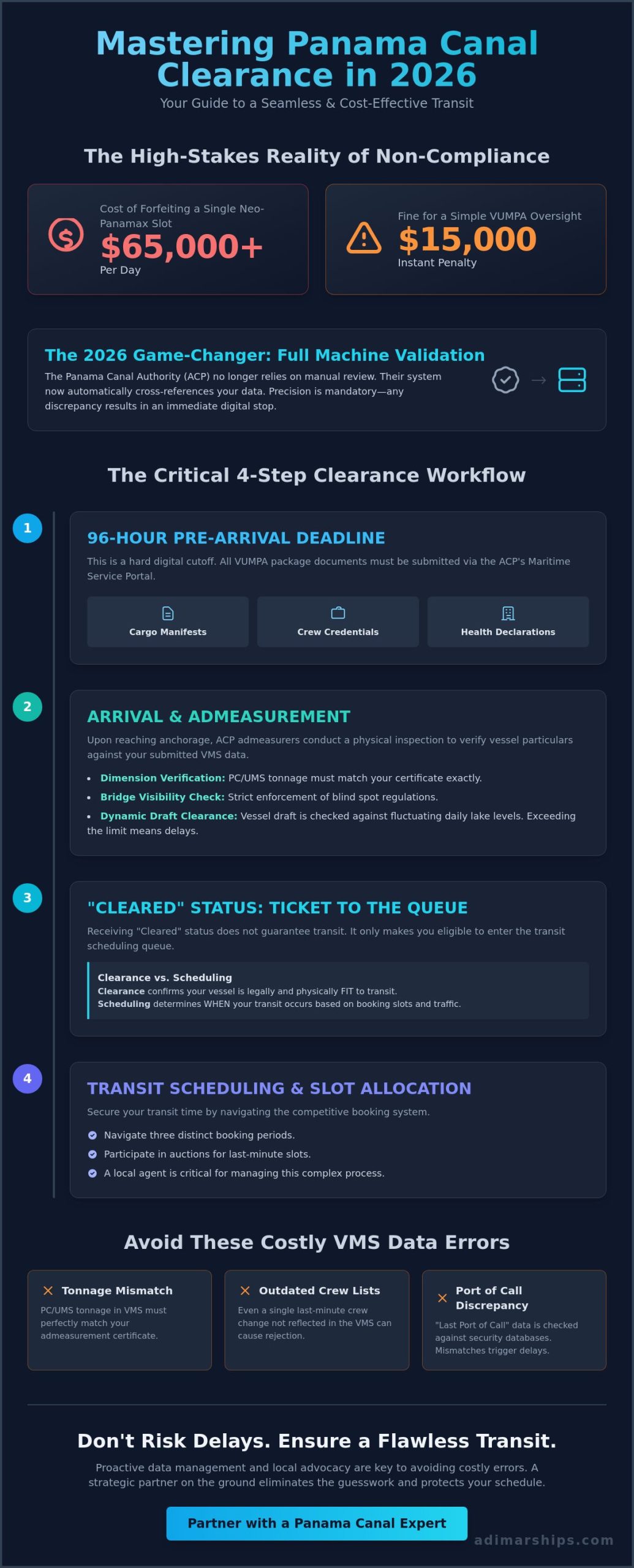
We believe that your focus should be on your business, not on the anxiety of changing regulations. This article provides a clear timeline of required actions, starting with the critical 96-hour VUMPA submission deadline. We’ll walk you through a checklist of non-negotiable documents and the specific machine-validation requirements for 2026 to ensure you pass inspection on the first try. You’ll gain the confidence to avoid expensive delays and keep your transit on schedule.
Key Takeaways
- Understand why the 2026 shift to machine-validated documentation requires a higher level of accuracy for successful panama canal vessel clearance procedures.
- Master the 96-hour pre-arrival workflow to ensure your VMS entries and cargo manifests are submitted correctly before the vessel reaches the anchorage.
- Learn the specific physical requirements ACP admeasurers look for during inspection to avoid delays during the verification of vessel dimensions.
- Gain a clear understanding of how to move from a “Cleared” status into the scheduling queue by navigating the three booking periods and auction systems.
- Discover how proactive data management and local advocacy can eliminate paperwork errors and protect your vessel from costly transit slot forfeitures.
Understanding Panama Canal Vessel Clearance in 2026
Every successful transit begins with a green light from the Panama Canal Authority (ACP). We define vessel clearance as the formal verification process where the ACP confirms your ship meets every technical, safety, and environmental standard required for passage. In 2026, this isn’t just a paperwork exercise; it’s a digital gatekeeper. Following a comprehensive Panama Canal overview of operational history, the ACP has moved to a machine-validated system that prioritizes precision over manual review. If your data doesn’t match their records perfectly, the system stops you before you even reach the locks.
The cost of a “Clearance Failure” is steep and immediate. Beyond the initial $15,000 fine for non-compliance with VUMPA requirements, Neo-Panamax operators face slot forfeiture costs exceeding $65,000 per day. There’s also the hidden cost of reputational damage. The ACP maintains digital profiles on every operator; frequent errors lead to increased inspections and less flexibility during peak congestion. This high-stakes environment involves three primary stakeholders: the Vessel Master, who provides the raw data; the ACP, who enforces the rules; and the ship agent, who acts as your local advocate and technical bridge.
The Difference Between Clearance and Scheduling
It’s a common misconception that being “cleared” guarantees a transit time. In reality, clearance is simply your ticket to enter the scheduling queue. You can have every document approved and still sit at the anchorage for days if you haven’t secured a booking slot. Clearance confirms your vessel is physically and legally fit to transit, while scheduling determines exactly when that transit happens based on water levels and traffic. A professional Panama Canal ships agent bridges this gap by managing the panama canal vessel clearance procedures alongside the booking auction, ensuring you don’t have one without the other.
Key 2026 Regulatory Updates for Operators
Digitalization has reached its peak this year. All Neopanamax vessels must now use the ACP’s updated Maritime Service Portal for real-time reporting of dangerous goods and ballast water status. Environmental compliance is also stricter. The 2026 clearance workflow includes mandatory cross-referencing of your PCSOPEP with the latest IMDG lists. Additionally, new water conservation measures mean the ACP now issues draft clearance based on dynamic daily lake levels. If your vessel’s draft exceeds the limit by even a few centimeters during the admeasurement phase, you’ll be forced to offload cargo or wait for rain, making panama canal vessel clearance procedures more volatile than in previous years.
The Pre-Arrival Workflow: Documentation and VMS Entry
The 96-hour rule is the most critical deadline in the panama canal vessel clearance procedures. It isn’t just a suggestion; it’s a hard digital cutoff. Exactly four days before your vessel is scheduled to arrive at the Canal anchorage, the ACP requires a complete VUMPA package. This package includes your cargo manifests, crew credentials, and health declarations. In 2026, the ACP’s Maritime Service Portal uses machine validation to cross-reference your “Last Port of Call” data against global security databases. Any discrepancy here can flag your vessel for a high-priority security inspection, which inevitably leads to delays.
The Vessel Monitoring System (VMS) serves as the digital backbone of this entire workflow. It acts as the single source of truth for the Canal Authority. If your team miskeys a single digit in the tonnage or dimension fields, the system may reject the entire submission. We’ve seen owners lose their transit sequence simply because a crew list hadn’t been updated to reflect a last-minute change. If you’re concerned about these technical hurdles, you can nominate a local agent to handle the VMS entry on your behalf, ensuring your data aligns perfectly with the Official Panama Canal Maritime Regulations.
Navigating the Vessel Monitoring System (VMS)
Entering vessel particulars into the VMS portal requires surgical precision. You must verify that the PC/UMS tonnage matches your latest admeasurement certificate exactly. A common error involves reporting incorrect visibility distances from the bridge; the ACP is incredibly strict about blind spots. Once all data is entered, you must monitor the digital dashboard until you see the “Ready to Transit” status. Without this specific confirmation, your vessel remains invisible to the scheduling team, even if you’ve already arrived at the breakwater.
PCSOPEP and Compliance Documentation
Environmental safety is a top priority for the ACP in 2026. You must ensure your PCSOPEP authorized person has verified and signed off on your pollution response plan before submission. This plan must be bilingual and current to avoid immediate rejection. Alongside the PCSOPEP, you’ll need to upload the International Ship Security Certificate (ISSC) and a complete “Ship’s Information and Quarantine” declaration. These documents prove your vessel isn’t just physically ready, but also legally and environmentally compliant for the journey through the locks.
Physical Inspection and Admeasurement Procedures
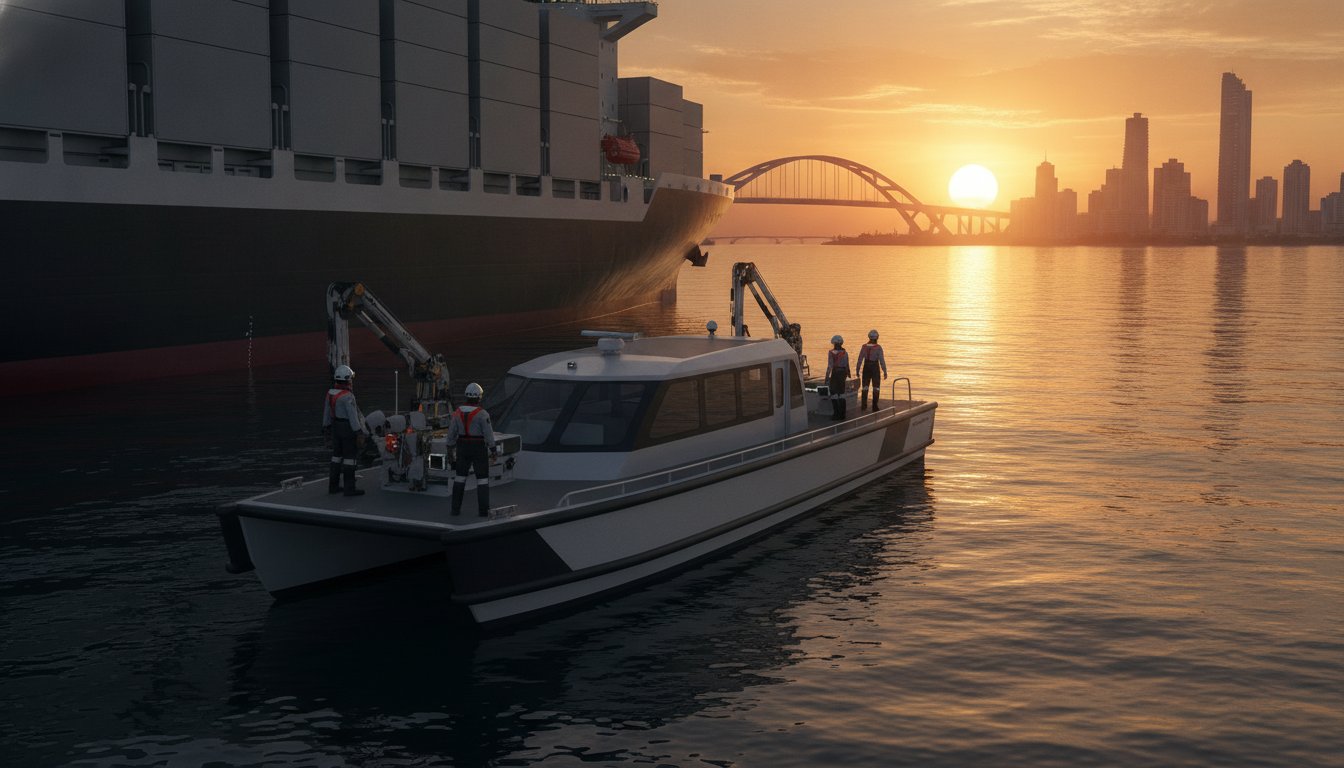
Once your digital paperwork is machine-validated, the focus shifts to the physical vessel. An ACP Admeasurer will board your ship at the Atlantic or Pacific anchorage to conduct a hands-on verification. They aren’t just there to check your ID; they’re measuring your ship against the Canal’s specific infrastructure. This step is a cornerstone of the panama canal vessel clearance procedures, ensuring that the data provided in the VMS portal aligns with the steel and machinery on deck. We’ve seen that even minor discrepancies between a digital manifest and physical reality can trigger an immediate re-inspection.
The Boarding Officer works alongside the Admeasurer to inspect navigational gear and crew safety protocols. They pay close attention to mooring equipment, specifically chocks and bitts. These must be compatible with the Canal’s locomotives and tugboats. If your vessel’s equipment doesn’t meet the ACP’s rigid standards, you won’t receive clearance. This level of scrutiny ensures safety for both your crew and the Canal’s locks. For vessels arriving from or heading to American ports, these steps often complement U.S. vessel clearance regulations regarding foreign trade and safety standards.
The Admeasurement Process Explained
The ACP uses the Panama Canal Universal Measurement System (PC/UMS) to calculate net tonnage. This figure is vital because it determines your total toll. If it’s your vessel’s first transit, expect a more rigorous session. The Admeasurer will physically measure cargo spaces and verify visibility from the bridge. You’ll need to pay an initial admeasurement fee of approximately $1,100. To ensure a smooth visit, have your bridge wing visibility charts and capacity plans ready for immediate review. We recommend clearing all deck obstructions before the inspector boards to avoid delays.
Managing Deficiencies on the Spot
What happens if an inspector finds a frayed mooring line or a non-compliant pilot ladder? These “on-the-spot” deficiencies don’t have to end your transit. If the issue is minor, the ACP may grant a “Conditional Clearance.” This status allows you to proceed as long as the deficiency is corrected before entering the locks. This is where professional husbandry services become invaluable. We can rush certified equipment or technical teams to your vessel at the anchorage, fixing the problem within hours to keep your slot secure and your schedule intact.
From Clearance to Transit: Scheduling and Slot Allocation
Obtaining a “Cleared” status is a major milestone, but it’s only half the battle. Your vessel now moves from the physical inspection phase into the ACP scheduling queue. This is where the commercial pressure intensifies. The panama canal vessel clearance procedures dictate that once you’re physically and legally cleared, your position in the line depends on your booking rank, vessel type, and previous transit history. High-demand periods often see the scheduling queue stretch for days. Your initial booking strategy is the difference between a timely transit and a costly wait at the anchorage.
Final transit approval also hinges on dynamic environmental factors. The ACP monitors lake levels daily to set draft restrictions. If Gatun Lake levels drop unexpectedly, a vessel that was cleared for a specific draft 96 hours ago might find its approval revoked at the last minute. This volatility requires constant vigilance. We serve as your eyes at the Panama Canal, monitoring these shifts in real-time to ensure your vessel’s load remains compliant with the very latest Canal requirements.
The Booking and Auction System
The ACP manages traffic through three distinct booking periods. Period 1 opens 365 days in advance for long-range planning. Period 2 starts 21 days before transit, while Period 3 covers the final 96-hour window. If you miss these windows, the auction system is your last resort. Auctions allow operators to bid on remaining slots, often at a significant premium. We help you calculate the cost-benefit of an auction slot versus the daily operating cost of waiting in the queue. Our team participates in these auctions on your behalf, using local insight to secure the best possible position.
Estimated Time of Arrival (ETA) Management
Precision is non-negotiable when it comes to your ETA. You must update your vessel’s ETA every 24 hours as you approach the breakwater. A single missed update can result in your vessel being bumped to the back of the queue or, worse, forfeiting a reserved slot entirely. A professional ship agency in Panama monitors local traffic congestion and weather patterns to advise you on the optimal arrival time. If your vessel misses its scheduled arrival window by even one hour, the financial penalties can reach $65,000 for Neo-Panamax ships. Don’t leave your timing to chance; get a quote for expert transit management to protect your schedule and your bottom line.
Why Adimar is Your Strategic Partner for Clearance
Adimar Shipping, Inc. has spent 20 years perfecting the art of the transit. We understand that for ship owners and charterers, time is money. Misjudging your timing at the breakwater isn’t just an inconvenience; it’s a financial disaster. Our deep familiarity with panama canal vessel clearance procedures allows us to act as a proactive partner rather than just a service provider. We don’t just wait for the ACP to find an error. Instead, we perform meticulous pre-arrival audits of your VUMPA package to ensure every machine-validated field is perfect before it ever reaches the Canal Authority’s portal.
We see ourselves as your local office at the Panama Canal. When the ACP admeasurer boards your vessel, we are your eyes on the ground, ensuring the inspection proceeds without unnecessary friction. Our team manages the technical bureaucracy so your Master can focus on the safety of the crew and cargo. Adimar Shipping, Inc. provides high-quality, timely service with integrity because we know that a single documentation error in 2026 can lead to immediate slot forfeiture. We are experts so you don’t have to be.
Eliminating Confusion with Personalized Service
The ACP’s technical jargon and changing 2026 regulations can be overwhelming for even the most seasoned crews. We translate these complex requirements into clear, actionable instructions for your vessel’s Master. Whether you need us as your primary agent or as an owner’s nominated agency, we protect your interests at every turn. In March 2026, we assisted a dry bulk carrier with a critical cargo manifest discrepancy. By identifying the error 96 hours before arrival and advocating directly with the ACP, we resolved the conflict and saved the operator from a 48-hour delay.
Cost-Conscious and Efficient Operations
Efficiency is our hallmark. We coordinate your husbandry needs and panama canal vessel clearance procedures simultaneously to maximize your vessel’s time in Panamanian waters. By handling crew changes, spare part deliveries, and bunker coordination alongside the official clearance, Adimar Shipping, Inc. eliminates redundant costs and logistical gaps. Our goal is to provide quick solutions that keep your vessel moving without the risk of expensive fines. Don’t let the complexity of the 2026 rules slow you down. Put your transit in our hands and eliminate the confusion. Get a Quote for Your Next Panama Canal Transit today and experience the security of working with a trusted partner.
Secure Your 2026 Transit with Expert Oversight
Success at the breakwater depends on a perfect synchronization of digital data and physical readiness. As we’ve explored, the transition to machine-validation and dynamic draft limits in 2026 leaves no room for clerical error. Mastering the panama canal vessel clearance procedures is the only way to safeguard your operation from the high costs of unexpected delays and slot forfeitures. Whether you’re navigating the 96-hour VMS deadline or preparing for a first-time admeasurement, proactive local advocacy is your most valuable asset.
Adimar Shipping, Inc. brings 20 years of local expertise to your bridge. With Authorized PCSOPEP Persons and on-the-ground 24/7 support in Panama City, we provide the vigilance your vessel deserves. We are your eyes at the Panama Canal, translating complex bureaucracy into a seamless journey for your crew. Don’t let documentation gaps or communication gaps jeopardize your schedule. Nominate Adimar Shipping, Inc. as your trusted Panama Canal ship agent today. We’ll handle the technical details so you can focus on your business with complete confidence. Your seamless transit is our priority.
Frequently Asked Questions
What is the most common reason for a vessel to fail Panama Canal clearance?
The most common cause for failure is a data mismatch between the VUMPA submission and the ACP’s digital records. In 2026, approximately 85% of rejections occur because the machine-validation system detects discrepancies in tonnage reporting or expired crew credentials. A single digit error in the PC/UMS net tonnage field can trigger an automatic rejection. This forces you to resubmit the package and often results in losing your position in the scheduling queue.
How many hours before arrival must a vessel submit its pre-arrival notification?
You must submit the complete notification package at least 96 hours before reaching the Canal anchorage. This 96-hour rule is a hard cutoff enforced by the ACP Maritime Service Portal. Missing this deadline by even a few minutes leads to an immediate fine of $15,000. It also puts your vessel at risk of forfeiting a reserved transit slot, which is a significant financial blow for any operator.
Does every vessel need a physical admeasurement before every transit?
No, physical admeasurement isn’t required for every transit. It’s mandatory for a vessel’s maiden transit or if structural modifications have been made since the last visit. The ACP also requires a new admeasurement if the vessel’s name or ownership changes. For standard repeat transits, the ACP uses the existing PC/UMS certificate on file, though inspectors may conduct spot checks to verify visibility requirements.
Can a ship agent speed up the clearance process with the ACP?
An agent can’t bypass official protocols, but they eliminate the clerical errors that cause delays. By managing the panama canal vessel clearance procedures with total accuracy, an agent prevents the rejection and resubmission cycle. We act as your local office, ensuring your VMS dashboard shows a “Ready to Transit” status so the Master doesn’t have to guess at local technical requirements.
What happens if my vessel is found to have a deficiency during inspection?
The Boarding Officer will categorize the deficiency as either minor or major. Minor issues might result in “Conditional Clearance,” which allows you to transit as long as you fix the problem before your next visit. Major safety or equipment deficiencies require immediate repair at the anchorage. We coordinate husbandry services to rush parts to your vessel, often resolving these issues within a 12-hour window to save your slot.
Is the VMS entry the responsibility of the Master or the Ship Agent?
While the Vessel Master is legally responsible for the data’s accuracy, the Ship Agent typically performs the actual VMS entry. This partnership ensures that the Master can focus on safe navigation while the agent handles the technical nuances of the ACP portal. It’s a collaborative effort where the agent’s local expertise protects the ship owner from expensive data entry mistakes and potential fines.
How do 2026 draft restrictions affect the clearance of Neopanamax ships?
In 2026, Neopanamax clearance is tied to dynamic water management protocols. The ACP adjusts maximum allowable drafts daily based on Gatun Lake levels, which can fluctuate significantly within a 24-hour period. If your vessel’s draft exceeds the limit announced on your arrival date, you won’t receive clearance. You’ll be forced to either offload cargo or wait for water levels to rise before you can proceed.
What documents are required for a first-time Panama Canal transit?
First-time transits require a technical package to establish the vessel’s permanent ACP ID. You must provide the General Arrangement, Capacity Plan, Midship Section, and the International Tonnage Certificate. These documents are essential for the ACP to calculate the PC/UMS tonnage. Once these are verified during the initial physical admeasurement, your vessel is registered in the system for all future panama canal vessel clearance procedures.