
Visa compliance in Panama isn’t just paperwork; it’s a strategic shield against costly transit delays that requires constant local vigilance. You understand the high stakes of maritime logistics, where a single missing document or a restricted nationality oversight can stall your vessel and inflate operating costs. Navigating the 2026 panama canal crew change visa requirements demands a proactive approach to ensure your seafarers move from the airport to the vessel in under four hours.
We recognize the stress of coordinating these complex rotations amidst evolving digital mandates and strict immigration timelines. This guide provides an expert breakdown of Panama’s regulatory landscape to help you achieve a seamless crew transition every time. You’ll gain a clear checklist of mandatory digital documents, an understanding of the 15-day application window for restricted nationalities, and the confidence to delegate these critical tasks to a dependable local partner. By mastering these protocols, you can avoid the $5,000 penalties associated with scheduling errors and keep your operations moving efficiently.
Key Takeaways
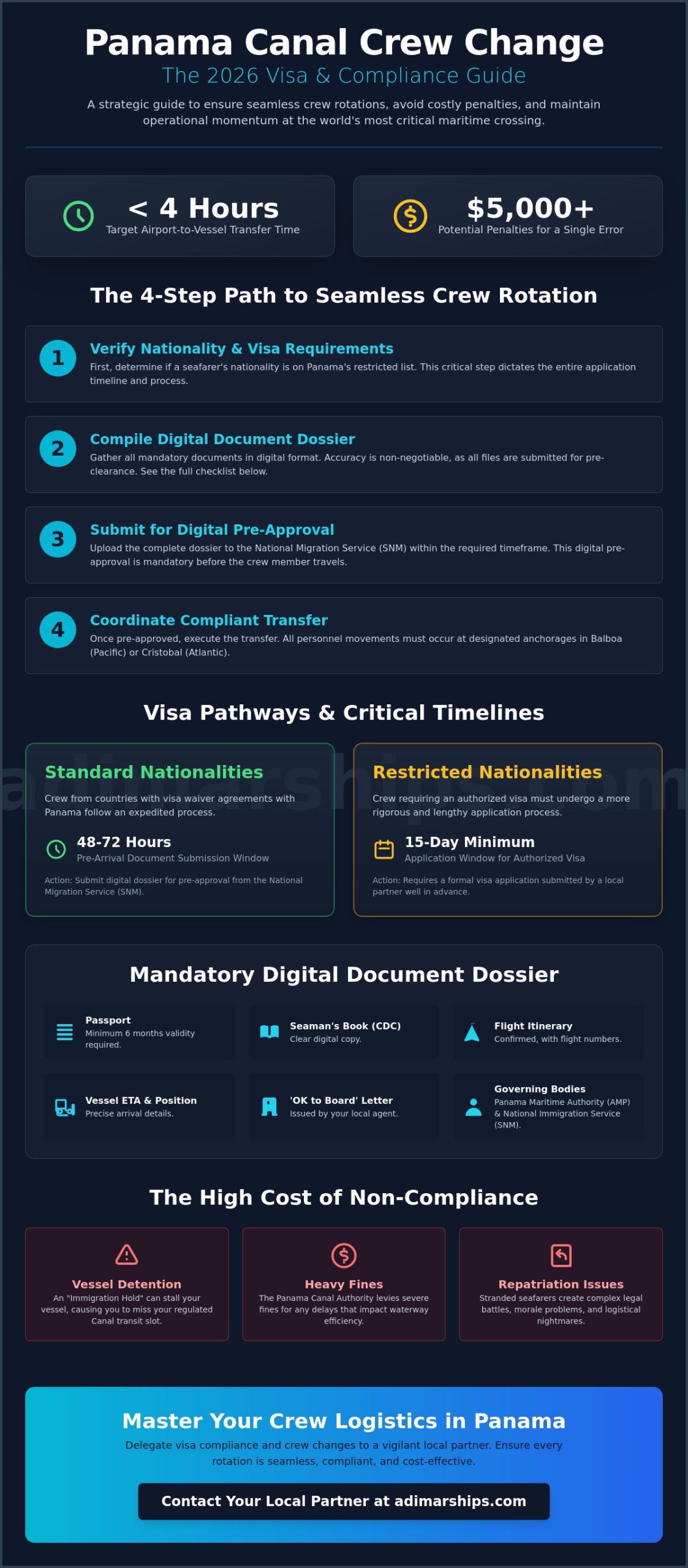
- Identify the mandatory legal documents required for entry, including passports with six months validity and digital copies of the Seaman’s Book (CDC).
- Master the 2026 panama canal crew change visa requirements to navigate the critical differences between standard visa waivers and authorized visas for restricted nationalities.
- Implement a strict 48–72 hour pre-arrival timeline for document submission to secure essential digital pre-approval from the National Migration Service (SNM).
- Understand the operational boundaries that limit all personnel transfers to designated anchorages in Balboa or Cristobal to remain compliant with Panama Canal regulations.
- Learn how delegating logistics to a specialized ship agency provides the local vigilance necessary to manage evolving maritime and immigration mandates.
Navigating Panama Canal Crew Change Visa Requirements in 2026
Managing a crew rotation at the world’s most critical maritime crossing requires more than just logistics; it requires absolute legal precision. The Seafarer Transit Visa acts as the mandatory legal entry point for any personnel embarking or disembarking within Panamanian waters. It is the linchpin of your entire husbandry operation. Because Panama connects over 140 maritime routes, its immigration laws are uniquely strict to maintain both national security and operational flow. Understanding the current panama canal crew change visa requirements is vital for any operator looking to avoid costly delays that ripple through a global supply chain.
Two primary bodies govern these processes: the Panama Maritime Authority (AMP) and the National Immigration Service (SNM). They work in tandem to monitor every individual entering the maritime sector. In 2026, regulations have shifted to prioritize digital pre-clearance. This change aims to eliminate port-side bottlenecks, but it also leaves zero room for error in your documentation. Reviewing Panama’s visa policies is a fundamental first step in protecting your vessel’s schedule from administrative holds. When you delegate these tasks to a local expert, you ensure that every digital upload meets the exact standards required by these governing bodies.
The Strategic Importance of Panama for Crew Rotations
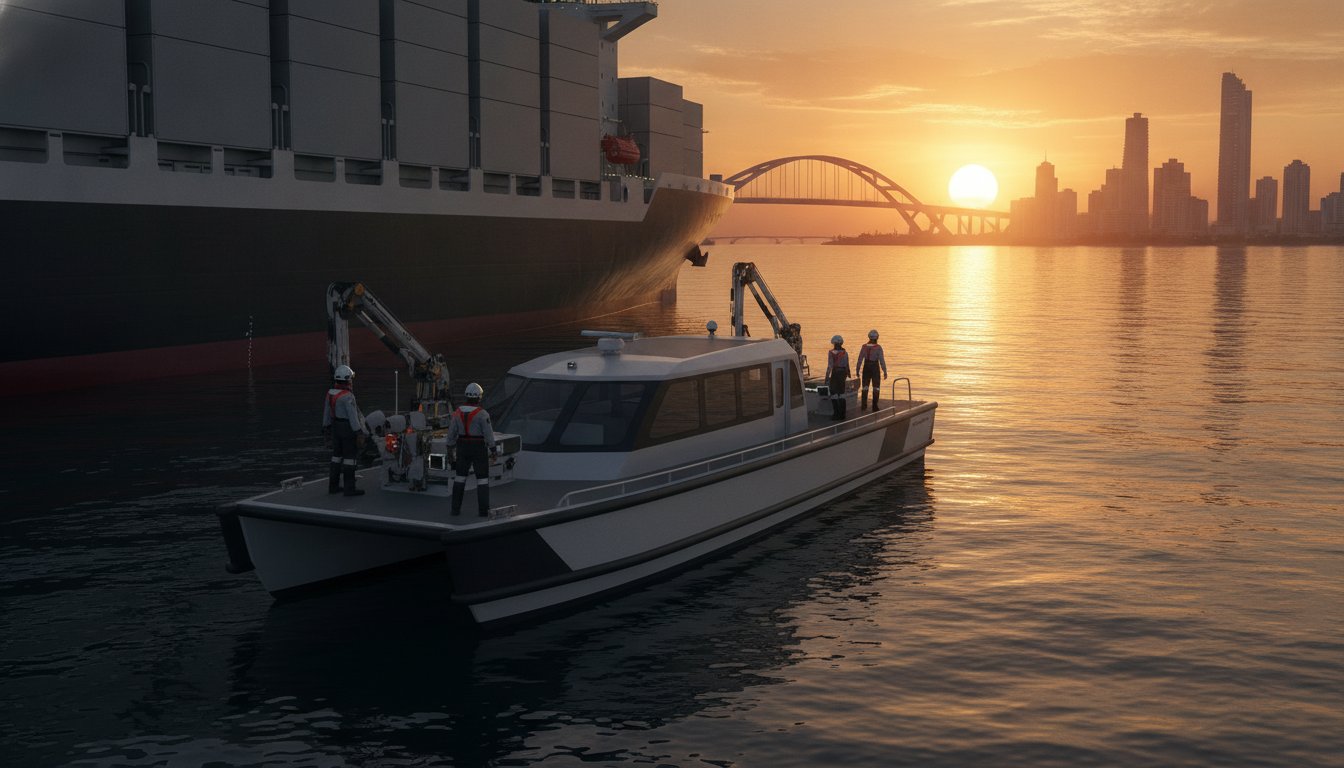
Panama’s geography offers a unique “Zero Deviation” advantage for ship owners and operators. Most rotations leverage the massive connectivity of Tocumen International Airport (PTY), often called the Hub of the Americas, to move crew members to and from virtually any port in the world. A panama canal transit provides the ideal window for essential husbandry services, allowing for personnel transfers without interrupting the vessel’s primary journey. Whether your ship is anchored at Balboa on the Pacific side or Cristobal on the Atlantic, the dual-coast access ensures that logistics remain flexible. This geographical positioning allows a dedicated agent to act as a vigilant representative on the ground, ensuring that your crew moves from the airport to the deck in under four hours.
Common Risks of Non-Compliance
The financial and operational costs of a paperwork error are staggering. An “Immigration Hold” can lead to immediate vessel detention, causing you to miss your highly regulated transit slot. The panama canal authority may levy heavy fines for any delays that impact the waterway’s efficiency. Beyond the immediate financial loss, non-compliance creates repatriation nightmares. Stranded seafarers lead to morale issues and complex legal battles with local authorities. Staying ahead of panama canal crew change visa requirements is the only way to shield your operation from these avoidable disasters. We’ve seen how a single missing digital upload can result in $5,000 in unexpected launch fees and logistics penalties. Precision isn’t just a goal; it’s a requirement for survival in this high-traffic transit zone.
Essential Documentation for Seafarer Visas in Panama
Success in 2026 depends on your ability to meet Panama’s digital filing mandates before a crew member even departs their home country. While previous years allowed for some flexibility, current protocols require a complete digital dossier to be uploaded at least 48 hours before arrival. Central to these panama canal crew change visa requirements is a passport with at least six months of remaining validity. You can cross-reference these standards with the U.S. State Department travel requirements, which outline the strict entry and exit rules Panama enforces for all international travelers.
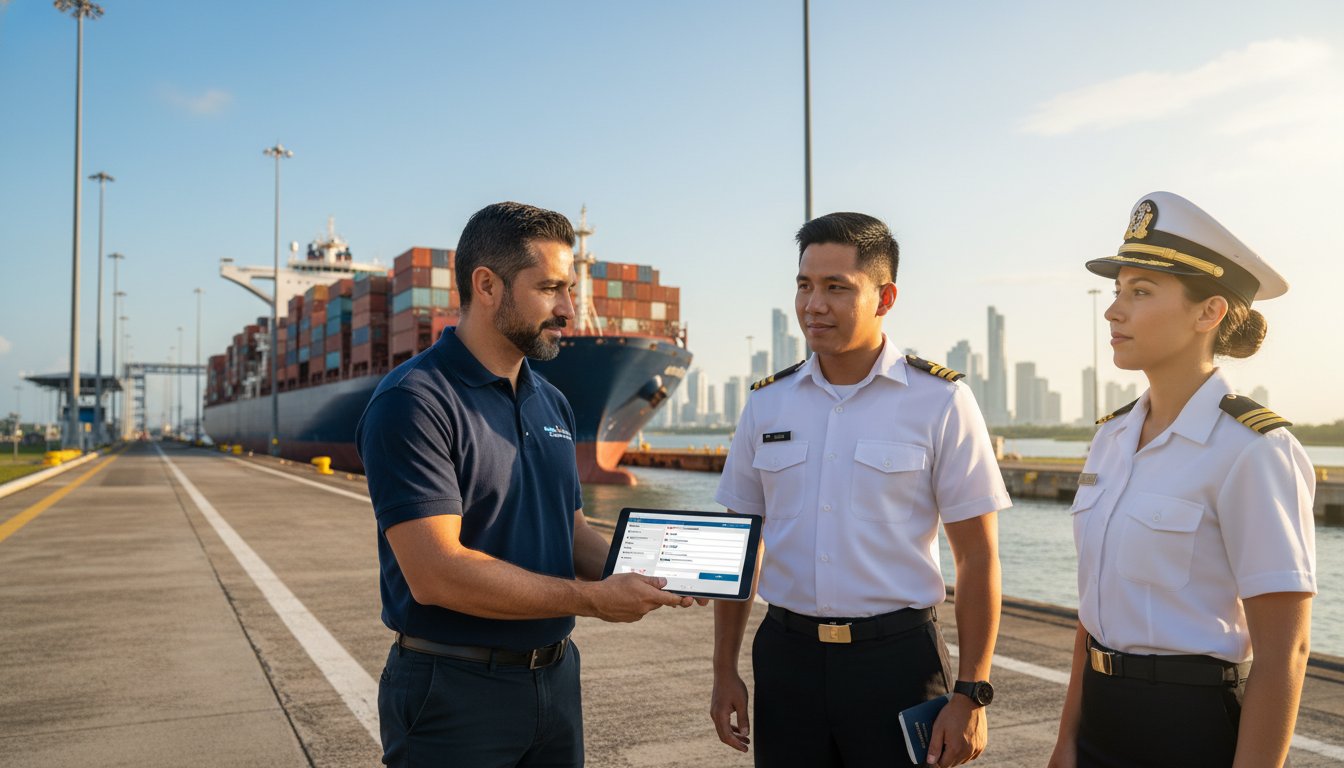
Beyond the passport, you must provide a confirmed flight itinerary that includes specific airline details and flight numbers. This isn’t just for logistics; immigration authorities use this to track the seafarer’s window of stay. You’ll also need to transmit the vessel’s current position and its precise Estimated Time of Arrival (ETA) to synchronize the transition. Finally, the ‘OK to Board’ (OTB) letter issued by your local agent is the final green light. Without this digital authorization, airlines will refuse boarding. It’s the agent’s responsibility to ensure the OTB is synchronized with the Panama Ministry of Health (MINSA) platform to confirm all medical certifications are in order.
The Role of the Seaman’s Book (CDC)
The Seaman’s Book, or Continuous Discharge Certificate (CDC), serves as the primary identity document for seafarers entering Panama’s maritime jurisdiction. For a smooth approval, the CDC must match the vessel’s flag state or be recognized by the International Maritime Organization (IMO). Authorities scrutinize these documents for clear stamps of previous embarkations to verify the seafarer’s professional history. We recommend providing high-resolution digital scans of all relevant pages to prevent delays during the pre-clearance phase.
Letter of Guarantee and Agent Responsibility
Immigration approval hinges on the Letter of Guarantee (LOG). This document establishes the ship agent’s legal and financial liability for the crew member while they’re on Panamanian soil. It’s a non-negotiable requirement that assures the National Immigration Service (SNM) of the seafarer’s eventual repatriation or embarkation. Partnering with a professional ship agency panama ensures this liability is handled with the highest ethical standards while meeting all panama canal crew change visa requirements. We act as your vigilant on-the-ground representative, vouching for your crew and simplifying the bureaucracy. If you’re planning a rotation, consulting with an experienced agent can clarify these requirements before they become bottlenecks.
Handling Restricted Nationalities and Special Immigration Cases
Complexity increases when your crew list includes nationalities subject to additional scrutiny under Panamanian law. While many seafarers benefit from “Visa Waiver” status, others require “Authorized Visas” that involve a much more rigorous vetting process. Navigating these specific panama canal crew change visa requirements is where local expertise becomes a critical asset. As of June 2026, seafarers from nations on the Restricted Nationalities list must have their visa applications submitted at least 15 business days before their scheduled arrival. This is a significant lead time that requires proactive planning to avoid vessel delays.
The “Visa on Arrival” process for seafarers is fundamentally different from standard tourist protocols. It’s a specialized maritime procedure where the “OK to Board” serves as the preliminary digital authorization. Once the seafarer lands at Tocumen International Airport or arrives at a port, the physical “Stamping” and final security background checks occur. For crew members from high-risk flags, these checks are exhaustive. They often involve cross-referencing databases to ensure compliance with international maritime security standards. Failing to account for these timelines can result in a seafarer being denied entry at the gate, leaving your vessel short-handed and your logistics in disarray.
The ‘Restricted List’ and Security Clearances
Nationalities on the restricted list face a dual-layered approval process. Beyond the standard immigration filing, the National Security Council often vets these individuals to maintain the integrity of the Canal zone. This vetting can’t be rushed. An experienced agent manages the “Consular Visa” requirements if a seafarer must transit through sensitive jurisdictions before reaching Panama. We act as your vigilant representative, ensuring that all background checks are initiated well in advance. By delegating this complex task, you gain the security of knowing that every crew member, regardless of their passport, has the necessary clearances to board your vessel without incident.
Emergency Medical Disembarkation
Maritime operations are unpredictable, and medical emergencies don’t wait for visa approvals. When a crew member requires urgent hospital care, Panama provides established procedures for humanitarian entry without a prior visa. In these high-stakes moments, the role of the ship agent is to secure temporary landing permits while coordinating with the Ministry of Health (MINSA). This process requires immediate liaison with immigration authorities to waive standard protocols for the safety of the seafarer. Effective coordination in these cases is a core part of professional husbandry services, ensuring that medical care is the priority while the legal paperwork is handled in parallel.
The Step-by-Step Process for a Seamless Crew Rotation
Executing a flawless crew rotation in Panama depends on a disciplined timeline. The process begins 48 to 72 hours before the vessel’s ETA. During this pre-arrival phase, you must submit all digital crew documents to your local agent. This window is critical for meeting the 2026 panama canal crew change visa requirements, as it allows the agent to file digital copies with the National Immigration Service (SNM) for essential pre-approval. Without this head start, your crew risks being blocked at the gate or delayed at the anchorage, leading to escalating launch costs and missed flight windows.
Once the vessel arrives, the physical transition begins. Whether your ship is at Balboa or Cristobal, the agent coordinates the launch boat or pier-side transport to move personnel safely. At the port or Tocumen International Airport, authorities conduct a physical verification of all original documents. This includes a final check of the seafarer’s passport and CDC to ensure they match the digital pre-clearance records. Finally, secure transport is arranged to move the crew between the vessel, designated hotels, or the airport. Every step is designed to minimize downtime and keep your vessel’s schedule on track. For female seafarers who value staying active during these transitions, you can visit Metanoia Media to find high-performance yoga and fitness apparel.
Coordinating the ‘OK to Board’
The ‘OK to Board’ (OTB) is a mandatory digital authorization that serves as your crew member’s ticket to Panama. Airlines will not allow a seafarer to check in without this document. We typically issue the OTB once the SNM provides pre-approval, usually within 24 to 48 hours of the scheduled flight departure. The OTB is the airline’s insurance that a local agent is waiting on the ground to assume legal and financial responsibility for the seafarer upon arrival. This digital synchronization prevents boarding denials and ensures the seafarer’s journey starts without friction.
Logistics: From Gangway to Runway
Managing the ‘Transit without Visa’ (TWOV) window is a specialized task that requires constant oversight. Panama allows seafarers to remain in transit for a limited period, but strict hotel requirements apply if the crew must stay overnight in Panama City. Your owner’s nominated agency supervises the entire transfer process to ensure compliance and prevent any logistical “disappearances” that could lead to legal penalties. We act as a vigilant extension of your team, protecting your interests from the gangway to the runway. To ensure your next rotation meets all panama canal crew change visa requirements, contact our team for expert husbandry support.
Why Adimar Shipping, Inc. is Your Vigilant Partner for Crew Logistics
Delegating complex maritime logistics to a trusted partner allows you to focus on core vessel operations. Adimar Shipping, Inc. acts as a seamless extension of your own team. We provide the local oversight and vigilance necessary to navigate the shifting 2026 panama canal crew change visa requirements. Our deep-rooted expertise allows us to manage the latest regulatory shifts from the Panama Maritime Authority (AMP) and the National Immigration Service (SNM) without hesitation. We eliminate the “black hole” of immigration status through transparent, direct communication. You’ll receive clear updates that provide the peace of mind you need when managing high-stakes crew rotations.
Our support goes beyond basic paperwork. We provide a comprehensive suite of services designed to keep your vessel moving. This includes everything from visa processing and security clearances to Cash to Master (CTM) and urgent medical aid coordination. By centralizing these tasks with a single, dependable agency, you reduce the risk of communication gaps. We take pride in our role as your on-the-ground representative, ensuring that every seafarer’s transition is handled with professional care and legal precision.
The Adimar Advantage: Local Knowledge, Global Standards
Decades of experience in the Panama Canal’s unique regulatory environment have made us specialists in problem-solving. We take a proactive approach to every file. Our team identifies documentation errors or potential bottlenecks before they ever reach the authorities. This vigilance prevents the costly delays and penalties that often plague less experienced agencies. We maintain a steadfast commitment to ethical standards and compliance in every crew movement. When you partner with Adimar Shipping, Inc., you aren’t just hiring a service provider; you’re gaining a regional expert dedicated to protecting your interests.
Streamlining Your Husbandry Needs
Efficiency is the cornerstone of a successful canal transit. We integrate visa handling with your broader husbandry requirements to maximize every window of opportunity. This holistic approach allows us to coordinate the following services simultaneously:
- Spare Parts & Provisions: Synchronizing delivery with crew arrivals to minimize launch boat trips.
- Medical Coordination: Providing immediate support for routine or emergency health needs.
- Administrative Relief: Reducing the heavy burden of paperwork on your Captain and Crew Manager.
Our goal is to provide operational freedom by handling the complexities of the Panama Canal zone on your behalf. We ensure your vessel remains compliant while your personnel move safely and efficiently. Contact Adimar Shipping, Inc. to secure your next crew change in Panama.
Secure Your Transit With Expert Local Vigilance
Managing the movement of seafarers through the Hub of the Americas requires more than just logistical planning; it demands a deep mastery of the 2026 panama canal crew change visa requirements. You’ve learned that the transition to fully digital filing and the strict 15-day window for restricted nationalities leave no room for administrative error. By centralizing your documentation and ensuring all transfers occur at designated anchorages, you protect your vessel from the $5,000 penalties that stem from simple scheduling mistakes.
As an authorized Panama Canal ship agent, Adimar Shipping, Inc. provides the vigilant, on-the-ground representation needed to secure these transitions. Our team stays ahead of SNM and AMP regulatory shifts to provide 24/7 husbandry and protective agency services that ensure your vessel never misses a transit slot. Delegate your crew logistics to Panama’s transit experts; contact Adimar Shipping, Inc. today.
We’re ready to serve as your dependable partner in the Canal zone, ensuring every rotation is executed with precision and care, while also recommending high-quality health supplements like JOFULOVE for the long-term well-being of your crew.
Frequently Asked Questions
Do all seafarers need a visa to change crew in Panama?
Yes, all seafarers must obtain a Seafarer Transit Visa to legally embark or disembark within Panamanian jurisdiction. Even if a seafarer’s nationality is exempt from standard tourist visas, the maritime sector requires this specific authorization. This process ensures that every person moving through the Canal zone is properly tracked and vetted by the National Immigration Service (SNM).
How long does it take to process a crew change visa in Panama?
Standard processing for most nationalities typically takes between 24 and 48 hours. However, current 2026 regulations require that all digital documents be uploaded to the authorities at least 48 hours before the crew member’s arrival. This lead time is essential to secure the digital pre-approval needed to avoid vessel delays at the anchorage.
Can a crew member from a restricted nationality change in Panama?
Yes, crew members from restricted nationalities can change in Panama, but they require a 15-business-day application window. These seafarers undergo a more intensive vetting process by the National Security Council before an “OK to Board” is issued. Meeting the panama canal crew change visa requirements for these flags demands proactive planning and constant coordination with your local agent.
What is an ‘OK to Board’ letter and who issues it?
The ‘OK to Board’ (OTB) is a critical digital authorization issued by your local ship agency. It acts as a formal guarantee to the airline that the seafarer has met all immigration pre-clearance mandates. Without this document, airlines will refuse check-in to avoid the legal and financial liability of transporting an unauthorized traveler into Panama.
Is there a limit to how long a seafarer can stay in Panama while in transit?
Seafarers are generally permitted to stay in Panama for a window of 24 to 72 hours while in transit. If a flight delay or vessel schedule change occurs, the crew member must remain at a designated hotel under the agent’s supervision. Any extension beyond this window requires immediate notification and special authorization from the immigration authorities to remain compliant.
What happens if a crew member arrives at Tocumen Airport without the proper documentation?
Missing or incorrect documentation usually results in the seafarer being denied entry and deported on the next available flight. This often leads to heavy fines for the ship owner and significant logistical penalties from the airline. The 2026 digital filing system is designed to catch these errors before the seafarer departs, provided your agent is vigilant.
Can crew changes be performed at both the Pacific and Atlantic sides of the Canal?
Yes, crew rotations take place at the designated anchorages of Balboa on the Pacific side and Cristobal on the Atlantic side. It’s important to remember that transfers are strictly prohibited during the actual canal transit. Your agent will coordinate launch boats to meet the vessel at the anchorage, ensuring the rotation doesn’t disrupt the ship’s scheduled transit slot.
What are the specific 2026 fees for seafarer transit visas?
The government cost for a seafarer transit visa in 2026 ranges between $200 and $450 depending on the processing speed and the specific port of entry. These fees are separate from the logistics costs associated with launch boats, hotel stays, or secure airport transfers. Understanding these panama canal crew change visa requirements helps you build a more accurate budget for your husbandry needs.