
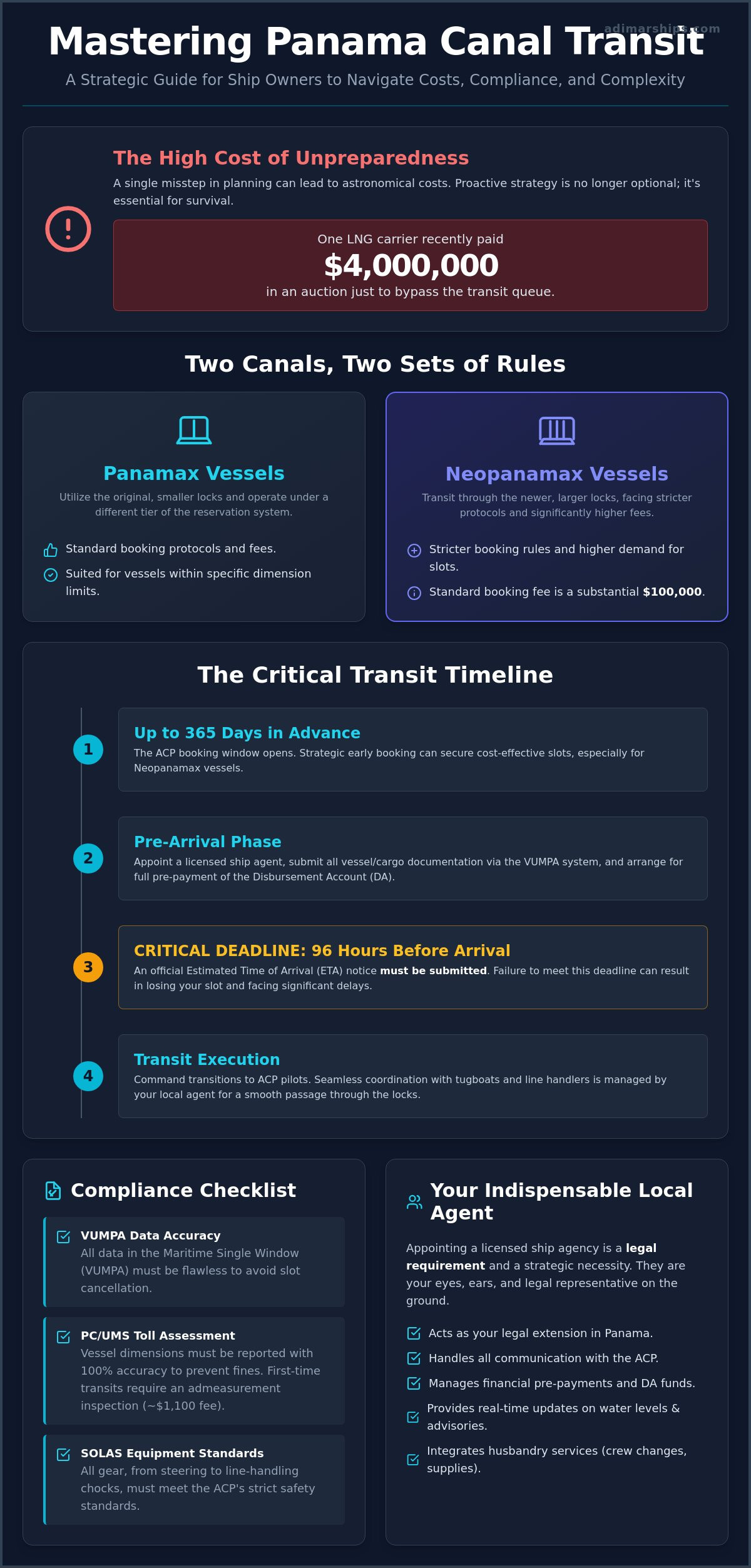
In May 2026, one liquefied natural gas carrier paid $4 million in an auction just to bypass the transit queue. For most ship owners, such astronomical costs are a symptom of logistical breakdowns that could have been avoided with proactive planning. You likely feel the pressure of these rising stakes. You know that arranging a panama canal transit is no longer a routine administrative task; it’s a high-stakes operation where a single documentation error or a missed 96-hour ETA notice leads to expensive delays.
The complexity of the new LoTSA 2.5 program and shifting auction premiums can make even seasoned operators feel like they’re managing the process from a blind spot. This guide will help you master these complexities by providing an expert breakdown of booking strategies, PCSOPEP compliance, and local coordination. We’ll explore the updated 2026 toll structures, the nuances of the Code 1050 reservation system, and how to maintain a predictable schedule while minimizing your operational costs through vigilant local oversight.
Key Takeaways
- Navigate the Panama Canal Authority’s complex framework by understanding the specific technical requirements for Panamax and Neopanamax vessels.
- Secure the most cost-effective slots by mastering the strategic timeline for arranging a panama canal transit and managing pre-payment requirements.
- Prepare for the transition of command to ACP pilots and ensure seamless coordination with tugboats and line handlers during the locking process.
- Maximize your vessel’s time in Panamanian waters by integrating husbandry services, such as crew changes and supplies, during your scheduled transit.
- Reduce the risk of expensive delays and fines by delegating local oversight to a specialized agent who acts as your vigilant representative on the ground.
Navigating the Panama Canal Authority (ACP) Framework
The Panama Canal Authority (ACP) is the autonomous agency of the Government of Panama that manages, operates, and maintains the canal. It functions as the ultimate gatekeeper for all waterway traffic. For any ship owner or charterer, the ACP’s regulations are the primary hurdle to clear. Every vessel movement within these waters is dictated by their Vessel Transit System (VTS), which prioritizes safety and environmental protection above all else. Understanding the History and operations of the Panama Canal provides essential context for why these rules are so rigid today. The ACP isn’t just a regulatory body; it’s a precision-oriented logistics machine that demands total compliance from every vessel entering its jurisdiction.
The first step in arranging a panama canal transit is identifying which set of rules applies to your vessel. The requirements differ significantly between Panamax and Neopanamax ships. Neopanamax vessels, which utilize the newer, larger locks, face stricter booking protocols and higher fees. For instance, a standard Neopanamax booking fee is $100,000, while Panamax vessels operate under a different tier of the Code 1050 reservation system. In 2026, water management remains a critical factor. The ACP has frozen its main toll structure until September 30, 2026, but operational capacity is constantly adjusted based on the water levels of Gatun Lake. This makes real-time data from a local partner indispensable.
Local representation is a legal requirement for foreign vessels. You cannot communicate directly with the ACP to secure a slot or clear your vessel; you must appoint a licensed ship agency. This agent serves as your legal extension in Panama, assuming responsibility for all administrative and financial interactions with the authorities. This isn’t just a formality. It’s a strategic necessity that ensures your vessel doesn’t get sidelined by bureaucratic misunderstandings or documentation errors.
Panama Canal Regulations and Compliance
Ship operators must monitor the ACP’s “Advisories to Shipping” daily. These notices contain vital updates on transit slots, draft restrictions, and new environmental mandates. All clearance documentation is processed through the Maritime Single Window (VUMPA). This digital platform coordinates data between the ACP and Panamanian health, immigration, and customs authorities. For comprehensive oversight of international shipments, many firms also rely on Customs and Trade Logistics to streamline their broader supply chain and regulatory requirements. Your local agent ensures that every entry in VUMPA is accurate, as even minor discrepancies can lead to the cancellation of your hard-won transit slot.
Vessel Dimensions and Toll Assessments
The ACP calculates tolls using the Panama Canal Universal Measurement System (PC/UMS). This formula is based on a vessel’s total volume and type of cargo. Accurate dimension reporting is vital. If a vessel’s actual dimensions differ from its reported data, the ACP may impose heavy fines or reassign the transit to a later date. First-time transits require a mandatory admeasurement fee of approximately $1,100. Local agents coordinate these pre-transit inspections to verify that all equipment, from steering gear to line-handling chocks, meets the ACP’s strict SOLAS-compliant standards.
Pre-Arrival Logistics: Booking Slots and Compliance
Timing isn’t just a factor in arranging a panama canal transit; it’s the foundation of your entire voyage. While the Panama Canal Authority (ACP) allows booking periods to open up to 365 days in advance, the logistical heavy lifting intensifies as your arrival window nears. You must provide an official Estimated Time of Arrival (ETA) notice at least 96 hours before reaching the canal waters. Any delay in this notification can push your vessel to the back of the queue, resulting in daily operational losses that quickly exceed the cost of the transit itself.
Financial readiness is equally critical. The ACP operates on a strict pre-payment basis. They don’t extend credit to ship owners. This means your local agent must receive and process the full Disbursement Account (DA) funds before your vessel is cleared to enter the canal. These funds cover tolls, booking fees, and mandatory ancillary services like tugboats and line handlers. Managing these payments through a trusted partner ensures your capital is handled with transparency and that your transit isn’t stalled by a simple wire transfer delay.
The 5-Step Transit Booking Process
To keep your operation on schedule, follow this chronological sequence for every transit:
- Step 1: Appoint an experienced ship agency Panama to act as your local office and legal representative.
- Step 2: Submit all vessel specifications and cargo manifests through the VUMPA portal to secure initial clearance.
- Step 3: Select your transit slot. You’ll choose between the standard reservation system or the auction market depending on your schedule’s flexibility.
- Step 4: Confirm your PCSOPEP authorized person compliance to meet oil spill response regulations.
- Step 5: Conduct a final equipment check to ensure all chocks, bitts, and navigation lights meet ACP requirements for the boarding inspection.
Managing Transit Slots and Auctions
In 2026, the competition for slots remains intense. If you don’t secure a slot during the initial booking periods, you may have to enter the auction market. In May 2026, premiums for unreserved slots surged as high as $425,000. For Neopanamax vessels, the LoTSA 2.5 program now governs long-term slot allocations, but it carries a steep cancellation fee of 80% if you withdraw within 15 days of transit. Navigating these financial risks requires a vigilant agent who monitors daily slot availability and auction trends on your behalf. If you’re concerned about current slot availability, reaching out for a preliminary consultation can help clarify your options before you commit to a specific arrival date.
Execution: Pilotage, Tugs, and Real-Time Coordination
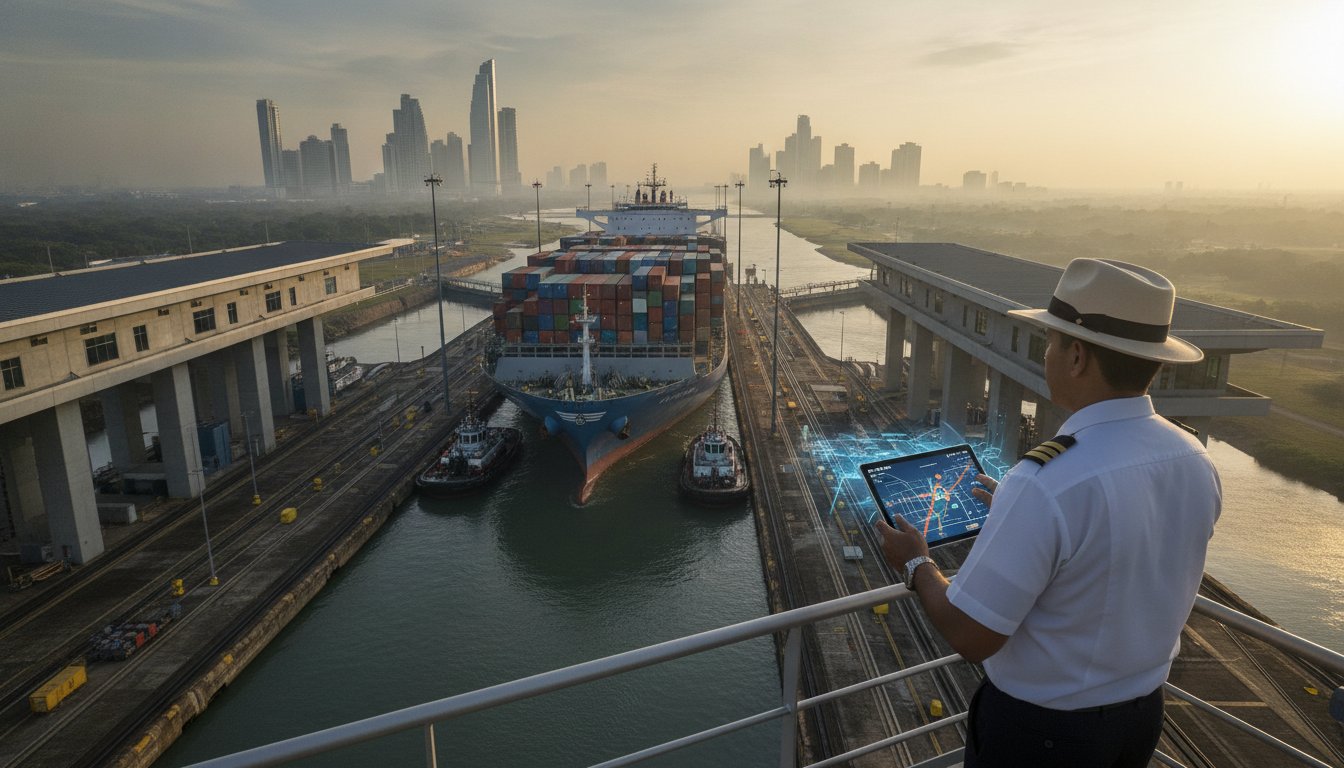
Once your vessel reaches the anchorage at either Cristobal or Balboa, the theoretical phase of arranging a panama canal transit ends and the operational phase begins. The most critical moment of this transition is the boarding of the ACP pilot. Unlike standard maritime practice where the pilot acts as an advisor to the Master, the Panama Canal Authority assumes legal command of the vessel’s navigation during the transit. This shift in responsibility requires the Master and bridge team to maintain a high level of coordination while the vessel maneuvers through complex lock systems and the narrow Culebra Cut.
This operational execution is heavily influenced by the Panama Canal’s transit booking system, which dictates the exact timing of the pilot’s arrival. If the vessel isn’t ready at the precise moment the pilot is scheduled to board, the ACP may cancel the transit slot. This leads to the massive auction premiums and delays mentioned earlier in this guide. Your agent acts as the vital link during this window, ensuring the Master is fully briefed on the latest “Advisory to Shipping” updates that might affect speed or passing protocols within the canal’s channels.
The Role of ACP Pilots and Tugs
The Panama Canal is unique because the pilot has total control over the vessel’s movements. To support this, the ACP deploys a fleet of high-performance tugs that assist with positioning in the locks and navigation through restricted areas. In the Culebra Cut, tug assistance is mandatory for specific vessel sizes to prevent bank suction and ensure safe passing in the narrow channel. Equipment standards are non-negotiable. Vessels must have all line-handling chocks and bitts in perfect working order. Any failure in this equipment during lockage can halt the entire convoy, resulting in steep fines and potential damage to the vessel or the canal infrastructure.
Vigilance on the Ground: Monitoring Progress
While the vessel is in transit, the agent serves as your “eyes and ears” on shore. We track the vessel’s progress in real-time, monitoring lockage times and identifying potential bottlenecks before they cause delays. A typical transit lasts 8 to 12 hours. During this window, 24/7 communication is essential. If the ACP issues a sudden scheduling shift due to weather or technical issues at the locks, the agent proactively manages the fallout. This includes adjusting the timing for husbandry services or crew changes scheduled for the opposite terminal. This vigilant oversight ensures that once the vessel exits the final lock, it can resume its voyage without lingering at the anchorage unnecessarily.
Beyond the Passage: Husbandry and Crew Support
A Panama Canal transit represents one of the most efficient windows in a vessel’s itinerary to address husbandry needs. While the passage itself takes 8 to 12 hours, the time spent at the anchorage or during the slow-speed maneuvers allows for a range of technical and human support services. Treating the transit as a productive stop rather than a simple crossing can significantly reduce your vessel’s overall downtime. When arranging a panama canal transit, successful operators integrate these requirements into the initial planning phase to avoid last-minute logistical friction.
Crew changes are a primary focus at both the Pacific and Atlantic terminals. Panama’s position as a global aviation hub makes it an ideal location for repatriating crew or bringing in fresh personnel. However, the timing is delicate. Your agent must coordinate with immigration authorities and transportation providers to ensure crew members are ready at the exact moment the vessel is accessible. Similarly, the delivery of critical spare parts or technical specialists must be synchronized with the vessel’s ETA to prevent any interference with the ACP’s boarding schedule.
While managing personnel is vital, the logistical efficiency of your voyage also depends on the availability of robust cargo and fuel infrastructure. To explore options for terminal and tank farm storage, you can discover DPP Logistics Company Ltd and their specialized marine transportation services.
Optimizing the Transit Stop
You can arrange essential husbandry services such as fresh water supply, provisioning, and medical assistance without delaying your scheduled passage. Managing Cash to Master (CTM) is another routine requirement that benefits from local oversight, ensuring funds are delivered securely to the vessel. There are also significant operational benefits to combining bunkering in Panama with your transit schedule. By taking on fuel at the anchorage while waiting for your slot, you eliminate the need for a separate port call later in the voyage.
Owner’s Protective Agency (OPA) Roles
In many cases, a charterer will appoint their own agent to manage the transit. However, ship owners often find it necessary to appoint an Owner’s Protective Agency (OPA) to safeguard their specific interests. An OPA acts as a vigilant supervisor, overseeing the charterer’s agent to ensure they are prioritizing the vessel’s safety and the owner’s financial transparency. This includes auditing the final Disbursement Accounts and ensuring that husbandry tasks are performed efficiently. Having an independent set of “eyes and ears” on the ground prevents the owner from being sidelined during complex cargo or transit operations. To ensure your interests are protected throughout the waterway, you can appoint us as your local representative to manage these critical oversight tasks.
Navigating the Canal with Adimar Shipping, Inc.
Success in Panamanian waters during 2026 requires more than technical knowledge; it demands a partner who treats your vessel as their own. Adimar Shipping, Inc. provides that level of commitment. We prioritize ethical conduct and operational excellence in every interaction. By arranging a panama canal transit through our team, you gain a vigilant representative who understands the high stakes of the maritime industry. We don’t just follow the ACP’s rules. We anticipate their shifts, protecting you from the frustration of unexpected demurrage or regulatory fines that often arise from poor local coordination.
Our role is to serve as a proactive extension of your own team. This “vigilant presence” means Adimar Shipping, Inc. is constantly observing the local environment, from water level updates to slot auction surges. We identify risks before they manifest as delays. This grounded, pragmatic approach provides the peace of mind you need to focus on the rest of your voyage. We believe that transparency is the foundation of trust, which is why we provide clear, itemized Disbursement Accounts and honest assessments of the current transit landscape. You aren’t just delegating tasks; you’re securing a regional expert dedicated to your operational freedom.
Your Local Partner in Panama
Our deep-rooted presence in Panama City since our inception allows Adimar Shipping, Inc. to navigate the ACP’s bureaucracy with confidence. We’ve built stable, professional relationships with canal authorities, which translates to faster problem-solving for our clients. Whether you’re managing a fleet of Neopanamax tankers or a single Panamax bulker, our team provides specialized oversight tailored to your vessel’s specific needs. We offer a full suite of Panama Canal transit services, acting as your local eyes and ears from the moment you send your 96-hour ETA notice until you clear the final lock.
Next Steps for Your Transit
Moving forward with your passage shouldn’t be a source of stress. Adimar Shipping, Inc. simplifies the process by providing transparent, accurate transit proformas that detail every anticipated cost, from tolls to ancillary fees. To generate a tailored estimate for your vessel, we only need basic information: the ship’s name, dimensions, current cargo status, and your preferred arrival window. This data allows us to identify the best booking period and potential auction risks for your specific voyage. Our goal is to ensure your transit is predictable, on-schedule, and fully compliant with all 2026 regulations. Contact Adimar Shipping, Inc. today to arrange your next passage.
Securing Your Operational Success in the Panama Canal
The maritime landscape of 2026 requires a level of logistical precision that goes beyond simple administrative checks. You’ve seen how the combination of strategic slot allocations, strict PCSOPEP compliance, and real-time coordination with ACP pilots can determine the financial outcome of your voyage. Arranging a panama canal transit is a complex operation where local vigilance is your most valuable asset. By delegating these specialized tasks to a partner who understands the nuances of the waterway, you protect your vessel from the risks of unexpected auction premiums and bureaucratic delays.
Adimar Shipping, Inc. stands ready to serve as your local office and vigilant representative on the ground. As a specialized Panama Canal agency and authorized PCSOPEP person, we provide the 24/7 local coordination necessary to keep your schedule on track and your costs minimized. Don’t leave your transit to chance in a high-demand environment. Contact Adimar Shipping, Inc. to Secure Your Panama Canal Transit and gain the peace of mind that comes with expert oversight. We look forward to ensuring your next passage is seamless and successful.
Frequently Asked Questions
How far in advance should I arrange a Panama Canal transit?
You should begin the process of arranging a panama canal transit as early as possible, as the booking system allows reservations up to 365 days before your arrival. While long-term planning is ideal, the Panama Canal Authority (ACP) requires a formal Estimated Time of Arrival (ETA) notice at least 96 hours before your vessel reaches canal waters. Early coordination with your agent ensures you can navigate the various booking periods and secure a slot before the competitive auction market becomes the only remaining option.
Is a vessel agent legally required for transiting the Panama Canal?
Yes, the ACP legally requires all foreign vessels to appoint a licensed ship agency to act as their local representative. You cannot interact directly with the ACP to secure clearance, book transit slots, or settle financial accounts. Your agent serves as the essential link for all administrative and operational requirements, assuming legal responsibility for your vessel’s compliance and ensuring that all mandatory pre-payments and documentation are processed through the VUMPA system.
What is the PCSOPEP requirement and how do I comply?
PCSOPEP stands for the Panama Canal Shipboard Oil Pollution Emergency Plan, which is mandatory for vessels with an oil-carrying capacity of 400 metric tons or more. To comply, you must appoint a Panama-based “Authorized Person” who serves as the liaison between your vessel and the ACP during an oil spill. This individual must be available 24/7 and have the authority to initiate response actions and manage the financial obligations associated with a cleanup operation.
How long does a typical Panama Canal transit take from sea to sea?
A typical transit through the Panama Canal takes between 8 and 12 hours to complete from sea to sea. This duration includes the time spent navigating the three sets of locks, the Culebra Cut, and Gatun Lake. However, the total time spent in canal waters is often longer. Vessels must arrive at the anchorage several hours before their scheduled pilot boarding time to undergo mandatory inspections and finalize administrative clearance with the authorities.
Can I book a transit slot without an agent?
No, you cannot book a transit slot without a licensed ship agency. The ACP’s booking and reservation systems are only accessible to authorized local representatives who are registered with the canal’s digital portals. Beyond the technical access, an agent provides the necessary oversight to manage the financial side of the booking. This includes processing high-value reservation fees and managing the risks associated with the auction market and potential cancellation penalties.
What happens if my vessel misses its scheduled arrival time?
If your vessel misses its scheduled arrival window, the ACP will likely cancel your booking slot, which leads to significant financial penalties. Depending on the specific booking program, cancellation fees can be as high as 80% or even 250% of the reservation price. Your vessel will then be forced to transit as a non-booked vessel, which often results in multi-day delays or the need to pay surge premiums in the slot auction market to regain a position.
What are the primary factors that determine Panama Canal fees in 2026?
Panama Canal fees are primarily determined by your vessel’s type, its total volume as measured by the Panama Canal Universal Measurement System (PC/UMS), and whether it’s laden or in ballast. In 2026, additional costs include fixed booking fees, which are $100,000 for standard Neopanamax slots, and mandatory ancillary charges for tugboats, line handlers, and locomotives. Environmental surcharges and on-deck TEU fees for non-container vessels also factor into the final Disbursement Account.
Are there different requirements for Neopanamax vessels?
Yes, Neopanamax vessels face distinct requirements because they utilize the larger Expanded Canal locks. These vessels must adhere to the LoTSA 2.5 program for long-term slot allocations and are subject to higher booking fees and stricter equipment standards for tugboat assistance. Arranging a panama canal transit for a Neopanamax ship involves more complex maneuvering protocols and different draft restrictions compared to smaller Panamax vessels that use the original 1914 locks.