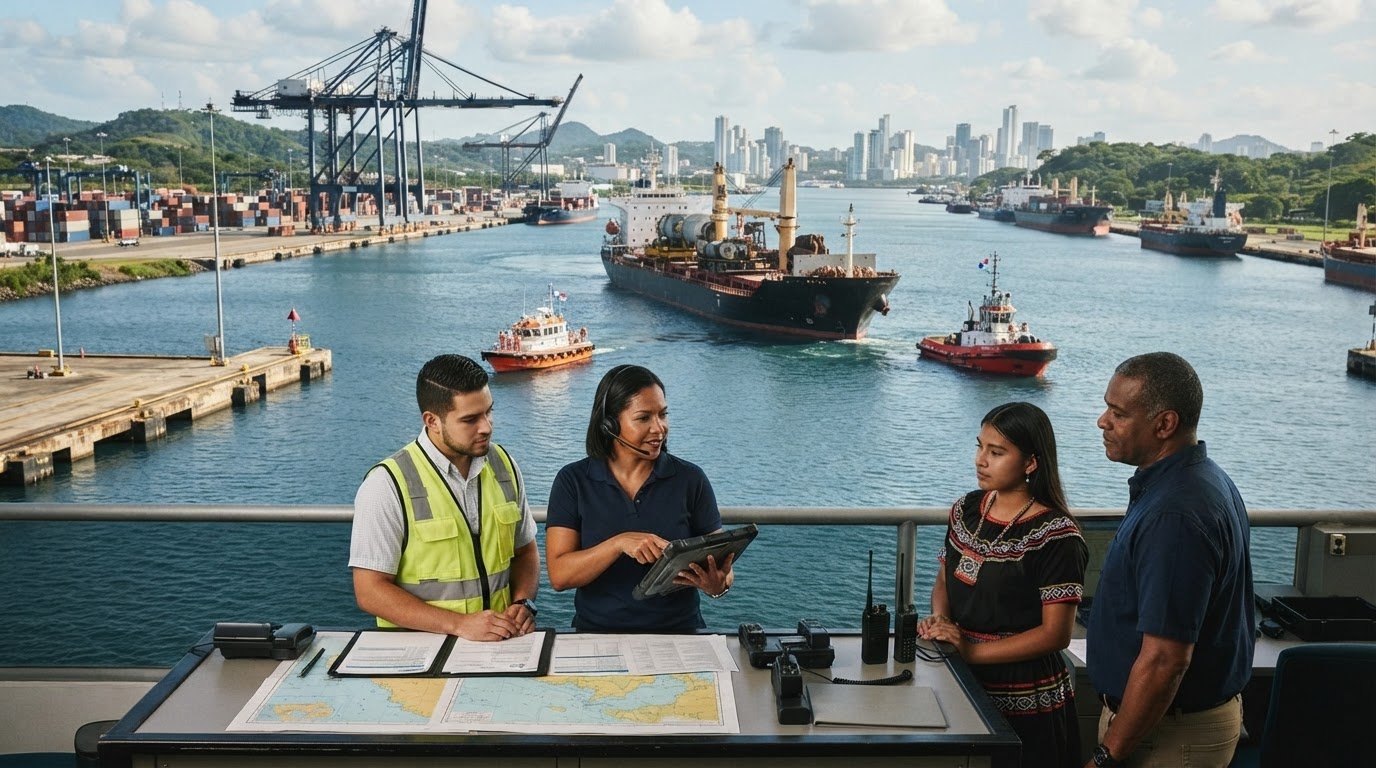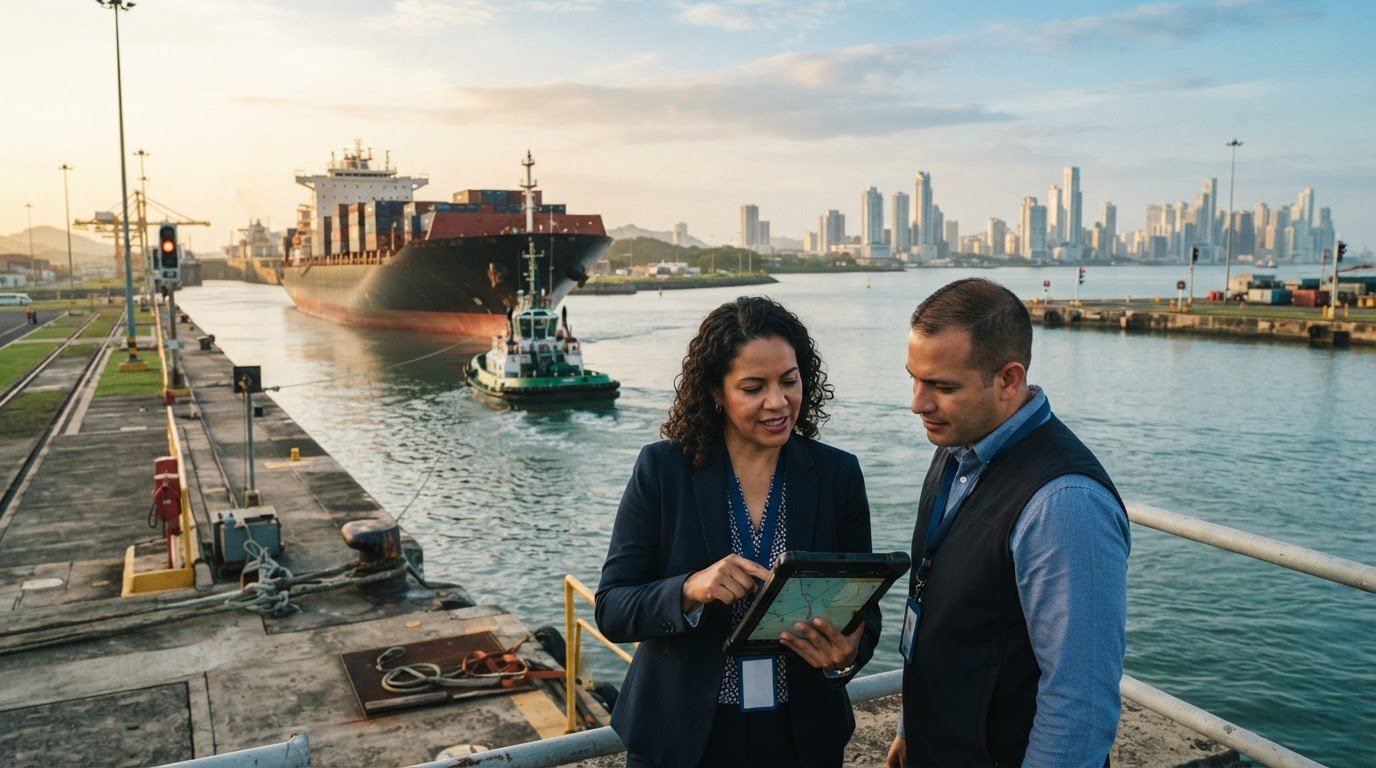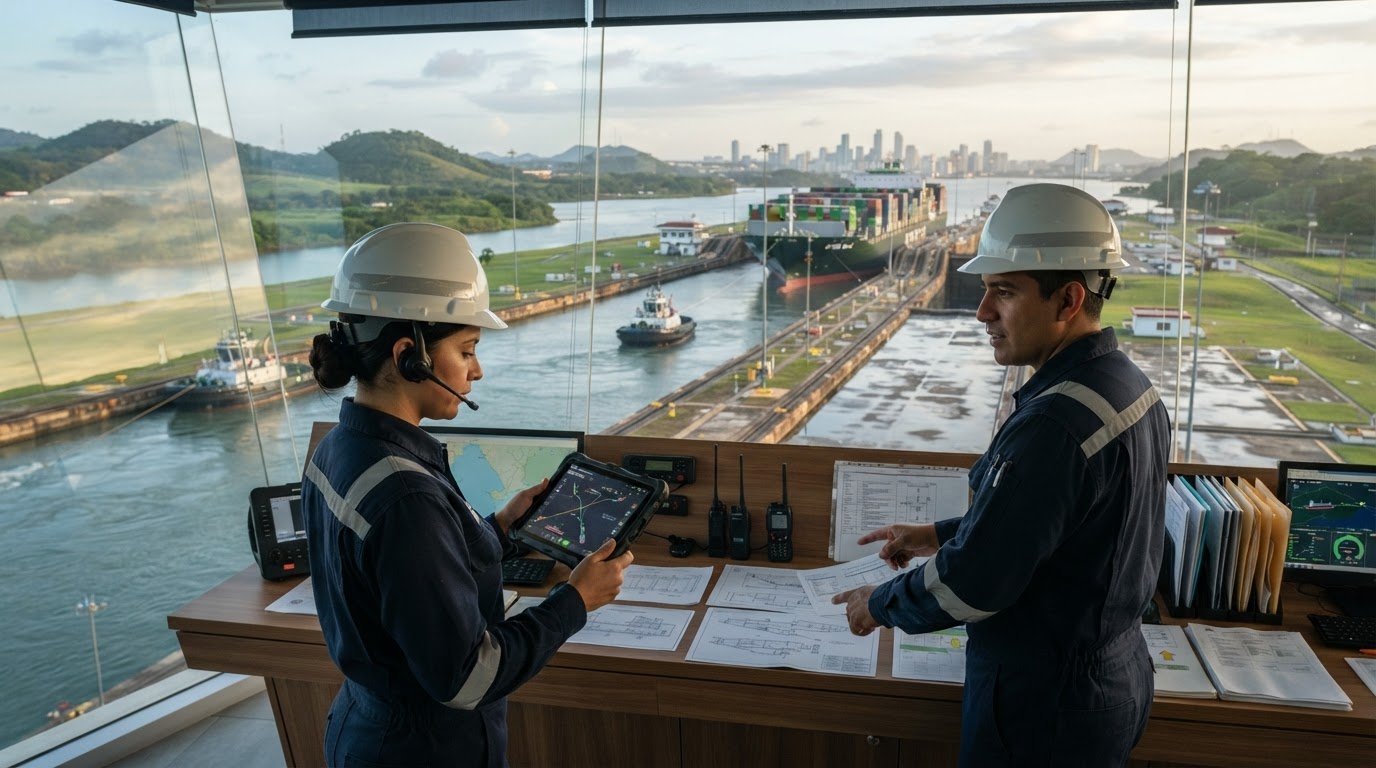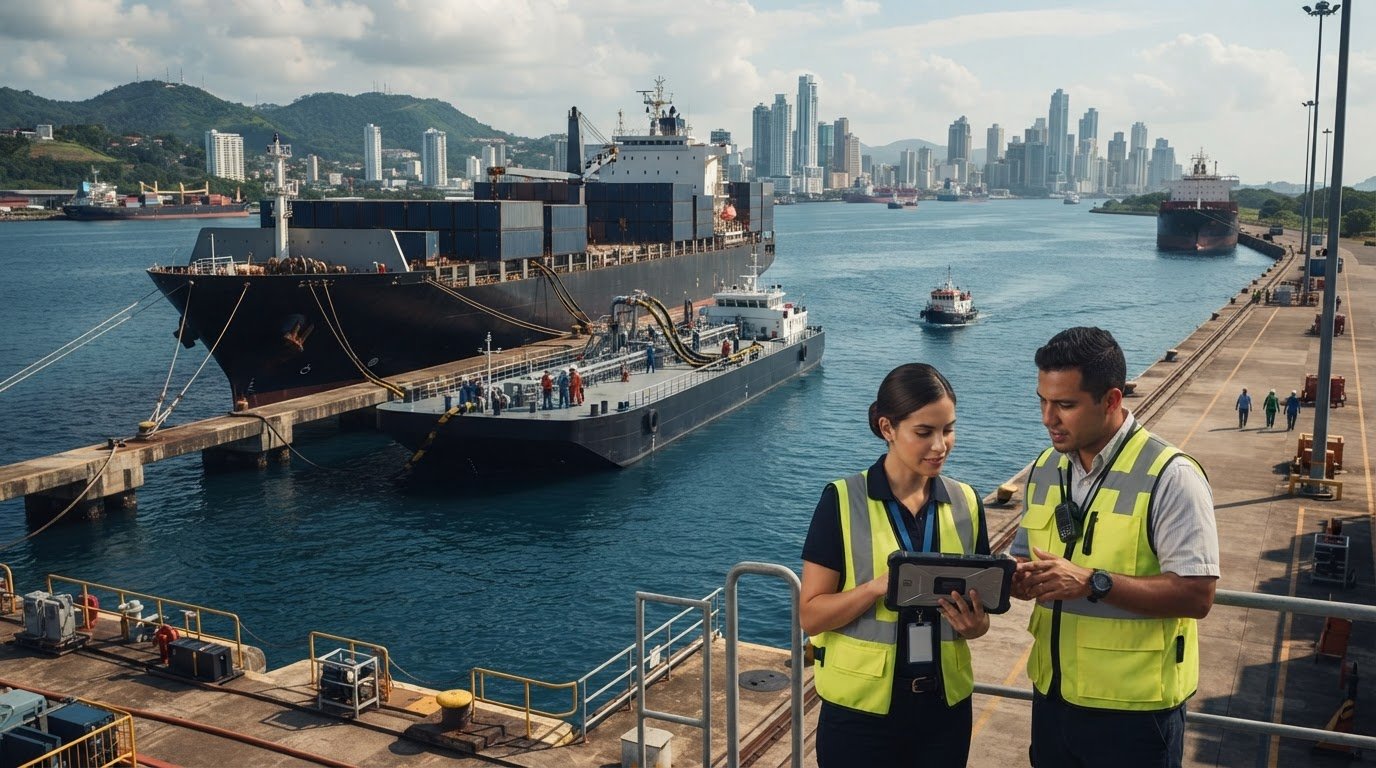

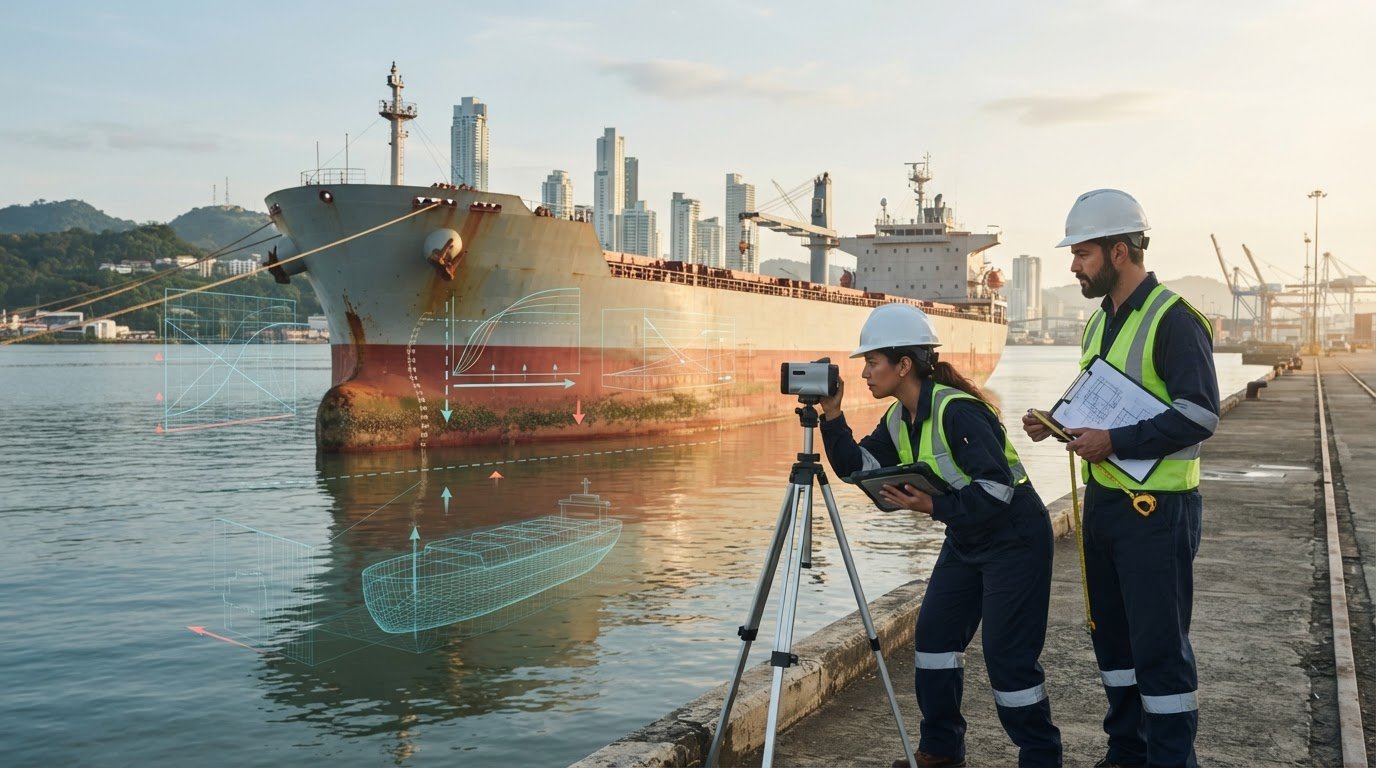
How can a draft survey provide a reliable cargo quantity assessment without disrupting a vessel’s port call or canal transit? It takes more than reading the vessel’s draft marks. Sound measurements, accurate supporting information, and careful timing all matter. For operators arranging husbandry services panama, fitting survey activity around loading, discharge, and other vessel operations is part of the planning challenge.
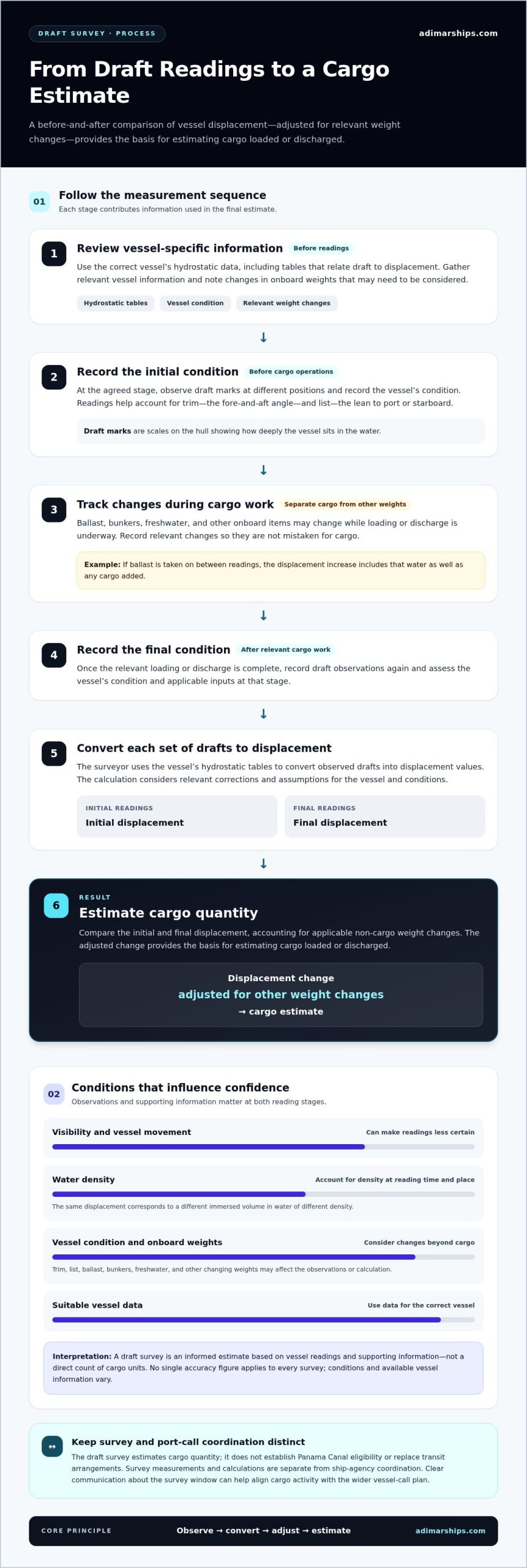
It’s reasonable to ask how readings translate into cargo quantity, especially when water density, vessel condition, or changing onboard weights could affect the calculation. A draft survey provides a structured estimate, but its reliability depends on the observations and information used. Understanding the method and its limitations helps operators prepare and interpret the results.
This guide explains the survey process, factors that can affect its accuracy, and vessel details worth preparing in advance. It also covers how clear local coordination can help keep activities aligned with the operational plan. Adimar Shipping, Inc. supports vessel operations in Panama through ship agency and husbandry services, including transit clearance, pilot and tug orders, and transit documentation. Survey measurements and calculations remain a separate responsibility.
Key Takeaways
- Learn what a draft survey can estimate from changes in vessel displacement, and how before-and-after readings support cargo assessment.
- Follow the main steps, from reviewing vessel data to calculating displacement change with vessel-specific hydrostatic information.
- Recognize how visibility and changes in vessel condition affect confidence in readings, and compare survey estimates with cargo records according to their purpose.
- Prepare vessel, cargo, and operational information before readings begin to support a smoother port-call plan.
- See how husbandry services panama and local agency coordination can help align vessel-call communications and transit arrangements, while keeping agency work distinct from survey measurement.
What Is a Draft Survey in Panama, and What Can It Establish?
A draft survey estimates cargo quantity by comparing a vessel’s displacement before and after cargo operations. It can help operators assess how much cargo was loaded or discharged, but it doesn’t count individual bags, containers, or other units. The result is an estimate based on vessel readings and supporting information, not a direct measurement of each item.
What does a draft survey measure?
Displacement is the weight of water a vessel displaces, corresponding to the vessel’s total weight at that moment. A surveyor observes the vessel’s draft marks, the scales on the hull that show how deeply the ship sits in the water. Using those readings and the vessel’s hydrostatic data, such as tables relating draft to displacement, the surveyor can estimate displacement at each stage.
The change between the initial and final displacement readings provides the basis for estimating cargo quantity. The calculation also uses relevant vessel information and accounts for weight changes unrelated to cargo. For a foundational overview of the method and its principles, see What Is a Draft Survey.
When might a Panama vessel call involve a draft survey?
Operators may arrange readings before and after loading or discharge when they need an independent estimate of the cargo quantity handled. For example, readings taken before and after loading can help estimate the increase in the vessel’s displacement. The purpose and timing depend on the operation. A draft survey isn’t automatically part of every port call.
A port-call survey is distinct from Panama Canal transit requirements. The survey estimates cargo quantity; it doesn’t establish canal eligibility or replace transit arrangements. Keep the two workstreams separate when planning the vessel’s schedule.
Accuracy depends on sound observations, suitable vessel data, and assumptions that reflect the vessel’s condition. The final figure is an informed estimate, not an exact count of cargo units. Clear communication about the survey window helps align cargo operations with other call activities. In Panama, husbandry services panama can support broader vessel-call coordination, while survey measurements and calculations remain separate.
How a Panama Draft Survey Turns Vessel Readings into an Estimate
A draft survey follows a sequence: review vessel data, observe draft marks, assess conditions that may affect readings, then calculate the change in displacement. Wärtsilä’s technical definition of a draft survey describes the method’s marine context. In practice, the calculation relies on vessel-specific data and conditions at each reading.
Before-and-after readings are compared because the change in displacement, adjusted for other weight changes, provides the basis for estimating cargo loaded or discharged. The surveyor uses the vessel’s hydrostatic tables to convert observed drafts into displacement values. These tables link a vessel’s draft to its weight in the water, so using data for the correct vessel is essential. The calculation also considers relevant corrections and assumptions. There isn’t one universal formula for every vessel and situation.
Which vessel and environmental inputs matter?
Draft marks show how deeply the vessel sits in the water. Readings at different positions help account for trim, the vessel’s fore-and-aft angle, and list, its lean to port or starboard. Poor visibility, vessel movement, or changes in condition can make observations less certain.
Water density matters because the same vessel displacement corresponds to a different immersed volume in water of different density. The survey calculation accounts for density at the time and place of the readings. Onboard weights matter too: ballast, bunkers, freshwater, and other items may change during cargo work. Those changes must be considered so they aren’t mistaken for cargo.
How are initial and final readings compared?
Initial readings are recorded at the agreed stage before cargo operations, and final readings after the relevant loading or discharge is complete. At each stage, the surveyor records draft observations and assesses the vessel’s condition and relevant inputs. The resulting displacement figures are compared, accounting for applicable non-cargo weight changes.
For example, if ballast is taken on between readings, the increase in displacement includes that water as well as any cargo added. The calculation must distinguish between the changes rather than attributing the full difference to cargo. Reliable records and clear timing help all parties understand what the estimate represents. No single accuracy figure applies to every survey because measurement conditions and available vessel information vary.
Survey calculations are separate from ship-agency coordination. For operators arranging husbandry services panama, clear communication around cargo activity and the wider port call helps keep operational plans aligned. Adimar Shipping coordinates vessel operations in Panama, including canal transit clearance, pilots, tugs, and transit documentation. Learn more about ship agency coordination in Panama.
Draft Survey Methods and Limits: What Panama Operators Should Compare
A draft survey and a cargo tally answer related but different questions. A draft survey estimates cargo quantity from changes in vessel displacement. A tally records cargo units handled or measures cargo directly, while cargo documents describe the shipment and its declared quantities. Comparing each record according to its purpose gives operators a fuller picture without treating them as interchangeable proof.
A single draft reading can’t establish how much cargo is aboard. It captures the vessel’s condition at one point in time. Interpreting it requires suitable vessel information and observations. The useful comparison is between readings taken at relevant stages, considered alongside changes in other onboard weights and cargo-operation records.
Draft survey versus cargo tally and documents
Think of each record as a separate checkpoint. Draft survey results provide a vessel-based estimate; tally records track cargo handled; and cargo documents provide the declared or recorded shipment context. If the survey estimate differs from tally totals, review the timing, scope, and assumptions before drawing conclusions. One record doesn’t automatically invalidate the others.
For example, a tally may count units moved during an operation, while a draft survey compares the vessel’s displacement before and after it. Differences in what each record covers, or when its figures were captured, can affect how closely the results align. Compare like with like and keep the assessment specific to the operation.
What can make a draft survey less certain?
Poor visibility and vessel movement can make draft marks harder to observe consistently. Changes in trim or list, or other changes to vessel condition between readings, also complicate comparison. Changes in ballast, bunkers, freshwater, or other onboard weights can do the same if they aren’t recorded and considered. Incomplete vessel data may limit how confidently observed drafts can be translated into displacement.
Inconsistent readings call for careful interpretation, not a forced single figure. The record should state which observations were taken, what conditions were present, which weight changes were considered, and what assumptions informed the calculation. That context helps cargo and vessel teams understand both the estimate and its limits.
For a Panama call, align the survey window and cargo records with the vessel’s operating schedule. Keep survey measurement separate from agency coordination. A local ship agent can support vessel-call communications and transit arrangements; husbandry services panama refers to broader operational support, not survey measurement or calculation.
How to Prepare for a Draft Survey During a Panama Port Call
Good preparation improves completeness and clarity, giving the survey team and vessel stakeholders a shared basis for interpreting the readings. Before the survey window, gather the vessel information, cargo records, and schedule details needed to understand the vessel’s condition at each observation.
Information to have ready before readings
Organize relevant documents and responsibilities in advance. Use this checklist:
- Vessel data: Current vessel particulars and the correct hydrostatic tables for converting observed drafts into displacement.
- Reading references: Draft-mark locations and any vessel information needed to interpret observations, including trim or list.
- Weight records: Available records for ballast, bunkers, freshwater, and other onboard weights that may change during cargo operations.
- Cargo records: Documents and tally information relevant to the loading or discharge being assessed.
- Communication roles: Identify who records or shares observations and how updates will reach the master, operator, and cargo stakeholders.
Review the information for gaps or inconsistencies before readings begin. If a table, record, or reference is missing or doesn’t appear to match the vessel, flag the issue early. Clear documentation lets the results be interpreted transparently instead of leaving teams to resolve uncertainties after the operation.
Coordinate survey activity with the vessel call
Agree on a survey window that fits the planned cargo operation and vessel movements. Loading or discharge progress, changes in onboard weights, and other call activities can affect when readings are meaningful. Keep the master, operator, cargo stakeholders, and local representatives informed about the planned sequence and schedule changes, so everyone is working from the same plan.
In Panama, the vessel’s wider schedule may also include canal transit arrangements. Survey activity and transit coordination are separate workstreams, but both benefit from timely, consistent communication. For an overview of the transit process, see the guide to Panama Canal transit.
Adimar Shipping coordinates vessel operations in Panama, including transit clearance, pilot and tug orders, and transit documentation. For broader port-call support, coordinate your Panama vessel call with Adimar Shipping. Ship-agency and husbandry services panama help keep operational communications aligned; draft survey measurements and calculations remain distinct from agency coordination.
Local Agency Coordination Around Draft Survey Operations in Panama
Draft survey observations and calculations belong to the survey process. Ship-agency work supports the vessel call around it. Keeping these responsibilities distinct helps operators understand who handles cargo-quantity findings and who coordinates vessel communications, transit arrangements, and related agency tasks.
Where local ship-agency coordination fits
A local ship agent helps keep the vessel’s operational schedule and relevant stakeholders aligned as plans develop. If cargo work affects the vessel’s expected movements or timing, clear updates help the operator coordinate the wider call. The agent doesn’t produce or validate draft-survey measurements; survey results remain separate from transit-clearance tasks.
Adimar Shipping coordinates Panama Canal transit clearance, pilot and tug orders, and transit documentation. These arrangements form part of the vessel’s broader operational plan alongside port-call activities. For more context on the local agency role, see the Panama Canal ships agent guide.
Plan the wider Panama operation with clear communication
Operational details can change during a vessel call. Timely updates about cargo progress, movement plans, or the status of arrangements help the master, operator, and other stakeholders work from the same information. This matters when several activities need to fit within the vessel’s schedule. Clear communication won’t replace survey records, but it can prevent confusion between measurement activity and other vessel operations.
For institutional context, review the Panama Canal Authority guide. The Panama Canal Authority manages canal operations, while a ship agent coordinates arrangements on behalf of the vessel’s interests. Understanding the distinction helps teams direct questions and updates appropriately.
Adimar Shipping is based in Panama and provides ship-agency, husbandry, and protective-agency services. Husbandry support includes vessel and crew needs such as crew changes and provisioning. If you’re planning Panama Canal vessel operations, Adimar Shipping can coordinate agency arrangements and communications. This support helps organize transit matters; it doesn’t include performing the draft survey itself.
Put Your Panama Vessel Plan on a Clear Course
A draft survey estimates cargo quantity by comparing vessel displacement before and after operations. Its reliability depends on suitable vessel data, careful observations, and transparent assumptions. Compare the estimate with tally records and cargo documents according to their purpose, and document conditions that could affect the readings.
Preparation matters too. Have relevant vessel and weight records ready, clarify who shares updates, and fit survey activity into the wider port-call schedule. Keep survey measurement separate from agency coordination so each task has clear ownership.
For operators managing husbandry services panama and canal-related arrangements, Adimar Shipping provides local ship-agency coordination from Panama City. The team coordinates Panama Canal transit clearance, pilot and tug orders, and required transit documentation, helping keep vessel communications aligned with the operational plan.
Discuss Panama Canal agency support for your vessel. Clear information and local coordination help you plan your next Panama call with confidence.
Frequently Asked Questions
What is a draft survey in shipping?
A draft survey estimates cargo quantity by comparing a vessel’s displacement before and after cargo operations. A surveyor reads the draft marks and uses vessel-specific hydrostatic information to interpret those readings, while accounting for relevant conditions and changes in onboard weights. It doesn’t directly count cargo units. For a useful result, the survey record should state the observations, assumptions, and limitations that may affect interpretation.
How is a draft survey calculated?
The calculation starts with vessel particulars and hydrostatic data, then uses draft observations taken at the relevant survey stages. The surveyor considers factors such as trim, list, and water density when interpreting the readings. Displacement before and after cargo work is compared, with relevant onboard weight changes also considered. The difference supports an estimate of cargo loaded or discharged. Exact calculation steps depend on the vessel and survey conditions.
How accurate is a draft survey?
There isn’t one accuracy figure that applies to every draft survey. Reliability depends on the quality and consistency of draft observations, available vessel data, environmental conditions, and records of onboard weight changes. Poor visibility or incomplete information can make the result less certain. A clear report documents readings, assumptions, and limitations, allowing commercial teams to assess the estimate alongside cargo records rather than treating it as an exact cargo count.
When is a draft survey conducted during cargo operations?
A draft survey may be conducted before and after loading or discharge to compare the vessel’s displacement at each stage. Timing depends on the operation and vessel circumstances. Teams should coordinate readings with cargo activity and record relevant changes to ballast, bunkers, freshwater, or other onboard weights between observations. That context helps distinguish cargo-related changes from other factors that may affect the displacement comparison.
Is a draft survey required for Panama Canal transit?
Don’t assume a draft survey is a universal Panama Canal transit requirement. A survey estimates cargo quantity, while canal transit procedures serve a separate operational purpose. Requirements may depend on the vessel, cargo operation, and applicable instructions for the specific call. Consult current official Panama Canal instructions, and keep transit requirements distinct from commercial measurement practices or cargo documentation.
What information is needed for a draft survey in Panama?
Useful information commonly includes current vessel particulars, vessel-specific hydrostatic data, draft-mark references, and records of relevant onboard weights. Teams also need a clear plan for when observations will be taken, who records them, and how operational updates will be shared. For operators coordinating husbandry services panama, organized vessel-call communications support schedule alignment, while survey records should identify missing information or assumptions.
Can a draft survey replace cargo tally records?
No. A draft survey estimates cargo quantity from changes in vessel displacement, while tally records count or measure cargo handled. They provide different information and shouldn’t automatically be treated as substitutes. Compare their scope and timing: a tally may record units moved during an operation, while the survey reflects the vessel’s condition at specific reading stages. Reviewing both with their assumptions documented can help explain differences in reported figures.