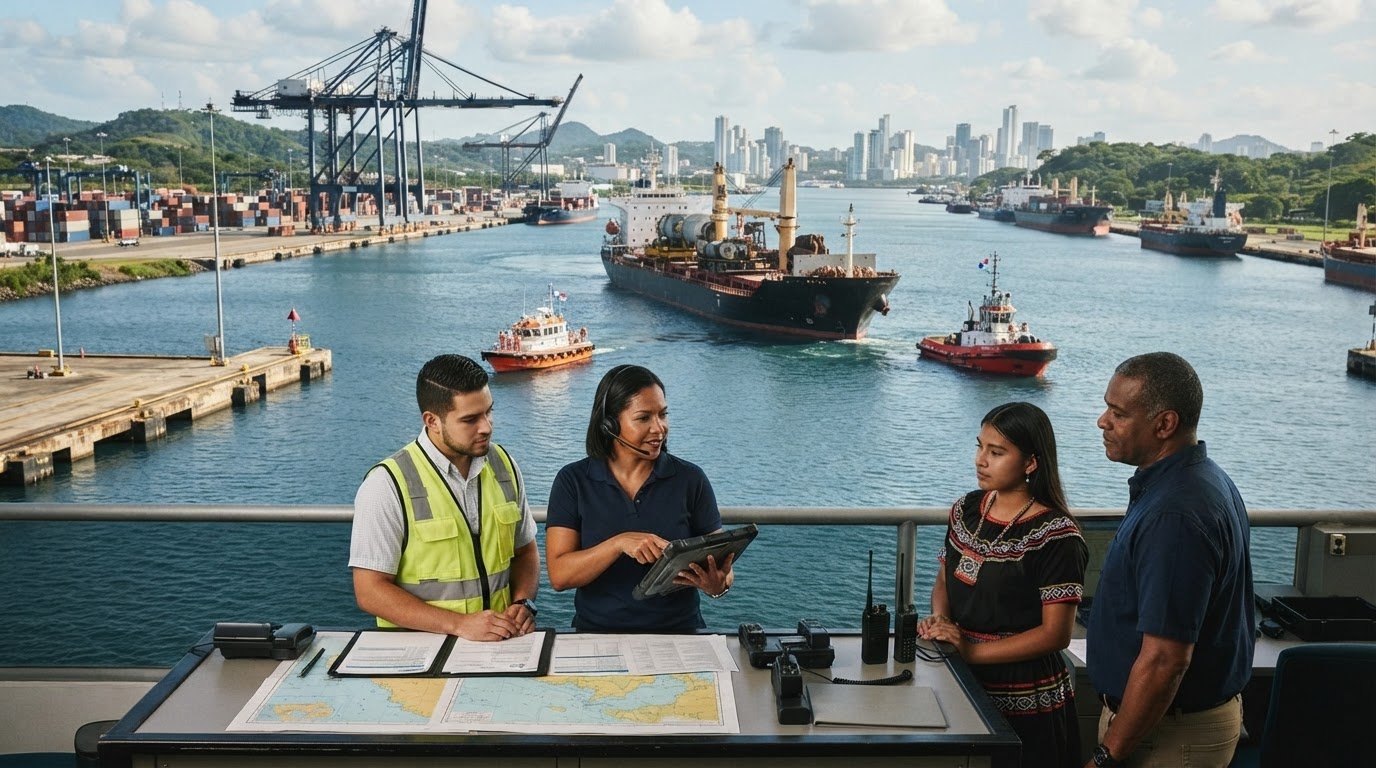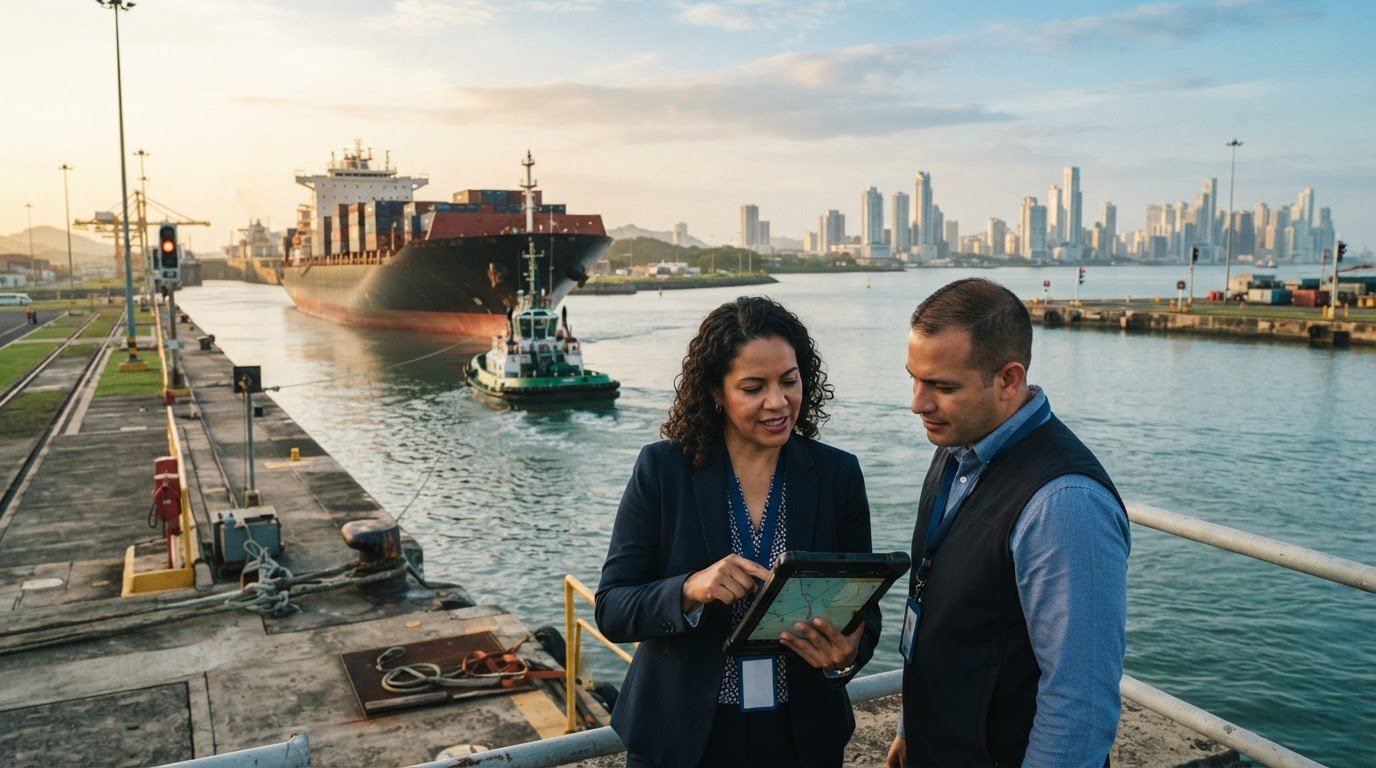


For operators planning crew travel and accommodation Panama, the itinerary must connect flight arrivals, shore-side arrangements, handovers, and overnight stays with the vessel’s actual position and schedule. Treating flights and lodging as separate tasks can leave a crew movement out of step with operations, even when each booking looks correct on its own.
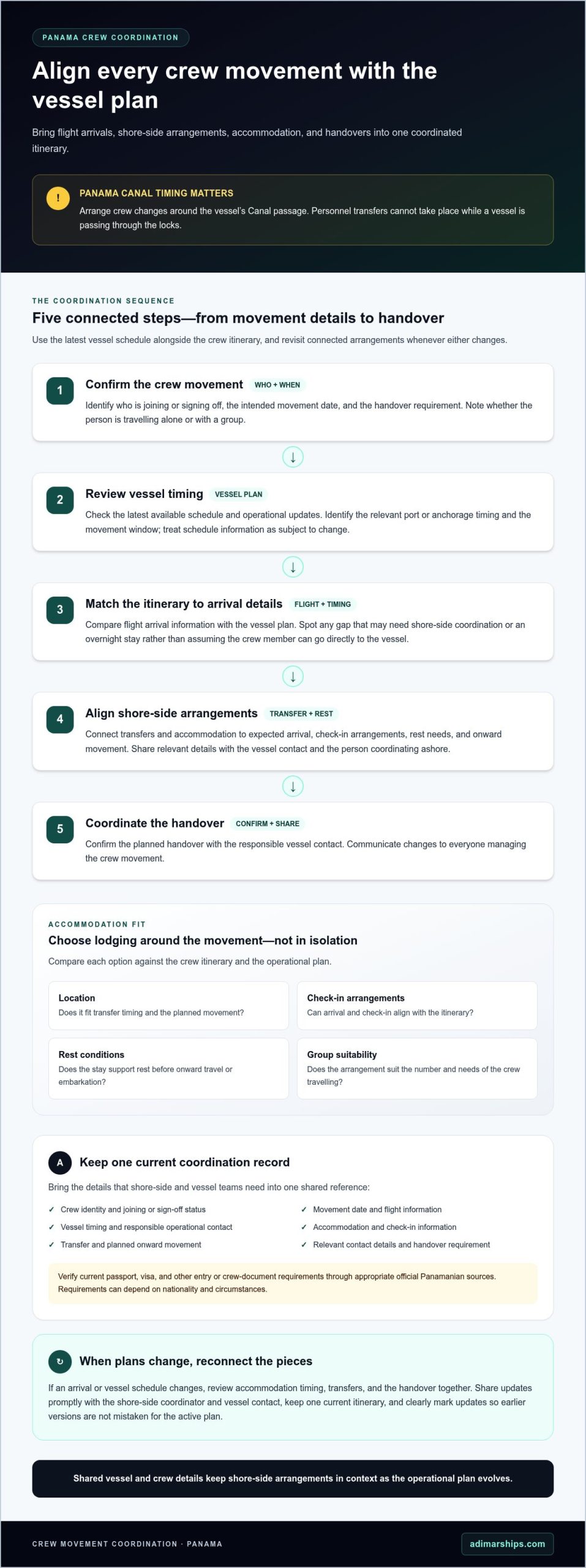
A hotel’s location can affect transfer timing, while a change in the vessel schedule may disrupt a planned handover. In Panama, crew changes also need to be arranged around the vessel’s Canal transit, since personnel transfers can’t take place while a vessel is passing through the locks.
This guide explains how to plan crew movements around vessel operations, compare accommodation against arrival times and transfer needs, and keep coordination clear when teams are working remotely. It also explains how a Panama-based ship agency can support crew-change coordination through husbandry services. Connecting crew details with the wider vessel schedule helps keep shore-side arrangements in context.
Key Takeaways
- Plan crew movements and accommodation as connected parts of vessel husbandry, with rest and handover timing built into the itinerary.
- Use the vessel schedule, crew itinerary, and arrival information to create a clear coordination workflow for crew travel and accommodation panama.
- Compare lodging options by location, check-in arrangements, rest conditions, group suitability, and fit with the movement plan.
- Use a practical checklist to keep itinerary details, vessel contacts, accommodation information, and schedule changes aligned.
- A Panama-based ship agency can coordinate crew changes within wider vessel and crew requirements through husbandry services.
Crew travel and accommodation in Panama: how the pieces fit together
Crew travel and lodging are connected parts of a vessel’s husbandry requirements. A flight itinerary is only one part of the movement. The plan may also need to account for arrival, transfer timing, a place to rest, the crew handover, and onward travel. The practical goal of crew travel and accommodation panama planning is to fit shore-side arrangements to both the vessel’s schedule and the crew member’s itinerary.
This is operational planning, not leisure travel. A joining crew member may need accommodation before embarking; a signing-off crew member may need to rest while waiting for onward travel. Layovers, revised arrival times, or changes to the vessel plan can affect when a room is needed and for how long. Since each itinerary and handover differs, use the specific movement and vessel plan to shape the arrangements rather than relying on a standard setup.
Which crew movements need accommodation planning?
Start with the crew movement. Joining personnel may arrive before the vessel is ready to receive them, while signing-off personnel may leave the vessel before their flight departs. Either movement can involve an overnight stay, depending on timing. A delayed flight or vessel schedule change can also affect check-in, rest time, and onward travel. Keep accommodation details tied to current arrival and vessel information, and revisit the plan when either changes.
Why Panama-specific coordination matters
Panama City is a key shore-side point for many crew itineraries, while vessel movements may be tied to operations at the Panama Canal. The Panama Canal Authority oversees the Canal, making transit timing an important planning input. Crew changes must be arranged around the vessel’s passage, not during its transit through the locks. Shore-side timing therefore needs to fit the vessel’s operational plan.
Crew logistics are the coordinated operational process of aligning crew arrivals, shore-side arrangements, handovers, and onward movements with a vessel’s schedule.
Local coordination connects those moving parts. A Panama-based ship agency such as Adimar Shipping, Inc. supports operators, owners, and charterers with crew-change coordination as part of wider husbandry requirements. Bringing vessel and crew details into the same coordination process helps reduce fragmented communication and makes schedule changes easier to manage. The next step is to turn those inputs into a clear sequence for each movement.
How to coordinate crew travel around Panama vessel schedules
Build the crew itinerary around the vessel plan, then update it as operational details change. Keep flights, shore-side arrangements, accommodation, and the shipboard handover in one coordination flow. This makes timing conflicts easier to spot early, without assuming that every connection or transfer will go as planned.
A practical coordination workflow
- Confirm the movement. Identify who is joining or signing off, the intended movement date, and the handover requirement. Note whether the crew member is travelling alone or as part of a group.
- Review vessel timing. Use the latest available vessel schedule and operational updates to identify the relevant port or anchorage timing and the window for the crew movement. Treat schedule information as subject to change.
- Match the itinerary to arrival details. Compare flight arrival information with the vessel plan. Identify any gap that may require shore-side coordination or an overnight stay instead of assuming the crew member can proceed directly to the vessel.
- Align shore-side arrangements. Connect transfer and accommodation details to the itinerary, including expected arrival, check-in arrangements, and onward movement. Share the relevant details with the vessel contact and the person coordinating ashore.
- Coordinate the handover. Confirm the planned handover with the responsible vessel contact, then communicate any changes to everyone managing the crew movement.
What information supports a workable crew itinerary?
Start with accurate, usable details. The coordination record should identify each crew member, movement date, joining or sign-off status, flight information, and relevant contact details. Include vessel timing, the responsible operational contact, accommodation information, and planned onward movement. Before travel, verify current passport, visa, and other entry or crew-document requirements through the appropriate official Panamanian sources. Requirements can depend on nationality and circumstances, so don’t rely on an outdated itinerary or general assumptions.
How to manage changes without losing coordination
Share updates promptly with the people who need to act on them, including the shore-side coordinator and vessel contact. When an arrival changes, review connected arrangements together: accommodation timing, transfers, and the handover may all need attention. Keep one current version of the itinerary, mark updates clearly, and make sure earlier versions aren’t mistaken for the active plan.
A single coordinated itinerary gives shore-side and vessel teams one shared reference as crew plans change. For operators managing crew movements as part of wider vessel requirements, Adimar’s Panama husbandry coordination provides a local agency point of coordination.
Comparing crew accommodation options in Panama
The right lodging choice depends on the crew movement, not a property’s leisure features. For crew travel and accommodation panama, assess each option against the itinerary: where the crew needs to be, when they’ll arrive, how long they need to rest, and what onward movement follows. The table is a practical comparison, not a ranking. Individual properties and arrangements vary.
| Accommodation type | Location and transfer fit | Check-in and rest | Group suitability |
|---|---|---|---|
| Hotel | Can suit a short stay if its location works with the crew’s arrival point and planned onward movement. | Confirm arrival and check-in arrangements against the flight itinerary; a private room can support rest between movements. | May work for individuals or smaller groups, depending on room capacity and booking arrangements. |
| Serviced apartment | Consider practical access to the next transfer point, rather than choosing solely for neighbourhood appeal. | May suit a longer layover, but access and check-in arrangements should fit the arrival timing. | Can be worth considering for a group or extended stay if the layout fits the crew’s needs. |
| Other suitable lodging | Assess the location in relation to the specific Panama itinerary and vessel movement. | Check that the planned arrival, rest period, and departure can be accommodated. | Suitability depends on group size, privacy needs, and the duration of the stay. |
Which accommodation criteria matter most to crews?
Start with practical access. A property that looks convenient on a map may not fit the route or movement timing. Consider arrival time, luggage, time available for rest, and whether several crew members are travelling together. Check how check-in fits the itinerary and how a timing change would affect the arrangement. Flexibility can help when plans shift, but don’t assume it is guaranteed. A workable location, clear access arrangements, and suitable conditions for rest matter more than leisure amenities.
How accommodation needs differ by crew movement
Joining crew may need a place to rest before proceeding to the vessel. Signing-off crew may need lodging while waiting for departure. For a short overnight stay, focus on arrival, rest, and the next movement. A longer layover may call for closer attention to privacy, group arrangements, and the crew’s ability to recover. In either case, include welfare and adequate rest in the plan. Treat specific amenities or arrangements as details to establish in the itinerary, not assumptions.
Choose lodging as one element of a coordinated movement plan. That keeps the decision grounded in crew timing and vessel requirements, rather than amenities alone.
A practical Panama crew-travel planning checklist
Use this checklist to keep each shore-side arrangement tied to the latest vessel plan. A flight, room, or transfer confirmed against an outdated schedule can leave a crew movement out of step with operations. For crew travel and accommodation panama, maintain one itinerary that shows who is moving, when they are moving, and which contacts need to know about changes.
Before crew arrival in Panama
- Confirm the movement: Record crew names, arrival and departure dates, joining or sign-off instructions, and the current vessel schedule. Identify the operational contact responsible for coordinating the movement.
- Match accommodation to timing: Note expected arrival, check-in arrangements, intended rest period, and onward movement. Revisit the plan if flight or vessel timing changes.
- Review travel documents: Check the applicable passport, visa, and crew-document requirements through official Panamanian sources. Requirements can depend on the traveller and circumstances, so use current authoritative guidance.
- Share key details: Keep vessel and shore-side contacts aligned on the itinerary, accommodation information, and planned transfer arrangements.
During a crew change or schedule adjustment
Tell the relevant vessel, crew, and shore-side contacts promptly when a material detail changes. Then reconcile the new timing across the itinerary, accommodation, and transfer arrangements. Don’t update one item in isolation: a revised arrival may affect the room plan and handover sequence. Keep a clearly dated, current version of the arrangements so the team can distinguish it from earlier plans.
If the crew movement is tied to Canal operations, include the vessel’s transit context rather than treating the shore-side itinerary as independent. The Panama Canal transit guide provides further context for ship operators coordinating around transit schedules.
Final confirmation before movement
- Recheck the latest vessel timing and the intended joining or sign-off point.
- Confirm that flight details, accommodation timing, and transfer arrangements reflect the same itinerary version.
- Ensure each responsible contact knows how updates will be communicated and who is coordinating the next handover.
- Record outstanding changes clearly, rather than relying on informal or scattered messages.
This structure supports a clearer handoff between the shore-side team and vessel contacts. For a broader view of how crew movements fit within vessel support, see ship husbandry services in Panama. To coordinate crew-related requirements as part of husbandry in Panama, work with Adimar’s local ship agency team.
How Adimar coordinates crew-related husbandry in Panama
A crew change is one part of a vessel’s wider Panama call. Flight details, movement dates, vessel timing, and handover requirements need to be considered together so everyone involved is working from the same operational picture. As a Panama-based ship agency, Adimar Shipping, Inc. supports ship operators, owners, and charterers with husbandry services that include crew-change coordination.
Adimar’s local agency role provides an on-the-ground point of coordination for crew-related vessel requirements. Bringing vessel requirements and relevant shore-side details into a clearer line of communication helps prevent information from being scattered across separate conversations. It also supports coordination as the vessel plan evolves, without treating any schedule as fixed.
What a local agency contributes to crew coordination
Coordination starts with the vessel’s requirements and the crew movement: who is joining or signing off, the expected dates, the relevant vessel contact, and any operational details that affect the handover. Adimar works as a local partner between the vessel representative and relevant shore-side parties, connecting crew-change coordination with the wider vessel call. Clear, current information helps keep the arrangements aligned with the movement and operational plan.
This is the practical value behind crew travel and accommodation panama: consider crew movements in relation to vessel operations, not as isolated travel plans. The focus is coherent communication as the crew requirement fits into the vessel’s Panama activities.
Next steps for ship operators and representatives
To start a productive discussion, prepare the vessel’s name and relevant call details, expected dates, crew movement requirements, and the operational contacts responsible for coordination. Include the latest available schedule and note known changes or dependencies. A clear brief establishes the scope of the requirement and gives the coordination process a useful starting point.
For wider context on the local agency role, read about Panama ship agency services. Adimar Shipping, Inc.’s husbandry work supports vessel and crew requirements in Panama, including crew changes and provisioning, within its ship agency role.
If you’re planning a crew change in Panama, discuss your vessel’s crew-related requirements and husbandry coordination with Adimar Shipping, Inc. Share the movement details and operational contacts so the conversation can start with the needs of your vessel call.
Put your Panama crew plan in motion
Successful crew movements depend on more than matching a flight to a vessel call. Keep the itinerary, accommodation timing, and handover aligned with the latest vessel plan, and choose lodging according to the crew’s arrival, rest, and onward movement needs. A clear update process helps vessel and shore-side contacts respond when operational details change.
Planning crew travel and accommodation panama is easier when crew changes are coordinated as part of the vessel’s wider husbandry requirements. Adimar Shipping, Inc. is a Panama-based ship agency supporting local vessel coordination, with husbandry services that include crew changes and provisioning. This gives operators, owners, and charterers a local point of coordination for crew-related requirements in Panama.
Prepare the vessel details, expected dates, crew movement requirements, and key operational contacts. Then discuss crew-change and husbandry coordination with Adimar Shipping, Inc. as part of your Panama vessel call. With clear information and local coordination, your team can approach crew movements with greater clarity and confidence.
Frequently Asked Questions
How is crew travel and accommodation coordinated in Panama?
Coordinate crew travel and accommodation in Panama against the vessel’s current schedule and the crew member’s itinerary. Confirm whether the movement is for joining or signing off, review arrival information, then align shore-side arrangements, rest time, and the handover with vessel contacts. Keep one current itinerary so changes are visible to everyone involved. A Panama-based ship agency can support crew-change coordination as part of wider husbandry requirements.
What information is needed to arrange a crew change in Panama?
Prepare the vessel’s name and schedule, expected movement dates, crew names, and whether each person is joining or signing off. Include available flight details, the relevant vessel contact, and the operational contact coordinating ashore. Note known timing dependencies or changes. This gives the coordination team a clear starting point for connecting the crew movement to vessel operations and identifying which itinerary details may need revision.
Where should ship crews stay in Panama City?
Choose accommodation based on the crew’s itinerary, not simply leisure attractions. Consider practical access to the next movement, expected arrival time, check-in arrangements, luggage, group composition, and the available rest period. Joining crew may need lodging before proceeding to the vessel, while signing-off crew may need a place to rest before departure. The suitable location depends on the vessel plan and each crew movement.
How do vessel schedule changes affect crew accommodation?
A schedule change can affect when crew arrive, how long they need accommodation, and when onward movement or handover should take place. Reconcile revised vessel timing with flight details, room dates, and transfer arrangements rather than updating only one part of the plan. Notify the relevant shore-side and vessel contacts, then circulate one updated itinerary so no one relies on superseded arrangements.
Can crew travel plans be coordinated with a Panama Canal transit?
Yes. Plan crew movements around the vessel’s transit schedule and the timing set for the crew change. Personnel transfers can’t take place while a vessel is transiting the Canal locks, so arrange the movement before or after that passage. Keep the itinerary aligned with current vessel information, as operational details can change and affect shore-side coordination.
What should ship operators consider when comparing crew accommodation in Panama?
Compare hotels, serviced apartments, and other suitable lodging by location, check-in arrangements, rest conditions, group suitability, and fit with the crew’s next movement. A short overnight stay may call for different considerations than a longer layover. Prioritize practical access and adequate rest over leisure amenities, and account for luggage and arrival timing. Keep accommodation details connected to the transfer plan and vessel itinerary.
Do crew members need to check entry requirements before travelling to Panama?
Yes. Crew members should review current entry and travel-document requirements before departure using official Panamanian sources. Requirements may vary with nationality, travel purpose, and individual circumstances. Check relevant passport, visa, and seafarer-document requirements, and make sure the travel information shared with the coordination team is current. Early verification helps operators identify document questions while there is still time to address them in itinerary planning.