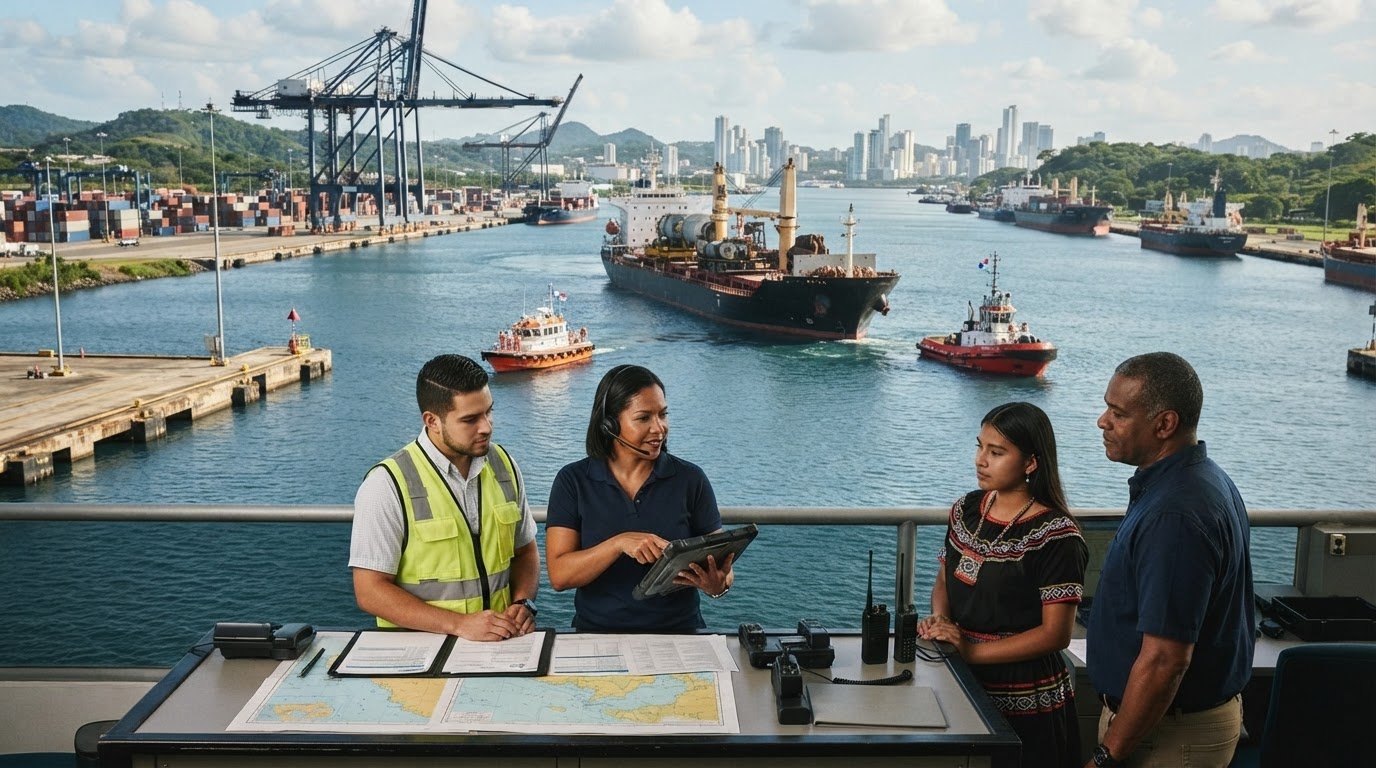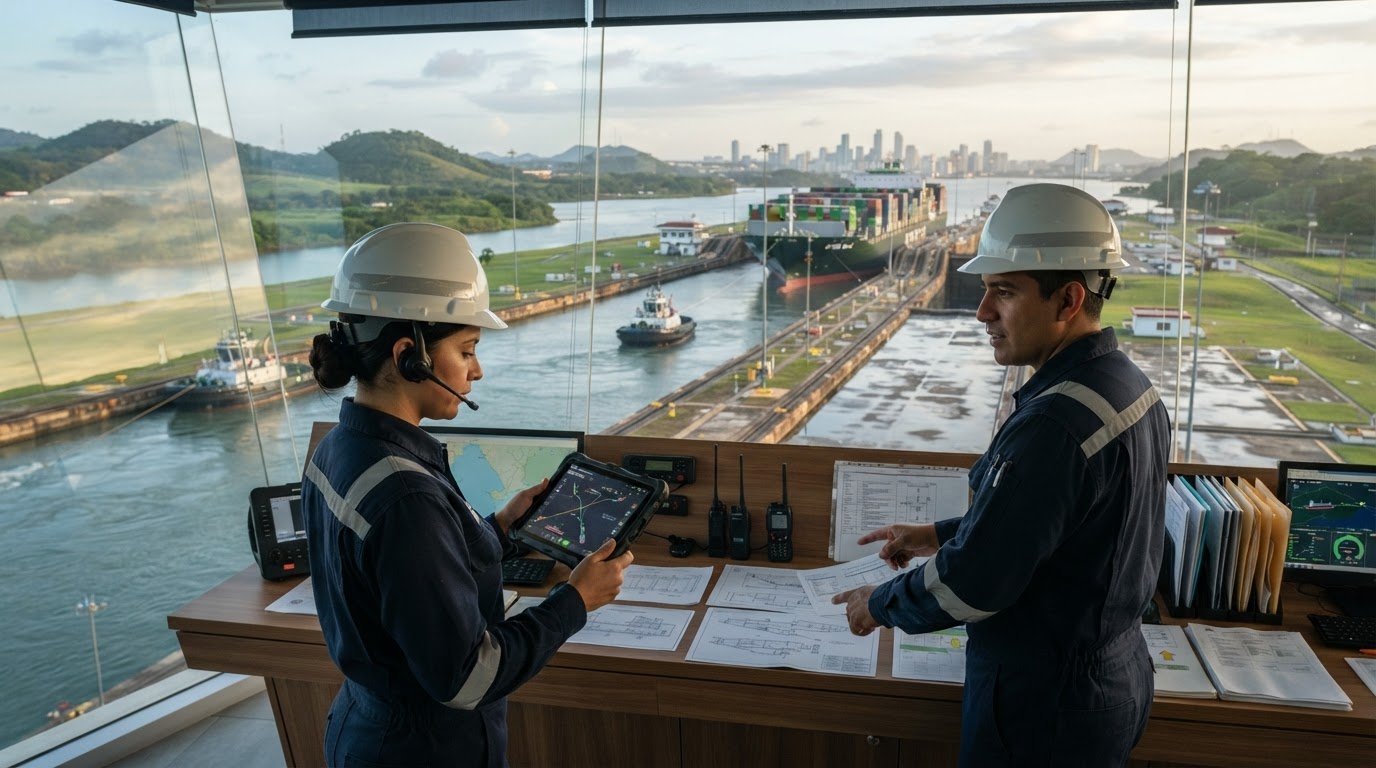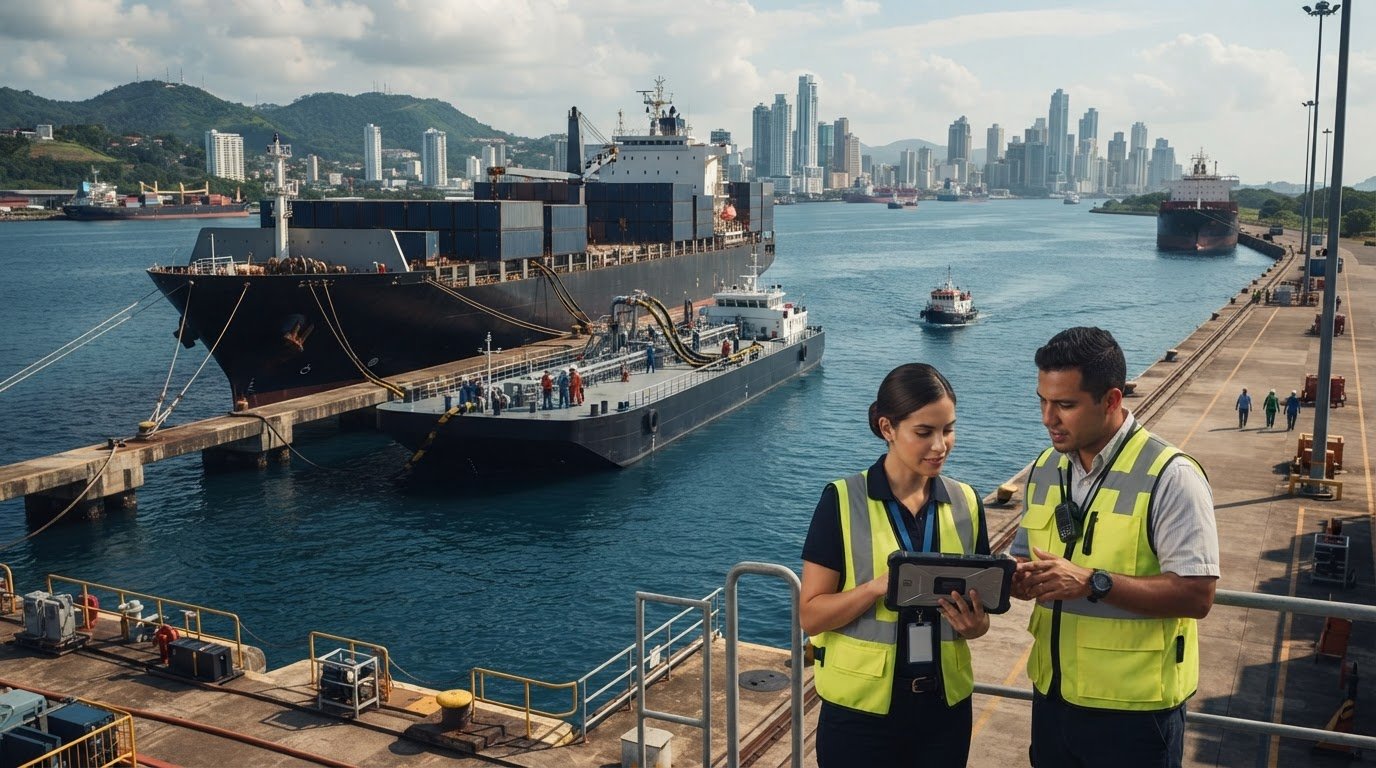

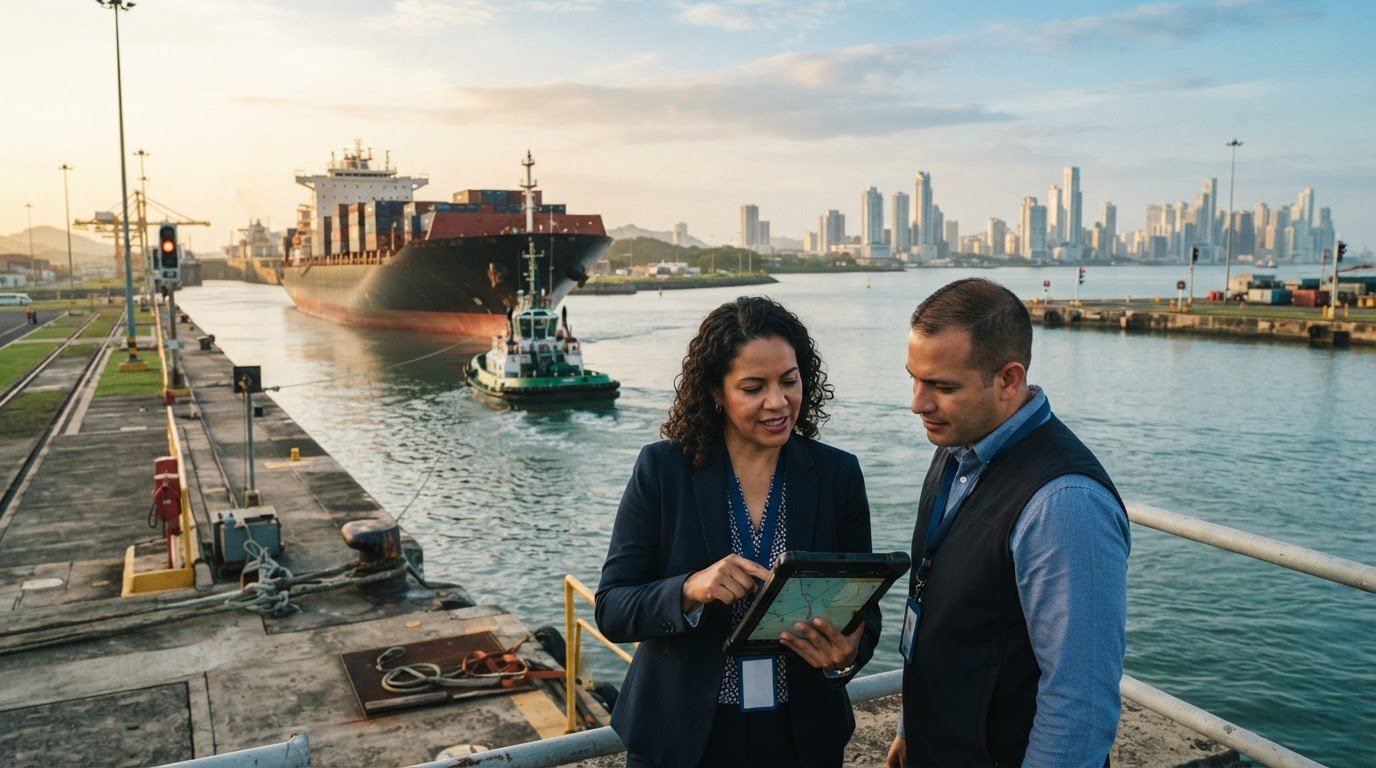
What if the agent coordinating your vessel’s Panama transit isn’t giving your chartering team the visibility it needs? If you’re arranging a charterer-nominated appointment in Panama, the question behind “charterer nominated agent panama” is practical: what will the local representative handle, and how will your instructions be carried through?
It’s reasonable to want clear boundaries between the charterer’s agent, the owner’s representative, and other parties involved in a call. Local coordination can affect communication, timing, and cost control, so agree on the agent’s scope and reporting expectations before the vessel arrives.
This guide explains the charterer-nominated agent’s role in Panama, how nomination and pre-arrival instructions work, and what information helps establish the appointment. It also covers how local coordination supports transit clearance, pilot and tug ordering, and inbound and outbound documentation. Adimar Shipping, Inc. provides charterer-nominated agency in Panama, acting as a local extension of the charterer’s operations team and keeping communication, coordination, and your instructions at the centre of the vessel’s transit.
Key Takeaways
- A charterer-nominated agent provides local operational representation, while the charterer retains commercial decisions and instructions.
- Sharing vessel, voyage, contact, and service details helps establish effective communication from nomination onward.
- For a charterer nominated agent panama appointment, define the scope, update expectations, and reporting arrangements to reduce coordination gaps.
- Charterer’s and owner’s agents may have different responsibilities. Their appointments and contractual arrangements define their respective roles.
- Adimar Shipping coordinates Panama transit clearance, pilot and tug ordering, and inbound and outbound documentation for charterers.
What Does a Charterer-Nominated Agent in Panama Actually Do?
A charterer-nominated agent in Panama is a local representative appointed to coordinate a vessel call according to the charterer’s interests and agreed instructions. The agent connects the charterer’s operations team with relevant local parties, helping align transit requirements, vessel needs, and communications. A general shipping agent supports a vessel during a port call. A charterer-nominated appointment adds a defined client relationship and scope.
The agent coordinates locally but doesn’t take over the charterer’s commercial decisions. The charterer sets priorities and provides instructions within the agreed arrangement. Agency representation also doesn’t make the agent the vessel owner, the master, the Panama Canal Authority (ACP), or a cargo broker. The agent coordinates requested services, while each relevant party retains its own role and responsibilities.
Whose interests does a charterer-nominated agent represent?
Consider a vessel scheduled to transit the Panama Canal under a charter. The charterer appoints a local agent to coordinate the call according to its instructions, share updates, and organize specified transit-related requirements. The agent acts as the charterer’s local operational link, not as the party making commercial choices on the charterer’s behalf.
The owner may have separate operational or commercial interests and may appoint an owner’s agent for matters within that appointment’s scope. The two representatives don’t automatically have identical instructions or responsibilities. Their roles depend on their respective appointments and contractual arrangements. Neither agent replaces the master’s onboard authority or the ACP’s role in managing Canal operations.
Which Panama Canal call activities can the agent coordinate?
For a Panama Canal call, the charterer-nominated agent can coordinate transit clearance, pilot and tug ordering, and inbound or outbound documentation, following the charterer’s agreed instructions. The agent also helps organize communication around vessel requirements, giving the charterer and relevant local parties a clearer operational picture.
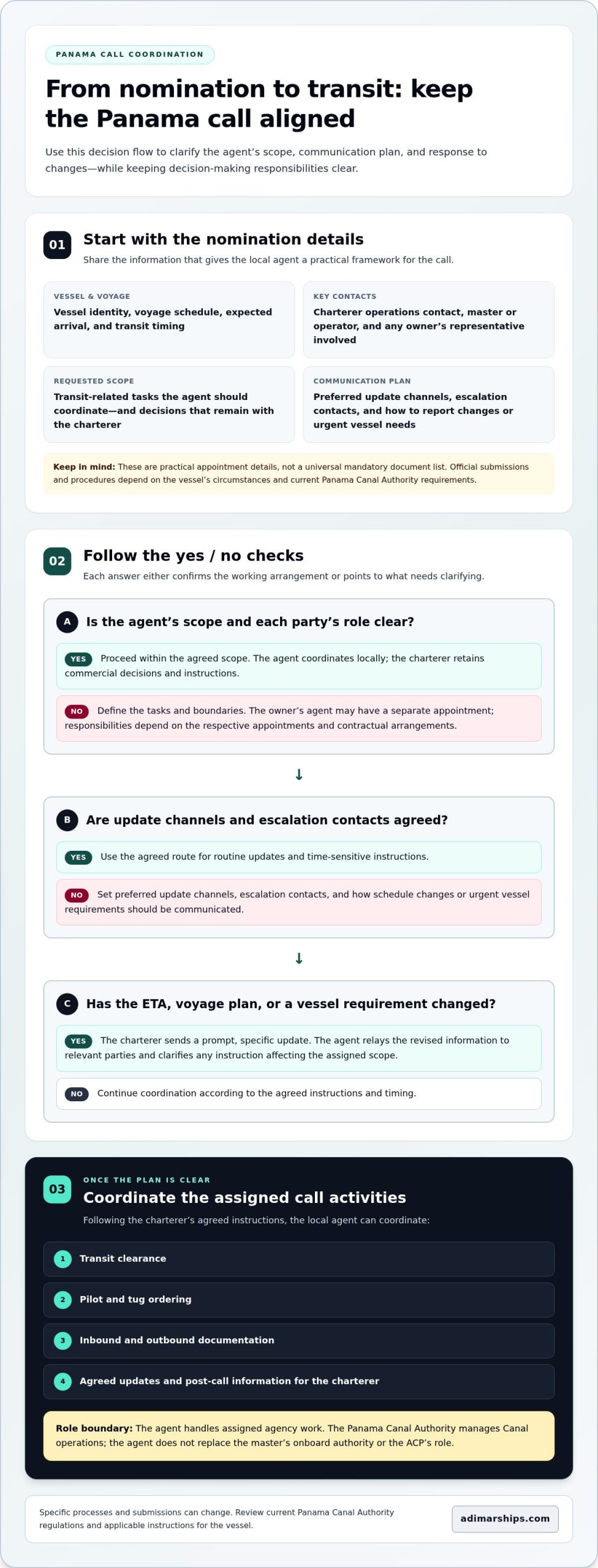
Clear instructions help prevent avoidable gaps. Share the vessel and voyage details, key contacts, schedule information, requested services, and any changes. If the ETA or a vessel requirement changes, send a prompt, specific update so the agent can relay the revised instruction to the parties involved.
This is local coordination, not Canal operation. The ACP manages Canal operations, while the agent handles the assigned agency work. For a broader overview of the transit itself, see a guide to Panama Canal transit. Understanding this distinction helps charterers define the agent’s scope and keep decision-making responsibilities clear.
How Does Charterer-Nominated Agency Work During a Panama Call?
A clear appointment gives the local agent a practical framework: who the agent represents, what to coordinate, which instructions to follow, and where to send updates. For a charterer nominated agent panama arrangement, sharing the right information early helps connect the charterer with the vessel and relevant local counterparts without blurring decision-making responsibilities.
What information should the charterer provide when nominating an agent?
Start with the vessel’s identity and voyage schedule, including expected arrival and transit timing. Identify key contacts and their roles, such as the charterer’s operations contact, the vessel’s master or operator, and any owner’s representative involved in the call. Then define the requested scope: which transit-related tasks the agent should coordinate and which decisions remain with the charterer.
Written instructions help prevent ambiguity. Include preferred update channels, escalation contacts, and how to communicate schedule changes or urgent vessel requirements. These are practical appointment details, not a universal mandatory document list. Official submissions and procedural requirements depend on the vessel’s circumstances and current Panama Canal Authority requirements.
How does coordination progress from instructions to transit?
A typical working sequence may look like this:
- Nomination: The charterer identifies the local agent and shares the appointment scope, vessel and voyage details, contacts, and instructions.
- Coordination plan: The agent aligns with the charterer and relevant vessel-call counterparts on requested services, communication, and timing.
- Pre-transit preparation: The agent coordinates assigned items such as transit clearance, pilot and tug ordering, and inbound documentation, following the agreed instructions.
- Schedule updates: If the ETA, voyage plan, or vessel requirement changes, the charterer relays the change promptly. The agent communicates the revised information to relevant parties and clarifies any instruction that affects the assigned scope.
- Call follow-up: The agent provides agreed updates and post-call information to the charterer, supporting clear operational visibility.
Specific processes and submissions can change. Review the current Panama Canal Authority regulations and applicable instructions for the vessel. For the wider sequence of a vessel’s passage, consult a Panama Canal transit guide. A locally coordinated appointment, such as charterer-nominated agency support from Adimar Shipping, Inc., helps keep instructions and communications connected throughout the call.
Charterer-Nominated Agent vs. Owner’s Agent: Where Do Responsibilities Differ?
The distinction starts with the appointment: each agent works within the scope and instructions agreed with the party that nominated them. In a charterer nominated agent panama arrangement, the charterer’s priorities guide the agent’s assigned coordination and communications. An owner’s agent, if appointed, works within a separate scope intended to address the owner’s interests. Neither appointment automatically overrides the other.
| Area | Charterer-nominated agent | Owner’s agent |
|---|---|---|
| Represented party | The charterer, within the appointment’s scope. | The owner, within the owner’s appointment. |
| Instructions | Follows agreed charterer instructions for assigned call matters. | Follows agreed owner instructions for assigned matters. |
| Communication focus | Updates the charterer on relevant coordination and vessel-call developments. | Communicates with the owner about matters covered by its appointment. |
| Coordination boundaries | Coordinates only the work included in its agreed scope. | Coordinates only the work included in its separate scope. |
What changes when the charterer appoints the agent?
The agent’s working priorities reflect the charterer’s instructions. For example, if the charterer asks the agent to coordinate assigned transit-related requirements and provide schedule updates, the agent organizes that local communication within the appointment’s scope. The charterer retains its commercial decisions and instructions. The agent doesn’t control the owner, the master, or the Panama Canal Authority. Specific responsibilities depend on the contractual arrangements and appointment.
Clear role definitions support sound practice across the industry. The International Chamber of Shipping (ICS) represents shipowners and operators internationally, but it doesn’t determine the scope of a particular agency appointment. That scope comes from the relevant instructions and arrangements.
How can two representatives coordinate without confusion?
Two agents can coordinate more smoothly when the parties establish practical boundaries early. Name a primary contact for each party, state which agent handles each request, and agree how operational updates are shared. If a request appears to overlap, the agents can clarify who is coordinating it before separate instructions create duplicate work or leave a task unaddressed.
For instance, send a schedule update through the agreed communication channel to the relevant charterer and agent contacts, including the owner’s representative where appropriate. This keeps everyone aligned without assuming that every vessel call uses the same agency arrangement. For a complementary explanation of owner representation, consult a guide to owner’s nominated agency.
How Can Charterers Appoint and Work Effectively With a Panama Agent?
A well-defined appointment gives the agent a clear mandate and the charterer a local point of coordination. Before a vessel call, put the scope and communication plan in writing. For a charterer nominated agent panama appointment, clarity from the outset helps prevent crossed instructions and gives everyone a shared reference as plans develop.
What should the appointment instructions make clear?
Use a practical checklist to set expectations:
- Representation: Name the charterer’s appointed representative and identify who can issue or approve instructions.
- Contacts: Provide operational contacts for the charterer, vessel, and any relevant owner’s representative, along with preferred communication channels and an escalation contact.
- Scope: Describe the requested coordination tasks in plain language, such as transit clearance, pilot and tug ordering, or inbound and outbound documentation.
- Updates: State what status information the charterer expects, how often updates should be shared, and who should receive them.
- Reporting: Agree on what post-call information or records should be provided, including how coordination matters and financial updates should be communicated.
These points are a practical framework, not a substitute for the appointment or charter contract. The contractual instructions govern the final scope of representation. Keep decision-making authority clear by identifying which actions the agent can coordinate and which require direction or approval from the charterer.
Which communication practices support a smooth vessel call?
Send schedule changes as soon as they’re known. A useful update states what changed, the revised timing or vessel requirement, when the change takes effect, and whether a decision is needed. If an urgent issue arises, use the agreed escalation route and identify the person authorized to respond. This helps the local representative relay accurate instructions to relevant vessel-call counterparts.
Keep concise records of instructions, status updates, and agreed actions. A short written summary after a call or decision can help the charterer, agent, and other authorized contacts stay aligned. For broader agency context, the Panama Canal ship agent guide is a useful companion to this appointment checklist.
Transparent financial communication also supports sound oversight. Agree on how relevant charges, supporting information, and financial updates will be presented, without assuming a particular accounting process or promised savings. Adimar Shipping, Inc. provides charterer-nominated agency in Panama, coordinating vessel needs with attention to communication and cost-efficiency. Read more about charterer-nominated agency support and the local coordination it provides for a vessel call.
How Adimar Shipping Supports Charterers at the Panama Canal
A Panama Canal call involves several moving parts. Adimar Shipping, Inc. provides charterer-nominated agency in Panama, representing the charterer’s interests and coordinating vessel requirements as a local partner. This gives the charterer a Panama-based point of coordination to carry agreed instructions into local arrangements and keep communication connected across the call.
What does local representation bring to charterer operations?
Adimar Shipping, Inc. coordinates Panama Canal transit requirements within the agreed scope, including transit clearance, pilot and tug ordering, and inbound or outbound documentation. These tasks involve communication among the charterer’s operations team, the vessel, and relevant local counterparts. A local representative brings those threads together, allowing the charterer to delegate operational coordination while retaining its commercial decisions and instructions.
The value is practical: fewer disconnected conversations and a clearer route for updates about assigned tasks. Adimar Shipping, Inc. coordinates and communicates; it doesn’t operate the Canal or guarantee a transit time or outcome. Attention to the charterer’s instructions helps keep local activity aligned with the vessel’s needs and the agreed appointment.
How can a charterer discuss Panama representation with Adimar?
Start with the vessel and voyage context. Share the vessel’s identity, expected schedule, key operational contacts, and the coordination required for the call. Explain who can issue instructions, how the charterer wants updates delivered, and which requirements need particular attention. These details give the discussion a clear operational foundation.
Adimar Shipping, Inc. discusses the requested representation, coordination scope, and communication approach with the charterer. If the schedule or vessel requirements change, clear updates help keep instructions current and local coordination aligned. The appointment should set out the agreed scope and responsibilities so the charterer and agent share the same expectations.
For a charterer nominated agent panama appointment, choose direct local coordination that keeps your team informed and your instructions in focus. Discuss representation for your Panama Canal call with Adimar Shipping, Inc. and share the vessel, voyage, and coordination details that will shape the appointment.
Put Clear Local Representation in Place for Your Panama Call
A well-defined appointment helps keep charterer instructions, local coordination, and owner representation distinct. Agree on the agent’s scope, communication contacts, and reporting expectations before the call so everyone understands who is handling each request.
A charterer nominated agent panama appointment gives your operations team a local point of coordination while leaving commercial decisions with the charterer. Adimar Shipping represents charterers and vessel operators in Panama, coordinating transit clearance, pilot and tug ordering, and required inbound or outbound documentation. Clear communication helps connect these moving parts and keep vessel-call requirements visible to your team.
Share your vessel and voyage context, the tasks you want coordinated, and how you’d like updates delivered. Discuss charterer representation for your Panama call with Adimar Shipping and set a clear foundation for local coordination. With clear instructions and a local representative, your team can approach the call with greater clarity.
Frequently Asked Questions
What is a charterer-nominated agent in Panama?
A charterer-nominated agent in Panama is a local representative appointed to act on the charterer’s instructions for agreed vessel-call matters. For a charterer nominated agent panama appointment, the scope may include coordinating transit-related requirements, communications, and documentation. The agent represents the charterer’s interests within that scope. It doesn’t own the vessel, replace the master’s authority, or operate the Panama Canal.
What does a charterer’s agent do during a Panama Canal transit?
A charterer’s agent coordinates agreed local requirements for the vessel call and keeps the charterer informed. Depending on the appointment, this can include transit clearance, pilot and tug ordering, and inbound or outbound documentation. The agent follows agreed instructions rather than making the charterer’s commercial decisions. The vessel’s master retains onboard authority, and the Panama Canal Authority manages Canal operations. Specific tasks depend on the appointment.
Can a vessel have both an owner’s agent and a charterer-nominated agent?
Yes, a vessel may have representatives appointed by different principals, depending on the agreements and instructions involved. The charterer’s agent and owner’s agent can each coordinate matters within their respective appointment scopes. To avoid crossed requests, define who each agent represents, which tasks each handles, and how updates should be shared. Clear contact paths help ensure instructions reach the appropriate representative without assuming every vessel call uses the same arrangement.
How do I nominate a charterer’s agent in Panama?
Start by identifying the charterer’s authorized contact, the vessel and voyage details, and the representation or coordination required. Send written instructions that state the requested scope, communication preferences, and escalation contacts, then align on reporting expectations. This gives the agent a clear basis for local coordination. Panama Canal-specific procedures can depend on current official requirements and the vessel’s circumstances, so don’t treat a general checklist as a complete regulatory document list.
Does a charterer-nominated agent replace the vessel owner’s agent?
No, not automatically. Each representative acts according to the party that appointed them and the agreed scope of work. A charterer’s agent focuses on the charterer’s instructions, while an owner’s agent represents the owner’s interests under a separate appointment. If both are involved, define responsibilities and communication routes so local coordination stays clear. The applicable agreements and instructions, rather than a universal rule, determine how the roles fit together.
What information should a charterer send to a Panama agent?
Provide the vessel’s identity, voyage and schedule information, relevant contacts, requested scope, and written instructions. Include who can make decisions or approve requests, how the agent should share updates, and how urgent questions should be escalated. Send revised timing or vessel requirements promptly if plans change. The final information set depends on the appointment and current procedures, so a practical checklist shouldn’t be treated as a mandatory or exhaustive regulatory document list.