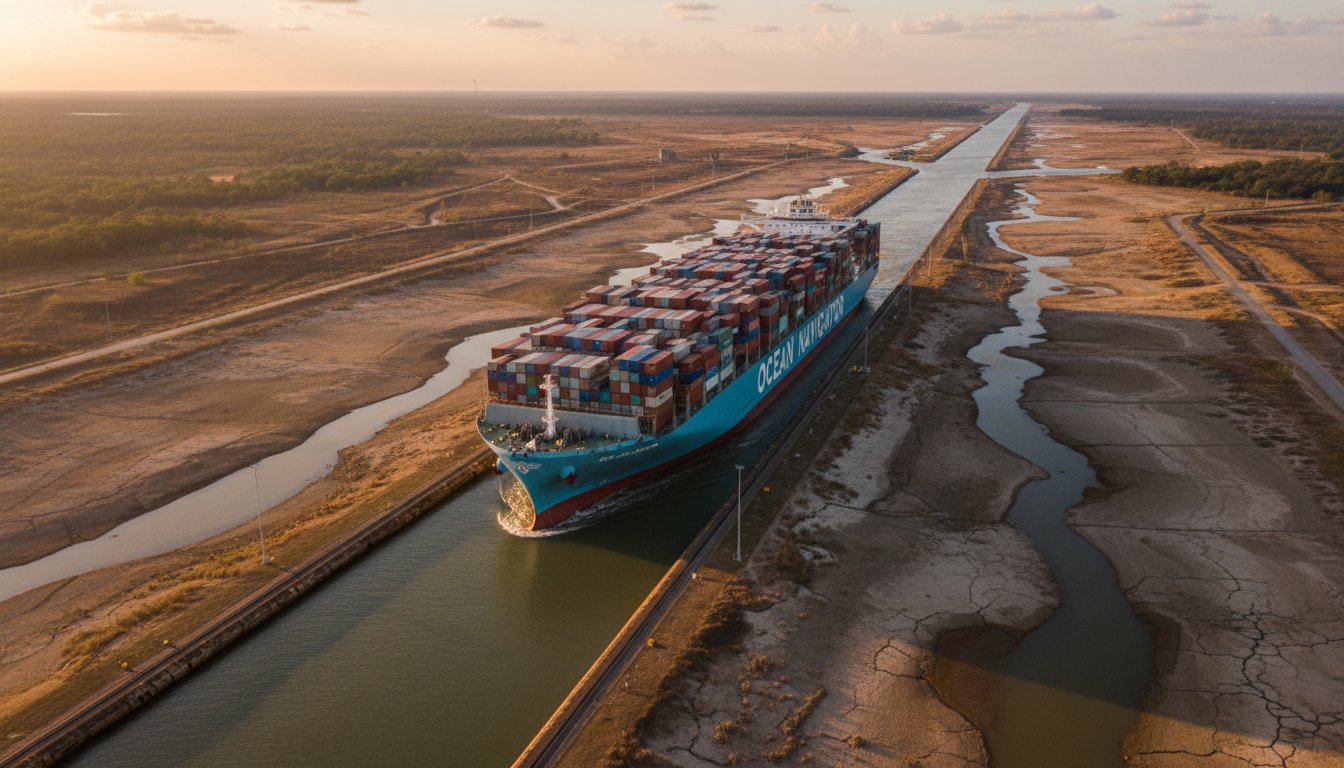

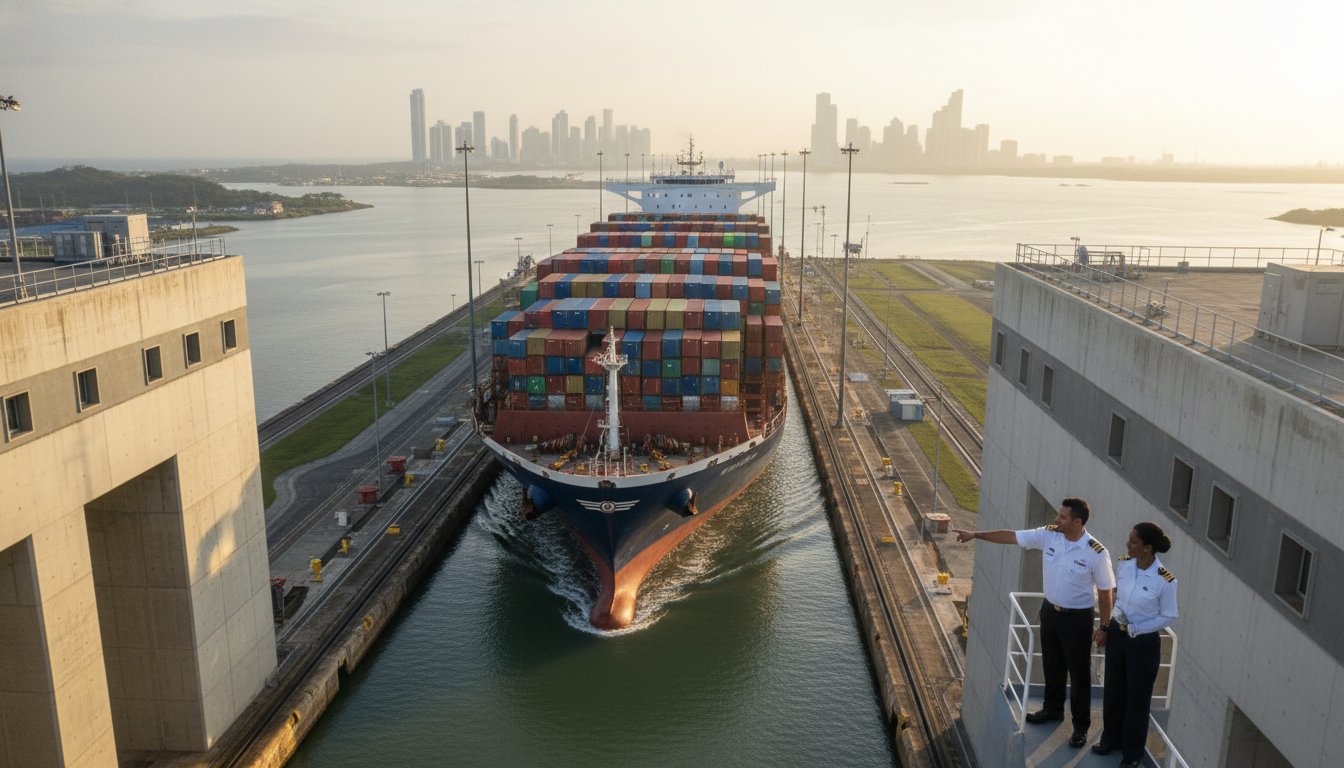
For any ship operator, the Panama Canal is a critical artery of global trade, but it can quickly become a costly chokepoint. A single miscalculation can lead to staggering demurrage charges in the thousands of dollars, while navigating the complex and ever-changing ACP regulations can feel like a minefield threatening hefty fines. This logistical uncertainty leaves many operators feeling powerless. In this high-stakes environment, proactively managing Panama Canal transit risks isn’t just good practice—it’s essential for protecting your bottom line.
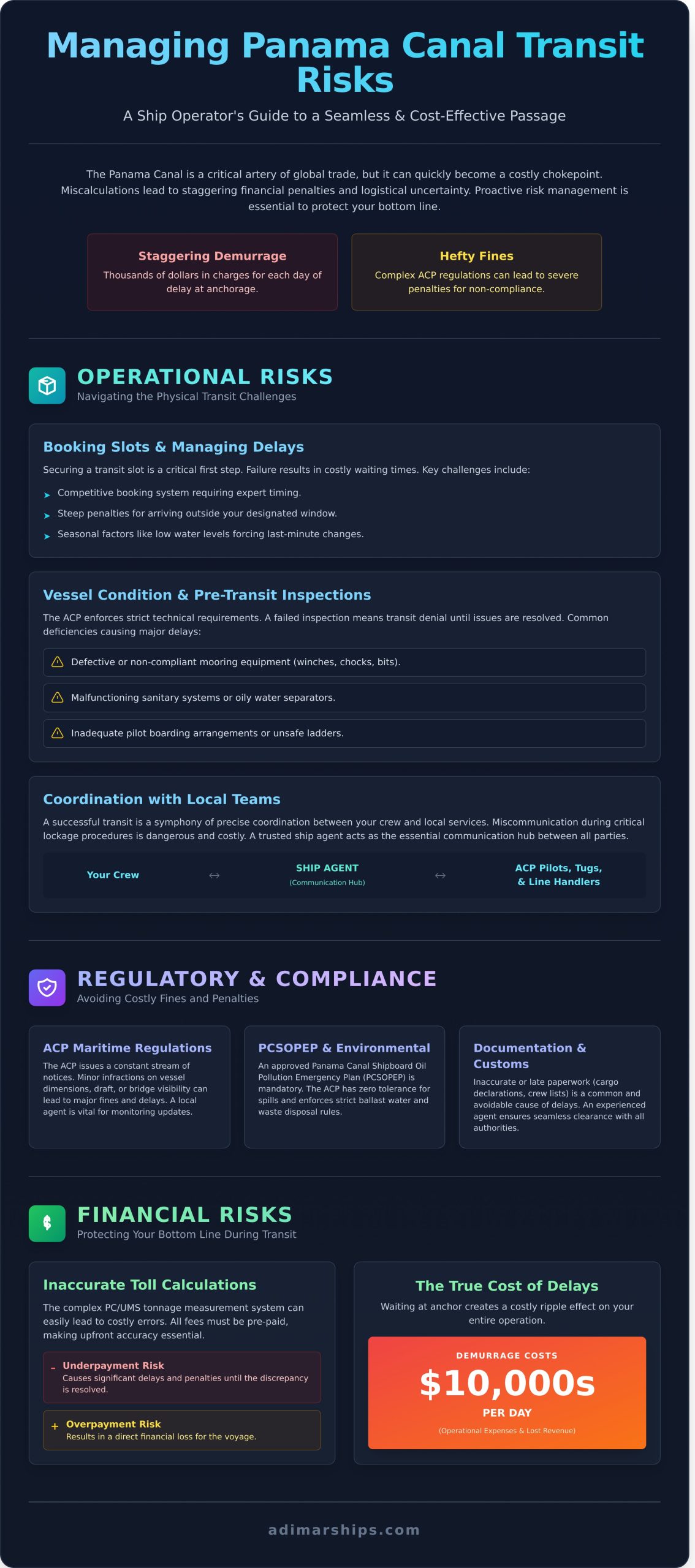
This guide is your trusted partner for a seamless passage. We will equip you to identify and mitigate the key operational, regulatory, and financial risks that can derail your voyage. You’ll learn the strategies to ensure a predictable transit schedule, maintain a cost-effective budget, and avoid compliance-related delays entirely. Our goal is to provide the on-the-ground knowledge you need to regain control, ensuring a smooth passage that allows you to focus on what you do best: your core business.
Operational Risks: Navigating the Physical Transit Challenges
The Panama Canal is a marvel of engineering and a highly controlled waterway. However, the physical passage presents constant operational risks for ship owners and charterers. Misjudge your timing or vessel readiness, and you face the most common and costly problem: delays. Effective managing panama canal transit risks starts with proactive preparation, ensuring a smooth, timely, and efficient passage from the Atlantic to the Pacific.
Booking Slots and Managing Delays
Securing a transit slot is the first critical hurdle. The Panama Canal Authority’s (ACP) Transit Booking System is competitive, and failing to book a slot in the correct period can leave your vessel waiting at anchorage for days, accumulating significant costs. Even with a booking, arriving outside your designated window incurs steep penalties. Compounding this, factors like seasonal low water levels and resulting draft restrictions can force last-minute schedule changes, making expert local knowledge indispensable for navigating these challenges.
Vessel Condition and Pre-Transit Inspections
Your vessel’s condition is non-negotiable. The ACP enforces strict technical requirements, and a mandatory pre-transit inspection will verify full compliance. A failure here means being denied transit until the issue is resolved. Common deficiencies that cause major delays include:
- Defective or non-compliant mooring equipment (winches, chocks, bits)
- Malfunctioning sanitary systems or oily water separators
- Inadequate pilot boarding arrangements or unsafe ladders
A thorough pre-arrival checklist, reviewed by your local agent, is a critical step in preventing these avoidable and expensive problems.
Coordination with Pilots, Tugs, and Line Handlers
A successful transit is a symphony of precise coordination between your crew, ACP pilots, tugboat captains, and line handlers. The intricate dance of vessels and support craft is central to all Panama Canal operations, where miscommunication during critical lockage procedures can be dangerous and costly. Your crew must be fully prepared for pilot boarding and ready to execute commands swiftly. A trusted ship agent is your essential communication hub, ensuring all parties are aligned and your vessel is prepared for a seamless operation.
Regulatory & Compliance Risks: Avoiding Costly Fines and Penalties
The Panama Canal Authority (ACP) operates one of the world’s most critical maritime passages with a strict and complex set of regulations. For ship owners and charterers, navigating these rules is a fundamental part of successfully managing panama canal transit risks. Missteps, even unintentional ones, can result in significant fines, operational delays, and scheduling disruptions. The ACP’s stance is clear: ignorance of the rules is not an excuse. Compliance is non-negotiable and extends from vessel specifications to environmental protocols and crew documentation.
Adhering to ACP Maritime Regulations
The ACP communicates changes through a constant stream of official notices and advisories. Key regulations cover everything from maximum vessel dimensions and draft restrictions to specific visibility requirements from the navigation bridge. A seemingly minor infraction can lead to fines or costly delays, which have ripple effects on global trade and development schedules. A trusted ship agent acts as your local expert, monitoring these updates to ensure your vessel is prepared and compliant long before arrival.
PCSOPEP and Environmental Compliance
Protecting the Canal’s sensitive ecosystem is a top priority. A core requirement for every transiting vessel is an approved Panama Canal Shipboard Oil Pollution Emergency Plan (PCSOPEP). This plan must name an authorized, Panama-based person to act on your behalf in an emergency. Beyond the PCSOPEP, the ACP enforces strict rules on ballast water management and waste disposal, with zero tolerance for spills. Ensure your PCSOPEP compliance with our authorized services.
Documentation, Customs, and Immigration
Inaccurate or incomplete paperwork is one of the most common—and avoidable—causes of transit delays. Pre-arrival notifications, cargo declarations, and crew lists must be submitted accurately and within strict deadlines. Any discrepancy can trigger inspections and hold-ups with Panamanian customs and immigration authorities. An experienced agent streamlines this process, managing all submissions and coordinating with officials. This proactive approach is key to managing panama canal transit risks and ensuring a seamless clearance.
Financial Risks: Protecting Your Bottom Line During Transit
A Panama Canal transit is a significant financial undertaking where time truly is money. Hidden costs, inaccurate calculations, and unexpected delays can quickly erode voyage profitability. Effective financial oversight is a critical component of managing panama canal transit risks. Transparent management of all fees, from tolls to tugs, is essential for budget control and protecting your bottom line. Understanding the Canal’s complex fee structure and payment procedures is non-negotiable for a successful and cost-effective passage.
Inaccurate Toll Calculations and Payments
The Panama Canal’s toll system is based on the complex PC/UMS tonnage measurement, which can easily lead to miscalculations. The risk is twofold: overpayment results in a direct financial loss, while underpayment can cause significant delays and penalties until the discrepancy is resolved. All transit fees must be pre-paid into an Operations Bank Account (OBA), making upfront accuracy essential. A diligent ship agent verifies all official calculations against vessel specifications to ensure you pay the correct amount, the first time.
The True Cost of Demurrage and Delays
For a commercial vessel, waiting at anchor can cost tens of thousands of dollars per day in operational expenses and lost revenue. Operational or regulatory issues can cascade into major financial losses, as even a minor compliance failure can trigger significant penalties, such as the Panama Canal Disruption Charges detailed by marine insurers. These delays create a costly ripple effect, jeopardizing future charters and disrupting tight schedules. Meticulous advance planning with an experienced local partner is the most effective strategy for mitigating these costs.
Managing Ancillary and Unexpected Costs
Beyond tolls, a transit budget must account for a range of ancillary services, including tugs, line handlers, security personnel, and inspection fees. Furthermore, unexpected husbandry costs, such as crew medical emergencies or urgent provisions, can arise without warning. Without a trusted local partner, you risk exposure to inflated vendor pricing. Utilizing an agent who provides a transparent, pre-agreed disbursement account (DA) ensures all costs are verified, competitive, and clearly accounted for, preventing financial surprises.
Husbandry & Logistical Risks: Managing Crew and Supplies
A vessel’s journey through Panama is far more than the 8-10 hours it takes to cross the Canal. The waiting period at anchorage is a critical window for vital logistical operations. A ship’s needs for crew, spares, and provisions don’t pause just because it’s waiting for a transit slot. Failure to manage these husbandry services with local expertise is a significant, yet often overlooked, part of managing Panama Canal transit risks. In a place where time is money, logistical failures lead directly to expensive delays and potential crew welfare issues.
Coordinating Crew Changes and Medical Needs
Mismanaging crew logistics is a fast track to operational disruption. Navigating Panamanian immigration rules for on-signers and off-signers requires precise documentation and perfect timing. An experienced agent handles these complexities, from securing shore passes and visas to arranging safe, reliable transport to and from the vessel at anchorage. Furthermore, should a crew member require urgent medical or dental attention, having a local partner to coordinate immediate, quality care is essential for their well-being and for maintaining the vessel’s strict schedule.
Timely Delivery of Spares and Provisions
Nothing grinds a vessel’s operations to a halt faster than a critical spare part stuck in customs or a delay in provisioning. The risk is real. Without deep knowledge of local customs procedures, essential engine components or navigation equipment can be held up for days. A trusted agent leverages their established network of suppliers and customs brokers to ensure a smooth clearance process. They coordinate everything from fresh water and food provisions to lube oil delivery via launch boat services, ensuring your vessel is fully prepared for its onward journey without delay.
Arranging Emergency Repairs and Technical Support
What happens if a critical generator fails or a pump gives out hours before your transit? This scenario can be disastrous, causing a vessel to lose its slot and face indefinite delays. An effective risk management plan includes having an on-the-ground partner with a 24/7 response capability. An agent’s role is to immediately connect the vessel with vetted, reliable workshops and certified technicians who can be dispatched to the ship to diagnose and resolve the issue. This rapid response is key to minimizing downtime and protecting your bottom line.
Ultimately, seamless husbandry and logistical support are foundational to successfully managing Panama Canal transit risks. Having an expert on the ground acting as your eyes and ears ensures that every need is met efficiently and with integrity. As your trusted partner at the Panama Canal, we eliminate these logistical uncertainties so you can focus on your core business.
The Ultimate Mitigation: How a Trusted Ship Agent Neutralizes Risk
While understanding regulations, weather patterns, and operational procedures is crucial, the ultimate strategy for managing panama canal transit risks is proactive partnership. Navigating the Canal’s complexities from thousands of miles away is a high-stakes challenge. A trusted ship agent on the ground in Panama is not a cost center; they are a strategic investment in efficiency, security, and peace of mind. They act as your local office, an extension of your own team dedicated to protecting your interests and transforming uncertainty into a predictable, managed process.
Local Expertise and Real-Time Communication
A seasoned agent possesses invaluable local knowledge and direct lines of communication with the Panama Canal Authority (ACP), pilots, and port officials. They are your eyes and ears, providing 24/7 updates and anticipating potential issues before they escalate into costly delays. This constant, clear communication eliminates confusion, allowing you to focus on your core business while your asset is in expert hands. Their experience turns reactive problem-solving into proactive risk management.
Financial Transparency and Cost Optimization
Unexpected costs can cripple a voyage’s budget. A reliable agent provides a detailed Proforma Disbursement Account (PDA) in US Dollars, offering a clear and transparent estimate of all transit-related expenses. They leverage long-standing local relationships to secure competitive pricing for all services and meticulously scrutinize every invoice to protect you from overcharges. This financial diligence ensures there are no surprises, keeping your transit on budget with integrity and precision.
A Single Point of Contact for All Services
The complexity of a Canal transit involves coordinating numerous third parties. Your agent simplifies this entire operation into a single point of contact. This centralized approach is fundamental to efficiently managing panama canal transit risks. One call or email to your agent handles everything, significantly reducing your administrative burden. Services they seamlessly coordinate include:
- Canal tolls and booking fees
- Launch boat services and crew changes
- Delivery of spare parts, provisions, and mail
- Coordination with technicians and surveyors
- PCSOPEP compliance and sludge/garbage disposal
This integrated service ensures every detail is handled with timeliness and efficiency. Put our expertise to work. Request a quote from Adimar Shipping, Inc.
Your Trusted Partner for a Seamless Panama Canal Transit
The journey through the Panama Canal is more than a physical passage; it’s a complex logistical operation with significant operational, regulatory, and financial hurdles. The key to success lies not just in understanding these challenges, but in having a proactive strategy to neutralize them. This is the essence of effectively managing panama canal transit risks.
You don’t have to navigate these complexities alone. With over 20 years of dedicated Panama Canal experience, Adimar Shipping serves as your ‘eyes at the Canal’. We provide the 24/7 communication and transparent, cost-conscious service necessary to transform potential risks into a predictable and profitable transit. Our reputation is built on integrity, and we see ourselves as an extension of your team, dedicated to protecting your interests every step of the way.
Let us eliminate the confusion and frustration so you can focus on your business. Secure your smooth transit. Nominate Adimar as your trusted agent today.
Frequently Asked Questions
How do recent Panama Canal water levels and drought conditions impact transit risks?
Drought conditions directly impact Gatun Lake’s water levels, forcing the Panama Canal Authority (ACP) to implement restrictions. These include reducing the number of daily transit slots and lowering the maximum allowable vessel draft. This creates intense competition for bookings, leading to potential delays, higher auction slot prices, and the risk of having to lighten cargo loads. Proactive planning is essential for managing Panama Canal transit risks under these challenging conditions.
What are the top 3 most common reasons vessels are fined by the ACP?
Vessels are most frequently fined for three key reasons. First, any marine pollution incident, such as even a small oil spill during bunkering, results in significant penalties. Second, deficiencies with required equipment, particularly non-compliant pilot ladders, mooring lines, or chocks, are a common cause. Third, failing to declare all personnel on board, including stowaways discovered during inspection, will lead to substantial fines from both the ACP and local immigration authorities.
What is the difference between a booked transit and an unbooked ‘first-come, first-served’ transit?
A booked transit secures a guaranteed transit slot for a specific date, providing schedule certainty and minimizing costly waiting times. In contrast, an unbooked transit places a vessel in a queue to wait for an available opening. This ‘first-come, first-served’ approach carries a high risk of unpredictable and lengthy delays, which can last for days or even weeks during periods of high congestion, ultimately increasing operational costs.
Can our vessel transit without a functioning AIS or other critical navigation equipment?
No, a vessel cannot transit with inoperative critical equipment. The ACP enforces strict maritime safety regulations, and all essential navigation systems, including AIS, gyrocompass, radars, and VHF radios, must be fully functional. If a vessel arrives with such deficiencies, it will be ordered to an anchorage for repairs at the owner’s expense, causing significant delays and unplanned costs before it is cleared for transit.
How much advance notice does an agent need to arrange a smooth transit?
While the official ACP pre-arrival notification is 96 hours, we strongly recommend nominating your agent at least 7 to 10 days in advance. This provides sufficient time to thoroughly review all vessel certificates, coordinate required services like husbandry, and address any potential compliance issues. More advance notice allows us to proactively plan and ensure a seamless, efficient, and cost-effective transit without last-minute complications.
What is an Owner’s Protective Agency (OPA) and how does it differ from a nominated agent?
A nominated agent is typically appointed by the charterer to manage the vessel’s port call and transit. An Owner’s Protective Agency (OPA) is appointed directly by the shipowner to safeguard their specific interests. The OPA supervises the nominated agent, verifies the accuracy of all charges in the disbursement account, and ensures the owner’s financial and operational interests are protected, acting as your trusted partner on the ground.