
Navigating the intricate web of Panama Canal regulations can be a daunting task for any ship owner, operator, or charterer. The official rules are dense, technical, and subject to change, leaving crews vulnerable to costly fines and unexpected transit delays. This guide simplifies the official Panama Canal regulations into a practical checklist, helping you ensure a smooth, compliant, and fine-free transit every time.
Key Pre-Arrival Regulations: Documentation & Notifications
A successful transit starts long before your vessel arrives at the Canal. The Panama Canal Authority (ACP) requires precise and timely information to schedule and manage traffic efficiently. Failure to comply with these preliminary documentation and notification rules is one of the most common and easily avoidable sources of fines and delays.
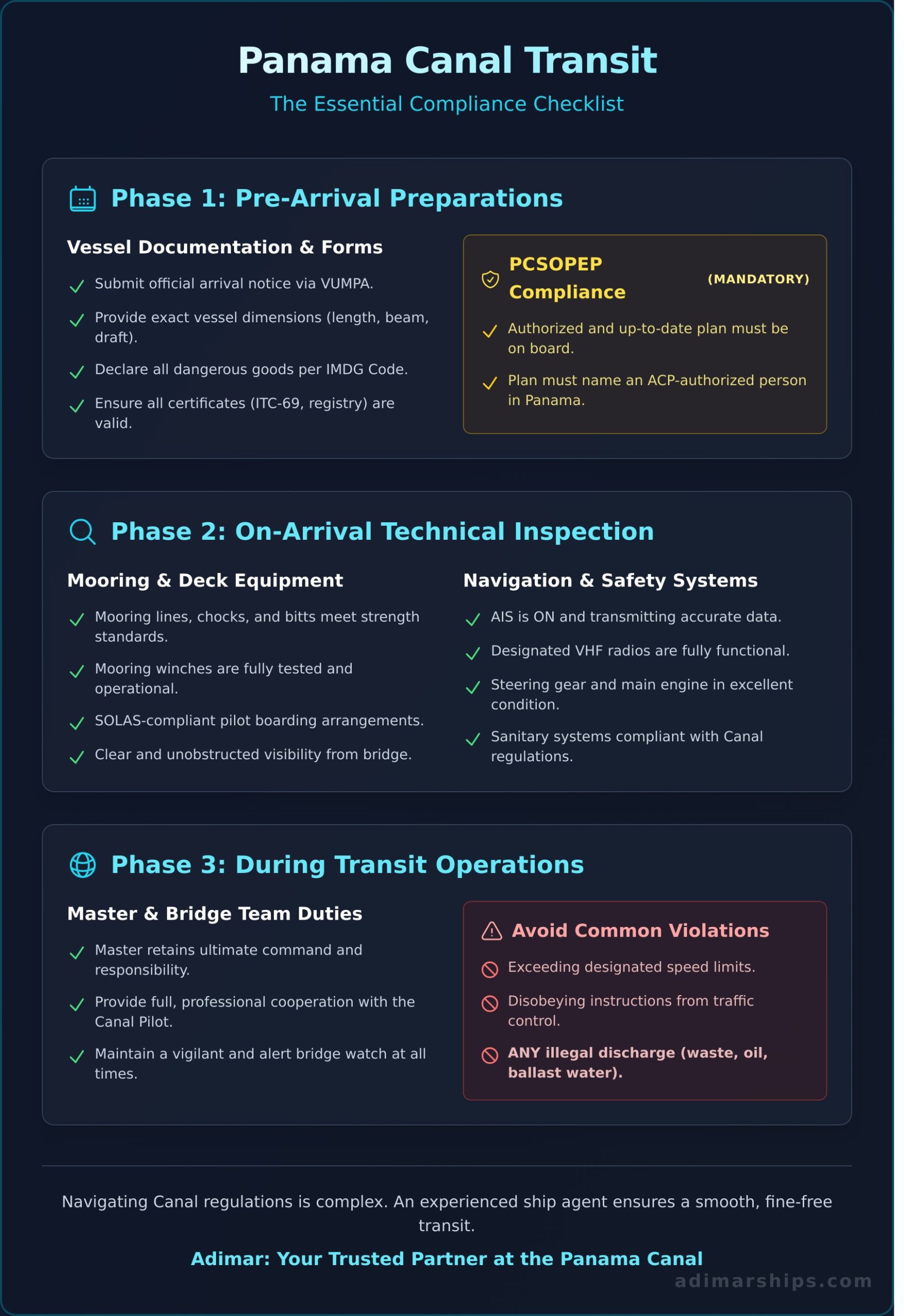
Vessel Information and Pre-Arrival Forms Checklist
Accuracy is paramount when submitting your vessel’s details. Any discrepancies can lead to re-inspections or penalties. Before arrival, ensure your team has completed the following:
- Submit the official arrival notice through the designated system, the Maritime Single Window of Panama (VUMPA).
- Provide exact vessel dimensions, including length, beam, draft, and tonnage details, to ensure proper classification and fee assessment.
- Declare all dangerous goods on board strictly according to the International Maritime Dangerous Goods (IMDG) Code.
- Confirm that all essential certificates, such as the International Tonnage Certificate (ITC-69), vessel registry, and safety certificates, are valid and readily available for inspection.
PCSOPEP: The Critical Oil Pollution Emergency Plan
Compliance with the Panama Canal Shipboard Oil Pollution Emergency Plan (PCSOPEP) is mandatory and non-negotiable. This plan is the Canal’s specific version of the SOPEP/SMPEP requirement and is strictly enforced to protect the waterway’s sensitive ecosystem.
- A vessel must have an authorized and up-to-date PCSOPEP plan on board before entering Canal waters.
- The plan must name a specific, ACP-authorized individual or company based in Panama who can be contacted to activate the response plan in case of an emergency.
- This is a specialized service that requires local authorization. As a leading ship agent, Adimar provides this essential authorized person service to ensure our clients are always compliant.
Vessel Technical & Equipment Requirements for Transit
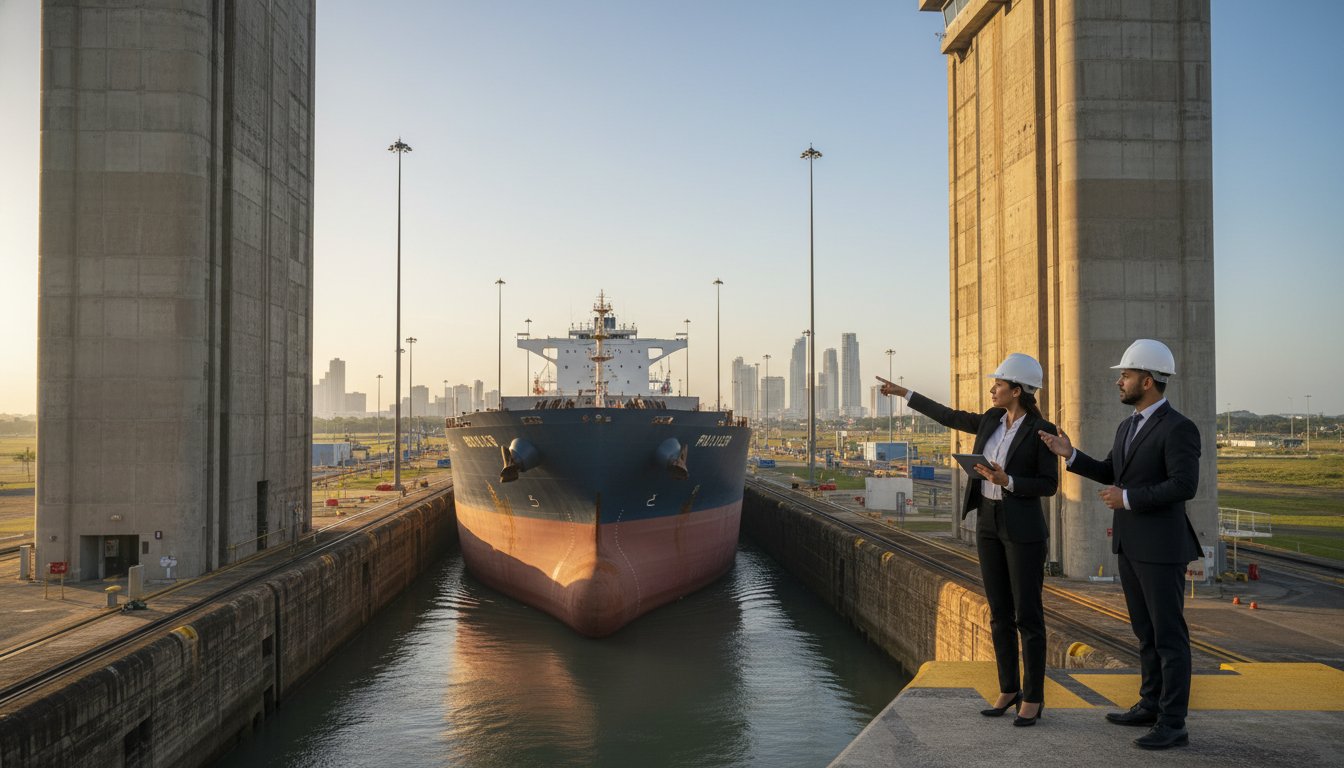
Upon arrival, the ACP conducts rigorous inspections to verify that every vessel is mechanically sound and properly equipped for a safe passage. Equipment failures are a primary cause of transit delays that can disrupt schedules and incur significant costs. Ensure your vessel meets these strict mechanical and equipment standards to pass inspection without issue.
Mooring and Deck Equipment Checklist
The unique nature of the lock system requires robust and fully functional mooring equipment. Inspectors will pay close attention to the following:
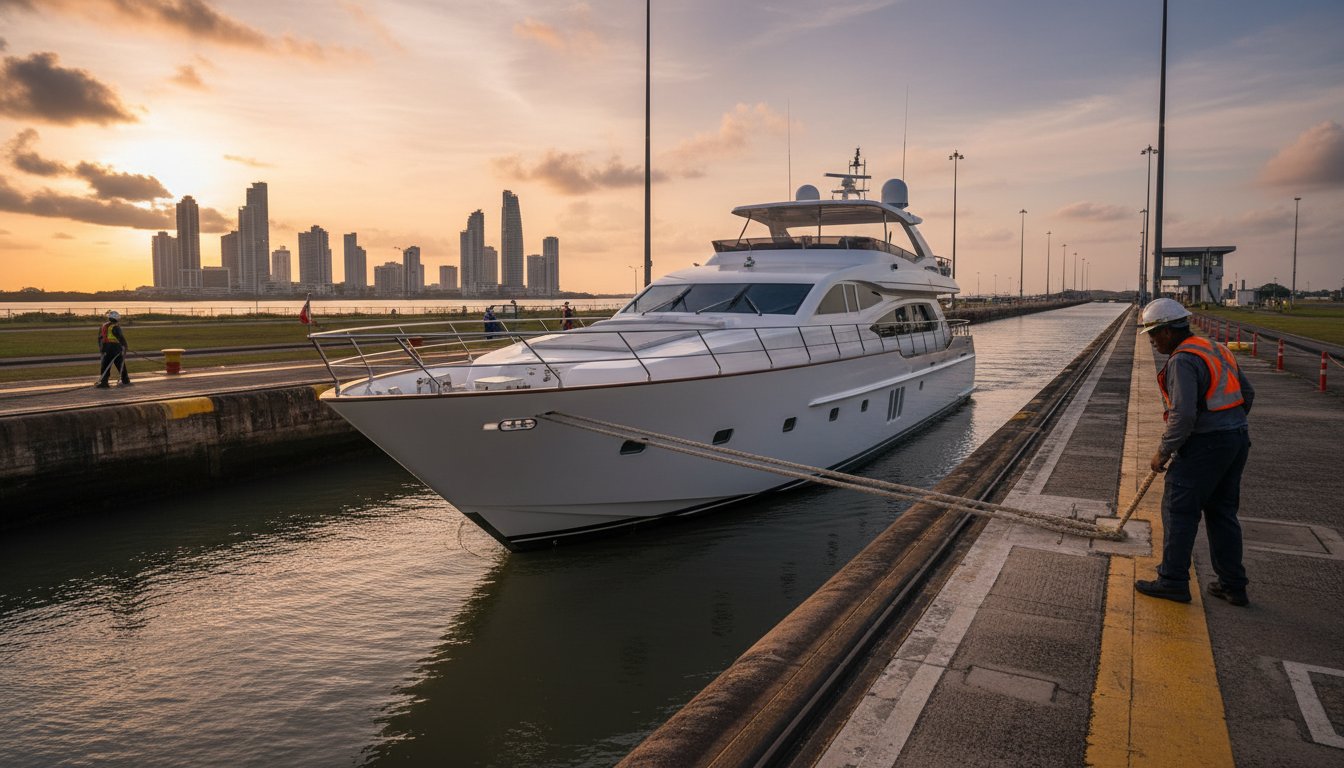
- Confirm all mooring lines, chocks, and bitts meet the required strength standards for your vessel’s size and are in excellent condition.
- Thoroughly test all mooring winches to ensure they are in good working order and can handle the stresses of lockage operations.
- Verify that pilot boarding arrangements, including ladders and lighting, are safe and fully compliant with SOLAS regulations.
- Ensure that visibility from the navigation bridge is clear and unobstructed by cargo, containers, or deck equipment.
Navigation and Safety Systems Checklist
Modern navigation and safety systems are critical for the Canal’s traffic management. Ensure all systems are fully operational:
- The Automatic Identification System (AIS) must be on, functioning correctly, and transmitting accurate vessel data at all times.
- All required VHF radios must be functional, with clear transmission and reception on the channels designated for Canal operations.
- The vessel’s steering gear and main engine must be in excellent condition, with recent tests and maintenance records available.
- Onboard sanitary systems must comply with Canal Waters regulations to prevent any illegal discharge.
Operational Rules During Canal Passage
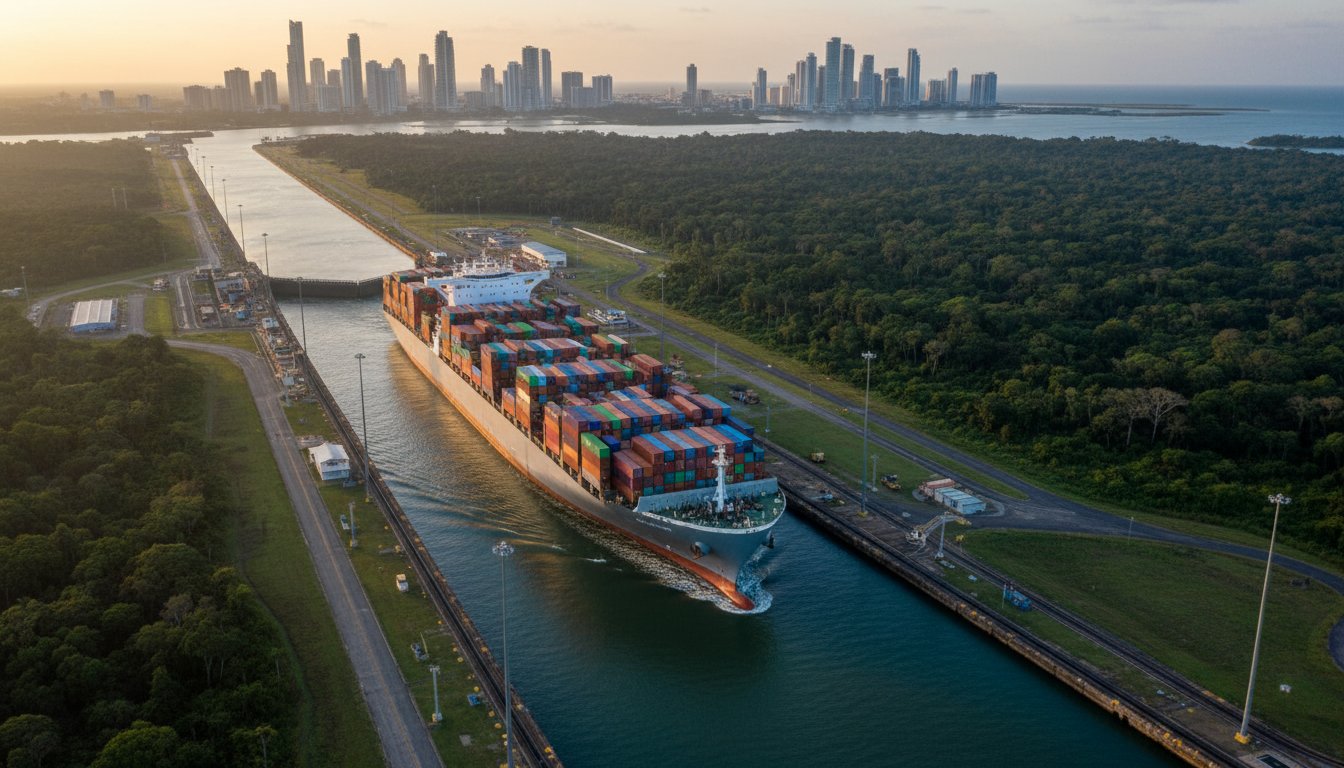
Maintaining compliance doesn’t end after the initial inspection. The entire transit is governed by a strict set of operational rules designed to ensure the safety and efficiency of all vessels in the Canal. Following these rules diligently is essential for a smooth passage.
Master, Pilot, and Bridge Team Responsibilities
A successful transit relies on seamless collaboration between the vessel’s crew and the Canal personnel. Key responsibilities include:
- The vessel’s Master retains ultimate command and responsibility for the ship at all times, even with a pilot on board.
- The bridge team must provide full and professional cooperation with the Panama Canal Pilot, who brings specialized local knowledge.
- A vigilant and alert bridge watch must be maintained throughout the entire transit, monitoring vessel position, traffic, and communications.
Avoiding Common Transit Violations
Simple mistakes can lead to serious consequences. Be mindful of these common operational pitfalls:
- Adhere strictly to the designated speed limits, which vary in different sections of the Canal.
- Follow all instructions from Canal signal stations and traffic control without delay.
- Any discharge of waste, garbage, oil, or untreated ballast water into Canal waters is strictly prohibited and carries severe penalties.
How a Ship Agent Ensures Flawless Compliance
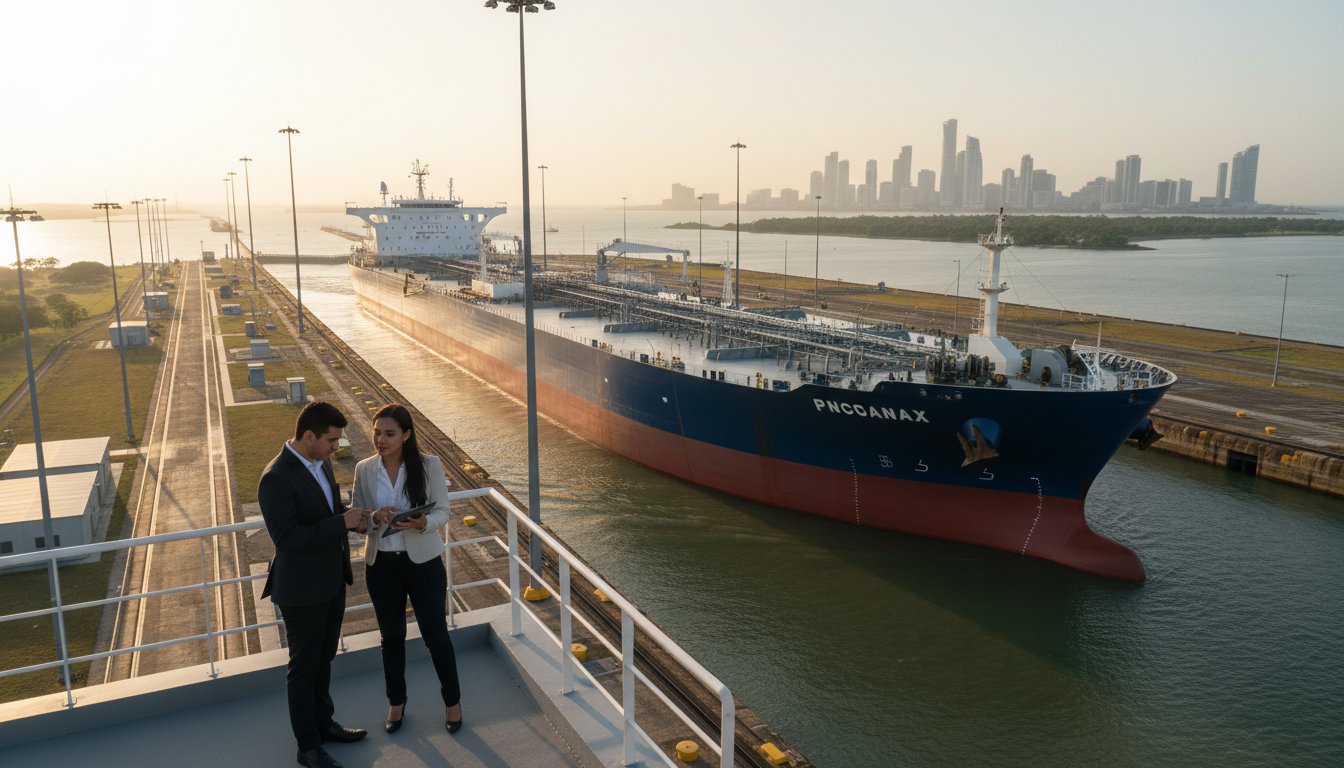
Navigating these complex regulations alone presents a significant operational and financial risk. An experienced, professional ship agent acts as your eyes and ears at the Canal, protecting your interests and ensuring every detail is managed correctly. At Adimar, we turn regulatory complexity into a simple, streamlined, and managed process for our clients.
Your Partner in Proactive Communication
Clear and timely communication is the backbone of a successful transit. As your dedicated agent, we take full responsibility for this critical function.
- We manage all necessary communication with the ACP on your behalf, from pre-arrival notifications to final clearance.
- We ensure all required documentation is submitted accurately, completely, and on time, preventing costly administrative errors.
- We serve as your single point of contact, providing you with clear updates and a stress-free transit experience.
Let Adimar Handle the Details
Our expertise allows you to focus on your primary business while we manage the intricacies of your Canal passage.
- With our team handling the details, you can focus on your core business of managing your vessels and cargo, not on complex local paperwork.
- Our 20+ years of experience as a trusted Canal agent means we have the knowledge and relationships to prevent common mistakes and resolve issues quickly.
Put your transit in our hands and let us eliminate the confusion with personalized, reliable service. Nominate Adimar as your trusted agent for your next transit.
Frequently Asked Questions
What is the most common reason for a vessel to be fined at the Panama Canal?
The most common reasons include inaccurate vessel information submitted pre-arrival, non-compliance with PCSOPEP requirements, and deficiencies in mooring equipment found during inspection.
How often do the Panama Canal regulations change?
The ACP typically issues an updated “Notice to Shipping” with revised vessel requirements annually. Minor advisories and operational changes can be issued more frequently, making it crucial to have a local agent who stays current.
What is a PCSOPEP Authorized Person and why do I need one?
This is an ACP-approved individual or company in Panama designated in your oil spill emergency plan. They must be available 24/7 to activate and coordinate a response. It is a mandatory requirement for all transiting vessels.
Can a ship transit the Panama Canal without an agent?
While technically possible, it is highly impractical and risky. An agent manages all local arrangements, including pilotage, tugs, line handlers, documentation, and fee payments, ensuring a smooth process. Attempting to coordinate these services without local expertise often leads to delays and higher costs.
What happens if my vessel fails the ACP inspection?
If a vessel fails inspection, it will not be allowed to transit. The vessel must correct the deficiencies, which may require repairs or sourcing parts locally, leading to significant delays and additional costs. A good agent can help expedite this process.
Ensuring your vessel is fully compliant with all Panama Canal regulations is the key to a predictable and cost-effective transit. By using this checklist and partnering with an experienced ship agent, you can protect your assets and keep your operations moving smoothly. Request a quote and ensure your vessel’s compliance.