
Panama Canal Regulations for Ships: The Complete 2025 Compliance Guide
In maritime operations, time is money-and a misstep at the Panama Canal can be one of the most expensive. The official Panama Canal Authority (ACP) regulations are dense, complex, and constantly evolving, making it easy to miss a small detail that could lead to costly delays or fines. You shouldn’t have to feel uncertain about which rules apply to your vessel or worry that you’ve overlooked a recent update.
This is where we step in. As your trusted partner at the Canal, we created this complete 2025 compliance guide to eliminate the confusion. We’ve translated the official jargon into a clear, actionable resource focused on the most important panama canal regulations for ships. Inside, you’ll find a straightforward breakdown of key vessel, safety, and documentation requirements, giving you the confidence to plan a smooth, predictable, and fine-free transit. Let us help you navigate with certainty.
Core Vessel Requirements: Is Your Ship Canal-Ready?
Before a vessel can even be considered for a transit slot, it must meet a series of foundational physical and operational standards. These are not suggestions; they are non-negotiable prerequisites outlined by the Panama Canal Authority (ACP). Failing to comply with these core panama canal regulations for ships results in costly delays and potential rejection of transit. All standards are detailed in the official ACP ‘N-01 Vessel Requirements’ notice, which serves as the definitive guide for ship owners and operators.
Vessel Dimensions (Beam, Length, Draft)
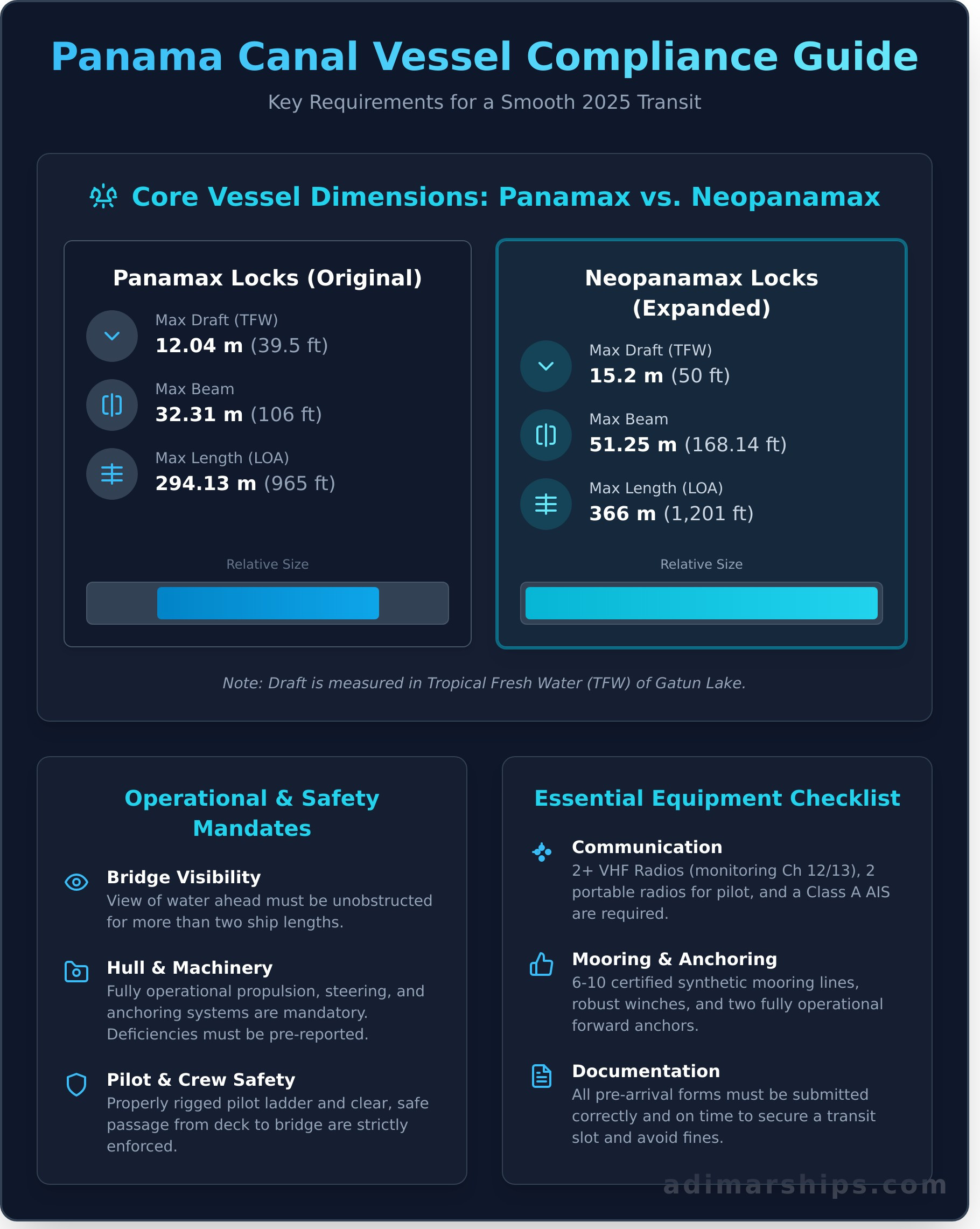
The Panama Canal operates two distinct sets of locks-the original Panamax locks and the larger Neopanamax locks-each with its own maximum allowable dimensions. The construction of the newer locks marked a major milestone in the Panama Canal history and overview, significantly increasing the size of vessels that can transit. It is critical to know which locks your vessel will use. Any protrusions, such as cargo gear or antennas, must not extend beyond the vessel’s maximum beam.
- Max Length (LOA): 294.13 m (965 ft)
- Max Beam: 32.31 m (106 ft)
- Max Draft (TFW): 12.04 m (39.5 ft)
- Max Length (LOA): 366 m (1,201 ft)
- Max Beam: 51.25 m (168.14 ft)
- Max Draft (TFW): 15.2 m (50 ft)
The draft limit is measured in Tropical Fresh Water (TFW) to account for the lower density of the water in Gatun Lake compared to saltwater. This is a critical calculation for ensuring safe clearance.
Visibility and Markings
Clear and unobstructed visibility is a paramount safety requirement. From the navigation bridge, the view of the water’s surface ahead must not be obscured for more than two ship lengths. Additionally, vessels must have clear, easy-to-read draft markings painted on the hull at the bow and stern on both sides. A designated pilot shelter must also be available, providing safe, accessible, and clean accommodation for the Canal pilot.
Hull and Machinery Condition
A vessel’s structural integrity and mechanical reliability are essential for a safe transit. Your ship must have fully operational main propulsion, steering systems, and anchoring equipment to be granted passage. Any known deficiencies that could affect maneuverability or safety must be reported to the ACP well in advance of arrival. Be prepared for an inspection, as the ACP reserves the right to board and verify the vessel’s condition, ensuring all panama canal regulations for ships are met before transit begins.
Navigational, Safety, and Mooring Equipment Mandates
A smooth Panama Canal transit hinges on more than just scheduling; it depends on your vessel being properly equipped. The Panama Canal Authority (ACP) enforces strict equipment mandates to ensure safety and efficiency within the locks and navigational channels. Think of this section as your critical pre-transit checklist. Failure to meet these standards is a leading cause of costly delays, turning a routine transit into a logistical headache. These tools are not optional-they are essential for precise maneuvering and clear communication with Canal personnel.
Communication and AIS Requirements
Constant and clear communication is non-negotiable. Your vessel must be equipped with the following to stay connected with ACP traffic control and pilots:
- VHF Radios: A minimum of two operational VHF radios are required. Your bridge team must continuously monitor VHF Channel 12 for Canal Port Control and Channel 13 for ship-to-ship navigation.
- Automatic Identification System (AIS): A fully functional, Class A AIS that is actively transmitting and receiving is mandatory for all vessels.
- Portable Radios: Two portable, intrinsically safe VHF radios must be available for the pilot’s use, ensuring seamless communication during lockage operations.
Mooring and Anchoring Gear
The unique nature of the lock system demands robust and reliable mooring equipment. The ACP will inspect your gear to ensure it meets stringent standards. Key requirements for mooring and anchoring include:
- Mooring Lines: Vessels must carry the specified number of synthetic mooring lines (typically 6 to 10, depending on vessel size), all in excellent condition and with proper certifications.
- Winches and Chocks: Mooring winches must have a braking capacity of at least 80% of the line’s breaking strength. All chocks and bitts must be well-maintained and free from any sharp edges that could damage lines.
- Anchors: Both forward anchors must be fully operational and ready for immediate deployment in case of an emergency.
Pilot and Crew Safety Standards
Ensuring the safety of the ACP pilot and your own crew is paramount. The panama canal regulations for ships detail specific requirements to create a secure working environment. These standards are not merely suggestions; they are strictly enforced as detailed in the official Panama Canal Authority Maritime Regulations to prevent accidents. Key mandates include a properly rigged pilot ladder, a clear and unobstructed passage from the deck to the bridge, and secure bridge wing railings. A vessel failing to provide safe access can be delayed until the deficiencies are corrected.
Essential Documentation & Pre-Arrival Procedures
A vessel’s physical compliance is only half the battle. Navigating the complex panama canal regulations for ships demands meticulous administrative preparation and strict adherence to deadlines. The Panama Canal Authority (ACP) operates on a precise schedule, and incomplete or late paperwork is the fastest way to lose a transit slot, leading to costly delays. In the world of Canal transits, timing is everything, and proper documentation is the key to securing your passage.
This entire process underscores the value of an experienced ship agent. A local partner acts as your eyes and ears, ensuring every digital form is submitted correctly and on time, eliminating confusion and allowing you to focus on your core business.
Required Pre-Arrival Forms and Information
All vessels must provide advance notification to the ACP at least 96 hours prior to arrival. This ETA (Estimated Time of Arrival) message is the first critical step and must be followed by a series of detailed submissions. While the exact forms can vary, the core requirements typically include:
- Ship’s Information and Quarantine Declaration: A comprehensive form detailing vessel particulars, sanitation conditions, and health status on board.
- Crew List and Effects: Standard documentation for customs and immigration.
- Dangerous Cargo Manifest: Required for any vessel carrying hazardous materials, with specific details on classification and stowage.
- Maritime Security Information: Proof of compliance with ISPS Code regulations.
The ACP frequently updates its specific documentation needs, so it is vital to check the latest Panama Canal vessel requirements to ensure full compliance before your voyage begins.
Booking, Scheduling, and Transit Systems
Securing a transit slot is managed through sophisticated digital platforms. The primary system for submitting all required information is the Ventanilla Única Marítima de Panamá (VUMPA). All forms, from pre-arrival notices to cargo declarations, are processed through this single-window system.
Vessels can transit the Canal in two ways: booked or un-booked. The Transit Reservation System allows ship operators to book a specific transit date in advance for a fee, providing scheduling certainty. Un-booked vessels operate on a first-come, first-served basis, which can result in significant and unpredictable waiting times, especially during peak seasons. Timely and accurate submission through VUMPA is essential for either option.
Overwhelmed by paperwork and complex scheduling systems? Adimar manages all documentation and ACP coordination for you.
Environmental & Pollution Control Regulations (PCSOPEP)
The Panama Canal Authority (ACP) enforces some of the world’s most stringent environmental rules. This is because the Canal’s operation depends entirely on the health of the surrounding freshwater watershed, a protected ecological area. For vessel operators, this means a zero-tolerance policy for pollution. Understanding these specific panama canal regulations for ships is not just about compliance; it’s about ensuring a smooth, cost-effective transit. Failure to adhere can result in significant fines, operational holds, and damage to your company’s reputation.
Understanding PCSOPEP Requirements
A cornerstone of the Canal’s environmental framework is the PCSOPEP (Panama Canal Shipboard Oil Pollution Emergency Plan). This is not a generic document; it is a mandatory, vessel-specific plan that details the exact procedures for responding to an oil spill within Canal waters. Every transiting vessel must have an approved PCSOPEP. A critical requirement is that the plan must name an ACP-authorized person or company as the point of contact. This ensures a qualified response is always available. As a trusted, authorized provider, Adimar Shipping manages PCSOPEP compliance to keep your vessel prepared and your transit on schedule.
Ballast Water and Waste Management
Beyond oil pollution, the ACP’s environmental regulations cover all potential contaminants to protect the local ecosystem. Navigating these rules requires careful planning and onboard discipline. Key areas of focus include:
- Ballast Water: Vessels are required to conduct ballast water exchange in the open ocean before entering Canal waters or use an approved Ballast Water Management System (BWMS). This prevents the introduction of non-native aquatic species.
- Waste Discharge: The discharge of any pollutants is strictly forbidden. This includes garbage, plastics, untreated sewage, and cargo residues. All waste must be managed and disposed of according to MARPOL regulations and ACP guidelines.
- Low-Sulfur Fuel: To combat air pollution, all vessels must use fuel with a maximum sulfur content of 0.5% m/m while in Panama Canal waters, aligning with global IMO 2020 standards.
Meeting these comprehensive environmental and pollution control aspects of the panama canal regulations for ships is essential for a seamless passage. Proactive management and partnership with a knowledgeable local agent can eliminate the risk of non-compliance.
How a Ship Agent Ensures Regulatory Compliance
Navigating the intricate web of canal rules, booking systems, and operational requirements can be a full-time job. The complexity of the system means a single misstep can lead to significant delays and financial penalties. This is where a dedicated ship agent becomes your most valuable asset. We are experts so you don’t have to be. By acting as your vessel’s local representative, a trusted agent transforms confusion into a clear, streamlined process, ensuring every transit is smooth, efficient, and cost-effective.
Your Eyes and Ears at the Canal
A ship agent is your on-the-ground team, providing constant vigilance and coordination. We serve as the direct liaison between your vessel and all local authorities, including Panama Canal Authority (ACP) officials, pilots, and tugboat operators. Before anything is submitted, we meticulously review all documentation for accuracy, ensuring full compliance with the latest panama canal regulations for ships. This proactive verification prevents rejections and keeps your transit on schedule. Furthermore, we provide real-time updates on canal conditions, traffic, and any potential issues, giving you a clear view from thousands of miles away.
Proactive Problem Solving and Cost Management
An experienced agent does more than just process paperwork; we anticipate challenges. Based on your vessel’s specifications and cargo, we can foresee potential compliance issues and resolve them before they impact your schedule. A critical part of our role is managing the timely pre-payment of tolls and fees, eliminating a common source of costly delays. While your vessel is in transit, we can also arrange essential husbandry services-from crew changes and medical assistance to delivering supplies and coordinating minor repairs-ensuring your operations remain efficient.
Choosing the Right Partner for a Seamless Transit
When selecting an agent, look for a partner defined by experience, integrity, and transparent communication. Your agent’s primary goal should be to protect your interests and optimize your vessel’s passage. A reliable partner provides:
- Expert guidance on all panama canal regulations for ships.
- Accurate pre-arrival documentation and transit booking.
- Efficient coordination of all operational and husbandry needs.
- Transparent accounting and cost-conscious solutions.
Don’t leave your transit to chance. Put your vessel in the hands of a team that sees itself as an extension of your own. Ensure a smooth passage. Nominate Adimar as your trusted Panama Canal agent.
Your Partner for a Seamless Panama Canal Transit
Successfully transiting the Panama Canal in 2025 requires more than a seaworthy vessel; it demands meticulous adherence to a complex web of rules. From core vessel readiness and specific mooring equipment mandates to flawless pre-arrival documentation and strict PCSOPEP environmental compliance, the potential for costly missteps is significant. Mastering the complete list of panama canal regulations for ships is not just recommended-it’s critical for an efficient and profitable voyage.
This is where a trusted local partner becomes your most valuable asset. With over 20 years of dedicated experience, Adimar Shipping acts as your eyes and ears at the Canal, navigating the complexities so you don’t have to. Our reputation is built on integrity, transparency, and proactive communication. As an authorized PCSOPEP service provider, we ensure every detail is managed flawlessly. Ensure a smooth, fine-free transit. Nominate Adimar as your trusted agent today. Partner with us and make your next transit your smoothest one yet.
Frequently Asked Questions About Panama Canal Regulations
What are the most common reasons for transit delays related to regulations?
The most common transit delays stem from non-compliance with Panama Canal regulations for ships, particularly administrative errors. Incomplete pre-arrival documentation is a primary cause, alongside vessels having non-compliant mooring equipment. Another frequent issue is an outdated Panama Canal Shipboard Oil Pollution Emergency Plan (PCSOPEP). These oversights lead to significant financial losses, underscoring the value of a vigilant agent verifying every detail before arrival to ensure a timely and efficient passage.
What happens if a vessel is found to be non-compliant upon arrival?
Upon arrival, the Panama Canal Authority (ACP) will conduct an inspection. If a vessel is found non-compliant, it will be denied transit and may be required to anchor until the deficiency is corrected at the owner’s expense. This results in substantial fines and costly operational delays. Working with a trusted local partner ensures all requirements are met well in advance, preventing these expensive and frustrating situations and safeguarding your schedule and budget. For a broader perspective on navigating commercial legal challenges, you can read more.
How often do the Panama Canal regulations change?
While major overhauls are infrequent, the Panama Canal Authority (ACP) regularly issues “Advisories to Shipping” that modify or clarify procedures. These updates can relate to draft restrictions, safety equipment, tariff changes, or new environmental requirements. Staying current is critical for a smooth transit. Our team constantly monitors these advisories to ensure our clients are always prepared, eliminating confusion and ensuring full compliance with the latest rules every time.
Is a PCSOPEP plan required for all vessel sizes?
A Panama Canal Shipboard Oil Pollution Emergency Plan (PCSOPEP) is mandatory for most commercial vessels of 400 gross tons or more. This applies to ships carrying oil as either cargo or fuel. The plan must be authorized by the ACP and be readily available for inspection. Failing to have an approved and up-to-date PCSOPEP is a common reason for transit delays, making it a critical compliance item for ship owners and charterers.
Can the captain or owner act as their own agent for a Panama Canal transit?
No, the Panama Canal Authority (ACP) regulations mandate that every vessel transiting the Canal must be represented by a local, licensed shipping agent. This requirement ensures a single, knowledgeable point of contact for all communications, documentation, and financial transactions with the ACP. An agent acts as your local office, providing the on-the-ground expertise needed to coordinate a timely and efficient passage, saving you from navigating complex procedures alone.
What are the specific regulations for ships carrying dangerous cargo?
Vessels with dangerous cargo face heightened scrutiny and stricter rules. Key regulations include a mandatory 96-hour pre-arrival notice, detailed cargo declarations, and strict adherence to IMDG Code segregation and stowage requirements. The ACP may also impose specific transit restrictions, such as daylight-only passage or additional tugboat assistance, to ensure maximum safety. Navigating these complex requirements demands specialized expertise from a trusted partner to guarantee a compliant and secure transit.