
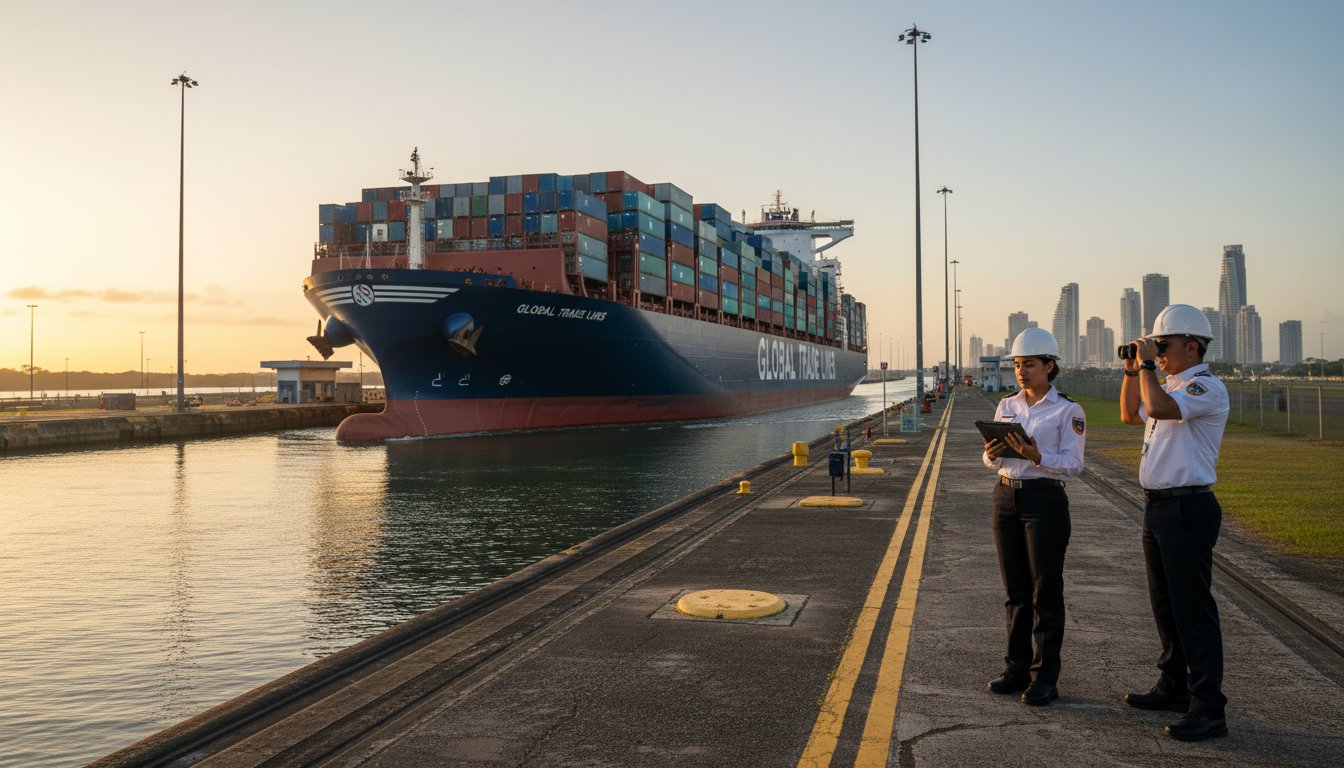
A smooth Panama Canal transit hinges on more than just good timing; it demands flawless regulatory adherence. For many ship owners, the line between global MARPOL standards and local requirements is dangerously blurry, making Panama Canal SOPEP compliance a source of constant stress. This confusion isn’t just an administrative headache-it can lead to significant fines, frustrating delays, and the very real risk of your vessel being denied passage.

This is where we step in. As your trusted partner at the Panama Canal, we’ve created this complete 2026 guide to eliminate the uncertainty. We are experts so you don’t have to be. Inside, you will master the specific complexities of the PCSOPEP, gain clarity on the crucial requirements for appointing a legally mandated Authorized Person (AP), and learn how to meet all Panama Canal Authority (ACP) standards with confidence. Let’s secure your zero-delay transit and ensure your vessel is fully compliant, every time.
Key Takeaways
- Understand the specific legal requirements mandated by the Panama Canal Authority (ACP) and why your vessel’s standard SOPEP is not enough for transit.
- Discover the critical role and strict 24/7 availability requirements for the mandatory, Panama-based Authorized Person (AP) needed for every vessel.
- Follow our step-by-step roadmap to achieving Panama Canal SOPEP compliance, from auditing your current plan to appointing an expert local agent.
- Identify the key differences between a global SOPEP and a PCSOPEP, particularly regarding Panama’s unique spill response tiers and notification protocols.
- Learn how an experienced partner provides more than just a certificate, offering personalized management that protects your vessel and your schedule.
Understanding Panama Canal SOPEP (PCSOPEP) in 2026
Navigating the Panama Canal involves more than just operational skill; it requires strict adherence to a unique set of environmental regulations. For any vessel over 400 gross tons (GT), a standard Shipboard Oil Pollution Emergency Plan (SOPEP) is insufficient. The Panama Canal Authority (ACP) mandates a specific, approved Panama Canal SOPEP (PCSOPEP) to protect one of the world’s most critical environmental and economic assets: the Gatun Lake watershed, which provides the freshwater essential for both Canal operations and drinking water for a significant portion of the country.
Achieving full panama canal sopep compliance is not a suggestion-it is a non-negotiable prerequisite for transit. The consequences of non-compliance are severe, ranging from tiered fines that can reach thousands of dollars to indefinite transit delays that disrupt schedules and create significant financial losses. In the world of shipping, where time is money, these delays can be far more costly than any fine.
The Sovereignty of ACP Environmental Regulations
Since Panama assumed full control, the ACP has established its own robust environmental framework to safeguard its sovereign territory. Governed by key documents such as the “Notice to Shipping N-12,” these regulations are tailored specifically for the unique ecosystem of the Panama Canal and often exceed international MARPOL standards. Looking ahead to 2026, the ACP is modernizing its processes, with updates expected to mandate electronic plan submissions and verifications, making expert guidance more critical than ever.
Why a Standard SOPEP is Not Enough
A vessel’s global SOPEP addresses oil spills on the open sea, but the Canal presents a different challenge. A PCSOPEP is a localized emergency plan designed for the Canal’s confined geography of locks, channels, and freshwater lakes. It must detail specific response tiers and list Panama-based resources. Critically, the plan must also designate a Panama-based Authorized Person (AP), empowering them to coordinate with the ACP and deploy resources on the vessel owner’s behalf during an incident-a requirement not found in a standard SOPEP.
The Critical Role of the PCSOPEP Authorized Person (AP)
For any vessel transiting the Panama Canal, the Authorized Person (AP) is not just a recommendation-it is a mandatory requirement. The AP serves as the critical, on-the-ground liaison between the vessel’s Master and the Panama Canal Authority (ACP). In the event of an oil spill or other environmental incident, this individual is the designated first point of contact, responsible for activating the response plan and ensuring seamless communication with the ACP’s Incident Management System (IMS).
This role is central to effective panama canal sopep compliance. The AP is empowered to act on behalf of the vessel’s owners, holding significant authority and liability. This includes the power to commit funds for spill response and cleanup operations, making the selection of a trustworthy and competent AP a decision of paramount importance.
Authorized Person Qualifications and Skills
The ACP enforces strict requirements for any individual serving as an AP. These are not roles that can be filled remotely or by an unqualified party. Key qualifications include:
- Panama Residency: The AP must be physically based in the Republic of Panama to ensure immediate availability and local knowledge.
- Bilingual Fluency: Complete fluency in both English and Spanish is essential for clear communication between the vessel’s crew and ACP officials.
- 24/7 Availability: The AP must be reachable around the clock during the vessel’s entire transit through Canal waters.
- IMS Familiarity: A deep understanding of the ACP’s Incident Management System is required. The specific protocols and expectations are regularly updated, as outlined in the official Panama Canal Authority Notices to Shipping.
The AP as Your Local Representative
Think of your Authorized Person as your “eyes and ears” at the Panama Canal. During an emergency, when time is money and every decision counts, the AP acts swiftly on your behalf. They coordinate directly with the designated Oil Spill Response Organization (OSRO) to deploy resources, manage the incident, and mitigate liability. This immediate, expert response is fundamental to protecting your assets and the environment.
As your trusted partner, a professional Panama Canal ships agent provides this specialized AP service, ensuring your vessel meets all regulatory demands. We eliminate the confusion and provide the peace of mind that comes from having an experienced, reliable representative safeguarding your interests every step of the way.
PCSOPEP vs. Global SOPEP: Mapping the Differences
While your vessel’s global Shipboard Oil Pollution Emergency Plan (SOPEP) is essential, it is not a substitute for a Panama Canal SOPEP (PCSOPEP). Think of the global SOPEP as a general framework mandated by the International Maritime Organization (IMO); the PCSOPEP is a highly specific, localized plan that must meet the stringent requirements of the Panama Canal Authority (ACP). Navigating these differences is the key to successful panama canal sopep compliance.
The ACP demands a plan that is not just acknowledged but actively approved and integrated with local resources. The primary distinctions fall into four critical areas: response tiers, notification protocols, the plan approval process, and the mandatory use of a local Oil Spill Response Organization (OSRO).
Tiers of Response Capability
The ACP classifies spill response capabilities into tiers based on a vessel’s total oil capacity (cargo and fuel). This ensures that the available resources match the vessel’s specific risk profile. The ACP requires a pre-calculated Worst Case Discharge (WCD) to determine your tier and mandate equipment standards.
- Tier 1: For spills up to 50 barrels. Requires immediate access to basic containment booms and recovery equipment.
- Tier 2: For spills up to 500 barrels. Demands a more substantial inventory of equipment that can be deployed within hours.
- Tier 3: For spills exceeding 500 barrels (the WCD). This requires a comprehensive, large-scale response capability, guaranteed through an OSRO contract.
Administrative and Digital Requirements
Unlike a global SOPEP, your PCSOPEP is a living document within the ACP’s ecosystem. The ACP directly reviews, comments on, and ultimately “stamps” the plan, making it official. This includes unique administrative requirements:
- OSRO Contract: You must have a binding contract with an ACP-authorized OSRO. This is a non-negotiable prerequisite for plan approval.
- Specific Notifications: The plan must list direct ACP emergency channels, not just generic coastal state contacts.
- Annual Review: The PCSOPEP requires an annual review and resubmission if there are major changes to the vessel or its ownership.
- Digital Submission: Starting in 2026, all plan management will transition to the ACP’s Maritime Service Portal, streamlining updates and approvals.
- Language: Key sections must be in both English and Spanish to ensure accessibility for ACP officials and local response teams.
Step-by-Step Roadmap to PCSOPEP Compliance
Achieving panama canal sopep compliance can seem complex, but it follows a clear and manageable path. At its core, the process is about demonstrating readiness and having the right local support. We see ourselves as your local office at the Panama Canal, guiding you through each requirement with integrity to ensure a smooth, penalty-free transit. Here is a reliable roadmap to secure your vessel’s approval.
- 1. Initial Audit: The process begins by meticulously reviewing your vessel’s current SOPEP or SMPEP against the latest ACP Notice to Shipping N-1 requirements. This gap analysis identifies exactly what needs to be adapted for the Panama-specific plan, preventing unnecessary revisions later.
- 2. Appointing the Authorized Person (AP): You must designate a Panama-based agent as your AP. This is not just a name on a form; your AP is your 24/7 emergency contact and compliance partner. Selecting an experienced agent with proven IMS expertise is the most critical decision in the process.
- 3. Drafting and Submission: Using the official ACP template, we integrate your vessel’s specific data-including oil type, capacity, and response equipment-to create a robust PCSOPEP. The completed plan is then submitted through the proper ACP channels for review.
- 4. Verification and Drills: A plan is only effective if the crew can execute it. We help ensure your crew understands the unique Panama-specific notification sequence through clear instructions and guidance for onboard drills, confirming they know who to call and when.
- 5. Final ACP Approval: Once the plan is reviewed and verified, the ACP issues a confirmation of compliance. This official approval is your vessel’s green light, clearing it for transit without costly delays.
Common Compliance Pitfalls to Avoid
Minor administrative errors can lead to major fines and transit delays. The most common issues we see are easily preventable, including:
- Incorrect or outdated contact details for the Authorized Person (AP), a leading cause of non-compliance penalties.
- Failure to update and resubmit the PCSOPEP after a change in the vessel’s ownership, management, or flag.
- Incomplete Oil Spill Removal Organization (OSRO) coverage for the entire length of the Canal waters.
The 2026 Digital Compliance Checklist
As the ACP moves toward greater digitalization, staying ahead is key. Ensure your vessel is prepared for future requirements:
- Verify that all documents are prepared in ACP-approved digital formats with valid electronic signatures for portal submission.
- Ensure your AP’s credentials are authenticated and current within the ACP’s centralized database to avoid validation issues.
- Confirm your plan includes the latest 2026 emergency contact directory for all relevant Panamanian authorities.
Adimar Shipping: Your Eyes and AP at the Panama Canal
Navigating the regulatory waters of the Panama Canal requires more than just a plan; it demands a trusted local partner. For over 20 years, Adimar Shipping, Inc. has built a reputation on integrity-the only currency that truly matters in Panama. We are not just another agent; we are your eyes and Authorized Person (AP) on the ground, offering a seamless, integrated solution that eliminates confusion and protects your assets.
The Adimar Shipping, Inc. advantage lies in combining our premier ship agency services with expert PCSOPEP Authorized Person duties. This unified approach moves beyond “off-the-shelf” compliance, providing a single, reliable point of contact for your entire transit. By entrusting your vessel to us, you benefit from:
- Streamlined Communication: One call or email handles everything from transit booking to compliance verification.
- Reduced Administrative Burden: We manage all liaison with the Panama Canal Authority (ACP), so you can focus on your business.
- Cost-Effective Coordination: Our deep local relationships ensure efficient and transparent handling of all required services.
Our Commitment to Transparency and Efficiency
We believe in proactive communication, keeping you informed at every stage of the compliance process. Our team anticipates requirements, verifies documentation, and manages Oil Spill Response Organization (OSRO) coordination to minimize costs and prevent last-minute issues. We are experts so you don’t have to be. Adimar Shipping, Inc. serves as your dedicated local office, ensuring every PCSOPEP requirement is met with 100% accuracy before your vessel reaches the breakwater.
Get Started with Your 2026 Compliance Audit
With the 2026 PCSOPEP renewal and audit period approaching, now is the time to ensure your plan is robust and your representation is secure. Contact our team for a complimentary review of your current plan and discover how easily you can nominate Adimar Shipping, Inc. as your Authorized Person. Let us handle the complexities of Panama Canal SOPEP compliance, providing you with the peace of mind that comes from working with a proven partner.
Contact Adimar Shipping, Inc. to secure your PCSOPEP Authorized Person today.
Secure Your Panama Canal Transit with an Expert Partner
Navigating the specific requirements of the waterway is a critical task for any ship owner. As we’ve detailed, the PCSOPEP is not merely an extension of your global SOPEP but a distinct plan with stringent local rules. The cornerstone of successful panama canal sopep compliance is appointing a skilled and responsive Authorized Person (AP) who acts as your direct liaison with the Panama Canal Authority (ACP), ready to manage any incident with precision.
For two decades, Adimar Shipping has served as the trusted partner for global fleets. Our deep expertise in ACP Incident Management System (IMS) protocols and a proven track record of zero-delay compliance make us the ideal choice to be your eyes at the Canal. We eliminate the confusion so you can focus on your voyage. Nominate Adimar Shipping as your PCSOPEP Authorized Person today and put your transit in the hands of seasoned experts. A smooth, compliant journey is just one step away.
Frequently Asked Questions About Panama Canal SOPEP Compliance
Is PCSOPEP compliance mandatory for all vessels transiting the Panama Canal?
Yes, compliance is mandatory for all vessels over 400 metric tons carrying capacity transiting Canal waters, regardless of whether they are carrying oil as cargo. The Panama Canal Authority (ACP) requires this plan to ensure environmental protection. Failing to meet panama canal sopep compliance requirements will prevent your vessel from being scheduled for transit, leading to costly delays. We ensure your documentation is correct and approved in a timely manner.
What is the specific role of the Authorized Person (AP) in Panama?
The Authorized Person (AP) is your vessel’s designated 24/7 legal representative in Panama for all PCSOPEP matters. In the event of an oil spill, the AP is the first point of contact for the Panama Canal Authority (ACP). They are empowered to immediately activate the response plan and coordinate with the OSRO on your behalf. A reliable AP is critical for a swift and effective response, minimizing liability and environmental impact.
How long does it take to get a PCSOPEP approved by the ACP?
The Panama Canal Authority (ACP) typically takes 2 to 3 business days to review and approve a PCSOPEP. However, to avoid any last-minute complications or potential transit delays, we strongly recommend submitting the plan at least 5 business days in advance. This buffer allows for any necessary revisions and ensures a smooth, stress-free approval process. Proper planning is essential, as we know that time is money in this industry.
Can my regular ship agent also act as my PCSOPEP Authorized Person?
Yes, your ship agent can also serve as your Authorized Person, provided they are officially registered and qualified with the ACP for this specific role. Consolidating these services with a single trusted partner like Adimar streamlines communication and ensures accountability. This integrated approach eliminates confusion and provides you with a single, reliable point of contact for all your transit and compliance needs in Panama, making the process more efficient and cost-effective.
What are the fines for not having a valid PCSOPEP on board?
Non-compliance with PCSOPEP regulations carries severe penalties. The Panama Canal Authority (ACP) can impose fines of up to $25,000 for violations. More critically, a vessel without a valid, approved PCSOPEP will be denied transit until the issue is resolved. These delays result in significant operational costs, far exceeding the price of maintaining compliance. We help you avoid these risks by managing your documentation proactively.
Do I need to update my PCSOPEP every year?
The PCSOPEP manual itself does not expire annually. However, the plan’s validity depends on having current contracts with both your Authorized Person (AP) and your Oil Spill Response Organization (OSRO). These service contracts must be renewed each year. Failure to renew them will invalidate your entire PCSOPEP. We manage these annual renewals for our clients to ensure their plans remain compliant without interruption.
What is an OSRO and why do I need a contract with one in Panama?
An OSRO is an Oil Spill Response Organization. It is a company certified by the Panama Canal Authority (ACP) that has the specialized equipment and trained personnel to manage and clean up an oil spill. A contract with an approved OSRO is a mandatory component of your PCSOPEP. This contract serves as proof that your vessel has guaranteed access to the necessary resources for an immediate and effective spill response within Canal waters.
How does the ACP verify PCSOPEP compliance during transit?
During the pre-transit inspection, an ACP boarding officer will physically verify that the approved PCSOPEP manual is on board. They will check for the official ACP approval stamp and confirm that the plan details match the vessel. The ACP also maintains a digital database to cross-reference the validity of your plan and your contracts with the AP and OSRO. A clean verification is key to an on-schedule transit.