
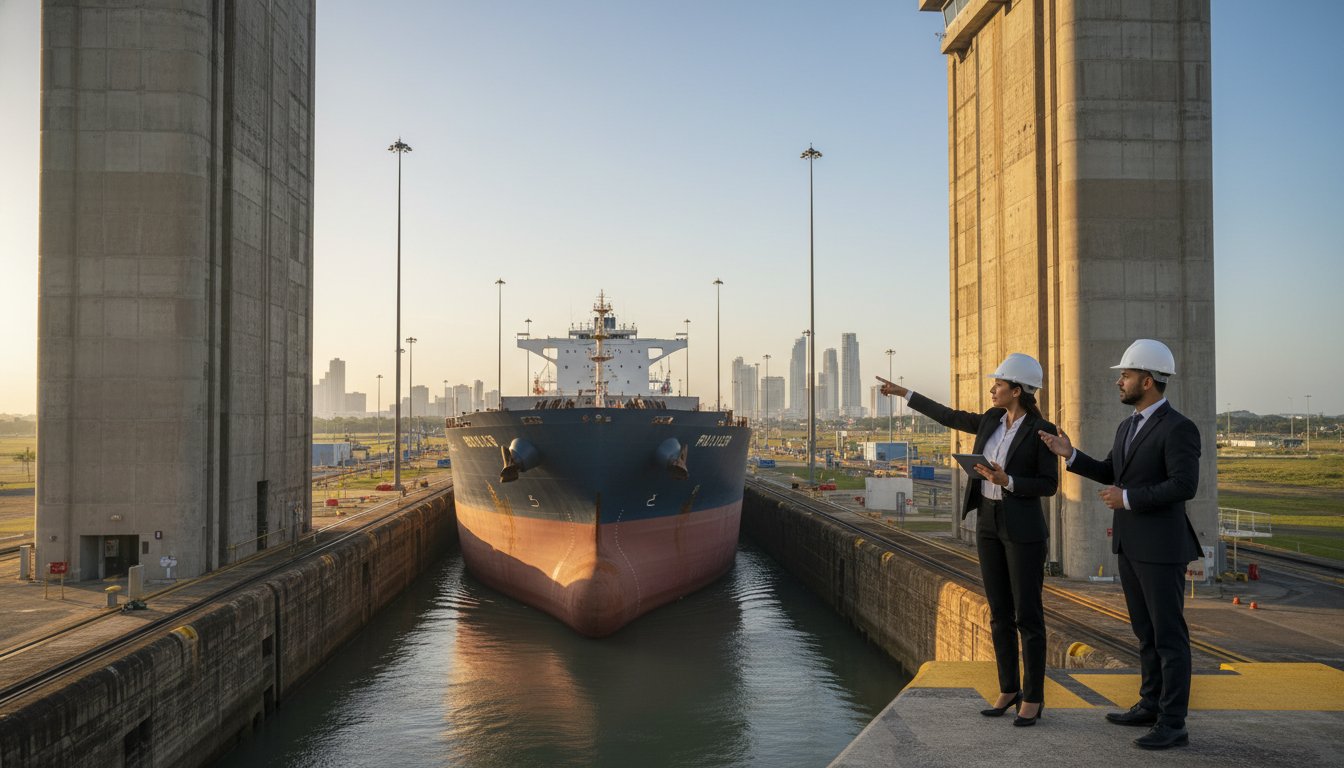
In the world of maritime logistics, time is money-and nowhere is this truer than at the Panama Canal. The potential for costly delays, confusing regulations, and unpredictable fees can turn a routine passage into a significant financial headache for ship owners and charterers. The uncertainty surrounding a panama canal transit for bulk carriers is a constant challenge, but it doesn’t have to be.
This complete guide is designed to eliminate that confusion and give you the confidence to manage your vessel’s passage effectively. We are experts in this waterway, and we’ve compiled our knowledge to help you achieve a smooth, predictable, and on-schedule transit every time. Think of us as your trusted partner, providing the clarity you need to navigate these waters successfully.
Inside, you will find a step-by-step breakdown of the entire process, from pre-arrival requirements to a transparent look at all associated costs and fees in US dollars ($). We demystify draft restrictions, simplify coordination with the Panama Canal Authority (ACP), and provide the critical insights needed for a cost-conscious and efficient voyage. Let’s get your vessel moving.
Key Takeaways
- Understand why your vessel’s draft is the single most critical factor for a successful transit, especially during Panama’s dry season.
- Learn to accurately forecast total transit expenses by understanding the full breakdown of costs, which extend far beyond standard tolls.
- Master the step-by-step process for a smooth Panama Canal transit for bulk carriers, from pre-arrival requirements to clearing the final lock.
- Discover how partnering with an experienced ship agent is the most effective strategy to prevent costly delays and navigate complex Canal regulations.
Key Considerations for Bulk Carriers at the Panama Canal
A successful Panama Canal transit for bulk carriers is a matter of precise planning and deep operational knowledge. Unlike container ships with fixed schedules, bulkers often face dynamic voyage plans that demand flexibility and expert coordination. The entire operation is governed by the Panama Canal Authority (ACP), the entity responsible for managing, operating, and maintaining this critical waterway. Understanding the ACP’s regulations and the canal’s physical limitations is the first step toward an efficient and cost-effective passage. The canal’s infrastructure has evolved significantly over its lifetime, a topic well-documented in the History of the Panama Canal, leading to the dual-lock system in place today.
Panamax vs. Neopanamax Locks: Which Path for Your Vessel?
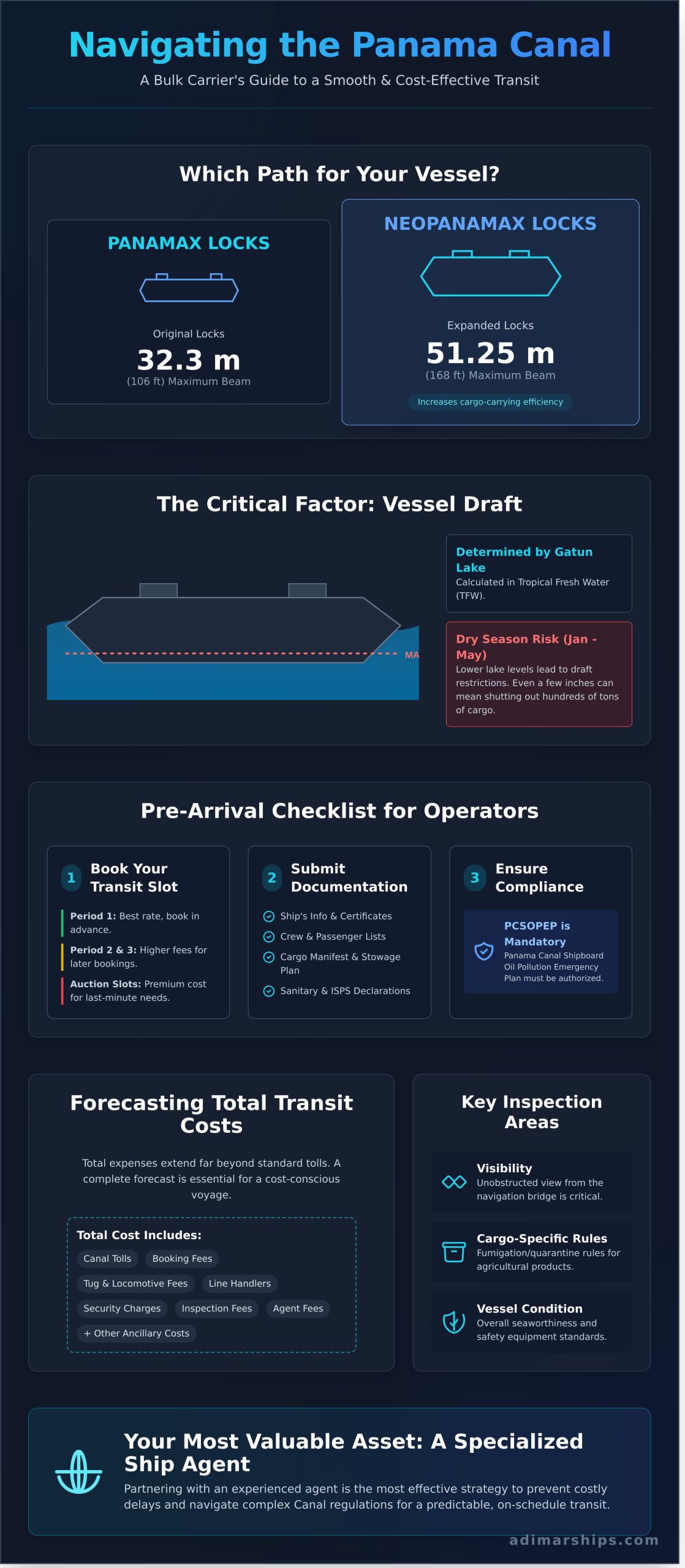
The choice between the original Panamax locks and the larger Neopanamax locks depends entirely on your vessel’s dimensions. Panamax vessels are limited to a beam of 32.3 meters (106 ft), while Neopanamax locks accommodate beams up to 51.25 meters (168 ft). This difference is critical; selecting the Neopanamax path allows larger Capesize or Newcastlemax bulkers to transit, significantly increasing cargo-carrying efficiency. While tolls are higher for Neopanamax vessels, the ability to move more cargo in a single voyage often provides a clear economic advantage.
The Critical Role of Vessel Draft and Water Levels
For any bulk carrier, the most critical variable is the maximum allowable draft, which is determined by the water level of Gatun Lake and calculated in Tropical Fresh Water (TFW). During Panama’s dry season (typically January to May), lake levels can drop, leading the ACP to impose draft restrictions. A reduction of even a few inches can mean shutting out hundreds of tons of cargo. Diligently monitoring ACP advisories on water levels and draft is essential to prevent costly delays or cargo short-shipping.
Specific Regulations and Inspections for Bulk Cargo
Bulk carriers undergo rigorous pre-arrival inspections that focus on specific operational and safety standards. Failure to meet these requirements can result in significant delays. Key areas of focus include:
- Visibility: The view from the navigation bridge must be unobstructed. Deck cranes or high-stowed cargo can be a common source of non-compliance.
- Cargo-Specific Rules: Agricultural products like grain may be subject to strict fumigation and quarantine regulations to prevent the introduction of foreign pests.
- Vessel Condition: The ACP will inspect the vessel’s overall seaworthiness, including mooring equipment, sanitary systems, and adherence to safety protocols.
Preparing for Transit: A Pre-Arrival Checklist for Operators
A successful panama canal transit for bulk carriers is determined weeks before your vessel ever reaches Panamanian waters. In an environment where time is money, meticulous pre-arrival preparation is the single most effective way to avoid costly delays, penalties, and operational headaches. The entire process hinges on three critical pillars: strategic booking, accurate documentation, and strict regulatory compliance. This is where proactive communication with your trusted ship agent becomes your greatest asset, turning potential confusion into a seamless, efficient operation.
Booking Your Transit Slot: The Transit Reservation System
Securing a transit slot is a competitive process managed by the Panama Canal’s Transit Reservation System. Slots are offered in three booking periods, with fees varying based on how far in advance you book. Early booking generally ensures a better rate and guaranteed passage. For urgent or last-minute needs, the system also offers daily auction slots. While these provide flexibility, they come at a significant premium and are subject to intense bidding, making them a costly last resort.
Essential Documentation and ACP Submissions
Accuracy is non-negotiable when submitting documentation. All required information must be submitted correctly and on time through the electronic systems of the Panama Canal Authority (ACP) to prevent processing delays or fines. Your agent will manage these submissions, but operators must ensure the source information is flawless. Key documents include:
- Detailed Ship’s Information and Certificates
- Official Crew and Passenger Lists
- Complete Cargo Manifest and Stowage Plan
- Sanitary and ISPS declarations
Ensuring PCSOPEP and Other Regulatory Compliance
All vessels must have a Panama Canal Shipboard Oil Pollution Emergency Plan (PCSOPEP). This is more than just a document; it is a comprehensive plan that requires an authorized person or legal entity based in Panama to be named as the plan’s manager. This local representative is responsible for implementation in an emergency. Beyond PCSOPEP, your vessel must also be fully compliant with International Ship and Port Facility Security (ISPS) Code requirements and local sanitary regulations to be cleared for transit.
The Transit Walkthrough: From Anchorage to Open Sea
A successful Panama Canal transit for bulk carriers is a precisely choreographed operation lasting approximately 8 to 10 hours. While the journey is a marvel of engineering, its efficiency is vital for global trade, a point underscored by recent BIMCO analysis of Panama Canal transits which highlights fluctuating traffic patterns. Understanding each stage of this journey eliminates confusion and ensures your vessel is prepared for a smooth and timely passage. Put your transit in our hands, and we will manage every detail from start to finish.
Arrival, Inspection, and Anchorage Procedures
Your vessel’s journey begins upon arrival at the Pacific or Atlantic breakwater, where it will proceed to a designated anchorage area. Here, a team from the Panama Canal Authority (ACP) will board the ship to conduct a thorough pre-transit inspection. They verify compliance with all safety, security, and operational requirements. This is also the critical window where your ship agent coordinates husbandry services, such as delivering provisions, managing crew changes, or arranging necessary repairs, ensuring your vessel is fully prepared for the crossing.
Navigating the Locks with Pilots and Tugboats
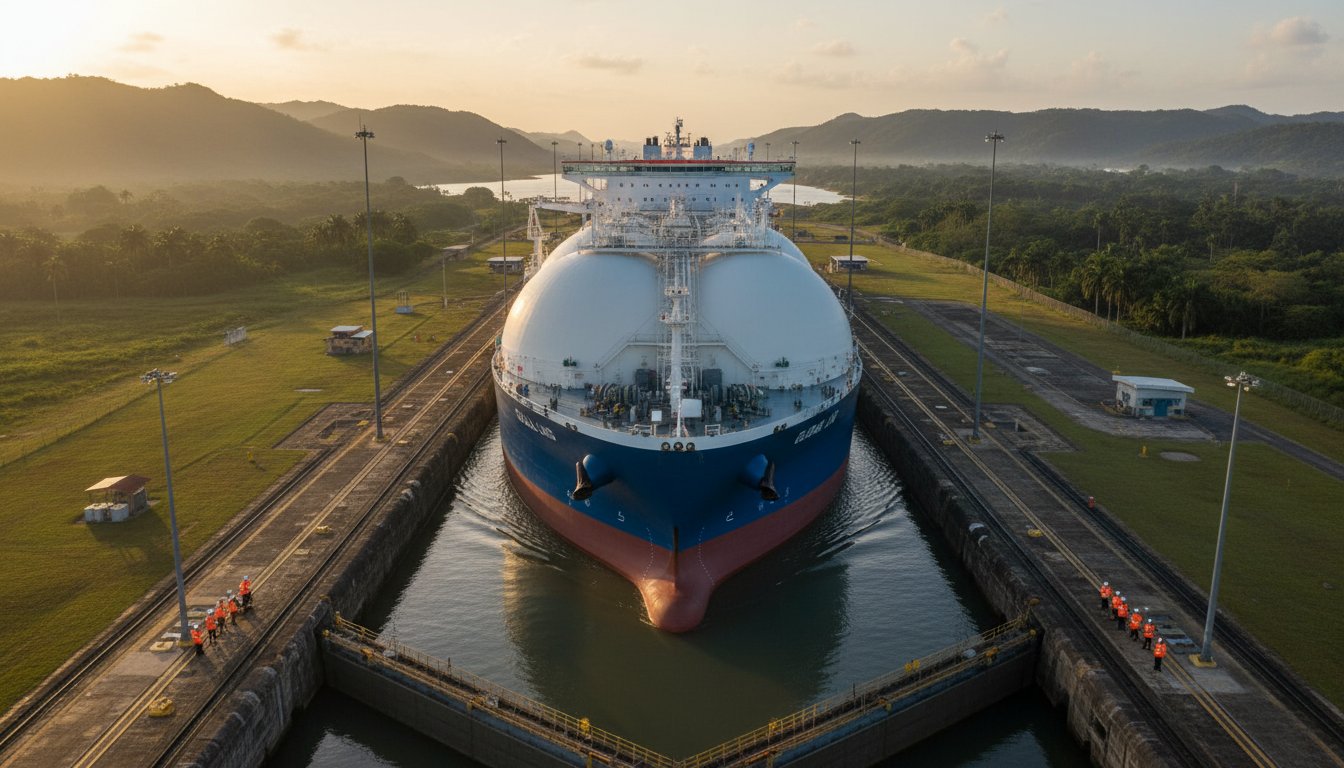
Once cleared for transit, an expert ACP pilot boards your bulk carrier and takes navigational control from the captain. As the vessel approaches the first set of locks-either the Gatun Locks on the Atlantic side or the Cocoli/Miraflores Locks on the Pacific-powerful tugboats take position. These tugs guide the massive ship with precision into the narrow lock chamber. Once inside, immense steel gates seal the chamber, and millions of gallons of water are transferred by gravity, raising or lowering the vessel to the level of the next chamber or waterway.
Crossing Gatun Lake and Completing the Transit
After ascending the initial locks, your vessel enters the vast, man-made Gatun Lake, which forms a major part of the canal system. The pilot navigates the 24-mile channel across the lake, a journey that offers a unique view of Panama’s lush interior. Upon reaching the other side, the vessel enters the final set of locks to be lowered back to sea level. Once clear of the last lock, the ACP pilot disembarks, returning full control to the ship’s captain. Your vessel is now in a new ocean, ready to continue its voyage.
A Detailed Breakdown of Panama Canal Costs for Bulk Carriers
Understanding the full cost of a Panama Canal transit for bulk carriers is critical for accurate voyage planning. The final invoice is more than just the toll; it’s a combination of mandatory fees, operational charges, and service costs. Miscalculating these expenses can directly impact your voyage’s profitability. At Adimar Shipping, Inc., we believe in complete transparency, ensuring you have a clear financial picture before your vessel arrives.
How Panama Canal Tolls are Calculated (PC/UMS)
The foundation of your transit cost is the toll, which is not based on cargo deadweight tonnage. Instead, the Panama Canal Authority (ACP) uses the Panama Canal Universal Measurement System (PC/UMS). This system measures a vessel’s total volumetric capacity. Tolls are then calculated based on this PC/UMS tonnage, with different rates applied depending on whether the vessel is laden (loaded) or in ballast (empty).
Booking, Security, and Ancillary Charges
Beyond the primary toll, several other charges are essential for a successful transit. A typical cost structure for a Panamax bulk carrier includes:
- Transit Reservation Fee: An optional but highly recommended fee to secure a specific transit slot and avoid potentially costly delays.
- ISPS Security Fee: A mandatory charge per transit for security compliance.
- Line Handler & Tugboat Fees: Essential personnel and equipment required to guide your vessel safely through the Canal’s locks.
- Other Potential Costs: Additional services such as vessel escorts or specific requests like guaranteed daylight transit can also add to the total.
For a standard Panamax bulk carrier, the total transit cost can range from $300,000 to over $450,000, depending heavily on its PC/UMS measurement, cargo status, and booking arrangements.
The Value of the Ship Agency Fee
The ship agency fee is not an expense; it is an investment in efficiency and peace of mind. This fee covers the vital on-the-ground coordination required for a smooth operation. As your trusted partner, we manage all communications with the ACP, arrange all necessary services, and handle the complex financial pre-funding and settlement process. We are your eyes at the Canal, ensuring every detail is managed with integrity to prevent delays and control costs. To understand the complete financial picture for your vessel, we invite you to request a transparent, no-obligation quote for your next transit.
Why a Specialized Ship Agent is Your Most Valuable Asset
In the intricate world of the Panama Canal, time is money. Misjudge your timing, and you lose. For vessel owners and charterers, navigating the complex rules, shifting schedules, and variable costs of the canal can be a constant source of frustration. This is where a dedicated, experienced ship agent transforms from a simple necessity into your most valuable operational asset-your eyes and ears on the ground, protecting your interests at every turn.
Mitigating Delays and Managing Complex Schedules
An expert agent doesn’t just react; they act proactively. With direct lines of communication to the Panama Canal Authority (ACP), we manage booking slots and anticipate schedule changes to keep your vessel moving. Should an unexpected issue arise during inspections or preparations, our on-the-ground team is there to resolve it swiftly, minimizing costly delays and ensuring your transit stays on track.
Ensuring Cost-Efficiency and Financial Oversight
Financial clarity is paramount. A trustworthy agent provides meticulous oversight to protect your bottom line. This includes:
- Verifying every invoice from the ACP and local vendors for accuracy.
- Delivering precise pre-arrival funding requests (PDAs) to avoid surprises.
- Advising on the most cost-effective booking strategies and transit options available.
Your Trusted Partner for Smooth, Predictable Operations
Think of Adimar as an extension of your own team, located right here in Panama. We are experts so you don’t have to be. Our mission is to eliminate the confusion inherent in a panama canal transit for bulk carriers with personalized, 24/7 service. We handle the local complexities with integrity and transparency, allowing you to focus on your core business with the confidence that your asset is in safe hands.
Ultimately, a successful transit is defined by predictability and efficiency. By partnering with a dedicated agent, you gain more than just a service provider; you gain a strategic partner committed to your success. Nominate Adimar as your agent and let us put our two decades of experience to work for you.
Navigate Your Next Transit with Confidence
Successfully navigating the Panama Canal requires more than just passage; it demands meticulous preparation, a deep understanding of operational costs, and flawless execution. As we’ve explored, a successful panama canal transit for bulk carriers hinges on proactive planning and expert on-the-ground coordination. Missteps can lead to costly delays, but with the right partner, your vessel’s journey can be smooth and efficient.
This is where an experienced ship agent becomes your most critical asset. At Adimar Shipping, we are your eyes and ears at the Canal. With over 20 years of specialized experience, we bring deep expertise in handling the unique needs of bulk carriers. Our reputation is built on a foundation of integrity, transparency, and cost-conscious service, ensuring there are no surprises.
Don’t leave your transit to chance. Ensure a smooth transit. Nominate Adimar as your trusted agent at the Panama Canal. Let our team manage the complexities so you can focus on a successful voyage ahead.
Frequently Asked Questions: Panama Canal Transit for Bulk Carriers
How long does a typical Panama Canal transit take for a bulk carrier?
A standard transit through the Panama Canal itself typically takes between 8 to 10 hours. However, the total time a vessel spends in Canal waters, from arrival at the anchorage to final departure, is usually around 24 hours. This includes waiting time and clearing procedures. For a successful Panama Canal transit for bulk carriers, efficient coordination by a trusted local agent is crucial to minimize delays, as we all know that in shipping, time is money.
What are the current maximum draft restrictions, and how do they change?
The maximum allowable draft for the Neopanamax locks is officially 15.24 meters (50.0 feet) Tropical Fresh Water (TFW). However, this figure is highly dependent on the water levels of Gatun Lake, which fluctuate with rainfall. The Panama Canal Authority (ACP) issues regular advisories announcing adjustments. Working with an agent who provides daily updates is essential for accurate voyage planning and to avoid costly loading errors or delays upon arrival.
What happens if a vessel misses its scheduled transit slot?
Missing a scheduled transit slot results in the vessel losing its place and being moved to the queue for un-booked vessels. This can lead to significant delays, often lasting several days, and incurs additional costs and potential demurrage claims. Proactive communication from your local agent is vital to prevent this. We act as your eyes at the Canal, monitoring vessel progress and liaising with authorities to manage any potential issues before they cause a costly delay.
How are Panama Canal transit fees paid and what is a Pre-Arrival Disbursement (PDA)?
All Panama Canal transit fees must be paid in advance in US Dollars. Your nominated agent will prepare a Pre-Arrival Disbursement Account (PDA), which is a detailed estimate of all anticipated costs, including tolls, security charges, and agency fees. These funds must be remitted to the agent before the vessel’s arrival. This ensures the Canal Authority receives payment on time, preventing any delays in scheduling your vessel’s transit slot. A transparent agent will provide a fully reconciled final invoice post-transit.
Can crew changes or provisioning be done during a Panama Canal transit?
Yes, husbandry services like crew changes, provisioning, and delivery of spares can be performed while a vessel is at a Panama Canal anchorage awaiting transit. However, this requires meticulous planning and coordination with port authorities, immigration, and suppliers. Appointing a single, reliable agent to handle both the transit and husbandry services ensures all operations are streamlined efficiently, saving time and preventing miscommunication between different parties. We are experts so you don’t have to be.
What is the difference between an owner’s nominated agent and a charterer’s agent?
An owner’s nominated agent is appointed by and acts solely in the interest of the shipowner, focusing on the vessel’s safety, crew welfare, and operational integrity. A charterer’s agent is appointed by the party chartering the vessel and prioritizes their interests, such as minimizing port time and cargo-related costs. For a smooth transit, it is crucial that the agent clearly understands and serves the principal who appointed them, ensuring all actions align with their specific contractual obligations.