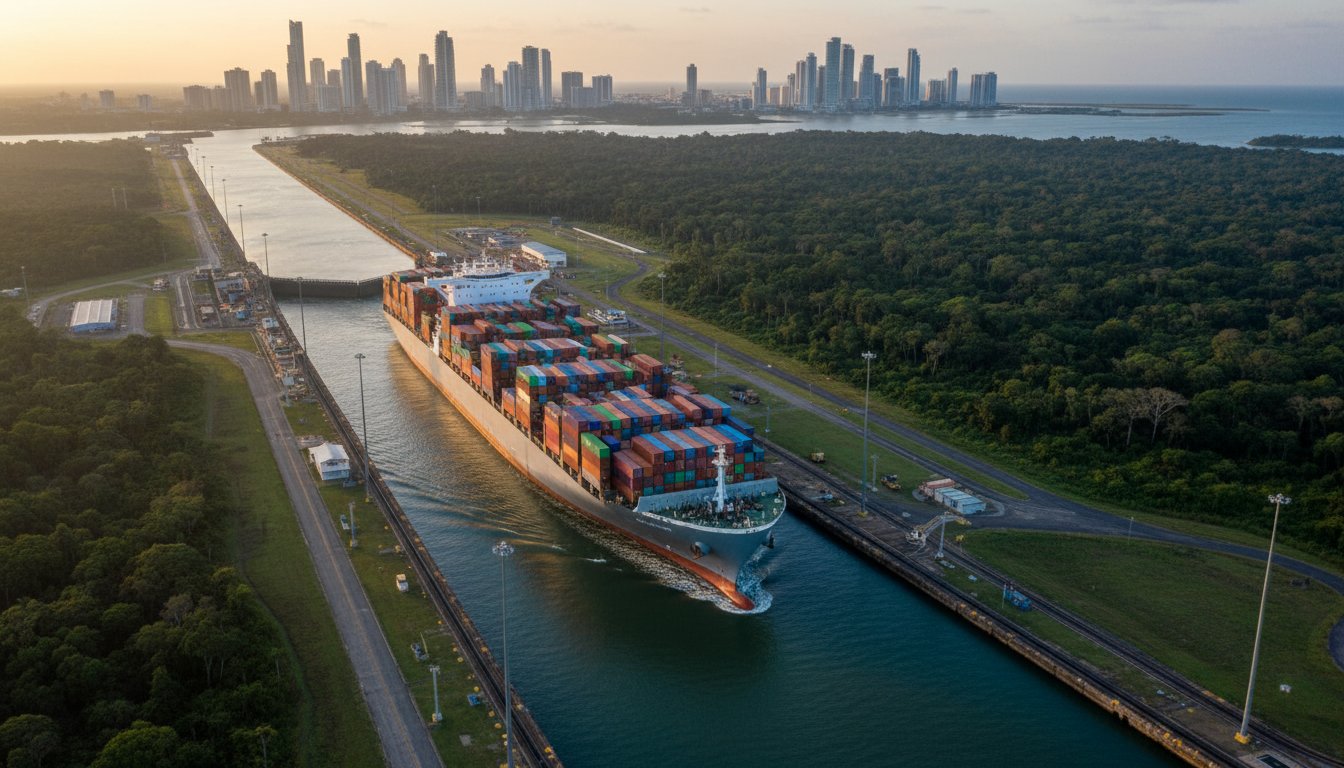
For LNG vessel operators, planning a panama canal transit for LNG carriers is a high-stakes operation where time is money and precision is everything. Uncertainty over complex booking procedures, the ever-present risk of costly delays, and fluctuating draft restrictions in Gatun Lake can make planning feel like navigating a minefield. This is where clarity and expertise become your most valuable assets, transforming a potentially frustrating process into a predictable and efficient operation.
This comprehensive 2026 guide provides the clarity you need. We’ll walk you through every critical step, from understanding unique LNG-specific requirements to accurately forecasting all costs, including tolls and potential surcharges in USD. Our goal is to eliminate the confusion and empower you with a clear strategy. You will gain the confidence to minimize delays, ensure full compliance, and secure a smooth, cost-effective passage through this vital waterway.
Key Takeaways
Understand the stringent safety protocols and vessel requirements specific to LNG carriers to ensure a smooth passage through the Neopanamax Locks.
A successful transit is a four-phase process-pre-arrival, arrival, transit, and departure-that requires meticulous planning weeks in advance.
Accurately budget your voyage by learning how tolls are calculated based on your vessel’s LNG cargo capacity and other key operational fees.
Mitigate risks like draft restrictions and potential delays by partnering with a local ship agent who provides the critical expertise for a successful Panama Canal transit for LNG carriers.
Unique Requirements for LNG Carriers at the Panama Canal
Navigating the Panama Canal is a complex operation for any vessel, but for Liquefied Natural Gas (LNG) carriers, the requirements are exceptionally stringent. Due to the nature of their cargo, these vessels are subject to a unique set of safety protocols, operational restrictions, and a specialized booking system. A successful panama canal transit for LNG carriers hinges on a deep understanding of these differences. Misjudging these nuances can lead to significant, costly delays and penalties, making expert guidance essential for a smooth and efficient passage.
Enhanced Safety and Operational Protocols
The Panama Canal Authority (ACP) enforces a higher standard of safety for LNG vessels to protect the crew, the cargo, and the waterway itself. Key protocols include:
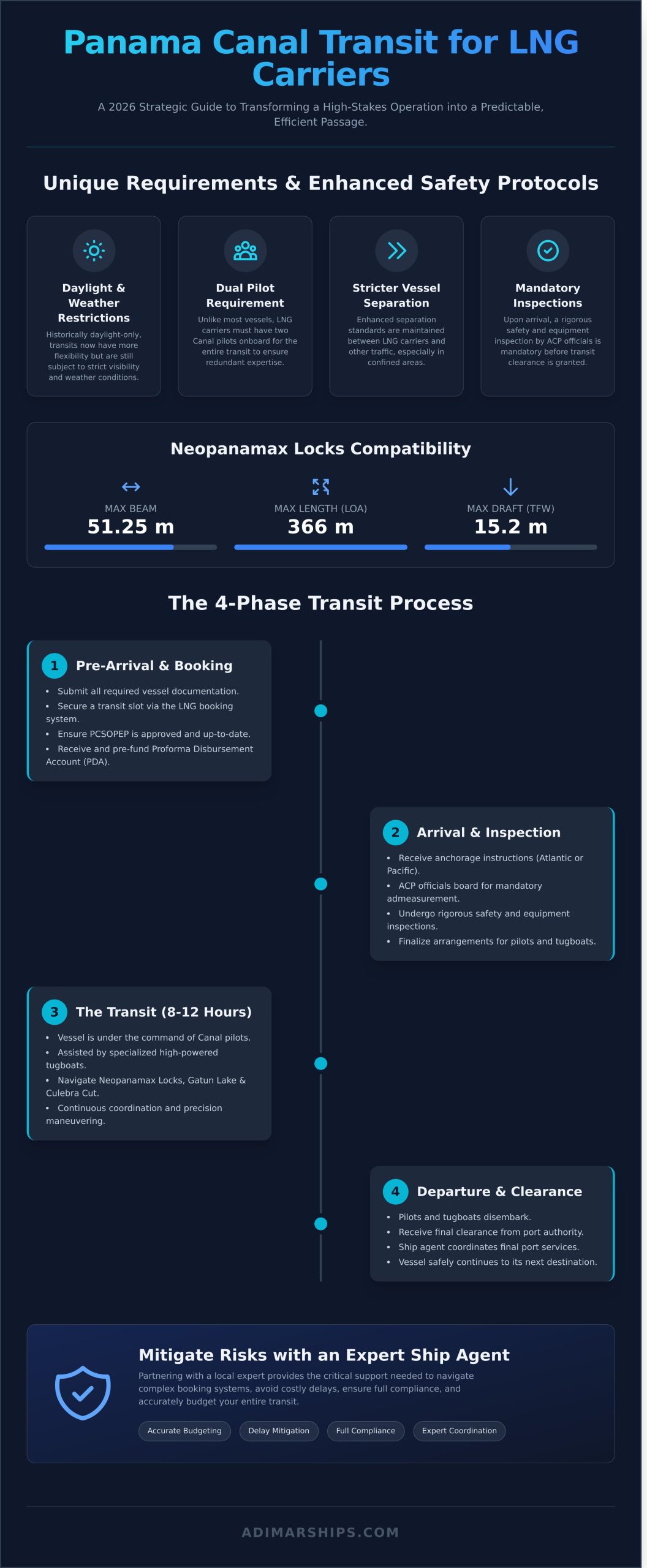
Daylight Transit: Historically, LNG carriers were restricted to daylight-only transits. While recent modifications have provided more flexibility, specific visibility and weather conditions must still be met for any nighttime navigation.
Pilotage Requirements: Unlike most vessels, LNG carriers must have two Canal pilots on board during the entire transit to ensure redundant expertise and command.
Vessel Separation: Stricter separation standards are maintained between LNG carriers and other vessels, particularly in confined areas like the Culebra Cut and Gatun Lake.
Mandatory Inspections: Upon arrival, each LNG carrier undergoes a rigorous safety and equipment inspection by ACP officials before being cleared for transit.
Neopanamax Locks and LNG Vessel Compatibility
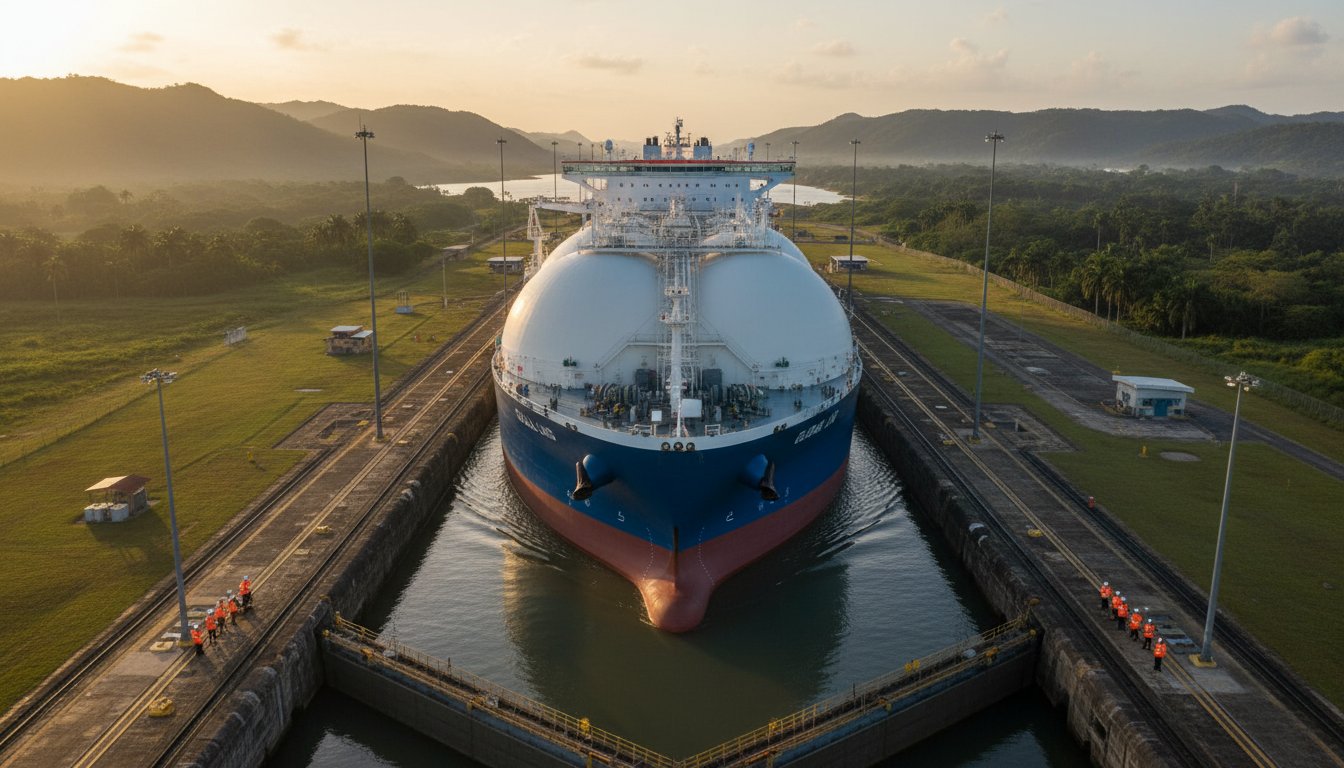
The inauguration of the Neopanamax Locks, a result of the extensive Panama Canal expansion, was a transformative event for the global LNG trade. This monumental project opened the waterway to the majority of the world’s LNG fleet, including modern Q-Flex and some Q-Max carriers. The new locks accommodate vessels with a maximum beam of 51.25 meters, a length of 366 meters, and a draft of 15.2 meters Tropical Fresh Water (TFW). Maneuvering these massive ships requires precision, which is why specialized, high-powered tugboats are exclusively assigned to assist them through the locks.
The LNG-Specific Transit Reservation System
Recognizing the unique scheduling needs of the LNG industry, the ACP created a dedicated booking system. A specific number of transit slots are reserved exclusively for LNG carriers, separate from the general pool. For last-minute opportunities, operators can bid for a slot through a high-stakes auction system. The ACP has periodically adjusted the booking rules and slot availability to attract more LNG traffic, reflecting the canal’s importance to the energy market. For operators seeking schedule reliability and cost certainty, securing a transit slot well in advance remains the most prudent strategy.
The LNG Transit Process: A Step-by-Step Walkthrough
A successful panama canal transit for LNG carriers is not a matter of chance; it’s the result of meticulous planning that begins weeks in advance. This complex logistical operation is best understood in four distinct phases, each with critical documentation and coordination requirements. Your ship agent acts as your local coordinator and trusted partner, ensuring every detail is managed with integrity and efficiency from start to finish.
Phase 1: Pre-Arrival Planning and Booking
This is the most critical phase, where proactivity prevents costly delays. Your agent will manage several key tasks on your behalf:
Vessel Documentation: Submitting all required vessel particulars, Q-Flex/Q-Max forms, and safety certificates to the Panama Canal Authority (ACP) well ahead of arrival.
Transit Reservation: Securing a transit slot through the ACP’s highly competitive booking system. This requires timely action and expert knowledge of the system’s nuances.
PCSOPEP Coordination: Ensuring your Panama Canal Shipboard Oil Pollution Emergency Plan (PCSOPEP) is approved and up-to-date, a non-negotiable requirement for transit.
Cost Management: Providing a detailed Proforma Disbursement Account (PDA) to estimate all costs, allowing you to pre-fund the transit with full transparency and avoid last-minute financial surprises.
Phase 2: Arrival, Anchorage, and Inspection
Upon reaching Panamanian waters, your vessel will receive instructions for anchorage at either the Atlantic (Cristobal) or Pacific (Balboa) entrance. Here, ACP officials will board to conduct mandatory admeasurement and safety inspections, verifying compliance with all Canal regulations for LNG carriers. During this period, your agent finalizes the arrangements for the highly skilled Canal pilots and powerful tugboats required for your scheduled transit.
Phase 3: The Transit Itself (8-12 Hours)
The actual transit is a masterclass in marine logistics. Your vessel is under the command of Canal pilots from the moment it enters the first lock. The typical sequence involves ascending the three-step Gatun Locks on the Atlantic side, navigating the expansive Gatun Lake, and then carefully passing through the narrow Culebra Cut. This remarkably efficient 8-12 hour passage through the Neopanamax locks has significantly reduced travel time for U.S. LNG exports to Asia. Throughout the journey, constant communication is maintained between the vessel’s bridge, the pilots, and Canal traffic control, ensuring a safe and timely passage to the Pedro Miguel and Miraflores Locks for descent into the Pacific Ocean.
Deconstructing the Costs: Budgeting for an LNG Carrier Transit
In the world of maritime logistics, “time is money,” and nowhere is this truer than at the Panama Canal. Accurately budgeting for a panama canal transit for LNG carriers is critical for voyage profitability, but the cost structure is far more complex than a single toll. The final invoice is a combination of official tolls, mandatory service fees, and potential hidden costs that can quickly escalate if not managed by an experienced agent.
Calculating the Official Canal Tolls
Unlike most vessels that are assessed based on Panama Canal Universal Measurement System (PC/UMS) tonnage, LNG carriers have a unique toll structure. The primary toll is calculated based on the vessel’s total LNG carrying capacity in cubic meters (m³). The Panama Canal Authority (ACP) sets different rates for laden (loaded) and ballast (empty) transits. As these rates can be updated, it’s crucial to consult the official Panama Canal advisories for the latest figures.
For example, a 170,000 m³ LNG carrier might face a laden toll of over $500,000, while its ballast return transit could be around $425,000, based on current per-m³ rates.
Ancillary and Variable Service Fees
The official toll is only the starting point. A significant portion of the total transit cost comes from a range of mandatory ancillary fees that ensure a safe and efficient passage. These are essential components of any accurate budget and include:
Transit Reservation Slot Fee: A substantial booking fee to secure a guaranteed transit date.
Tugboat, Pilotage, and Line Handler Fees: Charges for the essential personnel and equipment required to guide the vessel through the locks.
Security and Inspection Charges: Fees levied by the ACP for vessel security and compliance checks.
PCSOPEP Services: Costs for the required Panama Canal Shipboard Oil Pollution Emergency Plan (PCSOPEP) authorized person.
The Hidden Costs of Delays and Non-Compliance
Poor planning or unexpected issues can lead to severe financial consequences. Vessels without a pre-booked slot may face costly delays, incurring daily demurrage charges while waiting for an opening. In high-demand periods, securing a last-minute transit slot through the auction system can cost hundreds of thousands of dollars above standard fees. Furthermore, failing safety or regulatory inspections can result in fines and costly postponements, disrupting schedules and budgets.
Navigating these complex costs requires foresight and local expertise. Get a transparent, no-obligation transit cost estimate to ensure your next panama canal transit for LNG carriers is both smooth and cost-effective.
Navigating Risks: Water Levels, Delays, and Compliance
A smooth Panama Canal transit for LNG carriers is a matter of precise coordination and proactive risk management. Misjudging the operational landscape can lead to costly delays and commercial losses. The Canal operates within a dynamic environment influenced by weather, traffic, and stringent regulations. Understanding these challenges is the first step; having an expert local partner to navigate them is the key to success.
The Impact of Gatun Lake Water Levels
The Panama Canal Authority (ACP) sets the maximum allowable vessel draft based on the real-time water level of Gatun Lake, which is fed by seasonal rainfall. During periods of drought, the ACP issues Tropical Fresh Water (TFW) draft advisories, often restricting vessel depth. For an LNG carrier, this can have a direct commercial impact, potentially requiring you to lighten your cargo load to comply, thereby reducing voyage profitability. While the ACP is investing in long-term water management solutions, proactive monitoring of these advisories is essential for voyage planning.
Common Causes of Transit Delays
Even with a confirmed booking, several factors can delay your transit. Being prepared for these possibilities is critical. Common issues include:
Vessel Congestion: High traffic volumes or unforeseen disruptions can create backlogs at the Canal entrances.
Weather Events: Heavy fog, particularly in the Culebra Cut, can temporarily halt all transits for safety reasons.
Vessel Non-Compliance: Mechanical failures or issues discovered during the pre-transit inspection will sideline a vessel until they are resolved.
Lock Maintenance: Scheduled and unscheduled maintenance on the locks can impact transit schedules and availability.
Ensuring PCSOPEP and Regulatory Compliance
The ACP enforces its regulations with zero tolerance. A mandatory requirement is the Panama Canal Shipboard Oil Pollution Emergency Plan (PCSOPEP). This plan must be fully compliant and requires the designation of a locally based ‘Authorized Person’ who is available 24/7 to act as a spill response contact. Any inaccuracies in your documentation or failure to meet ACP standards can result in significant fines and delays. Ensuring every detail is correct before arrival is non-negotiable.
These operational risks are significant, but they are manageable. With deep local knowledge and constant communication, we act as your eyes and ears at the Canal, anticipating problems and executing quick solutions. Trust a partner who can eliminate the confusion and protect your assets. To ensure your vessel is fully prepared, nominate Adimar as your trusted agent today.
The Critical Role of Your Ship Agent in Panama
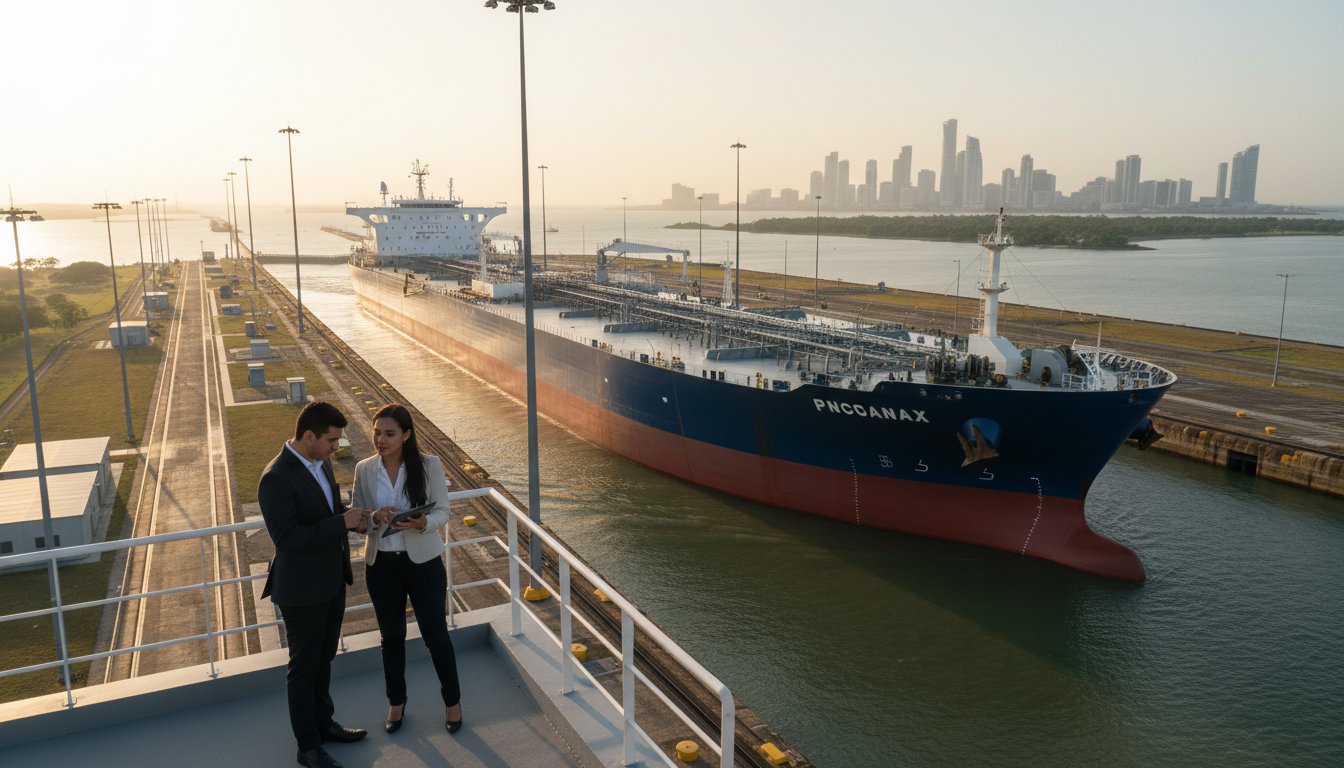
Navigating the complexities of the waterway is only one part of a successful transit. A smooth, efficient, and cost-effective panama canal transit for LNG carriers hinges on meticulous on-the-ground coordination and specialized local knowledge. An experienced ship agent is not merely a service provider; they are an essential extension of your operations team, acting as your trusted partner in Panama to manage every detail.
The right agent saves you time, money, and eliminates the uncertainty that can lead to costly delays. Their primary goal is to ensure your vessel’s passage is seamless from arrival to departure.
Coordination and Communication Hub
Your agent serves as the single, reliable point of contact between your vessel and all local entities. This includes constant communication with the Panama Canal Authority (ACP), port authorities, pilots, and tugboat operators. They provide real-time updates on your vessel’s status and transit schedule and are on hand 24/7 to troubleshoot any issues that arise, ensuring potential problems are solved before they impact your operations.
Financial Management and Cost Efficiency
In an environment where every hour counts, financial precision is paramount. A diligent agent provides complete financial oversight for your transit, including:
Arranging the timely pre-payment of all canal tolls and fees in USD on your behalf.
Reviewing and verifying every charge from the ACP and local vendors to prevent overpayment.
Advising on the most cost-effective booking strategies and slot reservations to optimize your budget.
Beyond the Transit: Husbandry and Protective Services
Comprehensive support extends beyond the waterway. Whether you require routine services or a protective oversight, your agent handles all vessel needs while in Panamanian waters. This includes coordinating crew changes, medical services, provisions and fresh water delivery, spare parts logistics, and any necessary technical support. As a protective agent, we safeguard your interests by monitoring and reporting on operations managed by another appointed party.
Why Adimar is Your Trusted Partner for LNG Transits
Executing a flawless panama canal transit for LNG carriers requires a level of expertise that comes only with experience. For over 20 years, Adimar Shipping has been the trusted partner for owners and charterers navigating this critical waterway. We possess deep expertise in the unique technical, safety, and scheduling requirements of LNG vessels. Our commitment is to provide a service built on integrity, transparency, and proactive communication. Put your transit in our hands and eliminate the confusion.
Navigating Your Next LNG Transit with Confidence
Successfully navigating a panama canal transit for LNG carriers demands more than just booking a slot. It requires a deep understanding of unique operational protocols, meticulous cost management, and proactive strategies to mitigate risks like water level fluctuations and potential delays. The complexity is high, but the key to a smooth, efficient passage lies in having an expert partner on the ground.
Adimar Shipping is your trusted partner at the Panama Canal. With over 20 years of dedicated agency experience, we bring specialized expertise in LNG carrier transits and PCSOPEP compliance. We are your eyes at the Canal, managing every detail with the integrity, transparency, and cost-conscious service our clients depend on. We are experts so you don’t have to be.
Frequently Asked Questions About Panama Canal Transit for LNG Carriers
How long does it take for an LNG carrier to transit the Panama Canal?
A standard transit through the Panama Canal takes approximately 8 to 10 hours from one ocean to the other. However, the total time your vessel will spend in Canal waters, including waiting for its slot and completing necessary procedures, is typically around 24 hours. Efficient coordination with a trusted ship agent is crucial to minimize delays and ensure a smooth, timely passage, protecting your schedule and bottom line. We manage this process to keep your operations on track.
What are the current maximum beam and length restrictions for Neopanamax locks?
The Neopanamax locks accommodate vessels with a maximum beam of 51.25 meters (168.14 feet) and a length overall (LOA) of 366 meters (1,200.79 feet). The maximum allowable draft is 15.2 meters (50.0 feet) in Tropical Fresh Water (TFW). These dimensions are strictly enforced by the Panama Canal Authority (ACP). As your local partner, we ensure your vessel’s specifications are fully compliant with the latest regulations to prevent any costly last-minute issues or transit denials.
Are night transits now possible for LNG carriers at the Panama Canal?
Yes, the Panama Canal Authority (ACP) now permits routine night transits for LNG carriers, a significant operational improvement. This change has greatly increased the Canal’s capacity and provides much-needed scheduling flexibility for LNG vessels. Having the option for nighttime passage helps optimize transit schedules and can reduce overall waiting times. We leverage these opportunities to secure the most efficient and cost-effective transit plan for your fleet, ensuring your cargo keeps moving around the clock.
How far in advance should I book a transit slot for my LNG vessel?
For LNG carriers, booking a transit slot should be done as early as possible. The Panama Canal Transit Reservation System is competitive, with booking periods opening up to 365 days in advance. Given the high demand and specific slot allocations for LNG vessels, securing a reservation well ahead of time is critical to avoid delays and costly auctions. Put your transit in our hands; we navigate the booking system’s complexities to secure your preferred dates with integrity and efficiency.
What happens if my vessel misses its scheduled transit slot?
Missing a scheduled transit slot results in the loss of your reservation and associated fees. Your vessel will lose its place in the queue and must wait for the next available opening, which can lead to significant delays and unpredictable costs. In some cases, the only option may be to participate in a high-cost auction for a new slot, often exceeding $1,000,000. As your eyes at the Canal, we provide proactive communication and coordination to prevent such costly mishaps.
How does the Panama Canal drought affect LNG shipping routes?
Periods of drought directly impact the panama canal transit for LNG carriers by forcing the ACP to implement draft restrictions and reduce the number of daily transit slots. This leads to longer waiting times, increased competition for slots, and higher auction prices. For some voyages, these conditions may make alternative routes like the Suez Canal or the Cape of Good Hope more economically viable. We provide timely, transparent updates on water levels and restrictions to help you make informed routing decisions.