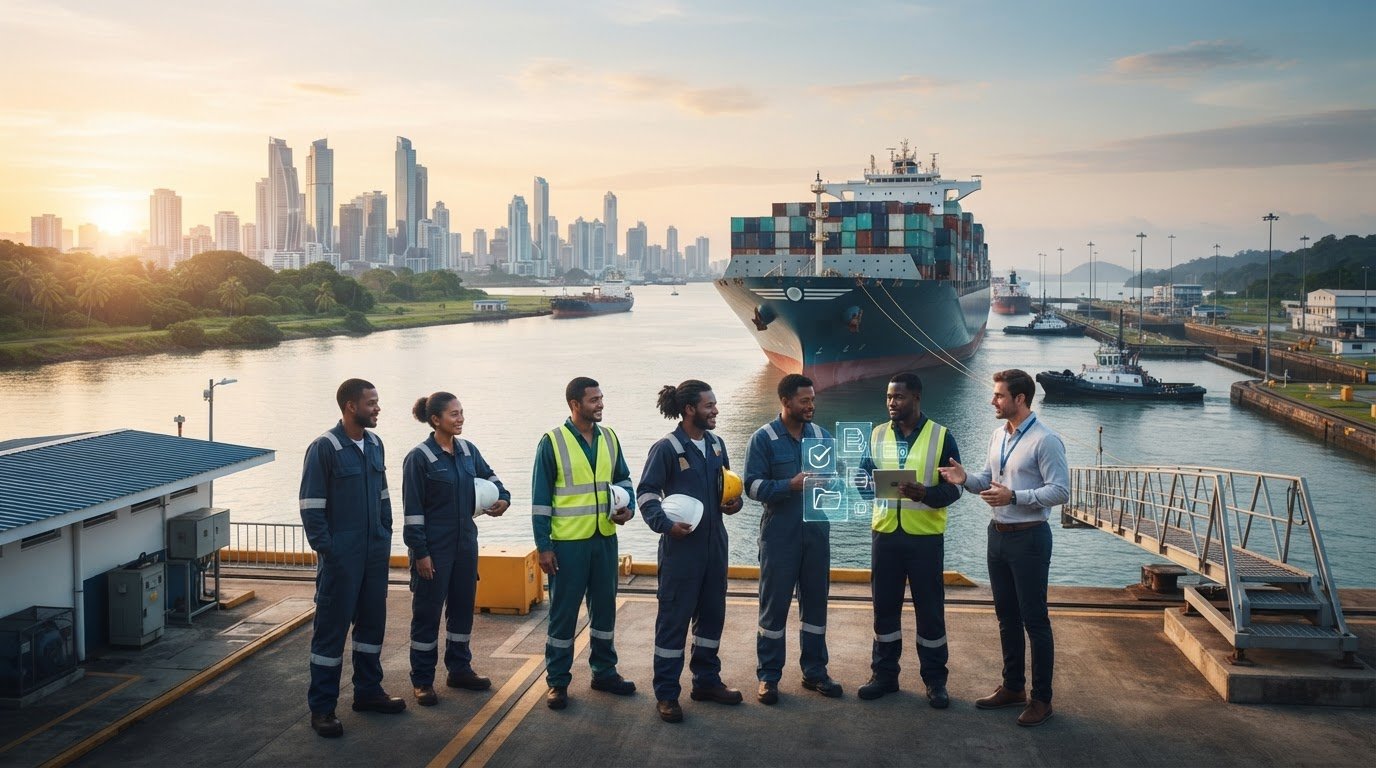

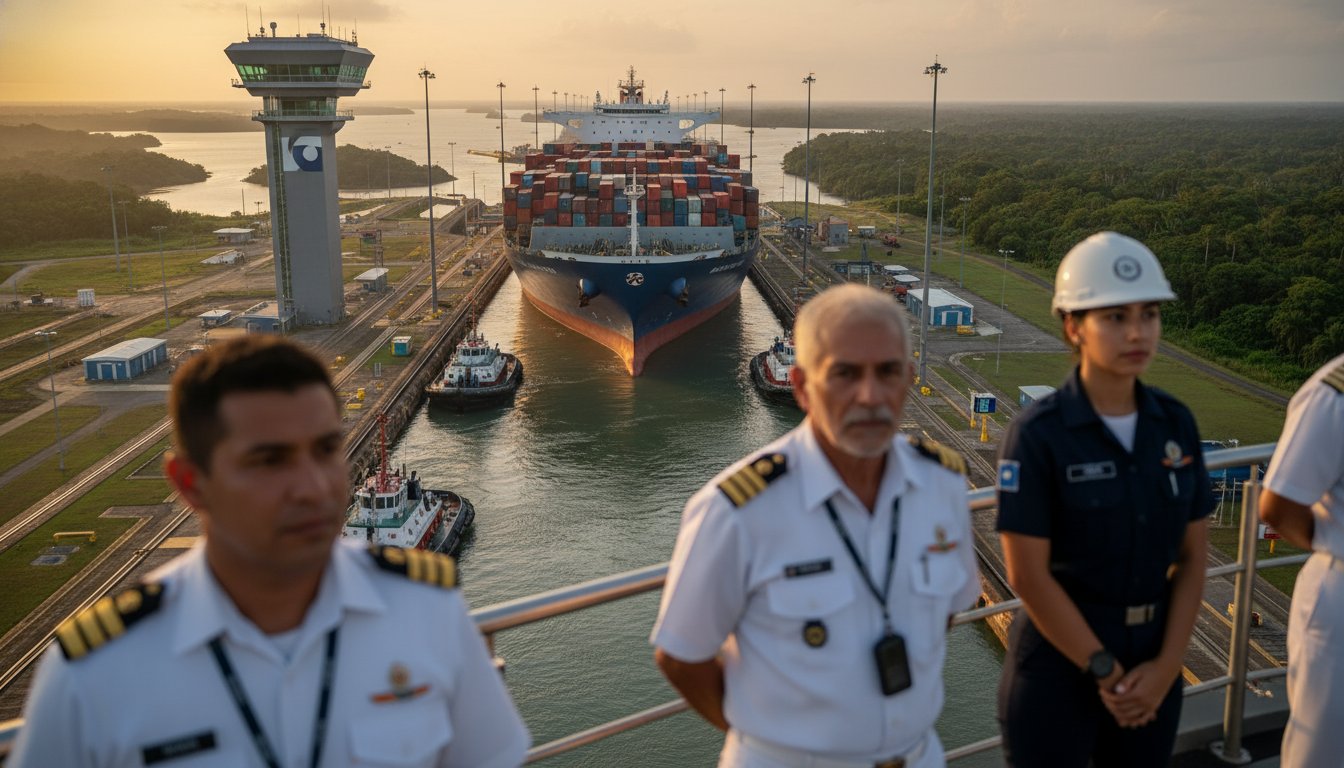
For any ship owner, charterer, or operator planning a voyage through one of the world’s most critical maritime shortcuts, a key question arises: who is in charge? The answer is the Panama Canal Authority, or Autoridad del Canal de Panamá (ACP). This guide will help you understand the crucial role of the ACP, its responsibilities, and how its decisions directly impact your vessel’s transit, ensuring you can navigate its waters with confidence.
What is the Panama Canal Authority (ACP)?
The Panama Canal Authority (ACP) is the autonomous government agency of the Republic of Panama responsible for the complete management and operation of the Panama Canal. Established in 1997 under Panamanian law, it officially assumed full control of the waterway on December 31, 1999, marking a historic moment for the nation. The ACP’s primary objective is to ensure the safe, efficient, and reliable transit of ships for the benefit of global trade.
A Brief History: From the U.S. to Panama
The creation of the ACP was the culmination of a long process defined by the 1977 Torrijos-Carter Treaties. These agreements set the stage for the gradual transfer of canal operations from the United States-led Panama Canal Commission (PCC) to full Panamanian control. Since formally taking the helm at the turn of the millennium, the ACP has successfully managed and even expanded the canal, cementing its reputation as a world-class maritime administrator.
The Mission and Vision of the ACP
The core mission of the ACP is multi-faceted. It is constitutionally mandated to manage the canal in a way that is safe, continuous, and efficient. A key principle of its operation is neutrality, ensuring the waterway remains open to peaceful transit by vessels of all nations on equal terms. Beyond its operational duties, the ACP is also tasked with managing the canal as a commercial enterprise that contributes significantly to the economic development and progress of Panama.
Key Responsibilities of the Panama Canal Authority
The ACP’s duties extend far beyond simply directing ship traffic. It functions as the comprehensive regulator, operator, and chief maintainer of the entire waterway and its surrounding resources. This broad mandate ensures the long-term viability and competitiveness of the canal.
Canal Operations and Maintenance
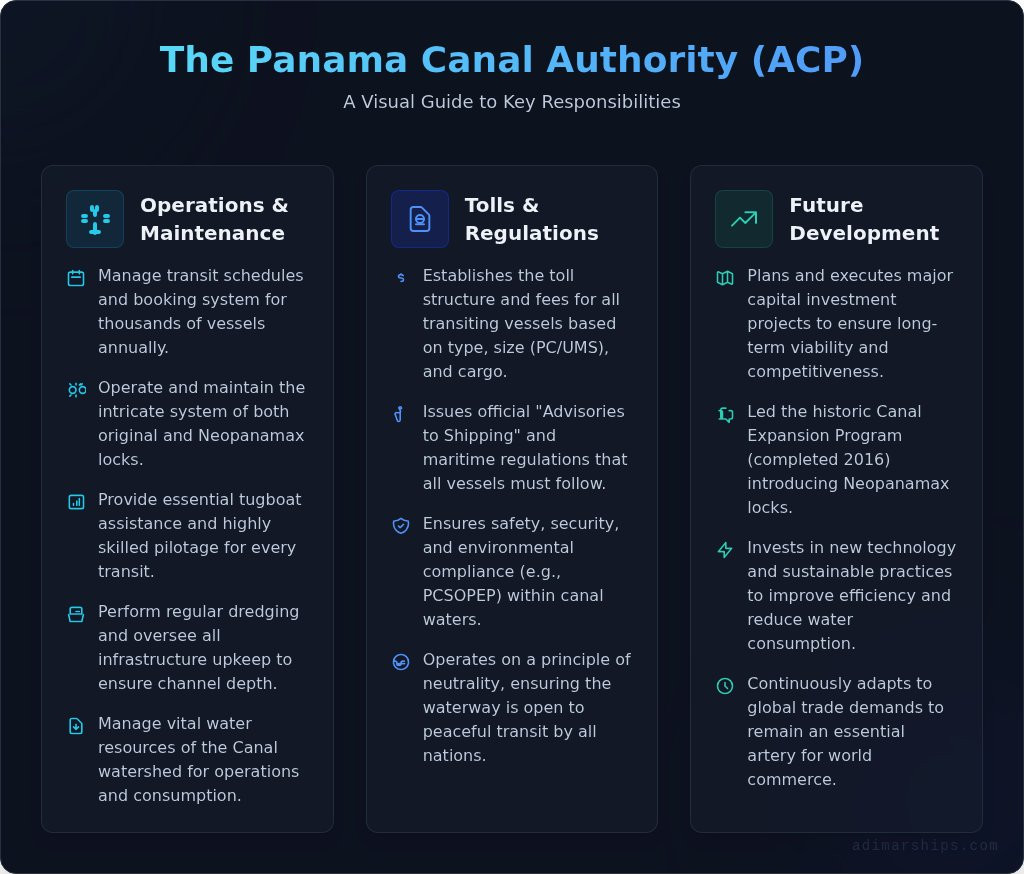
On a daily basis, the ACP is responsible for a complex logistical ballet. Its key operational duties include:
- Managing the day-to-day transit schedule and booking system for thousands of vessels annually.
- Operating and maintaining the intricate system of locks, both the original and the newer Neopanamax set.
- Providing essential services like tugboat assistance and highly skilled pilotage for every vessel.
- Performing regular dredging to maintain navigational channel depth and overseeing all infrastructure upkeep.
- Managing the vital water resources of the Canal watershed, which are essential for both lock operations and local consumption.
Setting Tolls and Maritime Regulations
As the governing body, the ACP has the sole authority to establish the financial and regulatory framework for using the canal. This includes setting the toll structure and fees for all vessel transits, which are periodically reviewed to reflect market conditions. Crucially, the ACP issues official “Advisories to Shipping” and other maritime regulations that all vessels must follow to ensure safety, security, and environmental compliance within canal waters.
Future Development and Expansion Projects
The ACP is a forward-looking organization focused on the canal’s future. It is responsible for planning and executing major capital investment projects, most notably the historic Canal Expansion Program completed in 2016. The Authority continues to invest in new technology and sustainable practices to improve efficiency, reduce water consumption, and ensure the Panama Canal remains a competitive and essential artery for global trade for decades to come.
How the ACP’s Rules Impact Your Vessel’s Transit
For ship owners and operators, understanding the ACP and its regulations is not just an academic exercise-it is fundamental to a smooth and cost-effective passage. Their rules and procedures affect every stage of the process, from booking a transit slot to final billing. Failure to comply with ACP mandates can lead to significant delays, operational challenges, and costly fines.
Navigating ACP Advisories and Requirements
The ACP frequently issues and updates advisories that can impact vessel requirements, equipment specifications, and operational procedures. This includes critical mandates for things like the Panama Canal Shipboard Oil Pollution Emergency Plan (PCSOPEP) and other safety protocols. For any shipping company, staying current with these evolving regulations is a full-time challenge that requires constant vigilance and local expertise.
Why a Ship Agent is Your Partner with the ACP
This is where a dedicated ship agent becomes an indispensable partner. A local agent like Adimar Shipping acts as your official representative on the ground, interfacing directly with the ACP on your behalf. We handle all necessary communication, submit required documentation, and ensure your transit is planned and executed in full compliance with all current regulations. We are your experts on the ground, eliminating confusion and proactively managing any potential issues before they arise. Put your transit in our hands for a seamless experience.
Frequently Asked Questions
While the ACP’s primary mission is to manage commercial shipping, the Panama Canal itself is a major tourist attraction with visitor centers overlooking the locks. The ACP’s role, however, is not to manage tourism. Planning specialized travel to unique maritime destinations, whether in Central America or across the globe in places like the Andaman Islands, often requires expert guidance. Travel specialists like Networld Tours & Travels focus on creating comprehensive tourism experiences in such unique locales. For those who find artistic inspiration in such scenic locations, you can learn the fundamentals of painting if you click here.
Does the ACP manage tourism at the Panama Canal?
Who is the current administrator of the Panama Canal Authority?
The leadership of the ACP can change. For the most current information, it is best to consult the official Panama Canal Authority website. (Note: Please verify the name of the current administrator before publishing.)
Is the Panama Canal Authority a private or public entity?
The ACP is a public entity. It is an autonomous agency of the Government of Panama, with its own legal framework and financial independence, as established by the Panamanian Constitution.
How does the ACP set the toll rates for the canal?
The ACP sets tolls through a structured process that considers the value the route provides to its users. Rates are based on vessel type, size (measured in the Panama Canal Universal Measurement System or PC/UMS), and cargo. The Authority conducts market analysis and public consultations before implementing any changes to the toll structure.
Where can I find official publications from the Panama Canal Authority?
All official publications, including “Advisories to Shipping,” maritime regulations, tariffs, and operational reports, can be found on the official ACP website, pancanal.com.
What was the Panama Canal Commission (PCC)?
The Panama Canal Commission (PCC) was the U.S. federal agency responsible for operating and maintaining the Panama Canal from 1979 until the official handover to the Panama Canal Authority (ACP) on December 31, 1999.
Navigating the regulations of the Panama Canal Authority requires diligence and local knowledge. With over 20 years of experience, Adimar Shipping possesses deep expertise in all aspects of canal transit and husbandry services. We act as your eyes and ears on the ground in Panama, ensuring every detail is managed with integrity and efficiency. Let us be your trusted partner at the Panama Canal. Contact Adimar today.