
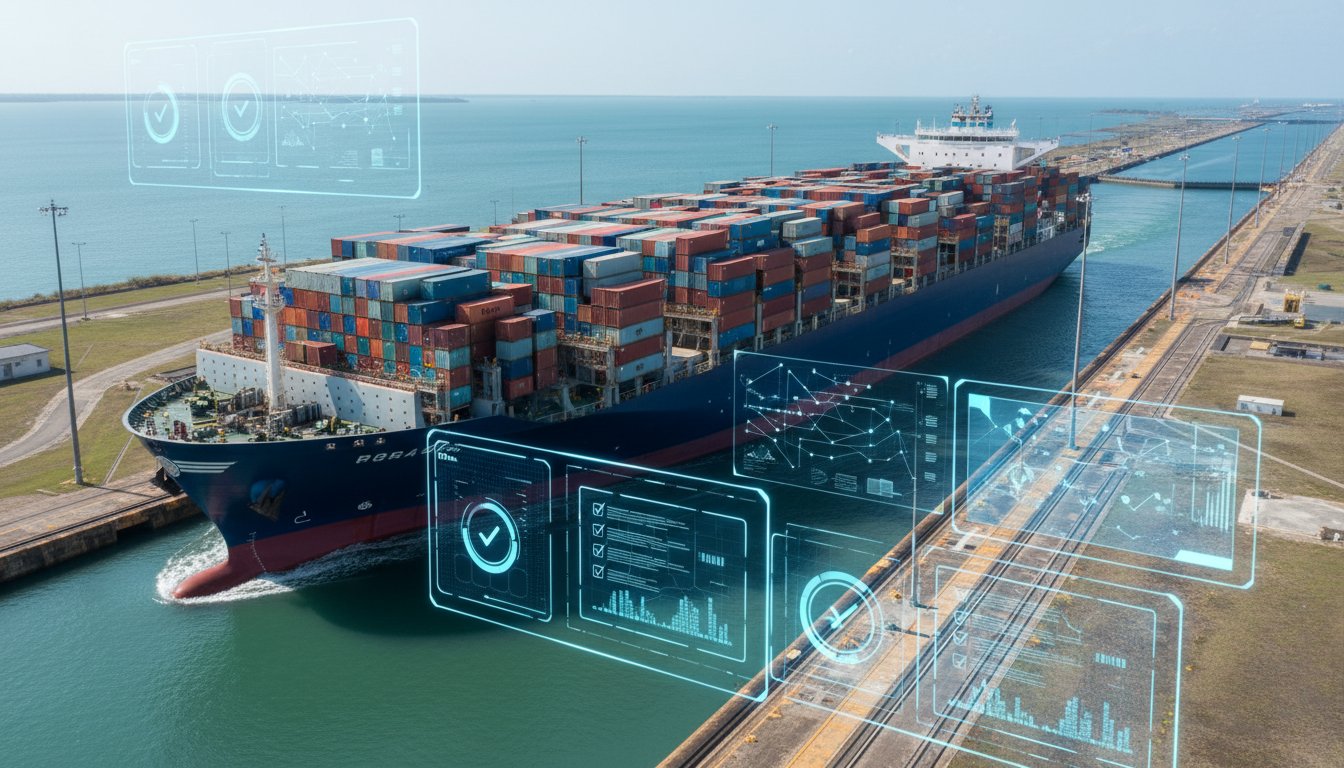
Navigating the Panama Canal’s technical and documentary rules can be a complex challenge. For ship owners and charterers, ensuring full compliance is not just about following regulations-it’s about safeguarding against costly delays and ensuring a smooth, predictable passage. You can navigate these requirements with confidence using our clear, actionable guide, designed to help you prepare for a successful transit.
Understanding the Core Requirements for Panama Canal Transit
The vessel requirements set forth by the Panama Canal Authority (ACP) are critical for maintaining the safety and efficiency of one of the world’s most vital maritime arteries. These rules, detailed in the official Notice to Shipping N-1-2025 (always verify the latest notice number), cover everything from documentation to on-deck equipment. Non-compliance carries significant risks, including expensive delays, substantial fines, and, in some cases, denial of transit. This guide simplifies the official regulations to help you prepare effectively.
Key Documentation & Pre-Arrival Notifications
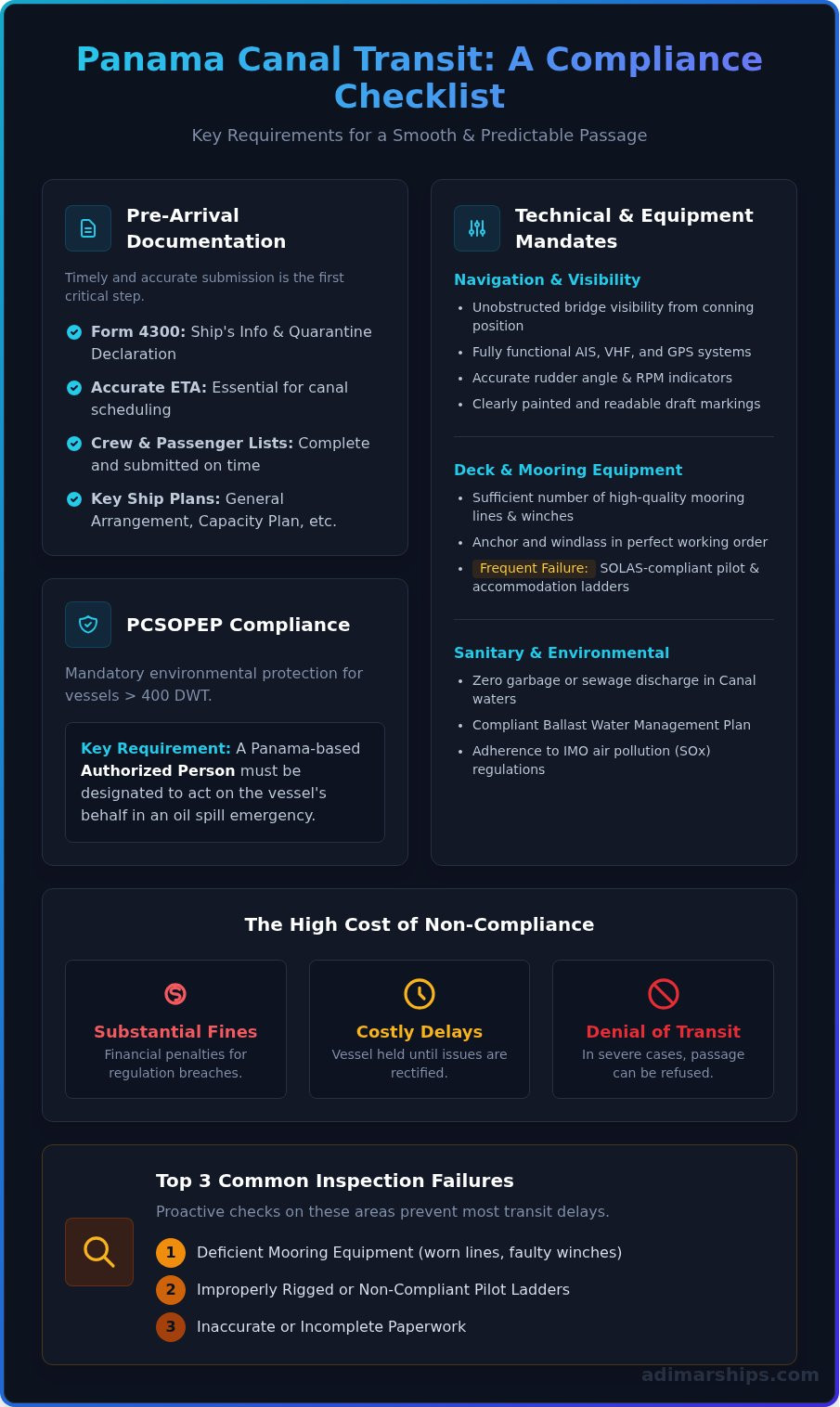
Proper and timely submission of documents is the first step to a smooth transit. The ACP requires a complete package of information well in advance of your vessel’s arrival. This includes the Ship’s Information and Quarantine Declaration (Form 4300), which must be accurately filled out. Furthermore, complete crew and passenger lists must be submitted within the specified deadlines. One of the most critical elements is providing an accurate Estimated Time of Arrival (ETA), as this is fundamental to the ACP’s scheduling. You will also need to have key ship plans ready for submission, such as the General Arrangement and Capacity Plan; for more on the importance of professional planning in any complex space, you can read more.
Panama Canal SOPEP (PCSOPEP) Compliance
Environmental protection is a top priority for the Panama Canal. As such, compliance with the Panama Canal Shipboard Oil Pollution Emergency Plan (PCSOPEP) is mandatory for all vessels over 400 DWT. This isn’t just a formality; it requires a vessel to have a comprehensive, canal-specific contingency plan to manage any potential oil spills. A key part of this regulation is the designation of an Authorized Person based in Panama who can act on the vessel’s behalf in an emergency. Adimar Shipping provides this essential service to ensure you meet all environmental mandates. If you are looking for a reliable local partner, Need a PCSOPEP Authorized Person? We can help.
Technical & Equipment Mandates: Is Your Vessel Ready?
Beyond paperwork, your vessel must meet a stringent set of technical and equipment standards. ACP inspectors will verify that all required systems are fully operational and meet their specifications. These mandates are common points of failure during inspections, making pre-arrival checks essential to avoid last-minute complications.
Visibility, Navigation & Communication Systems
Safe navigation through the canal’s narrow channels depends on clear visibility and reliable systems. The ACP enforces strict bridge visibility requirements from the conning position, ensuring pilots have an unobstructed view. Your vessel must be equipped with fully functional and compliant AIS, VHF, and GPS systems. Onboard, essential instruments like rudder angle and RPM indicators must be accurate and clearly visible. Finally, the vessel’s draft and load line markings must be painted and easily readable.
Mooring, Anchoring & Deck Equipment
Due to the close-quarters maneuvering within the locks, mooring equipment is heavily scrutinized. Vessels must carry a specific number of high-quality mooring lines, winches, and chocks, with the exact requirements depending on the vessel’s size. All lines must meet specific strength standards. The anchor and windlass must be in perfect working order and ready for immediate use. Additionally, pilot ladders and accommodation ladders must be properly rigged, safe, and compliant with SOLAS regulations, as this is a frequent point of inspection failure.
Sanitary & Environmental Regulations
The Panama Canal watershed is a sensitive ecosystem, and the ACP enforces strict environmental rules. There are rigorous regulations concerning garbage and sewage disposal, prohibiting any discharge into canal waters. Vessels must also have a compliant ballast water management plan and submit the required reports before arrival. To protect air quality, all ships must adhere to IMO regulations on air pollution, particularly regarding sulphur (SOx) emissions.
How a Ship Agent Ensures Seamless Compliance
Navigating the complex web of ACP regulations is a full-time job. An experienced ship agent is your most valuable asset, acting as your eyes and ears on the ground in Panama. A dedicated partner removes the burden of compliance, allowing you to focus on your core business while ensuring a timely and efficient transit.
Pre-Arrival Review & Coordination
A proactive agent begins working for you long before your vessel reaches Panamanian waters. At Adimar, we meticulously review all your documents for accuracy and completeness before they are submitted to the ACP. We act as your direct liaison with canal officials, clarifying any questions and ensuring smooth communication. This proactive approach allows us to identify and resolve potential compliance issues early, preventing them from causing delays upon arrival.
On-Site Support & Problem Solving
Should any issues arise, your agent is your on-site problem-solver. We coordinate directly with ACP inspectors, pilots, and technicians to address any concerns swiftly. Whether it’s arranging for urgent delivery of compliant mooring lines or resolving a documentation discrepancy, our expertise prevents small issues from escalating into major delays. We manage the details so you don’t have to. Put your transit in our hands. Get a quote today.
Frequently Asked Questions
What are the most common reasons a vessel fails ACP inspection?
The most frequent issues are related to deficient mooring equipment (worn-out lines, faulty winches), improperly rigged or non-compliant pilot ladders, and inaccurate or incomplete paperwork. Proactive checks of these areas can prevent the majority of transit delays.
How are vessel requirements different for Neopanamax locks?
Vessels transiting the larger Neopanamax locks face additional requirements. These often include tighter visibility standards, a greater number of required mooring lines, and specific mandates for tugboat assistance and placement. An experienced agent can clarify the exact needs for your vessel’s size.
What happens if my vessel is found to be non-compliant upon arrival?
If a vessel is found to be non-compliant, the ACP can impose a range of penalties. These may include fines, transit delays until the issue is rectified, or in severe cases, a denial of passage. The financial and operational costs of non-compliance can be substantial.
Are there any new vessel requirements for 2025?
The ACP periodically updates its regulations. The “Notice to Shipping N-1” is typically issued annually with any amendments. It is crucial to consult the latest version for the year of your transit. A knowledgeable ship agent stays current on all regulatory changes to ensure your vessel is always prepared.
Does a ship agent handle all the required paperwork?
Yes, managing all documentation and electronic submissions to the ACP is a core service of a ship agent. This includes everything from the initial booking request to final transit clearance, ensuring accuracy and timeliness at every step.
Can I transit without a PCSOPEP plan?
No. For any vessel over 400 DWT, a compliant PCSOPEP is mandatory. Attempting to transit without one will result in denial of passage until the requirement is met.
With over 20 years of dedicated experience at the Panama Canal, Adimar Shipping is your trusted partner for efficient and seamless transits. We are experts in all ACP regulations and procedures, serving as your on-the-ground team to protect your interests. Don’t leave your passage to chance; work with a team known for its integrity and expertise. Ensure a smooth transit. Nominate Adimar as your agent.