
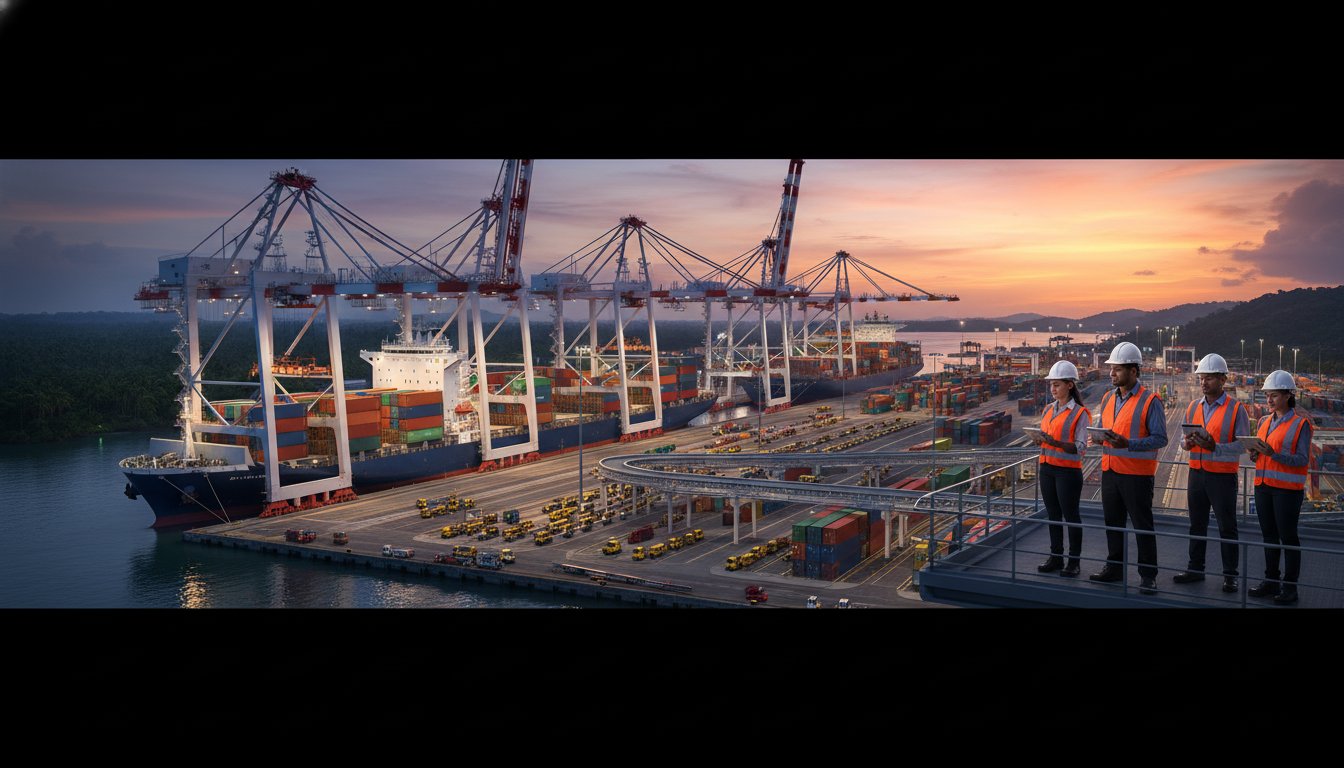
For ship owners, charterers, and operators, navigating the waters of Panama extends far beyond the Canal itself. The country’s world-class seaports on both the Atlantic and Pacific coasts serve as critical hubs for logistics, crew services, and vessel supply. Discover Panama’s key Atlantic and Pacific seaports and learn how to choose the right one for your vessel’s operational needs, from crew changes to bunkering, ensuring a smooth and efficient transit.
This principle also applies to maritime leisure. For those interested in a different perspective on coastal navigation, you can read more about luxury sailing charters and expeditions.
Panama’s Seaports: Strategic Gateways to the Canal
Panama’s ports are more than just entry and exit points; they are integral components of the global supply chain and critical for global shipping. Their strategic locations at either end of the Panama Canal make them indispensable for vessels preparing for transit or continuing their voyage. The ports are broadly divided into two distinct groups: those on the Atlantic (Caribbean) coast and those on the Pacific coast. Understanding the unique capabilities of each helps operators facilitate efficient Panama Canal transits, minimize downtime, and manage operational costs effectively.
Key Seaports on the Atlantic (Caribbean) Coast
The ports on the Atlantic side are the first point of contact for vessels arriving from Europe, the US East Coast, and the Caribbean. They are bustling centers of container transshipment and logistics.
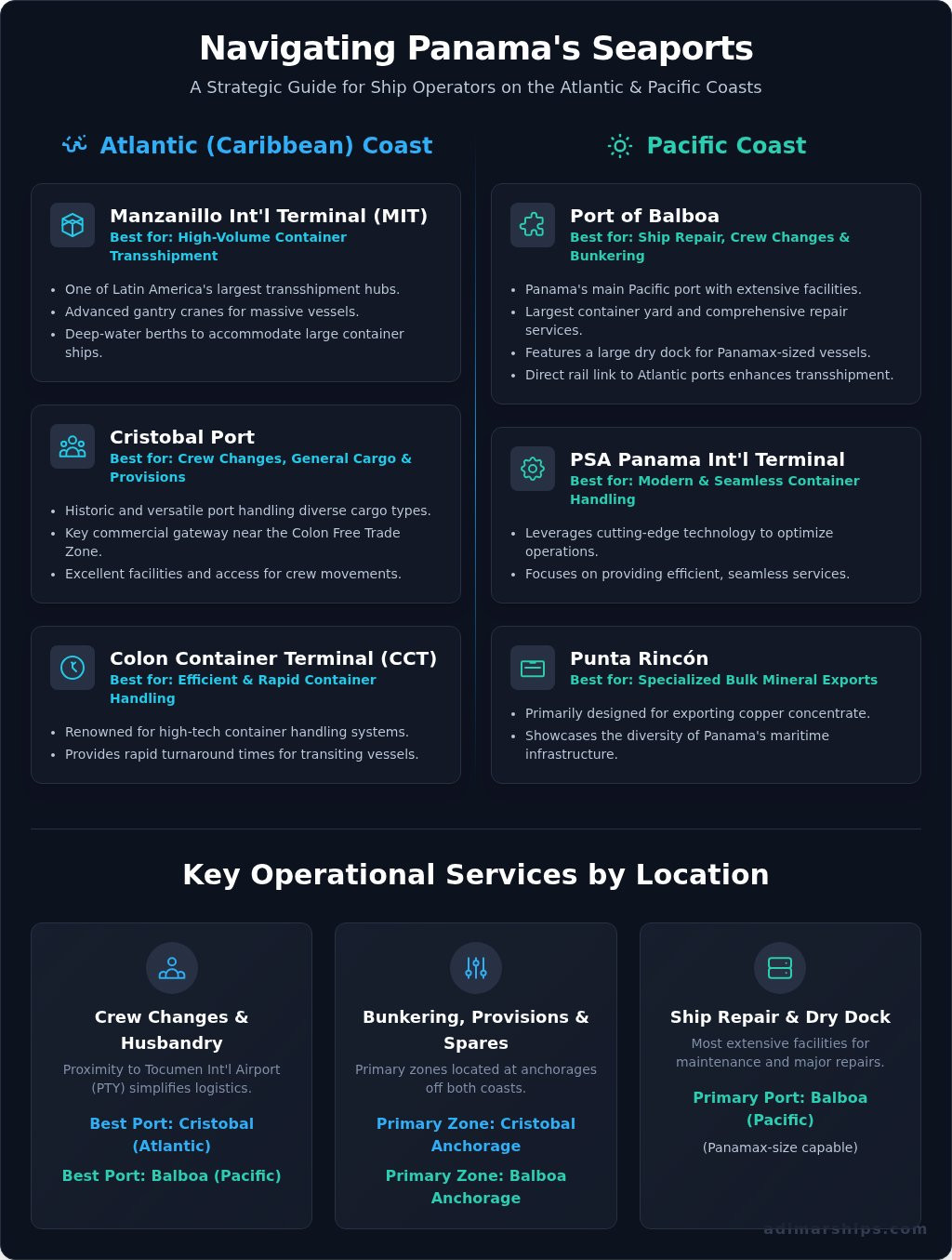
- Manzanillo International Terminal (MIT): As one of Latin America’s largest transshipment hubs, MIT is a powerhouse of container logistics, offering advanced gantry cranes and deep-water berths to accommodate massive vessels.
- Cristobal Port: A historic and versatile port, Cristobal handles a diverse range of cargo, including containers, bulk, and general cargo. Its proximity to the Colon Free Trade Zone makes it a vital commercial gateway.
- Colon Container Terminal (CCT): Renowned for its efficiency and high-tech container handling systems, CCT is a key player in the region, providing rapid turnaround times for container ships transiting the Canal.
Key Seaports on the Pacific Coast
Serving as the gateway to Asia and the West Coasts of the Americas, Panama’s Pacific ports are essential for vessels completing their Canal transit or arriving from the Pacific Ocean.
- Port of Balboa: As Panama’s main Pacific port, Balboa boasts extensive facilities, including the largest container yard in the country and comprehensive ship repair services. Its direct rail link to the Atlantic ports enhances its transshipment capabilities.
- PSA Panama International Terminal: A modern and highly efficient terminal, PSA Panama focuses on providing seamless container handling services, leveraging cutting-edge technology to optimize vessel operations.
- Punta Rincón: This is a more specialized port, primarily designed for the export of bulk minerals, such as copper concentrate, showcasing the diversity of Panama’s maritime infrastructure.
Choosing the Right Panamanian Port for Your Vessel’s Needs
The decision of which port to utilize is a strategic one that directly impacts your transit time and operational costs. The optimal choice depends on your vessel’s route, cargo type, and the specific services required, such as crew changes, provisioning, or maintenance. A thoughtful selection, guided by local expertise, can save valuable time and money.
| Port Name | Coast | Best For |
|---|---|---|
| Manzanillo (MIT) | Atlantic | Container Transshipment |
| Cristobal | Atlantic | Crew Changes, General Cargo, Provisions |
| Balboa | Pacific | Ship Repair, Crew Changes, Bunkering |
| PSA Panama | Pacific | Efficient Container Handling |
Best Ports for Crew Changes and Husbandry
For vessel operators, managing crew welfare is a top priority. Both Balboa on the Pacific and Cristobal on the Atlantic offer excellent access and facilities for crew movements. Their proximity to Tocumen International Airport (PTY), a major international hub, is a key factor that simplifies travel logistics. However, efficiently coordinating visas, ground transport, and accommodation requires deep local knowledge and meticulous planning. An experienced agent is vital to ensure that all aspects of your crew change logistics are handled seamlessly, preventing any delays to your vessel’s schedule.
Top Locations for Bunkering, Provisions, and Spares
Replenishing fuel, supplies, and parts is a routine but critical task. The anchorages off both Balboa and Cristobal are the primary bunkering zones in Panama, offering competitive refueling services. These ports also provide access to a wide network of comprehensive ship chandlers who can supply everything from fresh water and food provisions to technical stores. Coordinating the timely delivery of spare parts is especially important; a delay in receiving a critical component can have significant financial consequences. A reliable local agent ensures these deliveries are made efficiently to minimize vessel downtime.
Ports with Ship Repair and Dry Dock Facilities
For routine maintenance or unexpected repairs, the Port of Balboa has the most extensive ship repair facilities in the country, including a large dry dock capable of servicing Panamax-sized vessels. Understanding the capabilities and availability for both routine maintenance and major repairs is essential for fleet management. Planning these service stops requires expert local coordination to book slots, manage contractors, and oversee the work to ensure it is completed on time and to the highest standards.
Whether you’re coordinating complex shipping logistics in Panama or planning detailed excursions in other global hubs, the value of local expertise is universal. In the tourism sector, for instance, local specialists like iMusafir.pk in Pakistan provide the deep, tailored knowledge that ensures a smooth experience, a principle that applies equally to the maritime industry.
Global Services, Local Expertise
Partnering with a Local Agent: Your Eyes at the Port
A professional, reliable ship agent is essential for successfully navigating the complexities of Panamanian ports. They are your on-the-ground representative, handling all necessary paperwork, coordinating with port authorities and pilots, and ordering critical services on your behalf. This partnership is the key to ensuring smooth, efficient operations and avoiding costly delays or compliance issues. With over 20 years of experience, Adimar Shipping provides expert agency and husbandry services at all major ports in Panama, acting as your trusted partner to protect your interests every step of the way.
Frequently Asked Questions
Which is the largest seaport in Panama by cargo volume?
By container volume, the ports on the Atlantic side, particularly Manzanillo International Terminal (MIT) and Colon Container Terminal (CCT), collectively handle the majority of Panama’s transshipment cargo, making the Colon area the largest logistics hub.
How far are the main seaports from the Panama Canal entrances?
The ports are located very close to the Canal entrances. The ports of Cristobal and MIT are situated at the Atlantic entrance near Gatun Locks, while the Port of Balboa is located at the Pacific entrance, adjacent to the Miraflores Locks.
Can I perform a crew change while my vessel is waiting for Canal transit?
Yes, it is common to perform crew changes at the anchorages outside the ports of Balboa or Cristobal while a vessel is waiting for its scheduled transit slot. This requires precise coordination from a ship agent to be successful.
What is the difference between a port terminal and an anchorage?
A port terminal is a physical facility with docks (berths) where a vessel moors to load or unload cargo. An anchorage is a designated area of water where a vessel can safely anchor to wait for a berth, take on supplies, or perform services like crew changes.
Do I need a different agent for the Atlantic and Pacific ports?
No, a single, well-established ship agency like Adimar Shipping can handle your vessel’s needs at all ports in Panama, whether on the Atlantic or Pacific side. This provides you with a single point of contact and ensures consistent, reliable service.
Ensuring your vessel’s operations are handled with professionalism and integrity is our mission. With deep expertise in all Panamanian seaports, our team is ready to manage your husbandry, agency, and transit needs with efficiency and care. Nominate Adimar as your trusted agent in Panama.