


Navigating the Panama Canal is a complex operation where timing is everything. For ship owners and charterers, securing a transit slot efficiently is crucial to avoiding costly delays. If you’ve encountered terms like “Canal Schedule 1,” you know the booking system can be confusing. This guide will demystify the process, explain exactly what the booking periods mean, and provide a step-by-step walkthrough to help you secure your vessel’s passage with confidence.
Understanding the Panama Canal Transit Reservation System
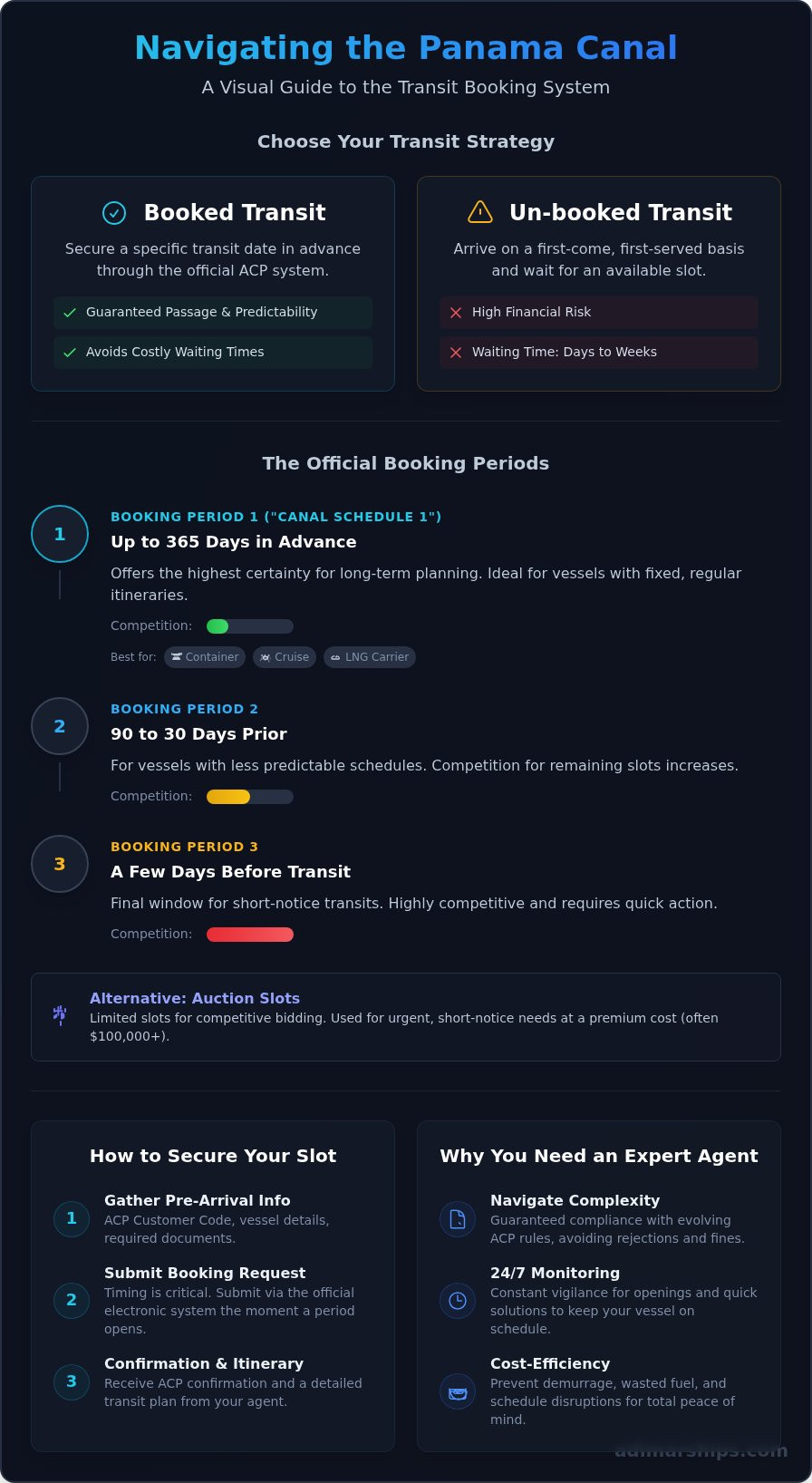
The Panama Canal Authority (ACP) operates a highly structured Transit Reservation System to manage the flow of vessels and ensure safe, predictable passage. This official system is the backbone of Canal operations, allowing vessels to book a specific transit date in advance. Ship operators have two main options for transiting: securing a booked slot or arriving un-booked and waiting on a first-come, first-served basis. While the un-booked option exists, it carries significant financial risk, as waiting times can stretch for days or even weeks, leading to massive fuel and operational costs.
Key Terminology: Booking Periods vs. Auction Slots
Before diving into the booking process, it’s vital to understand two core concepts. Booking Periods are the standard, pre-defined windows through which operators can request and reserve a transit slot in advance. These are designed for vessels with planned itineraries. In contrast, Auction Slots are a limited number of slots made available for competitive bidding. This option is typically used by vessels that need a slot on short notice and are willing to pay a premium for the certainty of passage.
A Guide to the Booking Periods: What is “Canal Schedule 1”?
The ACP’s booking system is divided into three main periods, each opening at a specific time before the desired transit date. The type and size of your vessel often determine which periods you are eligible to use. Understanding these windows is the key to effective long-term planning.
Booking Period 1 (The “Canal Schedule 1”)
In industry circles, the first and earliest booking window is often referred to as “Canal Schedule 1.” This period opens up to 365 days in advance of the transit date, offering the highest level of certainty for long-term planning. It is primarily utilized by vessels with regular, fixed itineraries, such as container ships, cruise lines, and LNG carriers. Securing a slot in Period 1 is the best way to lock in a transit date far in advance and build a reliable operational schedule around it.
Booking Period 2
The second booking window opens much closer to the transit date, typically between 90 and 30 days prior. This period is designed for vessels with less predictable schedules that cannot commit to a date a year in advance. Competition for slots in Period 2 is generally higher than in Period 1, as more vessels are vying for a limited number of remaining spots.
Booking Period 3
This is the final standard booking window, opening just a few days before the transit date. Period 3 is highly competitive and is used for short-notice transits when unexpected changes in a vessel’s schedule occur. Securing a slot in this window requires quick action and expert knowledge of the system’s availability.
Step-by-Step: How to Request a Transit Slot
Requesting a transit slot is a precise process where mistakes can result in a lost booking or financial penalties. While the steps seem straightforward, execution requires diligence. This is where having an experienced ship agent becomes invaluable, ensuring every detail is handled correctly and on time.
Step 1: Gather Pre-Arrival Information
Before any request can be submitted, you must have all necessary information ready. This includes an official ACP Customer Code, accurate vessel details (length, beam, tonnage, etc.), and all required documentation. Your agent will ensure these prerequisites are met well in advance to avoid last-minute issues.
Step 2: Submit the Booking Request
All booking requests are submitted through the ACP’s official electronic system. The key to success is timing. Your agent must submit the request at the exact moment the desired booking period opens, as popular dates are often filled within minutes. This requires 24/7 monitoring and a deep understanding of the system’s mechanics.
Step 3: Confirmation and Itinerary
Once a slot is successfully secured, the ACP will issue a confirmation. Your agent will then provide you with a detailed transit itinerary and communicate all pre-arrival instructions. From this point forward, they will manage all communications with the Canal authorities, pilots, and tugs to ensure a smooth passage.
Why You Need an Expert Ship Agent for Canal Bookings
At the Panama Canal, time is money. The booking system is complex and unforgiving, and a single mistake can lead to costly delays. A dedicated ship agent is not just a facilitator; they are your local expert on the ground, protecting your interests and ensuring your operations run smoothly.
Navigating Complexity and Official Procedures
The rules and regulations of the Panama Canal are constantly evolving. As your partner, we are experts in ACP procedures so you don’t have to be. We guarantee that all paperwork is filed correctly and on time, helping you avoid common pitfalls that lead to booking rejections or fines.
24/7 Monitoring and Quick Solutions
Securing a slot requires constant vigilance. We monitor the booking system around the clock for openings, changes, and opportunities. If unexpected issues arise, we are positioned to provide quick, effective solutions to keep your vessel on schedule. Think of us as your eyes and ears at the Panama Canal.
Cost-Efficiency and Peace of Mind
A smoothly executed booking prevents costly demurrage, wasted fuel, and schedule disruptions. By entrusting your transit to a professional agent, you can focus on your core business with the confidence that every detail is being managed with integrity and efficiency. Nominate Adimar as your agent for a seamless transit.
Frequently Asked Questions
What is the difference between a booked and an un-booked transit?
A booked transit guarantees a specific day for passage, minimizing waiting time. An un-booked transit means arriving at the Canal and waiting for an opening, which can take days or even weeks, incurring significant operational costs.
How much does a Panama Canal auction slot typically cost?
The cost of an auction slot varies dramatically based on demand, vessel size, and time of year. Prices can range from tens of thousands to several hundred thousand dollars above standard transit fees.
Can I change my transit date after I have booked a slot?
Changes are sometimes possible but are subject to availability and may incur fees or penalties. It is always best to coordinate any potential changes through your ship agent, who can navigate the official process with the ACP.
What happens if my vessel arrives late for its booked transit time?
Arriving late can result in the forfeiture of your slot and booking fee. The ACP has strict schedules, and prompt arrival is critical. Your agent will help coordinate your vessel’s arrival to meet the required timeline.
Are there different booking rules for Neopanamax vs. Panamax vessels?
Yes, there are different sets of locks and booking considerations for the larger Neopanamax vessels versus the traditional Panamax vessels. Your agent will manage the booking according to your vessel’s specific classification and requirements.
The Panama Canal booking system is a critical component of modern shipping, but its complexity demands expertise and attention to detail. With a clear understanding of the process and a trusted partner on your side, you can navigate it successfully. Adimar Shipping has over 20 years of experience providing transparent, reliable agency services. Let our team of experts handle the details of your next transit. Request a quote and let us handle your Panama Canal booking.