
For any ship owner, charterer, or operator planning a voyage through the Panama Canal, understanding the precise vessel dimension limits is not just important-it’s mission-critical. Get the current, verified maximum beam for both Panamax and Neopanamax locks to ensure your vessel’s smooth and efficient transit, avoiding costly delays and complications.
What is Maximum Beam and Why It’s Critical for Canal Transit
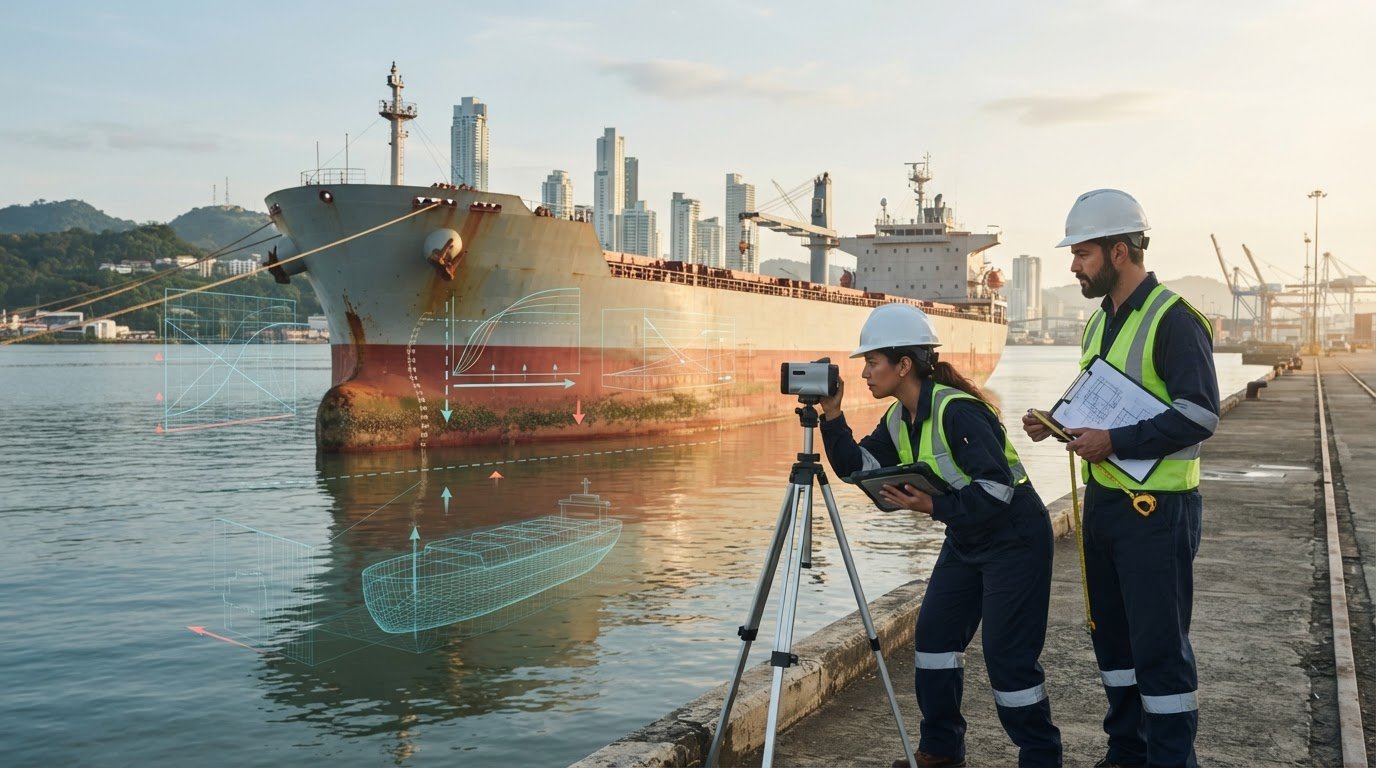
In maritime terms, a ship’s “beam” is its width at the widest point. While length, draft, and height are all crucial, the beam is often the most rigid and unforgiving dimension when navigating the locks of the Panama Canal. The clearance between a vessel and the lock walls can be minimal, leaving absolutely no room for error. A vessel’s beam is the primary factor that determines which set of locks it is eligible to use-the original Panamax locks or the newer, larger Neopanamax locks. Relying on incorrect or outdated beam information can lead to a vessel being denied transit, resulting in significant financial losses and scheduling chaos.
Panamax vs. Neopanamax: Two Sets of Locks, Two Beam Limits
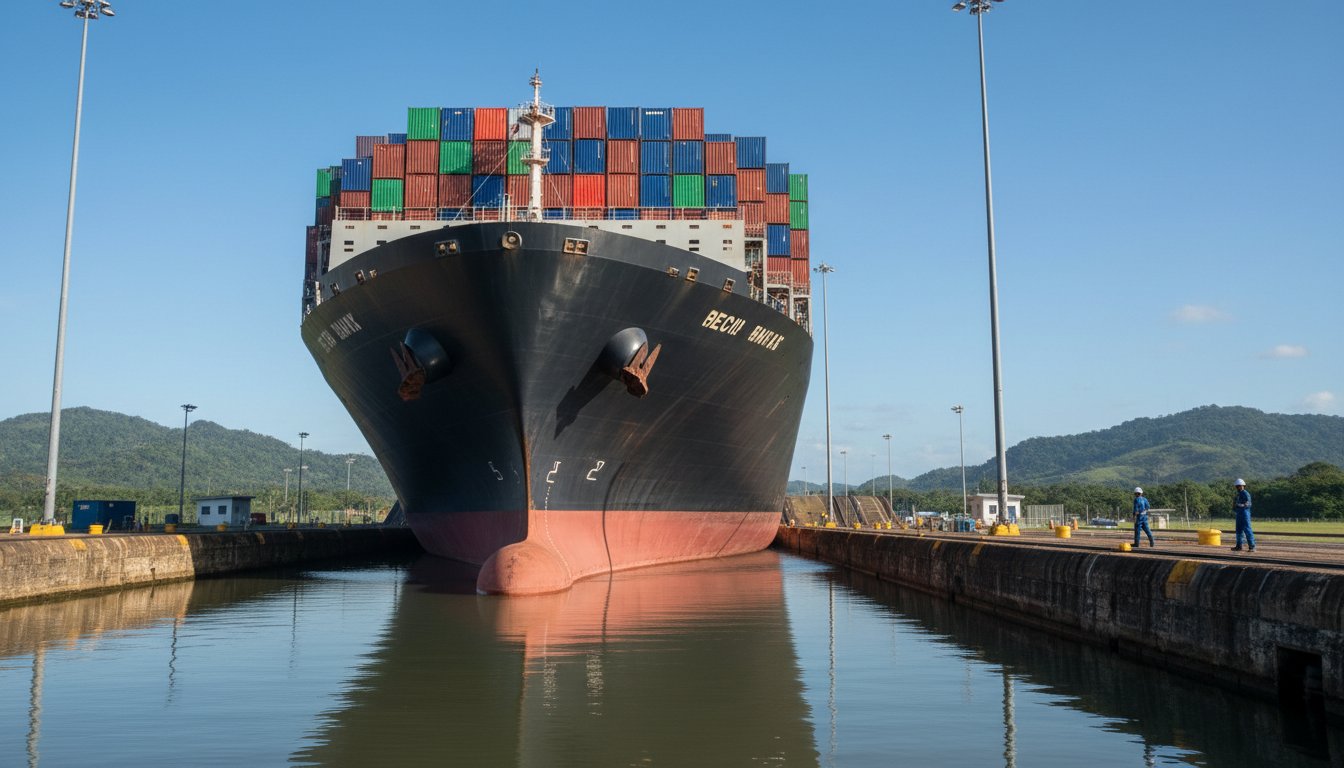
The Panama Canal operates two distinct sets of locks. The original Panamax locks, including the famous Miraflores and Gatun Locks, served global trade for a century and defined the “Panamax” class of ships. In 2016, the Canal completed a historic expansion, introducing the larger Cocoli and Agua Clara locks. This massive engineering feat created the “Neopanamax” class, allowing much larger vessels to transit the isthmus and reshaping global shipping routes.
Official Panama Canal Maximum Beam Limits
Navigating the official requirements can be complex, but the maximum beam limits are straightforward. The most critical takeaway is that there are two separate standards. Below is a clear breakdown of the current, official limits. Please note that these figures can be updated by the Panama Canal Authority (ACP) based on operational needs or maintenance, so always verify with the latest advisories.
Neopanamax Locks Maximum Beam
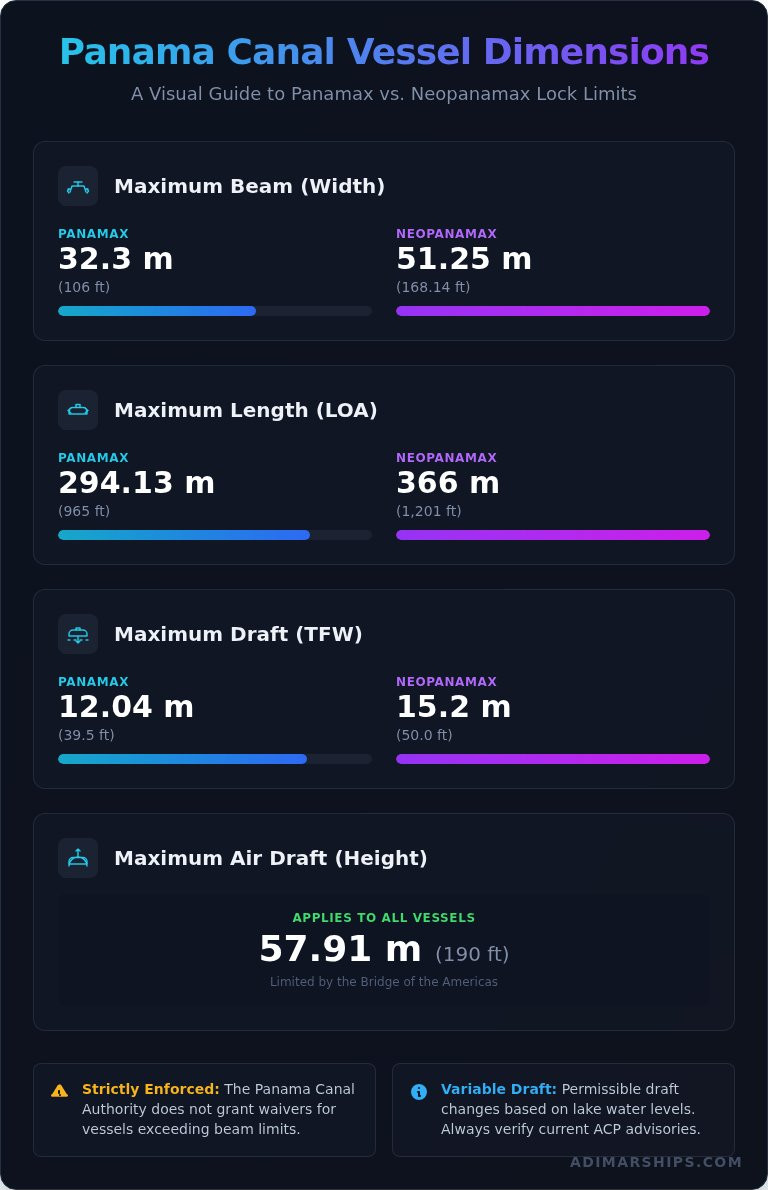
For vessels transiting through the newer, larger Cocoli and Agua Clara locks, the current maximum allowed beam is 51.25 meters (168.14 feet). This standard accommodates the vast majority of modern container ships, LNG carriers, and cruise ships. Any vessel exceeding this width cannot safely pass through the Neopanamax lock chambers.
Panamax Locks Maximum Beam
For the classic, original locks, the maximum allowed beam remains 32.3 meters (106 feet). These locks are still vital for a significant portion of canal traffic, serving smaller container vessels, bulk carriers, and naval ships that fit within these “Panamax” dimensions. Vessels with a beam even slightly over this limit must use the Neopanamax locks.
Beyond Beam: Other Key Dimensions for Panama Canal Transit
While maximum beam is a critical gatekeeper, it is only one piece of the puzzle. For a vessel to be approved for transit, it must comply with all dimensional limits simultaneously. A miscalculation in any of these areas can jeopardize a safe passage.
Maximum Length Overall (LOA)
A vessel’s total length from bow to stern is strictly regulated. For Neopanamax locks, the maximum LOA is 366 meters (1,201 feet). For the original Panamax locks, the maximum LOA is significantly shorter at 294.13 meters (965 feet).
Maximum Draft (Tropical Fresh Water – TFW)
A vessel’s draft-the depth of its hull below the waterline-is heavily dependent on the water levels of Gatun Lake, which can fluctuate seasonally. The official maximum draft for the Neopanamax locks is 15.2 meters (50.0 feet) in Tropical Fresh Water. However, this is the most variable dimension, and the ACP frequently issues advisories adjusting the permissible draft. Expert, on-the-ground guidance is essential to manage this risk.
Maximum Air Draft
A vessel’s air draft, or height above the waterline, is limited by the Bridge of the Americas on the Pacific side of the canal. This restriction applies to all vessels, regardless of which locks they use. The maximum air draft is 57.91 meters (190 feet), and there are no exceptions.
Planning a Smooth Transit? Don’t Risk It.
The Panama Canal Authority enforces vessel dimension limits with absolute strictness; there are no waivers for being slightly oversized. Furthermore, operational factors like scheduled maintenance or unexpected changes in water levels can alter requirements with little notice. This is why working with an expert ship agent is the best way to eliminate uncertainty and protect your investment. A dedicated agent handles the constant monitoring of ACP rules and advisories so you don’t have to. Let Adimar ensure your vessel’s compliance and smooth passage. We are your eyes and ears at the Panama Canal, providing the peace of mind that comes from proven expertise.
Frequently Asked Questions
What is the maximum beam for a Panamax vessel?
The maximum beam for a vessel to transit the original Panamax locks is 32.3 meters (106 feet).
What is the maximum beam for a Neopanamax vessel?
The maximum beam for a vessel using the larger Neopanamax locks is 51.25 meters (168.14 feet).
Can a ship get a waiver if it is slightly over the maximum beam?
No. The Panama Canal Authority does not grant waivers for vessels exceeding the maximum beam limits. These dimensions are strictly enforced for the safety of the vessel and the canal infrastructure.
Do water levels in the Panama Canal affect the maximum beam?
No, water levels do not affect the maximum beam, which is determined by the physical width of the lock chambers. However, water levels directly impact the maximum permissible draft of a vessel.
How often does the Panama Canal Authority (ACP) update vessel requirements?
The ACP can issue advisories and update requirements at any time based on operational conditions, weather, or maintenance schedules. Draft restrictions are the most frequently updated requirement.
Ensuring your vessel meets every dimensional requirement is the foundation of a successful and cost-effective Panama Canal transit. With over 20 years of dedicated experience, Adimar Shipping provides the transparent communication and cost-conscious service needed to navigate these complexities. We pride ourselves on being a trusted partner with integrity. Plan your Panama Canal transit with confidence. Nominate Adimar as your agent.