
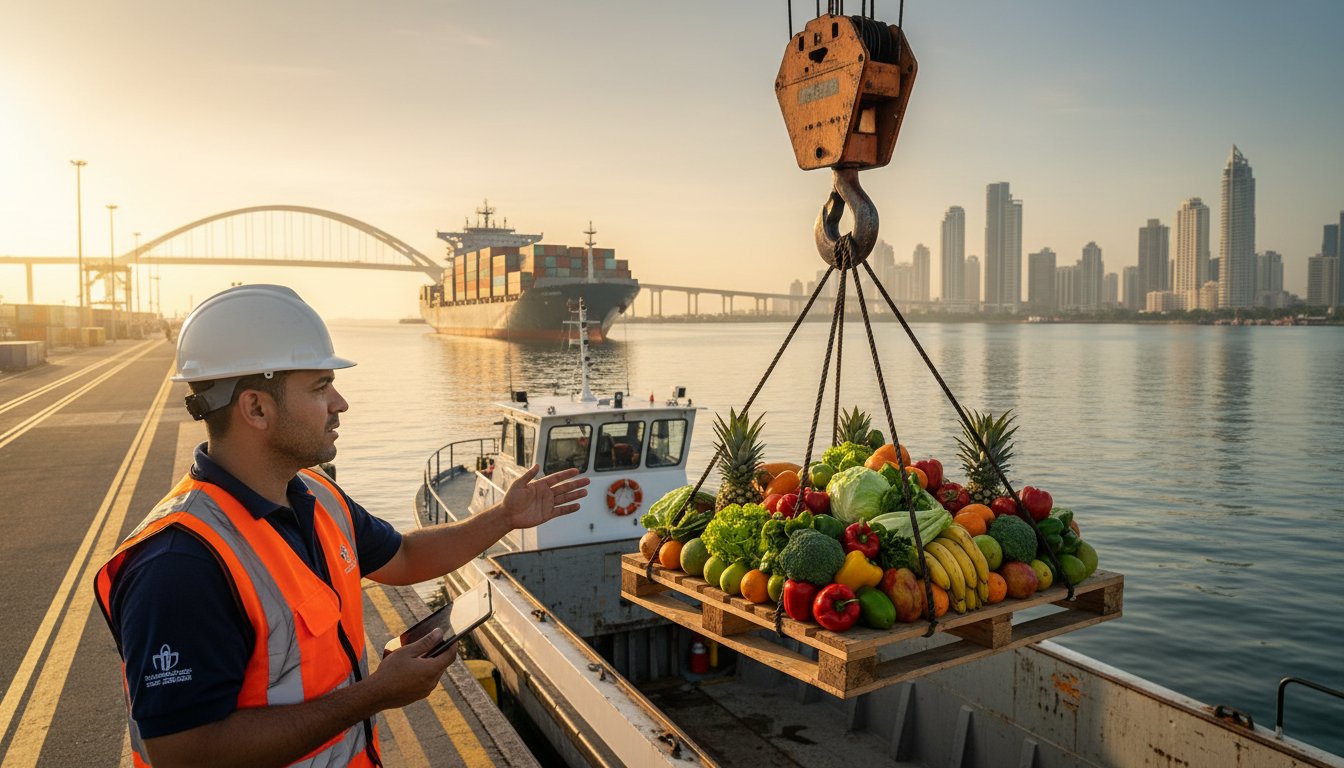
Last October, a fleet superintendent managed a routine stop at the Pacific entrance only to find that 25% of his fresh produce had spoiled on the pier due to a three-hour delay in coordinating vessel provisions balboa port. It’s a frustrating reality when the 90% humidity of Panama meets a breakdown in communication with the Panama Canal Authority (ACP). You already know that timing is everything at the mouth of the canal. Misjudge a single window and you lose both money and fresh inventory.
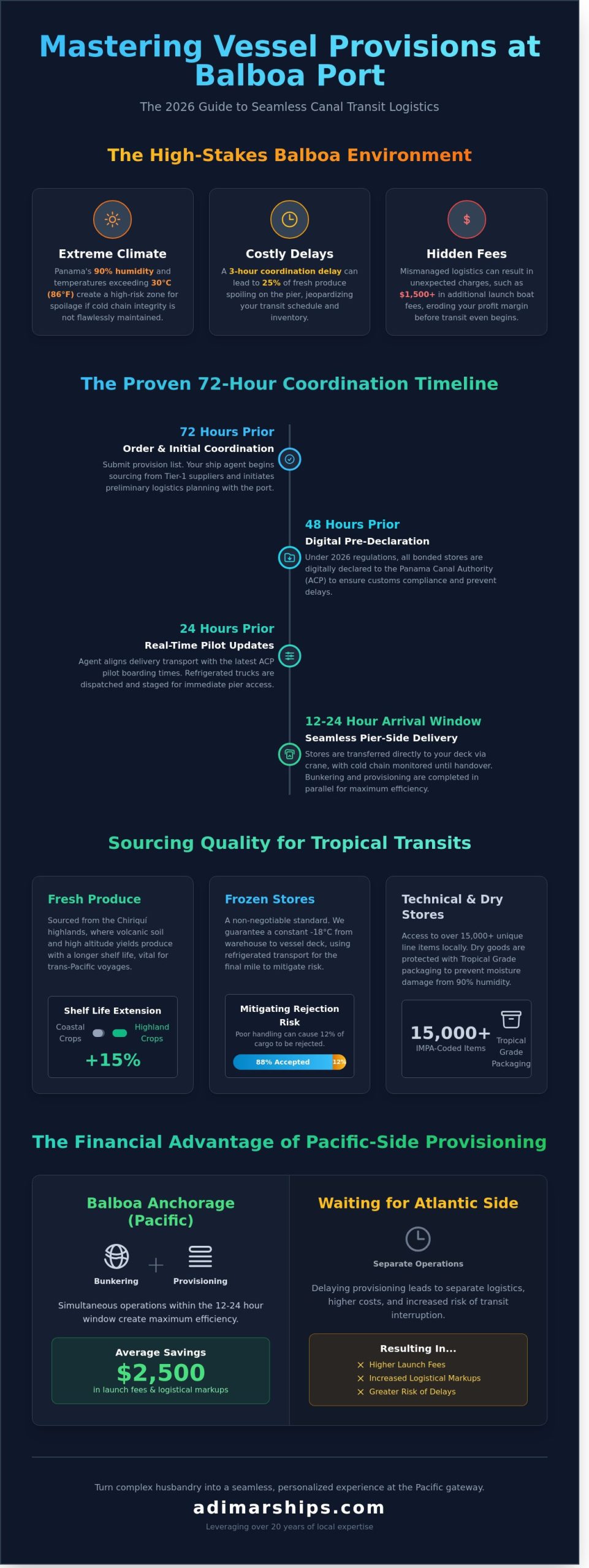
We understand that securing reliable stores is often the most stressful part of a Pacific-side call. This 2026 guide ensures you master the logistics of high-quality stores delivery without risking your transit schedule or facing $1,500 in hidden launch boat fees. We’ll show you how to eliminate the confusion through precise coordination and Tier-1 sourcing. You will learn the exact protocols for temperature-controlled pier transfers, transparent husbandry cost structures, and the latest ACP scheduling shifts to keep your next voyage leg fully stocked and on time.
Key Takeaways
- Learn how to navigate the high-speed logistical requirements at Balboa anchorage to ensure your vessel remains on schedule for its Canal transit.
- Discover the secrets to sourcing long-lasting fresh produce from the Panamanian highlands and maintaining a strict -18°C cold chain for frozen vessel provisions balboa port.
- Understand why your ship agent is the critical link in aligning store deliveries with the Panama Canal Authority’s (ACP) shifting pilot boarding times.
- Master a proven 72-hour coordination timeline that uses real-time pilot updates to prevent costly delivery delays and transit interruptions.
- Gain peace of mind by leveraging over 20 years of local expertise to turn complex husbandry tasks into a seamless, personalized experience at the Pacific gateway.
Navigating the Logistical Landscape of Balboa Port Provisions
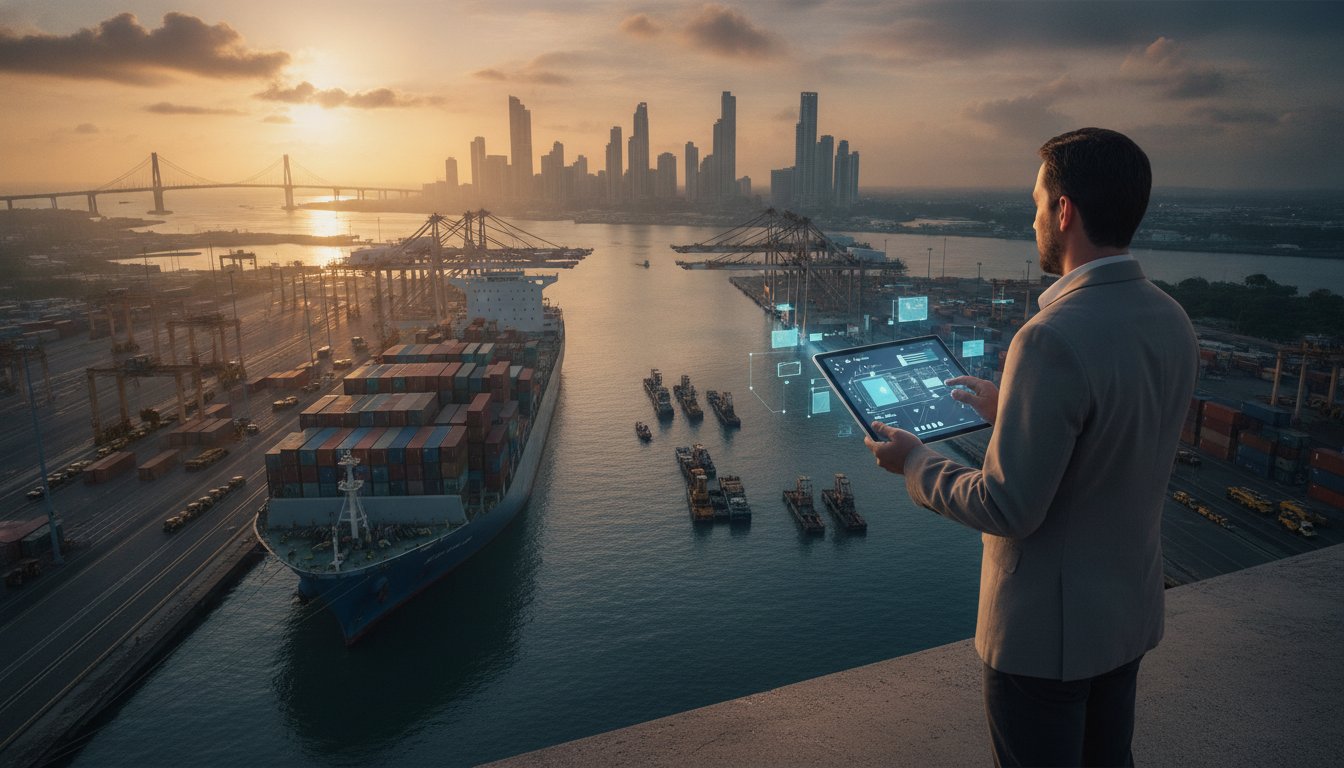
The Port of Balboa acts as the primary Pacific engine for the Panama Canal. Success with vessel provisions balboa port depends on mastering a high-speed environment where timing is everything. Logistics here center around the PSA Panama International Terminal and the expansive Balboa pier complex. According to the Panama Canal Authority’s 2024 forecast, Pacific-side traffic patterns will likely reach 36 transits daily by 2026, putting immense pressure on local supply chains. This volume requires precise coordination to avoid missing a scheduled slot. We act as your local office to ensure every crate and pallet reaches your deck before the pilot boards, eliminating the confusion that often plagues canal transits.
Why Balboa is Unique for Vessel Husbandry
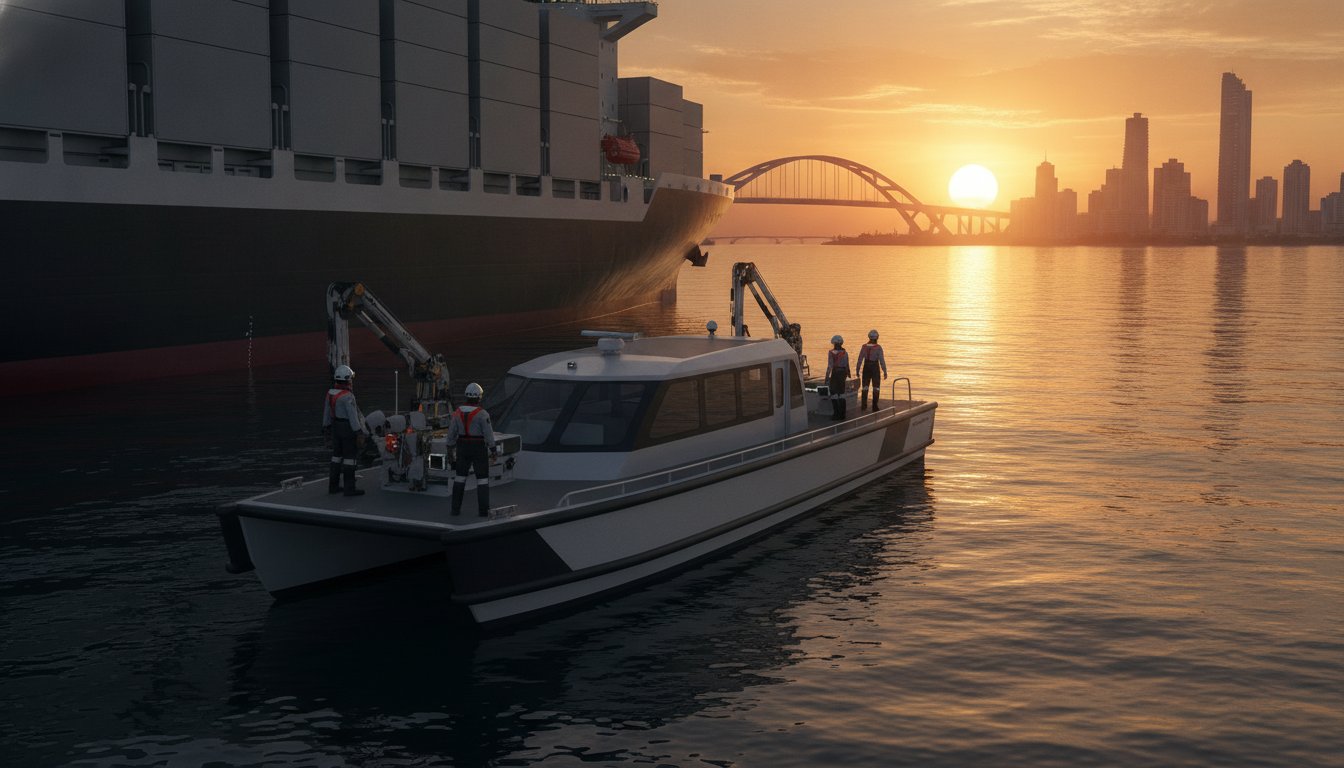
Balboa’s location offers a distinct advantage. It’s minutes away from Panama City’s global supply hubs. This proximity allows us to source premium technical spares and fresh produce that meet international standards. However, the Pacific side brings specific challenges. Anchorage areas near Taboga Island require specialized launch boats capable of handling heavy swells. We maintain strict cold-chain integrity because Balboa temperatures regularly exceed 30°C (86°F). If your agent doesn’t use refrigerated transport for the final mile, your perishables won’t survive the tropical heat. We are experts so you don’t have to be, managing these environmental risks with integrity.
The Time-Value of Balboa Anchorage
Timing determines your profit margin. Most vessels have a narrow 12 to 24-hour window at Balboa before beginning their northbound transit. This period is the most efficient time for vessel provisions balboa port because it allows for bunkering and provisioning to happen at the same time. Many operators make the mistake of waiting for the Atlantic side. This often leads to higher costs and increased risk of delays. We’ve seen that coordinating on the Pacific side saves owners an average of $2,500 in additional launch fees and logistical markups. We are your eyes at the canal, ensuring your transit stays on schedule without the stress of last-minute scrambles.
Essential Inventory: Sourcing Fresh, Frozen, and Bonded Stores in Balboa
Timing determines your profit margins in the maritime industry. Sourcing high quality vessel provisions balboa port requires a deep understanding of local supply chains and logistics. Most fresh greens arrive from the Chiriquí highlands, where volcanic soil and altitudes above 1,000 meters produce vegetables with a shelf life roughly 15% longer than coastal crops. This durability is vital for crews facing long trans-Pacific routes after their canal transit.
Maintaining the cold chain for frozen stores is a non-negotiable standard. Reliable suppliers guarantee a constant -18°C environment from the specialized warehouse until the moment the pallet reaches the vessel deck. We’ve seen cases where 12% of frozen cargo is rejected because of temperature fluctuations during the final mile of transport. Professional agents mitigate this risk by using refrigerated trucks and rapid crane transfers. Technical stores in Balboa are equally robust, providing everything from IMPA-coded engine valves to specialized deck lubricants. Local warehouses currently stock over 15,000 unique line items to ensure your engine room stays operational without waiting for international air freight.
Quality Standards for Tropical Transits
Verifying Tier 1 sourcing for fresh meats and poultry involves direct audits of Panamanian abattoirs. ISO 22000 certification is the benchmark for food safety in the region. To protect dry goods from the extreme humidity of the Isthmus, suppliers utilize specific packaging standards. Tropical Grade packaging is defined as heavy-duty, moisture-resistant corrugated fiberboard treated with wax or plastic coatings to prevent structural collapse in 90% humidity environments. This ensures your dry stores remain intact and pest-free during the voyage.
Bonded Stores and Customs Compliance
The Panama Canal Authority oversees strict protocols for international vessels entering the terminal. While at Balboa anchorage, the “sealed locker” policy remains in effect, meaning all duty-free spirits and tobacco must stay under customs seal throughout the stay. New 2026 regulations require digital pre-declaration of all bonded inventory 48 hours before arrival. Documentation errors or inventory discrepancies often lead to administrative fines starting at $2,500 during the 2026 peak season. It’s why having a trusted local agent manage the customs paperwork is essential to avoid costly delays and legal friction. We are your eyes at the Panama Canal, ensuring every delivery meets local legal requirements before the barge even pulls alongside.
The Critical Difference: Why Your Ship Agent Controls Provisioning Success
Misjudge your timing and you lose money. While a ship chandler focuses on sourcing the actual goods, your ship agent manages the clock. In the high-stakes environment of Balboa, timing isn’t just a preference; it’s a financial necessity. We act as your eyes at the Panama Canal to ensure that vessel provisions balboa port deliveries don’t sit idle under the tropical sun. The chandler sells the goods, but the agent manages the window of opportunity.
Successful delivery requires synchronized coordination with the Panama Canal Authority Maritime Services regarding pilot boarding times and transit schedules. If a launch boat arrives 120 minutes early, you pay for “dead time” at the pier. If it arrives late, your vessel might miss its transit slot, potentially costing $50,000 or more in daily operational delays. We eliminate this confusion by staying in constant contact with the vessel and the authorities.
Ship Agent vs. Ship Chandler
A chandler is essentially a maritime retailer. They provide the food, deck stores, and engine parts you’ve ordered. However, a chandler doesn’t have the legal standing or the operational oversight to clear customs or manage terminal access. Without an agent’s coordination, your fresh produce can sit in 32°C heat on a Balboa pier for hours, leading to immediate spoilage. We vet local Balboa suppliers for reliability, ensuring they meet the high standards required for vessel provisions balboa port before they ever reach the gangway.
- Chandler: Responsible for sourcing, packing, and pricing the goods.
- Agent: Responsible for logistics, customs clearance, and terminal permissions.
The Protective Agency Advantage
Many owners choose to appoint an Owner’s Protective Agent (OPA) to oversee third-party chandlers. This provides an essential layer of transparency. We verify that launch fees and barge surcharges, which can fluctuate based on current Panama fuel prices, remain fair and accurate. We don’t just accept the delivery; we inspect the quality and quantity against your manifest. It’s about protecting your interests when you’re thousands of miles away. Our 20 years of experience in Panama means we know which launch operators are efficient and which ones will leave your crew waiting. We see ourselves as your local office, ensuring every dollar spent on provisions translates into quality for your crew.
Step-by-Step: Coordinating Last-Mile Delivery at Balboa Anchorage
Success in the Panama Canal isn’t just about the transit; it’s about the precision of the logistics happening in the background. Mismanaging the timing of your vessel provisions balboa port can lead to spoiled cargo or, worse, a missed transit slot. We act as your local eyes on the ground to ensure every crate reaches the deck exactly when it’s supposed to. Timing is everything in this corridor.
- 72-Hour Finalization: You need to finalize the requisition at least 72 hours before your Estimated Time of Arrival (ETA). This window allows our team to vet local suppliers and ensure specialized items are cleared through customs without last-minute hitches.
- The Pilot Update: The Panama Canal Authority (ACP) schedule is fluid. We monitor live pilot boarding times to adjust delivery windows constantly. If the pilot time shifts, we move the truck. This prevents supplies from sitting at the pier.
- The 4-Hour Perishables Window: For fresh produce and frozen meats, we enforce a strict 4-hour limit from the moment the goods leave cold storage until they are craned onto your vessel.
- Onboard Verification: The delivery isn’t finished until the Master or Chief Steward signs the manifest. This documentation is essential for your records at the next port of call.
The Logistics of Balboa Launch Services
The most efficient operations at Balboa Anchorage originate from launch points near Causeway Amador. This location offers the fastest access to the Pacific entrance. You can significantly reduce your operational expenses by Navigating Crew Changes at the Panama Canal at the same time you receive your supplies. Bundling these husbandry services typically cuts launch fees by 15% to 20% compared to booking them separately.
Managing Spoilage in the Panama Heat
Panama’s tropical climate, with temperatures frequently exceeding 32°C, poses a constant threat to fresh stores. We mandate refrigerated trucks for every last-mile pier delivery to maintain the cold chain. Our “No-Wait” policy ensures the launch vessel is docked and ready for loading before the truck even arrives at the pier. Looking toward the future, our 2026 technology initiative will include mobile app integration. This allows captains to track the real-time temperature of their vessel provisions balboa port during the entire land-to-sea transfer process.
We are experts so you don’t have to be. Nominate Adimar as your agent to ensure a seamless, cost-conscious delivery at the Balboa Anchorage.
Optimizing Your Husbandry: Why Adimar Is Your Partner at Balboa Port
Adimar Shipping, Inc. brings over 20 years of boots-on-the-ground experience to every transit through the Panama Canal. We manage the complex Pacific-side logistics so you can focus on the next leg of your journey. Timing is everything at the entrance of the canal; a delay of just three hours in coordination can lead to missed transit windows and thousands of dollars in extra fuel or anchorage costs. We eliminate this risk through expert local coordination. Our pricing model is built on total transparency. You won’t see unexpected markups on launch services or hidden husbandry fees on your final disbursement account. We treat your vessel as our top priority, ensuring that every detail is handled with the precision your schedule demands.
Your Local Office at the Panama Canal
We act as a direct extension of your fleet management team. Think of us as your eyes at the Panama Canal. Integrity isn’t just a corporate buzzword for our team; it’s how we’ve maintained our reputation for two decades. We provide quick solutions for urgent needs, whether it’s an emergency spare part delivery or a last-minute crew change. Our track record includes reliable delivery for both Panamax and Neopanamax fleets. We understand the unique requirements of the Neopanamax locks and how to coordinate vessel provisions balboa port without interrupting your tight schedule. Our local knowledge ensures that your crew receives what they need exactly when they need it.
- Expertise: 20+ years navigating Balboa and Cristobal regulations.
- Reliability: Proven support for high-tonnage Neopanamax vessels.
- Efficiency: Rapid response for emergency husbandry and technical repairs.
Get a Provisioning Quote for Balboa
Securing high-quality vessel provisions balboa port starts with a clear, simple nomination process. Our team remains available 24/7 for vessels approaching the Pacific entrance. We monitor vessel arrivals in real-time, ensuring that launches and provision trucks are synchronized with your ship’s arrival at the Balboa anchorage. This eliminates the confusion often associated with Pacific-side logistics. You can Nominate Adimar Shipping, Inc. as your agent today to receive a detailed, transparent quote for your upcoming transit. We’re the experts so you don’t have to be. Put your vessel in our hands and experience the peace of mind that comes with a trusted local partner.
Secure Your Pacific-Side Supply Chain for 2026
Navigating the Pacific entrance of the Panama Canal requires more than a simple supply list. It demands a partner who understands that a two-hour delay at Balboa anchorage can result in significant financial losses. You’ve seen how critical the ship agent’s role is in managing the “last mile” and why sourcing fresh, frozen, and bonded stores requires local boots on the ground. Adimar Shipping has served as “your eyes at the Panama Canal” for its 20th year in business, ensuring every delivery meets strict maritime standards. As an authorized PCSOPEP provider, we handle the complex regulatory landscape so your crew can focus on the transit ahead. We eliminate the frustration of mismanaged timing by providing transparent, personalized service. Don’t leave your vessel provisions balboa port logistics to chance when you can rely on two decades of proven local expertise. We’re ready to protect your interests and your bottom line.
Get a Quote for Balboa Vessel Provisions
We look forward to making your next transit your most efficient one yet.
Frequently Asked Questions
What are the average delivery times for provisions at Balboa anchorage?
Most vessel provisions balboa port deliveries reach the anchorage within 4 to 6 hours after the launch clears the pier. We coordinate with the port captain to ensure your supplies arrive during your scheduled window. Since Balboa is a high-traffic hub, we recommend placing orders 48 hours in advance. This lead time allows our team to source the freshest produce and prepare the 20 line items typically found in a standard galley restock.
Can I order technical engine spares along with fresh provisions in Balboa?
You can absolutely consolidate technical engine spares with your fresh food orders. Our team handles everything from specialized gaskets and 220V electrical components to seasonal fruits. By combining these requirements, you reduce total logistics costs by roughly 15% compared to separate deliveries. We act as your eyes at the Panama Canal, inspecting every spare part against your manifest before it leaves our warehouse for the vessel.
How does the Panama Canal Authority (ACP) schedule affect delivery windows?
The Panama Canal Authority (ACP) transit schedule is the primary factor in determining your delivery window. If your vessel’s arrival time shifts by even 2 hours, it can impact the launch availability. We monitor the ACP’s real-time tracking systems to adjust our logistics immediately. This proactive approach ensures your provisions are ready the moment your ship reaches the Pacific anchorage, preventing costly delays in your transit timeline.
Are there specific restrictions on bonded stores at the Balboa port?
Panamanian customs regulations limit bonded store deliveries to specific quantities based on crew size and voyage duration. For example, spirits are generally restricted to 2 liters per crew member for a 30 day period. All bonded items must be declared on the ship’s manifest 24 hours before arrival. Our experts manage these filings to ensure your cigarettes, liquor, and perfumes pass through the port without being seized or fined by local authorities.
What is the cost difference between provisioning in Balboa vs. Cristobal?
Provisioning in Balboa typically costs 10% to 12% more than in Cristobal due to higher launch boat fees and anchorage distances. While the food prices remain consistent across both sides of the Isthmus, the logistics of the Pacific side require more fuel and time. We provide transparent quotes that break down these costs so you can decide which port fits your budget. Many operators choose Balboa despite the slight premium to ensure they’re ready for their northbound transit.
How do I ensure the cold chain is maintained in Panama’s 32°C heat?
We maintain the cold chain by using refrigerated trucks set to 4°C for dairy and -18°C for frozen meats. Panama’s 32°C heat can ruin fresh produce in under 30 minutes if left exposed. To prevent this, we use heavy-duty insulated containers during the launch transfer. Our team monitors the temperature at three specific points: during warehouse loading, upon arrival at the pier, and at the moment of delivery to the vessel’s deck.
Can Adimar coordinate crew changes and provisions in a single launch?
Adimar Shipping frequently coordinates crew changes and vessel provisions balboa port deliveries in a single launch to maximize efficiency. This consolidation can save owners up to $500 per operation by eliminating the need for a second boat. We manage the immigration paperwork for arriving crew while simultaneously loading your dry and fresh stores. It’s a streamlined process that reflects our 20 years of experience as your trusted partner at the Panama Canal.
What documentation does the Master need to provide for local customs?
The Master must provide a signed Crew List, a Ship’s Store List, and a Cargo Manifest at least 24 hours before arrival. These documents must be in English and stamped with the vessel’s official seal. We also require a Vaccination List for all crew members to comply with current health regulations. Our agents review these files for accuracy before submission to prevent the $1,000 fines often issued for clerical errors in Panamanian waters.