
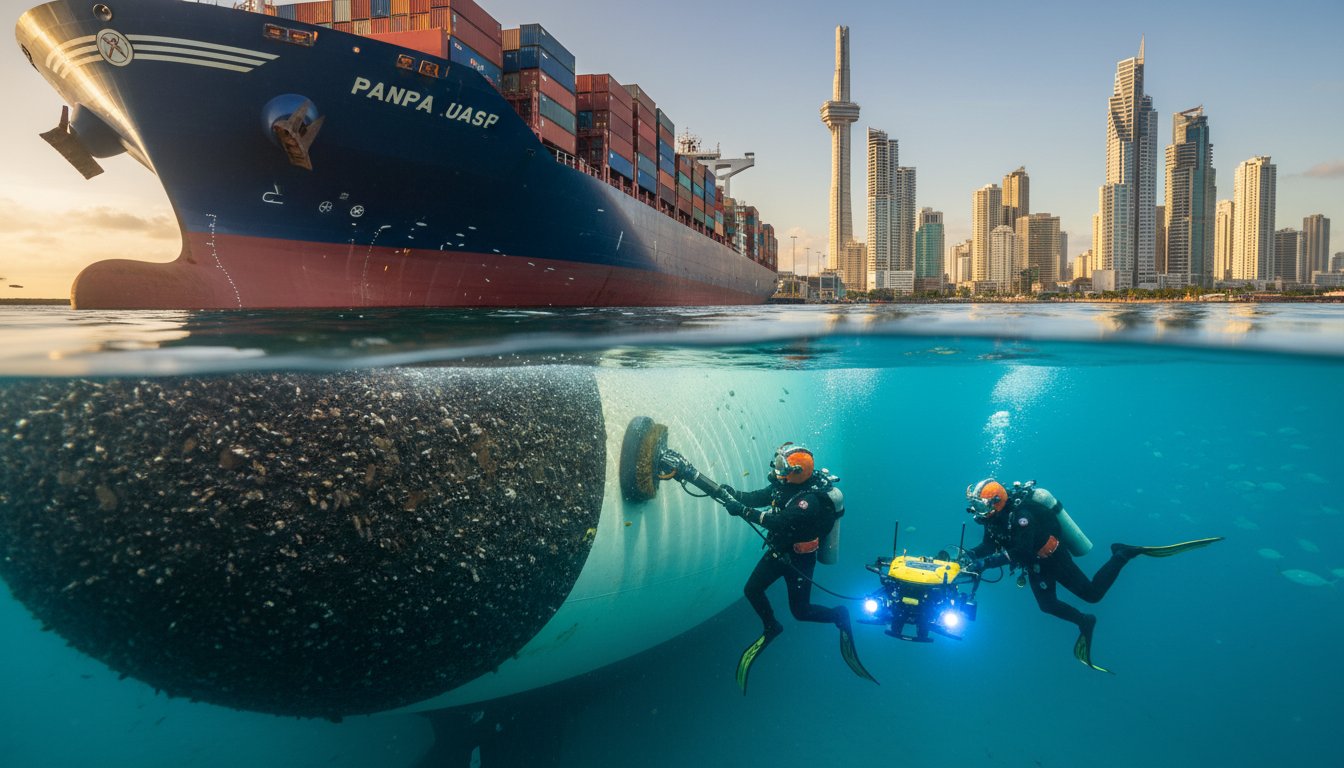
A single millimeter of biofouling on your hull can trigger a 15% increase in fuel consumption, costing a standard bulk carrier upwards of $4,500 extra in daily operating expenses. You already understand that timing is everything when approaching the Canal. Misjudging your coordination or arriving with a fouled hull doesn’t just waste fuel; it risks your entire transit window with the ACP. We know the pressure you face because we act as your eyes at the Panama Canal every day.
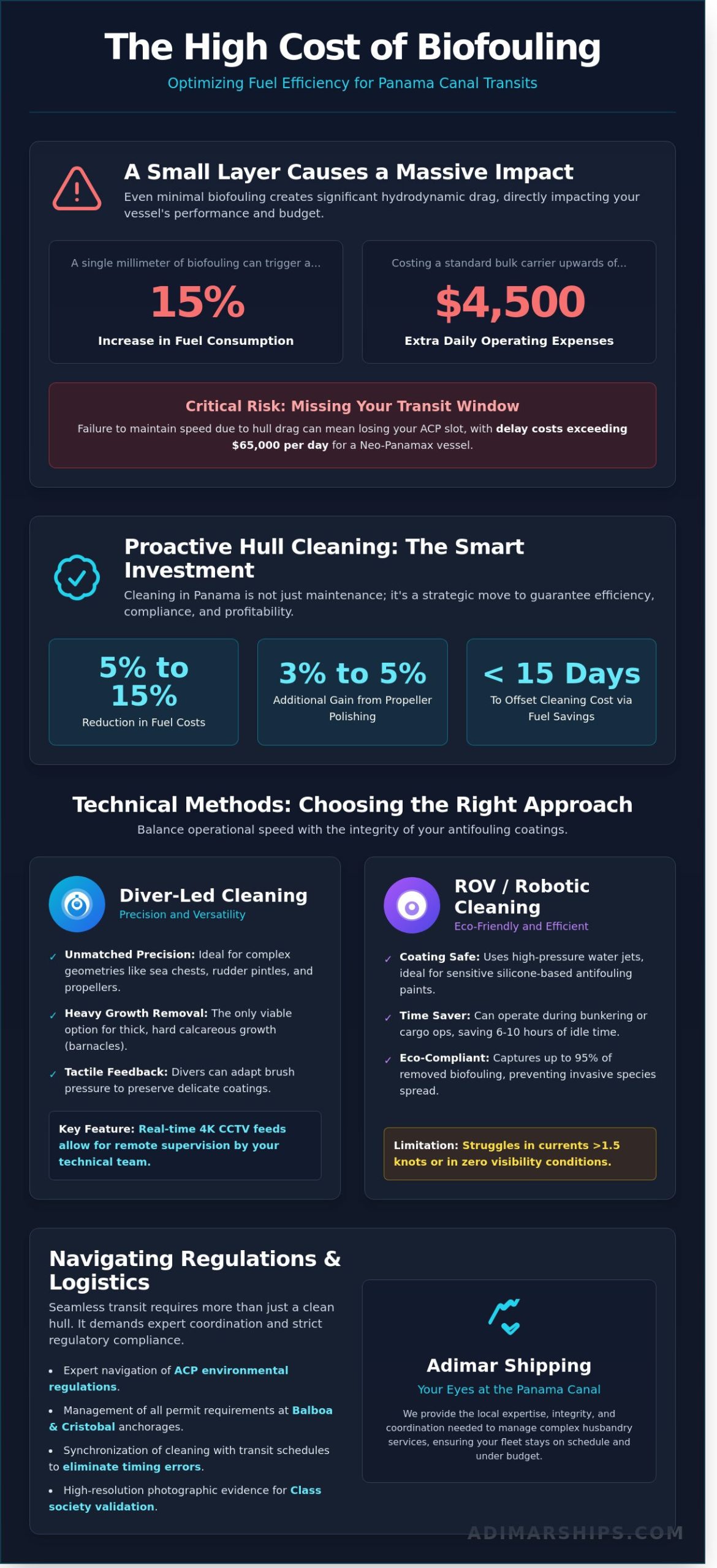
Professional underwater hull cleaning panama services are no longer just a maintenance task; they’re a strategic necessity for the 2026 fleet manager. This guide discovers how to optimize your vessel’s fuel efficiency and transit timing through expert intervention. You’ll learn how to achieve a 5% to 15% reduction in fuel costs while maintaining full compliance with strict local environmental discharge regulations. We’ll preview the essential steps for seamless coordination between cleaning crews and the ACP so your fleet stays on schedule and under budget.
Key Takeaways
- Discover why Panama’s unique position makes it the world’s most strategic location for biofouling removal to boost fuel efficiency and vessel speed.
- Learn to choose between diver-led brush systems and robotic ROV solutions to ensure your underwater hull cleaning panama service maximizes performance while protecting specialized coatings.
- Navigate strict ACP environmental regulations and permit requirements at Balboa and Cristobal anchorages to ensure seamless, compliant maintenance.
- Understand how to synchronize technical cleaning with your transit schedule through expert ship agent coordination to eliminate the risk of expensive timing errors.
- Find out how Adimar Shipping serves as your “eyes at the Panama Canal,” providing the local expertise and integrity needed to manage complex husbandry services.
The Strategic Role of Hull Cleaning in Panama Canal Transits
For fleet managers in 2026, underwater hull cleaning panama isn’t just a maintenance task; it’s a high-stakes tactical intervention. As the central artery of global trade, Panama serves as the world’s most strategic “pit stop” for biofouling removal. Vessels arriving from long trans-Pacific voyages often carry significant biological growth that compromises hydrodynamic efficiency. In the context of the Panama Canal, a fouled hull is a liability that directly impacts your bottom line through increased transit times and potential Panama Canal Authority (ACP) penalties.
The ACP maintains rigid arrival windows that require precise timing. If a vessel can’t maintain the required speed due to hull drag, it risks losing its scheduled slot. In 2026, missing a Neo-Panamax slot can result in daily delay costs exceeding $65,000. We act as your eyes at the Panama Canal, ensuring your vessel meets these strict criteria through proactive hull grooming before the pilot boards. A clean hull ensures your ship remains compliant with the ACP’s rigorous operational standards.
Fuel Efficiency and the “Time is Money” Factor
Quantifying the return on investment for hull cleaning is straightforward. A 10% reduction in hull drag typically offsets the entire cost of the cleaning operation within the first 15 days of steaming. By 2026, rising carbon levies and fuel prices make this efficiency mandatory. Increased biofouling leads to higher carbon emissions and excessive fuel burn as engines work harder to overcome resistance. Regular propeller polishing during the cleaning cycle adds another 3% to 5% in efficiency gains, ensuring your vessel operates at peak performance during the critical post-transit leg of the journey.
Biofouling and the Panama Canal Environment
Panama’s tropical waters, particularly the brackish environment of Gatun Lake, accelerate the growth of hard-shelled organisms and soft slime. Don’t wait until a scheduled dry-dock every five years; that is a $200,000 mistake for vessels on trans-Pacific routes. Beyond fuel, hull condition dictates maneuverability. A clean hull allows for precise control during the delicate approach to the locks, where even a slight loss of steerage can lead to safety incidents or transit delays. Specialized underwater hull cleaning panama provides the necessary friction reduction to keep your vessel responsive and safe in these confined waters.
Technical Methods: Diver-Led vs. ROV Hull Cleaning
Selecting the right method for underwater hull cleaning panama requires balancing operational speed with the long-term integrity of expensive antifouling coatings. Fleet managers in 2026 prioritize systems that meet the stringent requirements of ABS, Class NK, and Lloyd’s Register. Whether you deploy a traditional brush-kart or a modern robotic unit, the goal remains the same: restoring hydrodynamic efficiency without stripping the paint to the primer.
The Diver-Led Approach: Precision and Versatility
Human divers provide a level of tactile precision that machines can’t yet replicate. This is the only viable option when dealing with heavy calcareous growth or complex geometries like sea chest gratings and rudder pintles. In the high-traffic Balboa and Cristobal anchorages, we ensure safety through strict surface-supplied air protocols and constant radio contact. When growth is light, divers use soft nylon brushes to preserve the coating. If barnacles have taken hold, they switch to specialized hydraulic tools. Because we act as your eyes at the Panama Canal, every dive includes real-time 4K CCTV feeds. This allows your technical team to monitor the cleaning progress from the shore or the bridge. For complex niche areas, expertly coordinated diving teams provide the thoroughness required for a passing Class survey.
ROV and Hullwiper Technology: The Eco-Friendly Alternative
Robotic Hull Cleaning (ROV) has become the standard for vessels with sensitive silicone-based coatings. These systems often use high-pressure water jets instead of abrasive brushes, which significantly reduces the risk of coating depletion. A major advantage in Panama is the ability to operate during bunkering or cargo operations. This saves roughly 6 to 10 hours of idle time compared to traditional methods.
- Biosecurity: Modern ROVs often feature reclamation systems that capture 95% of removed biofouling, preventing the spread of invasive species in Panamanian waters.
- Operational Limits: ROVs struggle in currents exceeding 1.5 knots or in areas with zero visibility, which can occur during heavy tropical rains.
- Reporting: Every ROV session generates a digital map of the hull, providing a data-driven pre-and-post cleaning report that simplifies compliance with international environmental standards.
Class societies now demand high-resolution photographic evidence to validate the “as-cleaned” condition of the hull. We provide comprehensive reports that include close-up shots of the vertical sides, flat bottom, and niche areas. This documentation ensures your vessel maintains its performance profile and stays compliant with the $5,000 to $15,000 fuel-saving targets per transit that clean hulls typically achieve.
Navigating Local Regulations and Environmental Compliance
Operating in the Panama Canal requires more than just technical skill; it demands strict adherence to Panama Canal Authority (ACP) regulations. By 2026, the ACP has tightened its stance on biofouling management. You can’t simply scrub a hull and let the debris settle. Underwater hull cleaning panama now mandates the use of reclaimed debris systems that filter discharge down to 5 microns to prevent the spread of invasive species. If your vessel is caught cleaning without an authorized permit or using unapproved equipment, fines often start at $15,000 and can escalate quickly based on environmental impact.
We are your eyes at the Panama Canal, ensuring all paperwork is in order before the divers hit the water. You’ll need an approved International Biofouling Management Plan and a valid Hull Cleaning Permit issued by the ACP. Since January 2026, the “Green Vessel” incentive program offers tiered discounts on port dues for ships that prove a clean hull through verified 100% capture systems. We manage these logs for you, providing the digital evidence required to claim these cost-saving credits. We are experts so you don’t have to be, keeping your fleet compliant with the latest maritime laws.
Logistics at Balboa Anchorage (Pacific Side)
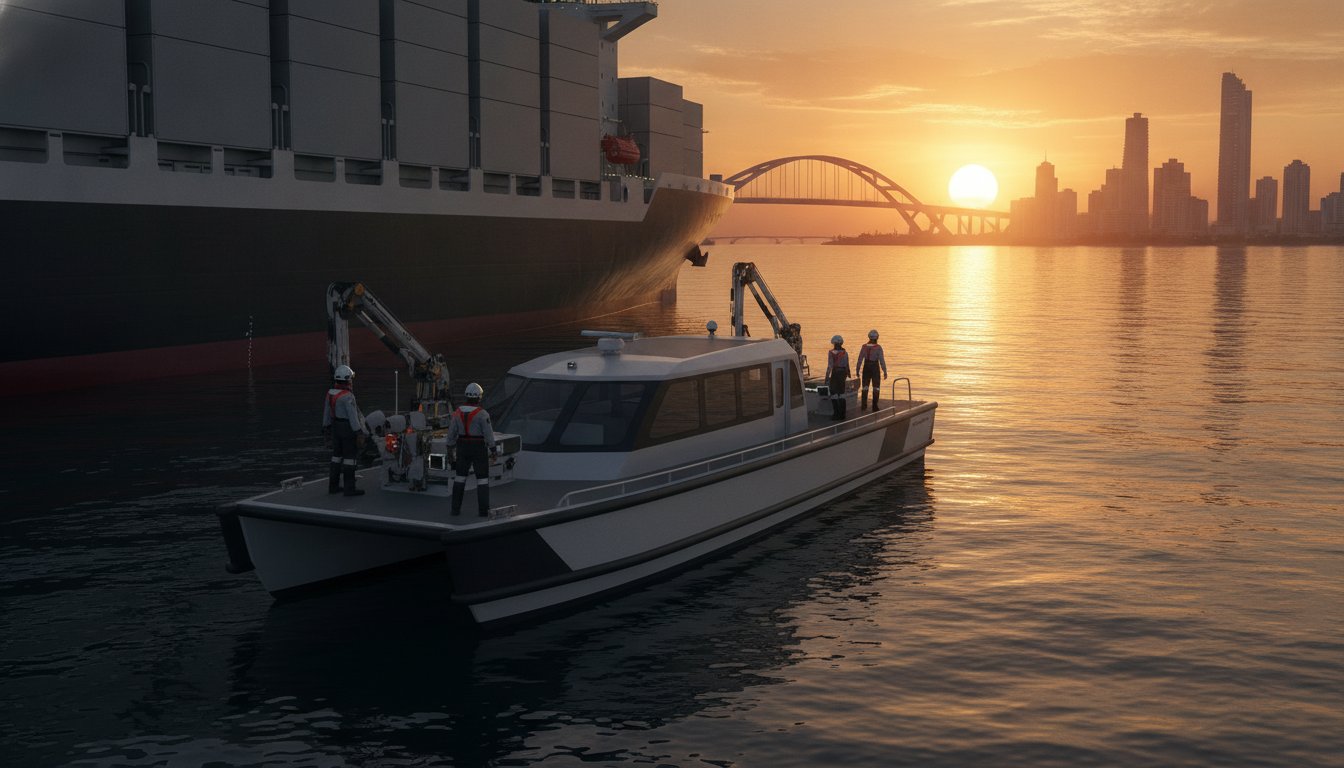
The Pacific entry presents unique tidal challenges. With tides swinging up to 6.1 meters, timing is everything. Most underwater hull cleaning panama operations at Balboa are coordinated alongside bunkering schedules near the Bridge of the Americas. Visibility varies between 2 to 5 meters depending on the season. We prioritize morning shifts to capitalize on calmer currents, ensuring the service doesn’t delay your scheduled transit window. Our proximity to the Balboa terminal allows for rapid mobilization of dive teams.
Logistics at Cristobal and Colon (Atlantic Side)
On the Atlantic side, the breakwater at Cristobal provides a more sheltered environment, though swell remains a factor. Mobilization from Colon-based dive stations usually takes 90 minutes. During the rainy season, which peaks between May and December, we monitor Caribbean weather patterns closely. We’ve seen 12% more weather-related delays on this side compared to Balboa, so we build buffer time into your husbandry schedule. This proactive approach keeps your fleet moving without unexpected interruptions or costly transit delays.
The Logistics of Coordination: The Ship Agent’s Role
Technical expertise is useless without perfect transit timing. In the high-stakes environment of the Panama Canal, even the most advanced cleaning equipment fails to deliver value if the vessel misses its scheduled lock entry. We’ve seen that misjudging a window by just 60 minutes can result in thousands of dollars in port stay extensions. Your ship agent acts as the conductor of this operational symphony, ensuring that underwater hull cleaning panama happens during the mandatory waiting period at anchorage rather than adding time to the voyage.
The booking process follows a rigorous timeline. It begins 72 to 96 hours before arrival, when the agent confirms the vessel’s ETA and coordinates with the dive team. Once the ship reaches the Balboa or Cristobal anchorage, the agent secures the necessary permits from the Panama Canal Authority (ACP). The agent then manages the inherent conflict of interest between speed and quality. While divers might want to rush to meet a deadline, the agent enforces quality benchmarks, ensuring sea chests and niche areas are cleared without compromising the transit slot.
A common objection from fleet managers is that cleaning will delay the transit. This fear is largely unfounded when using an experienced agent. Most vessels wait 12 to 24 hours at anchorage for their pilot. A standard cleaning session for a Neo-Panamax vessel typically takes 6 to 8 hours. By utilizing this existing downtime, the cleaning is completed long before the pilot boards, resulting in zero net delay to the schedule.
Synchronizing with the ACP Transit Schedule
We act as your eyes on the ground by maintaining constant contact with ACP tug coordinators and pilots. If the transit schedule shifts by two hours, we pivot the dive team immediately. This real-time reporting keeps owners informed and ensures the vessel is ready the moment the pilot arrives. We manage the transition from the cleaning site to the first set of locks with surgical precision, eliminating the confusion that often plagues uncoordinated transits.
Husbandry Integration: Maximizing the Stay
Efficiency is about stacking services to protect your bottom line. We integrate hull cleaning with crew changes, provisioning, and PCSOPEP requirements. By bundling these tasks, you often save between $800 and $1,500 by sharing launch boat mobilization fees. Transparent communication between the agent, the divers, and the Master ensures that underwater hull cleaning panama doesn’t interfere with other deck operations. It’s a holistic approach that treats the port call as a single, streamlined event.
Don’t let poor coordination drain your fuel savings. Nominate Adimar as your agent to ensure your hull cleaning is perfectly timed with your Canal transit.
Why Adimar Shipping is Your Trusted Partner in Panama
Since 2004, Adimar Shipping has operated as a specialized Panama Canal ship agent, building a legacy of reliability over two decades. We understand that for fleet managers, the canal isn’t just a transit point; it’s a high-stakes environment where every hour counts. We act as your eyes at the Panama Canal, providing the ground-level oversight that remote offices simply can’t match. Our team eliminates the confusion of complex scheduling by managing every detail of your underwater hull cleaning panama operations with a focus on integrity and transparency.
We don’t leave quality to chance. Every sub-contracted dive team and ROV operator undergoes a rigorous vetting process to ensure they meet our strict safety and performance benchmarks. By auditing technical capabilities and equipment standards, we protect your assets from subpar workmanship. We’re experts so you don’t have to be. We take the burden of coordination off your shoulders, allowing you to focus on your core business while we handle the technical logistics on the ground.
The Adimar Advantage: Protecting Your Interests
We see ourselves as your local office at the Panama Canal. This means we provide active quality control for all underwater works, ensuring that hull cleanings are performed to the highest standards without damaging expensive coatings. Our proactive approach to timing is a core benefit; we identify potential scheduling conflicts and resolve them before they turn into costly delays. All financial management is handled with absolute transparency. Owners and charterers receive clear, detailed reporting in USD, ensuring that every dollar spent is accounted for and justified through cost-conscious coordination.
Get a Professional Quote for Your Next Transit
Securing a fast, accurate estimate for your vessel is straightforward. To provide a precise quote for underwater hull cleaning panama, we require your vessel’s technical specifications, including its current draft and the date of its last cleaning. Our team remains available 24/7 to address urgent requests at both the Atlantic and Pacific canal entries. Whether your vessel is anchored at Balboa or Cristobal, we’re ready to deploy resources immediately to maintain your schedule.
Don’t let logistics and timing frustrations impact your bottom line. Trust a partner that prioritizes your interests and understands the unique pressures of the Panama market. Nominate Adimar as your agent for your next Panama Canal transit and experience the security of having local experts on your side.
Secure Your 2026 Fleet Efficiency at the Panama Canal
Efficiency is the only way to protect your bottom line in 2026. Proactive maintenance through underwater hull cleaning panama can reduce fuel consumption by up to 10% while ensuring your vessel stays compliant with strict local environmental laws. Whether you choose ROV technology or traditional diver-led methods, the goal remains the same: maximizing speed and minimizing costs. Coordinating these services during a transit window is complex, but it’s a burden you don’t have to carry alone.
Adimar Shipping serves as your local office and eyes at the canal. With 20 years of Panama Canal expertise, we understand the pressure of tight schedules and the high stakes of maritime logistics. As an authorized PCSOPEP representative, we provide the reliable oversight trusted by global ship owners and charterers. We manage the details so you can focus on your core business. It’s time to eliminate the confusion of canal transits with a partner who values integrity and transparency.
Request a Comprehensive Quote for Hull Cleaning and Agency Services
We’re ready to help your fleet succeed in Panama.
Frequently Asked Questions
Is underwater hull cleaning allowed at the Panama Canal anchorages?
Underwater hull cleaning is permitted at specific anchorages in Balboa and Cristobal provided the service provider holds a valid Panama Canal Authority (ACP) license. In 2026, regulations require a 48 hour advance notice for environmental clearance before divers enter the water. You can’t just clean anywhere; it’s restricted to approved zones to protect local biodiversity. We handle the permit process to ensure your vessel stays compliant throughout its stay.
How much time should I allocate for a full hull cleaning in Panama?
You should allocate between 8 and 14 hours for a standard Panamax vessel with moderate fouling. If your ship has heavy calcareous growth covering over 30% of the surface, the operation can extend to 24 hours. Our teams use multi-brush hydraulic systems that cover up to 1,500 square meters per hour. This speed helps you maintain your transit schedule without unnecessary delays or missing your scheduled arrival window.
Can hull cleaning be performed simultaneously with bunkering or cargo operations?
Yes, simultaneous operations are common at the Balboa anchorage and certain private terminals where space allows. This “multi-tasking” approach saves fleet managers roughly $5,000 in additional port stay costs. We coordinate with bunker barges and terminal operators to ensure divers stay clear of intake valves and discharge zones. It’s an efficient way to maximize your time while waiting for your canal slot to open up.
What documentation do I receive after the underwater service is completed?
You receive a comprehensive technical report that includes “before and after” high-definition photos and a 4K video survey of the hull. This documentation includes a detailed assessment of the anti-fouling condition and any structural anomalies found during the dive. These reports are delivered within 24 hours of completion. They serve as vital evidence for class surveys and fuel efficiency audits required under the 2026 MARPOL carbon intensity regulations.
Will underwater hull cleaning panama damage my vessel’s anti-fouling paint?
No, modern underwater hull cleaning panama utilizes specialized non-abrasive brushes designed to remove slime without stripping the coating. We select brush pressure based on your specific paint type, whether it’s silicone-based or self-polishing copolymer. Using the wrong equipment can reduce paint life by 25%, so we match the technical specs to your hull’s coating. This precision preserves your $100,000 investment in marine paint while restoring your vessel’s hydrodynamic profile.
How does the ACP monitor environmental compliance for underwater works?
The ACP enforces strict environmental standards through the OP’s Notice to Shipping N-1-2026. They require all cleaning residue to be captured by a filtration system that removes particles down to 50 microns. Inspectors often conduct spot checks at the Cristobal anchorage to ensure no visible plume is created. We only partner with vendors who use closed-circuit reclamation technology to avoid environmental fines that start at $10,000 per violation.
Why should I use a ship agent to coordinate cleaning rather than booking directly?
Using a ship agent ensures your cleaning window aligns perfectly with your canal transit time, which can change on short notice. We act as your eyes at the Panama Canal, managing the $2,500 permit fees and vendor scheduling so you don’t have to. If a vendor is late, we have the local leverage to find an immediate replacement. We eliminate the confusion of dealing with multiple local authorities.
What happens if the cleaning is not finished before my transit slot?
If the cleaning isn’t finished, you must either halt the operation to meet your pilot time or request a transit reschedule. Rescheduling can cost upwards of $15,000 in administrative fees and potential lost revenue. Because we monitor the ACP’s “Ready Time” in real-time, we provide a 4 hour warning to the dive team. This ensures the vessel is ready for the pilot without risking a missed slot or expensive delays.