
Did you know that a single administrative oversight in your Garbage Record Book can now trigger an immediate $10,000 fine from the Panama Canal Authority? With the implementation of OP Notice to Shipping No. N-01-2026 on January 1, 2026, the margin for error in ship waste disposal panama canal operations has effectively vanished. Mismanaging just one MARPOL Annex I document can result in a $50,000 penalty and a 48-hour delay that shatters your transit schedule.
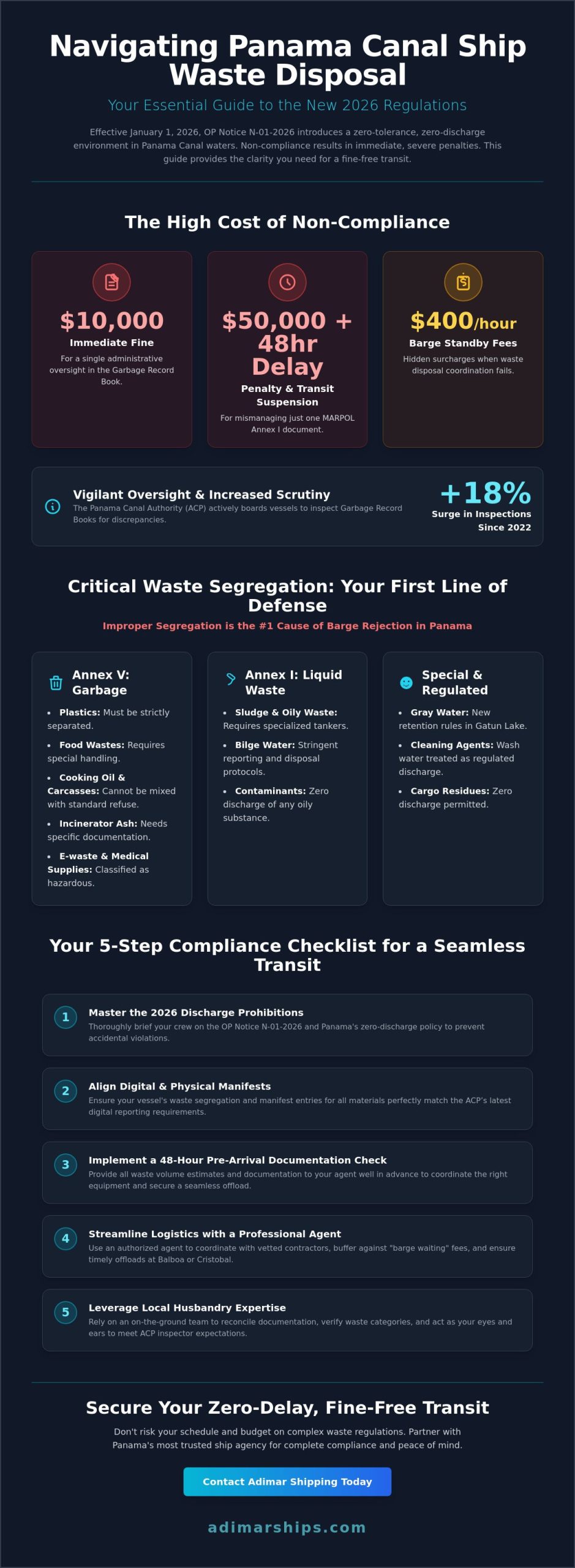
We understand the pressure of coordinating waste offloads while environmental inspections have surged by 18% since 2022. It’s frustrating to deal with hidden surcharges from unvetted contractors or the threat of $400 per hour barge standby fees when coordination fails. This guide provides the clarity you need to master the complexities of MARPOL Annex V and local waste protocols for a zero-delay, fine-free transit. You will learn how to secure transparent billing, obtain the critical Safe Disposal Certificate for every cubic meter offloaded, and maintain full compliance through expert husbandry and agency support.
Key Takeaways
- Master the updated 2026 discharge prohibitions to avoid the massive fines and transit delays associated with OP Notice N-01-2026.
- Streamline your ship waste disposal panama canal logistics by using a professional agent to buffer against expensive “barge waiting” surcharges.
- Ensure your vessel’s segregation and manifest entries for hazardous materials align perfectly with the ACP’s latest digital reporting requirements.
- Implement a 48-hour pre-arrival documentation checklist to secure a seamless waste offload that doesn’t disrupt your scheduled transit slot.
- Leverage local husbandry and agency expertise to navigate the high-stakes compliance environment with total transparency and peace of mind.
Navigating Ship Waste Disposal Panama Canal Regulations in 2026
Ship waste disposal is a mandatory compliance operation for all transiting vessels. In 2026, the regulatory landscape has shifted significantly with the enforcement of ACP OP Notice N-1 and updated international standards. These rules effectively create a zero-discharge environment within all jurisdictional waters of the Canal. For masters and operators, this means that managing ship waste disposal panama canal requirements is no longer a secondary task; it’s a critical path for a successful transit. You must utilize approved reception facilities at Balboa on the Pacific side or Cristobal on the Atlantic side to remain in good standing. Failure to coordinate these offloads through an authorized agent can lead to immediate transit suspension.
MARPOL Annex V: The Global Standard in Panama
The MARPOL 73/78 international convention remains the primary framework for preventing maritime pollution. However, the 2026 amendments have introduced much stricter controls on plastics, food waste, and cargo residues. Panama is now a zero-tolerance zone. This means that traditional exceptions for discharge are suspended while the vessel is in Canal waters. You should also be cautious with “Environmentally Friendly” cleaning agents. While they’re marketed as safe, the ACP often treats wash water containing these chemicals as a regulated discharge. If your crew isn’t briefed on these nuances, you risk an immediate violation before the transit even begins.
The ACP Monitoring Framework
The Panama Canal Authority (ACP) maintains a vigilant oversight system to protect the local ecosystem. During the transit process, inspectors will board the vessel to review the Garbage Record Book in detail. They look for specific data points, including the date, time, and position of any previous disposals. Discrepancies between your declared waste volume and what the inspector sees on deck can lead to heavy fines. These financial penalties are often paired with scheduling delays that can cost your operation thousands in lost time. Using professional Ship Agency Services ensures that your documentation is reconciled and ready for inspection long before the pilot boards. Our role is to act as your on-the-ground eyes, ensuring that every entry in your log matches the expectations of the boarding officer.
Categorizing Vessel Waste: From Garbage to Hazardous Materials
Effective waste management begins long before your vessel enters the breakwater. It requires precise segregation at the source. The ACP demands specific manifest entries that clearly distinguish between hazardous and non-hazardous materials. If these records don’t match the physical load, you face immediate logistical hurdles. Improper segregation is the #1 cause of barge rejection in Panama. To avoid this, provide your waste volume estimates to your agent well before arrival at the locks. This allows us to coordinate the right equipment and ensure the barge operator is prepared for your specific cargo mix. Managing ship waste disposal panama canal protocols requires a proactive approach to prevent your vessel from being turned away at the last minute.
Domestic and Operational Garbage (Annex V)
Managing Annex V waste involves more than just bagging trash. You need to separate plastics, food wastes, and domestic “dry” garbage for shore reception. Cooking oil and animal carcasses require special handling and cannot be mixed with standard refuse. In Panama ports, incinerator ash disposal has specific documentation requirements to prove it doesn’t contain heavy metal residues. Many operators overlook hazardous items like e-waste or medical supplies, which can lead to significant fines. Our Husbandry Services help you verify these categories ahead of time, ensuring your crew follows the correct protocols for a smooth offload.
Specialized Waste: Sludge, Bilge, and Gray Water
There’s a critical distinction between solid garbage and MARPOL Annex I liquid waste. Handling liquid contaminants requires specialized tankers and more stringent reporting. You can find detailed requirements in our guide on sludge disposal in Panama. Beyond oily waste, the 2026 guidelines introduce new restrictions for gray water. Vessels must now strictly manage gray water retention while at anchor in Gatun Lake to prevent nutrient loading in the freshwater ecosystem. Coordination is key here. If your tanks are near capacity, we need to schedule a discharge at the Pacific or Atlantic anchorages before you enter the lake system. This proactive approach prevents emergency situations that could derail your transit slot.
Agency Coordination vs. Direct Vendor Disposal: Avoiding Hidden Costs
Hiring a waste vendor directly might seem like a straightforward way to trim your budget. In practice, it often exposes your operation to unpredictable and aggressive surcharges. When the Panama Canal Authority shifts a transit schedule, a direct-hire barge won’t simply wait for free. These vendors often apply “standby” fees that accumulate by the hour, quickly exceeding the original cost of the disposal itself. A professional ship agent provides a necessary buffer between your vessel and the local vendor. We coordinate the barge’s arrival only when the ship is cleared and ready for the operation. The cost of engaging an experienced ship agent is a minor investment compared to the $10,000 or more your company loses from a single missed transit slot.
The Risk of Unvetted Waste Contractors
Choosing the wrong partner for ship waste disposal panama canal can lead to terminal consequences for your fleet’s reputation. Cheap, unvetted contractors may bypass environmental regulations to save on their own overhead. If waste is dumped illegally in jurisdictional waters, the liability falls squarely on the vessel owner. This can result in massive fines and the potential blacklisting of your entire fleet from future transits. We take the burden of vetting off your shoulders by verifying every ACP-certified waste reception facility license. Adimar acts as a vigilant extension of your team, ensuring that every kilogram of garbage or sludge is documented with a valid receipt and handled by ethical, authorized partners.
Logistical Synchronization: The Agent’s True Value
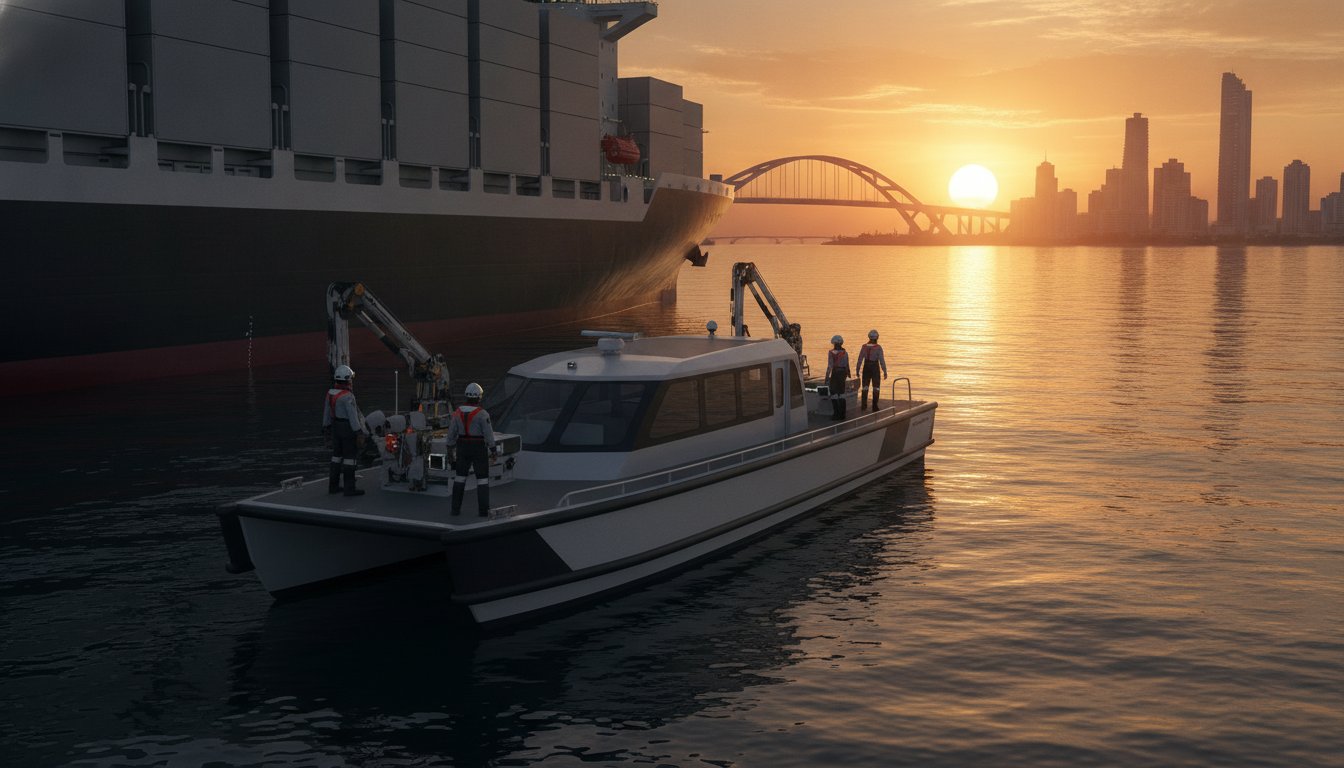
The true value of a Panama Canal ships agent lies in the ability to synchronize multiple moving parts simultaneously. You don’t want a waste barge competing for deck space with a bunker tanker or a crew launch. We manage the narrow “window of opportunity” that exists between your arrival at the anchorage and the moment the pilot boards for transit. By aligning waste offloads with other husbandry services like crew changes or parts delivery, we maximize your efficiency at anchor. Our team monitors the ACP digital system and local traffic in real-time to prevent operational overlaps. This level of coordination ensures your vessel is clean, compliant, and ready for transit without the stress of conflicting logistical demands.
Step-by-Step Preparation for Waste Discharge in Panama
Disposal success depends on the actions you take 48 hours before your vessel arrives. Waiting until you drop anchor to organize your manifests is a recipe for delay. Under the updated 2026 standards, the ACP monitors every waste stream with digital precision. Documentation must be absolutely error-free to avoid triggering red flags in the authority’s digital system. Current 2026 protocols require all vessels to submit digital waste manifests via the VUMPA system to ensure data transparency before arrival. By preparing early, you protect your transit slot and avoid the stress of last-minute compliance audits.
Preparing your crew is just as vital as the paperwork. They must be briefed on the specific manifold or deck requirements for the barge transfer to prevent accidents or spills. When ship waste disposal panama canal operations are handled correctly, they happen in the background without interrupting your primary schedule. We act as your vigilant representative on the ground to ensure these steps are followed to the letter.
The 48-Hour Pre-Arrival Checklist
- Step 1: Declare all waste types and accurate volumes to your ship agency in Panama to allow for barge scheduling.
- Step 2: Segregate all waste into color-coded, sealed bags as per international MARPOL standards to prevent barge rejection.
- Step 3: Ensure the Garbage Record Book is fully updated and ready for immediate inspection by boarding officers.
Operational Execution at the Anchorage
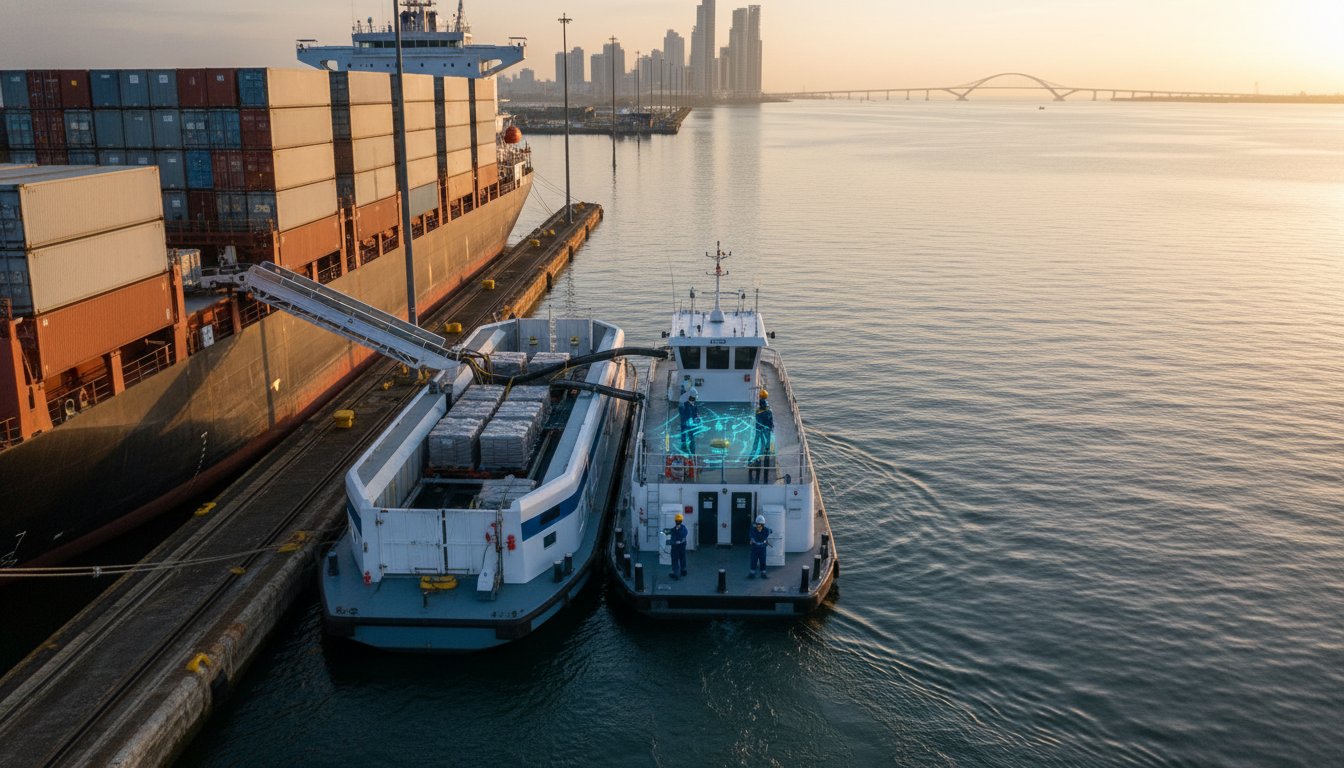
Once you reach the anchorage, clear communication between the vessel’s Duty Officer and the waste barge is essential. You must establish a shared understanding of the approach and mooring plan before the barge comes alongside. Safe transfer procedures are non-negotiable. Your crew must verify weight limits and crane requirements for garbage skips to ensure the equipment can handle the load safely. After the transfer is complete, finalizing the manifest is your top priority. You must obtain a signed receipt for the vessel’s MARPOL file to prove legal disposal. This document is your only shield against future claims of illegal dumping. If you need assistance with these complex logistics, you can reach out for professional Ship Agency Services to manage the entire process on your behalf.
Adimar Shipping: Your Eyes and Ears for Waste Logistics in Panama
Navigating the high-stakes environment of the Panama Canal requires more than just a service provider. It demands a partner who acts as a vigilant extension of your own team. With the 2026 ACP protocols now in full effect, the complexity of local execution has reached a new peak. We eliminate the confusion surrounding these shifting mandates by providing clear, expert guidance at every stage of the transit. Our team’s local expertise ensures that your vessel remains in total compliance without the stress of constant regulatory oversight.
Managing ship waste disposal panama canal operations doesn’t have to be a fragmented logistical burden. We prioritize cost-efficiency by bundling waste coordination with other essential Husbandry Services, such as crew changes and spare parts delivery. This integrated approach reduces the administrative weight on your operators and ensures that all vessel needs are met within a single, synchronized window. Adimar maintains an unwavering commitment to ethical conduct and MARPOL integrity, ensuring that every waste stream is handled with total regulatory transparency and documented proof of legal disposal.
Why Nominate Adimar for Your 2026 Transit?
Our long-standing history in the region provides the stability and deep local knowledge necessary to manage complex logistics for both owners and charterers. We don’t believe in a one-size-fits-all approach. Instead, we provide personalized service that treats every vessel transit as a high-priority mission. You’ll find total transparency in our billing. We’ve built our reputation on a foundation of trust, which means there are no “hidden” logistics fees or emergency surcharges for waste coordination. When you nominate us as your Owner’s Nominated Agency or Charterer’s Nominated Agency, you gain a partner dedicated to protecting your financial interests and your fleet’s reputation.
Secure Your Compliance Today
The best time to start the waste declaration process is well before your next Panama voyage. Early coordination allows us to vet contractors and secure the most efficient slots for barge operations. There are significant benefits to nominating a protective ships agency for waste oversight. We act as a watchdog for your interests, ensuring that third-party vendors meet our strict ethical and operational standards. Don’t leave your compliance to chance in a year of increased environmental inspections and tighter enforcement. Contact Adimar today for a comprehensive waste management and transit quote to ensure your next crossing is seamless, fine-free, and fully documented.
Protect Your Fleet with Proactive Compliance
Compliance in the Panama Canal is no longer just about following rules; it’s about precision and timing. You’ve seen how the 2026 digital mandates and strict segregation requirements have increased the stakes for every master and operator. Managing ship waste disposal panama canal protocols effectively requires a partner who understands the local landscape and the ACP’s digital reporting systems. Delegating these complex tasks allows your crew to focus on safe navigation while we handle the regulatory burden. It’s the most reliable way to avoid the scheduling delays and massive fines that follow even the smallest administrative error.
With over 20 years of expertise and a deep specialization in both Owner and Charterer representation, we provide the vigilance your fleet deserves. As an authorized PCSOPEP person, we ensure your vessel meets every environmental standard without compromising your transit schedule. We don’t just coordinate barges; we protect your operational freedom and financial interests. You can trust our team to be your dependable extension on the ground. Contact Adimar Shipping for Expert Waste Disposal Coordination and ensure your 2026 transits remain seamless and fine-free. We look forward to being your partner in Panama.
Frequently Asked Questions
Can I dispose of food waste in the Panama Canal?
No, you cannot discharge food waste within the jurisdictional waters of the Panama Canal. All food waste must be retained on board or offloaded to an authorized shore reception facility at either the Pacific or Atlantic anchorages. Under the 2026 regulations, even comminuted or ground food waste is strictly prohibited from overboard discharge.
Is ship waste disposal mandatory for every Panama Canal transit?
No, offloading waste isn’t a mandatory requirement for every transit, but maintaining a compliant Garbage Record Book is. You only need to dispose of waste if your storage capacity is insufficient for the remainder of your voyage. However, many vessels utilize the transit window to clear their stores and ensure they remain in full compliance with international arrival standards at their next port.
What are the fines for improper waste disposal in Panama?
Fines vary based on the severity of the violation, starting at $10,000 for administrative errors in the Garbage Record Book. Illegal discharge of contaminating substances can lead to sanctions exceeding $25,000. For mismanagement of MARPOL Annex I documentation, the ACP may impose a $50,000 fine and a 48-hour transit delay, which can be devastating to your operational schedule.
Which ports in Panama provide the best waste reception facilities?
Balboa on the Pacific side and Cristobal on the Atlantic side are the primary hubs for ship waste disposal panama canal operations. Both ports feature ACP-certified reception facilities capable of handling Annex I and Annex V waste streams. Your ship agent will coordinate with these facilities to determine which port fits your specific transit window and vessel type best.
How does a ship agent help with MARPOL Annex V compliance?
A ship agent acts as a vigilant coordinator between the vessel, the private waste vendor, and the Canal Authority. We vet every contractor to ensure they hold valid licenses and follow ethical disposal practices. This oversight prevents the vessel from being held liable for illegal dumping or the use of unapproved facilities that don’t meet international standards.
Can I dispose of electronic waste (e-waste) at the Panama Canal?
Yes, you can dispose of e-waste, but it requires a specific declaration as hazardous or specialized material. You shouldn’t mix electronics with general dry garbage under any circumstances. Your agent must manifest these items separately in the VUMPA digital system to ensure the shore facility is equipped to process them according to local environmental laws.
What documentation do I need to keep after offloading waste in Panama?
You must retain the Safe Disposal Certificate and a signed waste manifest in your vessel log. These documents provide the necessary proof that the offloaded volume matches your Garbage Record Book entries. Without these receipts, you have no legal defense if the ACP audits your environmental compliance records during a routine inspection.
Does the Panama Canal Authority charge a separate fee for garbage disposal?
No, the Panama Canal Authority doesn’t include waste disposal in its official maritime tariff list. These services are provided exclusively by private, third-party companies. Your ship waste disposal panama canal costs are billed separately by the vendor through your agency account, ensuring you only pay for the specific volume and type of waste offloaded.