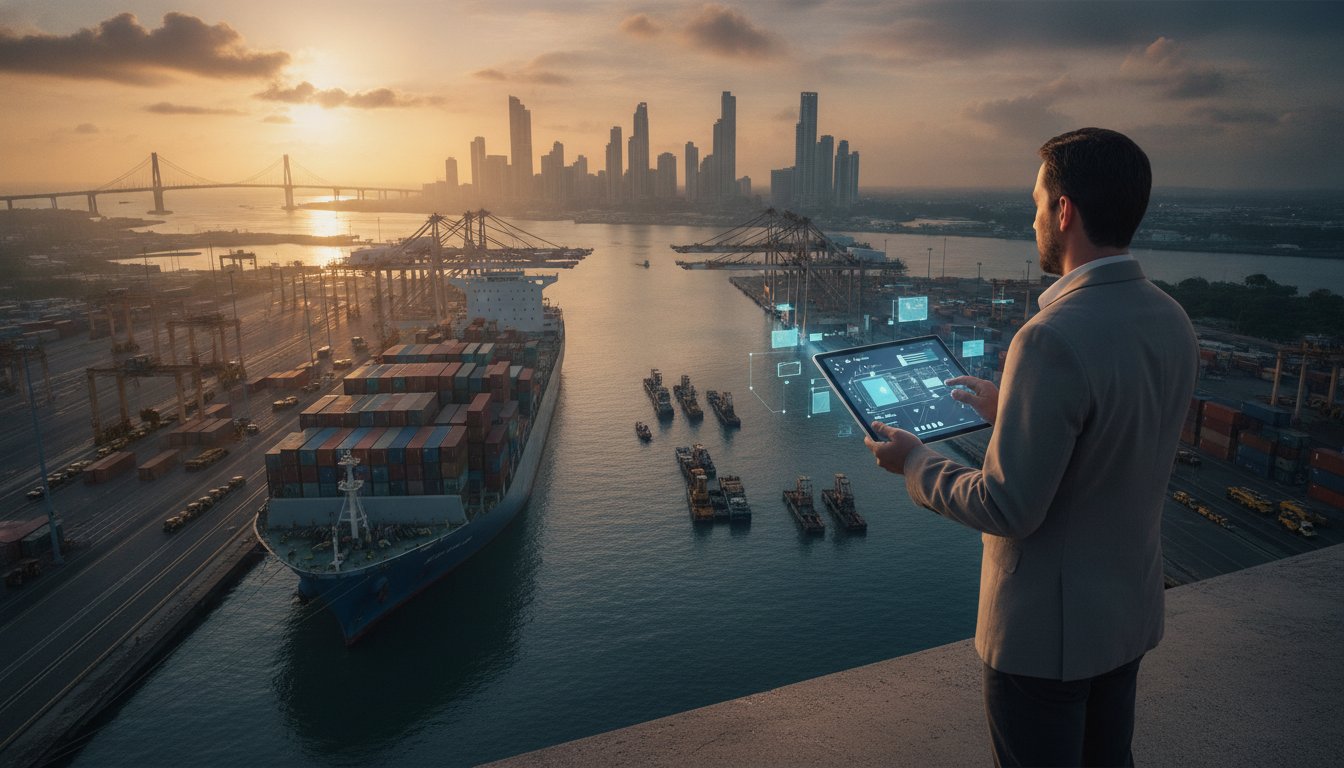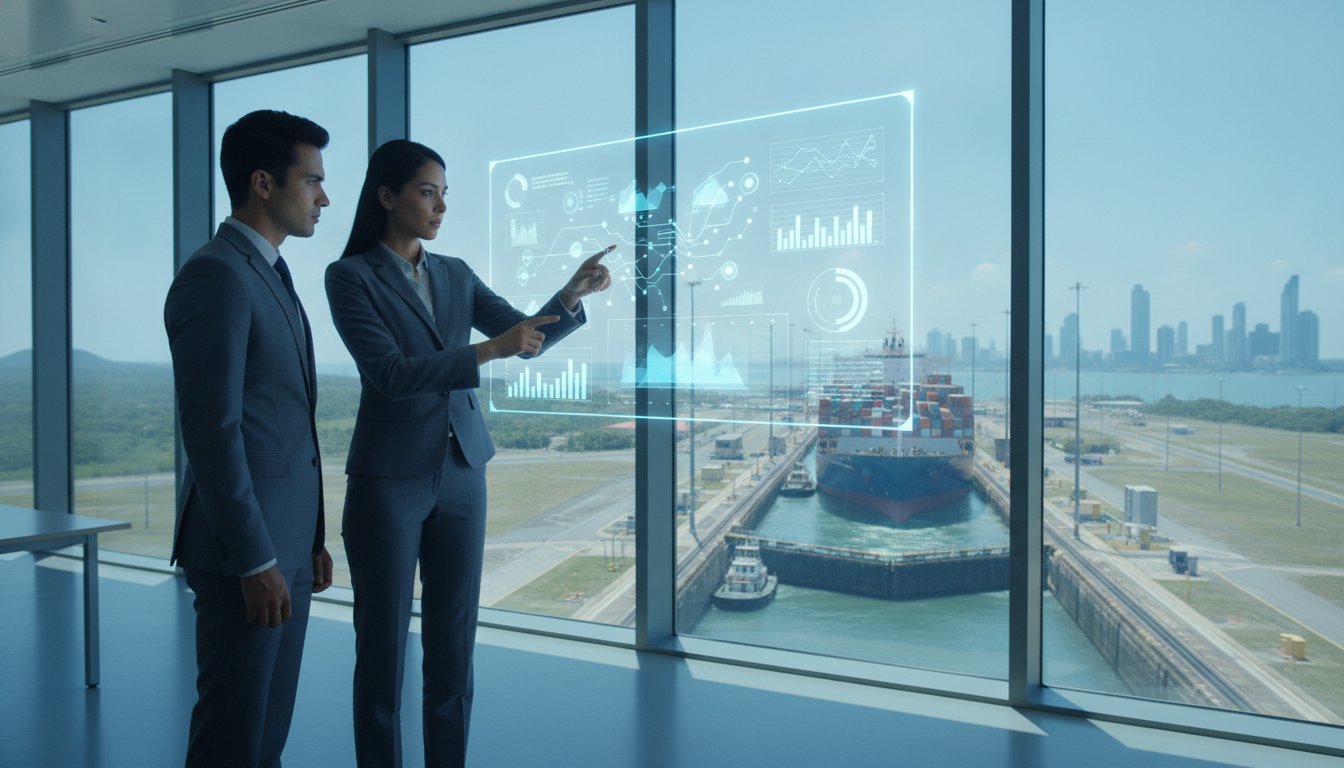


A single hour of late arrival at the Panama Canal in 2026 can trigger a penalty of up to 50% of your reservation tariff, potentially costing your operation $100,000 before you even reach the locks. We understand that daily revenue losses from missed transits often exceed $50,000, and the margin for error has vanished under the new Long-Term Slot Allocation (LoTSA) method. The pressure on your crew to manage complex ACP technical requirements while maintaining safety is immense. Understanding the role of a ship agent in preventing canal delays is no longer just about logistics; it’s about acting as a vigilant, on-the-ground representative to protect your bottom line.
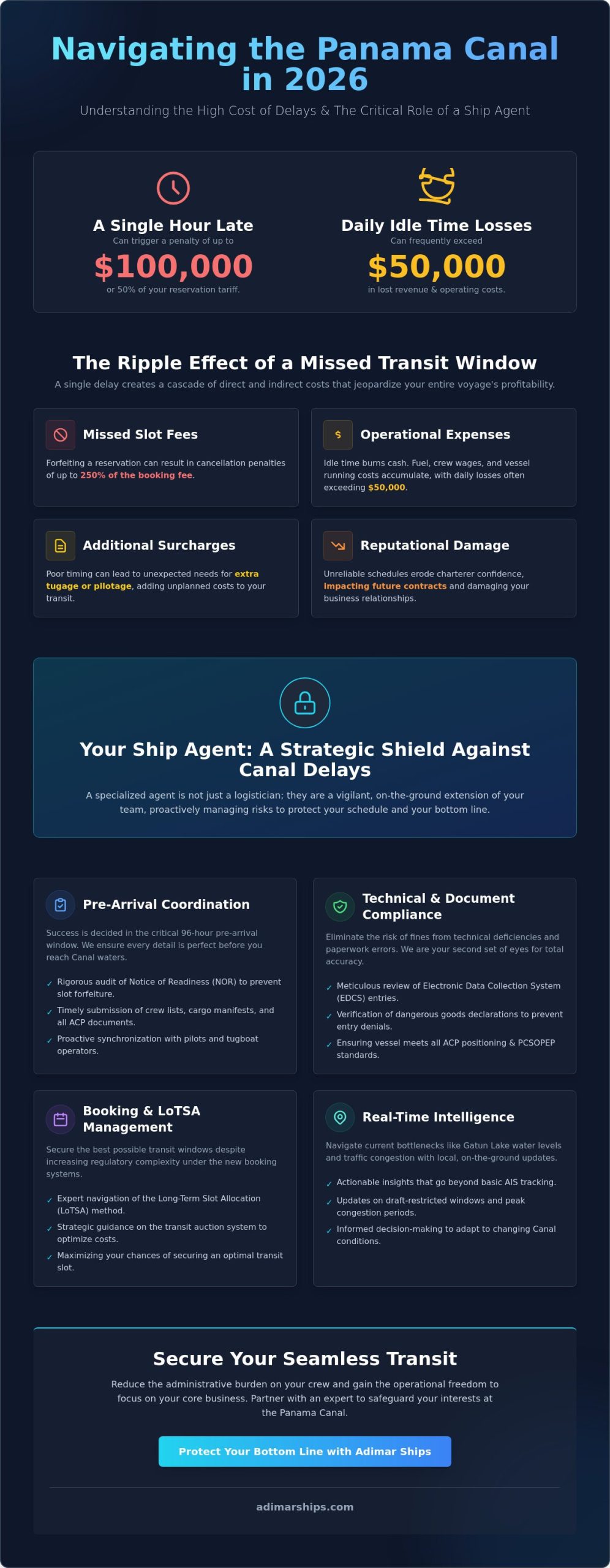
You’ll discover how a specialized ship agent acts as a strategic shield against regulatory bottlenecks, technical penalties, and transit delays. We’ll examine how expert local oversight secures the best possible transit slots and ensures your vessel meets every 2026 compliance standard for a seamless crossing. By delegating these complex tasks to a dependable partner, you reduce the administrative burden on your crew. You gain the operational freedom you need to focus on your core business.
Key Takeaways
- Quantify the true cost of transit deviations and learn how proactive risk management prevents the $50,000 daily losses caused by idle time.
- Understand the role of a ship agent in preventing canal delays through meticulous pre-arrival audits of your documentation and Notice of Readiness.
- Master the 2026 Long-Term Slot Allocation (LoTSA) and auction systems to secure optimal transit windows despite increasing regulatory complexity.
- Eliminate the fear of technical deficiency fines by ensuring your vessel meets every ACP positioning and PCSOPEP compliance standard before arrival.
- Learn how a dedicated local representative acts as a strategic extension of your team to manage administrative burdens and safeguard your interests.
Understanding the Financial Impact of Panama Canal Transit Delays
Financial precision is the difference between a profitable voyage and a deficit. In the maritime sector, a canal delay is defined as any deviation from the scheduled transit window that results in idle time for the vessel. This isn’t just a scheduling hiccup; it’s a cascade of expenses. When a ship misses its window, the “ripple effect” begins immediately. The vessel must often increase speed to meet subsequent port calls, significantly raising fuel consumption and emissions. These disruptions affect berth availability and labor scheduling at the next destination, creating a logistical nightmare for operators.
The financial burden is split into direct and indirect costs that can quickly spiral. Consider the following risks:
- Missed Slot Fees: Forfeiting a reservation can lead to cancellation penalties of up to 250% of the booking fee.
- Operational Expenses: Daily losses from idle time often exceed $50,000 in lost revenue and vessel running costs.
- Additional Surcharges: Unexpected tugage or pilotage requirements caused by poor timing.
- Reputational Damage: Charterers lose confidence when transit schedules aren’t met, potentially impacting future contracts.
The True Cost of a Missed Transit Window
Daily operating expenses (OPEX) in 2026 remain a heavy burden for ship owners. When a ship sits idle at anchor, every hour drains the budget. The Panama Canal Authority (ACP) enforces strict penalties for tardiness. Arriving just one hour late can trigger a penalty of 25% of the reservation tariff. If the delay exceeds two hours, that penalty jumps to 50%. This is where the role of a ship agent in preventing canal delays becomes financially critical. A proactive agent acts as a vigilant shield, ensuring all pre-arrival milestones are met to avoid these expensive forfeitures.
Current Bottlenecks: Water Levels and Traffic in 2026
Gatun Lake levels continue to dictate the daily transit capacity of the waterway. Climate factors have shifted the “standard” transit timeline, making historical data less reliable. Effective Panama Canal traffic management now requires local, real-time intelligence that goes beyond basic AIS tracking. Without on-the-ground updates, vessels risk arriving during peak congestion periods or during draft-restricted windows that weren’t apparent 48 hours prior. A dependable agent provides the local oversight needed to navigate these environmental shifts safely and efficiently.
Pre-Arrival Coordination: The Agent’s Role in Early Prevention
Success at the Panama Canal is often decided days before the vessel’s arrival. We focus on the critical 96-hour window. This is when crew lists and cargo manifests must be submitted to avoid administrative holds. The role of a ship agent in preventing canal delays starts with a rigorous review of the vessel’s Notice of Readiness (NOR). Even minor discrepancies in arrival times or vessel specifications can lead to slot forfeiture. By acting as a proactive partner, we ensure all data aligns perfectly with the expectations of the authorities.
Managing the complex web of ship agency Panama documentation requirements is a full-time task for the agent. It involves more than just passing papers; it’s about verifying information against the official Panama Canal Authority website guidelines. We synchronize arrival times with pilot and tugboat operators to ensure the vessel moves into its transit slot without a second of wasted idle time. This level of coordination is the primary defense against the late arrival penalties mentioned earlier.
ACP Documentation and Manifest Accuracy
Errors in Electronic Data Collection System (EDCS) entries are a frequent cause of avoidable delays. These technical mistakes often stem from confusion over IMO FAL Convention standardized forms. We meticulously audit every manifest before submission. If your vessel is carrying dangerous goods, we verify declarations early to prevent port-entry denials. This precision provides the peace of mind that your paperwork won’t be the reason for a $100,000 penalty. Our team acts as a second set of eyes for the Master, catching errors that could stall the transit.
Ordering Pilots and Tugs: Timing is Everything
The logistics of pilot boarding at the Pacific or Atlantic entrances require constant communication. Our agents liaise with the ACP’s vessel traffic controllers to secure optimal anchoring positions. Because we maintain deep local relationships, we’re faster at resolving pilotage scheduling conflicts than a remote office could ever be. If a pilot is delayed, we’re already working on a solution to keep the vessel moving. For owners seeking this level of vigilance, partnering with an experienced Owner’s Nominated Agency like Adimar Shipping ensures your interests are protected at every turn.
Strategic Management of the Transit Booking System and LoTSA
The 2026 transit landscape is dominated by the Long-Term Slot Allocation (LoTSA) method. This system provides greater predictability for Neopanamax vessels, but it requires a high level of technical foresight. The role of a ship agent in preventing canal delays involves interpreting these new Panama Canal Authority regulations to secure slots months in advance. We don’t just fill out forms; we analyze market demand and water level forecasts to advise you on the most cost-effective booking windows. This strategic approach ensures your vessel isn’t left waiting at anchor due to a simple scheduling oversight.
Handling slot cancellations and swaps is another area where an agent provides immediate value. With cancellation penalties reaching up to 250% of the reservation tariff, every decision carries significant weight. We act as your local office, coordinating with other operators and the ACP to facilitate swaps when schedules shift unexpectedly. This vigilance protects your capital and keeps your fleet moving without unnecessary financial friction.
Securing Slots for Neopanamax Vessels
The expanded locks have specific requirements that differ significantly from the Panamax lane. We monitor the LoTSA calendar daily to give owners a competitive edge in securing these high-demand slots. In 2026’s volatile market, transit certainty is your most valuable asset. A proactive agent manages the risk of slot forfeiture by ensuring all technical readiness criteria are met long before the vessel arrives at the breakwater. This early intervention is essential for maintaining the integrity of your supply chain.
The Auction System: A Last Resort for Urgent Transits
When a scheduled slot isn’t available, the ACP auction system offers a just-in-time alternative. These last-minute Neopanamax bookings can cost up to $200,000, making a data-driven bidding strategy essential. We use historical auction data to place strategic bids that balance the urgency of the voyage against the financial impact. It’s a high-stakes environment where local expertise prevents you from overpaying or losing the bid. We provide the risk assessment you need to decide if the auction cost is truly worth the time saved.
Technical Compliance and Preventing ACP Penalties
Technical errors can ground a transit before it begins. The role of a ship agent in preventing canal delays is to serve as a technical shield, identifying equipment failures or certification gaps before the ACP inspector boards the vessel. Even minor issues like faulty navigation lights or incorrectly positioned chocks and bitts can result in a “Vessel Deficiency” report. This designation often leads to the loss of a transit slot and forces the ship to wait at anchor until repairs are verified. We act as your proactive partner, conducting pre-arrival screenings to ensure your vessel meets every specific Panama Canal standard.
Coordination extends beyond the vessel’s machinery. We also manage essential husbandry services, including crew changes and spare parts delivery, with surgical precision. Our goal is to complete these tasks without impacting the transit schedule. By synchronizing these logistics with the ACP’s vessel traffic controllers, we eliminate the administrative burden on your crew and ensure the ship is ready for the locks the moment the pilot boards.
PCSOPEP and Oil Pollution Readiness
Environmental compliance is a non-negotiable requirement for modern transit. Every vessel over 400 gross tons must appoint a PCSOPEP authorized person to manage potential oil spill response plans. Failure to have a verified and active plan results in an immediate administrative hold. We ensure your oil spill response documentation is ACP-verified and up to date well before you reach the breakwater. This vigilance prevents the frustration of being denied a transit slot due to an expired certificate or an administrative oversight.
Avoiding Positioning System and Equipment Deficiencies
Neopanamax vessels face even stricter technical scrutiny. The ACP requires specific fixed positioning systems, including advanced GPS and AIS equipment, to navigate the expanded locks safely. We verify that these systems are installed and functioning according to the latest regulations. Our team also audits mooring equipment to confirm it meets the high-tension requirements of the Panama Canal’s unique towing system. If a deficiency is found, we help owners rectify the issue immediately through our network of local technical specialists.
Don’t let a technical oversight derail your schedule. Secure your transit today by appointing Adimar Shipping as your local technical experts.
Adimar Shipping: Your Expert Partner for Seamless Canal Transit
Choosing Owner’s Nominated Agency representation gives you a distinct operational advantage. We represent your interests exclusively, rather than balancing the needs of charterers or third-party brokers. This singular focus allows us to leverage our deep local relationships with the ACP to your benefit. Whether it’s clarifying a technical requirement or expediting a husbandry request, our established reputation for ethical conduct and transparency ensures your vessel moves through the locks with minimal friction. We simplify the complex so you can focus on your core business.
Vigilance and Local Oversight
Our physical presence in Panama City is our greatest asset. We aren’t just managing emails; we’re on the ground, acting as your eyes and ears. This vigilance metaphor describes our proactive approach to protection and observation. For example, when a documentation error is flagged by the authorities, we don’t wait for the next business day. We resolve issues in minutes by communicating directly with officials, preventing the hours of idle time that lead to late arrival penalties. This local oversight is the primary value proposition for owners who cannot afford to leave their schedule to chance.
Why Experience Matters in 2026
Navigating the 2026 regulatory landscape requires a partner who understands the nuances of the new LoTSA system and evolving environmental standards. Experience isn’t just about history; it’s about stability and trust. We maintain high ethical standards in every disbursement account, providing the transparency that modern ship owners demand. By delegating the role of a ship agent in preventing canal delays to us, you gain the operational freedom that comes with expert representation. Contact Adimar Shipping to secure your next Panama Canal transit and experience the peace of mind that comes with dependable local experts.
Protecting Your Maritime Interests at the Panama Canal
Adimar Shipping provides the vigilant, on-the-ground representation you need to stay ahead of traffic bottlenecks and environmental requirements. As an authorized PCSOPEP representative with decades of local Panama Canal expertise, we offer specialized Owner’s and Charterer’s Nominated Agency services tailored to your specific needs. We simplify the transit process, acting as a reliable extension of your team to ensure every crossing is seamless and cost-effective. Secure a smooth transit for your vessel with Adimar Shipping and gain the peace of mind that comes with expert local oversight. We look forward to guiding your next voyage safely through the locks.
Frequently Asked Questions
What are the most common causes of Panama Canal delays in 2026?
Late arrivals, technical deficiencies, and administrative holds are the primary causes of transit disruptions. Arriving just one hour past your scheduled window triggers a 25% tariff penalty, while delays over two hours result in a 50% fine. Technical issues, such as faulty positioning systems or outdated environmental certificates, often ground vessels before they even reach the locks.
How does a ship agent help with the ACP auction system?
A ship agent manages the high-stakes bidding process for last-minute slots, which can cost up to $200,000 for Neopanamax vessels. They use historical data and real-time traffic intelligence to place strategic bids that avoid overpayment while securing the slot. This specialized role of a ship agent in preventing canal delays is critical when standard bookings are unavailable.
What is the LoTSA method and how does it affect my transit?
The Long-Term Slot Allocation (LoTSA) method is a system designed to provide Neopanamax vessels with greater transit certainty months in advance. It replaces traditional short-term booking windows for high-demand vessel classes. Your agent monitors the LoTSA calendar to secure these slots early, ensuring your fleet isn’t left competing for expensive last-minute auctions during peak seasons.
Can a vessel transit the Panama Canal without a local agent?
No, the Panama Canal Authority (ACP) requires every vessel to be represented by a local agent for financial and regulatory reasons. The agent must handle the mandatory 100% pre-payment of all tolls and fees 48 to 72 hours before arrival. Without this local representation, the ACP won’t grant a transit slot or provide pilotage services.
How much are the typical fines for vessel deficiencies at the canal?
Fines often manifest as the forfeiture of reservation tariffs, which can range from $100,000 to $200,000 depending on the vessel size. Cancellation penalties can reach up to 250% of the booking cost. Technical failures, like faulty AIS equipment or mooring bitts that don’t meet ACP standards, lead to immediate administrative holds and potentially thousands in lost revenue.
What is the role of a PCSOPEP authorized person in preventing delays?
Every vessel over 400 gross tons must have an authorized person to manage the Panama Canal Shipboard Oil Pollution Emergency Plan (PCSOPEP). This individual ensures your oil spill response plan is ACP-verified and active before you arrive. This specific role of a ship agent in preventing canal delays prevents administrative holds that result from expired environmental certifications.
How does Gatun Lake water management affect my booking slot?
Water levels in Gatun Lake directly dictate daily transit capacity and maximum allowable drafts for all vessels. When levels drop due to climate factors, the ACP reduces the number of daily slots available, making existing bookings more valuable and harder to secure. Your agent provides real-time intelligence on these restrictions to help you adjust loading and arrival strategies.
What is the difference between a ship agent and a freight forwarder in Panama?
A ship agent represents the vessel and its owner directly to the ACP, managing technical compliance, pilotage, and husbandry. A freight forwarder focuses on the cargo, handling logistics like warehousing and customs for the goods themselves. In Panama, an agent is legally required to manage the ship’s physical transit and all regulatory interactions with the canal authority.