
A single clerical oversight in your PCSOPEP documentation can trigger a $15,000 fine before your vessel even reaches the Miraflores Locks. While many operators assume their standard MARPOL SOPEP is sufficient, the Panama Canal Authority (ACP) enforces a strictly localized set of requirements that demand a resident Authorized Person and a bilingual response plan. We understand the frustration of managing rigid 96-hour notification deadlines while coordinating complex global schedules. It’s a high-stakes environment where even a minor delay can cost a Neo-Panamax vessel upwards of $65,000 in daily operating expenses.
This guide provides a comprehensive Panama Canal SOPEP compliance checklist to help you master ACP Chapter IX requirements and secure a dependable local partner to act as your vigilant eyes at the locks. By delegating these technical complexities to an experienced representative, you gain the operational freedom to focus on your core maritime business. You’ll discover how to navigate the 2026 VUMPA portal updates, avoid common authorization pitfalls, and ensure your vessel remains ready for transit without the threat of administrative penalties or lost slots.
Key Takeaways
- Understand why vessels with over 400 MT of oil capacity must strictly adhere to ACP Chapter IX regulations to avoid mandatory transit forfeiture.
- Learn the legal necessity of appointing a Panama-resident Authorized Person to serve as your proactive 24/7 liaison with the Canal Authority.
- Utilize a comprehensive Panama Canal SOPEP compliance checklist to navigate the 2026 VUMPA portal updates and ensure error-free plan submissions.
- Identify how Tier 1 and Tier 2 classifications dictate your specific oil spill response obligations and equipment mandates for Panama Canal waters.
- Discover how delegating regulatory coordination to a local expert provides the vigilance needed to secure your transit slot and eliminate costly delays.
What is PCSOPEP Authorization and Why is it Mandatory?
PCSOPEP isn’t just another layer of maritime bureaucracy; it’s the legal bridge that allows your vessel to enter the Canal. Governed by Chapter IX of the Panama Canal Maritime Regulations, this authorization is mandatory for all commercial, toll-paying vessels with an oil carrying capacity of 400 metric tons (MT) or more. This threshold is inclusive of both cargo and fuel. The primary objective is ensuring every transiting vessel has a pre-verified emergency strategy and a resident Authorized Person (AP) available 24/7. This representative acts as the legal liaison between the ship and the Panama Canal Authority (ACP), providing a local point of contact that international plans simply cannot offer.
PCSOPEP vs. MARPOL SOPEP: The Critical Difference
Your standard Shipboard Oil Pollution Emergency Plan (SOPEP) satisfies international MARPOL Annex I requirements, yet it fails to meet the rigid local standards of the ACP. The Panama Canal is a unique, land-locked freshwater system where any pollution event carries catastrophic environmental and economic risks for the entire region. Because of this delicate ecosystem, the ACP requires a localized response strategy that specifically addresses the geography of the locks, the narrow Culebra Cut, and the Gatun Lake. Unlike global plans, a PCSOPEP requires a formal contract with a Panama-specific Oil Spill Response Organization (OSRO). This ensures that specialized equipment and response teams are positioned exactly where they’re needed most during a transit.
Consequences of Operating Without Authorization
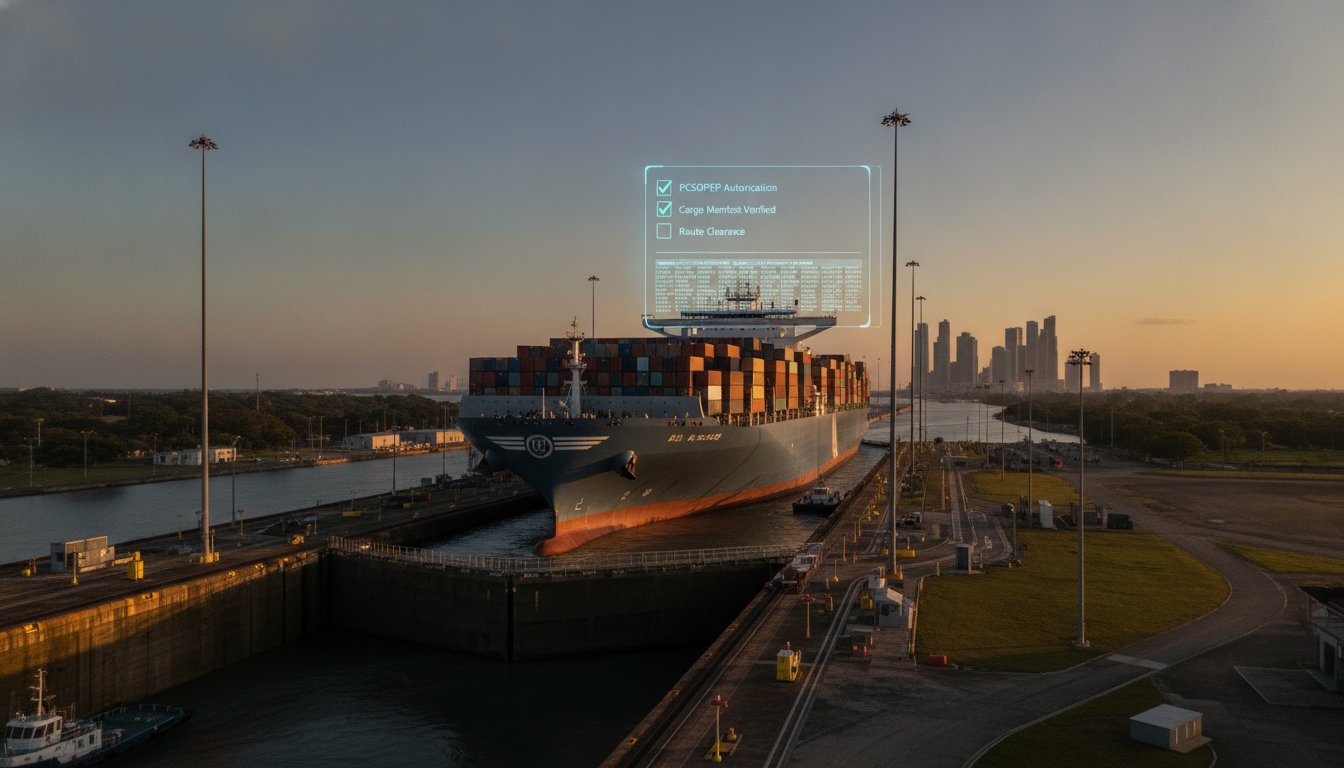
Operating without proper authorization is a gamble that rarely pays off. As of 2026, the ACP has intensified its scrutiny of pre-arrival submissions through the VUMPA portal, which now validates certificate numbers against international databases in real-time. A single clerical error or an expired document in your plan can result in administrative fines starting at $15,000. If a vessel arrives without an approved plan, the minimum fine jumps to $50,000 and includes the immediate forfeiture of the transit slot. Beyond the financial impact, non-compliance leads to severe operational delays at the Miraflores or Gatun Locks. A missed slot doesn’t just cost money; it damages your vessel’s vetting record and complicates future scheduling. Integrating a reliable Panama Canal SOPEP compliance checklist into your pre-voyage planning is the only way to safeguard against these avoidable risks and ensure a seamless entry into Canal waters.
The Essential Role of the Authorized Person (AP)
The Authorized Person (AP) is far more than a name on a compliance form; they are the legal backbone of your vessel’s transit safety. According to the Panama Canal Authority Notices to Shipping, specifically Notice N-12, having a resident AP is a strict mandate for any vessel transiting with 400 MT or more of oil. This individual serves as the 24/7 legal liaison between your ship and the Panama Canal Authority (ACP). While your vessel is in Canal waters, the AP must remain reachable at all times, standing ready to act as the primary point of contact for any environmental or regulatory issue. Crucially, the AP must hold the financial empowerment to authorize emergency expenditures on behalf of the shipowner. This ensures that response efforts aren’t delayed by cross-border communication gaps during a crisis. Without this empowered local presence, a vessel risks immediate delays or the appointment of a court-mandated representative who may not have the owner’s best interests in mind.
Duties of the AP During Transit
An AP’s responsibilities begin long before your vessel reaches the breakwater. They manage the critical 96-hour pre-arrival notification through the VUMPA portal, a task requiring meticulous attention to detail to avoid the clerical errors found on a typical Panama Canal SOPEP compliance checklist. During the transit, the AP’s duties include:
- Coordinating directly with local Oil Spill Response Organizations (OSROs) and the ACP during an incident.
- Managing all official documentation to ensure the vessel meets evolving ACP filing protocols.
- Acting as a local “owner representative” to protect financial interests and minimize liability.
- Ensuring that all shipboard notification exercises are documented and kept on file for at least three years.
Why Local Expertise Matters in 2026
The digital landscape of the Panama Canal is evolving rapidly. In 2026, the ACP’s filing protocols have become increasingly automated, requiring real-time certificate validation and precise technical data. Remote providers or global agents often miss the subtle nuances of these local regulations, which can lead to avoidable rejections or transit delays. Delegating these specialized tasks to a partner with deep local roots provides the vigilance needed to navigate these shifts successfully. Adimar Shipping, Inc. has provided expert PCSOPEP Authorized Person services since 1994, acting as a proactive extension of your own team. We serve as your eyes at the Panama Canal, providing the local oversight and stability necessary to secure your transit and eliminate the stress of regulatory uncertainty. Our commitment to ethical standards and transparent communication ensures that your vessel remains in full compliance with Chapter IX regulations at all times.
Step-by-Step Process for PCSOPEP Authorization
Securing PCSOPEP authorization is a technical sequence that transforms your vessel’s data into an ACP-approved emergency strategy. It’s a methodical process that doesn’t allow for guesswork. The first phase involves gathering vessel-specific documentation, including your current MARPOL SOPEP, IMO number, and exact oil carrying capacities. This data forms the technical core of your Panama Canal SOPEP compliance checklist. Once the information is verified, you’ll need to formally designate a local agent, such as Adimar Shipping, Inc., as your resident Authorized Person. This appointment is a legal prerequisite for the next stage: plan development. We tailor the response plan to meet your vessel’s specific Tier requirements, ensuring every protocol aligns with the environmental standards of the Canal. Finally, the plan is uploaded via the official VUMPA portal for technical review. In 2026, this portal uses real-time validation to check your certificates against global databases, making pre-submission accuracy more critical than ever.
Plan development must be precise. We analyze your vessel’s oil capacity to determine if you fall under Tier S, Tier 1, or Tier 2. Each classification demands a different level of external spill response coordination and OSRO equipment mandates. For Tier 2 vessels with over 1,000 MT capacity, the plan must include specific equipment inventories that meet current ACP standards. By delegating these technical steps to a specialized partner, you eliminate the risk of rejection and ensure your vessel is legally cleared for transit well before reaching the breakwater.
The 96-Hour Pre-Arrival Notification Rule
The ACP mandates that your notification exercise be submitted at least 96 hours before arrival. If your vessel departs from a port less than 96 hours away, you must file before leaving that last port. Missing this window triggers administrative fines starting at $2,500. It also risks transit rescheduling, which is a costly outcome for any operator. For a deeper look at managing these timelines, see our Panama Canal Transit: The Complete Guide for Ship Operators.
Approval and Renewal Timelines
In 2026, the ACP typically takes between 96 hours and one week to authorize a new plan. Verification remains valid for two years, while full re-validation is required every five years or after major vessel modifications. Managing fleet-wide authorizations requires a partner who tracks these dates across multiple vessels. Delegating these renewals ensures your Panama Canal SOPEP compliance checklist remains current, protecting your fleet from sudden transit rejections or expired document penalties.
Understanding Tier Classifications and Requirements
Your vessel’s oil carrying capacity dictates the complexity of its response strategy. The Panama Canal Authority (ACP) uses a tiered system to categorize risk and mandate specific resource availability. Accuracy here is vital; an incorrect tier designation on your Panama Canal SOPEP compliance checklist will lead to an immediate rejection during the VUMPA verification process. As of 2026, the ACP portal validates these capacities against technical drawings and class society databases in real-time, leaving no room for manual entry errors.
- Tier S: This classification applies to vessels with an oil capacity of less than 400 metric tons (MT). While they don’t require the same level of external response contracts, they must still maintain a basic PCSOPEP and designate an Authorized Person. This often includes non-self-propelled vessels and specific cargo types.
- Tier 1: Vessels carrying between 400 MT and 1,000 MT of oil fall into this category. This is the most common tier for medium-sized commercial ships.
- Tier 2: This tier covers vessels with an oil capacity exceeding 1,000 MT up to 7,500 MT. These vessels face stricter scrutiny regarding their shipboard response equipment and shore-side coordination.
- Tier 3: Reserved for large-scale operators, this classification applies to vessels with a capacity exceeding 7,500 MT. These transits require the highest level of preparedness and documented emergency response capabilities.
Resource Requirements per Tier
Higher tier classifications bring increased responsibility for shore-side coordination. For Tier 2 and Tier 3 vessels, the ACP mandates more robust integration between shipboard response teams and local resources. While the ACP acts as the sole Oil Spill Response Organization (OSRO) for vessels in transit, your PCSOPEP must detail how your crew will interface with Canal authorities during an incident. This includes maintaining specific equipment inventories and documented notification exercises that must be kept on file for three years. For a detailed breakdown of these legal liaisons, consult our PCSOPEP Authorized Person: A Complete Guide for Panama Canal Transit.
Verifying Your Vessel’s Classification
Calculating your MT capacity requires more than just looking at your cargo manifest. You must include the total capacity of all oil carried as cargo or fuel. However, it’s a common misconception that all fuels count toward this total. Distillate fuels, MGO, and non-persistent oils are currently excluded from the 400 MT threshold calculation. If you miscalculate and under-report your capacity, you risk mandatory forfeiture of your transit slot and significant administrative penalties. We recommend a proactive approach to verification. You can contact our team at Adimar Shipping, Inc. to verify your vessel’s tier and ensure your plan meets every 2026 technical requirement before you depart your last port of call.
Secure Your 2026 Transit with Adimar Shipping
Adimar Shipping, Inc. acts as your vigilant representative on the ground in Panama City, bridging the gap between global operations and local regulatory demands. Since 1994, we have specialized in providing Authorized Person services that prioritize transparency and risk mitigation. We understand that the stakes are high, with daily vessel operating costs for Neo-Panamax ships reaching approximately $65,000. Our role is to serve as your eyes at the Panama Canal, ensuring that every technical detail of your 2026 transit is managed with precision. By delegating the complexities of ACP coordination to our experienced team, you eliminate the confusion and administrative friction that often lead to costly delays at the locks.
Our approach goes beyond simple plan submission. We utilize a rigorous Panama Canal SOPEP compliance checklist to audit your vessel’s documentation before it ever reaches the VUMPA portal. This proactive oversight identifies potential red flags, such as expired certificates or tier miscalculations, that would otherwise trigger automatic rejections. With 24/7/365 emergency response availability, we provide the security of knowing that a seasoned legal liaison is always ready to act on your behalf in Canal waters.
The Adimar Shipping, Inc. Advantage for Ship Owners
We protect your interests by providing a single point of accountability for all your transit needs. Integrating your PCSOPEP authorization with our broader husbandry and full ship agency services creates a seamless operational flow. This synergy reduces the need for multiple vendors and ensures that your vessel’s husbandry requirements, crew changes, and regulatory filings are perfectly synchronized. For a complete overview of how we streamline these processes, explore our guide on Ship Agency Panama: Your Guide to a Smooth Canal Transit. Our commitment to ethical standards and direct local coordination with the Panama Canal Authority provides the peace of mind you need to navigate this critical waterway with confidence.
Next Steps: Request a Compliance Audit
Initiating your 2026 authorization process is a straightforward task when you have a capable partner. We recommend a comprehensive compliance audit for any vessel scheduled for transit in the coming year. To provide a fast-track authorization quote, our team requires your current MARPOL SOPEP, the vessel’s technical specifications, and your expected transit schedule. We will review your current Panama Canal SOPEP compliance checklist status and ensure your Authorized Person designation is legally sound and fully empowered. Don’t leave your transit to chance; secure your local representative now to ensure your vessel remains ready for its next voyage through the Miraflores or Gatun Locks. Contact Adimar Shipping, Inc. to secure your PCSOPEP Authorized Person today and experience the reliability of a proactive local partnership.
Secure Your Transit with Expert Local Oversight
Navigating the rigid requirements of the ACP doesn’t have to be a source of operational stress. It’s clear that a standard MARPOL plan isn’t enough to satisfy the unique environmental mandates of the Canal. You need a resident partner who understands the nuances of Tier classifications and the technical demands of the VUMPA portal. Utilizing a robust Panama Canal SOPEP compliance checklist is the first step toward ensuring your vessel avoids the $15,000 administrative fines and transit forfeitures that follow minor clerical errors.
Adimar Shipping has served as a trusted ship agency since 1994, providing the vigilant local oversight necessary for a delay-free transit. Our expert Panama Canal compliance team offers 24/7 local representation, acting as an extension of your own crew to protect your financial and legal interests. We handle the technical technicalities so you can focus on your global voyage.
Ready to safeguard your next transit? Secure Your PCSOPEP Authorized Person with Adimar Shipping today. We’re here to ensure your 2026 voyages remain efficient, compliant, and secure.
Frequently Asked Questions
Is PCSOPEP authorization required for every Panama Canal transit?
Yes, authorization is mandatory for every toll-paying vessel transiting the Canal with an oil carrying capacity of 400 metric tons (MT) or more. This regulation applies regardless of whether the oil is carried as cargo or fuel. If your vessel falls below this threshold, it’s designated as Tier S and still requires a basic plan, though the response requirements are less stringent than higher tiers.
Can my international ship agent act as my PCSOPEP Authorized Person?
No, your Authorized Person (AP) must be a resident of the Republic of Panama. The ACP requires a local representative who is available 24/7 to serve as a legal liaison. International agents located outside the country can’t fulfill this role. Selecting a local partner like Adimar ensures you have an empowered representative on the ground who can authorize emergency expenditures and coordinate directly with Canal authorities.
What is the penalty for arriving at the Panama Canal without an authorized plan?
Arriving without an ACP-approved plan triggers a minimum administrative fine of $50,000. Beyond the financial penalty, the vessel faces immediate forfeiture of its transit slot, which causes massive operational delays. Even minor clerical errors on your Panama Canal SOPEP compliance checklist can lead to fines starting at $15,000; this makes pre-arrival verification essential for every voyage.
How long does it take to get ACP approval for a PCSOPEP plan?
The Panama Canal Authority typically takes between 96 hours and one week to review and authorize a new plan. However, this timeline depends on the accuracy of your submission through the VUMPA portal. To avoid transit delays, we recommend starting the process at least two weeks before your expected arrival date to account for any technical clarifications or document re-submissions requested by the ACP.
Does a vessel in ballast still need PCSOPEP authorization?
Yes, a vessel in ballast still requires authorization if its total oil carrying capacity, including fuel tanks, meets the 400 MT threshold. The ACP focuses on the vessel’s potential for pollution rather than its current cargo status. Ensure your fuel capacities are accurately calculated against your technical drawings to determine your specific Tier classification before arrival.
What happens if my Authorized Person is unavailable during an incident?
If your designated AP is unreachable during an incident, the vessel risks severe administrative penalties and legal complications. The ACP mandates 24/7 availability for all Authorized Persons while a vessel is in Canal waters. This is why shipowners delegate this role to established agencies like Adimar Shipping. We maintain a dedicated team to provide constant vigilance and immediate response capabilities.
Can I use the same PCSOPEP plan for multiple ships in my fleet?
No, each vessel must have its own specific PCSOPEP plan tailored to its unique configuration and oil capacity. While fleet-wide operators often use the same Authorized Person, the technical data and response strategies must be vessel-specific. Your Panama Canal SOPEP compliance checklist should be completed individually for every ship to ensure technical drawings and certificate numbers match the ACP’s digital records.
What are the 2026 updates to the Panama Canal pollution regulations?
In 2026, the ACP implemented real-time certificate validation within the VUMPA portal to check IMO and class society databases automatically. There’s also increased scrutiny on Tier S plans and the integration between shipboard response and shore-side coordination. Inspectors now focus heavily on documented notification exercises. These must be performed at least twice a year and kept on file for three years.