
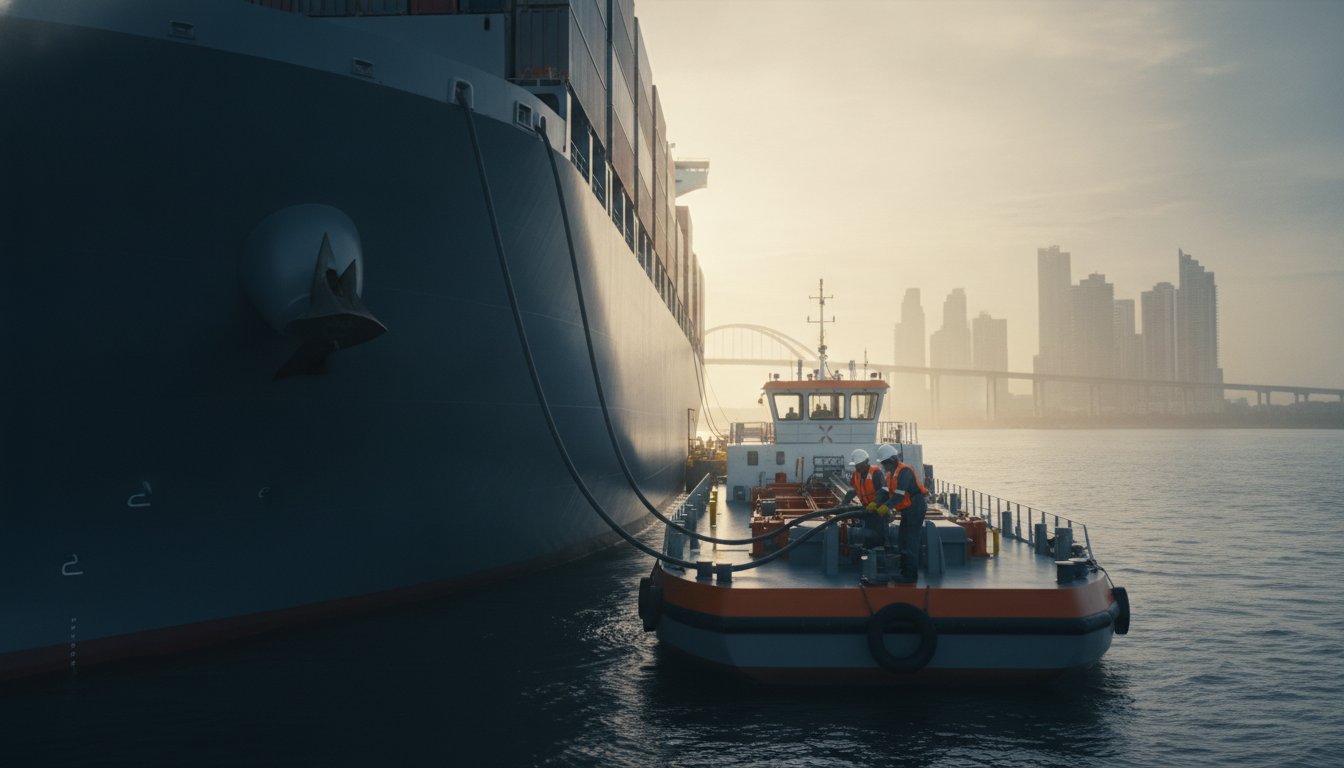
A missed transit slot in the Panama Canal isn’t just a scheduling error; it’s a six-figure blow to your vessel’s bottom line. In the high-stakes maritime environment of 2026, bunkering coordination panama has evolved from a routine refueling stop into a critical logistical chess match where timing and local expertise are the only things standing between profit and loss. You’re likely familiar with the frustration of watching demurrage costs climb while waiting for a vendor who doesn’t respect the ACP’s rigid schedule. It’s a risk no operator should have to take when the stakes involve both time and fuel integrity.
We understand that managing multiple vendors while ensuring fuel quality and quantity verification is an exhausting, high-pressure task. This guide promises to help you master these complexities, ensuring your bunkering operations integrate seamlessly into your transit itinerary for zero delays and maximum cost-efficiency. You’ll learn how to navigate the latest PCSOPEP requirements and ACP harbor operations protocols to maintain full regulatory compliance. We’ll also preview the essential on-the-ground strategies for protecting your vessel against quantity discrepancies, ensuring your 2026 transits are as efficient as they are secure.
Key Takeaways
- Learn how expert bunkering coordination panama prevents costly transit slot conflicts by synchronizing barge schedules with rigid Canal arrival windows.
- Discover the strategic operational differences between Balboa and Cristobal to select the most efficient refueling terminal for your vessel’s specific route.
- Master the latest PCSOPEP and ACP compliance requirements for 2026 to avoid administrative delays and significant financial penalties.
- Gain actionable insights into protecting your interests through fuel quality verification and rigorous quantity oversight during the bunkering process.
- Understand the value of delegating complex logistics to a local ship agency to ensure your vessel remains the primary priority throughout its stay in Panamanian waters.
The Strategic Importance of Bunkering Coordination in Panama
Effective bunkering coordination panama is far more than a simple transaction. It is the tactical management of fuel procurement, barge scheduling, and complex regulatory clearances within one of the world’s most congested maritime corridors. Bunkering in Panama requires a level of precision that few other ports demand. It’s a process where every minute of delay ripples through a vessel’s entire transit itinerary, potentially leading to missed slots and massive financial penalties. Efficiency in this zone isn’t a luxury; it’s a requirement for operational survival.
Fueling the Global Supply Chain at the Crossroads
Panama’s strategic position remains unmatched in the 2026 maritime landscape. In April 2026 alone, bunker sales reached 486,461 metric tonnes, which is a 6% increase from the previous year. This growth reflects the high demand for VLSFO and LSMGO that meet strict ISO 8217 standards. However, high traffic density means anchorages are often at capacity. The strategic advantage of bunkering in Panama is the ability to refuel during the mandatory waiting period for Canal transit. Without precise bunkering coordination panama, this window of opportunity can easily turn into a bottleneck that delays your entire journey across the globe.
The Agent’s Role: Coordinator vs. Physical Supplier
It’s vital to distinguish between the party selling the fuel and the party coordinating the operation. Separating these roles ensures unbiased oversight. As a specialized Panama Canal ships agent, Adimar Shipping, Inc. doesn’t sell fuel. Instead, we represent your interests exclusively. We manage the extensive paper trail required by the ACP and port authorities, including VUMPA filings and PCSOPEP documentation. Our role is to remain vigilant, verifying that barge arrivals align with your vessel’s ETA and that all local regulations are met with total transparency. We don’t just watch the clock. We protect your schedule and your assets through every step of the process.
Navigating Panama’s Bunkering Landscape: Balboa vs. Cristobal
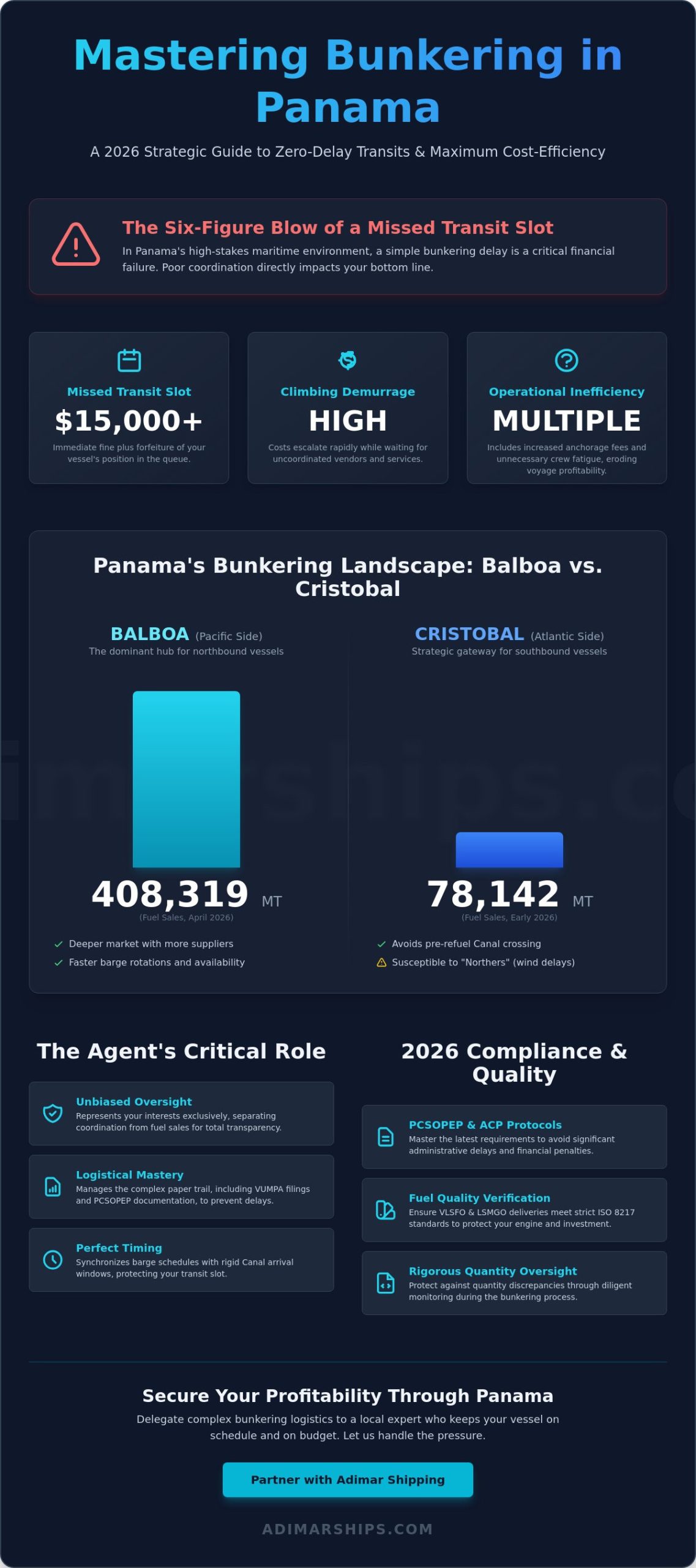
Panama’s bunkering infrastructure is divided by more than just geography. The choice between Balboa and Cristobal dictates your operational tempo and fuel availability. Balboa, located on the Pacific side, remains the dominant hub. In April 2026, the Pacific side accounted for 408,319 metric tonnes of fuel sales, nearly five times the volume of the Atlantic side. This terminal is the logical choice for northbound vessels beginning their journey through the Canal. Its deeper market provides access to a wider pool of suppliers and faster barge rotations, which are essential for effective bunkering coordination panama.
Cristobal serves as the strategic gateway on the Atlantic side. While its sales volume is lower, reaching 78,142 metric tonnes in early 2026, it offers significant advantages for southbound vessels. Bunkering here avoids the need to cross the Canal before refueling, reducing the risk of transit slot forfeiture. However, the Atlantic side is more susceptible to “Northers”, strong seasonal winds that can suspend barge operations at the outer anchorages. We monitor these weather patterns closely to advise our clients on the safest window for fuel transfer.
Specialized operations often require the use of the Dangerous Cargo Anchorages. While these locations provide the necessary isolation for vessels carrying hazardous materials, they can be more exposed to sea swells. For 2026, the Panama Canal Authority has reinforced draft restrictions at these sites to accommodate larger Neo-Panamax vessel sizes. Navigating these technical limitations requires a partner who understands the specific terminal capabilities of each side of the isthmus.
Port Selection for Maximum Transit Efficiency
Selecting the right port depends heavily on your Panama Canal transit direction. Infrastructure updates in Panama City and Colon for 2026 have improved terminal capabilities, but congestion remains a constant factor. Barge availability often fluctuates based on the daily arrival of large container fleets. By delegating your logistics to Adimar Shipping, Inc., you gain access to real-time port data that prevents your vessel from being caught in a scheduling bottleneck.
Barge vs. Onshore: Choosing the Right Delivery Method
Barge delivery at designated anchorages is the standard for most transiting vessels. It offers the flexibility to receive fuel while simultaneously performing other husbandry tasks. Onshore terminal bunkering is typically reserved for vessels with specific draft requirements or those staying for extended port calls. We specialize in synchronizing these transfers with the delivery of lube oils and grease, ensuring that all your vessel’s technical needs are met in a single, coordinated window. This level of oversight keeps your operational costs predictable and your transit on track.
Synchronizing Bunkering with Panama Canal Transit Schedules
Precision is the hallmark of successful bunkering coordination panama. While the actual fuel transfer may take only a few hours, the logistical preparation must begin at least 72 to 96 hours before your vessel arrives in Canal waters. The Panama Canal operates on a rigid, high-velocity schedule where even a minor delay in refueling can trigger a “Transit Slot Conflict.” If your vessel isn’t ready when the pilots arrive, the consequences are immediate and expensive. The Canal doesn’t wait for late barges, and a missed slot can lead to days of unplanned idling at anchorage.
Effective communication is the only way to mitigate these risks. We maintain constant contact with the Panama Canal Authority (ACP) to monitor real-time changes in your transit window. This allows us to adjust barge arrival times dynamically. We also establish direct protocols between the bunker barge and the ship’s master to ensure both parties are aligned on the “Readiness to Deliver” (RTD) status. This proactive approach turns a high-pressure window into a manageable, routine operation.
Contingency planning is equally vital for protecting your bottom line. Mechanical failures on a barge or sudden weather shifts can disrupt even the best-laid plans. We develop “Plan B” scenarios for every call, such as identifying alternative suppliers or shifting the operation to a more sheltered anchorage if sea conditions deteriorate. By anticipating these variables, we ensure that your vessel remains compliant with ACP regulations and stays on its assigned path through the isthmus.
The Bunkering Coordination Timeline
- Step 1: Pre-arrival Notification: We verify your fuel specifications and quantity requirements four days out, ensuring the physical supplier has the product reserved and the barge scheduled.
- Step 2: Slot Confirmation: Once the ACP assigns your transit time, we lock in the barge window to create a sufficient buffer before your pilot boarding time.
- Step 3: Real-time Monitoring: Our team tracks the barge’s movement and the vessel’s approach via AIS and direct radio contact, providing you with hourly updates during the transfer.
Avoiding Demurrage and Missed Transit Fees
Calculating a realistic “Buffer Zone” is essential for stress-free operations. We recommend a minimum six-hour gap between the completion of bunkering and your scheduled transit to account for unexpected technical hitches. A mere 2-hour delay in bunkering can cost $50,000 or more in missed transit fees and administrative penalties. Adimar Shipping acts as the vigilant interface between your charterers and the ACP, protecting you from these preventable financial losses. We manage the high-stakes timing so your crew can focus on the technical safety of the fuel transfer.
Quality, Compliance, and PCSOPEP During Bunkering Operations
Bunkering is arguably the most operationally sensitive phase of a vessel’s stay in Panama. It’s the moment when environmental risks and financial vulnerabilities converge. Effective bunkering coordination panama requires more than just a scheduled barge; it demands a rigorous compliance framework that protects both the vessel and the owner. In 2026, the Panama Maritime Authority (AMP) and the ACP have intensified their oversight of fuel transfers to ensure total adherence to MARPOL standards and local environmental protections. We treat these standards as the baseline, not the goal, providing an extra layer of security for your assets.
Environmental safety is a non-negotiable priority. An oil spill in Canal waters can lead to immediate vessel detention and fines exceeding $15,000. Beyond the financial impact, the reputational damage and logistical delays can be catastrophic. We act as your vigilant eyes on the ground, ensuring that every safety protocol is followed to the letter during the transfer. Our role is to identify potential hazards before they manifest into incidents, giving you the peace of mind that your operations are fully protected.
PCSOPEP Compliance During Fuel Transfer
The Panama Canal Shipboard Oil Pollution Emergency Plan (PCSOPEP) is a unique requirement for vessels carrying 400 metric tons or more of oil. This plan must be approved via the VUMPA system at least 96 hours before arrival. A critical component of this regulation is the mandatory designation of a Panama-resident authorized person. This individual serves as the official liaison with the ACP in the event of an emergency. Adimar Shipping provides specialized compliance support, managing these filings to ensure your vessel is never at risk of slot forfeiture due to administrative oversights.
Quantity and Quality (Q&A) Verification
Fuel discrepancies can cost owners thousands of dollars per call. “The Cappuccino Effect,” where air is entrained in the fuel to increase its apparent volume, remains a common industry risk. We mitigate this through rigorous oversight and independent sampling. Our bunkering coordination panama services include the verification of seals and the monitoring of flow rates throughout the entire delivery process. We ensure that all fuel delivered meets ISO 8217 and current IMO sulfur specifications. By acting as your protective agency, we provide the unbiased verification necessary to prevent quantity disputes and ensure you only pay for the energy you actually receive. If you require a partner who prioritizes your vessel’s integrity above all else, reach out to Adimar Shipping to secure your 2026 transit operations.
Adimar Shipping: Your Local Partner for Expert Bunkering Coordination
Selecting the right partner for bunkering coordination panama is a decision that impacts your vessel’s safety and your company’s financial health. At Adimar Shipping, we bring decades of experience as a specialized Panama Canal ships agent to every call. We don’t view your vessel as just another number in the queue. Instead, we treat each ship as our primary priority. Our team acts as a vigilant sentinel on the ground, ensuring that fuel suppliers, barge operators, and canal authorities remain perfectly aligned with your arrival window.
The complexities of the 2026 maritime environment require more than just basic logistics. They demand a partner who understands the high stakes of a transit slot and the precision required for a successful fuel transfer. We provide 24/7 on-the-ground vigilance to eliminate the confusion that often leads to costly delays. By delegating these specialized tasks to our local experts, you gain the operational freedom to focus on the broader needs of your fleet while we manage the intricate details at the isthmus.
The Adimar Advantage: Coordination Beyond the Fuel Hose
A bunker call is rarely just about fuel. It is often the most efficient time to manage the entire ecosystem of husbandry services, including crew changes, spare parts delivery, and fresh water supply. We specialize in integrating these requirements into your bunkering window to minimize vessel downtime. Our role is to serve as a seamless extension of your own team in Panama City. We uphold the highest ethical standards, ensuring that every transaction and communication is handled with total transparency and integrity. This commitment to ethical conduct is the foundation of the trust our clients place in us year after year.
Protecting Owner and Charterer Interests
Understanding the distinction between an Owner’s Nominated Agency and a Charterer’s Nominated Agency is vital for protecting your specific interests. We provide tailored support for both roles, ensuring that regardless of who appoints us, the vessel’s safety and schedule remain the top priorities. Our proactive planning focuses on reducing “vessel downtime” by identifying potential bottlenecks before they occur. Whether it’s verifying a barge’s pumping rate or coordinating with the ACP for a last-minute slot change, we are there to represent you. Contact Adimar Shipping today to develop a customized bunkering coordination panama plan for your next transit and experience the security of having a seasoned expert in your corner.
Securing Your Vessel’s Performance in 2026 and Beyond
Successful voyages through the Panama Canal require more than just fuel; they require absolute synchronization. You now understand how the strategic choice between Balboa and Cristobal impacts your timeline and how rigid PCSOPEP standards dictate your regulatory standing. Mastering bunkering coordination panama means eliminating the uncertainty that leads to expensive transit delays and quantity disputes. It’s about turning a complex logistical hurdle into a seamless operational advantage that protects your bottom line. Precision in these waters isn’t just about speed; it’s about the security that comes from expert oversight.
You don’t have to manage these high-stakes variables alone. As an authorized PCSOPEP representative and specialized Panama Canal ship agency with a long-standing history of excellence, we provide the 24/7 local coordination team necessary to protect your interests. Our experts act as your vigilant partner on the ground, ensuring every transfer is transparent, compliant, and perfectly timed to meet ACP requirements. We take the pressure off your crew by handling the intricate details of the isthmus. Contact Adimar Shipping for Expert Bunkering Coordination today to secure your vessel’s itinerary. We look forward to making your next transit your most efficient yet.
Frequently Asked Questions
What is the best port for bunkering before a Panama Canal transit?
The best port depends on your vessel’s transit direction and schedule. Balboa, on the Pacific side, is the larger hub and is generally preferred for northbound transits due to its higher fuel volumes and greater number of suppliers. Cristobal, on the Atlantic side, is a strategic choice for southbound vessels, allowing you to refuel before entering the Canal to avoid the risk of crossing the isthmus with low fuel reserves.
How long does a typical bunkering operation take in Panama?
A typical fuel transfer takes between 4 and 8 hours, depending on the total volume and the barge’s pumping rate. However, effective bunkering coordination panama must account for a wider 12 to 18-hour window. This timeframe includes the time required for the barge to maneuver alongside, connection of hoses, mandatory sampling, and the final documentation process before the vessel is cleared for its transit slot.
Do I need a PCSOPEP authorized person specifically for bunkering?
Yes, any vessel with a capacity of 400 metric tons or more of oil must have a Panama Canal Authority (ACP) approved authorized person. This individual acts as the primary liaison with the ACP during bunkering operations. They are responsible for coordinating the emergency response in the unlikely event of an oil spill, ensuring the vessel remains compliant with all local environmental regulations during the fuel transfer.
Can I bunker during my actual transit through the Panama Canal?
No, bunkering is not permitted while a vessel is in transit through the locks or Canal channels. Refueling must take place at designated anchorages in either Balboa or Cristobal. We synchronize these operations to occur during your mandatory pre-transit waiting period, ensuring that your bunkering coordination panama doesn’t interfere with your assigned pilot boarding time or transit schedule.
What are the current fuel quality standards (ISO 8217) in Panama for 2026?
All fuel supplied in Panamanian waters must meet the ISO 8217:2024 specifications and comply with IMO sulfur limits. VLSFO (0.50% sulfur) and LSMGO (0.10% sulfur) are the standard products available. We verify that all physical suppliers provide a comprehensive Bunker Delivery Note (BDN) and that representative samples are taken to confirm the fuel meets these international quality and environmental standards.
How much notice does a ship agent need to coordinate a bunker barge?
We recommend providing at least 72 to 96 hours of notice to ensure a seamless operation. While VLSFO and LSMGO generally have good availability, specific grades like HSFO often require 4 to 5 days of lead time. Early notification allows us to lock in the most competitive quotes and secure a barge slot that aligns perfectly with your vessel’s estimated time of arrival.
What happens if my bunkering operation causes me to miss my transit slot?
Missing a transit slot is a costly error that results in a fine of $15,000 or more and the immediate loss of your scheduled position. The vessel is typically moved to the end of the queue, which can lead to several days of unplanned waiting time at anchorage. This is why we prioritize proactive communication with the ACP to ensure bunkering is completed well before your pilot arrives.
Is it possible to perform crew changes and bunkering at the same time in Panama?
Yes, combining these tasks is a highly efficient way to manage your port call. We frequently coordinate crew changes, spare parts deliveries, and husbandry services to occur simultaneously with the bunkering process. This integrated approach reduces the total time your vessel spends at anchorage, allowing you to maximize your operational window while waiting for your Canal transit.