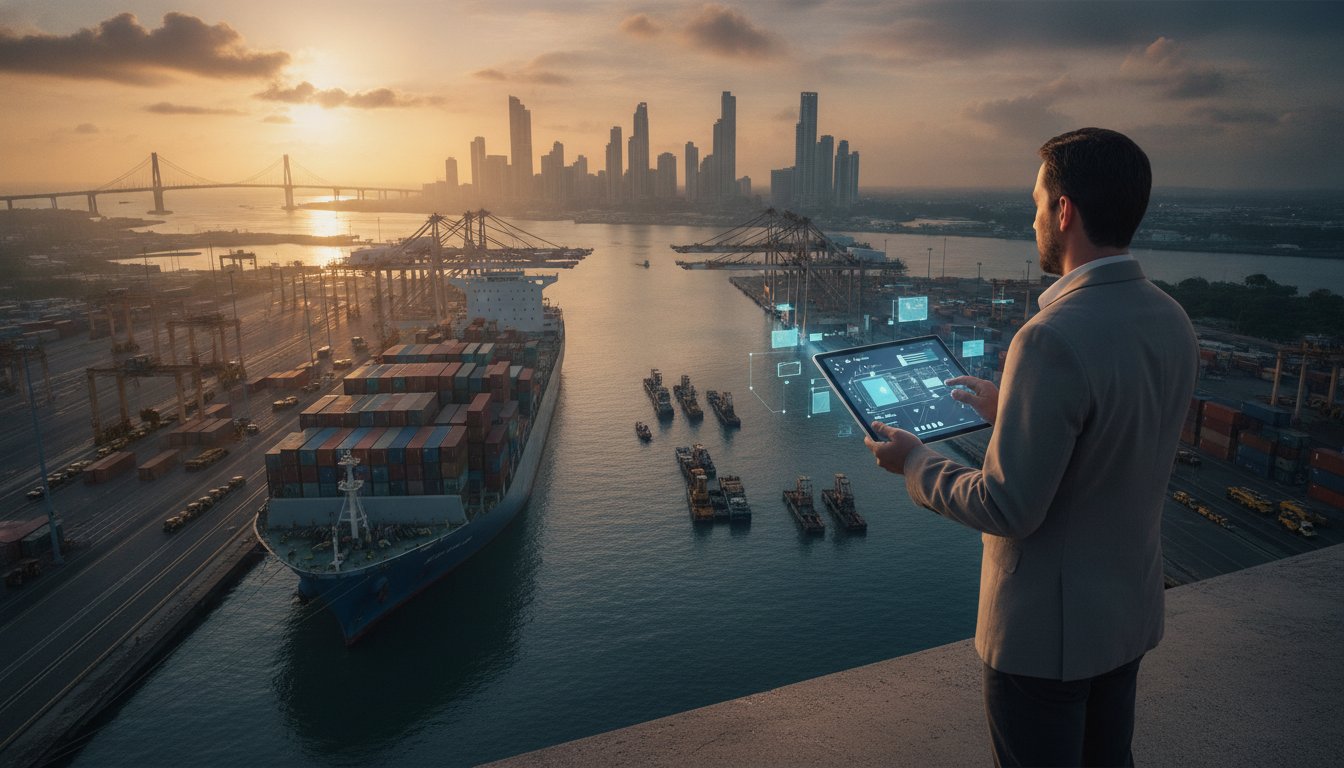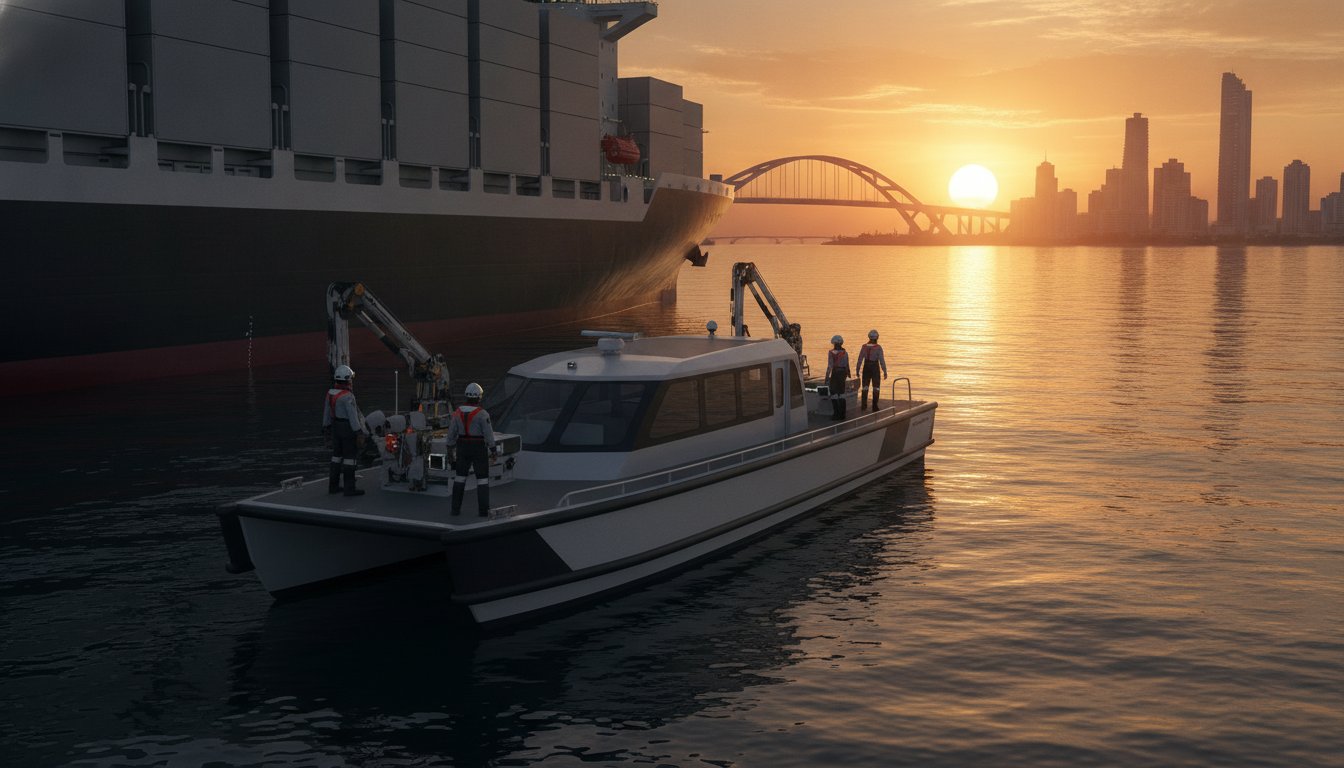


What if the agent managing your $400,000 Panama Canal transit is actually working against your bottom line? It’s a common frustration for vessel owners who rely on charterer-nominated agencies only to find hidden markups in their disbursement accounts or a complete lack of transparency in vessel status updates. When the agent’s loyalty lies with the charterer, your vessel’s maintenance and your financial security often take a backseat. That’s why investing in dedicated protective agent services panama canal is no longer an optional luxury; it’s a critical operational firewall.
You deserve a partner who prioritizes your interests and understands the high stakes of the 2026 maritime environment. This guide will show you exactly how independent oversight provides the peace of mind you need. You’ll discover how local expertise helps you avoid steep ACP regulatory fines and ensures an accurate Statement of Facts (SoF) every time. We’ll examine the specific ways a protective agent reduces port stay duration and provides the full financial transparency required to keep your operations profitable and efficient.
Key Takeaways
- Understand the inherent loyalty conflict in charterer-nominated agencies and why an independent representative is necessary to safeguard your vessel’s interests.
- Learn how protective agent services panama canal provide a dedicated operational workflow that manages everything from pre-arrival notifications to final post-transit reconciliation.
- Identify common “padding” in Proforma Disbursement Accounts and discover how to verify ACP tolls against the latest 2026 tariff structures.
- Master the complexities of Panama’s digital platforms, including VUMPA and the Enhanced Vessel Traffic Management System, to ensure seamless owner-specific reporting.
- Discover how deep local expertise and a commitment to ethical standards can significantly accelerate transit speed while reducing operational stress.
The Conflict of Interest: Why Charterer-Nominated Agencies Aren’t Enough
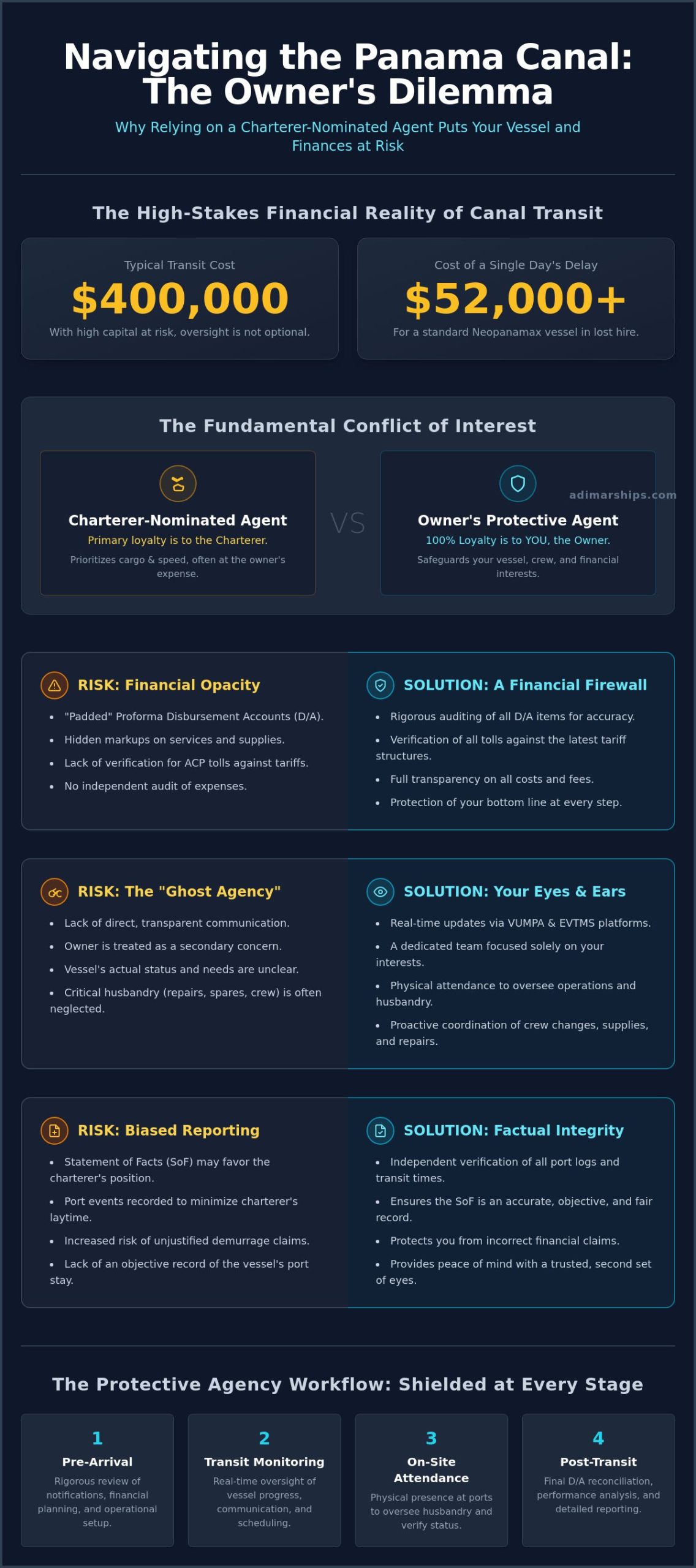
In most standard charter parties, the charterer retains the contractual right to nominate the port agent. While this agent technically serves the vessel, their commercial loyalty is almost always tied to the party paying their invoices. This structure creates an inherent conflict of interest. The primary agent focuses on the charterer’s priorities, such as minimizing laytime or accelerating cargo operations, often at the expense of the ship owner’s specific needs. In the high-stakes environment of 2026, where a single day of delay for a Neopanamax vessel can exceed $52,000 in lost hire, relying solely on a charterer-nominated agent is a significant financial risk.
Securing protective agent services panama canal provides the necessary oversight to ensure your interests remain the priority. The evolution of Panama Canal history has created a complex regulatory framework that requires vigilant monitoring. When you hire an independent representative, you’re not just adding a coordinator; you’re establishing a financial firewall. This proactive approach is essential because total transit costs now regularly reach $300,000 to $400,000. With such high capital at risk, passive oversight is no longer a viable strategy for modern ship owners.
The Legal and Financial Divide
The charterer’s agent has a primary fiduciary duty to the party that nominated them. This bias often manifests in the Statement of Facts (SoF), the critical document used to calculate demurrage and laytime claims. Without independent oversight, an agent might record port events or transit milestones in a way that favors the charterer’s financial position. An owner’s protective agent acts as an expert second set of eyes. We verify every entry in the port logs and transit times to ensure the SoF remains an objective record, protecting you from unjustified financial claims.
The “Ghost Agency” Risk
The Mechanics of Protective Agency: Your Local Eyes and Ears in Panama
Effective OPA doesn’t create friction; it promotes accountability. A seasoned agent knows how to work alongside the primary agency to ensure nothing falls through the cracks. In 2026, this oversight is powered by digital dashboards that provide real-time updates on vessel position, transit status, and expenditure. This level of transparency allows owners to make informed decisions without waiting for delayed reports from the charterer’s representative. If you’re looking for this level of dedicated oversight, exploring Ship Agency Services tailored to owners is the first step toward a more secure transit.
Vigilance at the Locks and Ports
Physical attendance remains a cornerstone of reliable representation. Your agent should be present at key locations like Balboa or Cristobal to oversee husbandry requirements and verify vessel status. We independently monitor the Panama Canal Authority (ACP) transit schedule to anticipate any shifts in the lineup. This vigilance is crucial when it comes to tug and pilot assignments. We ensure the primary agent is ordering these services at the optimal window, preventing costly delays or the steep penalties associated with vessel deficiencies that require extra tug support.
Documentation and Compliance Auditing
The paperwork involved in a canal transit is extensive and unforgiving. A protective agent audits all transit clearance documents for accuracy before they are submitted to the authorities. We verify that the primary agent is meeting all current ACP maritime regulations, including those detailed in the N-01 Vessel Requirements. This includes managing the complex paper trail for the ISPS Code and ensuring all port facility security protocols are strictly followed. By catching errors in VUMPA filings early, we help you avoid the administrative fines that can quickly erode your voyage profits.
Financial Stewardship: Auditing Disbursement Accounts (D/A) for ROI
Financial transparency is the cornerstone of effective protective agent services panama canal. With total transit costs frequently reaching $400,000, even minor discrepancies in a Disbursement Account (D/A) can lead to significant losses. Many owners receive a Proforma D/A that includes “padding” or unnecessary service charges designed to buffer the primary agent’s margins. We analyze these documents line-by-line to identify and remove redundant fees before you authorize the 100% pre-payment required by the ACP. It’s about ensuring every dollar spent aligns with actual operational requirements.
Verifying tolls against the latest 2026 tariff structures is a technical necessity. The Panama Canal Authority Maritime Regulations dictate specific pricing based on vessel dimensions and cargo types. We cross-reference these official rates with the primary agent’s invoice to prevent overcharging. We also identify hidden markups in third-party services like launch hire and provisions. Our audit process often identifies savings that exceed our own service fees. For example, we scrutinize emergency underwater inspection premiums to ensure you aren’t paying a 25% surcharge unless the 24-hour request window was actually breached. Securing independent protective agent services panama canal ensures that your final reconciliation reflects reality, not just the charterer’s narrative.
Toll Verification and Slot Auction Audits
Slot auctions have become increasingly complex under the LoTSA 2.0 system. We verify the exact winning bid price for your transit slot to ensure the primary agent isn’t adding unauthorized premiums. Admeasurement fees for first-time transits, currently approximately $1,100, must also be scrutinized to ensure they match official PC/UMS standards. We also monitor for the double-billing of port dues and lighthouse fees. These charges often appear twice when vessels move between anchorage zones in Balboa and Cristobal, and our oversight prevents these administrative errors from becoming permanent costs.
Reconciling the Statement of Facts (SoF)
The Statement of Facts (SoF) is the primary evidence for calculating laytime and demurrage. It’s the most important document for your bottom line. We cross-reference the agent’s logs with the vessel’s own deck logs to ensure every minute is accounted for accurately. Precise time-stamping of tug arrival, pilot embarkation, and lock entry is critical. Even a 15-minute discrepancy can shift financial liability in a multi-million dollar demurrage claim. If discrepancies exist, we advise the Master to sign “under protest” immediately. This protects your legal right to dispute unfair charges later. Don’t pay the final invoice until this reconciliation is complete.
Operational Oversight: EVTMS, VUMPA, and Modern Transit Tech
Modern canal transits rely on digital precision. The Enhanced Vessel Traffic Management System (EVTMS) is the backbone of canal coordination. A protective agent monitors this system to provide independent verification of your vessel’s slot and progress. We don’t just wait for the primary agent’s report. We use EVTMS data to anticipate changes in lock schedules or pilot availability. This proactive stance is a core part of protective agent services panama canal, ensuring you aren’t left in the dark when schedules shift.
Navigating VUMPA, the Maritime Single Window of Panama, requires specific expertise. While the primary agent uploads basic transit data, we ensure owner-specific documentation is handled correctly. This includes the mandatory PCSOPEP authorized person requirements. We verify that your designated person is ready and compliant with current ACP standards. Financial logistics like Cash to Master (CTM) also require secure, local handling. We manage these deliveries without creating conflict with the primary agent’s schedule. Our goal is to serve as your dependable local partner, ensuring these sensitive tasks are completed discreetly and on time. To secure this level of professional oversight, you can request a consultation for our Owner’s Nominated Agency services today.
Digital Transparency in 2026
Visibility is the antidote to transit anxiety. We utilize digital reporting tools to provide owners with 24/7 visibility into their vessel’s status. By integrating real-time AIS tracking with local port data, we offer a level of oversight that standard agencies often lack. EVTMS integration reduces transit uncertainty in 2026 by providing a single, verified source of truth for vessel scheduling and canal movements.
Husbandry and Crew Support
Husbandry is often the first thing a charterer’s agent forgets. Their focus is on the cargo, not the crew or the ship’s technical needs. An OPA fixes this by prioritizing your vessel’s internal requirements. We coordinate everything from emergency medical services to seafarer welfare in Panama City ports. This includes the complex coordination of ship spares logistics panama during the narrow transit window. We ensure your parts are cleared through customs and delivered to the vessel without delaying the transit schedule. Professional protective agent services panama canal turn these potential logistical nightmares into routine operations.
The Adimar Advantage: Local Expertise for Global Peace of Mind
Adimar Shipping maintains a strategic local presence in Coco del Mar and San Francisco, placing our team at the heart of the transit zone. This geographical positioning is a tactical advantage for ship owners. We don’t just monitor your vessel from a distance; we provide the physical oversight necessary to ensure transit speed and operational accuracy. Our commitment to ethical standards and transparent communication serves as your financial firewall. By delegating the complexities of the canal to a seasoned specialist, you gain the operational freedom to focus on your broader fleet goals while we manage the ground-level risks.
Our “Vigilance Metaphor” isn’t just a brand signature. It’s a pragmatic approach to cost savings. We act as your sentinel, identifying potential issues before they escalate into expensive delays or ACP penalties. Whether it’s verifying the condition of vessel equipment to avoid mandatory tug surcharges or auditing a Proforma D/A for hidden markups, our local insight translates directly to your bottom line. Choosing professional protective agent services panama canal means you no longer have to accept the “passive” representation of a charterer’s agent. You get a partner who answers only to you.
A Local Partner, Not Just an Agent
The value of a long-standing relationship with the Panama Canal Authority (ACP) cannot be overstated. Adimar’s deep roots in the Panamanian maritime community allow us to navigate bureaucratic hurdles that often stall less experienced firms. Our specialized focus as a panama canal ships agent ensures that your vessel receives priority attention for husbandry and technical needs. We have countless real-world examples where our intervention prevented unnecessary anchorage fees or identified double-billing in port dues, saving owners thousands of dollars per transit. We treat your vessel as if it were our own, providing the security and reliability you expect from a premier agency.
Securing Your 2026 Transit
Integrating Adimar into your operations is a straightforward process. You don’t have to wait for the next charter party negotiation to protect your interests. Most standard agreements allow for the appointment of an owner’s nominated agency to oversee the charterer’s agent. By nominating us as your OPA, you ensure that every document, from the Statement of Facts to the final invoice, is audited for accuracy. Contact Adimar Shipping today for a protective representation quote. Let us provide the expert protective agent services panama canal you need for a safe, transparent, and cost-effective transit in 2026.
Securing Your Operational Future in the Panama Canal
Navigating the Panama Canal in 2026 demands more than just a standard agency appointment. It requires a vigilant partner who acts as your dedicated on-the-ground representative. By securing independent protective agent services panama canal, you eliminate the inherent risks of “passive” representation and ensure your financial interests always come first. This guide has detailed how specialized oversight prevents Disbursement Account padding and how digital integration via EVTMS provides the transparency you deserve. You now have the tools to move beyond the conflicting interests of charterer-nominated agencies.
Adimar Shipping stands ready to serve as a proactive extension of your team. As an authorized PCSOPEP representative with deep expertise in the latest 2026 ACP toll structures, we provide the reliability needed to operate with absolute confidence. Our local offices in San Francisco and Panama City allow us to respond immediately to any logistical or regulatory challenge. Don’t leave your vessel’s security to chance in one of the world’s most complex transit zones.
Protect your vessel’s interests—Contact Adimar Shipping for expert protective agency services.
We look forward to ensuring your next transit is your most efficient and transparent one yet. Your peace of mind is our primary mission.
Frequently Asked Questions
Is a protective agent necessary if I already have a charterer’s agent?
Yes, it’s essential because a charterer’s agent is commercially beholden to the party that nominated them. While the primary agent handles cargo and basic transit formalities, their loyalty often leads to the prioritization of charterer needs over vessel owner interests. Investing in protective agent services panama canal ensures you have a dedicated representative whose only goal is to safeguard your vessel’s financial and operational bottom line.
How much can a protective agent save me on Panama Canal fees?
Savings are achieved through rigorous auditing and the prevention of administrative errors. We identify “padding” in Proforma Disbursement Accounts and ensure that third-party services like launch hire or underwater inspections aren’t subject to hidden markups. By verifying that every charge aligns with the latest 2026 ACP tariff structures, we often recover costs that significantly exceed our own service fees.
Can a protective agent help if my vessel is delayed at the locks?
Yes, we act as your local eyes and ears to mitigate the impact of delays. By monitoring the Enhanced Vessel Traffic Management System (EVTMS) independently, we verify if delays are legitimate or caused by the primary agent’s failure to order tugs and pilots at the optimal window. We provide real-time updates and intervene to ensure your vessel remains a priority in the ACP transit lineup.
What is the difference between Husbandry and Protective Agency?
Husbandry services focus on the physical needs of the ship and crew, such as spare parts delivery, provisions, and crew changes. In contrast, protective agency is a supervisory role focused on financial stewardship and legal oversight. While we provide both, the protective agent specifically audits the primary agent’s performance to ensure the owner’s interests aren’t neglected during the transit window.
Does the Panama Canal Authority (ACP) recognize protective agents?
Yes, the Panama Canal Authority (ACP) recognizes the role of an Owner’s Protective Agent as a legitimate representative of the ship owner. While only one agent can be the official “clearing agent” in the VUMPA system for a specific transit, your protective agent has the authority to communicate with the ACP and monitor all proceedings to ensure regulatory compliance.
How does an OPA handle the Statement of Facts (SoF) during a dispute?
We handle disputes by performing a line-by-line reconciliation of the Statement of Facts against the vessel’s deck logs. If we identify discrepancies in time-stamping for pilot embarkation or lock entry, we advise the Master to sign the document “under protest.” This critical step preserves your legal right to dispute unfair laytime or demurrage claims after the transit is complete.
Can Adimar Shipping also act as a PCSOPEP authorized person?
Yes, Adimar Shipping is an authorized PCSOPEP representative. This allows us to coordinate your oil spill response requirements seamlessly alongside our protective agent services panama canal. By consolidating these roles, we simplify your communication chain and ensure that all mandatory ACP environmental regulations are met without the need for additional third-party coordination.
What documents do I need to provide to appoint a protective agent?
You typically need to provide a formal letter of appointment, the relevant sections of the charter party agreement, and the vessel’s current particulars. We also require the contact details of the primary agent nominated by the charterer. Once these documents are received, we immediately establish contact with all parties to begin our oversight of the pre-arrival and transit process.