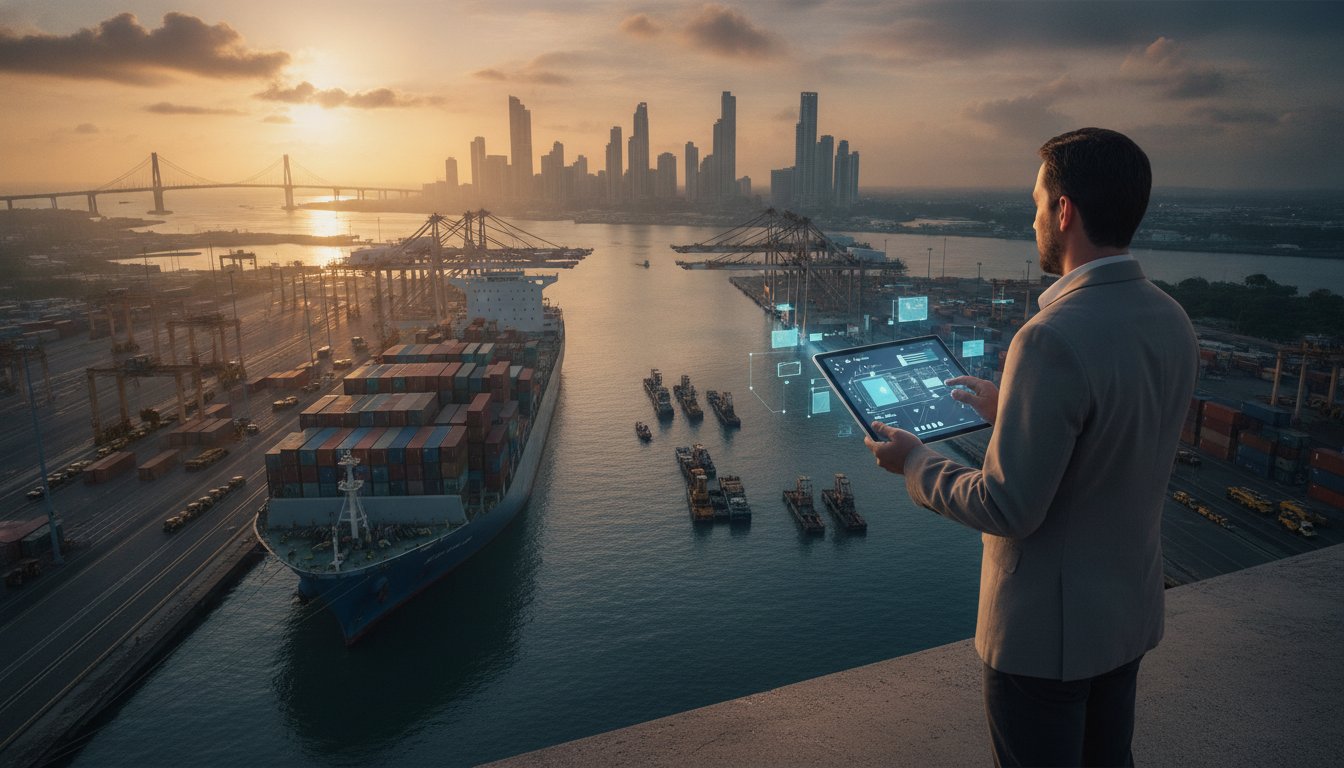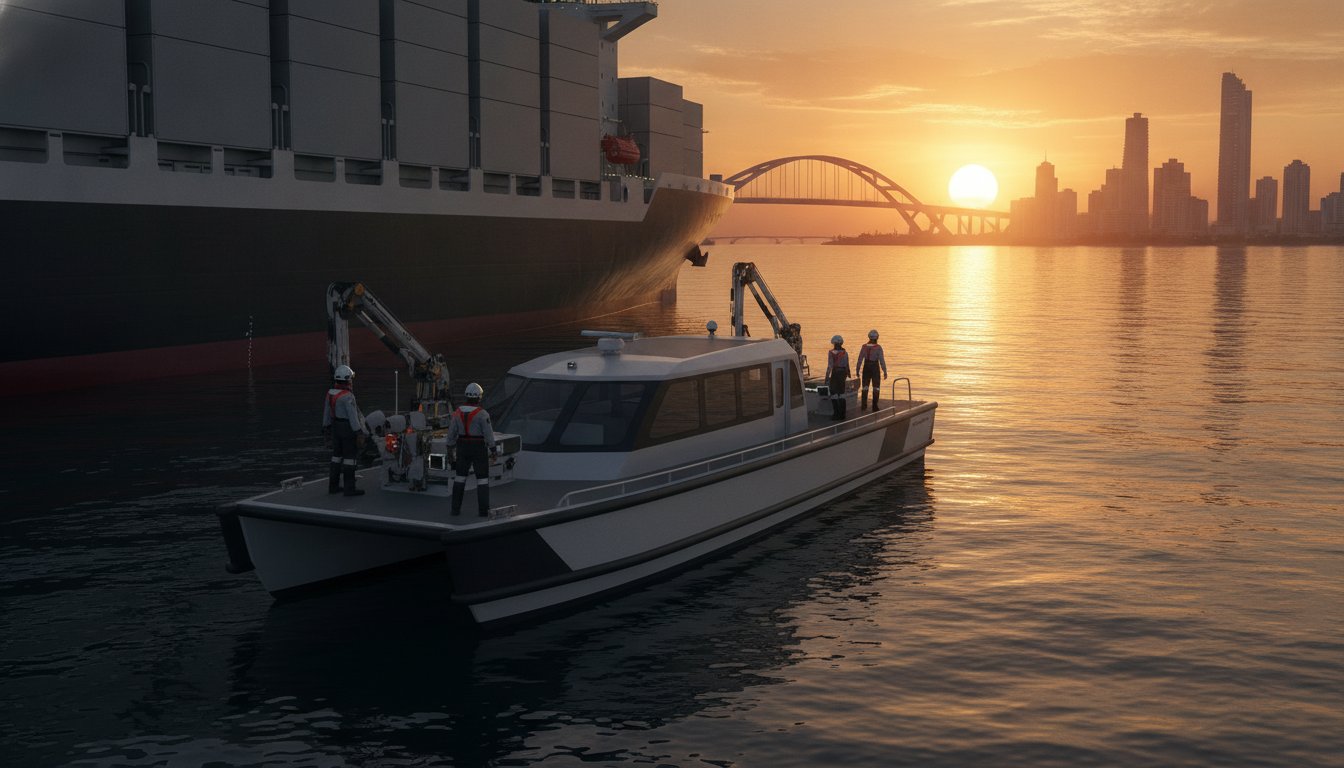


In 2026, a Panama Canal agent is no longer just a vendor; they’re your primary line of defense against $100,000 booking errors and skyrocketing auction premiums. Understanding how to choose a ship agent for Panama Canal transit has become a critical risk-management decision rather than a routine administrative task. You likely feel the mounting pressure of strict 96-hour VUMPA windows. The frustration of opaque disbursement accounts and unexpected ACP fines is a constant concern. It’s difficult to maintain oversight from a distance.
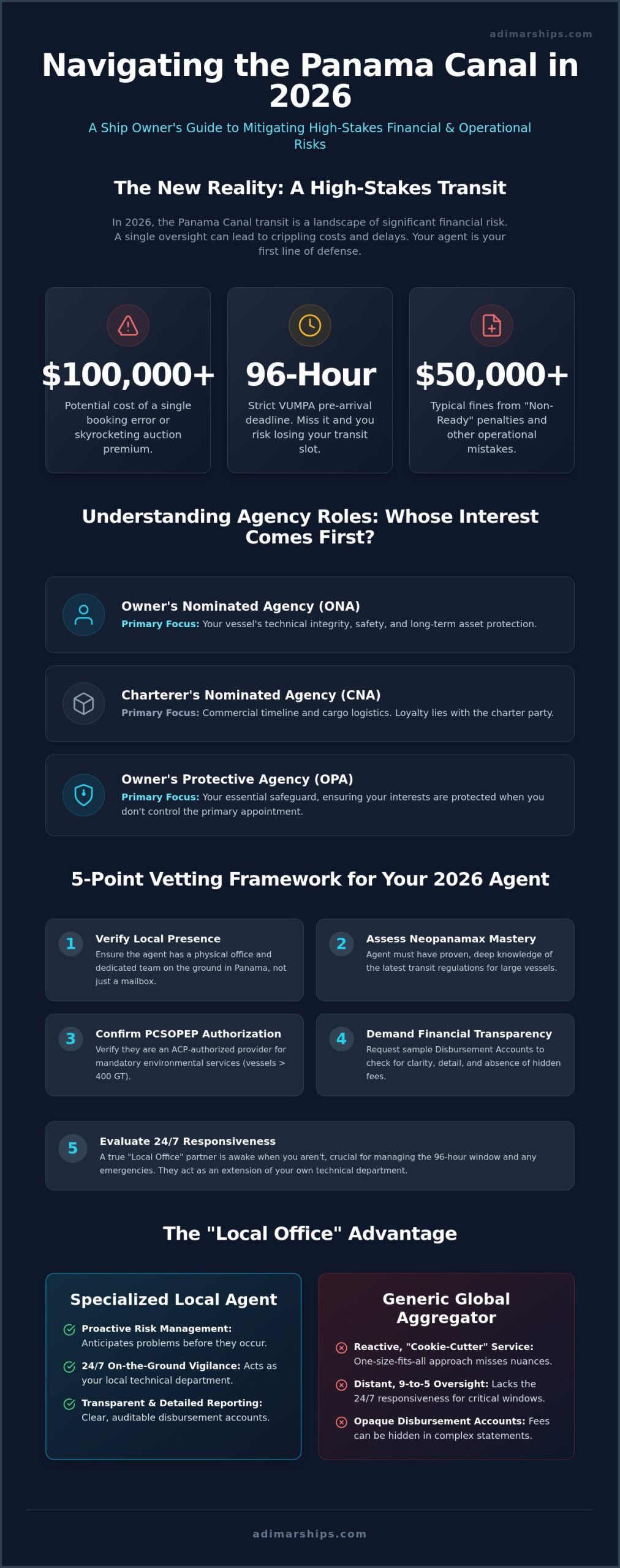
We’re here to help you regain control. This guide provides an expert vetting framework to ensure your maritime partner offers the vigilance and local expertise needed for a fine-free transit. You’ll learn how to evaluate agents based on 2026 regulatory compliance, PCSOPEP authorization, and their ability to act as your dedicated eyes on the ground in Panama. We’ll show you how to secure a partnership that prioritizes transparency and operational security for every mile of the Canal.
Key Takeaways
- Learn why the complex 2026 regulatory environment makes selecting a specialized agent a critical financial decision to avoid $50,000 operational errors.
- Discover how to choose a ship agent for Panama Canal transit by distinguishing between Owner’s, Charterer’s, and Protective agency roles to safeguard your specific interests.
- Utilize our 5-point vetting framework to verify an agent’s physical local presence and their mastery of the latest Neopanamax transit regulations.
- Understand the mandatory PCSOPEP requirements for vessels over 400 GT and how to confirm your agent is an ACP-authorized environmental service provider.
- Identify the “local office” advantage and how a vigilant partner manages the 96-hour pre-arrival window to eliminate the risk of unexpected ACP fines.
The Strategic Importance of Your Panama Canal Agent in 2026
The maritime landscape at the Panama Canal has shifted. In 2026, operational efficiency isn’t just a goal; it’s a financial necessity. A single administrative oversight can result in a $50,000 mistake, often manifesting as lost booking fees or “Non-Ready” penalties. Your agent acts as the vital buffer between your vessel and the Panama Canal Authority (ACP). They don’t just file paperwork. They manage risk. As global trade routes face increasing pressure, understanding how to choose a ship agent for Panama Canal transit becomes a decision that impacts your bottom line.
The Neopanamax era requires more than simple logistics. It demands local vigilance. When a vessel arrives at the locks, every minute counts. If your agent fails to verify equipment compliance or misses a VUMPA deadline, the ACP won’t hesitate to bump your ship from its slot. This isn’t just about moving cargo. It’s about protecting your asset from the volatility of the current booking system. You need a partner who anticipates problems before the pilot boards.
The Financial Impact of Agency Expertise
Choosing a specialist over a generic global aggregator provides a measurable return on investment. While a global firm might offer a lower initial fee, they often lack the deep local ties needed to navigate sudden shifts in ACP regulations. Expert scheduling prevents the accumulation of costly tugboat surcharges. These fees can exceed $3,500 per unit for vessel deficiencies. A specialized agent ensures your vessel meets all technical requirements to avoid these unnecessary expenses.
A specialized agent provides real-time interpretation of “Notices to Shipping.” These documents change frequently. A local expert anticipates these changes, ensuring your vessel is prepared, including the mandatory appointment of a PCSOPEP Authorized Person for vessels over 400 GT. This proactive approach eliminates idle time and ensures your transit remains within budget.
Defining the “Local Office” Concept
Your ship agent shouldn’t be a distant service provider. They must function as an extension of your own technical department. This “Local Office” advantage means having a team on the ground in Panama City that is awake when you are not. They provide 24/7 responsiveness, which is crucial for meeting the 96-hour pre-arrival window. When how to choose a ship agent for Panama Canal transit is the question, the answer lies in their physical presence at the ports.
Generic aggregators often use a “cookie-cutter” approach. They treat every vessel the same. In contrast, a dedicated local representative understands the specific needs of an Owner’s Nominated Agency. They prioritize your vessel’s interests above all else. This level of dedication separates a smooth transit from a logistical nightmare. You deserve a partner who watches over your ship with the same care you do.
Understanding Agency Roles: Owner’s vs. Charterer’s vs. Protective
Navigating the Canal involves multiple stakeholders with often conflicting priorities. A Charterer’s Nominated Agency (CNA) focuses on the commercial timeline and cargo logistics. Their primary loyalty lies with the charter party’s cargo requirements. Conversely, the ship owner’s priorities center on technical safety, long-term asset protection, and crew welfare. These objectives don’t always align. Knowing the specific role of each representative is a fundamental part of how to choose a ship agent for Panama Canal transit to ensure your asset isn’t compromised by commercial pressure.
While the CNA manages the commercial schedule, an Owner’s Protective Agency (OPA) serves as a necessary safeguard for your vessel. This role is vital when you don’t control the primary appointment. It ensures that technical maintenance and safety standards aren’t sidelined for the sake of a cargo deadline. Appointing a dedicated local expert like Adimar Shipping, Inc. allows you to delegate complex oversight with total confidence that your interests remain the priority.
The Owner’s Nominated Agency (ONA)
Appointing an Owner’s Nominated Agency ensures your vessel’s technical integrity is never sidelined. This agent manages critical husbandry services, secure crew changes, and Cash to Master (CTM) deliveries. They also verify that the vessel strictly adheres to the Panama Canal Authority’s vessel requirements. Without this specialized oversight, you risk a primary agent overlooking technical nuances that lead to avoidable fines. In the context of how to choose a ship agent for Panama Canal transit, the ONA is your most direct line of defense for the ship.
The Protective Agency (OPA) Advantage
When the charterer holds the right to appoint the agent, an Owner’s Protective Agency (OPA) acts as your independent auditor. They provide a second pair of eyes to scrutinize disbursement accounts (D/A). They monitor port costs, pilotage fees, and canal charges to ensure you aren’t overcharged for services. For high-value Neopanamax transits, this level of double-checking is standard industry practice. It removes the lack of transparency often found in generic agency relationships and ensures every dollar spent is documented and necessary.
A 5-Point Vetting Framework for Choosing Your 2026 Agent
Selecting a maritime partner is more than a box-ticking exercise. It’s about finding a vigilant representative who understands the high stakes of the 2026 maritime environment. When you evaluate how to choose a ship agent for Panama Canal transit, use this 5-point framework to ensure your vessel receives the oversight it deserves. A generic aggregator might provide a lower initial quote, but they often lack the local presence required to handle sudden operational shifts. Your selection process should prioritize these five critical criteria:
- Criterion 1: Local Physical Presence and ACP Relationships. Your agent must have a physical office in Panama City. This allows for direct, face-to-face communication with the Panama Canal Authority (ACP) and port officials.
- Criterion 2: Specialized Knowledge of 2026 Neopanamax Regulations. The locks have specific requirements for bridge visibility and mooring. Your agent must verify your ship meets these standards before you reach the 96-hour pre-arrival window.
- Criterion 3: Financial Transparency and D/A Accuracy. Opaque billing is a major pain point. Demand an agent that provides clear, line-item Disbursement Accounts (D/A) without hidden markups or “administrative” surcharges.
- Criterion 4: Comprehensive Husbandry Services Capabilities. Beyond the transit, you need support for crew changes, medical assistance, and spare parts delivery. A full-service agent manages these logistical layers seamlessly.
- Criterion 5: Environmental Compliance (PCSOPEP) Authorization. All vessels over 400 gross tons must have an authorized person for the Panama Canal Shipboard Oil Pollution Emergency Plan. Ensure your agent is an ACP-authorized provider.
Vetting for Technical and Regulatory Expertise
Does the agent truly understand the specific bridge visibility and mooring requirements for 2026? These technical nuances are where many transits fail. You should ask potential partners how they manage the VUMPA (Panama Maritime Single Window) documentation flow. A capable agent doesn’t just upload files; they audit them for accuracy. It’s helpful to ask for examples of how they’ve handled “non-compliance” disputes with the ACP in the past. Their ability to negotiate and resolve technical issues on the ground is what prevents a vessel from being declared “Non-Ready.”
Assessing Financial Integrity and Communication
Transparency in Disbursement Accounts is non-negotiable. Many global firms use “cookie-cutter” templates that hide significant markups on local services. Real-time reporting during the 96-hour pre-arrival window is essential for cost management. If an agent can’t provide immediate updates, you’re at risk of unexpected fees. A dedicated 24/7 Operations Desk is a requirement, not a luxury. This ensures that when a challenge arises in the middle of the night, you have a professional problem-solver ready to act. Clear communication is the foundation of trust.
Critical Compliance Factors: PCSOPEP and Environmental Mandates
Environmental compliance has become a central pillar of maritime operations. For any vessel over 400 gross tons, appointing a PCSOPEP Authorized Person is a mandatory legal requirement. This isn’t just a formality. It’s a critical safety mandate enforced by the Panama Canal Authority (ACP). If your agent isn’t an authorized environmental service provider, you face the risk of severe delays and heavy fines. When you evaluate how to choose a ship agent for Panama Canal transit, you must verify their standing with the ACP’s environmental division. Your agent must be a compliance specialist who understands the nuances of the Panama Canal Shipboard Oil Pollution Emergency Plan.
Managing ship waste and bunkering in Panama requires strict adherence to 2026 guidelines. The ACP has intensified its oversight of fuel quality and waste disposal protocols. A compliance specialist ensures every operation remains within these narrow legal margins. They act as your vigilant eyes, preventing accidental spills or documentation errors that could tarnish your environmental reputation. This oversight is vital for protecting both your vessel and your corporate standing in a strictly regulated zone.
The Authorized Person (AP) Selection
Bundling your ship agency and PCSOPEP AP services is a strategic move. It creates a single point of accountability and streamlines communication during high-pressure situations. You need an agent whose emergency response protocols are tested and ready. Their local readiness determines how quickly a situation is contained before it escalates into a major incident. A seamless Panama Canal transit depends on this background security. Your agent should manage the VUMPA submission for environmental compliance at least 96 hours before arrival. If you want to ensure your vessel meets every safety mandate, consult with an authorized PCSOPEP provider today.
Navigating New 2026 Green Incentives
A proactive agent does more than avoid fines. They help you qualify for ACP “Green Connection” discounts. These incentives reward vessels with high environmental standards and efficient designs. Your agent should guide you through the complexities of hull cleanliness and ballast water documentation required for these programs. In 2026, vigilance includes protecting your bottom line through these green rewards. An experienced partner ensures your technical data is submitted accurately to maximize these savings. They act as a bridge between your technical department and the ACP’s environmental incentives team.
Adimar Shipping, Inc.: Your Vigilant Partner at the Panama Canal
Since 1993, Adimar Shipping, Inc. has served as a specialized local office for ship owners and operators navigating the Isthmus. We don’t just process paperwork. We act as your vigilant eyes and ears on the ground in Panama City. When you decide how to choose a ship agent for Panama Canal transit, you need a partner that treats your vessel as a priority rather than a line item in a global database. Our team provides high-touch, personalized agency services that eliminate the confusion often associated with shifting ACP regulations and digital VUMPA submissions.
Our “Local Office” advantage means we function as a seamless extension of your technical department. We understand the high stakes of the 2026 maritime environment. A single oversight can derail a schedule and inflate costs. Adimar Shipping, Inc. offers 24/7 operational support to ensure every requirement is met well before your ship reaches Canal waters. By delegating these specialized tasks to our experienced team, you gain the operational freedom to focus on your fleet’s broader commercial goals while we handle the local details with precision.
Why Specialized Agency Matters
At a large global firm, your vessel is often just one of thousands. At Adimar Shipping, Inc., your transit is our primary focus. This specialized approach allows us to maintain strict ethical standards and absolute financial transparency in every Disbursement Account. We believe trust is built through clear communication and the elimination of hidden markups. Our commitment to these values has sustained our reputation for over three decades.
Consider the value of local vigilance in preventing financial loss. In a recent case, our ship agency Panama team identified a technical discrepancy in a vessel’s bridge visibility documentation during a pre-arrival audit. By coordinating an immediate local correction before the ACP inspection, Adimar Shipping, Inc. saved the client from a “Non-Ready” status and a resulting $20,000 fine. This level of proactive oversight is the hallmark of a true maritime partner. It’s the difference between merely reacting to problems and preventing them entirely.
Contact Adimar Shipping, Inc. for Your 2026 Transit
Securing a reliable local representative is the most important step in your transit planning. We invite you to request a customized quote for Owner’s or Charterer’s representation tailored to your specific vessel type and schedule. Beyond standard agency functions, Adimar Shipping, Inc. can also help you secure your mandatory PCSOPEP Authorized Person contract to ensure full environmental compliance. Don’t leave your transit to chance with a generic provider. Contact Adimar Shipping, Inc. for expert Panama Canal representation and experience the security of having a vigilant partner at the Canal.
Mastering the 2026 Transit Landscape
The shift toward stricter environmental mandates and complex booking systems means your choice of representative defines your operational success. Efficiency in 2026 requires more than just meeting deadlines; it requires a partner who anticipates the ACP’s evolving technical requirements. By prioritizing local vigilance over global brand size, you protect your vessel from the volatility of the current maritime environment.
When you evaluate how to choose a ship agent for Panama Canal transit, focus on specialized compliance and a proven local track record. Adimar Shipping, Inc. has provided this level of security as a dedicated local representative since 1993. As an Authorized PCSOPEP Provider, we ensure your vessel meets every safety and environmental standard before it reaches the locks. We’ve built our reputation on financial transparency and the specialized oversight that only a local expert can provide.
Don’t leave your high-value transit to a generic aggregator that lacks a physical presence at the ports. Secure your 2026 Panama Canal Ship Agent today and protect your fleet with the experienced oversight of a dedicated specialist. We’re ready to act as your vigilant partner at every step of the journey.
Frequently Asked Questions
Is it mandatory to have a ship agent for a Panama Canal transit?
Yes, it’s mandatory. The Panama Canal Authority (ACP) requires every vessel to be represented by a locally registered ship agent. This agent is responsible for all official notifications, the payment of tolls, and guaranteeing financial responsibility for the vessel. Without a registered agent, a ship cannot be scheduled for transit or enter Canal waters.
What is the difference between a port agent and a Panama Canal transit agent?
A port agent primarily handles cargo operations, berthing, and stevedoring at specific terminals. In contrast, a Panama Canal transit agent specializes in the unique regulatory framework of the Canal itself. This includes managing admeasurement, toll calculations, and transit slot bookings. While some firms offer both, the technical requirements for a Canal transit are much more stringent than standard port calls.
How do I verify if a ship agent is authorized by the Panama Canal Authority (ACP)?
You can verify an agent’s status by requesting their ACP-issued license number and checking it against the official list of authorized maritime agencies. It’s also vital to confirm their authorization for specialized environmental services like PCSOPEP representation. Choosing a partner with a long-standing local presence since 1993 provides an extra layer of verified reliability and deep-rooted relationships with the Authority.
What are the typical fees for a ship agent in Panama in 2026?
Fees vary based on vessel size, type, and the complexity of the required husbandry services. Most operators find that the cost of a specialized agent is a small fraction of the potential fines for non-compliance. When evaluating how to choose a ship agent for Panama Canal transit, you should prioritize transparency in the Disbursement Account (D/A) over the lowest initial quote to avoid hidden administrative markups.
Can one agent handle both husbandry and canal transit clearance?
What is the “96-hour rule” and how does my agent manage it?
The “96-hour rule” requires all vessels to submit their cargo declarations and PCSOPEP information through the VUMPA system at least 96 hours before arrival. Your agent manages this by auditing the vessel’s data for accuracy before the deadline. This proactive oversight prevents the ACP from assigning a “Non-Ready” status, which would lead to lost slots and significant delays.
Why should I appoint an Owner’s Protective Agent if the charterer already has an agent?
You should appoint an Owner’s Protective Agent (OPA) to safeguard your specific technical and financial interests when the charterer controls the primary appointment. The OPA acts as an independent auditor, reviewing the primary agent’s expenses and ensuring husbandry tasks are handled correctly. It’s a critical step in how to choose a ship agent for Panama Canal transit that protects the ship owner from opaque billing and commercial bias.
What happens if my ship agent makes a mistake in the VUMPA documentation?
Errors in VUMPA documentation often lead to immediate financial penalties or the cancellation of your transit slot. If an agent fails to report accurate dimensions or equipment status, the ACP may declare the vessel “Non-Ready” upon arrival. This is why you need a partner with deep local expertise to verify every data point before submission, ensuring a fine-free and predictable transit experience.