
A single data entry error in your digital filing can sideline a multi-million dollar cargo vessel for days, turning a routine transit into a costly logistical crisis. While the Panama Canal Authority (ACP) utilizes advanced automation to move water and ships, these systems are unforgiving to those who lack precise local oversight. Effective Panama Canal vessel traffic management is no longer just about following a schedule; it’s about navigating a complex web of 2026 regulatory updates and digital requirements like VUMPA and EVTMS without hesitation.
You’ve likely felt the stress of unpredictable transit windows or the looming fear of heavy fines for non-compliance. It’s a high-stakes environment where even small coordination gaps lead to significant operational setbacks. We’re here to show you how to regain control of your transit timeline. This guide provides a clear roadmap to mastering the 2026 traffic protocols and explains how expert ship agency coordination prevents delays. We’ll break down the latest digital filing standards, scheduling efficiencies, and the vital role of local vigilance in ensuring your vessel moves through the locks without a hitch.
Key Takeaways
- Understand how the Maritime Traffic Control Center (CCTM) uses integrated technology to monitor the 50-mile waterway every hour of the day.
- Master the technical requirements of Panama Canal vessel traffic management to ensure your digital filings in VUMPA and EVTMS are flawless.
- Learn how to navigate slot availability and environmental factors like Gatun Lake water levels that can impact your vessel’s draft and schedule.
- Discover why a proactive ship agent acts as your eyes on the ground to coordinate seamlessly with ACP pilots and tug operators.
- Reduce your operational costs and avoid non-compliance fines by delegating complex logistics to a partner who understands 2026 maritime protocols.
What is Panama Canal Vessel Traffic Management?
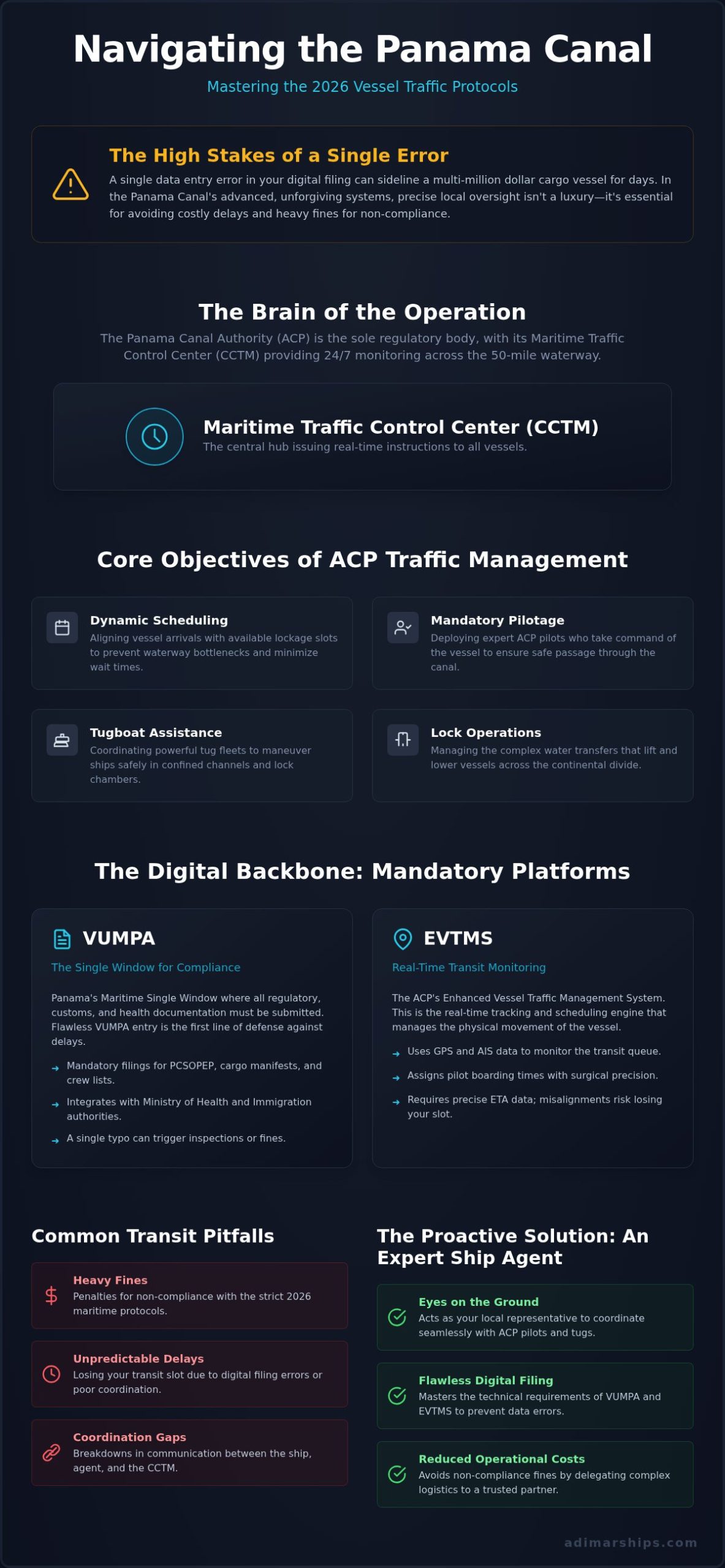
Panama Canal vessel traffic management is the engine behind the waterway’s efficiency. It’s an integrated ecosystem of advanced technology, specialized personnel, and rigid regulations that govern every vessel movement across the 50-mile span. The Maritime Traffic Control Center (CCTM) serves as the brain of this operation, providing 24/7 monitoring to ensure every transit is executed with precision. By 2026, these protocols have evolved significantly from the pre-expansion era. The introduction of the Neo-Panamax locks required a shift from manual-heavy processes to data-driven scheduling that accounts for increased vessel size, tighter margins, and real-time environmental data.
The Core Objectives of the ACP Traffic System
The primary goal is maximizing waterway throughput to minimize wait times, especially for the larger Neo-Panamax vessels that dominate modern trade. Safety remains paramount, achieved through strict separation of vessel classes and precise timing. Traffic management is the delicate balance between maximizing transit volume and maintaining absolute environmental safety. To reach these goals, the system coordinates several moving parts:
- Dynamic Scheduling: Aligning vessel arrivals with available lockage slots to prevent bottlenecks.
- Mandatory Pilotage: Deploying expert ACP pilots to take command of the vessel during the transit.
- Tugboat Assistance: Coordinating powerful tug fleets to maneuver ships safely in confined channels and lock chambers.
- Lock Operations: Managing the complex water transfers that lift vessels across the continental divide.
Who Governs the Traffic?
The Panama Canal Authority (ACP) is the sole regulatory body responsible for these waters. Their authority is absolute, and compliance isn’t optional. The CCTM interacts directly with vessel masters, issuing real-time instructions that must be followed to the letter. This governing body enforces annual maritime regulations that dictate everything from equipment requirements to arrival times. For operators, understanding this hierarchy is vital. You aren’t just dealing with a service provider; you’re operating within a strictly controlled maritime corridor where the ACP’s “Ready-for-Transit” status is the only metric that matters.
Effective Panama Canal vessel traffic management relies on the constant flow of information between the ship, the agent, and the CCTM. Any breakdown in this communication can lead to your vessel being sidelined, resulting in expensive delays. In the following sections, we’ll explore the digital tools that make this coordination possible and how to navigate the challenges that often arise in this high-pressure environment.
The Digital Backbone: EVTMS and VUMPA Explained
Modern Panama Canal vessel traffic management relies on two sophisticated platforms: EVTMS and VUMPA. These aren’t just software tools; they’re the mandatory digital gateways for every ship entering Panamanian waters. By 2026, the ACP has tightened requirements for digital Estimated Time of Arrival (ETA) notifications. Precise reporting is now critical. If your digital data doesn’t align with your physical position, you risk losing your slot.
VUMPA: The Single Window for Compliance
VUMPA is Panama’s Maritime Single Window. It’s the central portal where all regulatory and customs documentation must be submitted. This includes mandatory filings for PCSOPEP (Panama Canal Shipboard Oil Pollution Emergency Plan), cargo manifests, and crew lists. The system integrates directly with the Ministry of Health and Immigration authorities to streamline clearances. Error-free VUMPA entry is your first defense against traffic delays. A single typo in a container count or a crew passport number can trigger an inspection or a fine. It’s often safer to delegate these technical filings to an experienced local partner who knows the system’s quirks.
EVTMS: Real-Time Transit Monitoring
While VUMPA handles the paperwork, the Enhanced Vessel Traffic Management System (EVTMS) manages the movement. This is the ACP’s real-time tracking and scheduling engine. It uses GPS and AIS data to monitor the transit queue and assign pilot boarding times with surgical precision. Through EVTMS, operators can access arrival information reports and harbor assistance data. Understanding these scheduling windows is easier when you consult a comprehensive Panama Canal transit guide. The system ensures that tugboat assistance and lock operations are perfectly timed to prevent waterway congestion.
These two systems communicate constantly. VUMPA confirms your ship is legally cleared, while EVTMS confirms it’s physically ready. When these data points sync, the CCTM assigns a definitive transit slot. In the 2026 landscape, the margin for error is zero. Automation has optimized Panama Canal vessel traffic management, but it has also made the system less tolerant of manual mistakes. Ensuring your vessel is “Ready-for-Transit” in both the digital and physical realms is the only way to maintain your schedule.
Common Challenges in Vessel Traffic Coordination
Panama Canal vessel traffic management isn’t a static process. It’s a high-stakes competition for space and time where slot availability is often the biggest hurdle. The booking auction system is intensely competitive, especially for Neo-Panamax vessels. If you don’t secure a slot through the auction, you face the “non-booked” queue. This can mean waiting days at anchor, which drains your budget and disrupts global supply chains. Staying in the queue requires constant vigilance and a vessel that’s 100% compliant with ACP standards.
Managing Transit Delays and Slot Losses
A missed slot isn’t just a minor delay; it’s a massive financial hit. When a vessel loses its position due to arrival delays or paperwork errors, the costs escalate quickly. The ACP enforces a strict “Ready-for-Transit” status that leaves no room for error. If your ship has a mechanical failure or a deficiency during the approach, the CCTM will immediately sideline you to keep the rest of the traffic moving. Understanding the Panama Canal traffic delays that commonly plague operators helps you build a necessary buffer into your schedule. Proactive maintenance and clear communication with your agent are the best ways to mitigate these risks and protect your transit window.
Weather and Seasonal Traffic Fluctuations
Nature often dictates the pace of the waterway. Dense fog in the Culebra Cut can halt traffic for hours, creating a ripple effect through the entire daily schedule. Seasonal surges also play a role. During peak months, the high volume of LNG and LPG carriers increases competition for every available minute of lock time. Additionally, Gatun Lake water levels are a constant variable that operators must watch closely. Draft restrictions directly influence the ACP’s daily transit capacity. When water levels drop, the number of daily transit slots usually follows, making Panama Canal vessel traffic management even more restrictive for heavy-load carriers. Operators must be prepared to adjust cargo levels or wait times based on these environmental shifts.
The Role of the Ship Agent in Traffic Management
Software manages the data, but humans manage the exceptions. An experienced ship agent acts as the essential liaison between your vessel and the ACP’s complex operational hierarchy. We serve as your 24/7 point of contact for the CCTM and ACP Operations, ensuring that the information flow never stops. By managing VUMPA and EVTMS inputs with surgical precision, we secure your “Ready-for-Transit” status. This status is the only way to keep your vessel moving through the queue. Without a local expert to verify these digital inputs, a ship risks being sidelined for the smallest administrative oversight.
Pre-Arrival Coordination and Documentation
Success begins long before your vessel reaches the breakwater. We verify that all Panama Canal regulations are fully met at least 96 hours before arrival. This window is critical. During this time, we order pilots, tugs, and line-handlers through official ACP portals. We also navigate the high-pressure booking and auction systems to secure the best possible transit slots. Our role is to anticipate bottlenecks before they happen, acting as your vigilant eyes on the ground to ensure every box is checked.
In-Transit Monitoring and Support
Once the transit begins, our vigilance intensifies. We provide real-time updates as your vessel moves through each lock set, giving you total visibility over the operation. Efficient Panama Canal vessel traffic management also requires balancing husbandry needs with the transit schedule. We manage crew changes and spare parts deliveries during the transit window without causing a single second of delay. This is where the value of an owner’s nominated agency becomes clear. We safeguard your interests during traffic peaks, ensuring that husbandry services don’t compromise your slot or your safety.
Beyond logistics, we act as a protective buffer between the ship owner and the risk of ACP regulatory fines. Errors in documentation or timing are expensive in Panama. We ensure every requirement is satisfied so you can focus on your broader fleet operations. Our team monitors the traffic flow constantly, ready to react if the ACP changes a boarding time or if weather conditions shift. We don’t just react to the schedule; we anticipate changes to protect your bottom line. If you need a partner to handle these complexities with total transparency and local expertise, contact our ship agency team today for expert coordination.
Optimizing Your Transit with Adimar Shipping
Success in the waterway depends on more than just software. It requires a partner who anticipates the ACP’s moves before they happen. Adimar Shipping, Inc. provides a proactive approach to Panama Canal vessel traffic management that moves beyond simple reaction. We utilize our deep local knowledge of both official protocols and informal traffic dynamics to keep your vessel on schedule. Whether you’re navigating the Neo-Panamax locks or the original Panamax chambers, our team ensures your interests are protected at every turn. We don’t just follow the schedule; we actively manage the variables that threaten it.
Why Adimar Shipping, Inc. is Your Local Office in Panama
We act as a seamless extension of your own operations team. Our experience managing complex transits allows us to navigate the unique challenges of the expanded canal with absolute confidence. We place a dedicated focus on minimizing “idle time” in the Pacific or Atlantic anchorage areas. Every hour spent waiting at anchor is a direct hit to your bottom line. By coordinating precisely with the CCTM and monitoring real-time queue shifts, we aim for transitions that reduce fuel consumption and operational overhead.
Transparency is the foundation of our service model. We maintain a strict commitment to ethical standards and clear communication regarding all port fees and ACP tariffs. You won’t find hidden costs or vague reporting in our agency files. Instead, you get a vigilant partner who serves as your eyes on the ground, providing the security and reliability needed in high-stakes maritime logistics. We provide tailored representation for both owners and charterers, ensuring that specific contract requirements are met without compromising the transit timeline.
Secure Your 2026 Transit Today
Preparing for a voyage through the Panama Canal requires early intervention and expert coordination. You can initiate formal representation for your upcoming 2026 transit by contacting our Panama City office. Combining traffic management with specialized husbandry services creates a unified operational flow that further reduces potential delays. We handle the technical filings and local logistics so your crew can focus on the voyage itself.
Our team is ready to provide a customized transit cost estimate based on the latest 2026 ACP maritime tariffs. Don’t leave your vessel’s schedule to chance in an increasingly competitive environment. Reach out to Adimar Shipping, Inc. to secure a partner who understands that in Panama, timing is everything. We’re here to ensure your transit is seamless, safe, and cost-effective from the first ETA notification to the final lockage.
Mastering Your 2026 Transit Strategy
Navigating the Panama Canal in 2026 requires more than just following a route; it demands a shift from manual oversight to total digital mastery. The waterway’s efficiency has reached new levels, but the system is now less forgiving of administrative or technical errors. Understanding the nuances of Panama Canal vessel traffic management ensures your vessel remains a priority in the transit queue rather than a costly exception on the sideline. It’s a high-stakes environment where local expertise makes the difference between a seamless transit and an expensive delay.
By mastering platforms like VUMPA and EVTMS and anticipating environmental shifts before they impact your draft, you can significantly reduce operational overhead. As an Authorized PCSOPEP Person with a specialized focus on Neo-Panamax efficiency, Adimar Shipping provides the 24/7 local coordination your fleet needs. We act as your vigilant eyes on the ground, protecting your interests from the first notification to the final lockage. We’ve spent years refining our processes to ensure your vessel moves through the locks without a hitch.
Partner with Adimar Shipping for Expert Panama Canal Traffic Management and ensure your next transit is defined by precision. Your success in the waterway is our primary mission, and we’re ready to help you navigate every complexity with confidence. We don’t just manage your transit; we safeguard your bottom line.
Frequently Asked Questions
What is the Enhanced Vessel Traffic Management System (EVTMS)?
The EVTMS is the primary real-time tracking and scheduling engine used by the Panama Canal Authority. It integrates GPS, AIS, and radar data to monitor every vessel within the waterway’s jurisdiction. This system allows the Maritime Traffic Control Center to assign pilot boarding times and tug assistance with surgical precision. It’s the essential tool for maintaining safety and flow across the 50-mile transit corridor.
How do I request access to the Panama Canal’s traffic systems?
Access to systems like EVTMS and VUMPA is restricted to authorized ship agents and registered maritime companies. To interact with these portals, an entity must be officially recognized by the ACP and hold valid digital credentials. Most ship owners delegate this responsibility to their local agent. We manage the digital identity and technical filings on your behalf to ensure total compliance with 2026 security protocols.
Can a vessel transit the Panama Canal without a local ship agent?
No, the ACP requires all commercial vessels to have a local representative to facilitate the transit process. An agent is mandatory for managing technical filings, coordinating with the CCTM, and handling the financial guarantees for transit fees. Beyond the legal requirement, the complexity of Panama Canal vessel traffic management makes a local expert necessary. We act as your vigilant eyes on the ground to prevent delays.
What is the difference between VUMPA and EVTMS in Panama?
VUMPA serves as a documentation portal, while EVTMS is an operational movement system. Think of VUMPA as the “single window” for customs, immigration, and cargo manifests. EVTMS is the “live engine” that manages scheduling, pilotage, and real-time vessel positioning. Both platforms must be synchronized to achieve a “Ready-for-Transit” status. Errors in your VUMPA filings will prevent the EVTMS from assigning your vessel a definitive transit slot.
How does the ACP manage traffic during periods of low water levels?
The ACP implements draft restrictions and reduces the number of daily transit slots when Gatun Lake levels drop. This management strategy prioritizes vessels with lower drafts or those that secured slots through the booking auction system. During these periods, traffic management becomes much more competitive and restrictive. We help clients navigate these shifts by providing real-time data on lake levels and advising on cargo adjustments to protect their schedules.
What happens if my vessel misses its scheduled transit slot?
Missing a slot typically results in the vessel being moved to the “non-booked” queue, leading to multi-day wait times at anchor. You may also face administrative fines if the delay wasn’t communicated according to ACP protocols. The traffic systems are rigid; a missed window usually means losing your assigned pilot and tugboat resources. Our team works to prevent this by monitoring your approach and resolving potential issues before they trigger a slot loss.
Are there specific traffic management rules for LNG vessels?
Yes, LNG and LPG carriers are subject to stricter daylight and separation requirements due to the hazardous nature of their cargo. These vessels often utilize dedicated booking windows and must follow specific safety protocols within the Neo-Panamax locks. The CCTM monitors these transits with increased vigilance to ensure waterway security. We specialize in the unique scheduling needs of gas carriers, ensuring they meet every 2026 safety and timing standard.
How much does the ACP charge for vessel traffic services in 2026?
The ACP calculates charges based on vessel dimensions, cargo type, and the specific maritime services required during the transit. These fees are part of the broader 2026 tariff structure and are billed directly through the ship agent’s guarantee account. We provide our clients with transparent, itemized estimates before the vessel arrives. These estimates include pilotage, tugboat assistance, and lockage fees, ensuring total financial transparency throughout the transit process.