
What if your vessel’s time at the cristobal anchorage was a strategic operational window rather than a costly waiting game? For many ship owners, the Atlantic gateway represents a source of logistical friction, defined by the high costs of idle time and the complexity of Atlantic-side husbandry. It’s a valid concern; with Neopanamax draft limits tightening to 14.78 meters and variable Fresh Water Surcharges impacting the bottom line, every hour spent at anchor must be productive.
You deserve a partner who acts as your on-the-ground eyes and ears to simplify these complexities. This guide will help you master the logistics of the Atlantic gateway to ensure efficient transit and husbandry operations. We’ll show you how to minimize waiting times, execute seamless crew changes or bunkering, and maintain strict compliance with current ACP regulations. We’ll explore how to navigate LoTSA 2.0 scheduling and manage the latest tariff adjustments to keep your operations moving without delay.
Key Takeaways
- Understand how to leverage the cristobal anchorage as a strategic staging area situated behind the Atlantic Breakwater for both transit and technical operations.
- Learn how the division of anchorage zones accommodates different vessel sizes and drafts to ensure safe and compliant positioning.
- Discover how to successfully execute essential husbandry services, such as crew changes and bunkering, while awaiting your canal transit slot.
- Master mandatory communication protocols and pilotage requirements to maintain safety and regulatory compliance at the Atlantic gateway.
- Identify how proactive local agency coordination can minimize dwell time and reduce the high costs associated with vessel idle time.
What is the Cristobal Anchorage? The Atlantic Gateway Explained
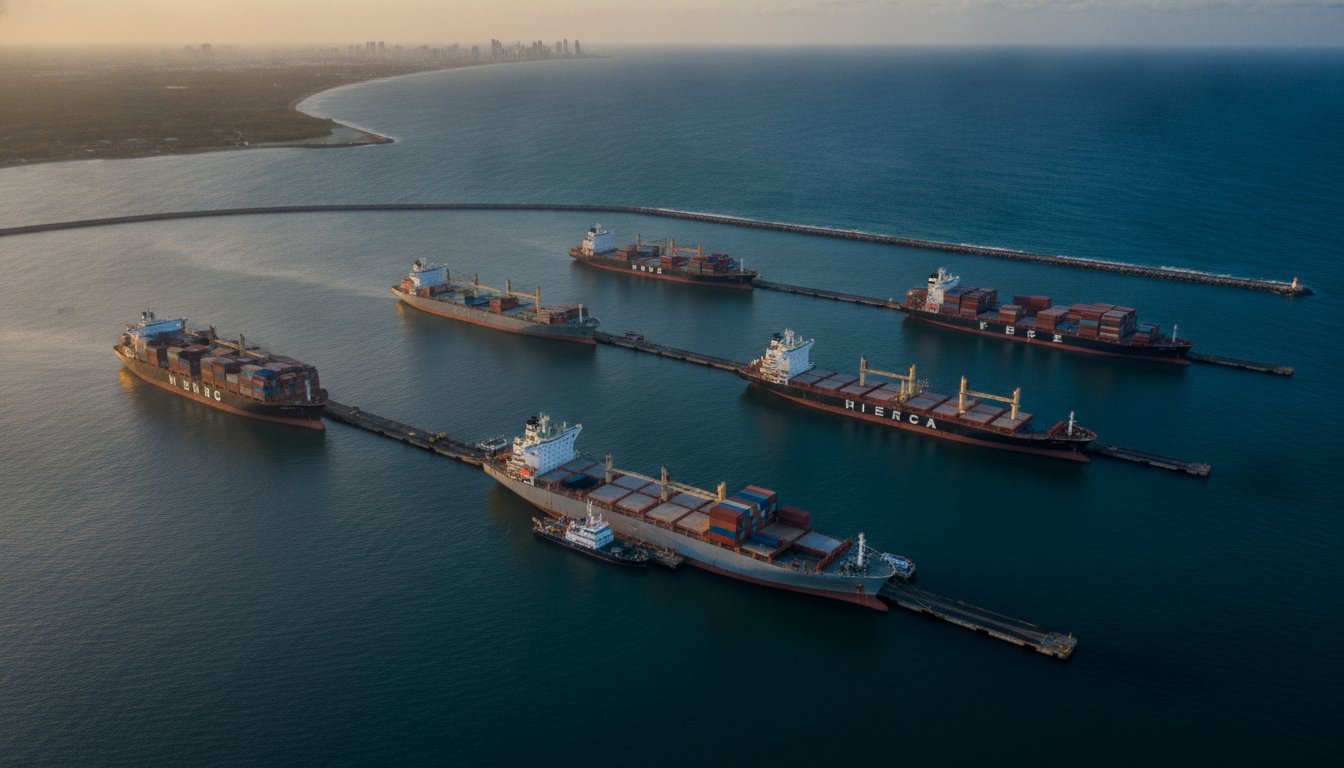
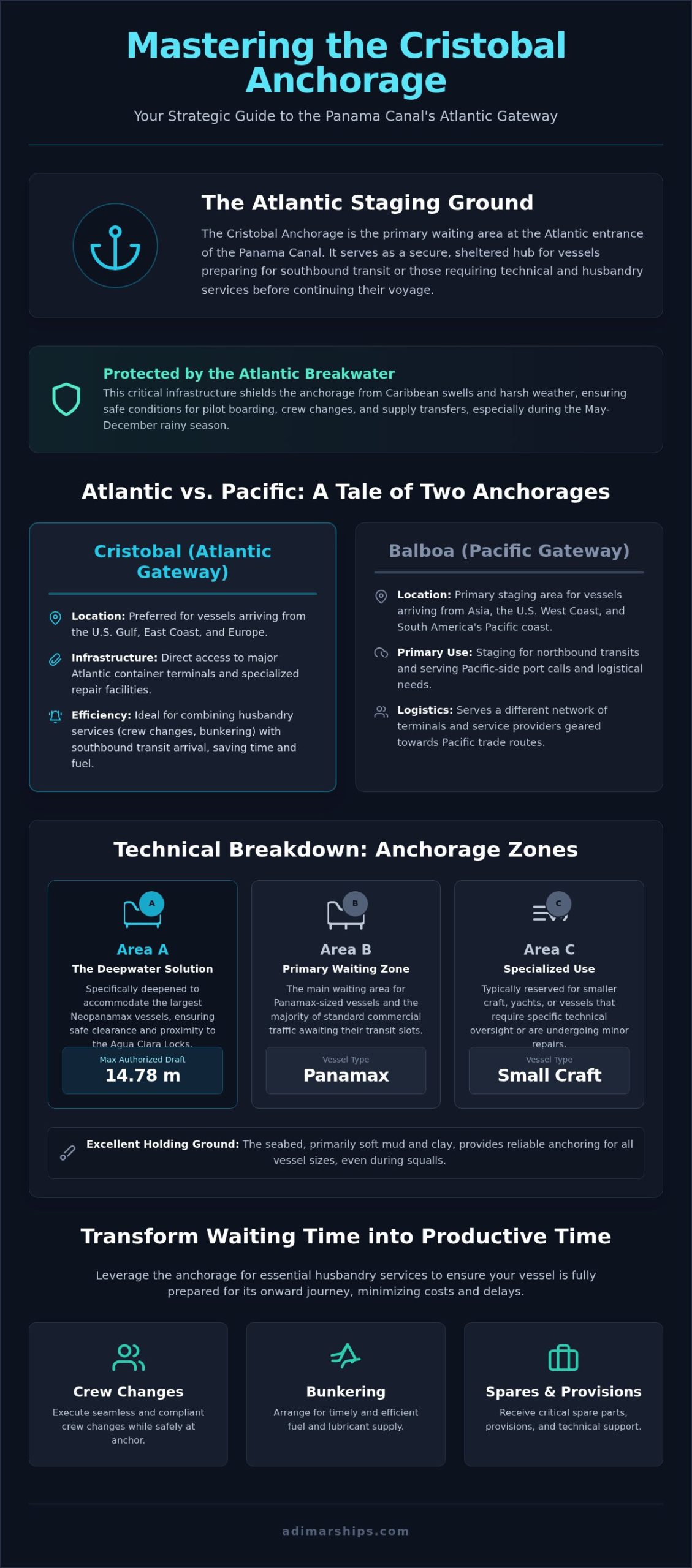
The cristobal anchorage is the primary maritime waiting area located at the Atlantic entrance of the Panama Canal. It provides a secure staging ground for vessels preparing for southbound transits or those calling at Atlantic-side ports. Geographically, it’s strategically situated behind the massive Atlantic Breakwater, adjacent to the historic Port of Cristóbal. This sheltered zone allows ship masters to manage their approach to the locks with precision while coordinating with local authorities. The cristobal anchorage serves as the essential hub for Neopanamax and Panamax vessels awaiting their Panama Canal transit.
The Importance of the Atlantic Breakwater
The Atlantic Breakwater is more than a landmark; it’s a critical piece of maritime infrastructure. It offers vital protection from Caribbean swells and unpredictable weather patterns that can disrupt operations. This shelter ensures safe boarding conditions for canal pilots and husbandry personnel, even when conditions outside the breakwater are rough. During the rainy season, which typically runs from May through December, the anchorage’s protection becomes even more significant for maintaining a steady transit schedule. Without this barrier, transfer operations for spares, provisions, and crew would face frequent delays due to hazardous sea states.
Cristobal vs. Balboa: Atlantic vs. Pacific Logistics
Choosing between the Atlantic and Pacific anchorages often depends on your vessel’s transit direction and specific husbandry requirements. While Balboa serves the Pacific entrance, Cristobal is the preferred site for vessels arriving from the U.S. Gulf, East Coast, or Europe. Logistics vary significantly between the two coasts.
- Infrastructure: Cristobal provides direct access to major Atlantic container terminals and specialized repair facilities that may not be as accessible on the Pacific side.
- Husbandry Efficiency: Many owners schedule crew changes or bunkering at Cristobal to coincide with their southbound transit arrival. This often prevents the need for a second stop on the Pacific side, saving both time and fuel.
- Directionality: Southbound vessels must utilize the Atlantic gateway to enter the Gatun or Agua Clara locks, making it the primary staging point for Atlantic-to-Pacific passage.
Ultimately, the choice is driven by the vessel’s next port of call and the current availability of transit slots. Relying on a local expert to monitor these variables helps prevent unnecessary idle time at either end of the canal. Coordination here is key to ensuring that your vessel doesn’t just wait, but remains productive while at anchor.
Technical Breakdown: Cristobal Anchorage Zones and Depth
The cristobal anchorage operates as a highly organized system of subdivisions. It isn’t a single expanse. Instead, it’s a series of designated zones assigned based on vessel dimensions, draft, and transit status:
- Area A: Specifically deepened to accommodate Neopanamax vessels.
- Area B: The primary waiting zone for Panamax vessels and standard commercial traffic.
- Area C: Typically reserved for smaller craft or vessels requiring specific technical oversight.
The seabed consists primarily of soft mud and clay. This provides excellent holding ground for vessels of all sizes. This reliability is crucial during the Atlantic’s sudden squalls or high-wind events. The Panama Canal Authority (ACP) maintains strict control over these assignments to prevent congestion. Following the Panama Canal Authority regulations ensures that vessels are positioned safely while respecting the specific draft requirements of the day.
Anchorage Area A: The Deepwater Solution
Capacity at the Atlantic gateway saw a significant boost following the deepening project that began in January 2022. This initiative specifically targeted Anchorage Area A to facilitate the growing number of Neopanamax vessels. By increasing the depth, the ACP provided a strategic solution for vessels with deeper drafts to wait in closer proximity to the Agua Clara Locks. As of August 15, 2026, the maximum authorized draft for the Neopanamax locks is 14.78 meters. Area A provides the necessary depth to handle these giants safely. It serves as the primary staging point for the largest container ships and gas carriers. Managing these technical nuances requires a partner who understands the local bathymetry and ACP scheduling.
Inner vs. Outer Anchorage Areas
Vessel movements within the cristobal anchorage are often dictated by operational readiness. The “Outer” anchorage serves as the initial arrival point for vessels awaiting their scheduled transit time. As the transit window approaches, the ACP typically instructs vessels to shift to the “Inner” zones. This move minimizes the distance to the lock entrance. It ensures the vessel is ready for the pilot boarding without delay.
Security remains a top priority in these zones. All areas are strictly monitored for ISPS compliance to protect the vessel and its cargo. While the outer areas offer more space, the inner zones provide enhanced protection and faster access to husbandry services. Coordinating these shifts effectively can save hours of transit time. If you need assistance managing these zone transitions, our ship agency services provide the local oversight necessary to keep your vessel on schedule and in full compliance with local harbor rules.
Operational Capabilities: Transit Waiting vs. Husbandry
Idle time is the enemy of maritime profitability. At the cristobal anchorage, ship owners can transform mandatory waiting periods into productive operational windows. Instead of viewing the transit queue as a delay, savvy operators treat it as a strategic staging ground. By performing husbandry services while awaiting a southbound slot, you eliminate the need for additional port calls. This consolidation reduces launch fees and minimizes the logistical footprint of your Atlantic-side operations.
Coordination is the backbone of these activities. Managing bunker barges, supply launches, and service technicians requires precise timing to avoid interfering with the ACP’s transit schedule. The financial impact of this efficiency is clear. Every hour saved by completing maintenance at anchor directly improves the vessel’s time charter equivalent (TCE) rate. It’s about making the most of every minute spent in Panamanian waters.
Crew Changes and Medical Services at Cristobal
The Atlantic gateway serves as a major hub for crew rotations. Launch services at the cristobal anchorage facilitate safe transfers between the vessel and the Port of Cristobal. Managing these rotations involves more than just boat hire. It requires navigating complex customs and immigration requirements for seafarers entering or exiting Panama. Our role is to ensure all documentation is in order before the launch arrives. We also provide critical support for emergency medical evacuations, ensuring that seafarers receive prompt attention without jeopardizing the vessel’s position in the transit queue.
Bunkering and Provisioning Logistics
Bunkering at anchor is a standard practice at Cristobal. Authorized bunker barges operate within the anchorage zones, providing fuel while the vessel remains in its assigned position. This service often includes fresh water delivery and regulated sludge disposal. Coordinating these deliveries alongside the arrival of critical spare parts requires a vigilant ship agency in Panama. We manage the “last mile” of the supply chain, ensuring that provisions and technical spares reach the ship exactly when needed. This proactive oversight prevents the frustration of missing a transit window because a delivery was poorly timed.
Regulatory Requirements and Safety at Cristobal
Maintaining strict compliance at the cristobal anchorage is essential for a trouble-free transit. The regulatory environment is dynamic and requires constant attention. Vessels must maintain mandatory communication with the Cristobal Signal Station on VHF Channel 12 or 16 upon arrival. This protocol ensures the ACP can monitor vessel traffic and assign positions based on current density. Entering or shifting within these zones requires the presence of an ACP pilot. Even a minor move from the outer to the inner anchorage is a regulated maneuver that demands professional oversight to avoid collision risks or anchor fouling.
Environmental stewardship is equally critical. The Panama Canal is a “No Discharge” zone. This means any discharge of sewage, oily water, or even grey water is strictly prohibited while at anchor. Violations lead to heavy fines and significant transit delays. To navigate these complexities safely, every vessel over 400 GT must designate a PCSOPEP authorized person. This individual serves as the primary contact for oil spill response and ensures the vessel meets all ACP environmental safety standards before transit begins.
Vessel Security and ISPS Compliance
Security at the Atlantic gateway remains a top priority for all operators. The cristobal anchorage typically operates at ISPS Security Level 1, but this can change based on regional alerts. Ship masters must report any suspicious activity or unauthorized boarding attempts immediately to the signal station. The National Aeronaval Service (SENAN) conducts regular patrols to maintain order and protect maritime assets within the breakwater. Having a local agent who understands these security protocols provides an extra layer of protection and reassurance for your crew and cargo.
ACP Advisories and Weather Alerts
The Atlantic side is prone to “Northers.” These high-wind events can create challenging conditions even behind the breakwater. When the ACP issues weather alerts, vessels may be required to keep engines on standby or increase their anchor cable length to prevent dragging. Staying ahead of these advisories is vital for vessel safety. Additionally, current water management strategies in Gatun Lake directly impact your operations. As of August 15, 2026, the maximum authorized draft for Neopanamax vessels is 14.78 meters. Exceeding these limits can result in a vessel being denied entry to the anchorage or forced to lighter cargo at high cost.
Managing these shifting regulations requires constant vigilance and local expertise. If you want to ensure your vessel remains fully compliant and avoids costly fines or delays, contact us to act as your Owner’s Nominated Agency for your next Panama Canal call.
Strategic Agency: How Adimar Shipping Manages Cristobal Operations
Efficiency at the Atlantic entrance isn’t accidental. It’s the result of vigilant local oversight. At the cristobal anchorage, Adimar Shipping acts as your dedicated representative, bridging the gap between your vessel and the Panama Canal Authority. We prioritize proactive monitoring of ACP schedules to minimize dwell time. By anticipating slot changes and lockage sequences, we ensure your vessel is ready to move the moment the pilot boards. This foresight prevents the frustration of idle hours and the high costs associated with missed transit windows.
Acting as the owner’s nominated agency allows us to protect your interests exclusively. We handle the heavy lifting of documentation for incoming vessels, ensuring immediate clearance upon arrival. Our deep roots in the Cristobal port community allow us to navigate local complexities that often frustrate foreign operators. We don’t just process paperwork; we manage relationships to keep your operations fluid and transparent. By delegating these specialized tasks to a knowledgeable partner, you gain the operational freedom to focus on your core maritime business.
Personalized Coordination for Owners and Charterers
We provide real-time updates on vessel position and anchorage status to keep all stakeholders informed. This transparency is crucial for managing the financial aspects of husbandry. We help you prevent overspending by vetting local vendors and consolidating service trips. Precise coordination of launches and bunker barges eliminates the risk of logistical friction. When every hour at anchor carries a price tag, our team focuses on speed and reliability. We act as an extension of your own team, providing a sense of security while your vessel is in Panamanian waters.
Contacting Your Atlantic Panama Partner
Nominating Adimar Shipping for your next transit is a straightforward process that secures your peace of mind. To ensure a smooth arrival at the cristobal anchorage, we recommend following our pre-arrival checklist:
- Submit all required ACP documentation at least 96 hours before arrival.
- Confirm your PCSOPEP authorized person status to ensure environmental compliance.
- Provide a detailed list of required husbandry services to allow for early scheduling.
- Verify your vessel’s current draft against the latest Neopanamax restrictions.
Our team stands ready to serve as your seasoned expert on the ground. We provide the stability and expertise needed to master the logistics of the Atlantic gateway. Ensure a seamless Atlantic arrival by partnering with Adimar Shipping today.
Mastering the Atlantic Gateway
Navigating the Atlantic entrance of the Panama Canal demands more than just patience. It requires a strategic approach to time management and strict regulatory compliance. By understanding the technical zones and leveraging waiting periods for essential husbandry, you transform a logistical hurdle into a competitive advantage. Success at the cristobal anchorage depends on having a vigilant partner who anticipates ACP scheduling shifts and manages the complexities of local port community requirements.
Delegating these specialized tasks to a dedicated expert ensures your vessel remains productive and compliant. As your authorized PCSOPEP representative and local advocate, Adimar Shipping provides the security and transparency necessary for efficient Atlantic-side operations. We focus on minimizing your dwell time while maximizing the value of your port call through expert husbandry coordination and dedicated owner advocacy.
Don’t let logistical friction impact your bottom line. Contact Adimar Shipping for Expert Cristobal Anchorage Coordination and ensure your next transit is handled with the precision it deserves. We look forward to serving as your dependable partner at the Atlantic gateway.
Frequently Asked Questions
Where exactly is the Cristobal Anchorage located?
The anchorage is situated at the Atlantic entrance of the Panama Canal, sheltered behind the iconic Atlantic Breakwater near the Port of Cristobal. This strategic location provides a secure waiting area for vessels preparing for southbound transits through the Gatun or Agua Clara Locks. Its proximity to major Atlantic container terminals makes it an ideal hub for coordinating technical services and husbandry while awaiting an assigned transit window.
Can my vessel perform bunkering while at the Cristobal Anchorage?
Yes, vessels can perform bunkering while at the cristobal anchorage. Authorized bunker barges operate within the designated zones to provide fuel, fresh water, and sludge disposal services. Coordinating these deliveries during your waiting period is a strategic way to maximize operational efficiency. It’s essential to schedule these services through your local agent to ensure the barge arrives without conflicting with your assigned transit window or ACP pilot boarding time.
What is the maximum draft allowed at the Cristobal Anchorage Area A?
The maximum authorized draft at the Neopanamax locks is 14.78 meters (48.5 feet) as of August 15, 2026. Anchorage Area A was specifically deepened starting in January 2022 to accommodate these larger vessels. Because draft restrictions change frequently based on Gatun Lake water levels, masters must verify the current ACP Advisory to Shipping before arrival. Staying compliant with these shifting limits is vital to avoid being denied entry to the anchorage or the locks.
Are pilots required to move between different zones in the anchorage?
Yes, an ACP pilot is mandatory for entering the anchorage and for any shifts between different zones. Whether you’re moving from the outer Atlantic area to the inner harbor or shifting within Area A, professional pilotage ensures safety in these high-density waters. These maneuvers are strictly regulated to prevent collisions and anchor fouling. Your local ship agency coordinates these pilot requests with the Cristobal Signal Station to ensure your vessel moves on schedule.
How long can a vessel typically stay at the Cristobal Anchorage before transit?
Stay duration depends entirely on your assigned transit slot and the current canal congestion. Vessels with reserved slots typically arrive 24 to 48 hours before their scheduled transit. However, unbooked vessels may experience longer dwell times depending on traffic volume and water level restrictions. We proactively monitor the ACP schedules to provide real-time updates on your expected waiting time. This allows you to plan husbandry services like provisioning or repairs with greater precision.
Is it possible to perform a crew change at the Atlantic entrance?
Yes, performing crew changes at the Atlantic entrance is a standard operational procedure. Launch services facilitate the transfer of personnel between the vessel and the Port of Cristobal. You must ensure all customs and immigration documentation for incoming or outgoing seafarers is processed in advance to avoid delays. Coordinating these rotations while at anchor is often more cost-effective than scheduling a separate port call, provided the logistics are managed by an experienced local agent.
What security measures are in place for vessels at anchor in Cristobal?
Vessels at anchor are protected by strict ISPS compliance protocols and constant monitoring by the Cristobal Signal Station. The National Aeronaval Service (SENAN) conducts regular patrols within the breakwater to prevent unauthorized boarding and ensure maritime safety. All suspicious activity must be reported immediately on VHF Channel 12. These layers of security provide a safe environment for your crew and cargo while awaiting transit or completing technical husbandry tasks in the cristobal anchorage zones.
How does the ACP assign anchorage spots to Neopanamax vessels?
The ACP assigns anchorage spots based on the vessel’s dimensions, draft, and readiness for transit. Neopanamax vessels are primarily assigned to Anchorage Area A due to its increased depth and proximity to the Agua Clara Locks. These assignments are communicated via the Cristobal Signal Station upon the vessel’s arrival at the Atlantic entrance. Factors like current weather conditions and the daily transit sequence also influence which specific spot is allocated to ensure optimal traffic flow.