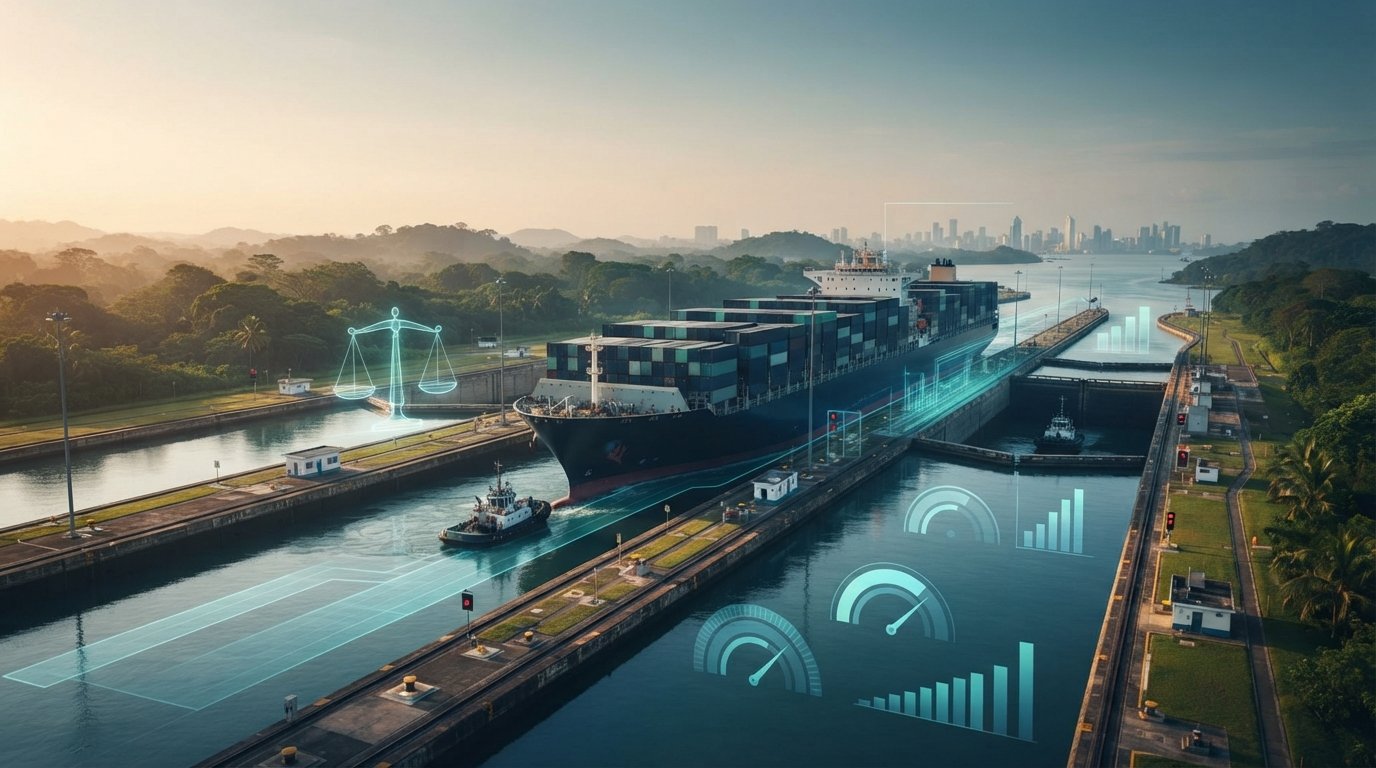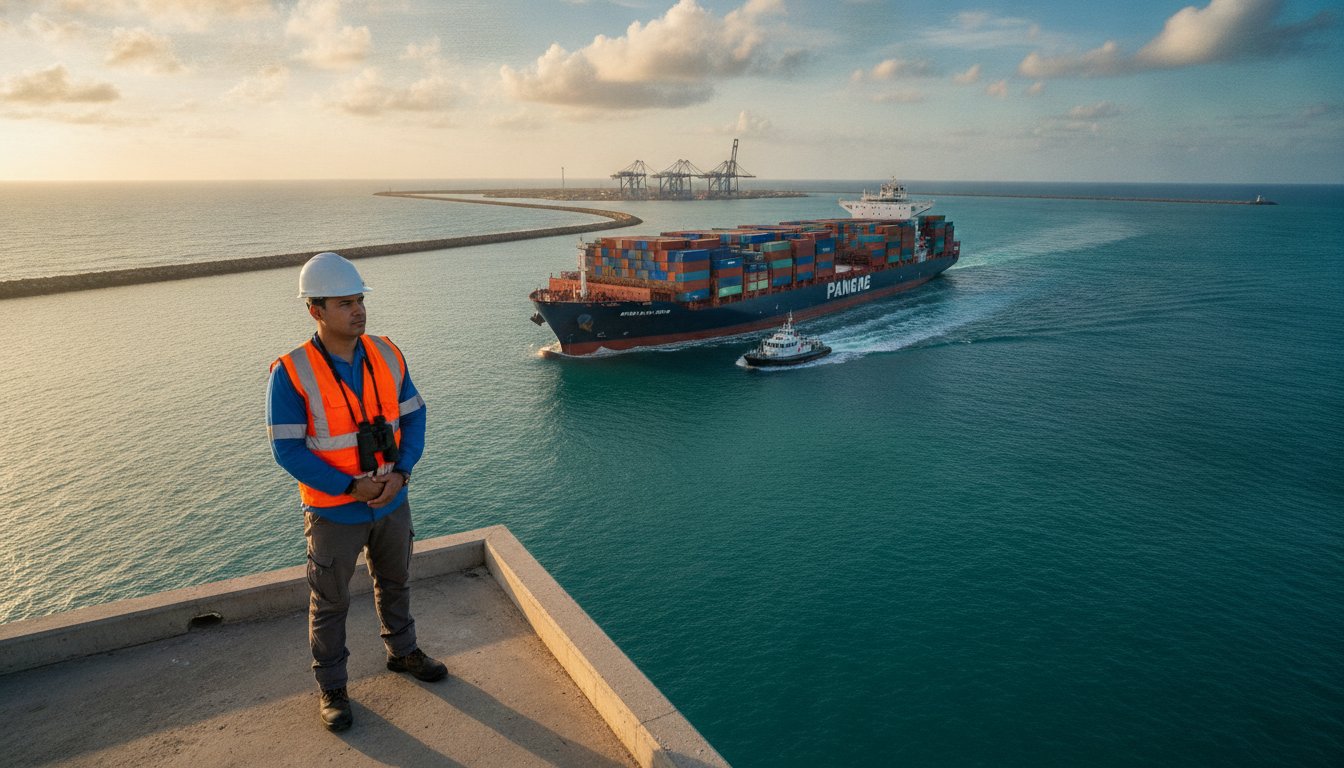

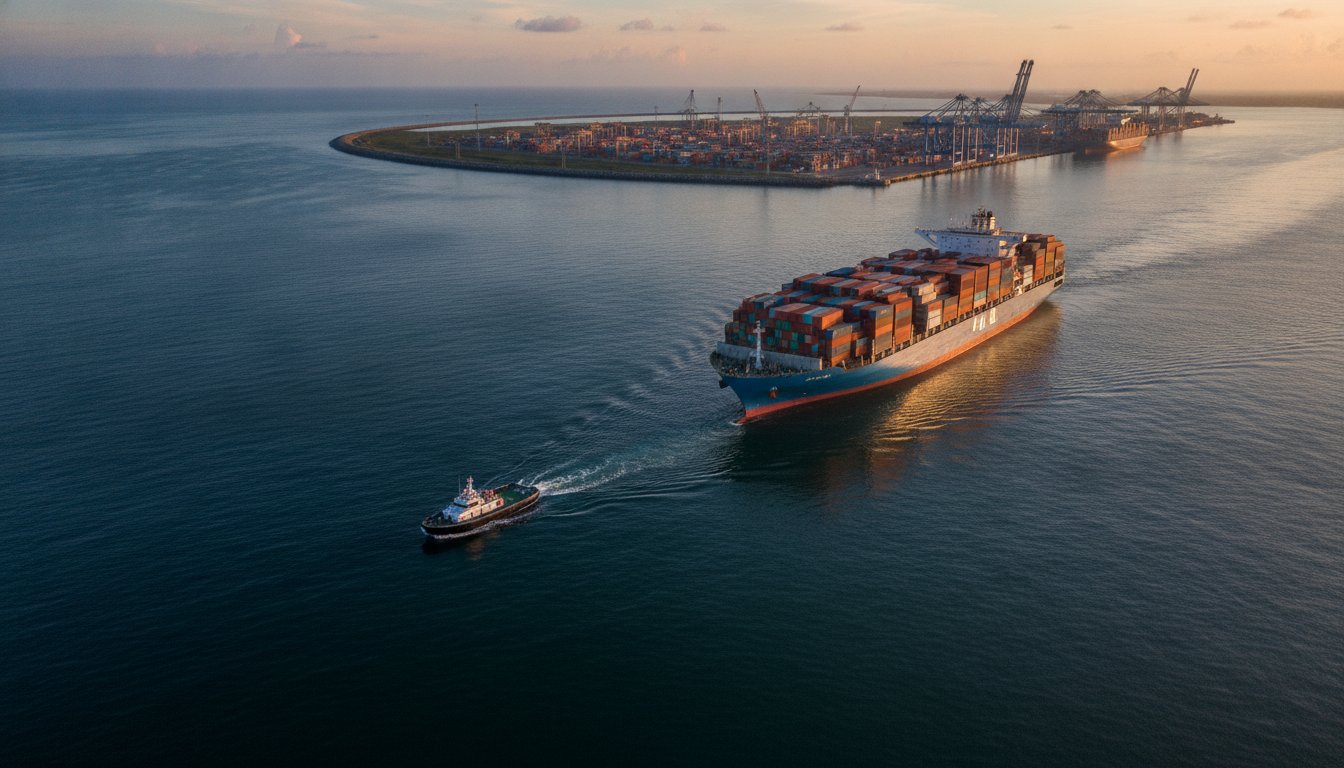
What if a single clerical error on your Electronic Data Collection System (EDCS) filing cost your vessel $15,000 in avoidable transit delays at the Atlantic breakwater? For vessel operators, the Port of Cristobal is a high-stakes environment where minor procedural missteps lead to cascading financial losses. You already know that managing port entry procedures Cristobal Panama requires more than just following a manual. It demands real-time compliance with evolving Panama Canal Authority (ACP) regulations and precise local coordination. The pressure of managing pilotage schedules while simultaneously organizing husbandry services often creates a logistical bottleneck that tests even the most seasoned fleet managers.
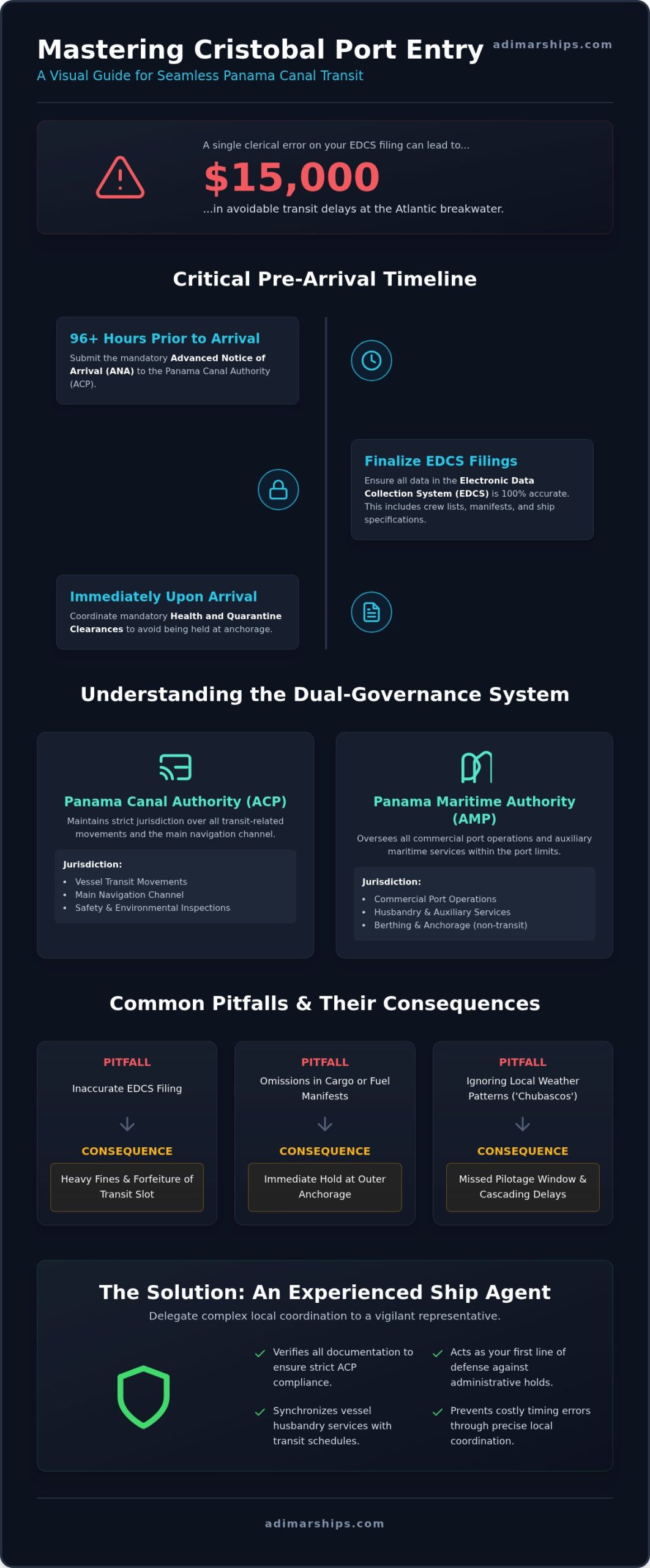
This guide provides the clarity you need to solve these complexities and ensure a seamless arrival. We’ll help you address the specific documentation requirements for 2026, ensuring you avoid the common pitfalls that trigger inspections or fines. You’ll gain a clear understanding of the current anchorage zones and pilotage protocols essential for safe passage. We also preview the best practices for coordinating crew changes and supplies at the Atlantic entrance, positioning your vessel for an efficient, delay-free experience in Panamanian waters.
Key Takeaways
- Submit the 96-hour Advanced Notice of Arrival and finalize EDCS filings to prevent administrative delays and potential ACP fines.
- Understand the specific boundaries of the Atlantic Breakwater anchorage zones and exactly where the ACP pilot assumes command of your vessel.
- Master the 2026 port entry procedures Cristobal Panama by coordinating the mandatory health and quarantine clearances immediately upon arrival.
- Learn how to synchronize vessel husbandry services with your transit schedule to maximize operational efficiency while at the Atlantic terminus.
- Delegate complex local coordination to an experienced ship agent who acts as your vigilant representative to prevent costly timing errors.
Navigating the Atlantic Gate: Understanding Cristobal Port Entry
Cristobal isn’t just a port; it’s the Atlantic’s vital anchor for the Panama Canal. As the northern terminus, it serves as the essential staging ground for every vessel entering the waterway from the Caribbean Sea. Mastering the port entry procedures Cristobal Panama requires a clear grasp of the dual-governance system in place. The Panama Canal Authority (ACP) maintains strict jurisdiction over all transit-related movements and the main navigation channel. Meanwhile, the Panama Maritime Authority (AMP) oversees commercial port operations and auxiliary maritime services. This distinction is critical for operators to understand, as it dictates which documentation goes where and who has the final say on vessel movement.
The port serves a diverse fleet, ranging from massive Neopanamax container ships to standard Panamax bulkers and regional feeder vessels. Each category follows a specific protocol, but all share the common goal of a seamless transition from the open sea to the canal’s lock system. Coordination must be precise to avoid the high costs of idle time at the Atlantic entrance.
The Role of the Atlantic Breakwater
The Atlantic Breakwater is more than a physical barrier against the Caribbean; it’s a complex network of designated anchorage zones. Vessels typically hold in the outer anchorage while awaiting their transit slot or move into the inner harbor for intensive husbandry work. You must account for local weather patterns, specifically the ‘Chubascos.’ These sudden, violent rainstorms bring heavy swells and reduced visibility that can instantly halt pilotage operations. Congestion at the breakwater often ripples through the entire canal schedule. If a vessel misses its window due to poor coordination during these weather events, the financial impact of the resulting delay is immediate. Having a ship agent acting as your local office ensures these shifts don’t compromise your schedule.
Cristobal vs. Balboa: Key Operational Differences
While Balboa serves the Pacific, Cristobal handles the more volatile Atlantic environment. This volatility means port entry procedures Cristobal Panama often require earlier notification and more frequent updates to your ship agency. Logistically, Cristobal offers a significant advantage for routes connecting Europe and the US East Coast, providing a more direct path to the Caribbean basin. The infrastructure here is specifically tailored for rapid turnaround, yet the berthing space is often more susceptible to Atlantic surges than the relatively sheltered waters of the Pacific side. Operators must prioritize Atlantic-side logistics early in the voyage to compensate for these environmental variables.
Mandatory Pre-Arrival Documentation and ACP Compliance
Precision in paperwork is the primary defense against costly transit delays. For 2026, the Panama Canal Authority (ACP) enforces a strict Advanced Notice of Arrival (ANA) protocol that requires submission at least 96 hours before your vessel reaches the Atlantic breakwater. This window is critical for the ACP to coordinate traffic flow and safety inspections. If your vessel is carrying hazardous cargo or specific fuel grades, your declarations must be exhaustive. Any omission in cargo manifests or fuel specifications can trigger immediate holds, forcing your vessel to remain in the outer anchorage until the documentation is rectified. A local agent acts as your first line of defense, verifying every line item to ensure it meets the specific port entry procedures Cristobal Panama requires.
The EDCS Framework in 2026
EDCS is the mandatory digital portal for all ACP communications. It serves as the single source of truth for your vessel’s data, including crew lists, passenger manifests, and technical ship specifications. In the current regulatory environment, the ACP has zero tolerance for data discrepancies. Inaccurate filings don’t just result in administrative headaches; they lead to heavy fines and the potential forfeiture of your reserved transit slot. Because the system is updated frequently, your team must stay current with the 2026 version of the portal to avoid compatibility errors during the upload process.
PCSOPEP and Environmental Readiness
Environmental compliance is a cornerstone of canal safety, particularly for vessels exceeding 400 gross tons. You’re legally required to have an active Panama Canal Shipboard Oil Pollution Emergency Plan (PCSOPEP) that’s been approved by the ACP. A vital component of this plan is the designation of a PCSOPEP authorized person who must be a resident of Panama. This individual serves as the official liaison between your vessel and the local authorities during an emergency. Without a verified authorized person on your documentation, your entry will be denied at the breakwater.
Managing these complex digital portals and legal appointments is a full-time task that shouldn’t be left to chance. Delegating these responsibilities to a seasoned partner ensures your vessel remains compliant with every shifting regulation. If you want to eliminate the risk of documentation errors, our ship agency services provide the vigilant oversight necessary for a successful arrival at Cristobal.
Strategic Anchorage: Managing Cristobal Breakwater and Inner Port Logistics
Upon approaching the Atlantic entrance, your bridge team must establish contact with the ‘Cristobal Signal Station’ on VHF Channel 12. This interaction is the cornerstone of your arrival. The station coordinates all traffic entering the breakwater and officially logs your ‘Order of Arrival.’ This timestamp is critical; it influences your position in the transit queue and confirms your compliance with the pre-booked schedule. Operators must clearly distinguish between the Outer Anchorage, used for vessels awaiting their transit window, and the Inner Harbor. The inner areas offer more protection but are subject to different regulations and berthing priorities. Mismanaging this initial communication can lead to your vessel being pushed back in the queue, resulting in expensive idle time.
Anchorage Zone Selection
The ACP categorizes anchorage zones to maintain safety and efficiency. Your ship agent provides the local insight needed to navigate these assignments correctly based on your vessel’s specific needs:
- Zone A: Reserved for deep-draft vessels requiring maximum under-keel clearance.
- Zone B: Designated for ships carrying explosives or hazardous materials to maintain safety buffers.
- Zone C: Utilized for general cargo and smaller vessels with shorter wait times.
If your voyage plan includes refueling, you should evaluate the benefits of bunkering in Panama at the anchorage versus alongside. While alongside bunkering offers higher pumping rates, anchorage delivery avoids the significant port fees and time lost to complex berthing maneuvers. This choice is a key part of your port entry procedures Cristobal Panama and should be finalized before reaching the breakwater.
Pilotage and Tug Coordination
The ‘Pilot Boarding Area’ is the precise location where the ACP pilot assumes navigational control. This area is situated near the Atlantic breakwater entrance, where sea conditions can change rapidly. For Neopanamax vessels, the entry into the Atlantic locks is a high-precision operation that demands tugboat assistance. The ACP mandates specific tug configurations based on vessel dimensions to ensure stability during the approach. During periods of heavy Atlantic swells, the pilot transfer becomes a critical safety event. Any failure to provide a safe boarding environment can result in the pilot aborting the maneuver. Such an incident will immediately stall your port entry procedures Cristobal Panama, leading to costly slot forfeitures and rescheduling fees. Your crew must follow strict safety protocols, ensuring the pilot ladder is rigged according to international standards and specific ACP requirements.
Step-by-Step Cristobal Port Entry and Vessel Husbandry
Precision is the hallmark of a successful transit. Twenty-four hours before your vessel’s ETA at the sea buoy, you must provide a final confirmation to your ship agency. This isn’t just a courtesy; it’s the trigger for the final coordination of pilots, inspectors, and husbandry teams. The clock starts now. Your agent uses this window to verify that the ACP has received all updated manifests and that there are no outstanding requirements in the EDCS portal. Any discrepancy found at this stage can still be corrected before the vessel enters the jurisdiction of the signal station, preventing expensive idle time in the outer anchorage.
The Arrival Sequence
The transition from open sea to the protected waters of Cristobal follows a rigid three-step sequence. Once your vessel reaches the sea buoy, the bridge team must establish VHF contact to declare the official arrival time. This is the first formal step in the port entry procedures Cristobal Panama requires for 2026. Following this declaration, the ACP inspectors and health officials will board the vessel. Health and Quarantine clearance is always the priority. No other services or personnel can board until the vessel is granted “Free Pratique.” Finally, ACP inspectors verify ship dimensions and transit readiness, ensuring the vessel’s gear and mooring arrangements meet canal standards.
Optimizing Husbandry Services
Cristobal serves as a premier hub for Atlantic-side operations because of its proximity to major logistics infrastructure. For many operators, this is the preferred location for crew rotations. The short transit time from Tocumen International Airport to the Cristobal piers allows for seamless crew transfers without the long overland journeys required for Pacific-side changes. Spare parts logistics are equally efficient. Parts arriving at the airport can often be delivered to the pier or via launch to the anchorage within the same business day.
Managing these moving parts requires a partner who understands the local landscape. Beyond parts and crew, coordinating Cash to Master (CTM) in USD and fresh provisions requires strict adherence to local customs regulations. For a deeper dive into these specialized tasks, consult our guide to ship husbandry services. If your vessel requires vigilant oversight and professional coordination at the Atlantic breakwater, our team provides the expert ship agency services necessary to eliminate delays and keep your operations moving.
Optimizing Atlantic-Side Operations with a Specialized Ship Agent
A vessel’s arrival at the Atlantic breakwater is the culmination of weeks of planning, yet the final miles are often the most volatile. This is where the value of a specialized ship agent becomes clear. Acting as your vigilant eyes on the ground, a local agent monitors the port entry procedures Cristobal Panama requires in real time. They don’t just process paperwork; they anticipate the shifts in ACP scheduling and Atlantic weather that your bridge team cannot see from the open sea. By serving as a local office for the owner, the agent ensures that every logistical gear, from pilotage to pier space, turns in perfect synchronization.
Misjudged timing is one of the most expensive errors a ship operator can make in Panama. Missing a transit slot due to a documentation delay or a slow husbandry transfer can result in thousands of dollars in idle time and rescheduling fees. To prevent this, our team maintains 24/7 personalized communication with vessel masters, providing constant updates as conditions change at the breakwater. This transparency extends to the financial side through the Proforma Disbursement Account (PDA). A detailed PDA allows operators to understand every cost center before the vessel arrives, ensuring there are no surprises in port expenses or local tariffs.
Eliminating Confusion and Delays
Consider a scenario where a vessel is 12 hours from the sea buoy and a last-minute discrepancy is found in the hazardous cargo manifest. Without local intervention, this error would likely result in a failed ACP inspection and a cancelled transit. In such cases, a specialized agent works at the 11th hour to coordinate with ACP officials and rectify the EDCS filing before the inspectors ever step on board. The Ship Agent is the primary shield against administrative fines. By managing the friction between the vessel’s needs and the authority’s requirements, the agent converts potential delays into a seamless arrival sequence.
Selecting the Right Partner in Panama
Local experience at Cristobal matters because the Atlantic side presents unique challenges, from the intensity of the Chubascos to the specific layout of the inner harbor. When selecting an agency, you must prioritize partners with a long-standing history of ethical conduct and transparent operations. With over 20 years of local experience, we understand the nuances of coordinating with pilots and tugs in heavy swells. This deep local knowledge allows us to protect your interests and maintain your schedule regardless of the complexities on the ground. To ensure your next arrival is handled with professional precision, nominate Adimar Shipping, Inc. as your Panama ship agency and experience the security of a truly expert local representative.
Mastering the Atlantic Transit: Your Path to Seamless Operations
Navigating the Atlantic entrance requires a balance of technical precision and local vigilance. By mastering the port entry procedures Cristobal Panama demands for 2026, you protect your vessel from the high costs of administrative delays and environmental non-compliance. Success depends on submitting your EDCS filings accurately, understanding the nuances of the Atlantic breakwater anchorage, and coordinating husbandry services with surgical timing. These steps transform a complex logistical maneuver into a predictable, efficient transition through the waterway.
You don’t have to manage these high-stakes requirements alone. With 20 years of Panama Canal expertise and our status as an authorized PCSOPEP representative, we provide the 24/7 local coordination your fleet deserves. We act as your on-the-ground office, shielding you from fines and ensuring your transit remains on schedule. Delegating these complex tasks to a seasoned partner gives your team the operational freedom to focus on the voyage ahead. Take the first step toward a delay-free arrival today.
Secure Your Cristobal Entry with Adimar Shipping
Frequently Asked Questions
What are the primary documents required for Cristobal port entry in 2026?
The primary requirements include the Advanced Notice of Arrival (ANA) and the Electronic Data Collection System (EDCS) filing, both submitted via the ACP digital portal. You must also provide updated crew lists, passenger manifests, and detailed ship specifications. For vessels carrying dangerous goods, specific cargo declarations and fuel grade specifications are mandatory to meet the port entry procedures Cristobal Panama enforces for 2026. Precision in these filings prevents costly administrative holds.
How far in advance must I notify my agent of an Atlantic-side arrival?
You must provide your initial notification at least 96 hours before arrival to comply with the Advanced Notice of Arrival protocol. This lead time allows your agent to verify all documentation and coordinate with the Panama Canal Authority. A final confirmation is then required 24 hours before your vessel reaches the sea buoy. This timeline is essential for the seamless organization of pilots, tugs, and any requested husbandry services.
Can crew changes be performed at the Cristobal anchorage?
Yes, crew changes are frequently performed at the Cristobal anchorage using specialized launch services. The Atlantic side is a preferred location for these rotations due to its efficient logistics and proximity to Tocumen International Airport. Your ship agent coordinates the transportation from the airport directly to the pier, ensuring that incoming and outgoing crew members transition smoothly without causing delays to the vessel’s scheduled transit or port operations.
What is the role of the ACP pilot during Cristobal port entry?
The ACP pilot assumes navigational control of your vessel at the designated Pilot Boarding Area near the Atlantic breakwater. Their primary role is to guide the ship safely through the breakwater and into the canal’s lock system. They provide expert local knowledge of the currents and wind conditions at the Atlantic terminus. While the master remains in overall command, the pilot’s directives are mandatory for all maneuvers within canal waters.
Are there specific draft restrictions for the Cristobal Inner Port?
Draft restrictions in the Cristobal Inner Port vary depending on the specific berth and current silting conditions. While the main channel supports deep-draft vessels, certain auxiliary piers may have limitations that require careful planning. You should always consult your ship agent for the most recent bathymetric data and terminal notices. We provide the latest depth information to ensure your vessel’s draft remains within safe operational limits during berthing or anchorage maneuvers.
What happens if my vessel misses its scheduled transit slot at Cristobal?
Missing a scheduled transit slot results in immediate financial penalties, including slot forfeiture and substantial rescheduling fees. Your vessel will be moved to the end of the “Order of Arrival” queue, which often leads to several days of expensive idle time in the outer anchorage. To avoid these costs, it’s vital to follow the port entry procedures Cristobal Panama strictly and maintain constant communication with your local agent to resolve any documentation issues early.
Is PCSOPEP coverage mandatory for vessels only calling at Cristobal port?
Yes, PCSOPEP coverage is mandatory for all vessels exceeding 400 gross tons that enter Panama Canal waters, including those only calling at the Port of Cristobal. You must have an approved Shipboard Oil Pollution Emergency Plan and a designated authorized person resident in Panama. This compliance is a prerequisite for entry. Without a verified plan on file with the ACP, your vessel will be denied access to the anchorage or port facilities.
What VHF channels are used for communication with Cristobal port authorities?
The primary communication channel for the Cristobal Signal Station is VHF Channel 12. This is used for declaring your arrival, requesting pilotage, and receiving anchorage assignments. Bridge teams should also monitor Channel 16 for international hailing and distress. Once the ACP pilot is on board, they will typically use specific working channels to coordinate with tugboats and lock masters as the vessel moves toward the Atlantic locks.