
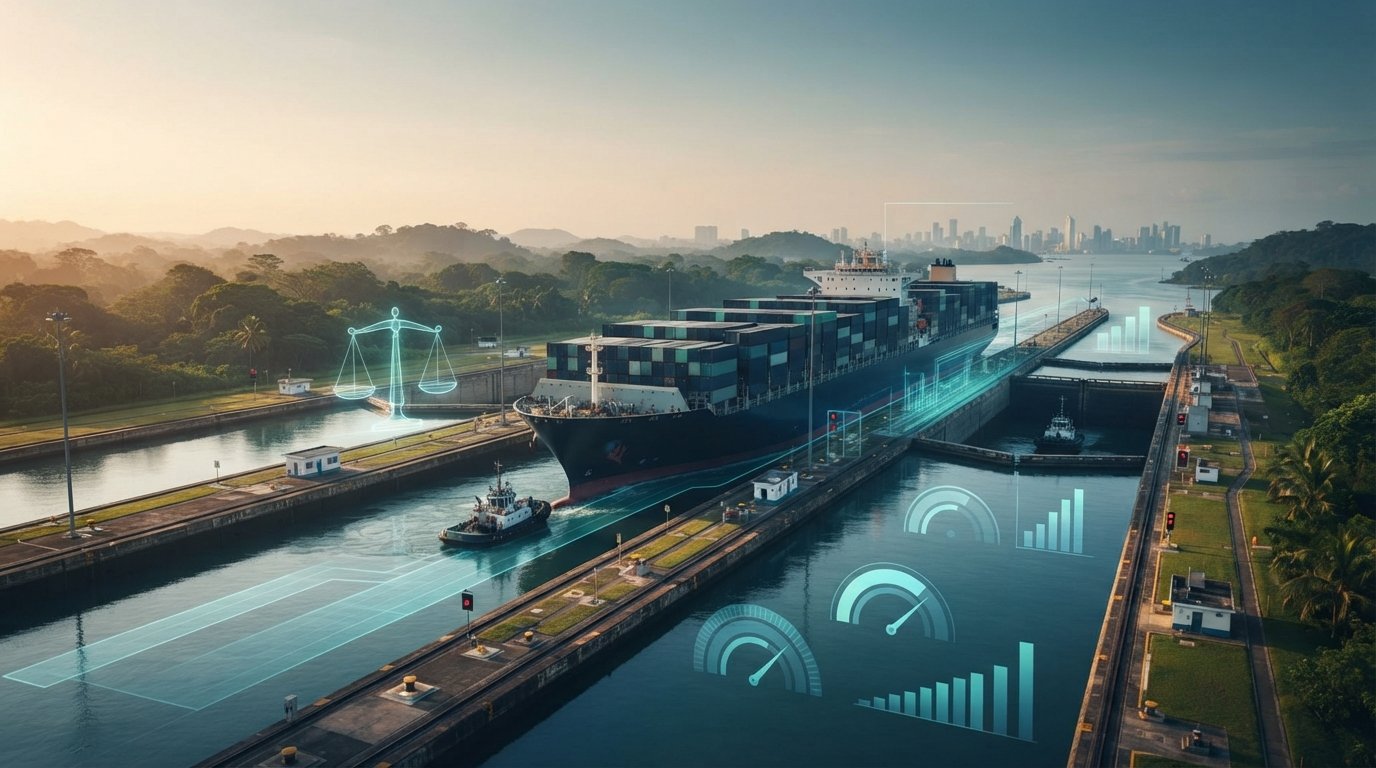
In 2026, the cost of a Panama Canal transit will no longer be determined solely by what your vessel carries, but by how it impacts the environment and the local water supply. For ship operators, understanding acp tariffs 2026 is now a critical prerequisite for financial stability. You likely feel the pressure of rising operational costs and the frustration of unpredictable freshwater surcharges that disrupt your quarterly bottom line. It’s a challenging environment where a single documentation error can result in thousands of dollars in avoidable penalties.
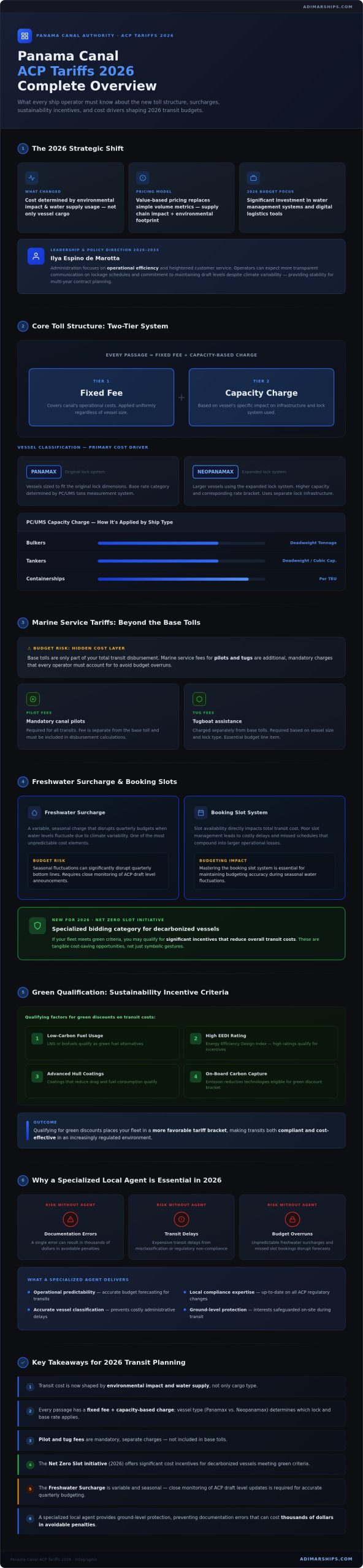
We understand that your primary goal is operational predictability. This guide provides the clarity you need to master the new structure, ensuring you can secure accurate budgets and cost-efficient passages. By delegating the complexities of local compliance to a seasoned partner, you gain the peace of mind that your interests are protected on the ground. We’ll break down the shift between fixed and variable 2026 costs, explain how to qualify for maritime sustainability incentives, and provide actionable strategies to reduce the risk of unexpected transit fines. This is your roadmap to managing the new fiscal year with confidence and security.
Key Takeaways
- Learn how the new administration’s strategic shifts and infrastructure plans for 2026 influence long-term transit costs and operational priorities.
- Improve your financial forecasting by understanding acp tariffs 2026, including the specific breakdown of fixed versus capacity-based charges.
- Identify the critical differences between base tolls and essential marine service fees for pilots and tugs to ensure every dollar is accounted for.
- Master the complexities of the Freshwater Surcharge and booking slot systems to maintain budgeting accuracy during seasonal water fluctuations.
- Understand why a specialized local agent is essential for navigating regulatory changes and protecting your vessel from expensive transit delays.
The 2026 ACP Landscape: Strategic Shifts and Tariff Evolution
The Panama Canal is entering a transformative era. For ship operators, the strategic focus has shifted toward long-term infrastructure resilience and fiscal stability. The 2026 budget reflects significant investment in water management systems and digital logistics tools to ensure the waterway remains competitive. This shift means that understanding acp tariffs 2026 is about more than just checking a price list. It’s about anticipating how the canal’s strategic evolution impacts your specific vessel type and transit frequency.
Accurate budgeting starts with a deep dive into the Panama Canal Authority. As the autonomous agency of the Panamanian government, the Panama Canal Authority (ACP) holds the mandate to manage and operate the waterway. Their move toward value-based pricing models signifies a departure from simple volume metrics. Now, the value provided to the global supply chain, combined with the environmental footprint of the transit, dictates the final disbursement. This isn’t a one-size-fits-all approach, and it requires a more nuanced perspective on maritime logistics.
New Leadership and Policy Direction for 2026
The 2026-2033 roadmap is defined by the leadership of Ilya Espino de Marotta. Her administration focuses on operational efficiency and heightening customer service standards across all maritime sectors. For operators, this leadership provides a sense of administrative stability. You can expect more transparent communication regarding lockage schedules and a commitment to maintaining draft levels despite climate variability. This stability is vital for multi-year contract planning and helps eliminate the guesswork from your long-term tariff projections.
Environmental Surcharges and Sustainability Incentives
Sustainability is no longer optional in Panama. It’s integrated into the fee structure. The Net Zero Slot initiative, set for implementation in 2026, introduces a specialized bidding category for decarbonized vessels. If your fleet meets specific green criteria, you may qualify for significant incentives that reduce your overall transit costs. These aren’t just symbolic gestures; they’re tangible cost-saving opportunities for forward-thinking ship owners. Key factors influencing these green discounts include:
- Low-carbon fuel usage such as LNG or biofuels.
- High Energy Efficiency Design Index (EEDI) ratings.
- Advanced hull coatings that reduce drag and fuel consumption.
- On-board carbon capture or emission reduction technologies.
By aligning your fleet with these sustainability goals, you don’t just protect the environment. You protect your bottom line by accessing a more favorable tariff bracket. This proactive approach ensures your transits remain both compliant and cost-effective in an increasingly regulated maritime environment.
Core Components of the 2026 Panama Canal Toll Structure
Predicting transit costs requires a clear grasp of the two-tier pricing system implemented by the ACP. Every passage involves a combination of a fixed fee and a capacity-based charge. This structure ensures that both the canal’s operational costs and the vessel’s specific impact on the infrastructure are covered. Mastering the variables involved in understanding acp tariffs 2026 allows for more predictable financial planning and eliminates the risk of budget overruns.
Vessel dimensions are the primary factor in determining your toll category. Whether your ship qualifies as a Panamax or a Neopanamax dictates which lock system you’ll use and the corresponding base rate. You can consult our Panama Canal transit guide to accurately identify your vessel’s classification and its specific requirements. Accurate classification is the first step in avoiding the costly administrative delays that occur when documentation doesn’t match a vessel’s physical profile.
Capacity Charges and Vessel Classification
The Panama Canal Universal Measurement System (PC/UMS) tons serve as the basis for capacity charges. However, the ACP applies this differently across ship types. Bulkers and tankers are typically charged based on deadweight tonnage or cubic capacity, while containerships are billed per TEU (Twenty-foot Equivalent Unit). A critical factor for 2026 pricing is the “laden” versus “ballast” status. Ships in ballast, meaning they carry no cargo, generally enjoy lower rates. To secure these savings, you must provide verified documentation before arrival. Smaller craft and passenger vessels follow separate, specialized tariff nuances that focus on passenger berths or overall length rather than cargo capacity.
The Freshwater Surcharge (FWS) Explained
The Freshwater Surcharge is a variable fee designed to manage the canal’s most precious resource: water. This charge fluctuates based on the daily water levels of Gatun Lake. When levels drop, the percentage-based surcharge increases to reflect the higher operational difficulty of maintaining the waterway. For 2026, ship owners should watch weather patterns and ACP water management reports closely. By prioritizing understanding acp tariffs 2026, you can better anticipate how these lake levels will impact your specific transit window. The FWS is calculated using the vessel’s length overall (LOA), making it a significant portion of the total disbursement for larger ships. Because these levels can change rapidly, having a partner provide Ship Agency Services ensures you receive real-time updates on water-related costs before your vessel reaches the locks.
Marine Service Tariffs: Beyond the Base Tolls
A successful transit requires more than just paying the base toll. While tolls cover the right of passage, marine service tariffs cover the physical and technical support required to move a vessel through the locks safely. In the 2026 ACP budget, these fees remain distinct from the capacity-based charges discussed earlier. They are operational necessities that don’t fluctuate with cargo volume but are strictly tied to vessel dimensions and transit requirements. Coordinating these moving parts requires a reliable ship agency Panama to ensure that every service is booked and synchronized with your arrival time. Beyond the primary services, you must account for ancillary costs such as admeasurement fees, ISPS security charges, and mandatory sanitation inspections.
Pilotage and Tugboat Coordination
Pilotage and tugboat assistance are non-negotiable for all deep-draft vessels. For 2026, the ACP continues to scale pilotage rates based on the vessel’s maximum draft and beam. Larger ships require more specialized oversight, which is reflected in the tariff. Tugboat requirements are equally stringent. Neopanamax vessels often require additional tugs to navigate the larger locks compared to traditional Panamax locks. Timing is everything here. If a vessel fails to arrive at its designated station on time, the ACP may apply significant surcharges or cancel the service slot entirely. These penalties can disrupt your entire financial forecast, making understanding acp tariffs 2026 essential for every operations manager.
Compliance and Regulatory Fees
Compliance fees form another layer of the total transit disbursement. Every vessel must have a designated PCSOPEP authorized person to ensure readiness for oil pollution emergencies. This isn’t just a formality; it’s a strict regulatory requirement for transiting the waterway. Documentation errors are the most common source of unexpected fines. The ACP holds ship operators to high standards regarding cargo manifests and technical specifications. You can refer to our PCSOPEP complete guide to verify your compliance status before your ship reaches Panamanian waters. By delegating these technical details to a specialist, you reduce the risk of non-compliance and protect your vessel from avoidable financial penalties. This level of local oversight is the best way to maintain budget integrity throughout 2026.
Practical Budgeting: Calculating Your Total Transit Disbursement
Estimating a full transit cost requires a comprehensive look at both official tolls and local operational expenses. While the ACP provides raw data through automated systems, understanding acp tariffs 2026 involves factoring in the hidden variables that a software tool might miss. Your budget must account for the total transit disbursement, which includes everything from base tolls to the smallest husbandry fee. Choosing between an Owner’s vs. Charterer’s Nominated Agency is a critical financial decision in this process. An owner’s agent prioritizes the vessel’s long-term interests and often identifies potential savings in the disbursement account that a charterer-focused agent might overlook. We also recommend integrating “Cash to Master” (CTM) and daily husbandry expenses into your initial Pro-Forma D/A. This prevents mid-transit liquidity issues and ensures your master has the necessary funds for immediate operational needs.
The Transit Reservation System (Booking)
Securing a transit slot is often the most volatile part of your budget. The ACP operates three distinct booking periods. The first period opens 365 days in advance, while the third period caters to short-term requirements. In 2026, the slot auction process remains a competitive necessity for many operators. You must budget for the possibility of high bidding costs if you require a specific transit date during peak seasons. It’s also vital to account for cancellation and modification fees. Schedule changes can quickly erode your margins if they aren’t managed by a vigilant local representative who understands the nuances of the booking system.
Husbandry and Crew-Related Costs
Transit time is the most efficient window for husbandry services in Panama. Crew changes, medical assistance, and provisioning are essential but add layers of cost to the final bill. A professional agent acts as a protective shield. They audit every ACP charge and third-party invoice to ensure accuracy. This oversight ensures that your final disbursement account reflects actual services rendered without unnecessary markups. If you need assistance with these complex calculations, our team can provide a detailed quote for Ship Agency Services tailored to your vessel’s specific 2026 requirements.
Why a Specialized Panama Canal Agent is Essential in 2026
Managing a vessel transit from thousands of miles away is inherently risky. You need a vigilant eye on the ground to safeguard your assets and ensure operational continuity. Adimar Shipping, Inc. acts as your local office in Panama, serving as a protective shield against the complexities of the waterway. By understanding acp tariffs 2026 through our expert lens, you eliminate the stress of sudden regulatory shifts. We don’t just process paperwork; we represent your interests with the same care your own team would. Our role is to stand watch at the locks, ensuring that every operational detail aligns with your budget and schedule.
Eliminating Confusion and Operational Friction
Achieving “Transit Clearance” requires a flawless documentation flow. We manage every technical detail to ensure your vessel meets all ACP requirements long before it arrives at the breakwater. This proactive approach is where we excel. Unlike generic aggregator agencies that provide automated, surface-level support, we offer personalized coordination tailored to your specific fleet. Our expert slot management has saved clients thousands of dollars by identifying the most cost-effective booking windows and avoiding unnecessary auction bidding wars. We navigate the 2026 regulatory environment with precision, preventing the operational friction that leads to costly delays and administrative fines.
Ethical Standards and Transparent Financials
Trust is the foundation of our partnership. Adimar Shipping, Inc. maintains a strict commitment to ethical conduct in all dealings with the Panama Canal Authority. This integrity extends directly to our billing process. You’ll receive a transparent Pro-Forma Disbursement Account where every line item is clearly explained and verified. There are no hidden fees or ambiguous charges in our documentation. Delegating these specialized tasks to a partner with deep local knowledge provides the operational freedom you need to focus on your core business. You gain the security of knowing that your financial interests are being protected by a seasoned expert who understands the high stakes of the maritime industry.
Mastering the 2026 landscape requires more than just a calculator; it requires a partner who is understanding acp tariffs 2026 in real-time. By choosing a specialized agent, you ensure that your transits are efficient, compliant, and cost-effective. Contact Adimar Shipping, Inc. for a 2026 Pro-Forma Disbursement Account today and let us provide the vigilant oversight your vessel deserves.
Securing Your Operational Future in the Panama Canal
The shift toward value-based pricing and environmental compliance makes 2026 a landmark year for the maritime industry. Success depends on your ability to anticipate variable freshwater surcharges and navigate the competitive slot auction system without compromising your margins. By prioritizing understanding acp tariffs 2026 today, you position your fleet for a year of financial predictability and operational security. You don’t have to manage these logistical hurdles alone.
Delegating these complexities to a local expert is the most effective way to protect your interests on the ground. Adimar Shipping brings decades of local expertise in Panama City to every transit. As an authorized PCSOPEP representative, we provide the personalized service and vigilant oversight necessary to maintain cost-efficiency in an increasingly complex regulatory environment. We act as an extension of your own team, auditing every fee to ensure your budget remains intact. Request a customized 2026 Panama Canal Transit Quote from Adimar Shipping to ensure your next passage is managed with the highest standards of reliability. We look forward to serving as your trusted partner at the locks.
Frequently Asked Questions
What are the primary changes to ACP tariffs for the 2026 fiscal year?
The 2026 fiscal year emphasizes a transition toward value-based pricing models that reward environmental efficiency. Key changes include the implementation of the Net Zero Slot initiative and more granular capacity charges. These adjustments aim to balance canal revenue with global sustainability goals. For operators, understanding acp tariffs 2026 means preparing for a fee structure that prioritizes vessel performance and environmental impact over simple tonnage metrics.
How is the Panama Canal Freshwater Surcharge calculated in 2026?
The Freshwater Surcharge (FWS) is calculated as a variable percentage applied to the vessel’s total toll. This percentage depends directly on the daily water levels of Gatun Lake at the time of transit. Additionally, a fixed fee is applied based on the vessel’s length overall (LOA). Because lake levels can fluctuate rapidly during the dry season, we recommend consulting with your ship agent for real-time projections before finalizing your budget.
What is the “Net Zero Slot” incentive and does my vessel qualify?
The Net Zero Slot is a specialized booking category designed for vessels that meet strict decarbonization criteria. To qualify, your ship must utilize low-carbon fuels like LNG or demonstrate high Energy Efficiency Design Index (EEDI) ratings. Meeting these green standards can lead to significant discounts or priority slot access. It’s a strategic opportunity for owners of modern, eco-friendly fleets to reduce their overall Panama Canal transit expenditures in 2026.
Can I transit the Panama Canal without a local ship agent?
While the ACP doesn’t strictly forbid self-representation, it’s highly impractical for international operators. Most owners use a specialized agency like Adimar Shipping to act as their local office. We manage the complex documentation flow and coordinate with canal authorities to prevent costly delays. Without local expertise, you risk administrative errors and fines that far exceed the cost of professional agency services. Delegation ensures your interests are protected on the ground.
What happens to my fees if my vessel transit is delayed by weather?
Weather delays can lead to missed booking windows and substantial surcharge penalties. If your vessel fails to arrive at the designated station due to fog or storms, the ACP may cancel your slot or move you to a lower priority. understanding acp tariffs 2026 involves knowing how to manage these schedule disruptions. A proactive agent helps mitigate these risks by communicating with the locks and attempting to reschedule services immediately.
How do Neopanamax tolls differ from Panamax tolls in the 2026 schedule?
Neopanamax tolls are significantly higher than Panamax tolls because they utilize the larger, more resource-intensive Expanded Canal locks. These vessels also face higher marine service fees due to the requirement for additional tugboat assistance and specialized pilotage. The 2026 schedule maintains this gap to reflect the increased capacity and operational complexity of transiting larger ships. Accurate vessel classification is essential to avoid underestimating your total transit disbursement account.
Are there specific discounts for repetitive transits or high-volume users?
Yes, the ACP maintains specific incentive programs for high-volume users, particularly in the containership and LNG segments. These discounts are often structured as loyalty programs where frequent transits result in lower per-unit costs over a fiscal year. Eligibility depends on your vessel type and the total PC/UMS tons transited. We can help you audit your fleet’s history to determine if you qualify for these volume-based savings under the new tariff structure.
What ancillary marine services are mandatory for a 2026 transit?
Every transit requires a suite of mandatory marine services to ensure safety and compliance. These include pilotage, tugboat assistance, and line handlers at the locks. Additionally, you must pay for admeasurement, ISPS security fees, and sanitation inspections. You’re also required to have a PCSOPEP authorized person to manage oil pollution emergency plans. Coordinating these services through a single agency ensures a seamless passage without the risk of missing a critical regulatory requirement.