
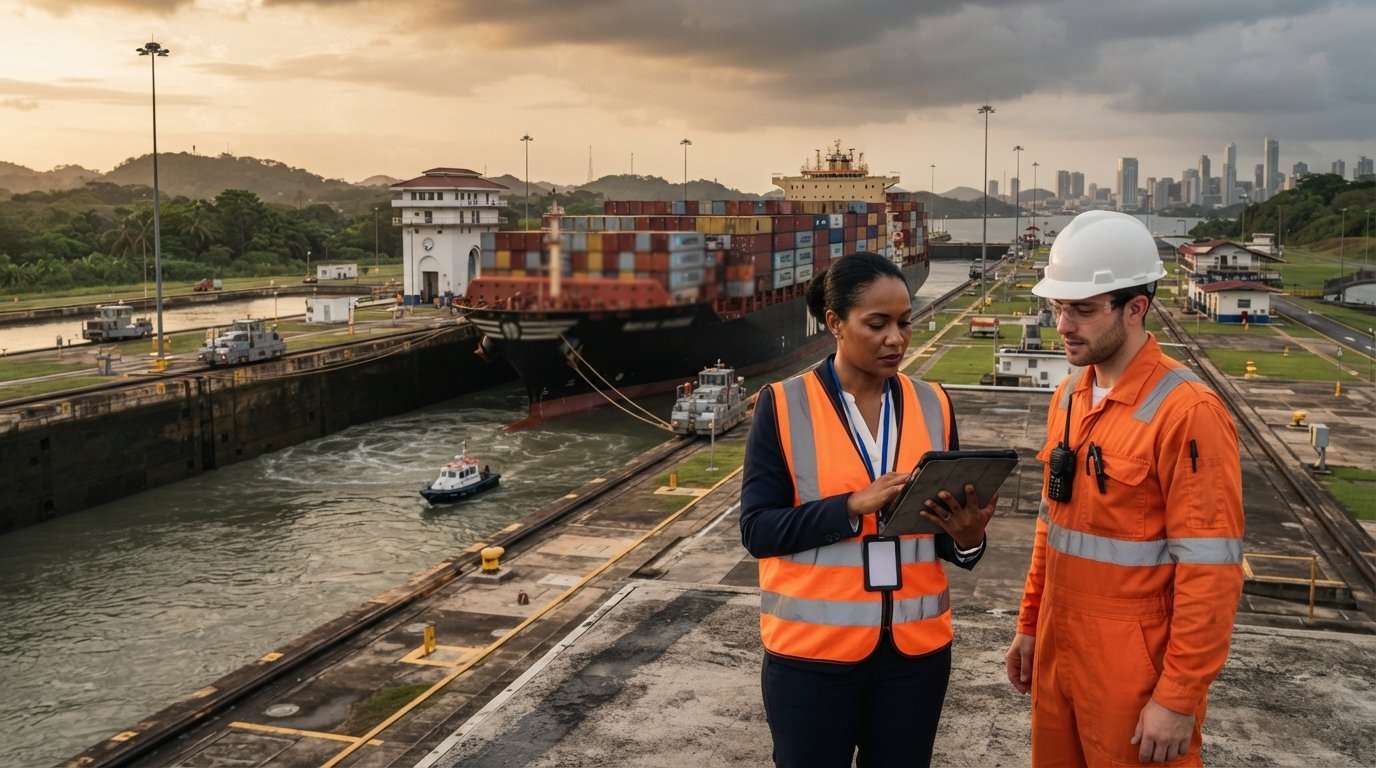
A single mechanical failure or documentation error during a Panama Canal transit can now trigger an ACP Disruption Charge of up to $250,000 USD. For many operators, the line between a profitable voyage and a financial disaster is thinner than ever in 2026. Understanding the nuances of charterer’s liability during canal transit isn’t just about reading the fine print; it’s about active risk management on the ground. You likely find the ambiguity in standard charterparty clauses frustrating, especially when facing tightening regulations and unpredictable slot auctions. We understand the high stakes involved and the difficulty of coordinating with local authorities from a distance.
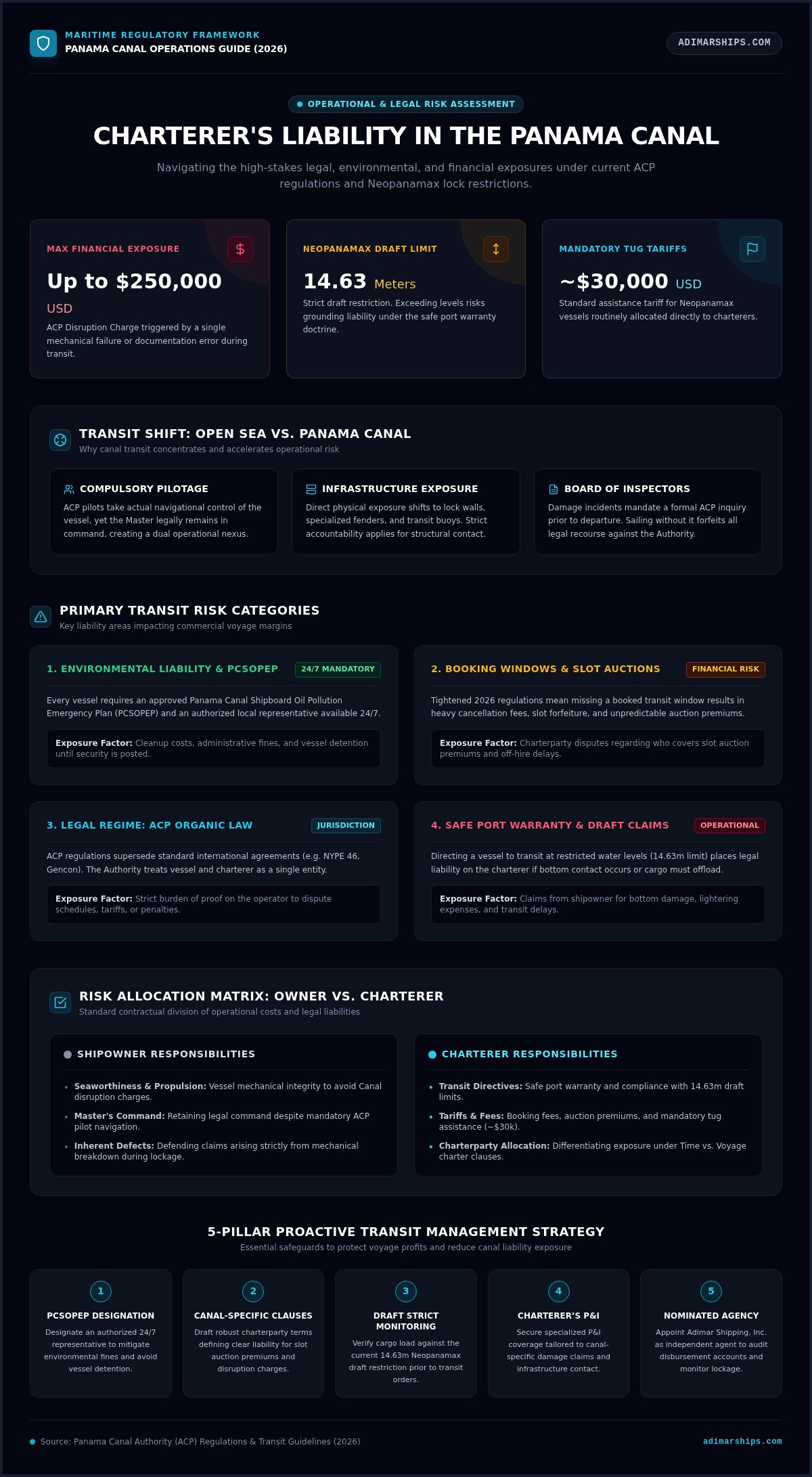
This expert guide provides you with a clear framework to navigate these complex legal and financial risks while offering actionable mitigation strategies. We’ll break down the division of liability between owners and charterers, explain the impact of current 14.63 meter draft restrictions, and show how a dedicated local representative acts as your vigilant eyes and ears. You’ll gain the tools to reduce your financial exposure and ensure your vessel moves through the canal with maximum efficiency. This knowledge provides the security you need to delegate complex tasks to a trusted regional partner who understands the local landscape.
Key Takeaways
- Identify the specific financial and legal risks that define charterer’s liability during canal transit in the current 2026 regulatory environment.
- Learn why designating an authorized PCSOPEP representative is essential for mitigating environmental liability and avoiding costly ACP penalties.
- Discover the critical differences in risk allocation between Time and Voyage charters, including responsibility for slot auction premiums and booking fees.
- Implement proactive management strategies, such as drafting robust canal-specific clauses and securing specialized Charterer’s P&I coverage.
- Understand the operational advantage of appointing an independent Charterer’s Nominated Agency to safeguard your interests and audit disbursement accounts.
Defining Charterer’s Liability in the Panama Canal
Charterer’s liability during canal transit refers to the legal and financial obligations a charterer assumes when a vessel enters the specific jurisdiction of the Panama Canal. While a shipowner is responsible for the vessel’s seaworthiness, the charterer often bears the weight of operational costs and risks associated with the transit itself. The Panama Canal Authority (ACP) views the vessel as a single unit during its passage. However, the underlying charterparty determines who actually pays for delays, fines, or damages. This legal nexus is complex because the ACP operates under its own set of regulations that often supersede standard international maritime agreements.
The “safe port” warranty is a critical concept for charterers in this region. Although the canal is technically a waterway rather than a port, courts often apply similar logic to transit orders. If a charterer directs a vessel to transit when draft levels are restricted, such as the current 14.63 meter limit for Neopanamax locks, they may face claims if the vessel touches bottom or is forced to offload cargo. Adimar Shipping, Inc. acts as your local representative to define these boundaries clearly, ensuring you don’t accept liability for risks that should remain with the owner.
The Legal Framework: ACP vs. International Maritime Law
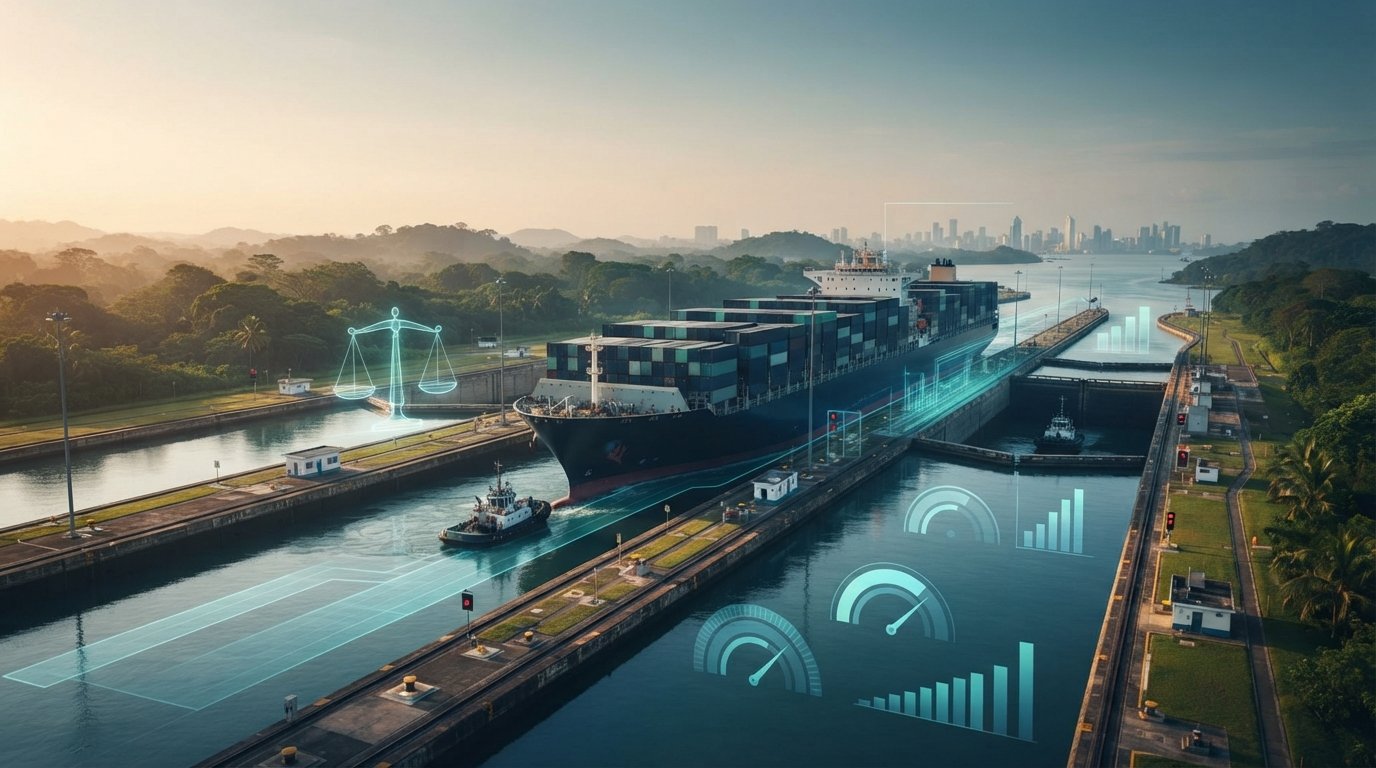
Panama Canal regulations, specifically the ACP Organic Law, create a unique legal environment. Standard charterparty terms like NYPE 46 or Gencon often fail to account for the ACP’s absolute authority. For instance, any incident involving damage to canal infrastructure requires a formal hearing by the Board of Inspectors before the vessel can depart. If a vessel sails without this inquiry, all legal recourse against the Authority is forfeited. Under 2026 regulations, the ACP holds the vessel and its local representatives strictly accountable for any disruption to the transit schedule, placing the burden of proof on the operator to avoid significant disruption charges.
Why Transit Liability Differs from Open Sea Risks
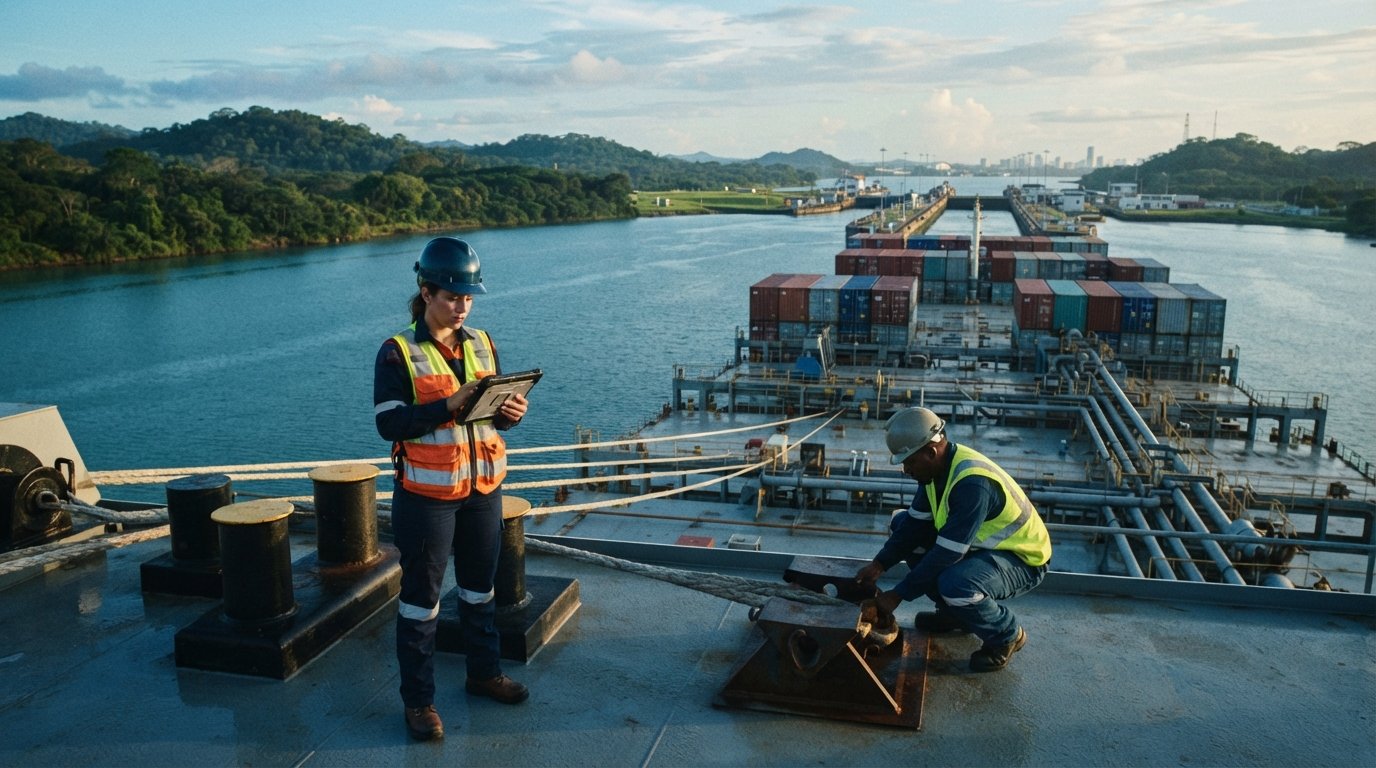
Risks in the canal are concentrated and immediate. Unlike the open sea, where navigation is the Master’s sole domain, canal transit involves a total shift in operational control.
- Compulsory Pilotage: ACP pilots take actual navigational control of the vessel, yet the Master remains legally in command.
- Infrastructure Exposure: Liability often stems from contact with lock walls, specialized fenders, or transit buoys.
- Mandatory Tugs: Charterers are typically responsible for tugboat tariffs, which reach approximately $30,000 USD for Neopanamax vessels.
These specialized risks require a partner who understands the local nuances. We serve as your vigilant eyes on the ground, monitoring lockage procedures and pilot interactions to protect your interests from unjustified claims.
Primary Risk Categories for Charterers During Transit
Understanding the specific categories of risk is the first step toward effective mitigation. For those managing a vessel’s commercial operations, charterer’s liability during canal transit encompasses environmental, operational, and physical hazards. The financial consequences are immediate. A single incident can lead to the forfeiture of booking fees or the imposition of heavy surcharges that can erase voyage profits. While owners handle seaworthiness, charterers often find themselves responsible for the consequences of operational decisions made during the passage.
Environmental Liability and PCSOPEP Compliance
The Panama Canal Authority (ACP) enforces some of the world’s strictest environmental regulations. Every vessel must have an approved Panama Canal Shipboard Oil Pollution Emergency Plan and designate a PCSOPEP authorized person. This local representative must be available 24/7 to coordinate with the ACP in the event of a spill. In these scenarios, the charterer often faces initial exposure for cleanup costs and administrative fines, especially if the incident occurs during maneuvers requested for the charterer’s convenience. Because the ACP may detain a vessel until security is posted, having a proactive agent on the ground is vital to prevent prolonged operational disruptions.
Operational Delays and Off-Hire Disputes
In 2026, the cost of missing a transit window has reached record levels. Standard Neopanamax booking fees now range from $100,000 to $200,000 USD, while auction premiums routinely trade between $385,000 and $425,000 USD. If a vessel misses its slot due to a reason not covered by the charterparty’s off-hire clauses, the charterer absorbs these staggering costs. Proper Panama Canal transit coordination ensures that documentation is submitted through the VUMPA system at least 96 hours in advance, reducing the risk of administrative delays that trigger slot cancellations. Effective communication between the ship and local authorities minimizes the chance of being “bumped” from the daily allocation of 32 to 34 vessels.
Physical risks also extend to the canal’s infrastructure. The ACP levies a “Disruption Charge” ranging from $15,000 up to $250,000 USD for vessels that develop deficiencies affecting lock throughput. Whether it’s damage to a lock fender or a mechanical failure that blocks a channel, the financial impact is severe. Even crew-related liabilities during husbandry operations, such as medical evacuations or crew changes, can lead to unexpected expenses if not managed by a professional Charterer’s Nominated Agency that prioritizes your specific financial interests.
Charterer’s Liability vs. Owner’s Responsibility: Risk Allocation
Clear division of risk is the backbone of a successful transit. While the ACP holds the vessel itself accountable for any damage or disruption, the commercial reality is governed by the specific terms of the charterparty. In a standard Time Charter, the charterer’s liability during canal transit typically covers all variable costs. This includes the tolls, slot booking fees, and the dynamic freshwater surcharge. Conversely, the shipowner is responsible for the vessel’s technical compliance and mechanical readiness. A frequent conflict arises between the Master’s responsibility for safety and the Charterer’s orders to proceed despite tight draft margins. If the Master follows an order that leads to a grounding or infrastructure strike, the charterer may be held liable for breaching the safe port warranty.
Tolls, Fees, and Financial Exposure
Accurate financial planning requires more than just a surface-level understanding of tolls. Under standard BIMCO terms, charterers are usually responsible for ancillary costs that many operators overlook. These include mandatory tugboat tariffs, which cost approximately $30,000 USD for Neopanamax vessels, and specialized line handler fees. Even the first-time PC/UMS admeasurement inspection fee of $1,100 USD often falls to the charterer’s account. We help you navigate these Panama Canal fees by auditing pro-forma disbursement accounts (PDAs) to ensure you aren’t overcharged. Having a dedicated representative ensures that every dollar spent is verified against actual ACP tariffs.
Damage to Vessel vs. Damage to Canal
Determining fault during a hull impact or infrastructure strike is a high-stakes process. If a vessel strikes a lock wall, the ACP Board of Inspectors conducts an immediate inquiry. The charterer has a duty to provide a vessel fit for the intended transit, but the owner must ensure all technical systems, such as mooring winches and bridge equipment, are fully operational. If the investigation proves a mechanical failure caused the incident, the owner is liable. If the charterer’s orders regarding cargo stowage or draft led to the impact, the liability shifts to the commercial operator.
Appointing a Charterer’s Nominated Agency ensures you have an independent advocate during these critical hearings. We act as your vigilant eyes on the ground, ensuring that the owner’s agent doesn’t bias the report in favor of the ship’s interests. By delegating this oversight to us, you gain the peace of mind that your financial interests are protected by experts who understand the nuances of Panamanian maritime law.
Mitigating Liability Through Proactive Transit Management
Managing charterer’s liability during canal transit requires a shift from a reactive to a proactive stance. Relying on standard, generic charterparty terms is no longer sufficient in an era of $400,000 USD auction premiums and strict draft limits. Protective management begins long before the vessel reaches the breakwater. It involves drafting specific “Canal Transit Clauses” that clearly define who bears the cost of waiting time, slot cancellations, and dynamic surcharges. By establishing these boundaries early, you prevent the ambiguity that leads to expensive legal disputes after the voyage is completed.
Technical readiness is equally vital. We recommend a comprehensive pre-arrival audit of the vessel’s VUMPA documentation and mechanical systems. Since minor equipment deficiencies trigger the ACP Disruption Charge, verifying that mooring winches and bridge air conditioning meet 2026 standards is a commercial necessity. This vigilance ensures that your operational schedule remains intact and your financial exposure is minimized.
The Role of Charterer’s Liability Insurance
Standard P&I coverage provides a foundation for risk management, but it often contains gaps regarding specific canal zones. While it typically covers third-party property damage and pollution, it may exclude certain administrative fines or contractual indemnities unless specifically endorsed. Charterers frequently remain uninsured for the secondary costs of a transit delay, such as the loss of a subsequent fixture or mandatory moorage fees. Charterer’s P&I insurance acts as a vital financial buffer against the immediate security demands and administrative penalties imposed by the ACP following a transit incident. Reviewing your policy to ensure it accounts for the unique jurisdictional power of the Panama Canal Authority is a critical step in your risk mitigation strategy.
Selecting a Dedicated Charterer’s Nominated Agent
Relying solely on the owner’s agent is a common mistake that creates a potential conflict of interest. The owner’s agent naturally prioritizes vessel husbandry and the master’s convenience, which may not align with your need for cost control and accurate laytime reporting. A specialized Panama Canal ships agent provides independent verification of all expenses, from tugboat tariffs to line handler fees. We act as your “watchdog” on the ground, providing 24/7 oversight and real-time reporting that the owner’s representative might overlook.
Our local expertise allows us to audit pro-forma disbursement accounts with precision, ensuring you only pay for the services actually rendered. This independent oversight is the most effective way to safeguard your commercial interests during a complex passage. To ensure your next transit is managed with this level of professional scrutiny, contact our team to nominate a protective agent.
Protecting Your Interests with Adimar Shipping, Inc.
Managing charterer’s liability during canal transit requires more than just legal knowledge. It demands a constant, vigilant presence at both the Balboa and Cristóbal terminals. Adimar Shipping, Inc. acts as your local representative, bridging the gap between your commercial headquarters and the complex regulatory environment of the Panama Canal. We understand the high stakes of the 2026 maritime landscape, where a single oversight can lead to massive disruption charges. By delegating the oversight of your transit to our team, you gain a partner dedicated solely to your financial and operational interests. We serve as your vigilant eyes and ears on the ground, ensuring that every procedure follows ACP guidelines while protecting your bottom line.
Expert Oversight as Your Local Office
We function as an extension of your own team in Panama. Our specialists manage the vessel’s needs and finances to your total satisfaction, ensuring that the owner’s agent doesn’t overlook your specific instructions. We coordinate directly with the ACP to secure timely and cost-efficient transit, which is particularly vital during the current periods of restricted slot allocations. Whether you need a rapid response to technical questions or specialized coordination for husbandry services, our 20+ years of experience ensures your operations remain seamless. Our Charterer’s Nominated Ships Agency service provides the transparency you need to manage voyage expenses effectively. Adimar Shipping, Inc. eliminates the confusion caused by distance and the risk of owner-favored agency bias, giving you the operational freedom to focus on your core business.
Requesting a Quote and Nominating Adimar Shipping, Inc.
Getting a precise Pro Forma Disbursement Account (PDA) is the first step toward transparent cost management. We provide detailed, itemized estimates that reflect the latest 2026 ACP tariffs, including dynamic freshwater surcharges and mandatory tugboat fees. The process for nominating Adimar Shipping, Inc. as your agent is simple and efficient. Once appointed, we immediately begin the pre-arrival vetting of your VUMPA documentation to prevent administrative delays. As an authorized PCSOPEP provider, we also handle the critical liaison duties required for environmental compliance, ensuring you are never left without a local representative during an emergency. Our commitment to ethical standards and transparent communication means you receive honest, real-time reporting on every aspect of the transit. Don’t leave your commercial success to chance in a challenging regulatory landscape. Protect your transit interests-contact Adimar Shipping, Inc. today.
Securing Your Commercial Success in the Panama Canal
In the current maritime environment, navigating the 2026 landscape requires more than just standard insurance; it demands a vigilant local presence. We have explored how understanding the specific legal nexus between the ACP and your vessel is the first step in managing charterer’s liability during canal transit. By drafting robust clauses and ensuring full PCSOPEP compliance, you effectively shield your operations from unexpected fines and slot forfeitures. The most critical takeaway remains that your financial interests deserve independent representation that never conflicts with the owner’s agenda.
With over 20 years of experience as Panama Canal specialists, we provide the transparent, cost-efficient pro forma estimates you need to plan with confidence. As your authorized PCSOPEP representative and local watchdog, we ensure your vessel moves through the locks with minimal friction. You don’t have to navigate these complexities alone. Secure Your Panama Canal Transit-Nominate Adimar Shipping, Inc. as Your Agent. We look forward to being your trusted partner on the ground.
Frequently Asked Questions
What is the primary difference between owner’s and charterer’s liability in the Panama Canal?
Owners are responsible for the vessel’s technical seaworthiness and maintenance. Charterers manage the commercial operations, such as cargo stowage and voyage timing. In the Panama Canal, the ACP holds the vessel liable for any incidents, but the underlying charterparty determines who pays the owner back. If a charterer orders a transit that exceeds safe draft limits, they assume the financial risk for any resulting grounding or infrastructure damage.
Is the charterer responsible for Panama Canal pollution fines?
The shipowner is usually the primary party responsible for pollution under the ACP’s strict liability regime. However, a charterer may face secondary liability if a spill results from their specific orders or cargo operations. Charterers also bear the cost of cleanup if their charterparty includes specific environmental indemnities. Having a dedicated agent ensures these liabilities are correctly categorized during a formal investigation to protect your commercial interests.
Does the Panama Canal Authority require charterers to have specific insurance?
The Panama Canal Authority doesn’t mandate that charterers carry specific insurance policies; they focus on the vessel’s overall compliance. However, commercial prudence dictates that operators maintain Charterer’s P&I (Protection and Indemnity) coverage. This insurance protects against the massive financial risks of infrastructure damage or pollution claims. Without it, a charterer’s liability during canal transit could result in devastating out of pocket expenses following a single accident or mechanical failure.
Can a charterer nominate their own agent if the owner has already appointed one?
Yes, charterers can and should nominate their own agent even if the owner has already appointed one. This is known as a Charterer’s Nominated Agency service. While the owner’s agent handles vessel husbandry, your agent acts as a protective watchdog for your commercial interests. We audit disbursement accounts and provide independent reporting to ensure you aren’t overcharged for canal services or unfairly blamed for transit delays.
How do canal delays impact a charterer’s financial liability?
Delays directly impact your bottom line through slot forfeiture surcharges and potential off-hire disputes. If a vessel misses its transit window due to a charterer-related issue, such as late documentation or cargo readiness, the charterer absorbs the booking fee loss. These costs can exceed $100,000 USD per incident. Proactive coordination through a local office reduces these risks by ensuring all VUMPA declarations are submitted 96 hours before arrival.
What is a PCSOPEP authorized person, and why does a charterer need one?
A PCSOPEP authorized person is a Panama-based representative required for all vessels transiting the canal. They act as the liaison between the ship and the ACP during an oil pollution emergency. Charterers need an independent authorized person to ensure that any emergency response is managed transparently. We provide this service to safeguard your interests, ensuring that response actions are necessary, cost-effective, and accurately documented for your insurance providers.
Who pays the Panama Canal tolls in a typical time charter agreement?
In a typical Time Charter agreement, the charterer is responsible for paying the Panama Canal tolls and all related transit fees. This includes the fixed transit fee, the freshwater surcharge, and mandatory tugboat tariffs. These costs are considered voyage expenses rather than vessel operating costs. Because these fees can reach $400,000 USD for Neopanamax vessels, accurate estimation and auditing by a local agent are essential for your financial security.
What happens if a vessel damages a lock during a charterer-ordered transit?
If a vessel damages a lock, the ACP conducts a formal inquiry to determine the cause. If the damage resulted from the charterer’s orders regarding cargo stowage or an unsafe draft, the charterer is held financially responsible. The ACP may detain the ship until a guarantee is posted. We represent your interests during these hearings to ensure that mechanical failures, which are the owner’s responsibility, aren’t misattributed to your commercial orders.