
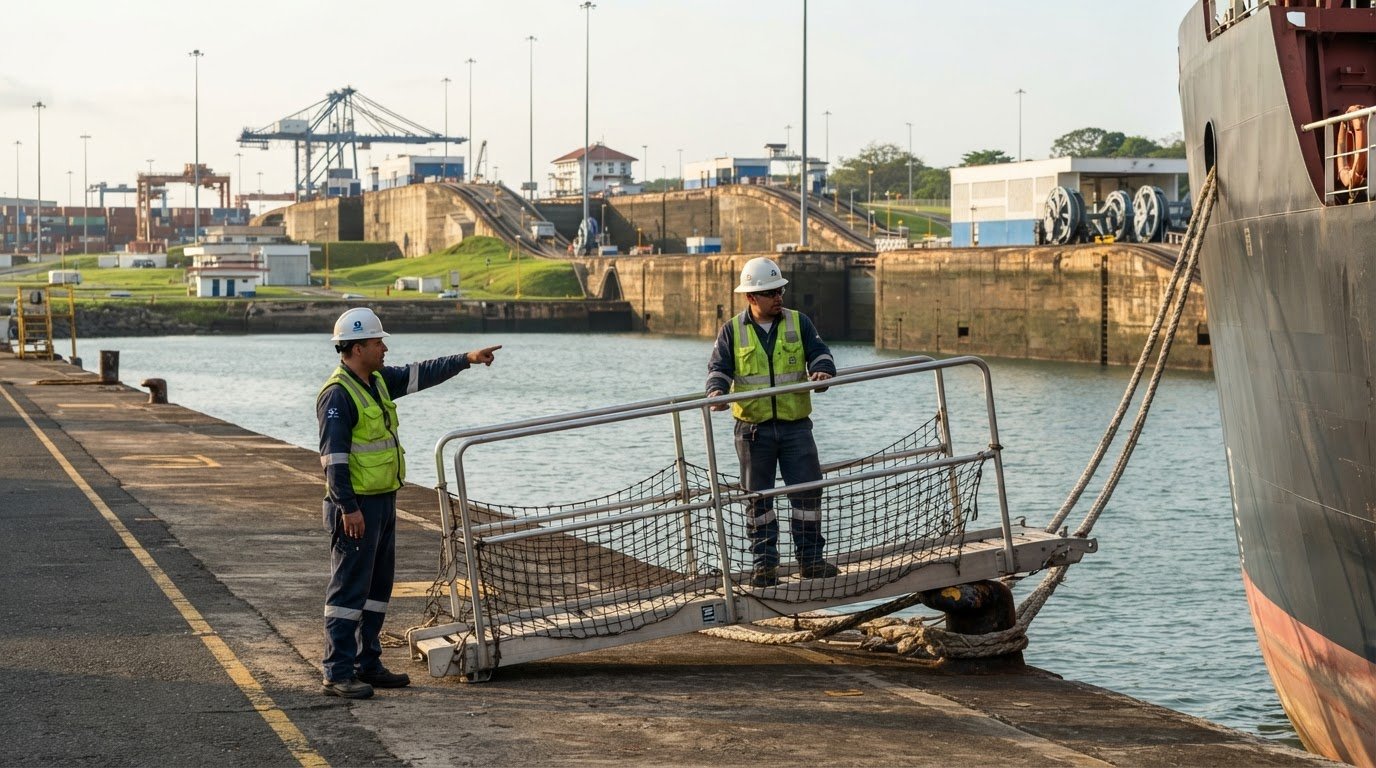
The berth is only the visible part of a Panama port call. A ship agent for the Pacific side of Panama coordinates port-call and transit preparations, and vessels arriving for transit or port calls at Balboa or Cristobal must provide required information at least 96 hours before arrival. Owners and charterers can also nominate an agent to represent their interests locally.
Early coordination matters: arrival information, vessel requirements, and the represented party’s instructions all shape how a call is handled. Knowing who is responsible for each step helps keep communication clear when a vessel’s schedule depends on smooth coordination across port and canal operations.
This article explains how ship agency works on Panama’s Pacific and Atlantic sides, what to expect in arrival procedures, and how owner’s and charterer’s nominated agency differ. You’ll also see where husbandry support fits, so you can understand the scope of local representation before a vessel calls or transits.
Key Takeaways
- Understand how a vessel call can involve coordination on either side of the Panama Canal, with port requirements shaping the arrangements.
- Learn what local ship agency contributes to a Pacific-side or Atlantic-side call, from communication to operational coordination.
- See how arrival preparation brings vessel information and port-call needs together to support an orderly call.
- Distinguish owner’s nominated agency from charterer’s nominated agency, so representation aligns with the party’s role and priorities.
Offices on both sides of the Panama Canal
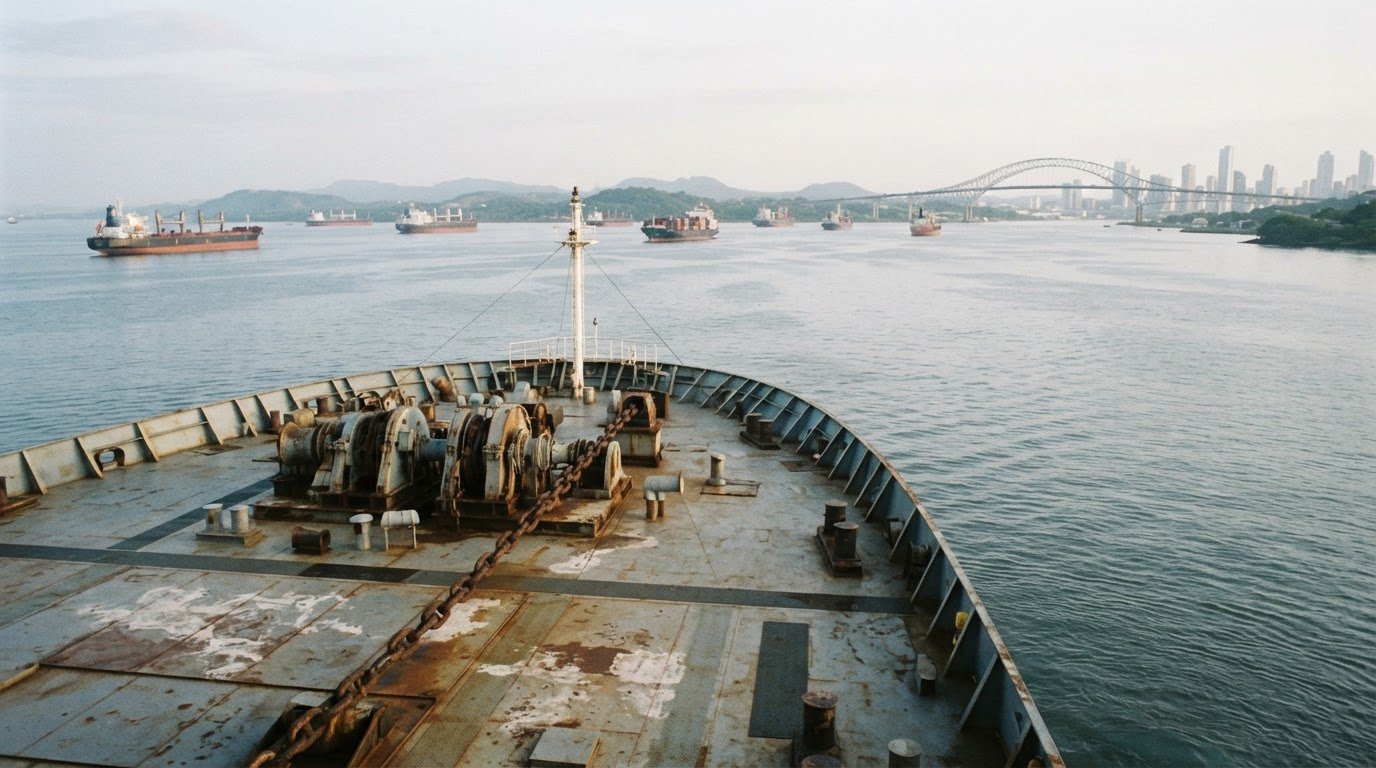
Panama Canal calls can involve activity on both coasts. Balboa serves the Pacific side, while Cristóbal is the Atlantic-side terminal. An agent with a presence at both terminals can coordinate port-call communication and transit arrangements around the vessel’s route. This is especially useful when a ship arrives on one side, transits the Canal, and continues toward the other coast.
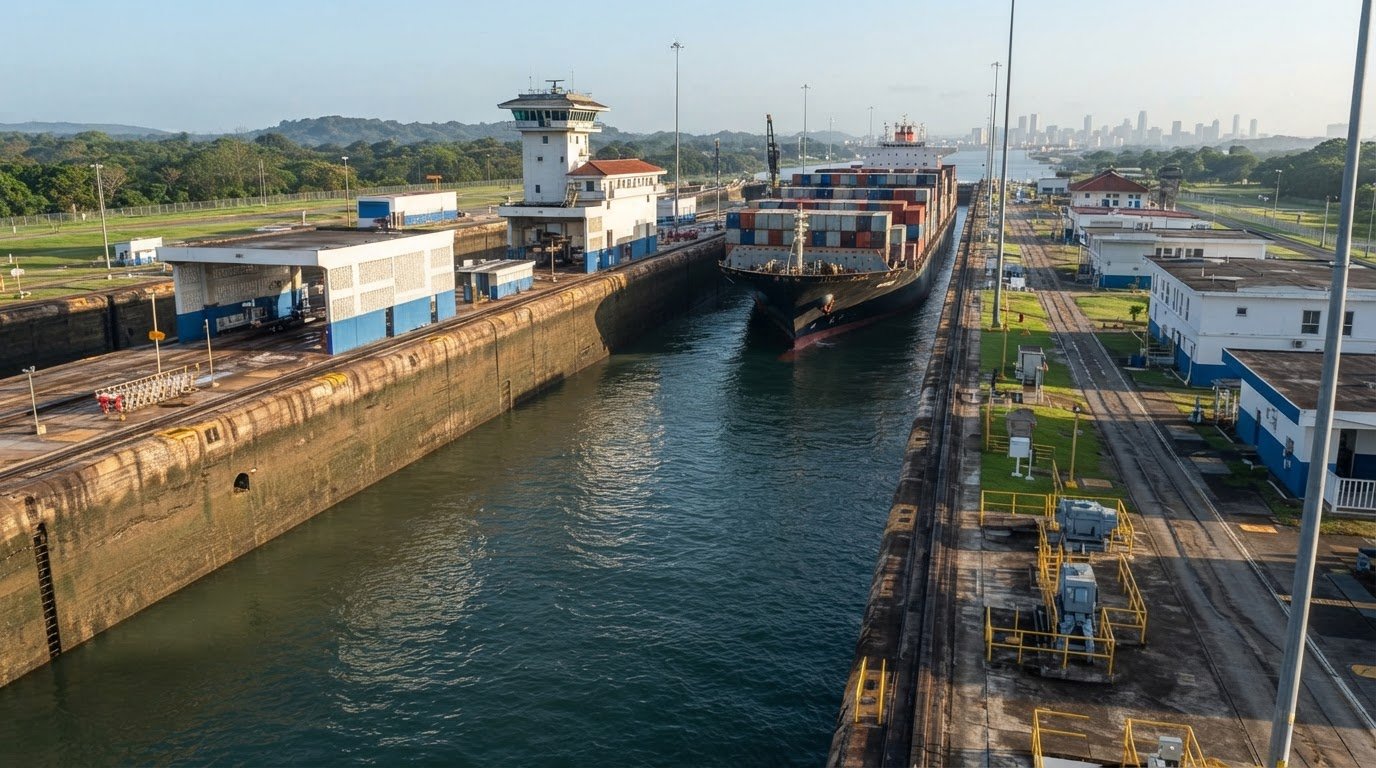
The Canal is about 80 kilometers long and connects the Atlantic and Pacific Oceans. Its locks raise vessels from sea level to Gatun Lake, so transit planning involves more than arrival at a terminal. Advance booking and coordination must account for the vessel’s particulars, intended movement, and applicable Canal requirements. Timing depends on the transit arrangements and operational details of the call.
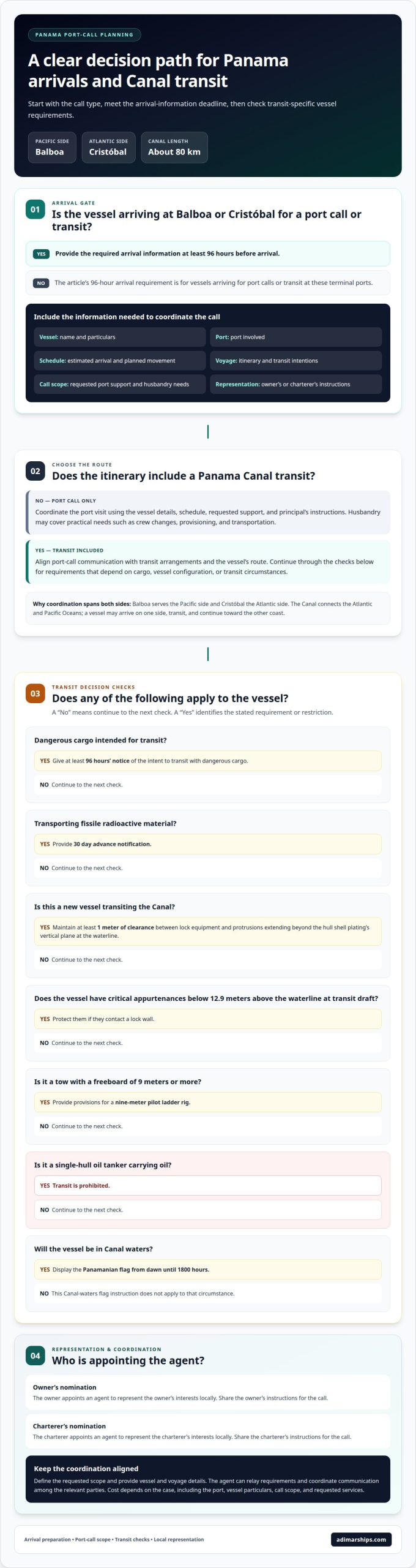
Some requirements involve advance notice or vessel configuration. For example, vessels intending to transit with dangerous cargo must give at least 96 hours’ notice of their intent. Vessels transporting fissile radioactive material must provide 30 day advance notification. New vessels transiting the Canal must maintain at least 1 meter of clearance between lock equipment and protrusions extending beyond the hull shell plating’s vertical plane at the waterline.
- Protect critical appurtenances below 12.9 meters above the waterline at transit draft if they contact a lock wall.
- Tows with a freeboard of 9 meters or more need provisions for a nine-meter pilot ladder rig.
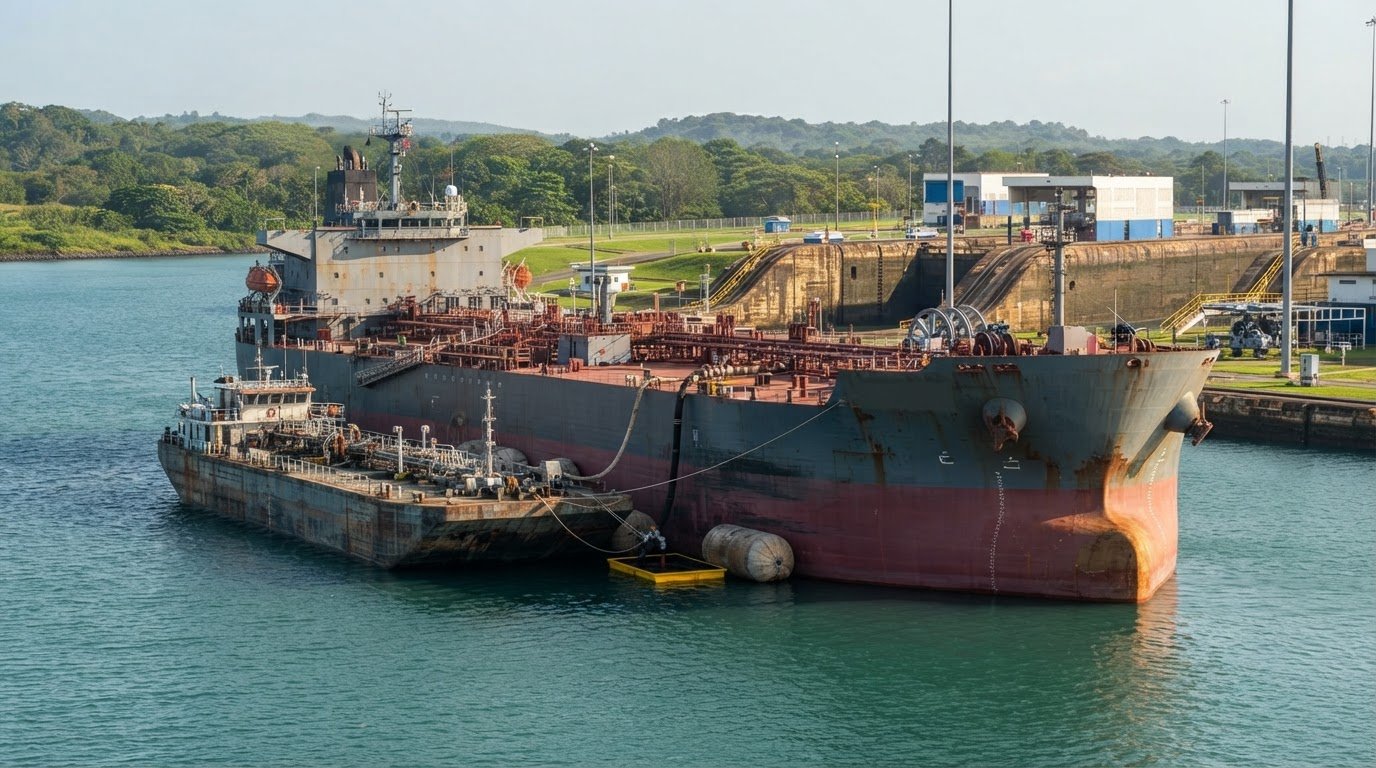
- A single-hull oil tanker carrying oil is prohibited from transiting the Panama Canal.
- Display the Panamanian flag in Canal waters from dawn until 1800 hours.
Transit coordination brings together vessel-call information and booking arrangements. A local agent can relay requirements, coordinate communication between the relevant parties, and keep port and transit preparations aligned. Balboa is the key Pacific-side location, while Cristóbal serves the Atlantic side. Clear, consistent vessel and schedule information helps each party coordinate effectively.
Pacific-side and Atlantic-side ship agency
A Panama call may involve a Pacific port, an Atlantic port, or a Canal transit connecting both. Balboa and Panama City are useful Pacific-side reference points, while Cristóbal is a key Atlantic-side terminal. The port, itinerary, and requested support determine the coordination required. A ship agent for the Pacific side of Panama can align local port communication with the vessel’s wider voyage plan.
Ship agency work centers on representing a vessel’s interests and coordinating information among the relevant parties. It can include communicating vessel requirements, managing call details, and arranging support for the port visit. The scope depends on whether the appointment is for an owner or charterer and whether the call involves Canal transit, port services, or husbandry.
To compare agents, assess their coverage of the vessel’s intended port, relevant port-call experience, and ability to handle the support your appointment requires. Agency cost depends on the case and is provided after a quote request; relevant factors include port, vessel particulars, call scope, and requested services.
For Balboa, Panama City, or another Pacific port, contact an agent through its published business channel and share the vessel name, port, estimated arrival, itinerary, and requested support. These details help establish whether the inquiry concerns a port call, a Canal transit, or both.
To appoint an agent, identify whether the owner or charterer is making the nomination, define the requested scope, and provide the vessel and voyage details. Clear instructions about representation and communication allow the appointed agent to coordinate the call with the relevant parties.
Ship agency services in Panama connect local coordination with the principal’s instructions. For calls requiring practical assistance beyond port communication, husbandry support may also be relevant. A clear scope helps keep responsibilities and updates aligned. For help coordinating a vessel call, explore local ship agency support.
Port calls and arrival procedures
At Balboa, a Pacific-side call may involve port arrangements, Canal transit preparation, or both. Vessels arriving for transit or port calls at the Panama Canal terminal ports of Balboa and Cristobal must provide required information at least 96 hours before arrival. That advance window supports coordination between the vessel, its representatives, and the relevant port parties.
Requirements depend on the call’s purpose and the vessel’s details. A port visit differs from a call linked to a Canal transit, so arrival information should reflect the itinerary, expected arrival, vessel particulars, and requested support. Accurate, consistent details help align communications and reduce avoidable follow-up.
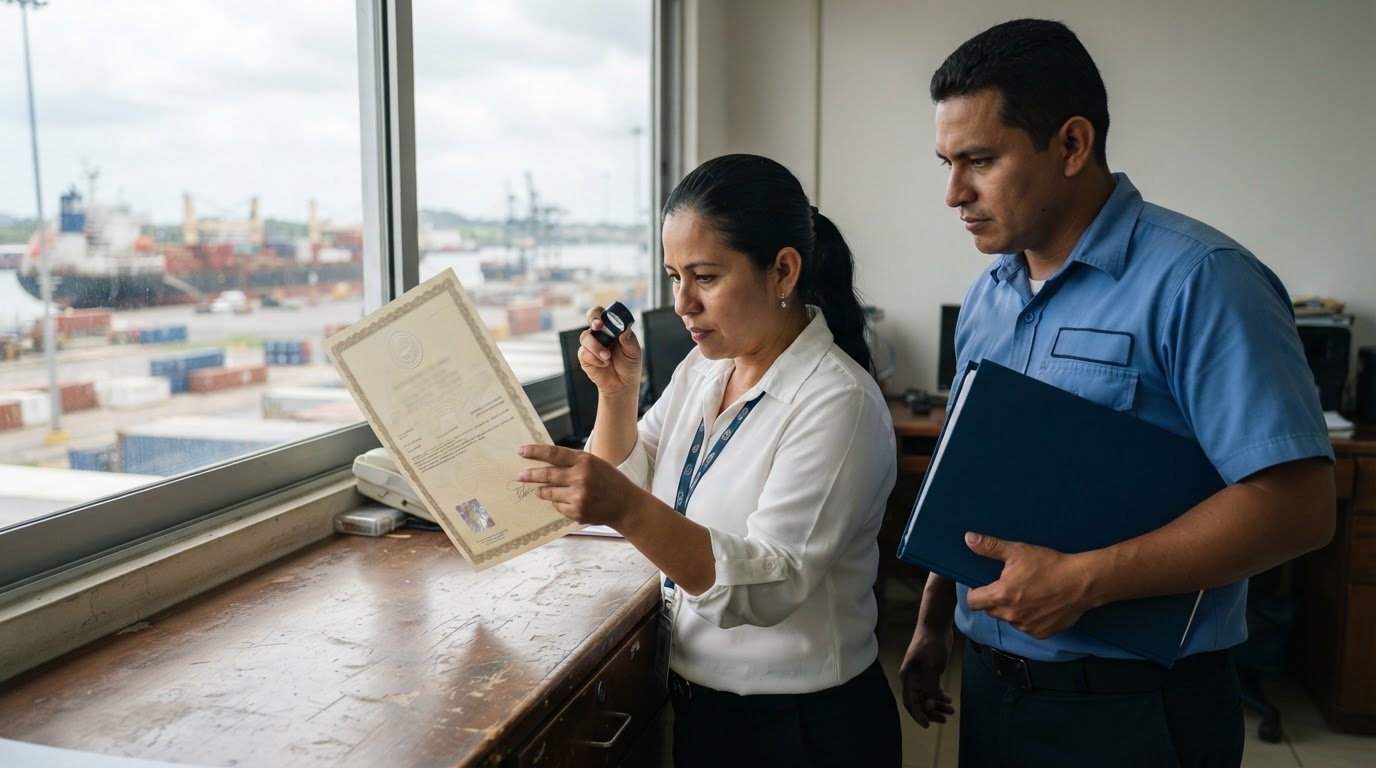
Before arrival, provide the information needed to coordinate the call, including the vessel’s identity, port, estimated arrival, voyage plan, and principal’s instructions. Supporting documents depend on the vessel’s circumstances and requested services. The agent uses the details provided to manage the relevant communications and arrangements.
- Vessel details: name, particulars, and the port involved.
- Schedule: estimated arrival and planned movement, including transit intentions.
- Call scope: requested port support and any husbandry needs.
- Representation: the owner’s or charterer’s instructions for the call.
Husbandry addresses practical needs connected with a vessel’s stay alongside port-call coordination. Support may include crew changes, provisioning, transportation, and other vessel or crew requirements. State the needs clearly and provide the principal’s instructions so the agent can organize the requested support and keep the owner or charterer informed.
Delays can arise when arrival details are incomplete, parties receive inconsistent instructions, or linked arrangements are not updated. Unclear husbandry requests can also slow coordination. Keep the agent informed of changes to the vessel’s arrival and call details so updates can be relayed consistently to the relevant parties.
Owner and charterer representation
The nominating party determines whose instructions the agent follows. An owner’s nominated agent represents the owner, while a charterer’s nominated agent represents the charterer. For a vessel calling at Balboa before a Canal transit, making this distinction clear helps direct local coordination according to the appointed party’s priorities.
An owner may focus on the vessel’s operational requirements and communication with its management team. A charterer may focus on voyage instructions and coordination for the chartered movement. In either case, the nominated agent acts as the local point of contact for the party that appointed them, within the agreed scope.
- Owner’s Nominated Agency: Use this appointment when the owner wants local representation for the vessel call.
- Charterer’s Nominated Agency: Choose this arrangement when the charterer wants its own local representative.
- Clear instructions: Identify the nominating party, vessel, port, itinerary, and requested scope at appointment.
These appointments are not interchangeable labels. If the owner and charterer have separate priorities, identify the represented party at the outset so instructions and updates reach the right place. For example, a charterer coordinating a voyage through Panama may nominate an agent to represent its interests, while the owner maintains separate vessel-management communications.
The appointment begins when the principal identifies the representative and defines the call’s scope. The agent then receives the vessel and voyage details, follows the principal’s instructions, and coordinates relevant local communications. If the call requires husbandry, specify those needs as part of the requested support.
The practical takeaway is simple: nominate the agent whose role matches the interests requiring local representation. A ship agent for the Pacific side of Panama can provide a local point of coordination while keeping the nominated principal’s instructions central. Appoint an owner’s or charterer’s nominated agent to organize representation for a Panama call.
Adimar Shipping: Ship Agency Services
Adimar Shipping provides ship agency support for vessels transiting the Panama Canal, coordinating communication and local arrangements for the appointed principal. Turn to the team when a vessel call needs a local representative or an owner or charterer needs its interests represented.
Adimar’s services include Ship Agency Services, Owner’s Nominated Agency, Charterer’s Nominated Agency, and Husbandry Services. Owners and charterers can appoint the agency to represent their instructions and interests. Husbandry support can address practical needs such as crew changes and provisioning. Share the vessel details, itinerary, requested scope, and principal’s instructions to establish the coordination required.
For a Panama Canal call, Adimar Shipping can act as the local point of contact, keeping communication and arrangements aligned with the appointed party’s needs. Contact Adimar Shipping to discuss representation or support for your vessel call.
Put local representation in place for your next call
Start by identifying whose instructions should guide the vessel’s local representation. A ship agent for Panama’s Pacific side can coordinate the call and keep communication focused on the nominated principal’s needs. Clear instructions from the outset give the agency relationship a practical foundation.
Adimar Shipping offers Ship Agency Services, Owner’s Nominated Agency, and Charterer’s Nominated Agency. Whether you need general call coordination or representation for an owner or charterer depends on who is appointing the agent and what support the vessel requires.
Share the vessel’s port, itinerary, and requested scope when you’re ready to discuss representation. Contact Adimar Shipping for ship agency support and take the next step toward coordinated local support for your Panama call.
Frequently Asked Questions
Which ship agents serve ports on Panama’s Pacific coast?
Adimar Shipping, Inc. provides ship agency services for vessels transiting the Panama Canal, including local representation for owners and charterers. For a call connected with Balboa, a ship agent for Panama’s Pacific side can coordinate vessel communications and transit arrangements. The agent’s role depends on who makes the nomination and what support the vessel’s itinerary requires.
What services do Pacific-side Panama ship agents provide?
Ship agents coordinate vessel calls and transit matters, while the appointment determines the specific support. Adimar Shipping offers Ship Agency Services, Owner’s Nominated Agency, Charterer’s Nominated Agency, and Husbandry Services, including crew changes and provisioning. For applicable Panama Canal compliance, Adimar can also act as the authorized person for the Panama Canal Shipboard Oil Pollution Emergency Plan.
Which ports on Panama’s Pacific side handle commercial vessels?
Balboa is the Panama Canal terminal port on the Pacific side and a practical reference point for vessel transits and port calls. Panama City is also a useful geographic reference, but a city name alone does not identify a vessel’s port. The appropriate port depends on the vessel’s itinerary and planned call.
How do ship agents arrange pilotage, tugs, berthing, and port clearance in Pacific Panama?
For a Canal transit, Adimar Shipping coordinates transit clearance and required documentation, and orders pilots and tugs. The agent uses the vessel’s itinerary and call details to coordinate these arrangements with the relevant parties. Berthing is handled through port-call coordination, with timing and requirements shaped by the vessel’s planned movement and the arrangements for its call.