
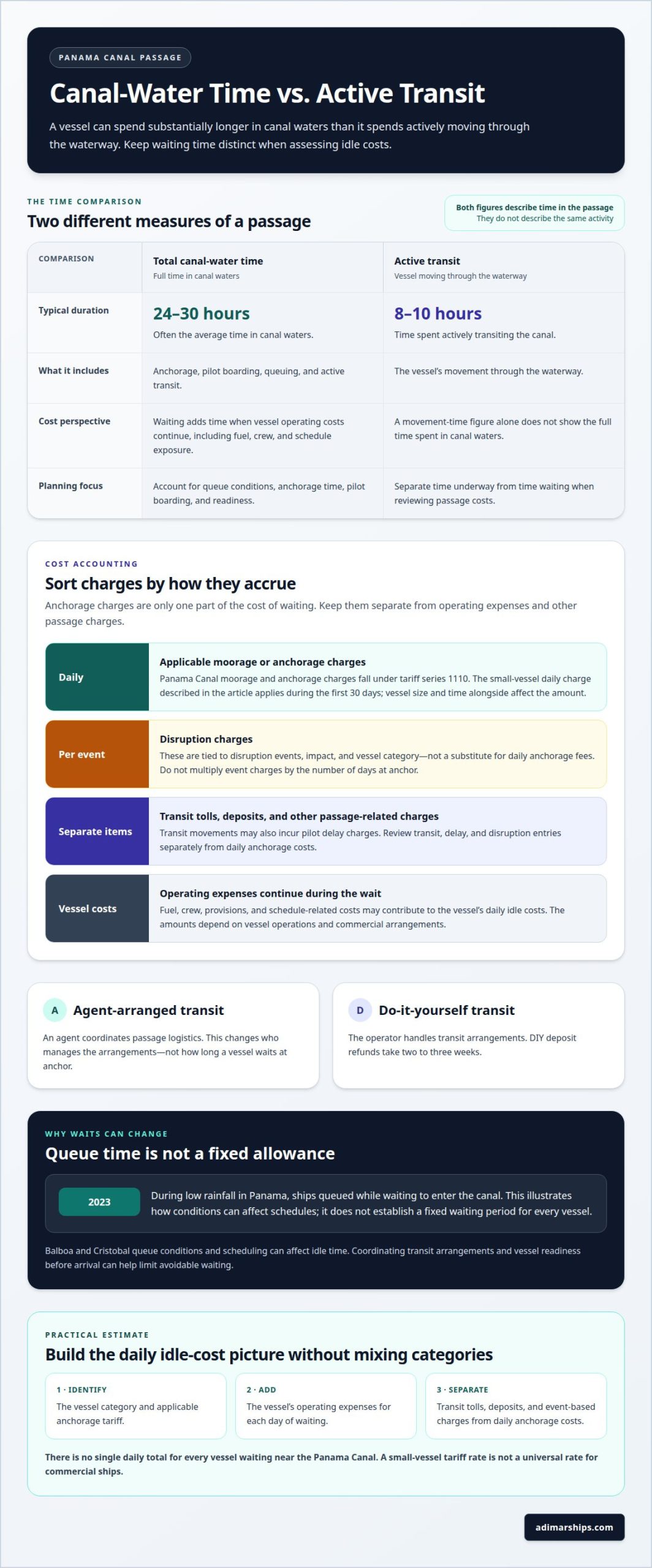
A Panama Canal passage can involve far more waiting than active movement. Total time in canal waters often averages 24 to 30 hours, including anchorage, pilot boarding and queuing, while active transit takes 8 to 10 hours. That gap is central to understanding the cost of idle time at Panama Canal anchorage: the vessel’s operating costs continue while it waits at Balboa or Cristobal.
Waiting can disrupt schedules and inflate costs, even when the passage itself is relatively short. This article explains how anchorage time compares with active transit, what can contribute to delays, and how to assess the cost of idle time at Panama Canal anchorage without confusing it with transit charges. Understanding where time is spent helps operators plan a passage and coordinate it effectively.
Key Takeaways
- Separate canal charges from the vessel’s own operating costs to build a clearer picture of waiting-related expense.
- Balboa and Cristobal queue conditions and scheduling can affect how long a vessel remains idle before transit.
- Panama Canal moorage and anchorage charges fall under tariff series 1110; small-vessel rates include a daily charge that varies with the length of stay.
- Estimate daily idle cost using the vessel’s operating expenses and applicable charges, rather than relying on one universal anchorage rate.
Total time in canal waters versus active transit time
Separate time underway from time waiting: a Panama Canal passage often spans 24 to 30 hours in canal waters, while active transit takes 8 to 10 hours. That distinction helps isolate operating costs from canal charges.
Separating transit time from idle time
Active transit is the vessel’s movement through the waterway; total canal-water time also includes anchorage, pilot boarding, and queuing. The difference matters because fuel, crew, and schedule exposure continue while a ship waits. A vessel moving for 8 to 10 hours may therefore occupy canal waters much longer, making the cost of idle time at Panama Canal anchorage a separate budgeting question.
Transit arrangements and queue access
With an agent-arranged transit, an agent coordinates passage logistics; in a do-it-yourself transit, the operator handles those arrangements. The choice affects who manages the details, not how long a vessel waits at anchor. DIY deposit refunds take two to three weeks.
Charges during anchorage delays
Canal charges and vessel operating costs are separate from comparable port expenses, so there is no single like-for-like rate for nearby anchorages. Tug and line-handler costs depend on the services required.
Vessel characteristics and waiting costs
Vessel length and type influence applicable transit charges, so one daily estimate will not fit every ship. Queue reservation payments can be substantial, but operators can limit avoidable idle time by coordinating transit arrangements and vessel readiness before arrival.
Waiting at Balboa and Cristobal anchorages
Extended waits at Balboa or Cristobal can add days of vessel operating costs and disrupt transit schedules. Canal-related anchorage charges may also apply, separately from the ship’s own expenses.
Anchorage fees and daily waiting costs
Anchorage fees apply to a vessel remaining in canal waters. They are distinct from fuel, crew, and other operating expenses, helping operators separate direct canal charges from the wider cost of idle time.
Panama Canal moorage and anchorage charges fall under tariff series 1110. For small vessels, the daily charge described earlier applies during the first 30 days; a vessel’s size and time alongside affect the amount due.
Balboa and Cristobal are not interchangeable with every nearby port or anchorage when comparing costs. The applicable charge depends on where the vessel waits and which tariff applies, while its operating costs continue during the delay.
Costs and risks of extended delays
An extended delay means a vessel remains at anchor longer than planned, adding to the time its operating expenses accrue. Poor scheduling at Balboa or Cristobal can turn a transit wait into days of idle time.
Queue conditions can change. During low rainfall in Panama in 2023, ships queued while waiting to enter the canal. That example shows how conditions may affect the schedule, without establishing a fixed waiting period for every vessel.
Operators should distinguish ordinary anchorage charges from costs associated with vessel-caused delays. Those are different cost categories, and the reason for a delay matters when assessing exposure. Planning coordination around the vessel’s readiness and transit timing can help reduce avoidable waiting. For local Panama Canal transit coordination, organized communication can support clearer scheduling between the vessel and its passage arrangements.
What are current Panama Canal anchorage fees for vessels?
Panama Canal anchorage costs depend on the charge category, vessel, and period covered. Tariff series 1110 covers moorage and anchorage charges, while transit tolls and disruption charges are separate items. Keeping these categories distinct helps operators avoid treating every invoice as a daily anchorage rate.
This is a specific small-vessel rate, not a universal daily figure for every ship waiting near the canal. To estimate costs, first identify the vessel category and applicable tariff, then account separately for other charges.
Disruption charges are event-based, not a substitute for anchorage fees.
Do not multiply these event charges by the days spent at anchor. They apply to disruption events, while the small-vessel anchorage amount is stated per day. Vessel category and the reason for a charge both matter when reviewing a Panama Canal cost estimate.
For a practical cost breakdown, group charges by how they accrue:
- Daily: applicable moorage or anchorage charges, including the small-vessel rate.
- Per event: disruption charges, with amounts tied to impact and vessel category.
- Separate items: transit tolls, deposits, and other passage-related charges.
This structure makes the cost of idle time easier to understand. It separates the expense of remaining at anchor from charges triggered by a specific event or transit.
Transit movements may also incur pilot delay charges, separate from daily anchorage costs. Reviewing transit, delay, and disruption entries separately clarifies what each charge covers.
How much does it cost per day to wait at anchorage near the Panama Canal?
There is no single daily total for every vessel waiting near the Panama Canal. That figure is a canal charge, not a complete estimate of a ship’s daily idle costs.
For a practical daily estimate, add the applicable anchorage charge to the vessel’s own costs for each day of waiting. Operating expenses continue at anchor and may include fuel, crew, provisions, and schedule-related costs. The amounts depend on the vessel’s operations and commercial arrangements, so do not apply a small-vessel tariff rate as a universal rate for commercial ships.
Use a consistent accounting period. For each additional day at anchor, add another day of applicable charges and operating expenses. Do not count a transit toll or deposit as a daily anchorage fee. Separating these items shows which costs arise from waiting and which relate to passage arrangements.
Vessel category and the basis for each charge are key to interpreting the bill. Other vessel expenses must be assessed separately. A combined figure can obscure whether a daily increase comes from canal charges, vessel operations, or schedule impacts.
For planning, separate the estimate into three parts:
- Canal charges: applicable daily moorage or anchorage fees.
- Vessel operations: expenses continuing while the ship waits.
- Passage costs: tolls, deposits, or other non-daily transit charges.
This breakdown helps assess how each additional day changes the vessel’s total exposure without mistaking a small-vessel tariff for a commercial ship’s daily rate. Discuss Panama Canal transit coordination to support clearer planning around vessel readiness and passage timing.
In the example, the Panama Canal transit wait lasted one week in February. It illustrates why operators should allow for a variable anchorage period when planning costs.
Adimar Shipping
Adimar Shipping, Inc. helps vessel owners and charterers coordinate Panama Canal transits and manage the factors that affect schedules and waiting costs. Its Ship Agency Services support communication and passage coordination. Owner’s Nominated Agency and Charterer’s Nominated Agency provide representation aligned with the appointing party’s interests, while Husbandry Services support vessel needs during a port call.
Turn to Adimar Shipping, Inc. when you need a local partner to coordinate transit arrangements, keep relevant parties informed, and reduce confusion around a vessel’s schedule. Clear coordination helps operators assess waiting-related costs alongside the rest of the passage plan.
Contact Adimar Shipping, Inc. to discuss support for your vessel’s Panama Canal transit.
Make the Next Transit Plan More Deliberate
Use an anchorage estimate as an operational planning tool, not just an accounting figure. A clear view of the cost of idle time at Panama Canal anchorage helps teams compare schedule options, understand the impact of delays, and make decisions based on the vessel’s commercial priorities.
Align transit coordination with your vessel’s requirements and the parties responsible for the passage. Adimar Shipping supports this coordination through Ship Agency Services, Owner’s Nominated Agency, or Charterer’s Nominated Agency. The right arrangement depends on who appoints the agent and what support the transit requires.
For a discussion focused on your vessel’s Panama Canal transit, contact Adimar Shipping about your transit. Clear coordination can help you approach the next passage with a more informed plan.
Frequently Asked Questions
What rules govern anchoring and waiting areas near the Panama Canal?
For planning, treat the vessel’s designated waiting location and transit instructions as central to anchorage arrangements near the Panama Canal. Balboa and Cristobal are named waiting areas, but do not assume nearby waters are interchangeable in a vessel’s transit plan. Coordinate anchorage position with transit timing, vessel readiness, and applicable charges to track schedules and waiting costs clearly.
How do Panama Canal anchorage costs compare with nearby ports and anchorages?
There is no single like-for-like rate: charges depend on where the vessel waits and which tariff applies. Panama Canal anchorage charges are separate from nearby port expenses and the vessel’s own operating costs.