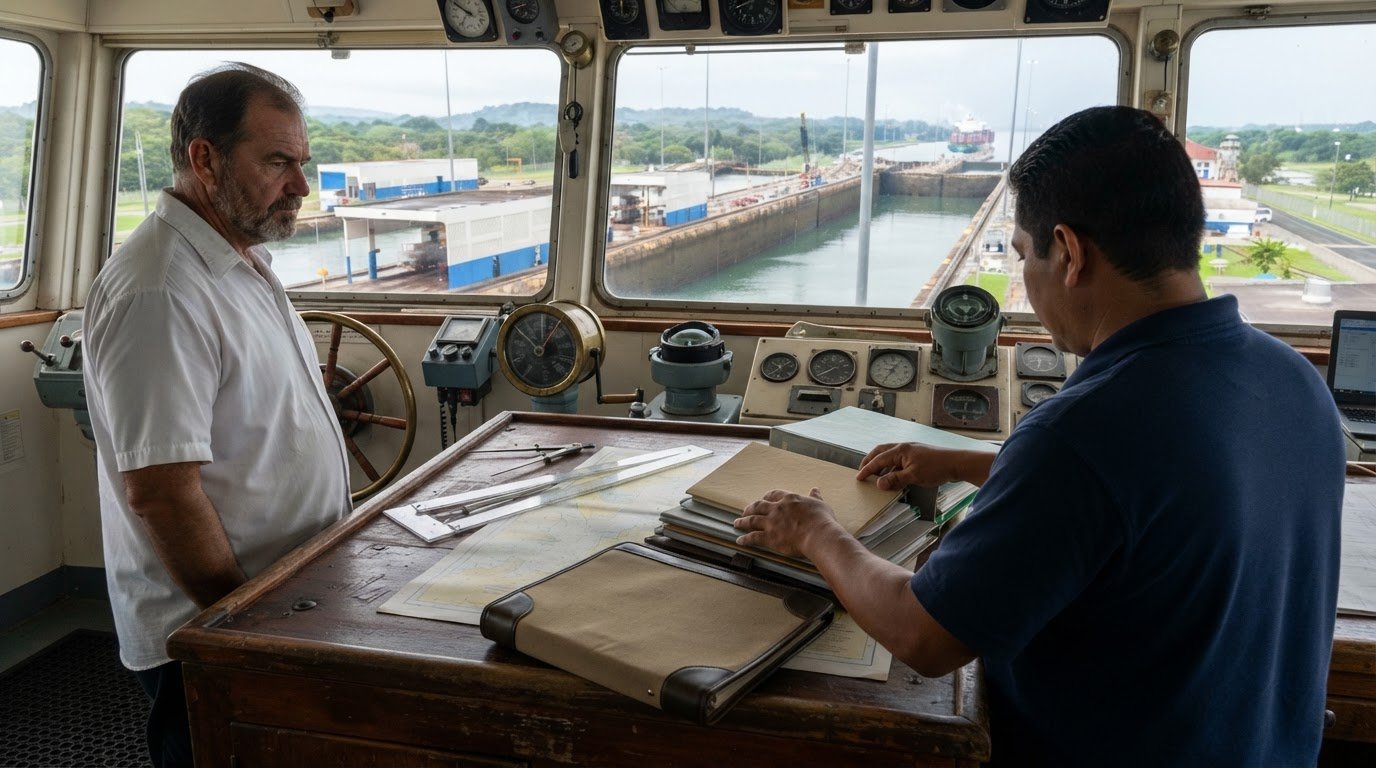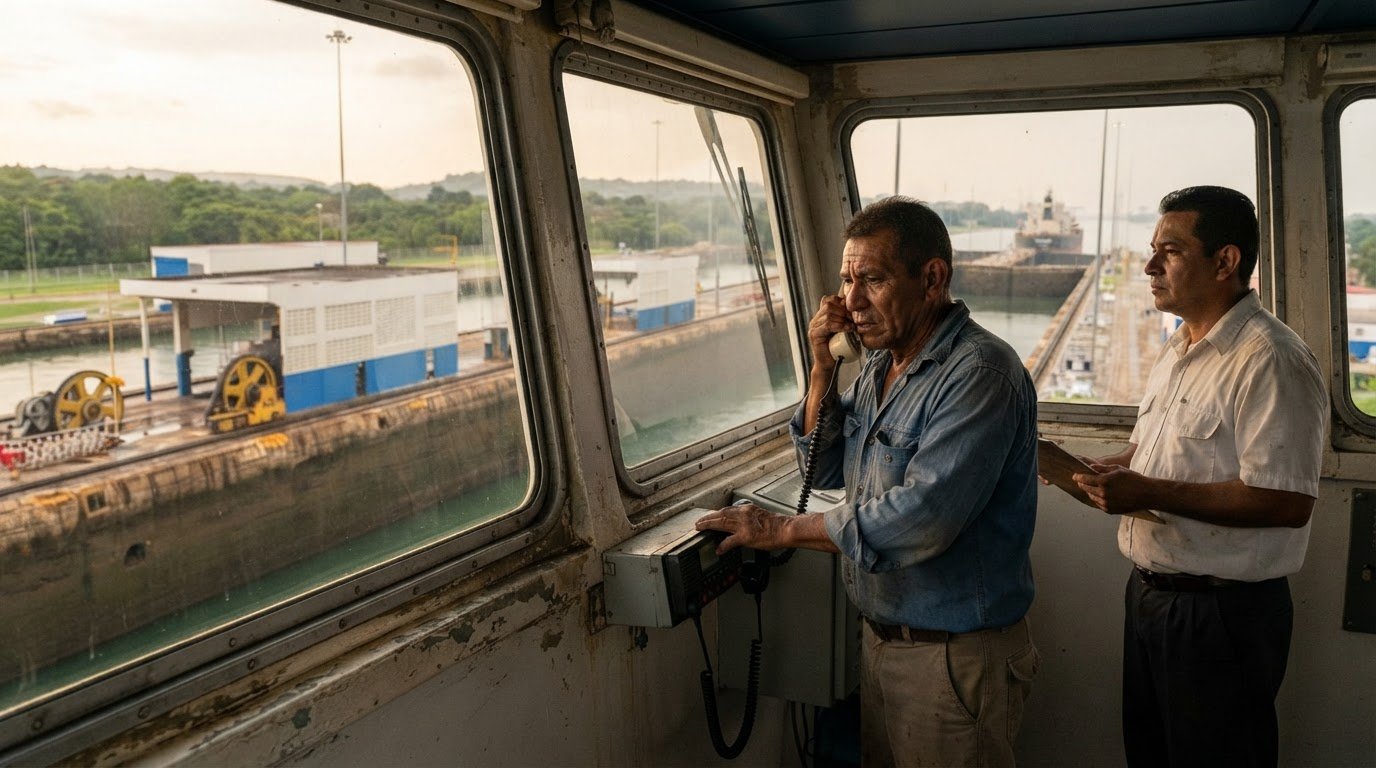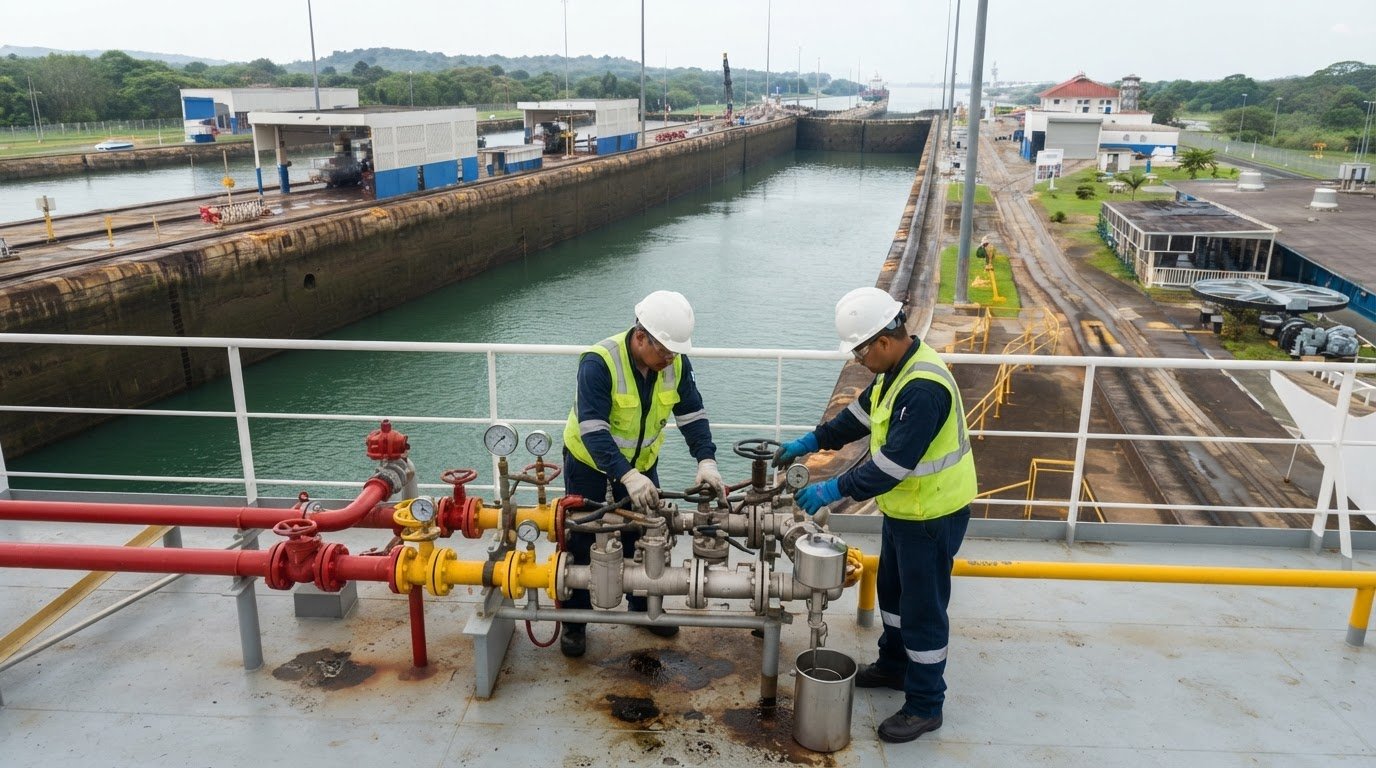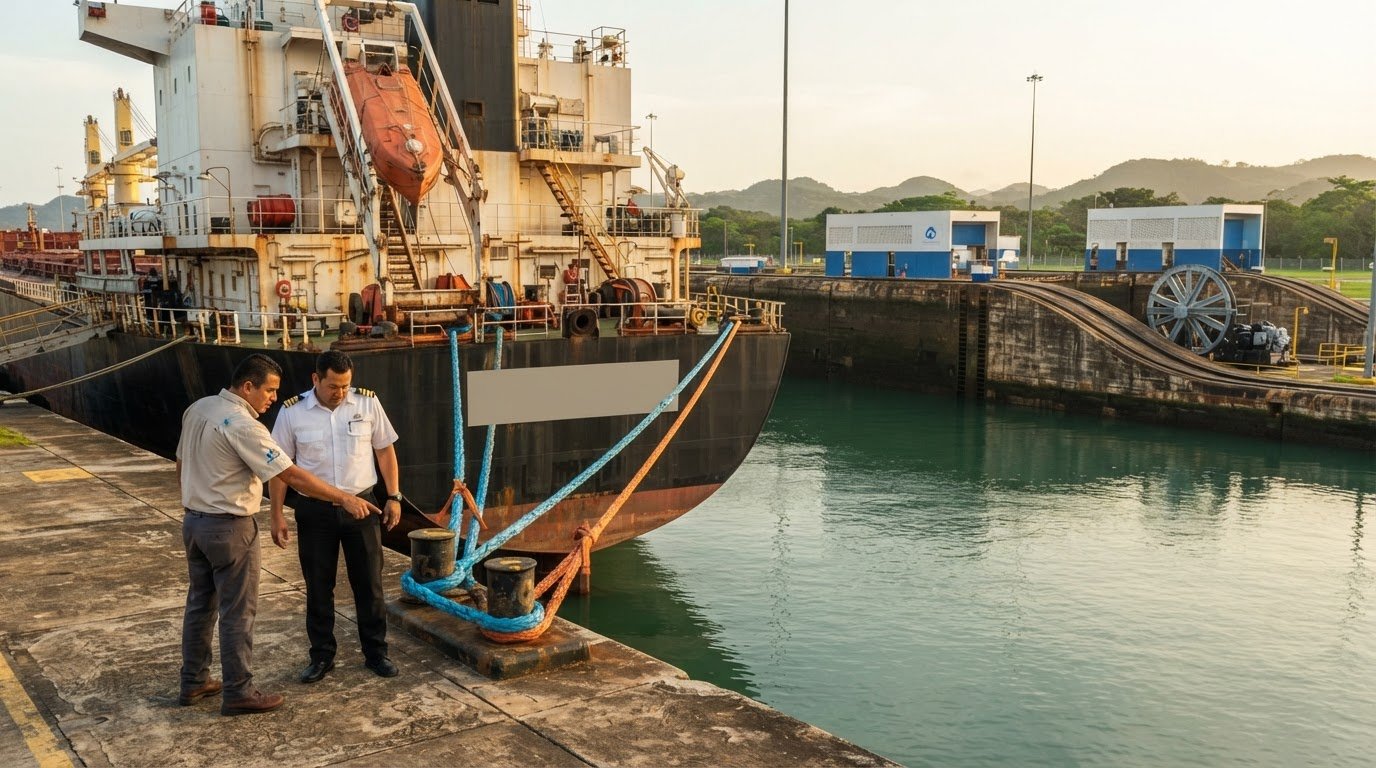

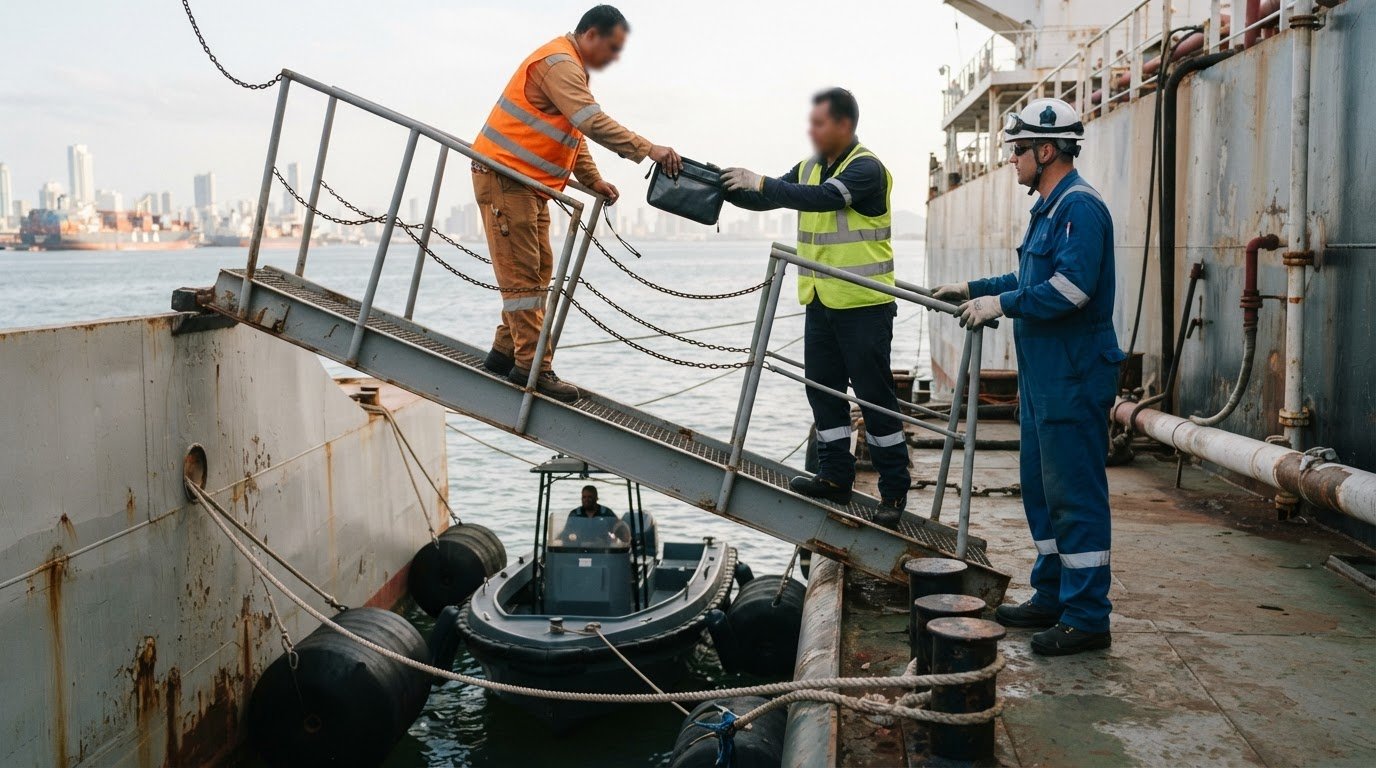
Changing a ship agent in Panama is a coordinated handover, not a reset of the vessel’s port arrangements. The process for switching a ship agent in Panama typically involves appointing the incoming agent, transferring the vessel’s call details and operating instructions, and aligning responsibilities with the outgoing agent. Clear communication helps maintain continuity across port services and the vessel’s schedule.
It’s understandable to focus on whether a change will disrupt operations. The key is to organize the handover around the vessel’s port call, service requirements, and communication flow. This article explains what the incoming agent needs, how responsibilities are transferred, and which Panama port services may require coordination, so you can plan the transition with clarity.
Key Takeaways
- Understand how a change of agent is coordinated with maritime and immigration authorities, and why timing around the vessel’s call matters.
- See how port agency services support continuity during a handover and which operational details shape the transition.
- Learn which vessel, crew, and appointment records help the incoming agent prepare for the port call.
- Clarify the roles of the shipowner, master, and port authorities so the change can proceed with clear authorization and communication.
Coordination with maritime and immigration authorities
A vessel’s agent change needs to fit its arrival, port call, and crew operations. In Panama, the handover can involve updating authority records, coordinating immigration arrangements, and aligning any Canal-related timing.
Approval for an Agent Change
The shipowner authorizes the appointment, while the master needs clear instructions about the incoming agent’s role. This distinction matters: an unclear handover can leave port communications or crew arrangements without an accountable contact.
The outgoing agent should transfer the vessel’s call information and pending operational details to the incoming agent. The incoming agent can then coordinate updates with relevant port offices and authorities, including the Panama Maritime Authority when required for the call. Keep the owner’s appointment instructions and the master’s operational contacts aligned.
For an Owner’s Nominated Agency appointment, the owner’s instruction establishes who represents the vessel. The master’s cooperation supports an orderly exchange of arrival information and service requirements. Port authorities may need updated agent details for their operational records, but that is separate from the owner’s appointment decision.
Port, Customs, and Canal Procedures
Port, customs, and Canal procedures shape the timing and information needed for a change. There is no single handover that fits every vessel. An arrival at Balboa, Colón, or Cristóbal may involve different port contacts and active vessel arrangements.
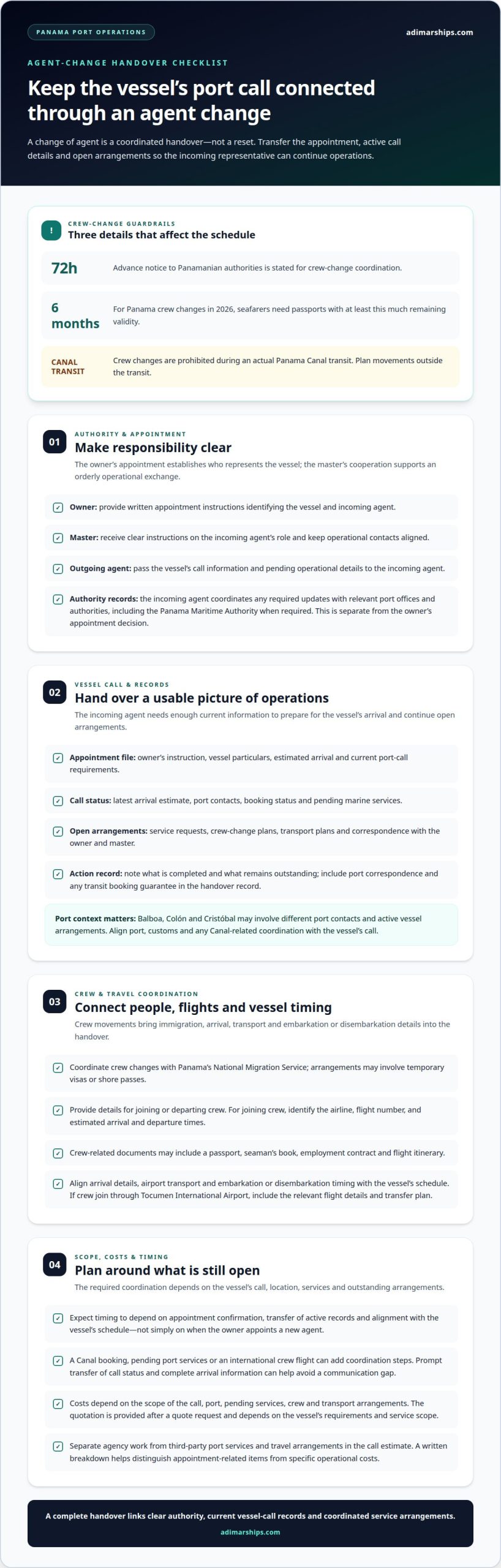
How do Panama port, customs, and Panama Canal procedures affect an agent change? The incoming agent coordinates relevant port and customs communications, then aligns any Canal-related arrangements with the vessel’s call. Crew changes require immigration coordination with Panama’s National Migration Service and may involve temporary visas or shore passes. Seafarers need passports with at least six months of remaining validity for Panama crew changes in 2026.
For crew-change coordination, the stated advance notice to Panamanian authorities is 72 hours. The agent should align arrival details, transport, and embarkation or disembarkation timing with the vessel’s schedule. Crew changes are prohibited during an actual Panama Canal transit under ACP regulations, so planned movements must fit outside that transit. Keep port correspondence and any transit booking guarantee within the handover record, supporting timely coordination between the outgoing and incoming representatives.
Ship agency services in Panamanian ports
An agent’s responsibilities can include port-call coordination, vessel communications, and practical support for seafarers. The handover should reflect the vessel’s location, schedule, and outstanding arrangements.
Appointment Documents
Appointment documents identify the incoming agent and provide the information needed to prepare for the vessel’s call. Clear instructions matter because incomplete details can slow coordination with port and marine contacts.
The incoming agent needs the owner’s appointment instruction, vessel particulars, estimated arrival, and current port-call requirements. For a crew change, arrangements also depend on details about joining or departing crew and their flights. Plans for joining crew should identify the airline, flight number, and estimated arrival and departure times. Seafarer documents may include a passport, seaman’s book, employment contract, and flight itinerary.
Switching Costs and Fees
Costs and fees depend on the scope of the vessel’s call, port, pending services, and crew or transport arrangements. The price depends on the case and is given after a quote request, with the vessel’s requirements and service scope shaping the quotation.
Separate agency work from third-party port services or travel arrangements in the call estimate. For example, a vessel calling at Cristóbal with a crew transfer and airport transport needs different coordination from a call without crew movements. A written breakdown helps the owner see which items relate to the agency appointment and which relate to specific operations.
Process Timing
The handover takes the time needed to confirm the appointment, transfer active records, and align the incoming agent with the vessel’s schedule. Timely instructions help prevent a gap in communication.
A straightforward handover can move faster when the outgoing agent promptly shares the call status and the incoming agent receives complete arrival information. A Panama Canal booking, pending port services, or an international crew flight can add coordination steps. Timing depends on what remains open, not simply on when the owner appoints a new agent.
Outgoing Agent Handover
The outgoing agent should hand over current vessel-call records, open service requests, and the communications needed to continue operations. This matters because missing details can lead to duplicated requests or missed arrangements.
The handover should cover the latest arrival estimate, port contacts, booking status, pending marine services, crew-change arrangements, transport plans, and correspondence with the owner and master. If seafarers are joining through Tocumen International Airport, the incoming agent needs the relevant flight details and transfer plan. A clear record of completed and outstanding actions gives the new representative a usable picture of operations.
For a Balboa or Cristobal call, a coordinated Panama port agency handover can keep vessel arrangements connected through the transition.
Which documents should you provide to appoint a new ship agent in Panama?
A complete appointment file gives the incoming agent authority to represent the vessel and enough operational detail to prepare for its call. Keep appointment records separate from crew-change documents, since each supports a different part of the handover.
Start with the shipowner’s written appointment instruction, identifying the vessel and the agent being appointed. Add vessel particulars and current port-call information, including the expected arrival and any pending arrangements. These records establish the scope of representation and help the incoming agent take over active communications without confusing the appointment with a separate port or Canal approval.
For a Panama crew change, commonly required supporting documents include:
- A valid passport and seaman’s book for each seafarer.
- An employment contract or Letter of Guarantee.
- A flight itinerary covering arrival and departure.
- Medical or vaccination certificates, when required for the movement.
Joining crew need additional documents for visa applications: a passport copy, seaman’s book copy, STCW-COC certification, and a seafarer job letter or employment contract. These records connect the crew member’s identity and seafarer status with the planned assignment. For example, the employment contract or job letter supports the joining crew member’s stated role aboard the vessel.
For departing crew, the listed documents include a crew list showing each person’s date and place of embarkation, plus passport and seaman’s book copies. The crew list records who is signing off and their embarkation details. Keeping joining and departing crew files separate helps prevent a document intended for one movement from being used for the other.
Send the appointment instruction and relevant vessel records together, then provide crew documents according to whether each person is joining or leaving. For a crew change involving Tocumen International Airport, the arrival and departure itinerary should match the planned movement. An organized file helps the incoming agent coordinate the vessel’s call and crew arrangements using consistent information.
Who must approve a change of ship agent in Panama, including the shipowner, master, and port authorities?
A ship-agent change separates the commercial appointment from operational coordination. In Panama, the shipowner appoints the agent, the master receives the operational handover, and port authorities need accurate agent information for the vessel’s call.
The shipowner’s written instruction is the basis for the appointment. It should identify the vessel, the incoming agent, and when the new representation begins. If the owner delegates agency nomination, the appointment should still make the owner’s authorization clear. This gives the incoming agent a defined mandate and helps prevent conflicting instructions during an active port call.
The master is the vessel’s key operational contact, not a substitute for the owner’s appointment. The master needs the incoming agent’s contact details and a clear picture of which arrangements are transferring. For example, if a port service is already scheduled, both sides should know who will coordinate updates and report changes to the vessel.
Port authorities and relevant offices maintain their own operational records and procedures. They do not choose the vessel’s agent, but accurate agent details support communication about arrival, port services, and outstanding requirements. Changing agents does not itself transfer or cancel a separate port or Panama Canal arrangement. Give those records and bookings attention during the transition.
A practical responsibility split is:
- Shipowner: authorizes the appointment and its effective date.
- Master: receives updated contact and vessel-call information.
- Incoming agent: communicates its role and coordinates assigned port matters.
- Port authorities: receive accurate agent details for relevant operational records.
Keeping these roles distinct reduces uncertainty over who may issue instructions, answer port queries, or report a schedule change. For an owner-led appointment, coordinate an Owner’s Nominated Agency appointment with a clear handover of responsibilities.
Adimar Shipping: Ship Agency Services
Adimar Shipping, Inc. supports vessel owners and charterers through ship-agent transitions in Panama. Its Ship Agency Services provide local coordination for a vessel’s port call, connecting appointment details with operational needs and communications.
For an owner-led appointment, Owner’s Nominated Agency represents the vessel. Charterers can use Charterer’s Nominated Agency when their role calls for agency representation. Husbandry Services coordinate vessel-related requirements alongside the port call. Together, these services help align ongoing arrangements and keep stakeholders informed during a change of agent.
Contact Adimar Shipping, Inc. to discuss ship agency support for your vessel’s Panama call.
Set Up Your Next Panama Port Call With Confidence
Changing ship agents is an opportunity to set clear expectations for the next port call. Adimar Shipping, Inc. supports vessel owners and charterers with local coordination. The switching ship-agent process in Panama works best when operational needs and stakeholder communications stay aligned.
Adimar Shipping, Inc. offers Ship Agency Services, Owner’s Nominated Agency, and Charterer’s Nominated Agency. The right arrangement depends on who is nominating the agent and what the vessel’s call requires. Plan the switch around those needs so your team has a shared understanding of the transition.
Contact Adimar Shipping, Inc. for assistance with your vessel’s agency arrangements. A clear next step can help your team move forward with confidence.
Frequently Asked Questions
What does switching ship agents in Panama involve?
Switching a ship agent in Panama means changing the vessel’s local representative while keeping its port-call coordination organized. The transition affects who receives operational updates, follows up on open arrangements, and communicates with stakeholders. For example, if the arrival estimate changes after the appointment, the new representative needs a clear process for sharing that update with the master and relevant port contacts.
What steps does a professional ship agent take to manage a ship-agent change in Panama?
An agent establishes the scope of the appointment, reviews the vessel’s active call status, and sets clear communication channels with the owner and master. The agent then tracks outstanding items and reports changes that could affect operations. If a service request remains open during the handover, for instance, the incoming representative confirms its status and coordinates the next update rather than treating it as a new, unrelated request.
How do ship-agent services and switching procedures differ among Panama ports?
The appointment principle remains consistent, but operational details depend on the vessel’s port call and location. A call at Balboa, Colón, or Cristóbal can involve different local contacts and service arrangements, so the incoming agent organizes communications around the vessel’s actual port and schedule. A Canal transit adds another coordination layer, while a call without transit-related activity has a different operational focus.