
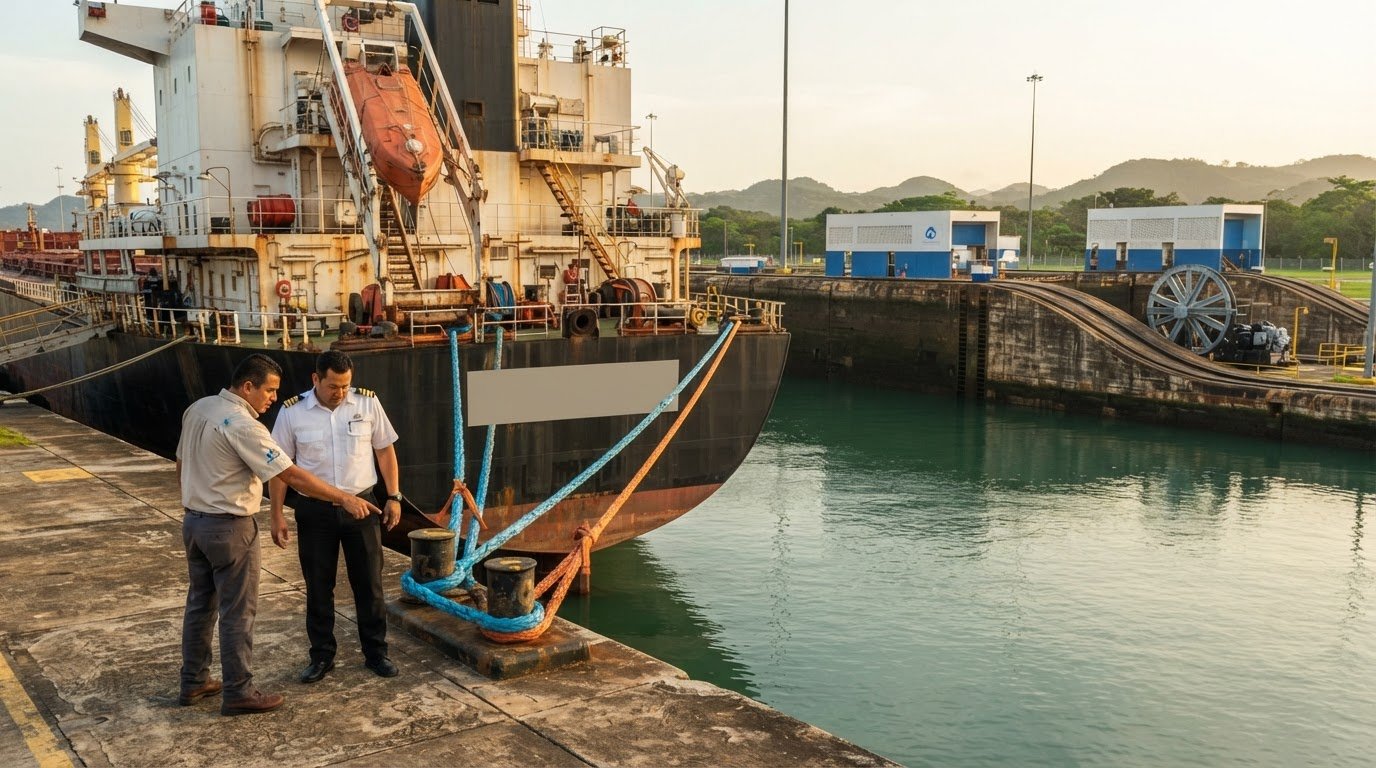
A vessel arrest in Panama can unfold quickly. As a trusted agent for handling vessel arrest in Panama, Adimar Shipping, Inc. coordinates local vessel arrangements, while qualified local legal assistance is required for the arrest application. A vessel in Panamanian territorial waters or transiting the Canal can be arrested within the same day.
The timing depends on more than reaching port. If a vessel has been assigned Panama Canal Authority transit resources, it can be detained only after completing transit and before leaving Panamanian waters. Coordinating the legal process with the vessel’s movements is therefore essential.
This guide explains how the deposits affect an arrest, the timing rules for Panamanian waters and Canal transit, and which documents may be filed at the initial stage. It also clarifies how local ship agency support from Adimar Shipping, Inc. fits into the process when vessel schedules and legal proceedings intersect.
Key Takeaways
- Separate the damages security from the vessel’s custody and maintenance deposit, and account for the vessel’s gross tonnage when planning funds.
- Map the arrest request against the vessel’s position and Canal transit stage, since timing and eligibility depend on where the vessel is in its passage.
- Prepare the application package with the supporting evidence and authority documents; initial filings can use copies or scans in English or Spanish.
- Distinguish local legal assistance for the arrest proceedings from ship agency coordination that helps manage vessel movements and port arrangements.
Court deposits for damages and vessel custody
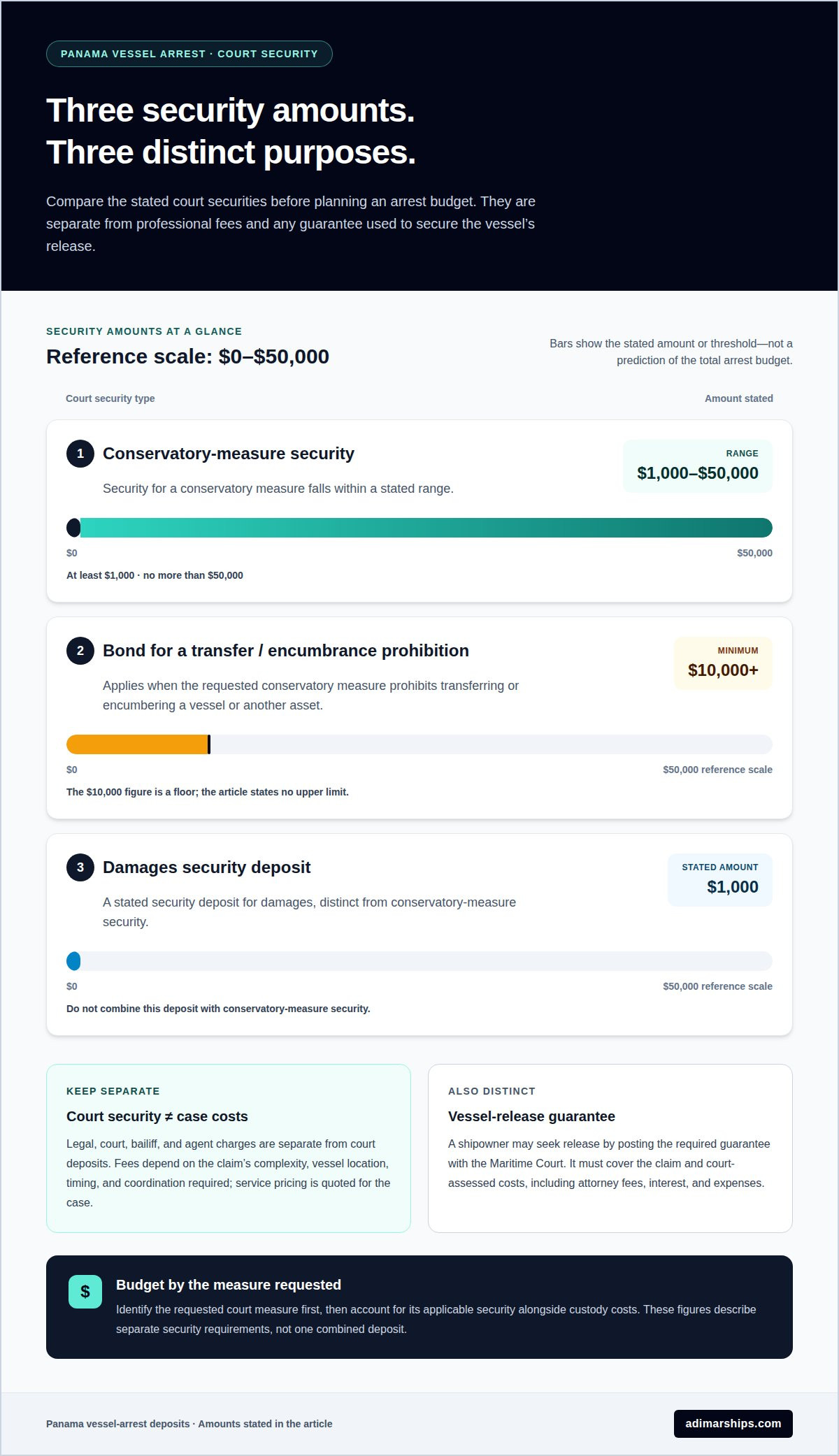
Panama’s arrest budget includes separate security for damages and vessel custody. These court deposits are distinct from professional fees and any guarantee used to secure the vessel’s release.
For damages, the stated security deposit is $1,000. A conservatory measure requires security of at least $1,000 and no more than $50,000. These amounts serve different purposes, so they shouldn’t be treated as one combined deposit.
A separate bond applies when the requested conservatory measure prohibits transferring or encumbering a vessel or another asset. That bond must be at least $10,000. Identify which measure the application seeks, then account for its applicable security alongside custody costs.
Legal, Court, Bailiff, and Agent Fees
Legal, court, bailiff, and agent charges are separate from court deposits. Amounts depend on the claim’s complexity, the vessel’s location, timing, and the coordination required. Service pricing is quoted for the case rather than given as a typical fee range.
The Panama Maritime Admiralty Court is the judicial forum for international maritime disputes, including vessel arrest proceedings. Panama’s Maritime Courts can also hear claims through an arrest when the vessel and parties are foreign.
Challenges, Release, and Wrongful Arrest Risks
A shipowner may seek release by posting the required guarantee with the Maritime Court. Posting the required guarantee may allow the vessel’s release. It must cover the claim and court-assessed costs, including attorney fees, interest, and expenses.
A defendant can challenge enforcement by arguing that the vessel belongs to someone else, that a prior express no-arrest undertaking applies, or that the claimed maritime lien does not exist under the applicable law. Article 187 of Panama’s Maritime Procedure Law provides for a wrongful-arrest action as part of the defendant’s defense. This makes the claim basis and supporting evidence important considerations before seeking arrest.
Ship arrest timing in Panamanian waters and during Panama Canal transit
In Panama, a vessel must be in Panamanian waters before a plaintiff can apply for its arrest. A ship there or transiting the Panama Canal can be arrested within the same day.
Compared with other Central American jurisdictions, the key point here is Panama’s territorial-water requirement and Canal-specific timing rule. The practical question is whether the vessel is physically within Panamanian waters when the arrest application is made.
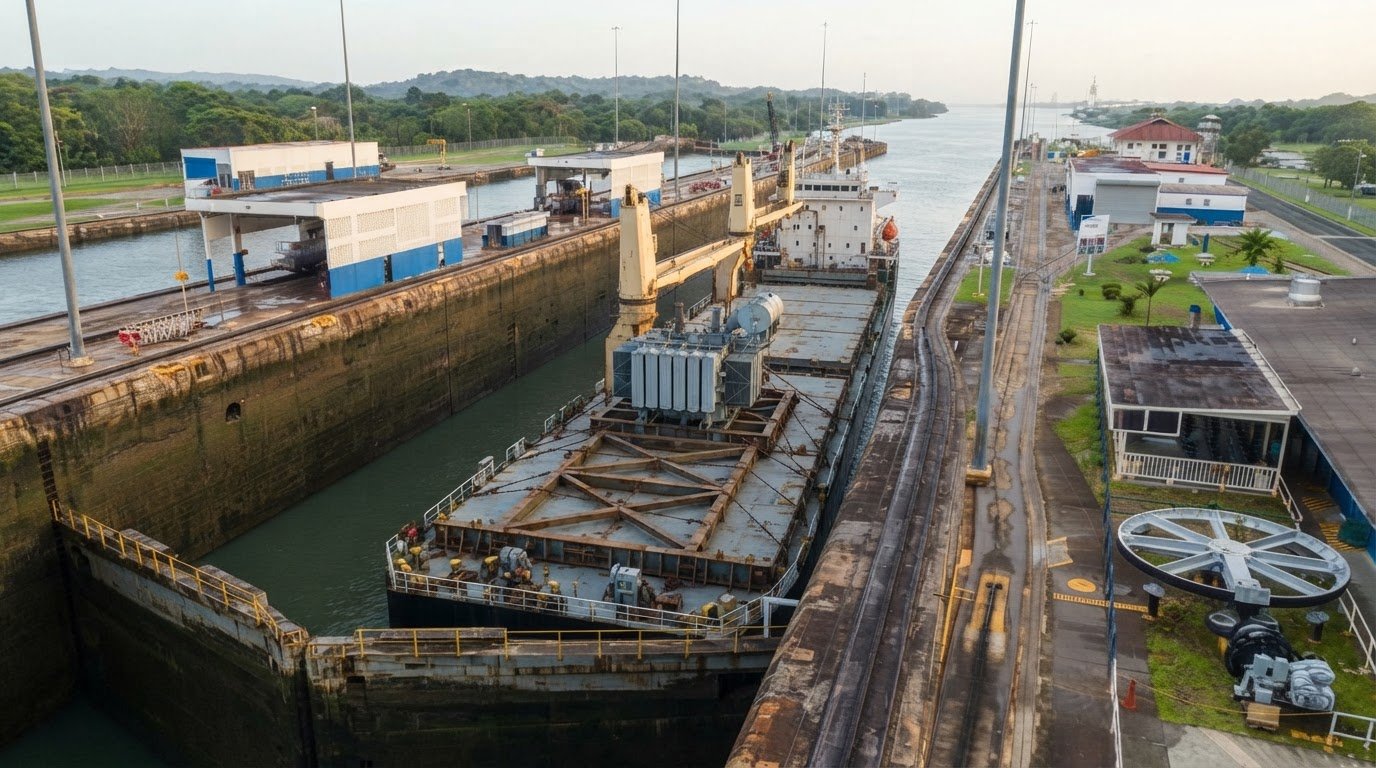
Panama’s Maritime Courts are available 24/7 for arrests at a port or dock, or around a Canal transit. An arrest may take place at the beginning or completion of transit, but Canal Authority transit resources affect the available window.
- At port or dock: The vessel must be in Panamanian waters when the plaintiff applies.
- During Canal transit: A vessel can be arrested within the same day, subject to its transit status.
- With assigned transit resources: Detention can occur only after transit is complete and before the vessel leaves Panamanian waters.
The vessel’s position and transit stage are central to timing. Under this rule, a ship cannot be detained while it is still completing its scheduled passage. After transit ends, the arrest window lasts only until the vessel leaves Panamanian waters.
Qualified local legal assistance is required for an arrest or a defense against arrest. Counsel should have experience with Panamanian maritime proceedings; ship agency coordination does not replace legal representation or determine the court’s ruling.
The appropriate choice is a Panamanian maritime law firm experienced in vessel arrest and ship detention. Panama’s Maritime Courts handle these proceedings, and qualified local legal assistance is required for the arrest process.
For a vessel approaching or completing transit, local vessel-movement coordination can help align operational arrangements with the legal timetable.
Documents and evidence required for an arrest application
A Panama arrest application starts with the maritime claim and evidence connecting it to the vessel. Article 19 of Panama’s Maritime Procedure Law allows arrest for claims arising from acts related to maritime commerce, transportation, and traffic, whether those acts arose inside or outside Panama.
At the initial court proceeding, documents may be submitted in Spanish or English as photocopies or scanned copies. Legalized or authenticated originals are not required at this stage, which can help prepare an application when original papers are not immediately available.
A practical first step is to organize the claim, supporting records, and filing materials for local counsel:
- Define the claim: Identify the act related to maritime commerce, transportation, or traffic, and explain how it supports the requested arrest.
- Assemble evidence: Group the available records by issue, so counsel can connect each document to the claim and the vessel.
- Prepare authority documents: Include the claimant’s power of attorney and certificate of good standing in the application package.
- File initial materials: Submit documents in Spanish or English as photocopies or scans during the initial stage.
Certified originals of the power of attorney and good-standing certificate remain important. This is a procedural alternative for the initial stage, not a replacement for supplying the originals.
Document preparation should make the connection between the alleged maritime activity and the requested court measure clear. For example, records relating to transportation or maritime traffic can be arranged to show how the claim arises from the relevant activity. Counsel can then assess whether the evidence supports the application under Article 19.
Arresting a ship requires qualified local legal assistance. An organized filing gives counsel a clear record to present, while copies and scans can support the initial stage before certified originals are available.
What types of agents handle vessel arrests in Panama?
“Agent” can mean local maritime counsel or a ship agent, but their roles differ. Panama’s arrest process requires qualified local legal assistance; vessel-side coordination supports operations but does not replace counsel. An agent for handling vessel arrest in Panama can coordinate operational arrangements while counsel provides legal representation.
Maritime counsel manages the legal case by assessing the maritime claim, preparing court filings, and representing the claimant or shipowner. The Panama Maritime Admiralty Court hears international maritime disputes, including proceedings to challenge vessel seizure and arrest. Panama’s Maritime Courts can exercise jurisdiction even when the vessel and parties are foreign and the contract is not governed by Panamanian law.
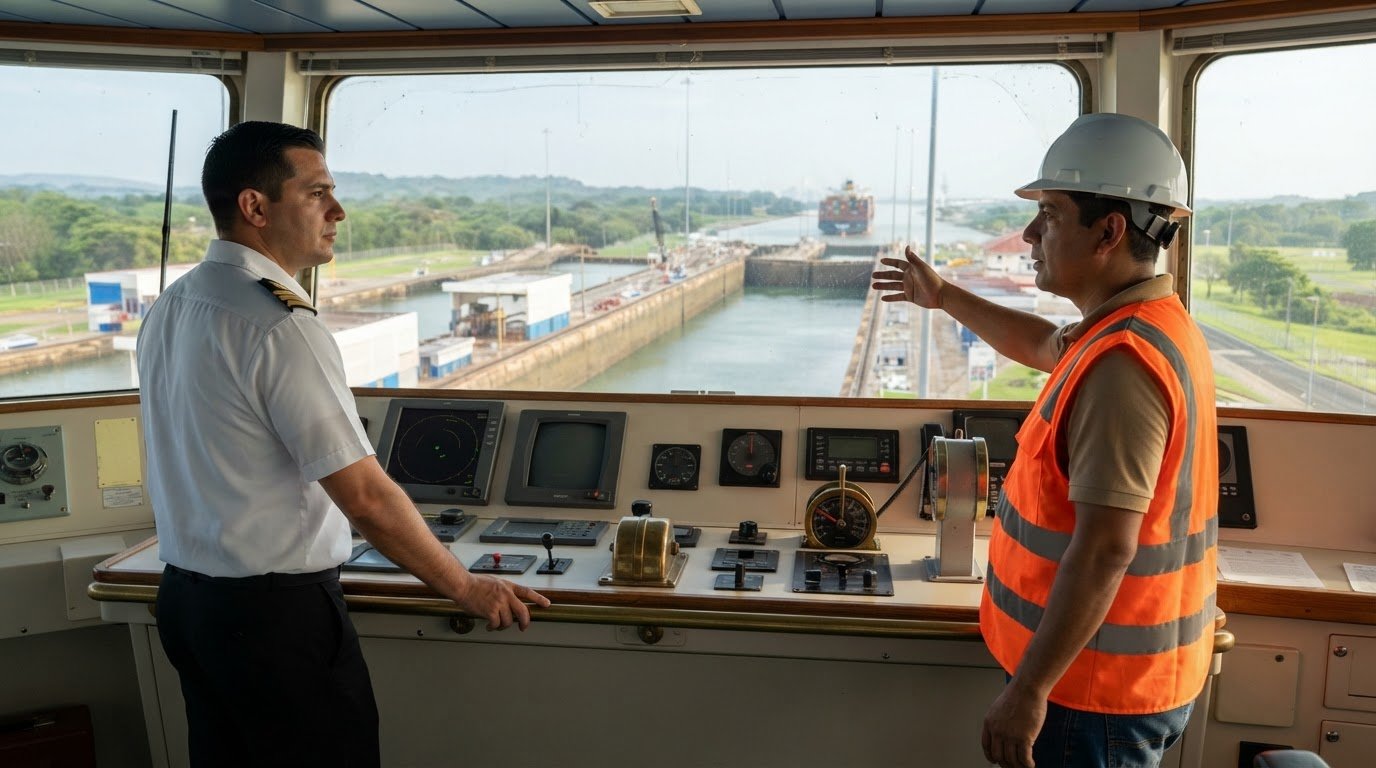
A ship agent focuses on vessel arrangements and communication. For an arrest near a port, dock, or Canal transit, local coordination helps align vessel movements with the legal timetable. An agent for handling vessel arrest in Panama can facilitate communication among the shipowner or charterer, vessel representatives, and operational contacts, while legal decisions remain with counsel and the court.
To keep responsibilities clear, identify the role needed at each stage:
- Claimant’s maritime counsel: prepares the arrest application and presents the claim in court.
- Shipowner’s maritime counsel: advises on challenging the arrest or seeking release.
- Ship agent: coordinates vessel-related arrangements and operational communications.
- Owner’s or charterer’s appointed representative: relays instructions and keeps the relevant party informed about vessel movements.
For example, if an application concerns a vessel approaching a Panama Canal transit, counsel handles the court process while the ship agent coordinates operational communications. Keeping these functions distinct avoids the mistaken assumption that an agent can provide legal representation.
To align vessel-side arrangements with an arrest-related timetable, coordinate Panama vessel movements through local agency support.
For legal representation, the agent should be qualified local maritime counsel. The section provides no specific licensing requirements.
Adimar Shipping
Adimar Shipping helps owners and charterers coordinate vessel arrangements in Panama while legal counsel manages arrest proceedings. Its Ship Agency Services, including Owner’s Nominated Agency and Charterer’s Nominated Agency, provide a local point of coordination when an arrest may affect port calls or Canal transit. Husbandry Services can support related vessel requirements.
Turn to Adimar Shipping when vessel movements, communications, and port arrangements need to align with the legal timetable. Clear coordination helps owners, charterers, and their representatives manage operational details while keeping agency support distinct from legal representation.
For support coordinating vessel arrangements in Panama, contact Adimar Shipping.
Set the Next Port Call in Motion
If a vessel arrest becomes a possibility, align legal representation and vessel-side coordination early. A local agent for handling vessel arrests in Panama can support operational communications, while qualified maritime counsel manages court proceedings. Keeping these responsibilities distinct helps owners and charterers assess the vessel’s schedule more clearly.
Adimar Shipping provides Ship Agency Services, Owner’s Nominated Agency, and Charterer’s Nominated Agency for vessel coordination in Panama. Select the agency arrangement according to whether the owner or charterer is directing the vessel’s local representation. This gives operational teams a clear point of contact while legal counsel addresses the arrest matter.
Share the vessel’s current position, planned movements, and the coordination required to contact Adimar Shipping for arrest assistance. A clear operational picture is a constructive first step toward managing what comes next.
Frequently Asked Questions
What documents and evidence are required to obtain a vessel arrest in Panama?
Prepare evidence connecting the claim to maritime commerce, transportation, or traffic, alongside documents showing the claimant’s authority. Article 19 of Panama’s Maritime Procedure Law covers those claim types. At the initial stage, photocopies or scanned documents in English or Spanish may be filed without legalized or authenticated originals. Organize the supporting records around the claim and vessel, and include the power of attorney and good-standing certificate.
How quickly can a vessel be arrested in Panama, including after-hours procedures?
Panama’s Maritime Courts are available 24/7, and a vessel in Panamanian waters or transiting the Canal can be arrested within the same day. After-hours timing still depends on the vessel being within Panamanian waters and the arrest application proceeding. For a vessel assigned Canal transit resources, detention can occur only after transit ends and before it leaves Panamanian waters.
What security or counter-security is required for a vessel arrest in Panama?
For damages, the stated security deposit is $1,000; a conservatory measure requires security of at least $1,000 and no more than $50,000. To obtain release, the guarantee must cover the claim and court-assessed costs, including attorney fees, interest, and expenses. A prohibition on transferring or encumbering an asset requires a bond of at least $10,000.
What qualifications and local licenses should a Panama vessel arrest agent have?
Arrest proceedings require qualified local legal assistance, preferably a lawyer experienced in Panamanian maritime law and vessel arrest. A ship agent may coordinate vessel operations, but does not replace legal counsel; no specific agent license is stated.