
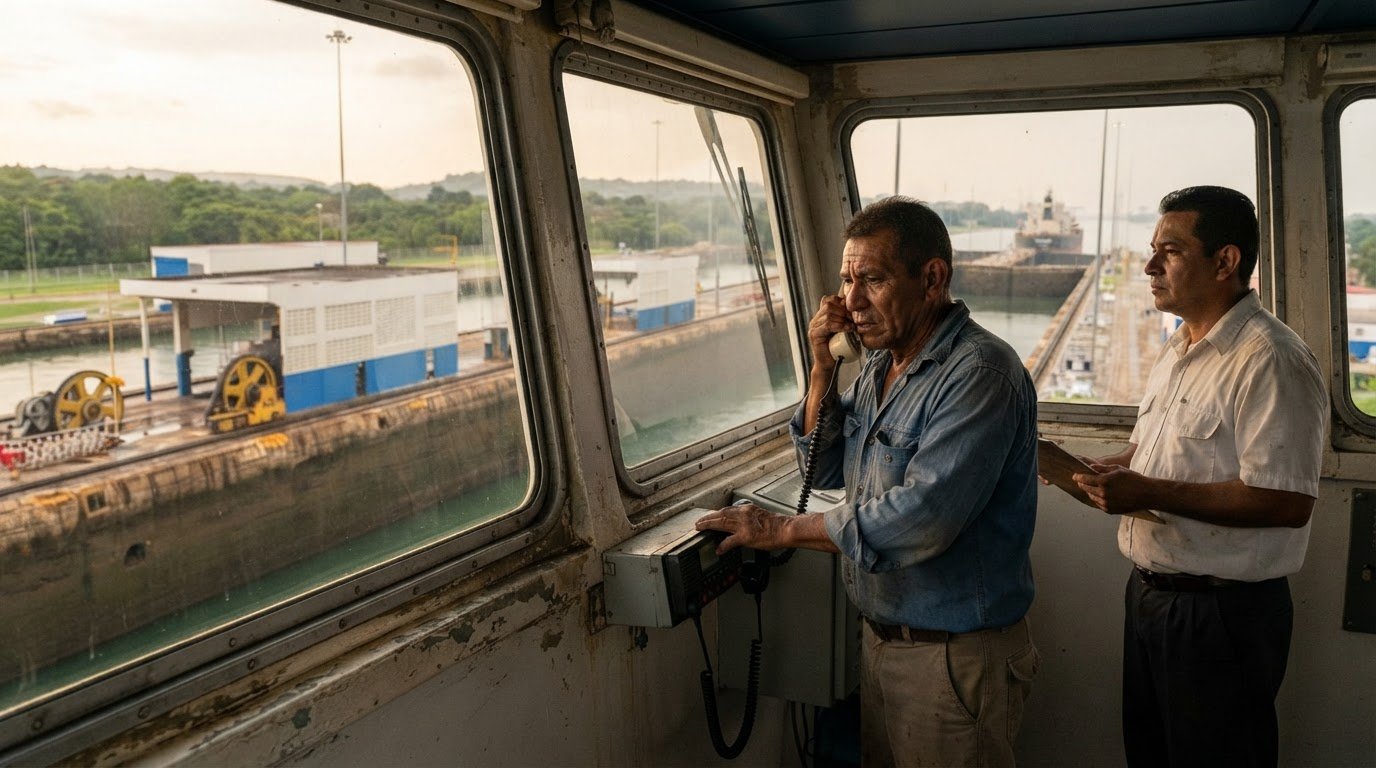
A breakdown in Canal waters is not just a repair problem; it can affect the vessel’s transit and the coordination around it. For effective Panama Canal emergency anchorage coordination, the key requirement is prompt communication: the Panama Canal Authority requires immediate notification when a mechanical failure affects a vessel’s maneuverability.
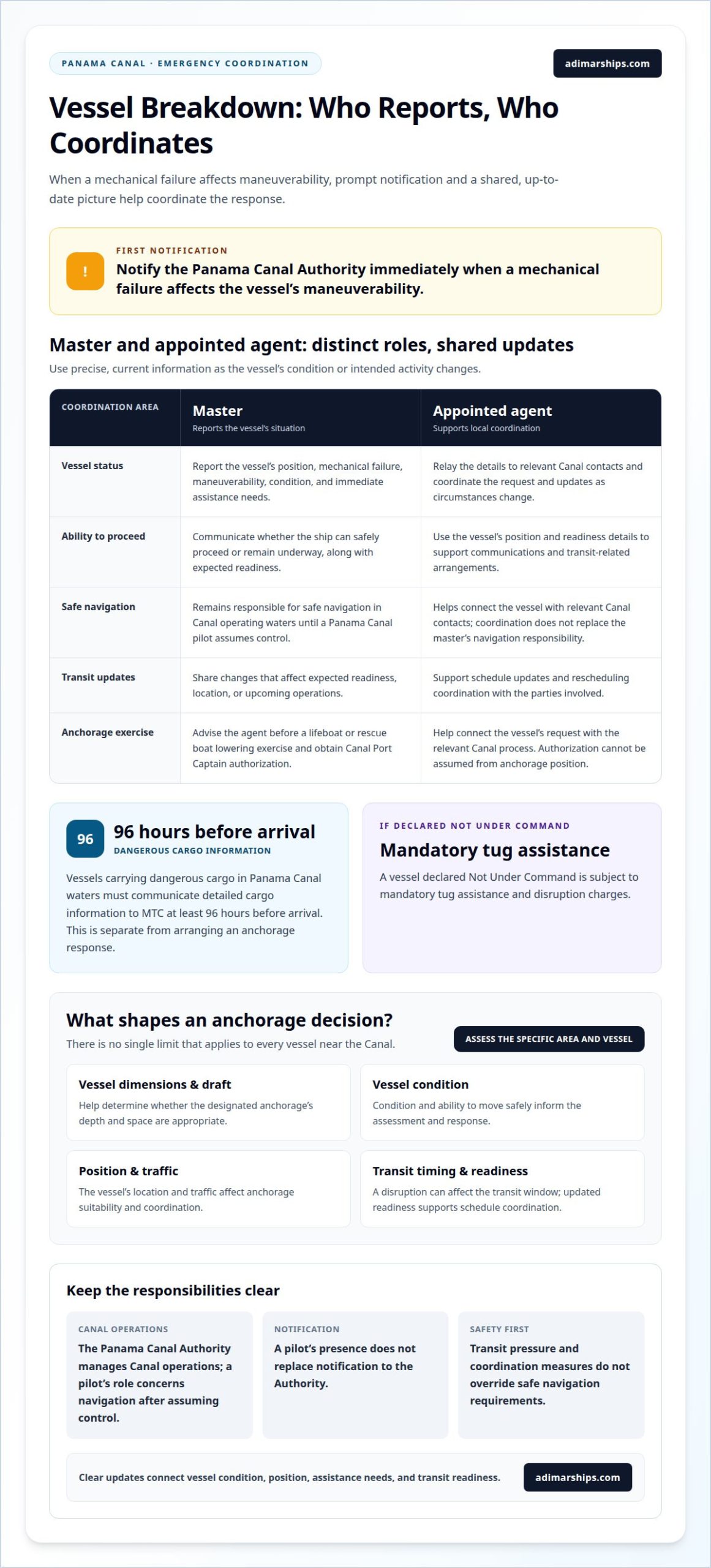
That urgency matters, but so does knowing who needs the information and how the response relates to the vessel’s position, transit timing, and condition. The master, appointed agent, Canal authorities, and responders each have a role in keeping communications clear as the situation develops.
This article explains what to report when a vessel breaks down during transit, how notification and coordination work on the Pacific and Atlantic sides, and what may affect a decision to anchor or request assistance. You’ll also learn how agents help connect the vessel with local responders, allowing owners and charterers to manage operational details while staying mindful of ACP requirements.
Key Takeaways
- Learn why a mechanical failure affecting maneuverability calls for immediate notification to the Panama Canal Authority.
- Understand how the master and appointed agent coordinate vessel updates and response arrangements across the Canal.
- See why the vessel’s position, condition, and transit timing shape anchorage and assistance decisions.
- Find out what to consider when coordinating with local responders and identifying suitable anchorage options.
Coordination across both sides of a Canal transit
The Panama Canal Authority manages a scheduled transit system linking the Pacific and Atlantic oceans. A disruption on either side can affect a vessel’s transit window and require coordinated schedule updates.
ACP Procedures and Transit Timing
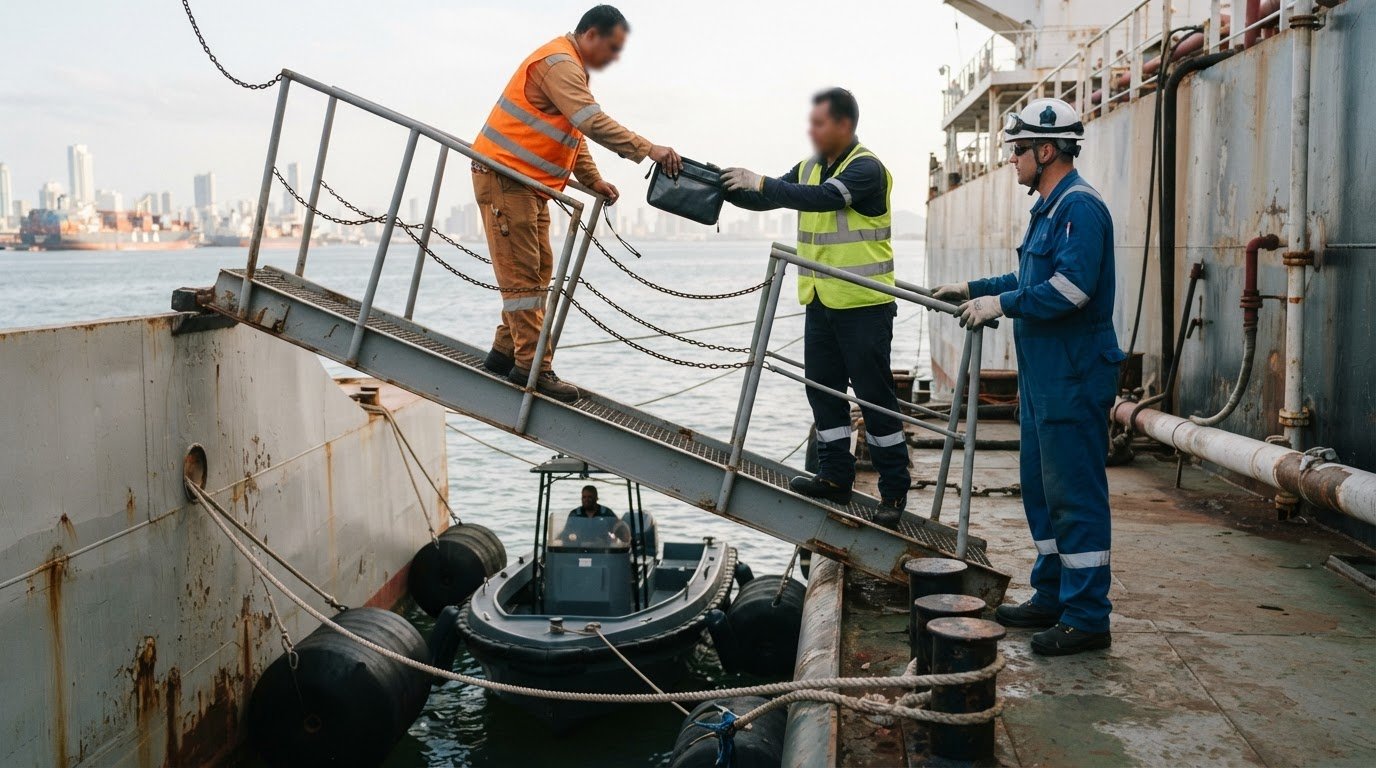
ACP procedures govern how transit-related operations fit the vessel’s schedule. This matters because boarding and delivery operations must follow those procedures and account for transit timing.
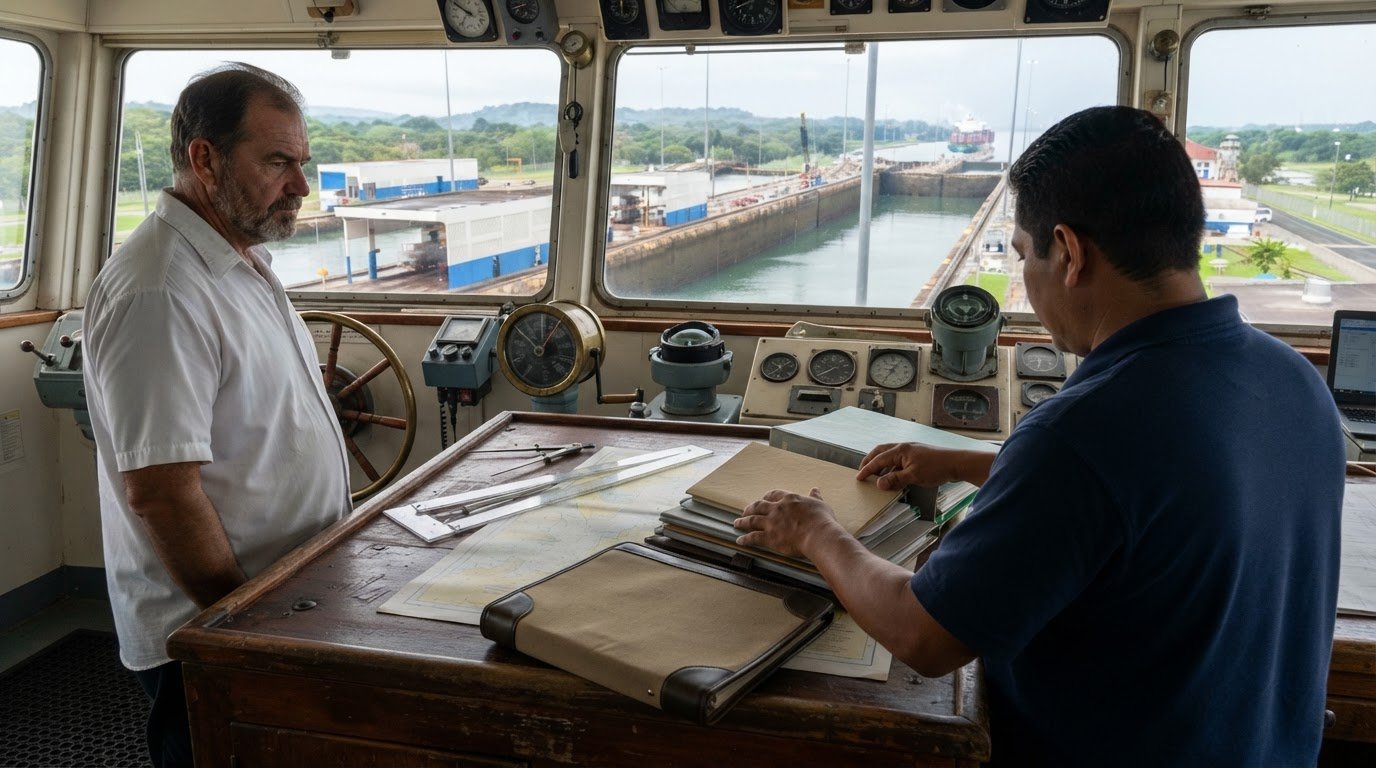
For planning, the vessel’s location, condition, and expected readiness help frame the timing discussion. The master remains responsible for safe navigation in Canal operating waters until a Panama Canal pilot assumes control. Article 114 sets out the Authority’s collision-prevention rules, and those rules can’t be relaxed to accommodate coordination measures.
Canal Anchorage Limits
Anchorage suitability depends on the designated area and the vessel’s draft, dimensions, and condition. These factors help determine whether the available depth and space are appropriate for the ship.
There is no single anchorage limit that applies to every vessel near the Canal. Depth and size restrictions depend on the anchorage under consideration, while traffic and the vessel’s position also affect the assessment. The master remains responsible for safe navigation until the pilot takes control, so schedule pressure never takes precedence over safety.
Transit-Window Planning and Rescheduling
Transit planning connects the vessel’s readiness with its assigned timing and operations on the relevant side of the Canal. If a breakdown affects expected readiness, updated timing can support rescheduling coordination between the vessel and the parties involved.
For a vessel moving between the Pacific and Atlantic sides, schedule changes must account for its current position and upcoming operational arrangements. Transit-related boarding and delivery operations must still follow ACP procedures and fit the vessel’s timing. If a harbor-operations directive violation occurs, report it to the Cristobal Canal port captain, or to the Canal port captain on duty if that official is absent.
Coordination with appointed agents and vessel masters
During an anchorage disruption, the master and appointed agent need a shared, up-to-date picture of the vessel’s condition and movements. The master reports what has changed aboard, the vessel’s location, and any effect on transit readiness. The agent helps coordinate updates with relevant Canal contacts and supports communication between the vessel and those arranging the response. Clear, consistent information helps prevent conflicting assumptions about the ship’s status.
For example, if a vessel is waiting at an Atlantic or Pacific anchorage, its agent should be advised before a lifeboat or rescue boat lowering exercise. The vessel must also obtain authorization from the Canal Port Captain before the exercise. The agent helps connect the vessel’s request with the relevant Canal process. Authorization is required and cannot be assumed based on the vessel’s anchorage position.
Dangerous cargo adds a separate communication requirement. Vessels carrying dangerous cargo in Panama Canal waters must communicate detailed cargo information to MTC at least 96 hours before arrival. The agent and master should keep cargo details aligned in their communications, especially when an operational disruption changes the arrival plan. This requirement concerns cargo information to MTC; it is distinct from arranging an anchorage response.
Effective coordination also depends on keeping updates precise as circumstances change. The master can report the vessel’s position, operational condition, and expected readiness; the agent can use these details to coordinate relevant notifications and arrangements. If the ship’s condition or intended activity changes, updated information helps ensure earlier messages are not mistaken for current ones. The Canal Port Captain’s authorization remains necessary for an anchorage lowering exercise.
For vessel operators, the practical distinction is clear: the master reports the ship’s situation, while the appointed agent supports local coordination. For an anchorage drill, advise the agency and obtain Canal Port Captain authorization. For dangerous cargo, ensure detailed information reaches MTC at least 96 hours before arrival. These are separate coordination matters, each with its own timing and recipient.
Emergency maritime response
Emergency response depends on the vessel’s condition, position, and ability to move safely in Canal waters. Effective Panama Canal emergency anchorage coordination starts with prompt, accurate communication when mechanical failure affects maneuverability.
Emergency Anchorage Coordination Roles
The Panama Canal Authority manages Canal operations, while a pilot’s role concerns navigation after assuming control. The master remains responsible for safe navigation until a Panama Canal pilot takes control. For Panama Canal emergency anchorage coordination, this distinction matters: the master reports the emergency, and the agent helps relay information and coordinate the request with relevant Canal contacts. A pilot’s presence does not replace notification to the Authority.
Information and procedures for agents coordinating emergency anchorage requests
An agent needs a clear report of the vessel’s position, mechanical failure, maneuverability, and immediate assistance needs. The master should also communicate the ship’s condition and whether it can safely proceed or remain underway. The agent can relay those details to relevant Canal contacts and coordinate updates as circumstances change. If the vessel is declared Not Under Command, mandatory tug assistance and disruption charges apply.
Allocation Rules and Priorities
Anchorage decisions must account for safe navigation and operating conditions; coordination does not relax Canal navigation rules. No priority should be promised before the request is assessed against the vessel’s condition, location, traffic, and available response arrangements. If an anchorage is unavailable or a request is denied, the agent should relay the decision to the master and coordinate the next safe response with Canal contacts. A vessel unable to maneuver may require tug assistance.
Available Emergency Anchorages
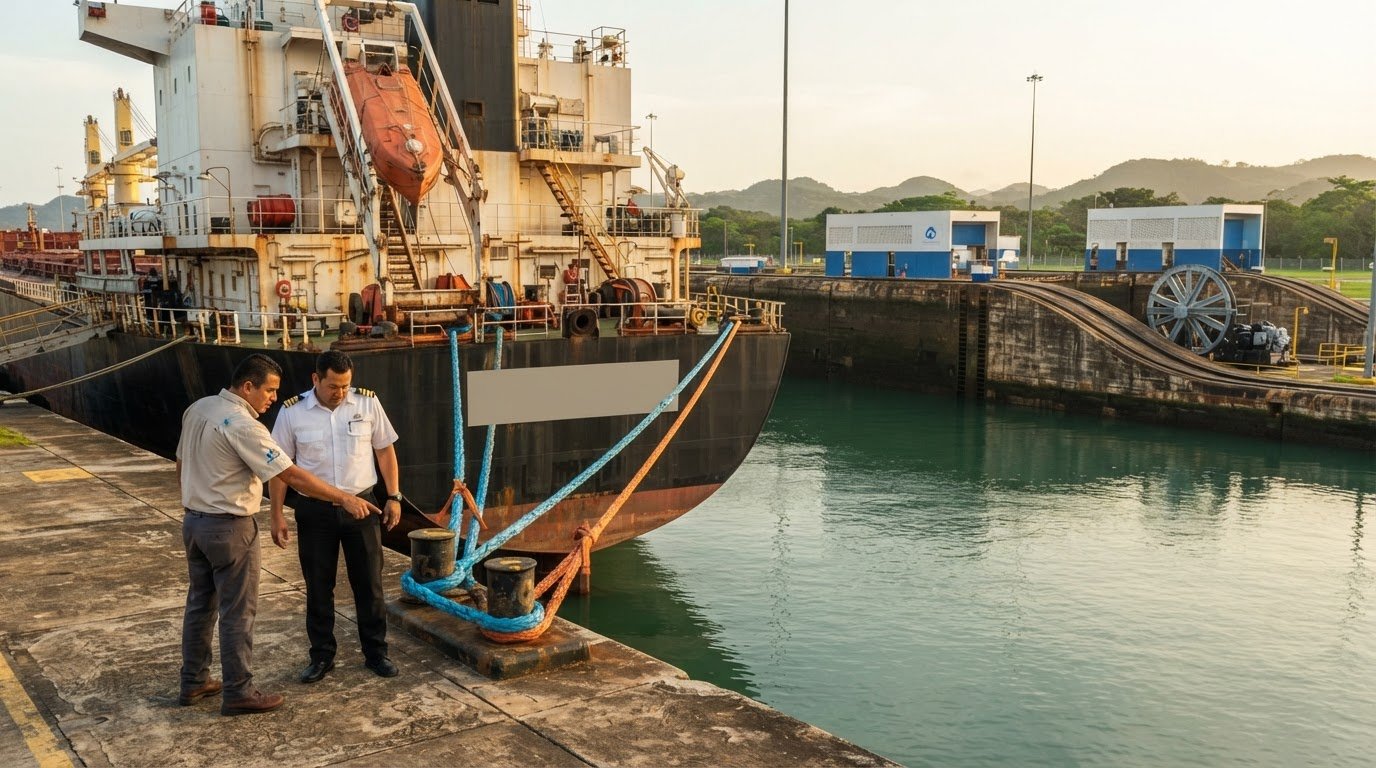
Vessels may wait at Pacific or Atlantic anchorages, but the appropriate location depends on the ship’s position and operational circumstances. These are identified anchorage areas, not guaranteed emergency berths or allocation rankings. While anchored, the master must prioritize safe navigation and report changes in the vessel’s condition. Traffic, nearby maneuvering vessels, and further mechanical failure are practical safety concerns; environmental and security arrangements should also be part of the response plan.
What emergency anchorages are available near the Panama Canal?
Near the Panama Canal, vessels may wait at Pacific or Atlantic anchorages while awaiting transit, weather permitting. These are the two anchorage areas identified for vessels waiting for Canal transit, including during lifeboat or rescue boat lowering exercises. This does not mean every anchorage is suitable for every disabled vessel. The vessel’s position, condition, and ability to remain safely in place all matter when coordinating a response.
In an emergency, the master and appointed agent should provide Canal contacts with the vessel’s location and operational condition when discussing an anchorage arrangement. This information helps establish which side is relevant and whether the vessel can safely remain there. A request is not an automatic assignment. Pacific and Atlantic anchorages are identified, but there is no separate guaranteed emergency berth or universal allocation order.
Anchorage activities also have specific limits. Before a lifeboat or rescue boat lowering exercise, the vessel must advise its agency and obtain Canal Port Captain authorization. Weather must permit the exercise; the area must be clear of traffic, and nearby vessels must not be maneuvering. Lowered boats must remain secured aboard and cannot navigate in the area. Free-falling lifeboat tests are not approved at Canal anchorages. These drill requirements are distinct from the arrangements needed after a breakdown.
If an emergency occurs during an anchorage lifeboat exercise, report it as soon as possible to the relevant authority or signal station. Flamenco Signal or Cristobal Signal Station can be reached at 272-5717 or 443-2211. The Port Captain’s Office can be reached at 272-4215 or 443 2207, and Marine Traffic Control at 272-4205. These contacts relate to emergencies during lifeboat exercises, not a general anchorage allocation hotline.
For help coordinating local vessel-agency communications around an anchorage disruption, discuss your vessel’s agency coordination.
Adimar Shipping, Inc.
Adimar Shipping, Inc. supports vessel owners and charterers with local agency coordination when a Canal transit is disrupted. Its Ship Agency Services, Owner’s Nominated Agency, and Charterer’s Nominated Agency provide a coordination point for vessel communications and operational arrangements. This support helps keep relevant parties aligned as the master reports the vessel’s condition and transit needs.
Turn to Adimar Shipping, Inc. when a breakdown or anchorage issue requires local coordination alongside an existing agency appointment or nominated agency arrangement. Husbandry Services can also support vessel-related needs during a call or interruption. Canal decisions remain with the appropriate authorities.
Contact Adimar Shipping, Inc. to discuss agency coordination for your vessel.
Build readiness before the next transit
Emergency response is easier to coordinate when communication roles are clear before a disruption occurs. Owners and charterers can align the master, shore contacts, and appointed agent on who shares operational updates and who coordinates local arrangements. This preparation gives Panama Canal emergency anchorage coordination a practical starting point when plans change, without assuming every incident follows the same sequence.
Consider the handoffs that matter to your operation: how vessel updates reach the appointed agent, how changes are shared with relevant parties, and who keeps the operational picture current. A clear arrangement helps everyone respond with accurate information instead of relying on assumptions in a time-sensitive situation.
For support coordinating vessel agency requirements around a Canal transit, contact Adimar Shipping, Inc. A clear conversation about your vessel’s needs can help establish the right local agency support for the next step.
Frequently Asked Questions
What are the ACP requirements for a vessel that breaks down during transit?
Mechanical failure that affects maneuverability requires immediate notification to the Panama Canal Authority. The master should communicate the vessel’s current condition and location through established vessel-agent channels so updates accurately reflect the situation. If the vessel is declared Not Under Command, mandatory tug assistance and disruption charges apply. Before the vessel is cleared to proceed after repairs, a class surveyor must certify that the repairs are complete.
Are emergency anchorages available on both the Atlantic and Pacific sides of the Panama Canal?
Yes. Vessels awaiting Canal transit may wait at Pacific or Atlantic anchorages. These areas are not automatic emergency berths and do not guarantee a particular location. The vessel’s position and condition shape the operational assessment, while safe navigation remains central. For lifeboat or rescue boat lowering exercises at either anchorage, weather must permit the exercise and separate authorization requirements apply.
How are emergencies coordinated between the ACP, port authorities, pilots, and shipping agents?
Coordination separates navigation from local communication: the master reports the vessel’s status, the ACP receives immediate notice of failures affecting maneuverability, and the agent relays updates. The master remains responsible for safe navigation until a Panama Canal pilot assumes control. For non-compliance with the harbor operations directive, report to the Cristobal Canal port captain, or to the Canal port captain on duty if that official is absent.
What fees or charges apply to emergency anchoring near the Panama Canal?
Vessels declared Not Under Command are subject to mandatory tug assistance and disruption charges. The stated charges range from $15,000 for smaller vessels to $65,000 for high-impact disruptions.
What safety, environmental, and security risks apply while anchored near the Panama Canal?
Traffic, nearby maneuvering vessels, and further mechanical failure are safety concerns while anchored; environmental and security arrangements should also be included in the response plan. For a lifeboat or rescue boat lowering exercise, the area must be clear of traffic, with no vessels maneuvering nearby.