
A transit file can be complete on paper and still miss a requirement that matters at boarding. Preparing for a Panama Canal boarding inspection means getting the required forms and pre-arrival information in order: Form 4398 covers ship information and the quarantine declaration, Form 1746 covers the blind distance declaration, and complete pre-arrival information must be submitted through VUMPA at least 96 hours before arrival in Panama Canal waters.
Preparing for a Panama Canal boarding inspection means coordinating forms, certificates, and crew records on schedule, while also reviewing the vessel’s safety, security, and pollution-response requirements. This guide covers the transit documents to prepare and when to submit them, along with the safety and security certificates, PCSOPEP, and local Authorized Person requirements. Use it to understand the paperwork and coordination needed before arrival.
Key Takeaways
- See which transit forms and supporting records belong in the vessel’s inspection file, and how missing or inconsistent paperwork can affect transit readiness.
- Learn how an agency can coordinate document preparation ahead of the pre-arrival submission window, including records that depend on the vessel’s cargo and configuration.
- Understand why valid safety and security certificates must align with the vessel’s actual crew complement.
- Find out how PCSOPEP approval, annual updates, and a designated local Authorized Person fit into Panama Canal preparation.
What Documents Do You Need for Panama Canal Transit?
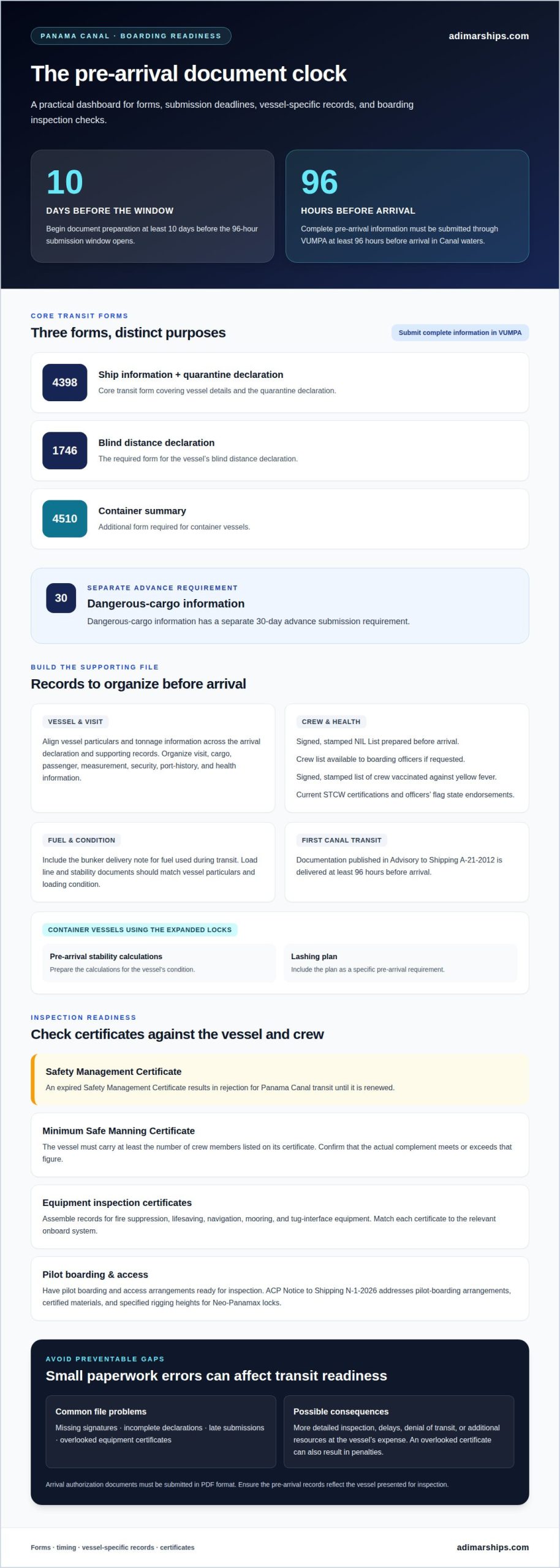
Preparing for a Panama Canal boarding inspection starts with the core forms: Form 4398 covers ship information and the quarantine declaration, while Form 1746 covers the blind distance declaration. Complete pre-arrival information must reach VUMPA at least 96 hours before arrival in Panama Canal waters. Container vessels also need Form 4510, the container summary.
Common problems include missing signatures, incomplete declarations, late submissions, and overlooked equipment certificates. Incorrect, false, incomplete, or late information may lead to a more detailed inspection, delays, denial of transit, or additional resources at the vessel’s expense. An overlooked certificate can also result in penalties.
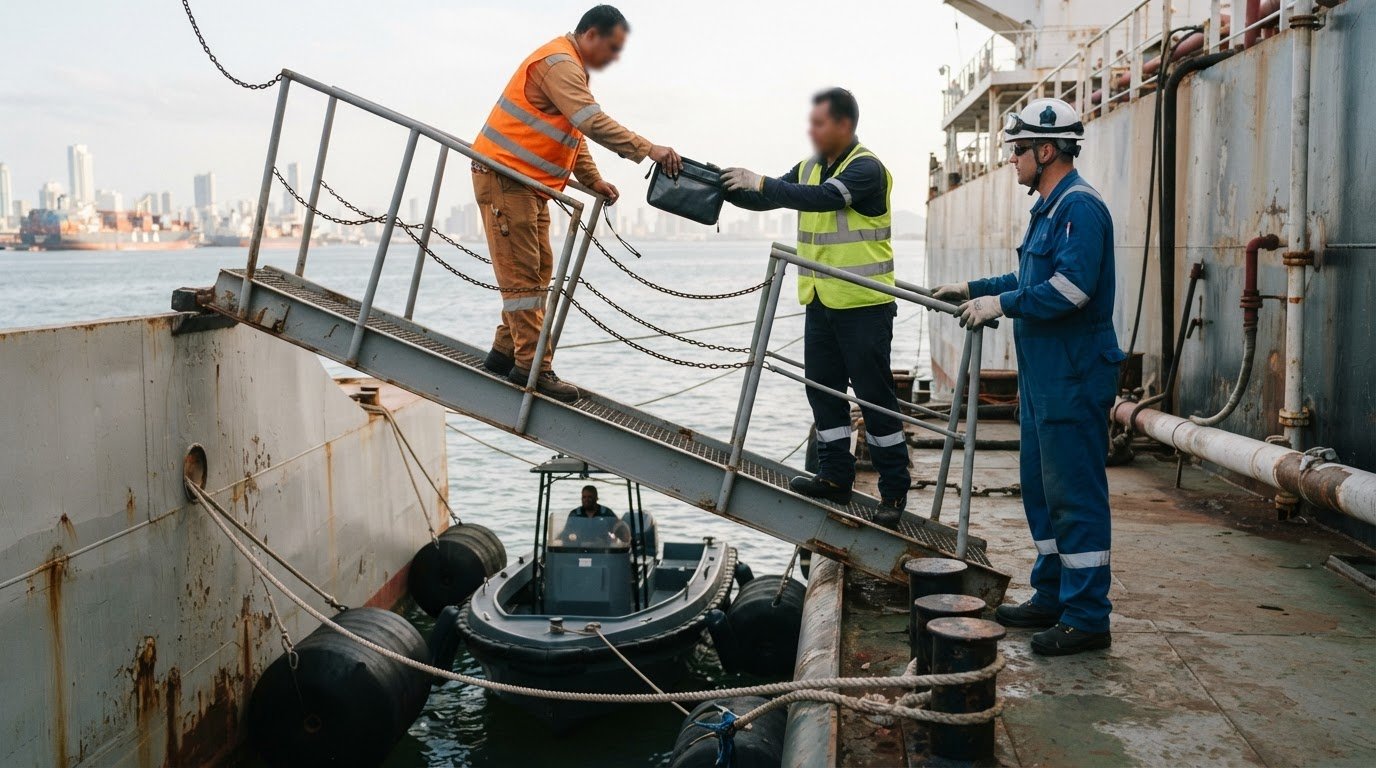
Pilot boarding and access arrangements must be ready for inspection. ACP Notice to Shipping N-1-2026 addresses pilot-boarding arrangements, certified materials, and specified rigging heights for Neo-Panamax locks.
Other trip expenses depend on the vessel’s arrangements.
Scheduling affects the broader transit plan. One account reported a typical wait of 4 to 6 days from inspection to transit, and 2 to 3 weeks during the busy season described.
Transit direction can shape positioning plans. One account reported Atlantic-to-Pacific transits typically started at 1600, while Pacific-to-Atlantic transits typically started at 0400. For operators preparing for a Panama Canal boarding inspection, treat these as account-specific examples, not fixed schedules for every vessel.
How a ship agency prepares documents before the 96-hour window
Document preparation starts before the submission deadline. Begin at least 10 days before the 96-hour window opens, allowing time to assemble vessel particulars, resolve inconsistencies, and prepare required files. Complete and accurate pre-arrival information goes through VUMPA at least 96 hours before arrival in Panama Canal waters.
Vessel particulars and tonnage information should align across the arrival declaration and supporting records. An agency organizes visit, cargo, crew, passenger, measurement, security, port-history, and health information for submission. Arrival authorization documents must be submitted in PDF format, so the file set is ready for review.
The vessel’s cargo and configuration determine which additional documents apply. Prepare the relevant records, including:
- Container vessels: Form 4510 provides the container summary. Vessels using the expanded locks also submit pre-arrival stability calculations and a lashing plan.
- Fuel and health records: The file includes the bunker delivery note for fuel used during transit and a signed, stamped list of crew vaccinated against yellow fever.
- Crew declarations: A signed, stamped NIL List is prepared before arrival, and the crew list is available to boarding officers if requested.
- First canal transit: Documentation published in Advisory to Shipping A-21-2012 is delivered at least 96 hours before arrival.
Load line and stability documents should match the vessel’s particulars and loading condition. For container vessels using the expanded locks, stability calculations and lashing-plan documentation are specific pre-arrival requirements. Check that these records accurately reflect the vessel presented for inspection.
The review also covers current crew credentials, including STCW certifications and officers’ flag state endorsements, plus inspection certificates for fire suppression, lifesaving, navigation, mooring, and tug-interface equipment. Check that naval and nautical equipment details and arrival-condition information are included in the pre-arrival records. Dangerous-cargo information has a separate 30-day advance requirement.
A ship agency can coordinate these submissions and document sets through Panama Canal ship agency services, keeping vessel-specific requirements organized ahead of arrival.
Safety, security, and minimum safe manning certificates
For boarding, confirm that the vessel’s safety records are valid and its crew complement meets the stated minimum. An expired Safety Management Certificate results in rejection for Panama Canal transit until it is renewed. The vessel must also carry at least the number of crew members listed on its Minimum Safe Manning Certificate.
Review crew credentials and equipment certificates against the vessel’s submission to catch gaps before arrival, such as an expired certificate or missing officer endorsement. Current crew credentials include STCW certifications and flag state endorsements for officers.
- Match crew numbers to the certificate: The actual complement must meet or exceed the Minimum Safe Manning Certificate figure, so a shortfall is visible before inspection.
- Review the Safety Management Certificate: Confirm the certificate is current, because an expired one prevents transit until renewal.
- Organize crew credentials: Keep current STCW certifications and officers’ flag state endorsements together, so the submitted records reflect the crew serving aboard.
- Assemble equipment inspection certificates: Include records for fire suppression, lifesaving, navigation, mooring, and tug interface equipment, as these certificates form part of the Canal documentation requirements.
- Keep security information consistent: Include the vessel’s security information with its pre-arrival declarations, so the inspection file corresponds with the vessel’s submitted details.
Equipment records should clearly identify the relevant onboard systems. For example, a fire suppression certificate should correspond to the vessel’s fire suppression equipment, while navigation and mooring certificates should relate to their respective systems. Mixing vessel details or leaving equipment categories unsupported can lead to avoidable questions during review.
Review crew and equipment records together rather than treating each certificate as a separate item. A coordinated check can reveal expired documents, inconsistent vessel particulars, or a crew complement below the certified minimum. For the master, the readiness check is straightforward: valid certificates, current crew credentials, and staffing that meets the vessel’s Minimum Safe Manning Certificate.
PCSOPEP and Authorized Person requirements
The Panama Canal Shipboard Oil Pollution Emergency Plan, or PCSOPEP, is mandatory for all vessels transiting the Panama Canal. The stated applicability threshold is vessels carrying 400 metric tons or more of persistent oil. The plan must be approved by the ACP, updated annually, and written in English and Spanish. These requirements make the plan’s validity, language, and approval central parts of transit preparation.
The PCSOPEP must name an Authorized Person residing in Panama who can act on the vessel’s behalf in an emergency. This local representative connects the ship’s emergency plan with on-the-ground support, so the person’s name and contact details must be accurate. Adimar Shipping, Inc. provides PCSOPEP Authorized Person services.
- Approval: Confirm that the PCSOPEP carries ACP approval, rather than treating a draft as the final plan.
- Annual update: Keep the plan updated annually so its information remains current for the vessel’s transit.
- Language: Prepare the PCSOPEP in both English and Spanish.
- Local representation: Identify the local Authorized Person and document that person’s emergency role on the vessel’s behalf.
- Applicability: Include the plan in transit preparation, noting the stated threshold of 400 metric tons or more of persistent oil.
These requirements need separate checks. ACP approval does not replace the annual update, and bilingual wording does not substitute for naming an Authorized Person. Review each requirement against the plan itself rather than relying on a single approval page.
A missing or unsigned PCSOPEP can trigger fines starting at $50,000. The practical takeaway is to resolve plan approval, annual currency, bilingual presentation, and local emergency representation before arrival. Adimar Shipping, Inc.’s PCSOPEP Authorized Person service addresses the local representative requirement for vessels preparing for Panama Canal transit.
Adimar Shipping
Adimar Shipping helps coordinate Panama Canal transit preparations when document deadlines, vessel requirements, and local communication need to stay aligned. Its Ship Agency Services support owners and charterers with coordination for a vessel’s passage, while Owner’s Nominated Agency and Charterer’s Nominated Agency provide agency support according to the party’s appointment.
Adimar Shipping provides Ship Agency Services to coordinate Panama Canal transit communication and preparations. Its Husbandry Services support vessel and crew needs, including crew changes and provisioning. The agency appointment can be made by the owner or charterer, depending on whose interests the local representative is to serve.
For help coordinating your vessel’s Panama Canal preparations, contact Adimar Shipping.
Set Your Transit Preparation in Motion
A disciplined approach to preparing for a Panama Canal boarding inspection supports clear coordination between the vessel, its representatives, and local requirements. Arrange transit communication and agency support in line with the vessel’s ownership or charter arrangements. Adimar Shipping provides Ship Agency Services, Owner’s Nominated Agency, and Charterer’s Nominated Agency.
A local agent connects document coordination with the wider planning for the vessel’s canal passage and gives owners and charterers a practical point of contact as preparations progress. Arrange support early, before arrival deadlines compress the planning process.
When you’re ready to discuss transit support, contact Adimar Shipping. A clear agency arrangement is a constructive next step toward well-coordinated preparations.
Frequently Asked Questions
What is the most common reason for failing a Panama Canal vessel inspection?
Incomplete, inaccurate, or late pre-arrival information is a common failure point. For example, a declaration that conflicts with vessel or crew records can prompt closer scrutiny. Incorrect, false, incomplete, or late submissions may lead to additional resources at the vessel’s expense, a more detailed inspection, delays, or denial of transit. Check that declarations and supporting records are consistent.
What documents are required for a Panama Canal boarding inspection?
The core file includes Form 4398 for ship information and the quarantine declaration, plus Form 1746 for the blind distance declaration. Container vessels also submit Form 4510. Supporting records include crew and cargo declarations, relevant equipment certificates, and the vessel’s PCSOPEP when applicable. First-time transits and particular vessel types may require additional plans, drawings, or stability documentation.
What are the Panama Canal inspection procedures for arriving vessels?
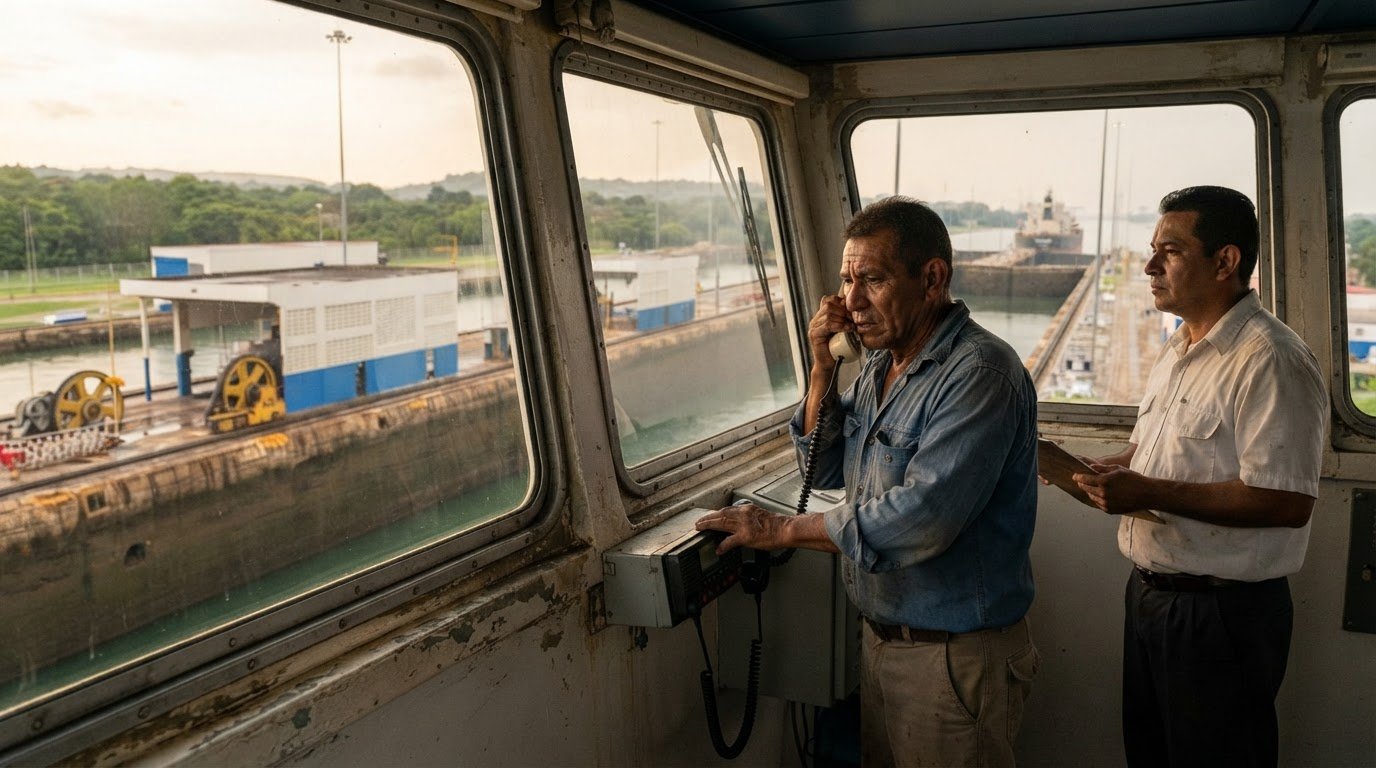
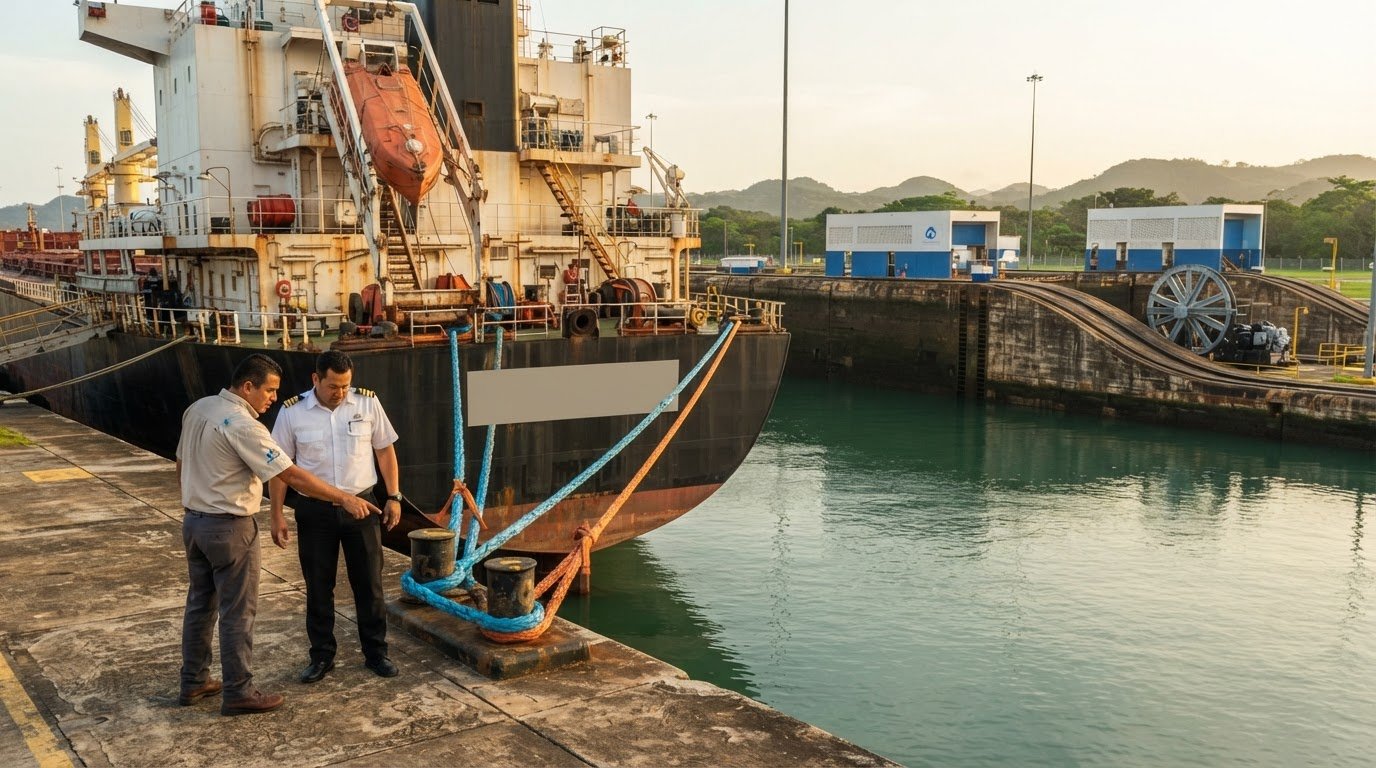
Every vessel arriving in Panama Canal waters is boarded for inspection by a Panama Canal inspector. Arrival inspections operate 24 hours a day, seven days a week. Masters are instructed to contact the relevant signal station on VHF channel 12. The inspection can include review of submitted information and the vessel’s condition, so the master should have the crew list available if boarding officers request it.
What safety and security requirements apply during a Panama Canal inspection?
Boarding facilities should be suitable for safe access during an inspection. The vessel also needs a current Safety Management Certificate, since an expired certificate results in rejection for transit until renewed. Its actual crew complement must meet or exceed the Minimum Safe Manning Certificate. Security declarations and applicable fire suppression, lifesaving, navigation, mooring, and tug interface equipment inspection certificates also form part of transit documentation.
What inspections are conducted by the Panama Canal Authority before transit?
A Panama Canal inspector boards each vessel arriving in canal waters. An inspection may uncover technical or administrative deficiencies; a vessel issued a Notice of Deficiency must correct the listed issues before transit is permitted. The review covers both the vessel’s condition and its supporting documentation, not just the submitted forms. The master should be ready to provide requested records, including the crew list.
How far in advance must vessels submit inspection documents and notifications?
Submit complete pre-arrival information through VUMPA and ETA notification at least 96 hours before arrival in Panama Canal waters. Allow enough time to prepare and review submissions before sending them. Dangerous-cargo information has a 30-day advance requirement, while naval and nautical equipment and vessel arrival-condition information are submitted 48 hours before arrival. These separate deadlines should be tracked independently.