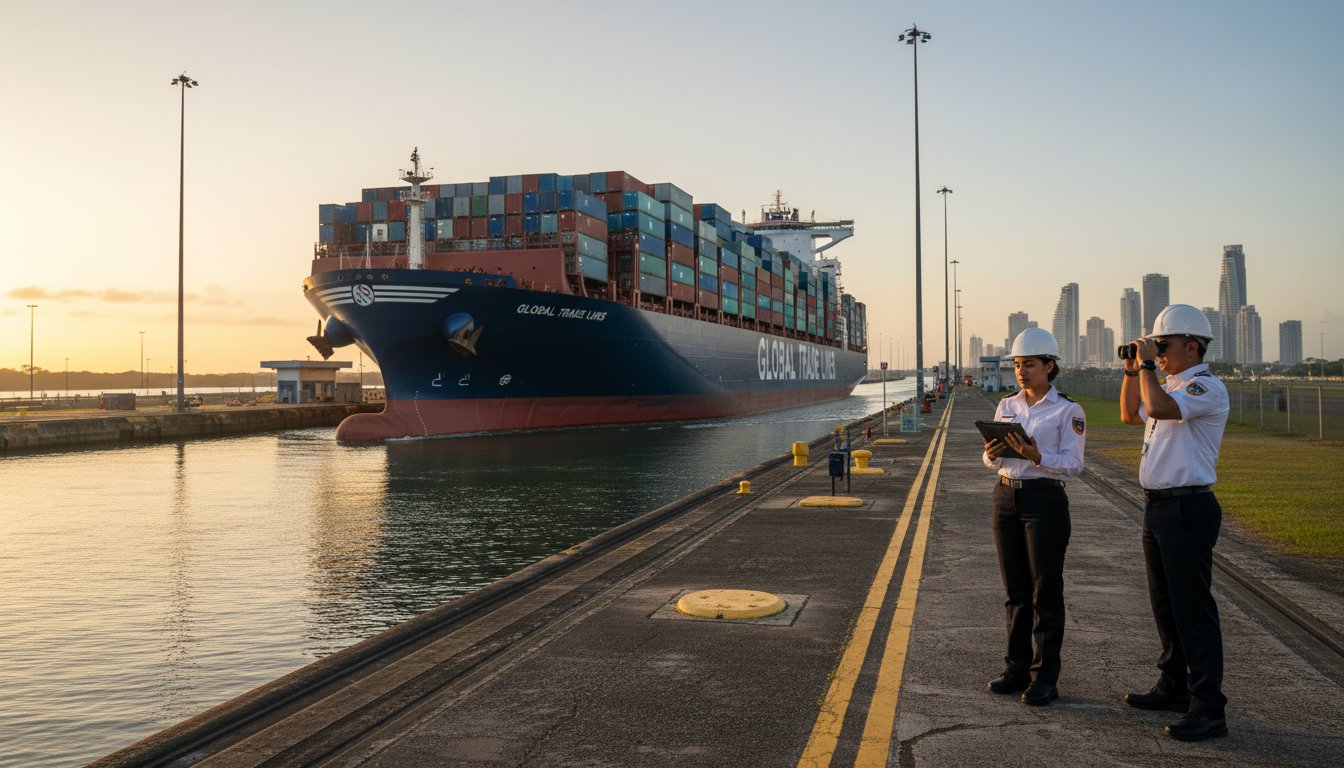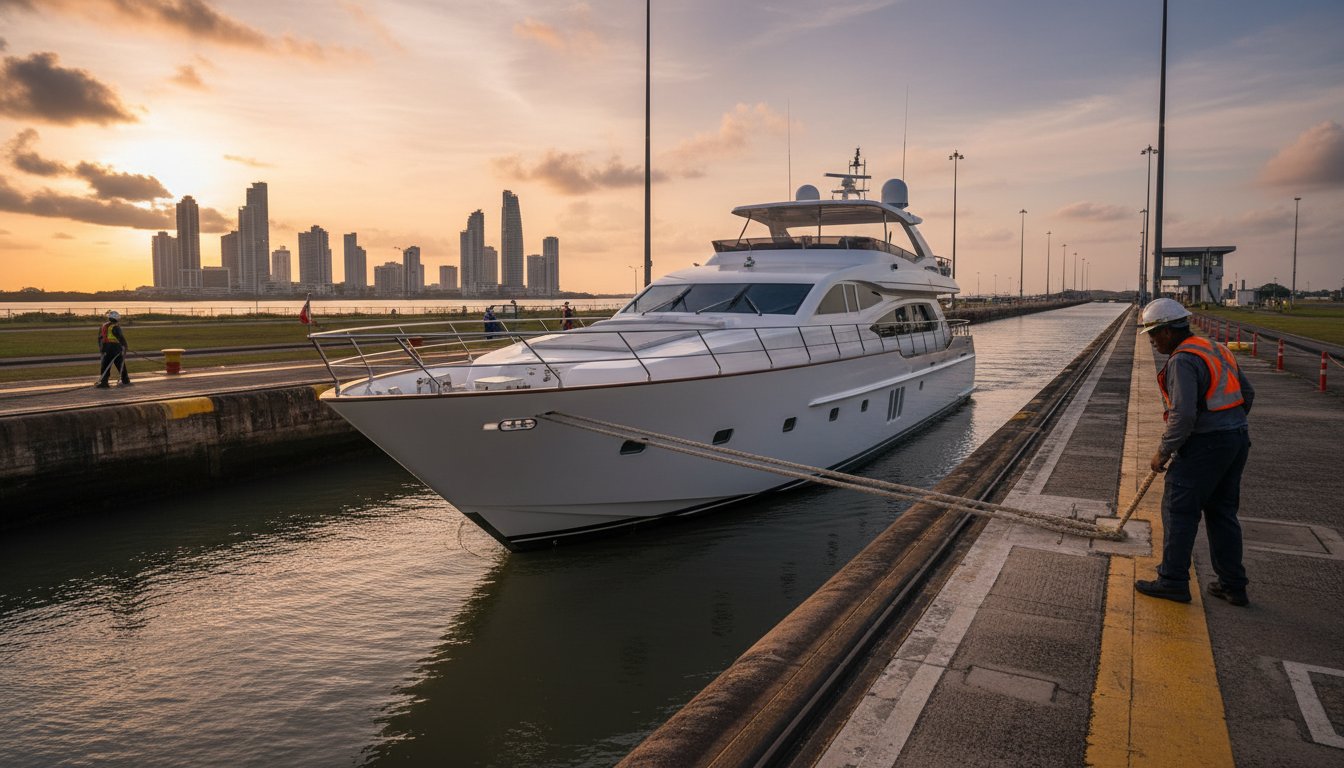


For any vessel operator, owner, or charterer, transiting the Panama Canal is a complex logistical challenge where timing is everything. A crucial part of this process is staying current with the official announcements from the Panama Canal Authority (ACP). These updates, known as Advisories to Shipping, can directly impact your vessel’s schedule, costs, and compliance. This guide will demystify ACP advisories, explain their importance, and show you how a trusted partner can help navigate them effectively.
Key Takeaways:
- Advisories are Mandatory: ACP Advisories are official, non-negotiable updates that affect all vessels transiting the Canal.
- They Impact Operations: Advisories cover everything from draft restrictions and lock maintenance to tariff changes and safety protocols.
- Non-Compliance is Costly: Ignoring an advisory can lead to significant delays, financial penalties, and scheduling disruptions.
- An Agent is Essential: A proactive ship agent monitors, interprets, and acts on these advisories 24/7 to protect your interests and ensure a smooth transit.
What Are ACP Advisories to Shipping?
In simple terms, ACP Advisories to Shipping are the official communication channel used by the Panama Canal Authority to inform the maritime community about any changes or conditions that could affect transit operations. Think of them as essential, real-time updates for navigating one of the world’s most critical waterways. These announcements are mandatory reading for all vessels planning to use the Canal, as they are fundamental to ensuring a safe, efficient, and compliant passage. Staying informed is not just recommended-it is a core requirement for a successful transit.
Advisory to Shipping vs. Notice to Shipping: What’s the Difference?
While often used together, these two documents serve different purposes. Advisories to Shipping typically announce temporary or upcoming operational changes. Common examples include temporary draft restrictions due to water levels, scheduled lock outages for maintenance, or updates to the transit reservation system. In contrast, Notices to Shipping communicate permanent or long-term changes to official regulations and procedures. These are less frequent but represent fundamental shifts in how the Canal operates.
The Main Types of ACP Advisories Explained
Understanding the different categories of advisories helps you and your team quickly assess their potential impact on your vessel. While they cover a wide range of topics, most advisories fall into one of three main categories.
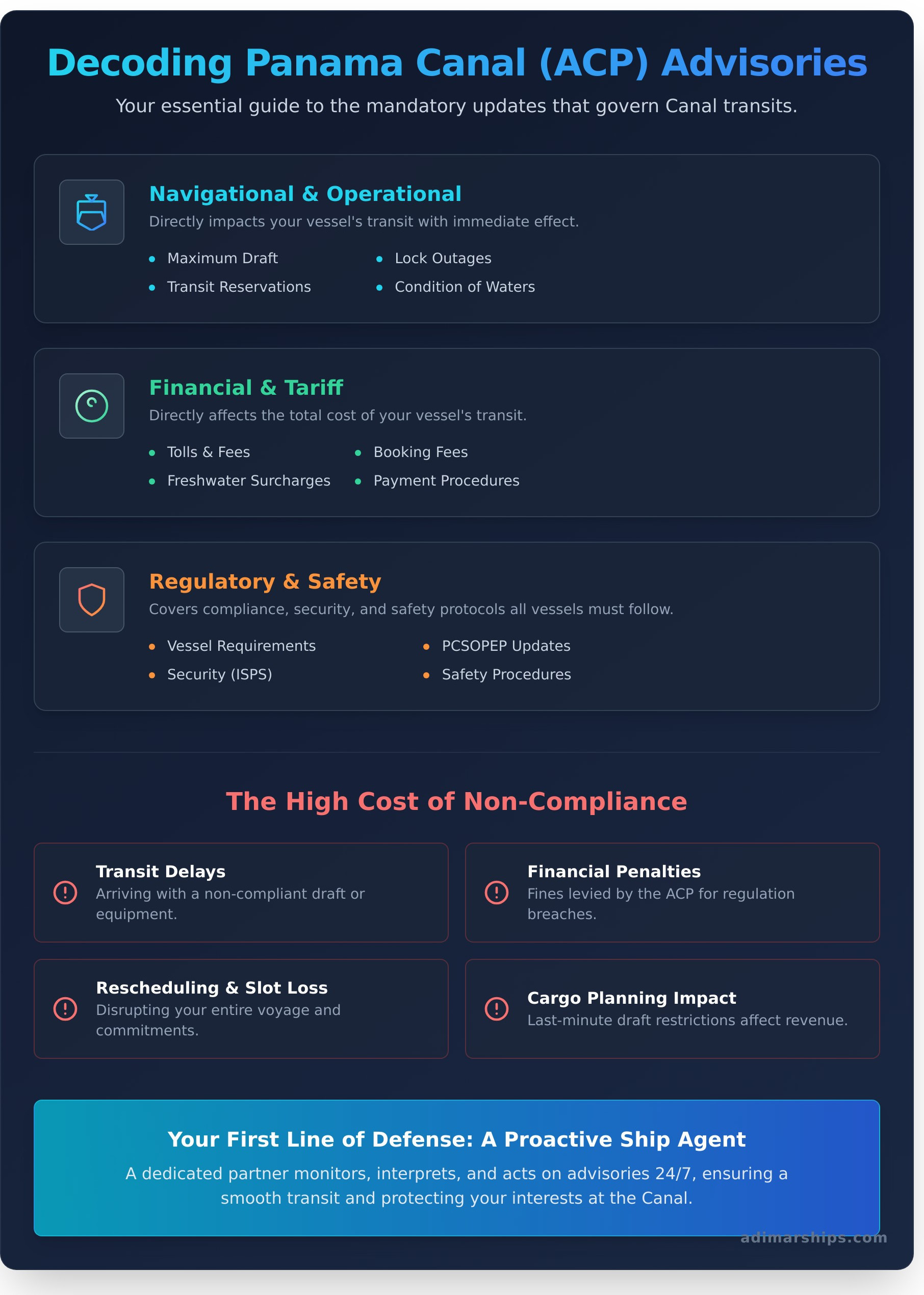
Navigational & Operational Advisories
These are the most common advisories and have a direct, immediate impact on your vessel’s transit. They include:
- Maximum Draft: Updates on the maximum permissible vessel draft, which often change based on the water levels of Gatun and Alhajuela Lakes. This is especially critical during dry seasons.
- Lock Outages: Notifications about scheduled maintenance on specific locks or lanes, which can affect traffic flow and transit times.
- Transit Reservation System: Announcements regarding changes to the booking system, slot availability, or auction rules.
- Condition of Waters: Warnings about weather conditions, such as heavy fog or strong currents in the Gaillard Cut, that may require additional safety measures.
Financial & Tariff Advisories
These advisories directly affect the cost of your transit. They provide advance warning of changes to the financial aspects of using the Canal, such as:
- Tolls & Fees: Official announcements of annual adjustments to toll rates and other standard transit fees.
- Booking Fees: Changes to the cost of securing or auctioning a transit reservation slot.
- Surcharges: The introduction of new fees, such as the freshwater surcharge implemented during periods of drought.
- Payment Procedures: Updates to banking details, payment deadlines, or other financial requirements.
Regulatory & Safety Advisories
This category covers updates related to compliance, security, and safety protocols that all vessels must follow. Key examples include:
- Vessel Requirements: New rules for onboard equipment, manning levels, or vessel configuration needed for a safe transit.
- PCSOPEP: Updates related to the Panama Canal Shipboard Oil Pollution Emergency Plan requirements.
- Security Measures: Changes in security levels or procedures related to the ISPS (International Ship and Port Facility Security) Code.
- Safety Procedures: Implementation of new safety protocols for line handlers, pilots, or tugboat operations.
How Advisories Impact Your Transit (and Your Bottom Line)
In the high-stakes environment of global shipping, missing a critical advisory is not an option. The consequences go beyond simple inconvenience and can lead to significant financial and operational setbacks. A proactive approach, however, turns this flow of information into a powerful tool for planning and a distinct competitive advantage.
The Risks of Non-Compliance
Failing to adhere to the latest advisories can result in a cascade of problems:
- Transit Delays: Arriving with a non-compliant draft or without the required equipment will cause your vessel to be delayed until the issue is resolved, costing valuable time and money.
- Financial Penalties: The ACP can levy fines for failing to adhere to new regulations or safety procedures outlined in an advisory.
- Rescheduling: If your vessel misses its scheduled slot due to non-compliance, you may lose it entirely, disrupting your entire voyage schedule and onward commitments.
- Cargo Planning: Last-minute draft restrictions can directly impact how much cargo you can load, affecting revenue for that voyage.
Why a Ship Agent is Your First Line of Defense
This is where the value of an experienced, on-the-ground ship agent becomes clear. Instead of tasking your busy team with monitoring and interpreting these updates, you can rely on a dedicated partner whose sole focus is your vessel’s smooth transit. At Adimar Shipping, we monitor all ACP communications 24/7, ensuring nothing is missed. We don’t just forward the information; we interpret its specific impact on your vessel and voyage, providing clear, actionable steps for the Master and crew. From handling necessary adjustments to your booking to ensuring all paperwork is compliant with the latest rules, we manage the details so you can focus on your business. Let Adimar be your eyes at the Canal. Request a quote today.
Frequently Asked Questions
- Where can I find the official list of ACP Advisories to Shipping?
- The official list is published on the Panama Canal Authority’s website, typically under the “Maritime Services” section.
- How often does the Panama Canal Authority issue new advisories?
- The frequency varies depending on operational needs. During periods of changing weather or maintenance, several advisories may be issued in a single week. At other times, it may be less frequent.
- What were the most significant ACP advisories issued recently?
- Recently, the most impactful advisories have related to draft restrictions due to low water levels in Gatun Lake and adjustments to the number of daily transit slots available.
- What happens if my vessel’s draft exceeds the limit in an advisory?
- The vessel will not be allowed to transit until the issue is rectified, which may involve lightering cargo or waiting for water levels to rise. This will result in significant delays and costs.
- Can Adimar Shipping help us prepare for upcoming regulatory changes?
- Absolutely. We provide clients with advance notice and clear guidance on how to prepare for scheduled changes, ensuring your vessel is compliant long before arrival.
- How do I subscribe to receive ACP advisories directly?
- The ACP website offers options for stakeholders to subscribe to their official communications via email.
Navigating the complexities of the Panama Canal requires vigilance, expertise, and a proactive partner you can trust. By staying ahead of ACP Advisories and understanding their impact, you can protect your schedule, control your costs, and ensure every transit is as smooth as possible. With over 20 years of dedicated experience, Adimar Shipping is committed to providing that peace of mind. Nominate Adimar as your trusted agent for a seamless transit.