
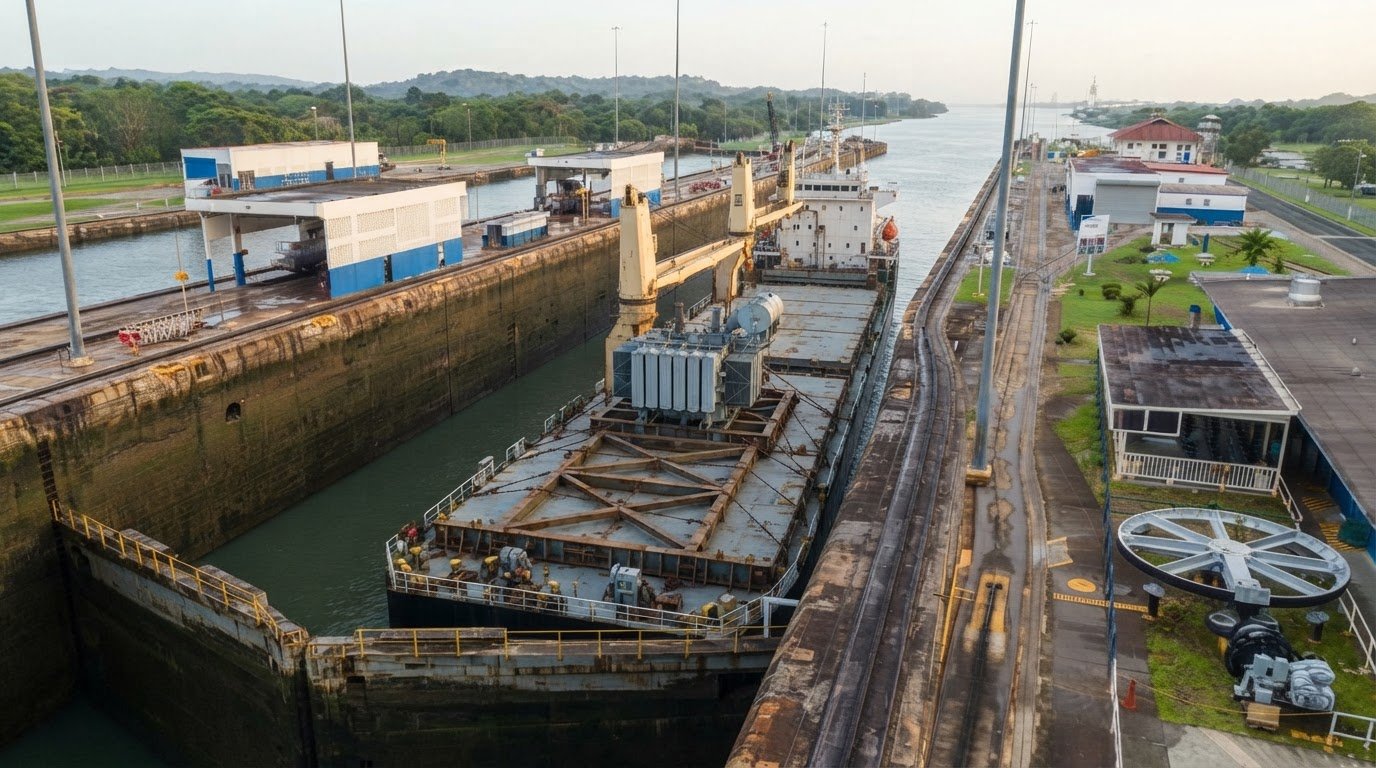
For special project cargo, local coordination matters as much as the transit plan. A Panama Canal agent for special project logistics coordinates pre-arrival information and communication with the Panama Canal Authority (ACP), which operates and manages the Canal. Clear communication helps align vessel and project requirements as the transit approaches.
Special cargo requires careful coordination, and keeping the right parties informed can reduce uncertainty around arrival and passage. This article explains how an agent organizes pre-arrival information, supports communication with local authorities, and connects vessel needs with the wider project plan. It also covers the information that shapes transit planning and how local ship agency support helps keep responsibilities clear.
Key Takeaways
- Organize vessel and project details before arrival so the agent can coordinate the information needed for transit planning.
- Factor vessel dimensions into coordination: the Panama Canal Authority’s stated maximum dimensions depend on ship type.
- Permit and document requirements depend on the vessel and cargo, so clear communication with local authorities is central to the process.
- Transit booking timing depends on project and vessel requirements; agency support can help keep the relevant parties aligned.
Pre-arrival information coordination
Pre-arrival coordination brings vessel particulars, cargo details, and transit planning together. A Panama Canal agent for special project logistics uses this information to identify gaps and align communication before the vessel arrives.
Transit Permits and Documentation
Documentation coordination starts with vessel particulars and a clear cargo description, including dimensions, weight, and handling requirements. The agent organizes the information for transit planning and directs relevant questions to the appropriate authority. Accurate descriptions help distinguish project cargo, such as heavy-lift shipments, from standard cargo.
There is no single document list for every project vessel. A Panama Canal agent for special project logistics considers the vessel, cargo, and planned transit together, then coordinates applicable submissions and responses. Consistent details help resolve discrepancies before arrival.
Agent Selection and Transit Arrangements
A ship agent coordinates transit planning around the vessel and project cargo. The process starts by collecting vessel particulars and cargo dimensions, then identifying operational questions that need attention. For heavy-lift cargo, the agent can coordinate communication about handling and the vessel’s planned passage.
The agent keeps vessel representatives and relevant local authorities aligned as plans develop. This gives the project team a clear point of contact for transit-related communication and helps identify missing information early.
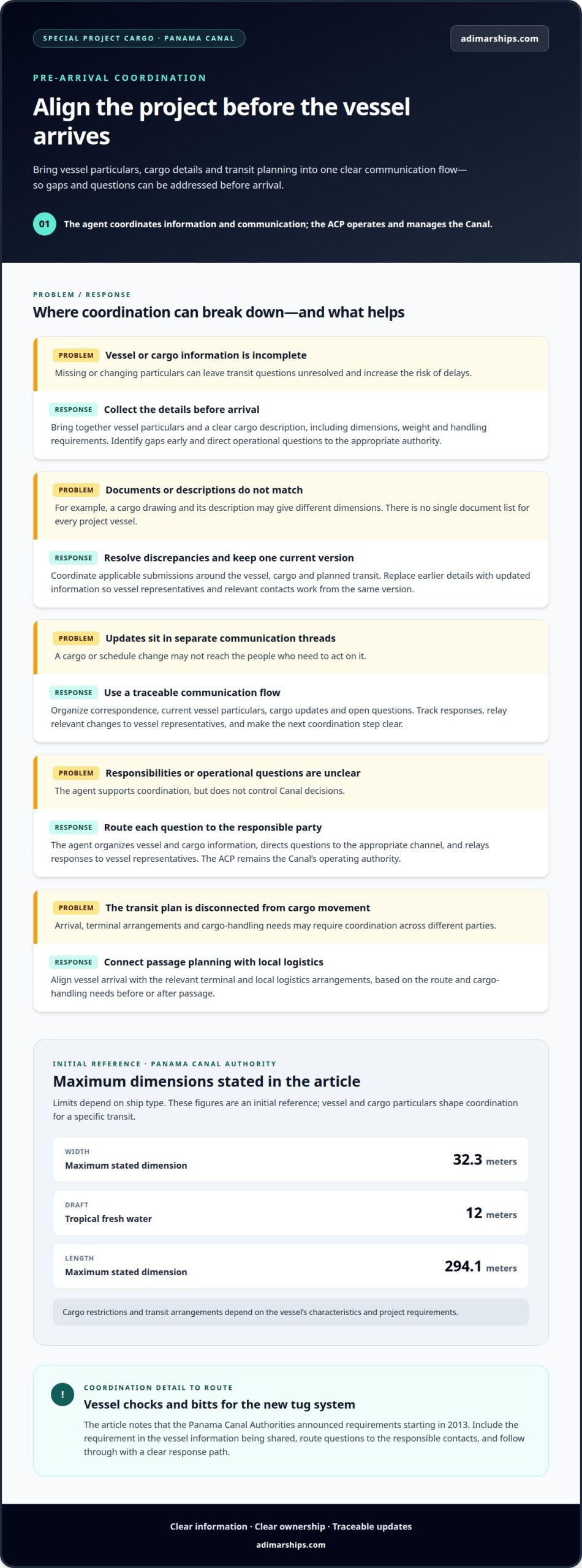
According to Panama Canal Authority, maximum ship dimensions are 32.3 meters wide, a draft of 12 meters of tropical fresh water, and 294.1 meters long, depending on ship type. These dimensions provide an initial reference; vessel and cargo particulars shape coordination for a specific transit. Cargo restrictions and transit arrangements depend on the vessel’s characteristics and project requirements.
Incomplete or changing vessel and cargo details can increase the risk of delays.
Port and terminal coordination depends on the route and cargo-handling needs. The agent aligns vessel arrival with the relevant terminal and local logistics arrangements, connecting transit planning with cargo movement before or after passage.
Local authority coordination
The Panama Canal Authority (ACP) operates and manages the Canal, while the vessel’s agent coordinates communication about its transit. For project cargo, this means organizing vessel and cargo information, directing operational questions to the appropriate channel, and relaying responses to the vessel’s representatives. The agent supports coordination; the ACP remains the Canal’s operating authority.
When comparing agents for project logistics, consider how they manage local communication, information flow, and follow-up. Ask who handles each transit question, how updates reach the vessel team, and how changes to cargo or schedule are communicated. These practical working methods matter more than broad claims about expertise.
A practical coordination process starts by identifying the question and the responsible party. The agent sends the relevant details, tracks the response, and shares it with those who need to act. For example, if project cargo information changes, the updated description should promptly reach the appropriate contacts instead of remaining in a separate planning thread.
Clear records help prevent conflicting instructions. The agent can organize correspondence, current vessel particulars, cargo updates, and open questions in one communication flow. If a response affects the transit plan, the agent relays the change to the vessel’s representatives and identifies the next coordination step. This creates a traceable handoff without implying that the agent controls Canal decisions.
Local coordination is especially useful when a project involves several parties with different operational roles. A Panama-based representative can serve as the communication link between the vessel team and the ACP, while keeping the project’s transit questions visible. For support with Panama ship agency coordination, use a service partner that keeps responsibilities and updates clear.
The Panama Canal Authorities announced requirements for vessel chocks and bitts for the new tug system starting in 2013. In coordination terms, this is the kind of requirement to route to the responsible contacts, include in the vessel information being shared, and follow through with a clear response path. Keeping the relevant parties aligned on the requirement helps ensure the vessel team receives the information needed for its coordination, while questions about the requirement can be directed to the appropriate channel.
What permits and documentation are required for project cargo transiting the Panama Canal?
Documentation for a project transit starts with the vessel and cargo details needed for coordination. Applicable submissions depend on the vessel, cargo characteristics, and planned transit. Because the Panama Canal Authority operates and manages the Canal, transit requirements need to be coordinated through the relevant process, not assumed from a generic project-cargo checklist.
A working file can bring operational information together in a consistent format. It may include vessel particulars, cargo descriptions, dimensions, weights, and the planned stowage arrangement. For a heavy-lift unit, a drawing or handling plan can clarify how the cargo will be carried and managed. These materials support coordination, but should not be mistaken for a universal list of permits.
The agent organizes the information, identifies gaps, and directs questions to the appropriate Canal contact. For example, if a cargo drawing and description give different dimensions, resolve the discrepancy before moving the package forward. Clearly replace earlier versions with updated details so vessel representatives and relevant contacts work from the same information.
- Vessel particulars: Identify the vessel and its relevant transit details.
- Cargo information: Describe each project unit and its dimensions and weight.
- Handling details: Explain stowage and any special lifting or handling needs.
- Supporting correspondence: Keep questions, responses, and revisions together.
This approach helps distinguish transit coordination from other project paperwork. Cargo documents for port or terminal handling may serve a different purpose from Canal transit submissions. The agent can keep these workstreams aligned without treating every shipping document as a Canal permit.
Before the vessel arrives, the agent reviews the current file, follows up on open questions, and communicates changes to the relevant parties. This disciplined handoff helps prevent outdated cargo details from circulating and provides a clear record of the information supplied for transit coordination.
How far in advance should a Panama Canal transit be booked for a project vessel?
Start transit planning as soon as the project vessel’s schedule and cargo plan take shape. Booking lead time depends on vessel readiness, cargo details, and the transit arrangements involved. Early coordination gives the agent time to organize information and address operational questions before the requested passage.
Project schedules can change as cargo is completed, loaded, or prepared for handling. If loading changes or the departure window shifts, the vessel’s arrival plan may need to be revisited. The agent should keep transit coordination aligned with the latest schedule and communicate material changes to the relevant parties.
The Panama Canal Authority (ACP) operates and manages the Canal. Transit planning therefore requires clear communication with the appropriate Canal contacts, as well as coordination between the vessel’s representatives and project team. An agent can help maintain that communication, but does not control Canal scheduling decisions.
Useful planning inputs include:
- Vessel readiness: Establish when the vessel and crew can meet the planned departure window.
- Cargo status: Track changes to loading plans, dimensions, or handling arrangements.
- Route and arrival plan: Align the Canal transit request with the vessel’s broader itinerary.
- Open questions: Identify items needing ACP coordination and follow up as details develop.
For example, if a heavy-lift unit’s loading date changes, the agent can update the transit coordination timeline and share the revised plan. Keeping one current schedule helps prevent vessel, cargo, and project teams from acting on different assumptions. Revisit the plan whenever a key milestone changes rather than relying on an outdated arrival estimate.
For a project vessel, the practical answer is to begin early, then keep the request current as readiness and cargo plans firm up. Coordinate your Panama Canal transit planning with local ship agency support.
The Panama Canal aims to forecast how many ships will transit on a given day six months in advance. Treat this horizon as context when discussing a project vessel’s intended passage, while refining the request as its schedule and cargo plan develop. A daily traffic forecast does not replace confirmation of the vessel’s arrangements with the relevant Canal contacts.
Adimar Shipping, Inc.
Adimar Shipping, Inc. coordinates vessel transits through Panama with local ship agency support. For a project vessel, this means keeping communication and transit-related arrangements organized as vessel and cargo plans develop.
Turn to Adimar Shipping, Inc. for local representation that coordinates with the vessel’s interests and keeps relevant parties aligned. Ship Agency Services support transit coordination, while Owner’s Nominated Agency or Charterer’s Nominated Agency represents the respective party’s agency interests. Husbandry Services support vessel needs alongside agency coordination.
Share the vessel’s planned schedule, project cargo overview, and key coordination questions to define the support required. Contact Adimar Shipping, Inc. to discuss your Panama Canal project transit.
Set Your Project Transit in Motion
Assign clear responsibility for transit planning early. Align the vessel’s commercial interests, project schedule, and communication responsibilities so decisions move through the right channels as plans develop. A panama canal agent for special project logistics provides local agency coordination while your team focuses on the wider project.
Adimar Shipping, Inc. provides vessel representation through Ship Agency Services, Owner’s Nominated Agency, and Charterer’s Nominated Agency. The appropriate arrangement depends on whom the agent represents. Defining that representation helps your project team establish a focused working relationship for transit coordination.
Prepare a concise project brief covering the vessel’s intended schedule, cargo overview, and key coordination needs. This gives the discussion a practical starting point and helps identify the right scope of agency support for your operation.
Contact Adimar Shipping, Inc. to discuss your project transit. A well-organized next step can help your team move forward with greater clarity and confidence.
Frequently Asked Questions
What services does a Panama Canal agent provide for special project logistics?
A Panama Canal agent coordinates vessel transit arrangements and related agency support. Adimar Shipping’s Ship Agency Services include transit clearance, ordering pilots and tugs, and handling documentation for inbound and outbound passage. Through Owner’s Nominated Agency or Charterer’s Nominated Agency, Adimar represents the relevant party’s interests. Husbandry Services also support vessel and crew needs, including crew changes and provisioning.
Which ports, terminals, and logistics services in Panama support project cargo near the Canal?
Coordination with the relevant terminal depends on the route and cargo-handling needs. The agent aligns vessel arrival with local logistics arrangements and cargo movement before or after Canal passage.