
In the fast-paced world of maritime logistics, time is money. Misjudging your timing or relying on outdated information for a port call risks costly delays and operational headaches. Planning a seamless vessel call at Cristobal Port, Panama, shouldn’t be a source of frustration, yet sifting through scattered data, navigating language barriers, and coordinating multiple vendors can drain valuable resources and create unnecessary confusion.
We believe in providing clarity and control. This comprehensive 2025 guide is designed to be your trusted, single source of truth. We are your eyes on the ground, delivering a complete operational overview with the integrity you expect. Inside, you will find detailed technical specifications, a full breakdown of available services from bunkering to husbandry, and expert insights into the essential role a ship agent plays in ensuring every call is cost-conscious and efficient. Let’s eliminate the guesswork and plan your next port call with confidence.
Cristobal Port: Strategic Gateway to the Panama Canal
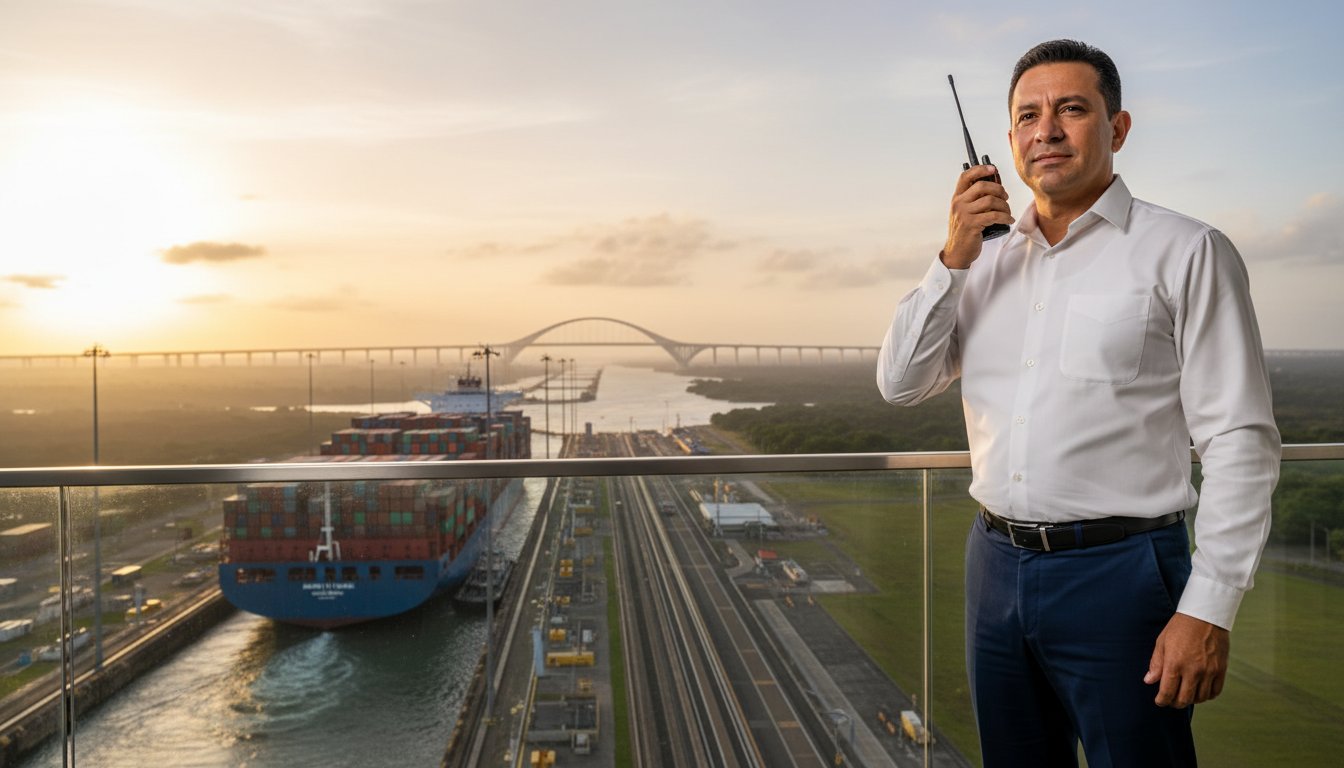
Positioned strategically at the Atlantic entrance of the Panama Canal in Limon Bay, the Port of Cristobal serves as a critical linchpin in global maritime trade. With a rich history dating back to the canal’s construction, the Port of Cristóbal has evolved into a state-of-the-art container terminal and a pivotal transshipment hub for the Americas. Operated by the globally recognized Hutchison Ports PPC, the port leverages a world-class network to provide efficient and reliable service, connecting major shipping routes between the Atlantic and Pacific oceans. Its legacy and modern capabilities make it an indispensable asset for international logistics.
Geographic and Economic Importance
The strategic value of the cristobal port panama is magnified by its location adjacent to Colón, Panama’s second-largest city. This proximity creates a powerful synergy with the Colon Free Zone (CFZ), the largest free port in the Americas. This direct connection establishes Cristobal as a logistics powerhouse, facilitating the seamless movement of goods for import, re-export, and distribution throughout North, Central, and South America. For businesses relying on efficient supply chains, this integration of port and free zone offers unparalleled economic advantages.
Cristobal’s Role in a Panama Canal Transit
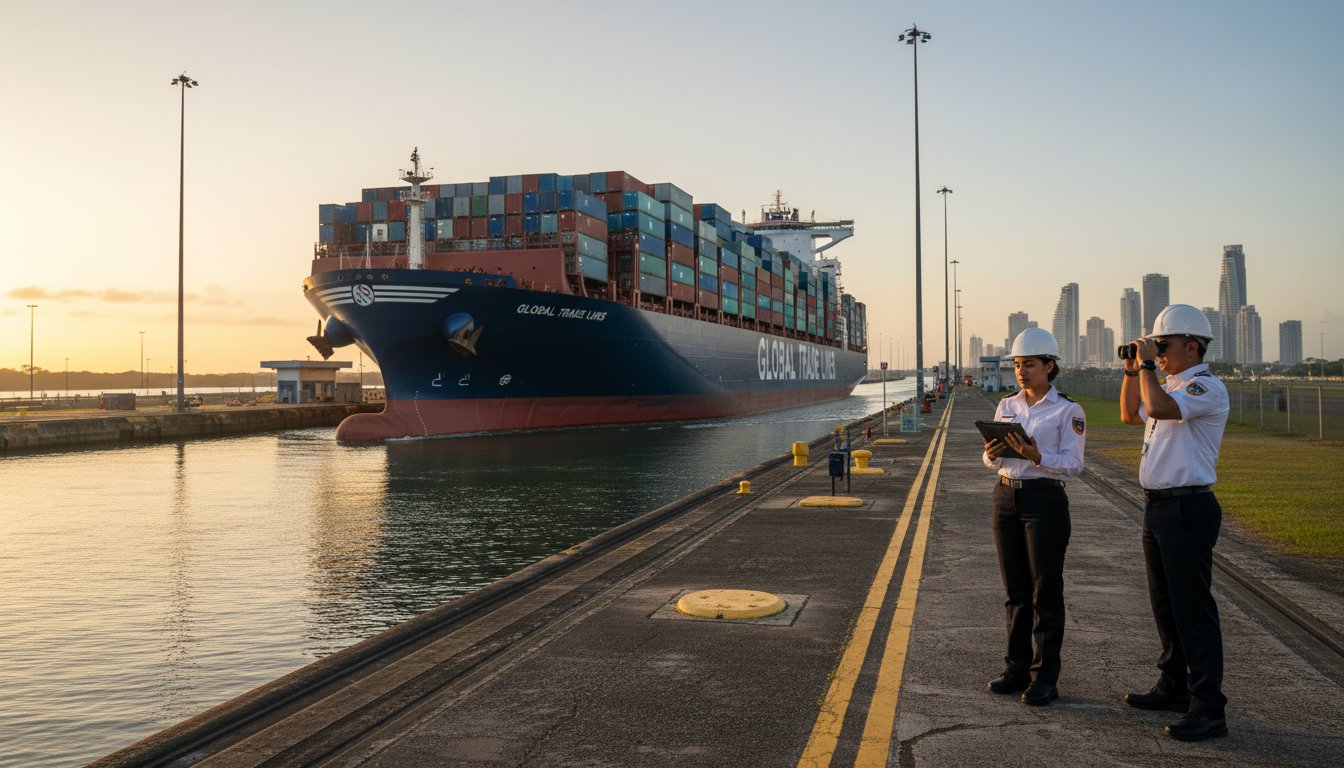
For ship owners and charterers, Cristobal is more than just a cargo terminal; it is a vital operational hub for a successful Panama Canal transit. In the complex world of maritime logistics where timing is everything, the port provides essential support services that ensure smooth and cost-effective passage. Its role is multifaceted, offering crucial assistance before or after a vessel’s journey through the canal.
- Pre-Transit Staging: The port and its surrounding anchorage serve as a secure staging area where vessels can wait for their assigned transit slot, ensuring they are prepared to enter the canal on schedule.
- Husbandry Services: It is a primary location for critical operations such as crew changes, receiving spare parts, and taking on provisions and fresh water for the next leg of a voyage.
- Bunkering Operations: Cristobal offers reliable and timely bunkering services, allowing vessels to refuel efficiently without disrupting their tight schedules.
Navigating Cristobal Port: Terminals & Technical Specifications
For ship owners and charterers, successful operations hinge on precise, actionable data. Misjudging a port’s capabilities can lead to costly delays and logistical frustrations. The cristobal port panama is a multi-faceted facility, and understanding its technical specifications is the first step toward ensuring a smooth and efficient port call. From container handling to cruise passenger services, Cristobal is equipped to manage diverse maritime needs at the Atlantic entrance to the Panama Canal.
Container Terminal Capabilities
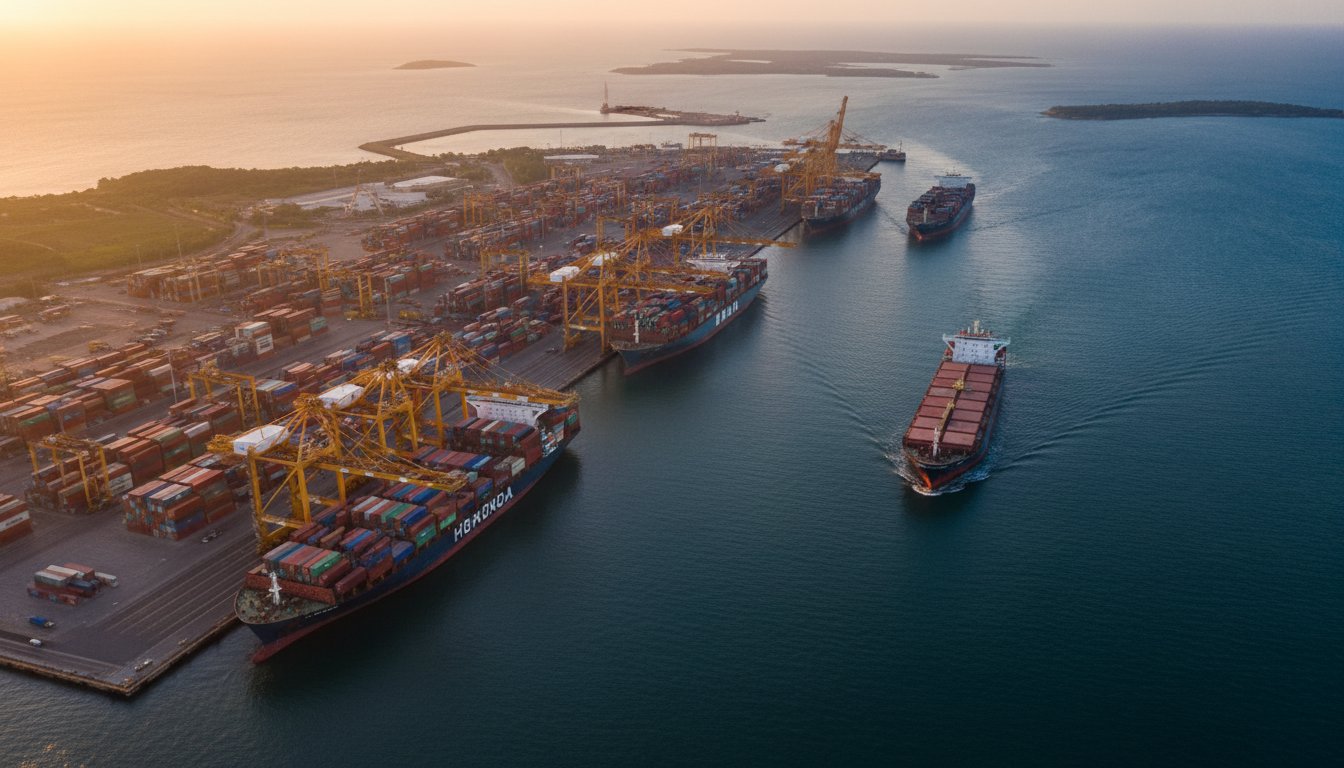
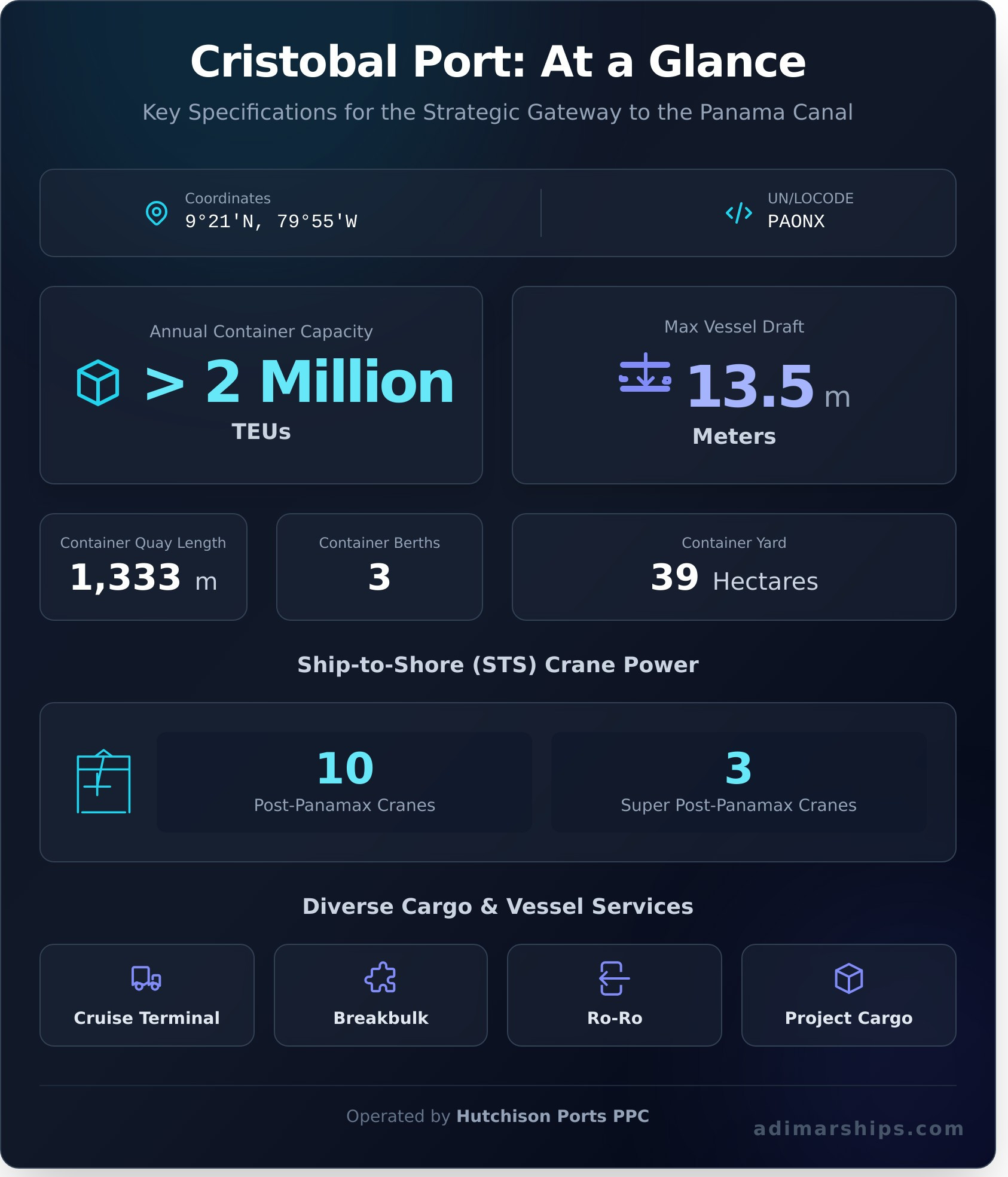
Operated by Hutchison Ports PPC, Cristobal’s container terminal is a powerhouse of efficiency. The facility is designed for high-volume throughput, featuring three dedicated container berths with a total quay length of 1,333 meters. Cargo operations are supported by a robust fleet of 10 Post-Panamax and 3 Super Post-Panamax ship-to-shore (STS) gantry cranes, ensuring rapid vessel turnaround.
With an annual handling capacity exceeding 2 million TEUs, the terminal is built for the demands of modern trade routes. Vessel operators must note the maximum draft of 13.5 meters. Planning your vessel’s call requires careful coordination to ensure compliance not only with port limits but also with the requirements set forth by the Panama Canal Authority for transit, making precise husbandry services essential.
Cruise Ship and General Cargo Facilities
Beyond containers, the cristobal port panama is a premier destination for cruise lines and handles a wide array of general cargo. The port features a dedicated cruise terminal, a vital homeport for Caribbean itineraries, offering modern passenger processing and support services. For general cargo, the port provides specialized facilities and experienced personnel to manage Ro-Ro (Roll-on/Roll-off), breakbulk, and oversized project cargo. Ample storage is available, including a 39-hectare container yard and secure warehousing options for various cargo types.
Key Port Specifications at a Glance
.spec-table {
width: 100%;
border-collapse: collapse;
margin-top: 20px;
}
.spec-table th, .spec-table td {
border: 1px solid #dddddd;
text-align: left;
padding: 8px;
}
.spec-table th {
background-color: #f2f2f2;
font-weight: bold;
}
| Specification | Details |
|---|---|
| UN/LOCODE | PAONX |
| Coordinates | 9°21’N, 79°55’W |
| Operator | Hutchison Ports PPC |
| Container Quay Length | 1,333 meters |
| Container Berths | 3 |
| Max Vessel Draft | 13.5 meters |
| Annual TEU Capacity | > 2 Million TEUs |
| Cargo Handled | Containers, Cruise, Ro-Ro, Breakbulk, Project Cargo |
Essential Vessel Services Available at Cristobal
A port’s value extends far beyond its berths and cranes. A vessel’s time is money, and the robust infrastructure at Cristobal is designed to protect that principle. The comprehensive ecosystem of vessel services available ensures that every operational need can be met with efficiency and integrity. However, leveraging these services effectively requires meticulous planning and on-the-ground coordination. This is where a trusted local agent becomes your greatest asset, transforming potential challenges into seamless solutions for any vessel calling at cristobal port panama.
Husbandry, Crew, and Protective Agency Services
The well-being of your crew and the smooth handling of administrative tasks are paramount. We understand that seamless crew changes-managing all logistics for on-signers and off-signers-are critical to maintaining morale and operational readiness. Our services extend to arranging timely medical assistance and transportation for seafarers, ensuring their health is a top priority. Furthermore, we coordinate secure Cash to Master (CTM) deliveries and can act as your protective agent, providing oversight to safeguard your interests when another agent is appointed by charterers.
Bunkering, Provisioning, and Waste Disposal
Keeping your vessel fueled, stocked, and compliant is a core operational necessity. The port offers reliable bunkering options, including Marine Gas Oil (MGO) and Very Low Sulphur Fuel Oil (VLSFO), delivered efficiently via barge. We coordinate the timely delivery of fresh water, high-quality provisions, and essential deck and engine stores to prevent any delays to your schedule. Additionally, we manage the proper disposal of sludge, garbage, and bilge water in strict accordance with local and international regulations, protecting both your vessel and the environment.
Technical Support and Repairs
Unexpected technical issues require quick and expert solutions. Cristobal provides access to a network of certified professionals for critical support services. This includes underwater hull inspections, cleaning, and propeller polishing to maintain fuel efficiency. For more complex needs, we arrange for minor afloat repairs, connect you with specialized workshops, and manage the sourcing and delivery of critical spare parts. The port’s strategic location next to the vast Colón Free Zone provides a significant advantage, often enabling faster access to essential components and minimizing vessel downtime.
The Agent’s Role: Ensuring Smooth Operations at Cristobal Port
In the world of maritime logistics, where time is money, viewing a ship agent as a simple cost is a critical mistake. A professional agent is an investment in efficiency, risk mitigation, and financial control. For any vessel calling at Cristobal Port, Panama, the agent is the central nervous system of the entire operation, coordinating every detail to prevent costly delays and ensure a seamless turnaround. They are the owner’s trusted local partner, transforming potential challenges into streamlined processes.
Pre-Arrival Planning and Documentation
A successful port call begins long before the vessel is in sight. Your agent acts proactively to handle all the complex administrative requirements. This includes submitting timely pre-arrival notifications to port, customs, and immigration authorities, managing all necessary declarations, and securing essential services like berth allocation and pilotage in advance. This meticulous preparation ensures your vessel is cleared for a swift and compliant entry.
On-the-Ground Coordination and Communication
Once your vessel is near, the agent becomes your single point of contact for all service providers-from tugs and line handlers to suppliers and surveyors. We eliminate confusion by managing all communications and providing real-time operational updates to owners and charterers. Should any issue arise, from a last-minute supply need to a regulatory question, your agent is there to troubleshoot immediately. Let us be your eyes at the Panama Canal, protecting your interests around the clock.
Financial Management and Disbursement
Transparent and accurate financial handling is a cornerstone of our service. We prepare a detailed Proforma Disbursement Account (PDA) so you have a clear and reliable estimate of all port call costs upfront. We then manage all payments to local vendors and authorities with integrity, ensuring every dollar is accounted for. This oversight protects you from unexpected fees and guarantees a cost-effective operation at Cristobal Port Panama, supported by clear and final documentation.
Cristobal’s Multimodal Advantage: Rail, Road, and Free Zone
A port’s true value extends beyond its quayside cranes and deep-water berths. In a world where time is money, connectivity is paramount. This is where the Cristobal Port Panama truly distinguishes itself, offering a deeply integrated multimodal network that provides shippers with unparalleled flexibility and efficiency. Its strategic position is amplified by powerful road, rail, and free zone connections that transform it from a simple port of call into a comprehensive logistics hub for the Americas.
The Panama Canal Railway Connection
Cristobal features a unique on-dock rail interface, directly linking its container yards to the Panama Canal Railway. This 47-mile railroad functions as a highly efficient “dry canal,” capable of transshipping containers between the Atlantic and Pacific coasts in a matter of hours. For time-sensitive cargo, this service is a strategic advantage, allowing goods to bypass vessel transit through the Canal and reach their connecting carrier with remarkable speed and reliability.
Proximity to the Colon Free Zone (CFZ)
Immediately adjacent to the port lies the Colon Free Zone (CFZ), the largest free port in the Americas and a vital commercial center for the entire hemisphere. The seamless logistical corridor between Cristobal and the CFZ allows for the swift, often duty-free, movement of goods. This synergy creates immense value for businesses engaged in:
- Regional Distribution: Importing goods in bulk to the CFZ for storage and subsequent distribution throughout Latin America and the Caribbean.
- Value-Added Logistics: Using CFZ facilities for light assembly, labeling, packaging, and other value-added services before re-export.
- Cargo Consolidation: Combining smaller shipments within the zone into larger, more cost-effective loads for export.
This integration of port and free zone operations provides a powerful platform for optimizing supply chains. By leveraging these connections, cargo owners can reduce transit times, minimize handling costs, and gain a significant competitive edge. Navigating these options effectively requires deep local knowledge, and partnering with an experienced agent ensures your cargo leverages this powerful network for maximum efficiency.
Mastering Your Port Call at Cristobal, Panama
As this guide has detailed, Cristobal Port is far more than a location; it’s a dynamic, multimodal hub offering a strategic advantage at the Panama Canal’s Atlantic entrance. From its state-of-the-art terminals to its comprehensive vessel services, the opportunities for efficient operations are immense. However, capitalizing on these advantages requires precise coordination and expert local knowledge. A smooth, cost-effective port call at cristobal port panama is the critical difference between profitability and frustrating delays.
This is where a trusted partner becomes your greatest asset. In an environment where every minute counts, you need an agent who acts as your eyes on the ground, ensuring every detail is managed with unwavering integrity. With over 20 years of proven experience at Panamanian ports, Adimar Shipping is that partner. We are your expert, on-the-ground team, committed to transparency and efficiency for all your vessel needs.
Don’t leave your port call to chance. Put our expertise to work for you. Ensure a seamless port call at Cristobal. Nominate Adimar as your trusted agent. Let’s make your next transit your most successful one yet.
Frequently Asked Questions About Operations at Cristobal
What is the difference between Cristobal Port and Colon Port?
While often used interchangeably, these terms refer to different things. The Port of Colon is the entire port complex on the Atlantic side. The Port of Cristobal is a specific terminal within that complex, operated by Panama Ports Company (PPC). Colon also includes other major terminals like the Colon Container Terminal (CCT). Understanding this distinction is key to ensuring your vessel is routed to the correct facility for its specific cargo and service needs.
Can major vessel repairs be carried out at Cristobal?
Yes, Cristobal’s strategic location provides access to comprehensive vessel repair services. While the terminal itself focuses on cargo operations, it is situated near major dry dock facilities and specialized workshops in the Colon area. Coordinating these services requires an experienced local agent to manage logistics, secure technicians, and source parts efficiently. This ensures repairs are completed with minimal downtime, protecting your schedule and budget from costly delays and miscommunication.
What are the typical weather conditions and potential impacts on port operations?
Panama has a tropical climate with a rainy season from May to December and a dry season. Port operations are generally resilient, but conditions can cause temporary delays. During the rainy season, heavy downpours may briefly suspend crane operations for safety. In the dry season, strong northerly winds can occasionally delay vessel movements or pilotage. Having an agent on the ground provides crucial real-time updates to help you anticipate and manage these potential impacts effectively.
How long does it take to get from Cristobal Port to the Pacific side via the railway?
The Panama Canal Railway provides a highly efficient “dry canal” for container transshipment. The journey for cargo moving from the Cristobal Port, Panama, to the Port of Balboa on the Pacific side typically takes just over one hour. This rapid transit is a significant advantage for logistics planners, offering a reliable and fast alternative to the waterway transit for moving containers between oceans and connecting with different shipping routes.
What are the security (ISPS) levels and procedures at Cristobal Port?
Cristobal Port operates in strict compliance with the International Ship and Port Facility Security (ISPS) Code, maintaining a standard MARSEC Level 1. Access to the terminal is tightly controlled, requiring proper identification and authorization for all personnel, vehicles, and visitors. These robust security procedures are diligently enforced to ensure the safety and integrity of vessels, crew, and cargo throughout all port operations, providing peace of mind for ship owners and charterers.
Are there restrictions on crew shore leave at Cristobal?
Generally, crew shore leave is permitted at Cristobal Port, Panama, provided all immigration and customs requirements are met. Crew members must have valid documentation, including a seaman’s book and any necessary visas. Final approval rests with Panamanian authorities. A proactive ship agent is essential for a smooth process, preparing all necessary paperwork in advance to facilitate clearance and ensure your crew can get timely and well-deserved rest without administrative hurdles.