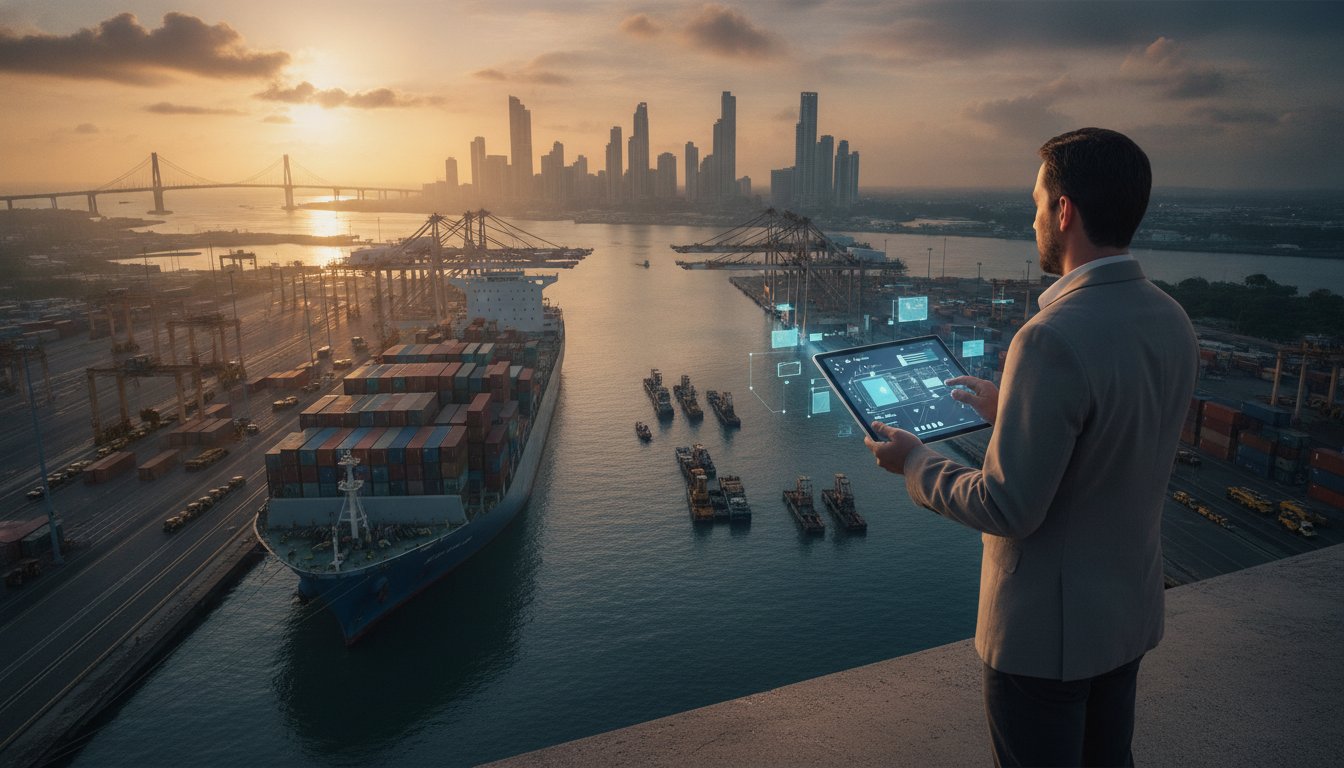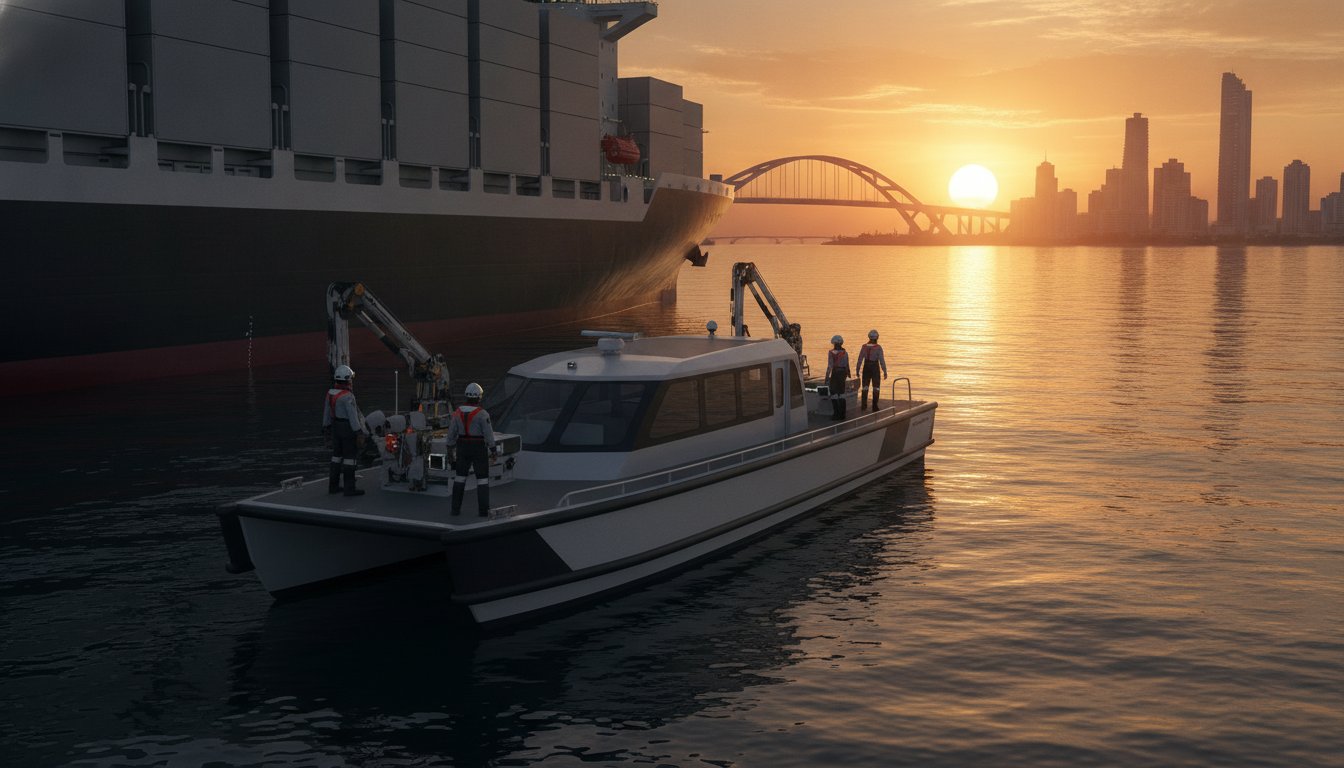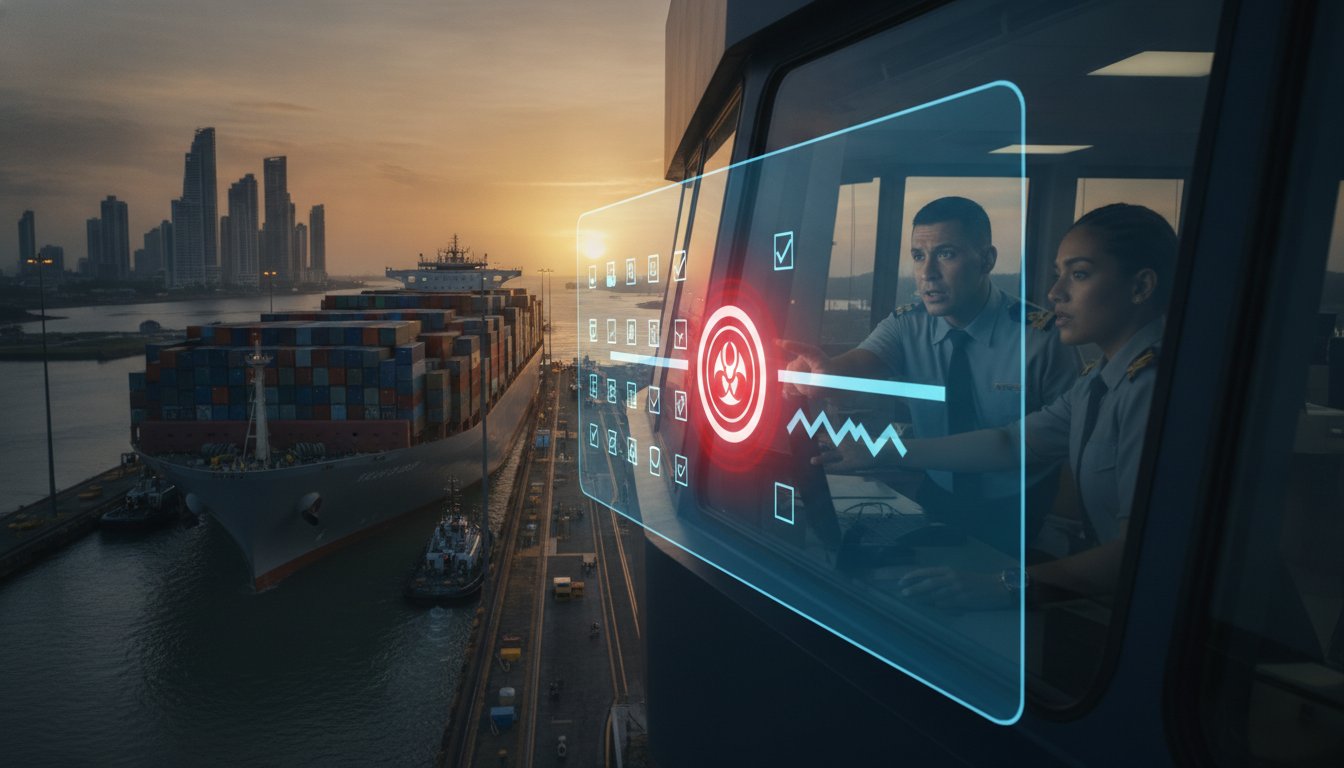


In May 2026, auction premiums for unreserved Panama Canal slots surged as high as $425,000. This staggering figure highlights why understanding how to book a Panama Canal transit is now a high-stakes financial priority rather than a routine task. You know the frustration of watching operational margins erode while a vessel waits ten days in a queue. It’s difficult to keep pace with changing ACP regulations and the specialized requirements of PCSOPEP or ISPS compliance. You deserve a process that eliminates these delays and provides total transparency.
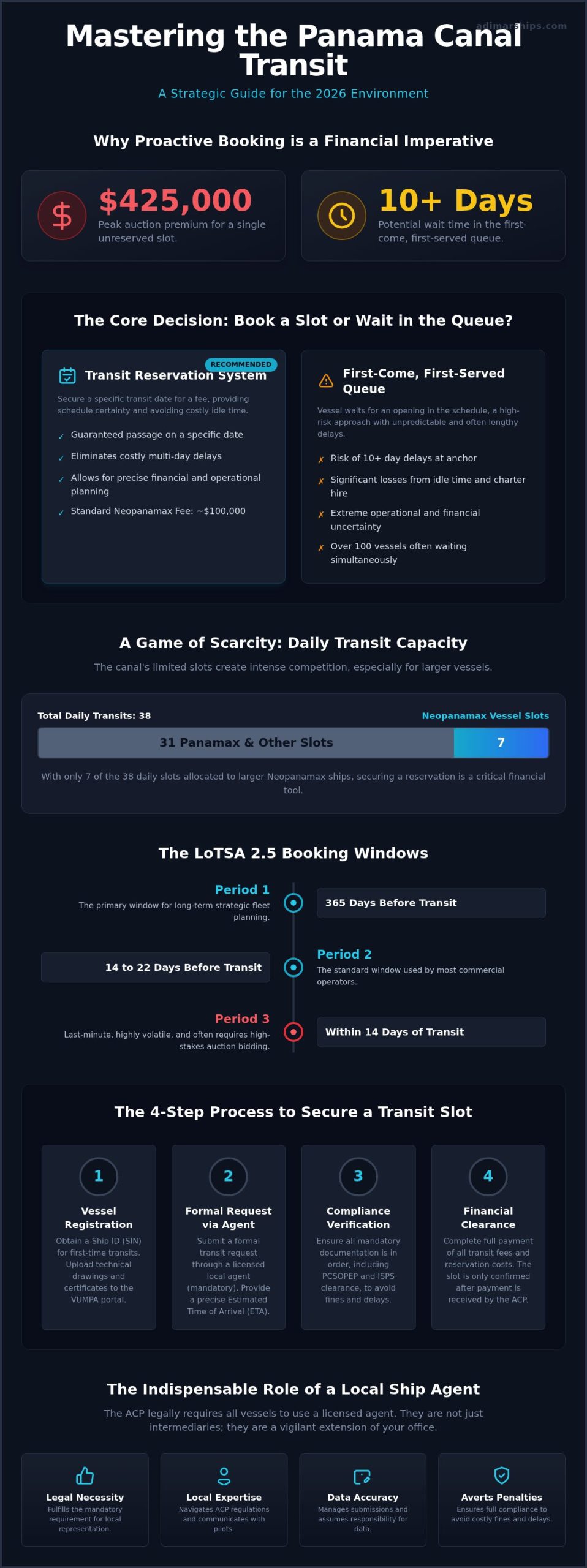
We’ve designed this guide to help you master the complex logistics of the 2026 transit environment. You’ll find a clear timeline for the LoTSA 2.5 booking windows and a breakdown of the current fees for Neopanamax and Panamax locks. We’ll explain how to navigate the auction system and the vital role a local partner plays in managing your paperwork. By the end of this article, you’ll have the technical knowledge to secure your slot, avoid costly fines, and keep your fleet moving on schedule.
Key Takeaways
- Learn the precise sequence of steps for how to book a Panama Canal transit through the VUMPA system to ensure your vessel is registered correctly with the ACP.
- Understand the financial trade-offs between paying for a guaranteed reservation and waiting in the “first-come, first-served” queue.
- Identify the mandatory documentation requirements, including PCSOPEP and ISPS clearance, to avoid costly administrative fines and transit delays.
- Discover strategic bidding tactics for the Transit Reservation Auction to secure passage when standard slots are unavailable.
- Recognize why local representation is a legal necessity and how an experienced ship agent acts as a vigilant extension of your own office.
Understanding the Panama Canal Transit Reservation System
The Panama Canal Authority (ACP) governs every movement through the isthmus, managing a complex balance between global trade demand and local water resources. When you’re determining how to book a Panama Canal transit, you must first choose between the Transit Reservation System and the “first-come, first-served” queue. The reservation system allows you to secure a specific date for a fee, while the queue requires your vessel to wait until a gap in the schedule appears. With over 100 vessels often awaiting transit simultaneously, the queue can lead to delays exceeding ten days. It’s a risk most commercial operators can’t afford to take.
This Panama Canal overview shows how the waterway’s dual-lock system creates distinct operational paths. Your booking strategy depends entirely on whether your vessel fits the original Panamax locks or the larger Neopanamax locks. As of August 2026, the ACP permits 38 daily transits; however, only seven of these are for Neopanamax ships. This limited capacity turns a booking into a vital financial tool. While a standard Neopanamax reservation fee is $100,000, the cost of a vessel sitting idle at anchorage often far exceeds this amount in lost charter hire and operational overhead.
The Three Booking Periods
The ACP manages capacity through the Enhanced Long-Term Slot Allocation Program (LoTSA 2.5), which divides the calendar into three distinct windows. Period 1 opens 365 days before the transit date, serving as the primary window for long-term strategic planning. Period 2 covers the 14 to 22-day window, which most commercial operators use for standard voyages. Finally, Period 3 handles requests within 14 days of transit. This last-minute window is the most volatile. Slots are often scarce and may require participating in an auction where premiums recently reached $425,000.
Vessel Tiers and Slot Allocation
Slot availability isn’t uniform. It’s dictated by your vessel’s length, beam, and draft. The ACP uses these dimensions to categorize ships into tiers, such as “Super” or “Neopanamax.” For instance, Neopanamax vessels are currently restricted to a maximum authorized draft of 14.78 meters (48.5 feet). Because larger ships require more water and specialized tugboat support, their slots are more restricted. Knowing your vessel’s tier is the first step in delegating the transit process to a local expert. A specialized agent acts as a vigilant extension of your own office, monitoring these changing draft limits and reservation tiers in real-time to ensure you don’t miss a critical window.
The Step-by-Step Process to Secure a Transit Slot
Understanding how to book a Panama Canal transit requires a rigorous administrative sequence. You must provide the ACP with exact technical specifications long before the vessel arrives at the breakwater. This process ensures that the canal’s infrastructure can safely accommodate your ship’s specific dimensions. Accuracy at this stage prevents the “confusion and delays” that often plague operators who attempt to manage these details without local oversight.
Registering Your Vessel with the ACP
For first-time transits, your priority is obtaining a Ship Identification Number (SIN). This unique identifier tracks your vessel’s history and technical profile within the canal’s database. You must upload detailed technical drawings and certificates to ensure your ship meets the Mandatory Compliance and Documentation standards set by the authority. Vessels transiting for the first time also undergo a physical admeasurement by an ACP inspector upon arrival to verify the submitted data. VUMPA is the centralized digital portal for all Panama maritime entries. This system integrates information from the ACP and the Panama Maritime Authority, requiring precise data entry to avoid clearance delays.
Submitting the Formal Request via Your Agent
The ACP does not accept transit requests directly from ship owners. You must work through a licensed local agent to navigate the digital submission process. This requirement exists because the agent assumes responsibility for the accuracy of the data and serves as the local point of contact for canal pilots. When learning how to book a Panama Canal transit, you’ll find that the Estimated Time of Arrival (ETA) is the most critical variable. If your vessel fails to arrive within the designated window, the ACP may cancel your reservation and charge a significant penalty. Your agent will verify lockage requirements based on your cargo type, such as specific safety protocols for LNG carriers or tankers.
Once the request is approved, you must manage the financial logistics. The ACP requires full payment of the booking fee and estimated transit costs in advance. These funds are typically handled through your agent’s escrow account. This pre-payment includes the booking fee, tugboat charges, and security fees, ensuring there are no financial holds when the vessel is ready to move. Timing is vital here. If the funds aren’t cleared by the ACP’s deadline, your slot will be released to the next vessel in line. To simplify these financial and administrative hurdles, many operators choose to partner with a specialized ship agency that provides direct oversight of the entire clearance process.
Strategic Booking: Auctions and the “Ad Hoc” Queue
When standard reservation windows close and all slots are fully committed, your operational strategy must shift. Knowing how to book a Panama Canal transit during these peak periods requires a deep understanding of the auction market. This isn’t a routine administrative task; it’s a financial decision where the cost of a bid is weighed against the massive expense of a vessel sitting idle. If your cargo is time-sensitive, the auction system becomes your primary path to maintaining your schedule.
Navigating the Transit Reservation Auction
The Transit Reservation Auction is the ACP’s mechanism for allocating unreserved slots or those made available by last-minute cancellations. Every auction begins with a “Base Bid,” which is the minimum amount required to enter the competition. However, the “Winning Bid” is the figure that actually secures the slot. In May 2026, auction premiums for unreserved slots surged as high as $425,000, demonstrating how volatile this market can be. To navigate this, Adimar Shipping provides real-time market intelligence for auction bidding. We analyze recent winning bids and current congestion levels to help you determine a competitive offer that secures passage without overpaying.
Managing the Arrival Queue
If you choose not to participate in an auction, your vessel enters the “first-come, first-served” queue. This is a high-risk gamble. While you avoid the immediate reservation fee, you’re exposed to the daily running costs of the vessel. You must calculate your “Daily Running Cost,” including fuel for auxiliary engines, crew wages, and potential late-delivery penalties, against the cost of a booking. Several factors influence the speed of this queue:
- Water Levels: Drought conditions can lead to tighter draft restrictions, slowing the movement of Neopanamax vessels.
- Weather: Heavy fog or tropical storms in the Gatun Lake region can halt transits entirely.
- Traffic Surges: A sudden influx of unbooked vessels can extend wait times past the ten-day mark.
Our role as a vigilant agent is to monitor the ACP’s VUMPA system for “last-minute” openings. These opportunities often arise when another vessel fails to meet its ETA or cancels its slot. Because we act as an extension of your own office, we can react instantly to these openings, potentially saving your voyage from a lengthy stay in the queue. This proactive oversight is often the difference between a profitable voyage and one marred by six-figure delay costs. Understanding how to book a Panama Canal transit strategically means knowing when to bid and when to rely on a partner who knows how to spot an opening before the competition does.
Mandatory Compliance and Documentation for Booking
Securing a slot is only half the battle. Even with a confirmed reservation, the ACP will deny transit if your documentation is incomplete or inaccurate. This is why mastering how to book a Panama Canal transit requires a rigorous compliance checklist that begins long before your vessel reaches the breakwater. You must submit a formal “Notice of Arrival” (NOA) through the VUMPA system between 96 and 24 hours before your ETA. Missing this window or providing conflicting data causes immediate scheduling friction and leads to administrative fines that erode your voyage profitability.
PCSOPEP and Oil Pollution Compliance
All vessels exceeding 400 gross tons must maintain a Panama Canal Shipboard Oil Pollution Emergency Plan (PCSOPEP). This regulation requires you to designate an authorized person based in Panama who can act on your behalf in the event of an environmental incident. Adimar specializes in serving as your authorized PCSOPEP representative, providing the local oversight the ACP demands. We ensure your plan is updated, filed correctly, and fully compliant with the latest environmental mandates. Operating without a verified representative isn’t just a risk; it’s a major breach of canal protocol that results in indefinite transit holds and significant financial penalties.
Security and ISPS Clearance
Security protocols are non-negotiable under the International Ship and Port Facility Security (ISPS) Code. You must coordinate all security documentation through the local port authority to ensure your vessel is cleared for entry. The “Declaration of Security” must be finalized and ready for immediate review when the ACP pilot boards. For a deeper look at these technical requirements, see our PCSOPEP authorized person guide. We act as your vigilant partner, verifying that every security protocol is met to protect you from ISPS compliance fines.
Vessel inspections are the final hurdle. Before entering the locks, ACP inspectors board to verify your ship’s operational readiness. They focus on boarding facilities, pilot platforms, and mooring equipment. They also confirm that your vessel’s actual dimensions match the database records. Discrepancies here often trigger a mandatory admeasurement service fee of $1,100 and can delay your transit by several days. We manage these inspections by conducting pre-arrival reviews of your equipment, ensuring your vessel passes the ACP’s scrutiny on the first attempt. Partner with Adimar Shipping to delegate these complex compliance tasks to a dedicated local expert.
The Indispensable Role of a Panama Canal Ship Agent
The ACP mandates that every vessel transiting the waterway must be represented by a licensed local ship agent. This requirement isn’t just a formality. It ensures there’s a professional entity on the ground to manage the technical, financial, and legal responsibilities of the voyage. When you’re coordinating how to book a Panama Canal transit, the agent acts as your primary liaison with the VUMPA system and the canal pilots. Without this local expertise, the administrative burden would be insurmountable for an overseas office, leading to the very delays and fines this guide helps you avoid.
Owner vs. Charterer Representation
Conflict of interest is a common risk in Panama. It’s standard for a charter party to grant the charterer the right to appoint the ship agent. While this agent handles the transit logistics, their primary loyalty often lies with the party that nominated them. This can leave the ship owner vulnerable to inflated husbandry costs or overlooked vessel interests. To mitigate this risk, many owners appoint a Protective Agency (OPA) to audit the primary agent’s accounts and supervise vessel requirements. Our Owner’s Nominated Agency guide explains how this layer of protection preserves your interests and ensures that every dollar spent on transit expenses is verified and necessary.
The Adimar Advantage: Personalized Local Oversight
Adimar Shipping functions as a vigilant eye for our clients, providing a level of oversight that global networks often lack. We eliminate the confusion and delays inherent in the canal’s complex scheduling by maintaining direct communication with our partners. You won’t deal with anonymous call centers. Instead, you’ll work with local experts who have deep roots in the Panama maritime sector. Our team acts as an extension of your own office, ensuring your vessel’s needs are prioritized at every stage of the transit.
Our Ship Agency Services go beyond the booking slot to reduce husbandry friction. We manage the following essential tasks to keep your vessel operational:
- Coordination of crew changes and medical assistance
- Delivery of fresh provisions and technical stores
- Secure handling of Cash to Master (CTM) payments
- Management of bunker fuel and lube oil delivery
By delegating these specialized tasks to a partner who understands the nuances of how to book a Panama Canal transit, you gain operational freedom. Whether you’re navigating the auction system or managing a standard reservation, having a dependable representative on the ground is the final step in a successful Panama Canal transit. We provide the transparency and reliability you need to protect your margins in the 2026 shipping landscape.
Mastering Your 2026 Panama Canal Strategy
Securing a vessel’s passage through the isthmus requires more than just administrative paperwork; it demands a strategic approach to timing and compliance. By understanding the nuances of the LoTSA 2.5 windows and the financial risks of the arrival queue, you can protect your operational margins from six-figure delays. You now understand how to book a Panama Canal transit by navigating the VUMPA system and maintaining strict PCSOPEP standards. These technical hurdles are manageable when you have a local partner focused on your specific interests.
Adimar Shipping serves as a specialized ship agency in Panama City, acting as a vigilant extension of your own office. As an authorized PCSOPEP person and an expert in owners and charterers representation, we eliminate the confusion that often leads to transit holds. Don’t let shifting regulations or auction volatility disrupt your fleet’s schedule. Secure Your Panama Canal Transit Slot with Adimar Shipping and gain the peace of mind that comes with dependable, local oversight. Your voyage is our priority, and we’re ready to guide you through every lockage with transparency and speed.
Frequently Asked Questions
How far in advance should I book a Panama Canal transit?
You should book as early as possible through the LoTSA 2.5 system to ensure your preferred date. Period 1 opens 365 days before your transit date for long-term strategic planning. Period 2 provides a booking window 14 to 22 days in advance for standard commercial needs. If you miss these, Period 3 offers a first-come, first-served basis within 14 days. Early booking is the most reliable way to avoid the ten-day queues at the anchorage.
Can I cancel a transit booking after it is confirmed?
Yes, you can cancel a booking, but the ACP imposes strict financial penalties based on your timing. If you cancel less than seven days before the transit, you forfeit 80% of the booking fee. Cancellations made within four days of the scheduled date result in a 100% loss of the fee. Managing these windows carefully is vital to protecting your voyage profitability and avoiding unnecessary operational losses for your fleet.
What is the difference between a Panamax and a Neopanamax booking?
The difference lies in the lock system your vessel requires based on its technical dimensions. Neopanamax bookings are for larger vessels using the expanded locks, which have a maximum authorized draft of 14.78 meters. These slots are currently limited to seven transits per day. Panamax bookings use the original locks for smaller ships. Understanding these tiers is essential when learning how to book a Panama Canal transit effectively for your specific vessel type.
How much does it cost to book a transit slot in 2026?
Standard reservation fees for Neopanamax vessels are currently $100,000, while Super vessels are charged $50,000. You must also account for mandatory charges like the $30,000 tugboat fee and the $1,250 vessel security charge. For first-time transits, an additional $1,100 admeasurement fee applies. These costs are separate from the actual transit tolls and depend on your vessel’s specific dimensions and the lockage requirements determined by the ACP inspectors.
What happens if my vessel arrives late for its booked slot?
Late arrival typically results in the immediate cancellation of your reservation and the forfeiture of your entire booking fee. Your vessel will be moved to the “first-come, first-served” queue, which recently included over 100 vessels awaiting passage. This can lead to delays of ten days or more. We act as your vigilant representative to monitor ETAs and coordinate with pilots to prevent these costly scheduling failures and keep your operations moving.
Do I need a separate agent for crew changes during the transit?
You don’t need a separate entity for these tasks because Adimar Shipping provides comprehensive Husbandry Services alongside our transit coordination. We manage crew changes, medical assistance, and the delivery of fresh provisions or technical stores while your vessel is in Panamanian waters. Delegating these needs to a single specialized agency reduces administrative friction and ensures your crew’s requirements are met without interrupting the transit schedule or causing clearance delays.
What is the “Booking Auction” and when should I use it?
The Booking Auction is a mechanism used to allocate unreserved or canceled slots to the highest bidder. You should use it when standard booking windows are closed and your cargo urgency justifies the additional expense. Auction premiums surged to $425,000 in May 2026, though averages are often much lower. We provide real-time market intelligence to help you determine a competitive bid that secures your how to book a Panama Canal transit goal.
Is PCSOPEP compliance mandatory for all transiting vessels?
Compliance is mandatory for all vessels exceeding 400 gross tons. You must have a Panama Canal Shipboard Oil Pollution Emergency Plan and a designated authorized person based locally in Panama. Adimar serves as this authorized representative, ensuring your plan meets all ACP environmental regulations. Failing to maintain a verified PCSOPEP results in indefinite transit holds and significant fines, making it a critical component of your mandatory pre-arrival documentation checklist.