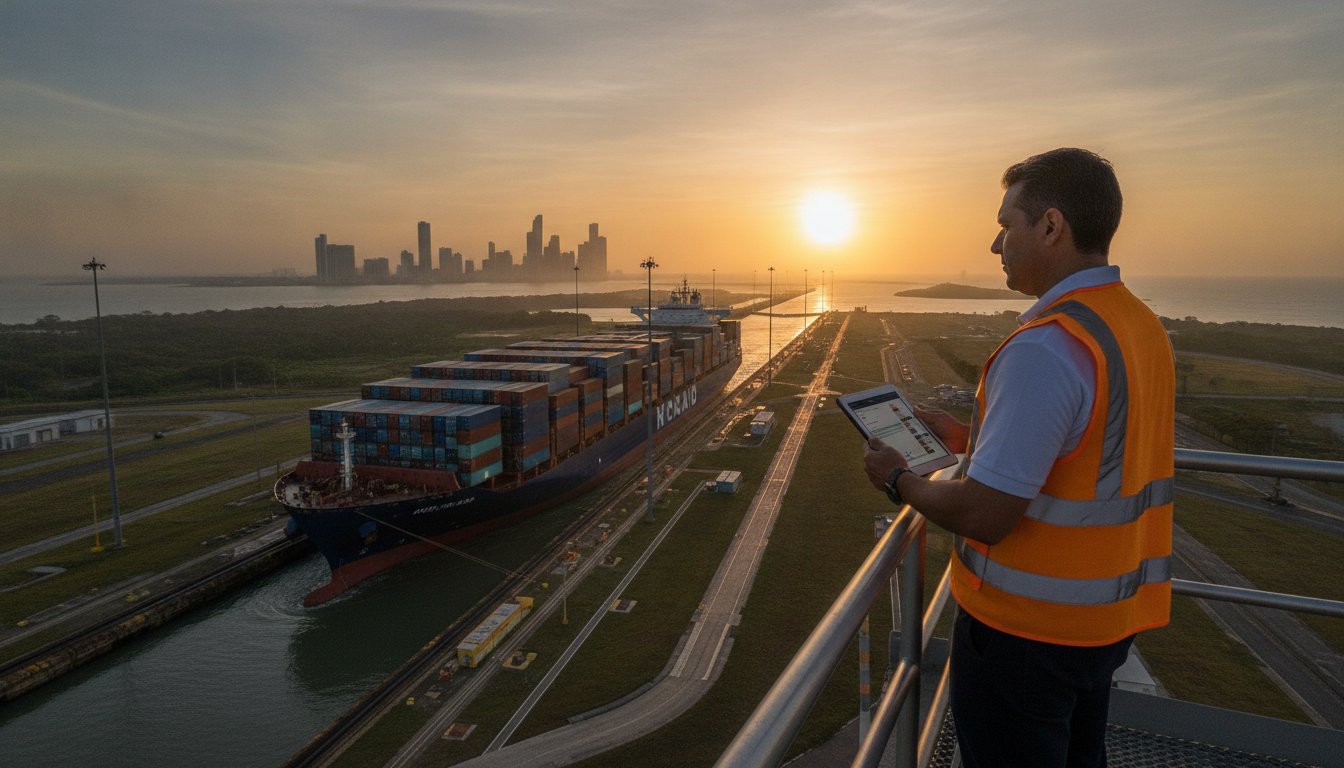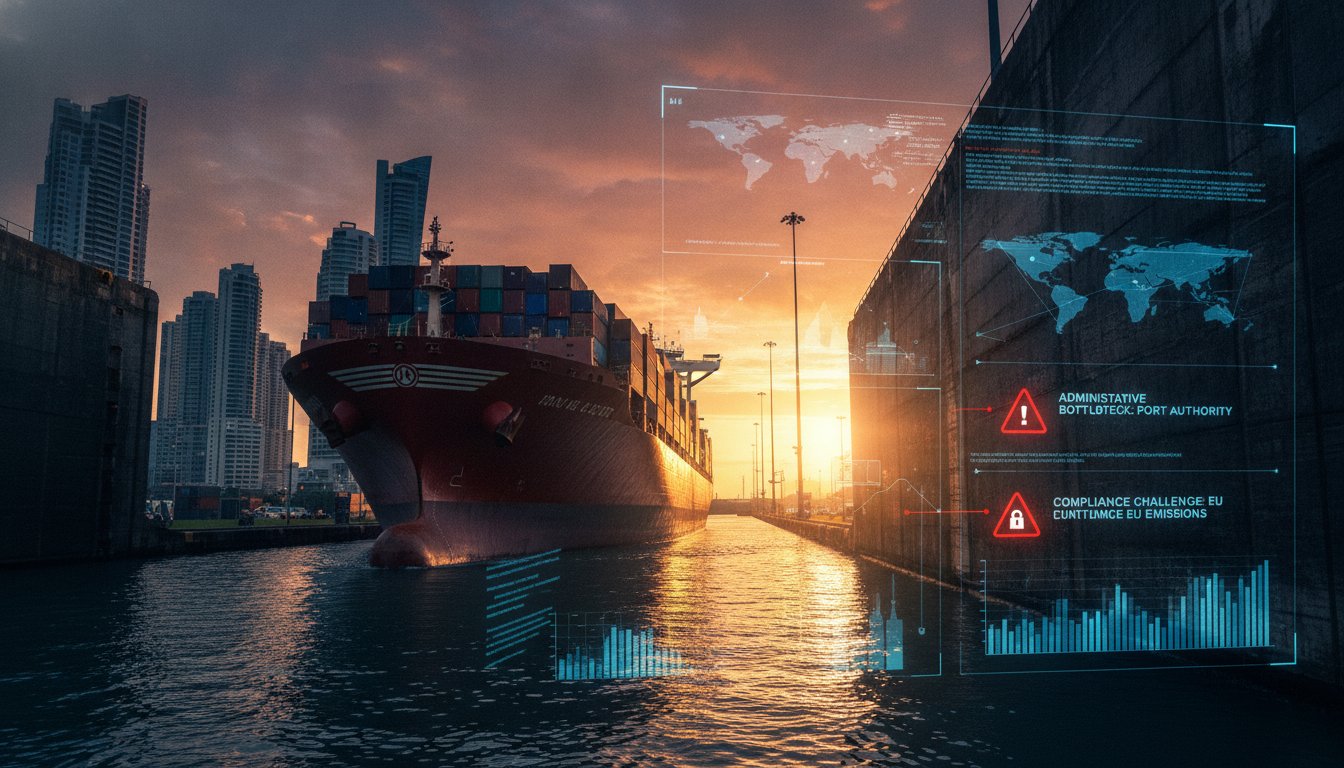

A single error in your VUMPA submission can lead to an automatic transit slot forfeiture, leaving a Neo-Panamax vessel idling at a cost of over $65,000 per day. For ship owners and operators, the financial risk of non-compliance is only half the story. The real challenge lies in the shifting landscape of Panama Canal MARPOL requirements, where global Annex VI standards meet the rigid local mandates of the Panama Canal Authority (ACP).
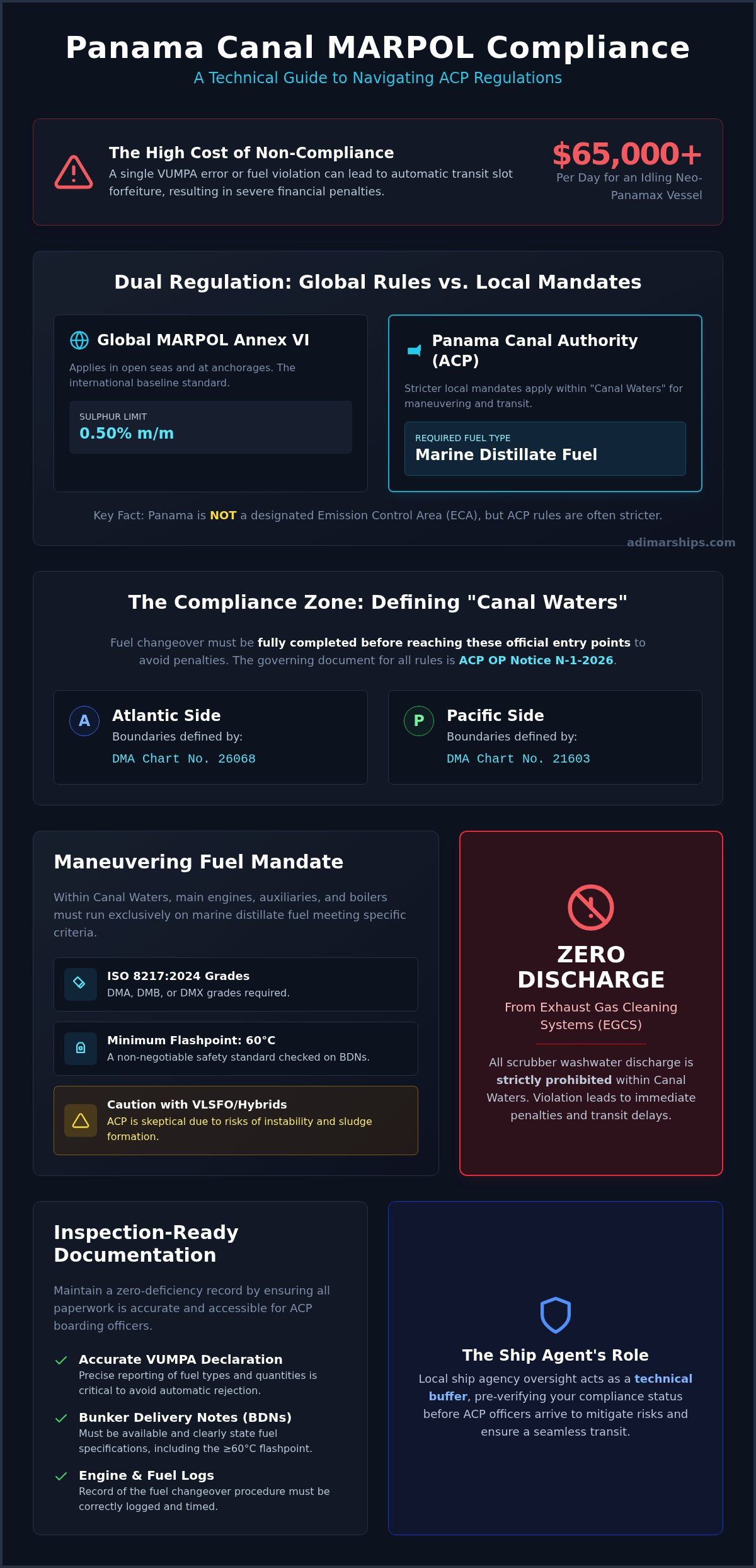
We understand the pressure of coordinating fuel changeovers and scrubber washwater management while approaching the breakwater. It’s a complex process that demands absolute precision to avoid heavy fines or propulsion loss during transit. This guide provides the technical roadmap you need to ensure a seamless, penalty-free passage through the waterway. We’ll examine the specific geographic boundaries of ACP waters, the latest mandates in OP Notice N-1-2026, and the critical steps for maintaining a zero-deficiency record during boarding inspections by ACP officers.
Key Takeaways
- Learn why Panama is classified as a non-ECA zone yet maintains local mandates that are often stricter than standard international limits.
- Discover the specific maneuvering requirements for marine distillate fuel to ensure your propulsion systems remain compliant while navigating Panama Canal MARPOL requirements.
- Master the zero-discharge protocols for Exhaust Gas Cleaning Systems (EGCS) to avoid immediate penalties and transit delays in Canal waters.
- Identify the critical documentation, including Bunker Delivery Notes and VUMPA declarations, required for a successful, deficiency-free boarding inspection.
- Understand how local ship agency oversight acts as a technical buffer to pre-verify your compliance status before ACP officers arrive.
Understanding Panama Canal MARPOL Requirements in 2026
The MARPOL 73/78 Convention provides the global framework for preventing marine pollution, but for vessels transiting the Isthmus, these international rules are only the starting point. Compliance in this region requires a dual-layered approach. You must adhere to MARPOL Annex VI standards while simultaneously following the specific operational mandates set by the Panama Canal Authority (ACP). This intersection of global and local law creates a unique regulatory environment that demands precise technical management.
The primary governing document for these operations is the ACP OP Notice to Shipping N-1-2026. This notice outlines the technical requirements for all vessels, including fuel specifications and environmental protocols. It’s essential to understand that while Panama is not a designated Emission Control Area (ECA), the ACP enforces local mandates that often mirror ECA stringency during the actual transit. These Panama Canal MARPOL requirements focus heavily on air quality and water protection within the sensitive tropical ecosystem of the watershed.
MARPOL Annex VI vs. ACP Local Rules
Under global MARPOL standards, the sulphur limit for fuel oil used on board ships is capped at 0.50% m/m. This limit applies while your vessel is in the Pacific or Atlantic anchorages awaiting transit. However, once a vessel enters “Canal Waters” for maneuvering, the ACP rules become more restrictive. The Authority distinguishes between “Transit Fuel” and “Maneuvering Fuel.” While you can use 0.50% sulphur fuel in the open sea, the ACP requires a switch to marine distillate fuel for main propulsion engines, boilers, and auxiliary generators during the transit itself. This distinction is a cornerstone of regional compliance and is a frequent point of confusion for crews unfamiliar with the local port state control environment.
Geographic Boundaries of Compliance
Knowing exactly where “Canal Waters” begin is vital for a timely fuel changeover. The ACP defines these boundaries through specific nautical charts that every master should have on the bridge. For the Pacific side, the limits are defined by DMA Chart No. 21603. On the Atlantic side, operators must refer to DMA Chart No. 26068. Your vessel’s fuel changeover must be fully completed before reaching these entry points. If a boarding officer discovers residual fuel in the lines during an inspection, the vessel faces immediate delays and potential fines. We recommend completing the changeover well in advance of the sea buoy to ensure the system is fully flushed and stabilized before the pilot boards.
Fuel Switching and Sulphur Limits: The Maneuvering Mandate
The ACP enforces a strict maneuvering fuel policy that goes beyond standard open-sea transit. While global limits allow for various fuel blends, entering Canal waters requires a complete switch to marine distillate fuel. This mandate applies to your main propulsion engines, auxiliary generators, and boilers. It’s not just a matter of emissions; it’s about operational safety. The Authority requires that any fuel used during transit maintains a minimum flashpoint of 60°C to minimize fire risks in the locks. This 60°C threshold is a non-negotiable safety standard. Boarding officers frequently check Bunker Delivery Notes (BDNs) specifically for this value to ensure the vessel isn’t carrying volatile blends that could compromise the safety of the Canal infrastructure.
Distillate Fuel Specifications
Vessels must utilize fuels that meet ISO 8217:2024 standards, specifically focusing on DMA, DMB, or DMX grades. While hybrid fuels or Very Low Sulphur Fuel Oils (VLSFO) might meet the 0.50% sulphur cap set by the International Maritime Organization (IMO), the ACP remains cautious about their use during the maneuvering phase. The primary concern is the risk of wax formation or stability issues when mixing different fuel types. The ACP remains skeptical of hybrid fuels because they often lack the long-term stability required for the complex maneuvering within the locks. Mixing these with residual fuels can lead to sludge formation in filters, which is the last thing a chief engineer wants during a pilotage. Ensuring your fuel aligns with Panama Canal MARPOL requirements involves verifying that the sulphur content remains strictly compliant with MARPOL Annex VI Regulation 14.
The Fuel Changeover Procedure
Managing the transition from residual fuel to distillate is a high-stakes operation. A sudden change in temperature or viscosity can lead to thermal shock, fuel pump seizures, or engine flameouts. These technical failures are catastrophic during a transit, often leading to immediate fines and massive tugboat charges. We recommend a gradual changeover that ensures the entire system is flushed of Heavy Fuel Oil (HFO) well before the pilot boards. The engine room logbook must reflect every step of this process, including the date, time, and vessel position when the changeover started and finished. The Fuel Changeover Log serves as the primary legal evidence during ACP inspections to prove that the vessel was operating on compliant distillate fuel before entering the regulated zone. If you have concerns about your system’s readiness, our team at Adimar Shipping, Inc. can help pre-verify your fuel declarations to ensure a smooth boarding.
Scrubber Regulations (EGCS): Zero Discharge in Canal Waters
The ACP maintains a clear stance on Exhaust Gas Cleaning Systems (EGCS). While these systems help vessels meet the global sulphur cap, they introduce a significant compliance risk in Panama. The Authority strictly prohibits the discharge of scrubber washwater or bleed-off water into the freshwater ecosystem of the Gatun Lake and the surrounding locks. If your vessel is equipped with an open-loop scrubber, it must be switched to a closed-loop mode or turned off entirely before entering the Canal’s jurisdiction. Adhering to this zero-discharge policy is a fundamental part of meeting Panama Canal MARPOL requirements, designed to protect the local environment from acidic effluents and heavy metals.
Closed-Loop Operations and Washwater Retention
To ensure the long-term integrity of these systems against corrosive fluids, many operators utilize high-performance components; Polímeros Indeplast SRL offers specialized PTFE and industrial plastic solutions that are essential for maintaining durable maritime infrastructure.
Vessels operating in closed-loop mode must ensure their holding tanks have sufficient capacity for the entire transit. You’ll need to transition to this mode well before entering the Atlantic or Pacific anchorages. Boarding officers will require documentation proving the system’s operational status and approval. This includes your SECP and the EGCS Technical Manual. Managing the resulting scrubber sludge requires specialized handling. Under our husbandry services guidance, we coordinate the proper disposal of these residues in accordance with local environmental laws. Failing to account for sludge volume can lead to tank overflows. The ACP treats such events as major pollution incidents, often resulting in mandatory transit slot forfeiture.
Pre-Arrival Notification for EGCS Vessels
The ACP requires advance notice if your vessel uses a scrubber. You must report any retrofits or system installations through the VUMPA portal at least 96 hours before arrival. Your local agent plays a vital role here. They must upload technical manuals and certificates for review by the Authority. This proactive step minimizes the time boarding officers spend reviewing documentation on the bridge. You can find the latest technical updates in the Panama Canal Authority Notices to Shipping. Unauthorized discharge in Panamanian waters is a serious offense. It often results in immediate detention and fines that can easily exceed $50,000. We help our clients avoid these risks by pre-verifying all EGCS declarations to ensure they align with current Panama Canal MARPOL requirements.
Administrative Compliance: VUMPA and Documentation
Compliance isn’t just about what’s in your tanks; it’s about what’s in the portal. The Vessel Universal Measurement and Pre-Arrival (VUMPA) package is the digital foundation of your transit. In 2026, the ACP uses machine-level validation to scan these submissions for errors. A single data mismatch can trigger an automatic rejection. This administrative hurdle often leads to transit slot forfeiture, which is a disaster for any schedule. Ensuring your paperwork aligns with Panama Canal MARPOL requirements is the only way to protect your bottom line from avoidable expenses.
VUMPA Data Entry Requirements
The Fuel Declaration menu in VUMPA is where most administrative errors occur. You must declare every fuel type on board, including the specific distillate grades and any scrubber combinations intended for use. The timeline for submission is rigid. You must file the VUMPA package through the ACP Maritime Service Portal no later than 96 hours before your scheduled arrival at the anchorage. Waiting until the last minute is a high-risk strategy. If the system rejects your package, you’ll likely lose your slot and face a 72-hour wait for reassignment. We act as a local office for owners, pre-verifying these declarations to ensure the data is live and accurate before the vessel ever reaches the breakwater.
The Boarding Inspection Process
ACP Boarding Officers are thorough and look for consistency between your digital filings and physical logs. They’ll start by reviewing the engine room logbook to verify the fuel changeover times. Officers also frequently request fuel analysis reports to confirm the flashpoint and sulphur content of the bunkered fuel. Sampling is a standard procedure. The ACP takes fuel samples from the service tanks to verify that the sulphur content remains within the 0.50% m/m global limit and the stricter maneuvering distillate mandates. The Bunker Delivery Note serves as the definitive legal safeguard for ship owners to verify that the fuel supplied meets all contractual and regulatory quality standards during a dispute.
Administrative success also intersects with your environmental safety plans. If your vessel carries 400 metric tons or more of persistent oil, you must have a PCSOPEP authorized person listed in your documentation. This is a mandatory requirement under ACP rules. Failing to maintain a valid PCSOPEP carries a minimum fine of $50,000 plus immediate transit cancellation. Our team provides the local oversight needed to manage these complex filings. Contact Adimar Shipping, Inc. to ensure your VUMPA submission is deficiency-free and your transit remains on schedule.
The Ship Agent’s Role in MARPOL Risk Mitigation
While the technical execution of fuel switching and scrubber management rests with the engine room, the ship agent acts as a vital technical buffer. We bridge the gap between the vessel master and the ACP Maritime Operations Department. This local oversight is critical because once an ACP officer steps on board, any documentation error is already an active liability. Our primary objective is to identify and resolve potential deficiencies long before the pilot ladder is lowered, ensuring that the ship remains an extension of the owner’s commitment to safety and environmental standards.
Coordination is particularly key during bunkering in Panama operations. We don’t just schedule the barge; we verify the Bunker Delivery Note (BDN) against ACP standards before the fuel ever enters your tanks. This proactive verification addresses a common industry gap where owners often discover non-compliant flashpoints or sulphur levels only after an inspection has begun. By delegating this oversight to an Owner’s Nominated Agency, you ensure your interests are protected by experts who understand the local enforcement landscape and can challenge discrepancies immediately.
Vigilance on the Ground
Our team at Adimar Shipping, Inc. performs a comprehensive “pre-boarding” audit for our clients. We review your fuel changeover logs for consistency and ensure your engine configurations match the declarations in VUMPA. If your vessel has a unique engine setup or a retrofitted scrubber, we liaise directly with the ACP for technical clarifications. This prevents “Non-Compliance Delays” that can jeopardize your transit slot. In 2026, the ACP has increased the frequency of unannounced environmental inspections at anchorage. Staying ahead of these trends requires a partner who is physically present in Panama City, ready to solve problems in real-time and provide the latest updates on enforcement protocols regarding Panama Canal MARPOL requirements.
Ensuring a Seamless Transit
Environmental compliance must be a core part of your broader Panama Canal transit strategy. It’s about more than avoiding fines; it’s about maintaining operational freedom. A smooth fuel changeover and flawless documentation allow your crew to focus on the technical demands of the locks. We provide the security of knowing that every regulatory detail has been double-checked by a regional specialist. This partnership transforms a high-stress inspection into a routine administrative procedure. Contact Adimar Shipping, Inc. to ensure your vessel meets all 2026 MARPOL and ACP requirements without delay.
Securing Your Transit in an Evolving Regulatory Landscape
Mastering the intersection of global standards and local ACP mandates is essential for a successful voyage. Achieving a zero-deficiency boarding inspection depends on two critical factors: technical precision during fuel changeovers and absolute accuracy in your VUMPA documentation. By maintaining strict scrubber washwater retention and ensuring all distillate fuels meet the required flashpoints, you protect your vessel from heavy fines and operational interruptions.
Integrating these protocols ensures your vessel remains fully aligned with Panama Canal MARPOL requirements throughout the 2026 season. At Adimar Shipping, Inc., we act as your vigilant local partner to simplify these complexities. As an authorized PCSOPEP representative with expert local knowledge of ACP OP Notice N-1-2026, we have a proven track record in preventing environmental compliance delays. We provide the local oversight and technical pre-verification needed to safeguard your schedule and your reputation.
Partner with Adimar Shipping, Inc. for a Compliant Panama Canal Transit and navigate the waterway with total confidence. We look forward to supporting your next successful crossing.
Frequently Asked Questions
Is the Panama Canal considered an Emission Control Area (ECA)?
No, the Panama Canal is not a designated MARPOL Emission Control Area (ECA). However, the ACP enforces local regulations that often match or exceed ECA stringency during the transit. While the global sulphur cap is 0.50%, the Canal requires specific distillate fuels during maneuvering. This local mandate ensures air quality within the sensitive tropical watershed remains protected. Operators must treat the transit zone as a high-compliance area regardless of its official ECA status.
Can I use an open-loop scrubber while transiting the Panama Canal?
No, the ACP prohibits the discharge of washwater from open-loop scrubbers in all Canal waters. You must switch to a closed-loop system or turn the scrubber off entirely before entry. Any discharge into Gatun Lake or the locks is a violation of environmental rules. Vessels must have sufficient holding tank capacity to retain all bleed-off water for the duration of the transit to remain compliant and avoid immediate penalties.
What is the maximum sulphur limit for maneuvering fuel in Panama Canal waters?
The ACP requires the use of marine distillate fuel for maneuvering, which effectively aligns with the 0.50% global cap but limits the fuel type to DMA, DMB, or DMX grades. This mandate applies to main engines, auxiliary generators, and boilers. Ensuring your fuel meets these specific Panama Canal MARPOL requirements is vital for a smooth boarding inspection. All fuels must also maintain a minimum flashpoint of 60°C for safety.
When must the fuel changeover be completed before arriving at the Panama Canal?
The fuel changeover must be fully completed before the vessel reaches the Pacific or Atlantic entry points. These boundaries are defined by DMA Charts 21603 and 26068. We recommend finishing the process well before the sea buoy to ensure the system is completely flushed. This proactive approach prevents residual heavy fuel from being detected during sampling, which would lead to immediate transit delays and costly administrative fines for the vessel.
What documents does the ACP boarding officer inspect for MARPOL compliance?
Boarding officers primarily focus on the engine room logbook and the Bunker Delivery Note (BDN). They verify the exact times and positions of fuel changeovers and check that the fuel’s flashpoint meets the 60°C minimum. Other essential documents include the Fuel Changeover Log, the Oil Record Book, and the VUMPA Fuel Declaration. Keeping these records organized and consistent is the best way to ensure a zero-deficiency boarding inspection during your transit.
Does the ACP allow the use of hybrid fuels for maneuvering?
The ACP remains cautious regarding hybrid fuels and generally prefers traditional marine distillates like MGO. While some hybrid blends meet the sulphur limit, they often present stability or wax formation risks during the complex maneuvering required in the locks. If you plan to use a hybrid fuel, you must ensure it meets all ISO 8217:2024 standards and ACP safety requirements. Consultation with your local agent is highly recommended before declaring these fuels.
What are the penalties for discharging scrubber washwater in the Canal?
Unauthorized discharge of scrubber washwater carries severe financial and operational consequences. Fines for environmental violations often start at $50,000 and can escalate based on the severity of the incident. Beyond the monetary penalty, the ACP will likely cancel your transit slot, leading to significant wait times for reassignment. These non-compliance delays can cost Neo-Panamax operators over $65,000 per day in lost time and vessel expenses while waiting for a new slot.
How does Adimar Shipping help with MARPOL and fuel declaration compliance?
We act as your local office in Panama to pre-verify all VUMPA declarations and documentation before the ACP boards. Our team audits your fuel changeover logs and checks BDNs for compliance with Panama Canal MARPOL requirements to identify potential issues early. By coordinating directly with the ACP Maritime Operations Department, we resolve technical questions and provide real-time updates on enforcement trends. This proactive oversight ensures a seamless, penalty-free transit for every client.