
If you’re planning a vessel’s passage through the Panama Canal, one of your first questions is likely about the cost. While searching for a “Panama Canal tolls calculator” seems like a straightforward step, the reality is that most online tools provide an incomplete picture that can lead to significant budget shortfalls. A simple toll calculation misses numerous mandatory fees that make up the total transit cost.
This guide will walk you through the key factors that determine your vessel’s fees, explain the hidden costs most calculators ignore, and show you how to get an accurate, all-inclusive cost estimate for a smooth and predictable passage.
Why Most Panama Canal Toll Calculators Are Incomplete
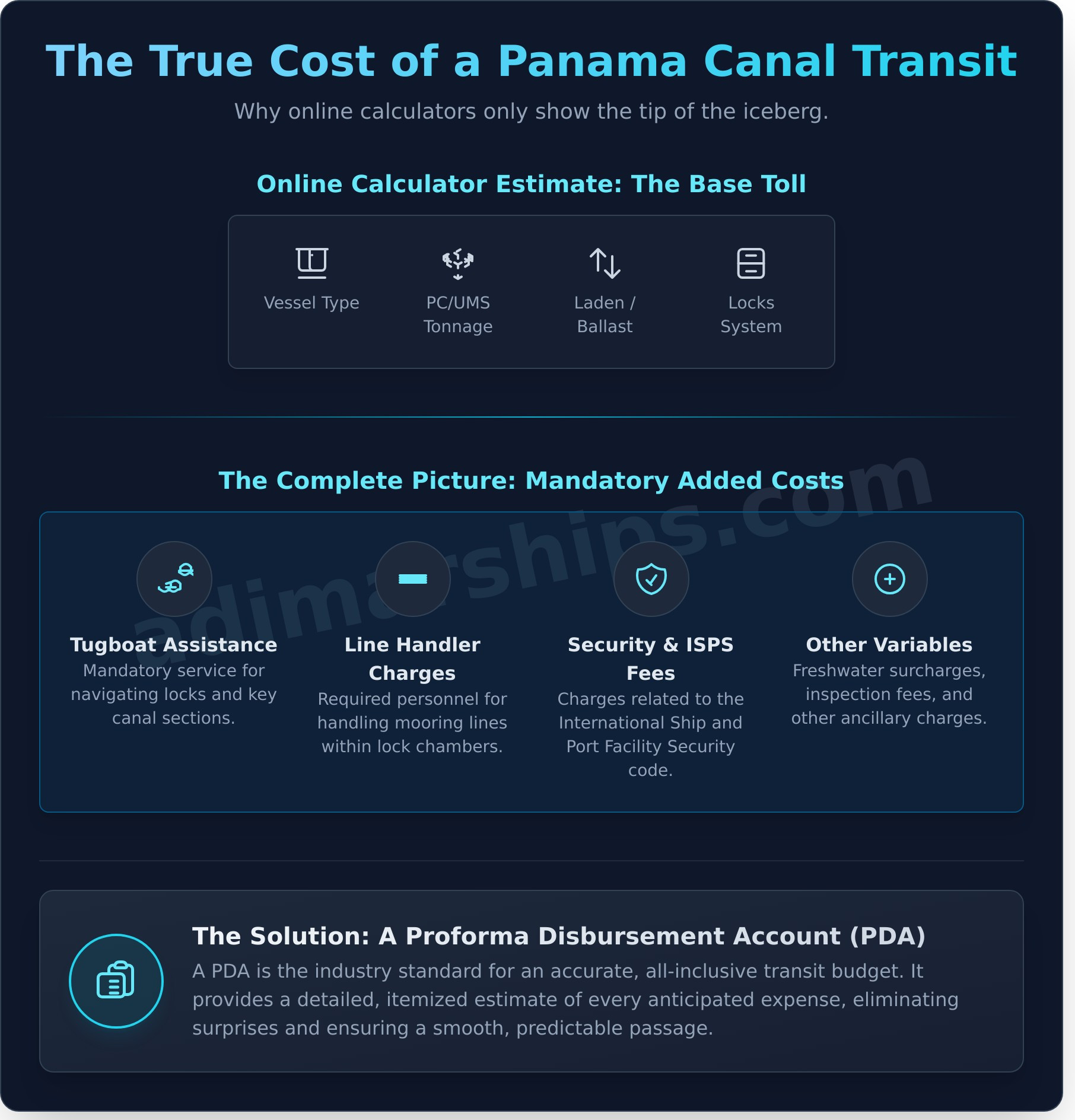
The core problem with automated toll calculators is that they focus on a single variable-the toll itself-while the final invoice for a canal transit is far more complex. These tools can give you a ballpark figure, but they rarely account for the full range of services and charges required for a successful transit. The only way to get a true and reliable financial picture is through a comprehensive Proforma Disbursement Account (PDA) prepared by an experienced ship agent.
The Key Factors That Determine Your Base Toll
Before diving into the hidden costs, it’s important to understand what goes into the base toll calculation performed by the Panama Canal Authority (ACP). Several key variables are considered:
- Vessel Type: The pricing structure varies significantly depending on whether your vessel is a tanker, dry bulk carrier, container ship, passenger vessel, or another classification. Each has a unique toll system.
- PC/UMS Tonnage: The Panama Canal Universal Measurement System (PC/UMS) is the official metric used to determine a vessel’s capacity for toll assessment. This figure, based on volumetric tonnage, is the primary foundation of ACP pricing.
- Laden or Ballast Status: A vessel’s toll will differ based on its cargo status. A fully loaded (laden) vessel pays a higher rate than an empty (ballast) one, as the pricing is designed to reflect the economic value of the transit.
- Locks System Used: The Panama Canal has two sets of locks: the original Panamax locks and the larger Neopanamax locks, opened in 2016. The tolls are substantially different depending on which set of locks your vessel’s dimensions require.
Beyond the Tolls: The Hidden Costs of a Canal Transit
Here is where simple calculators fall short. The base toll is just one line item on a much longer invoice. A complete transit budget must account for several other mandatory charges, including:
- Tugboat Assistance Fees: All vessels require the assistance of Panama Canal Authority tugboats to navigate the locks and certain sections of the canal. This is a mandatory service and a significant operational expense.
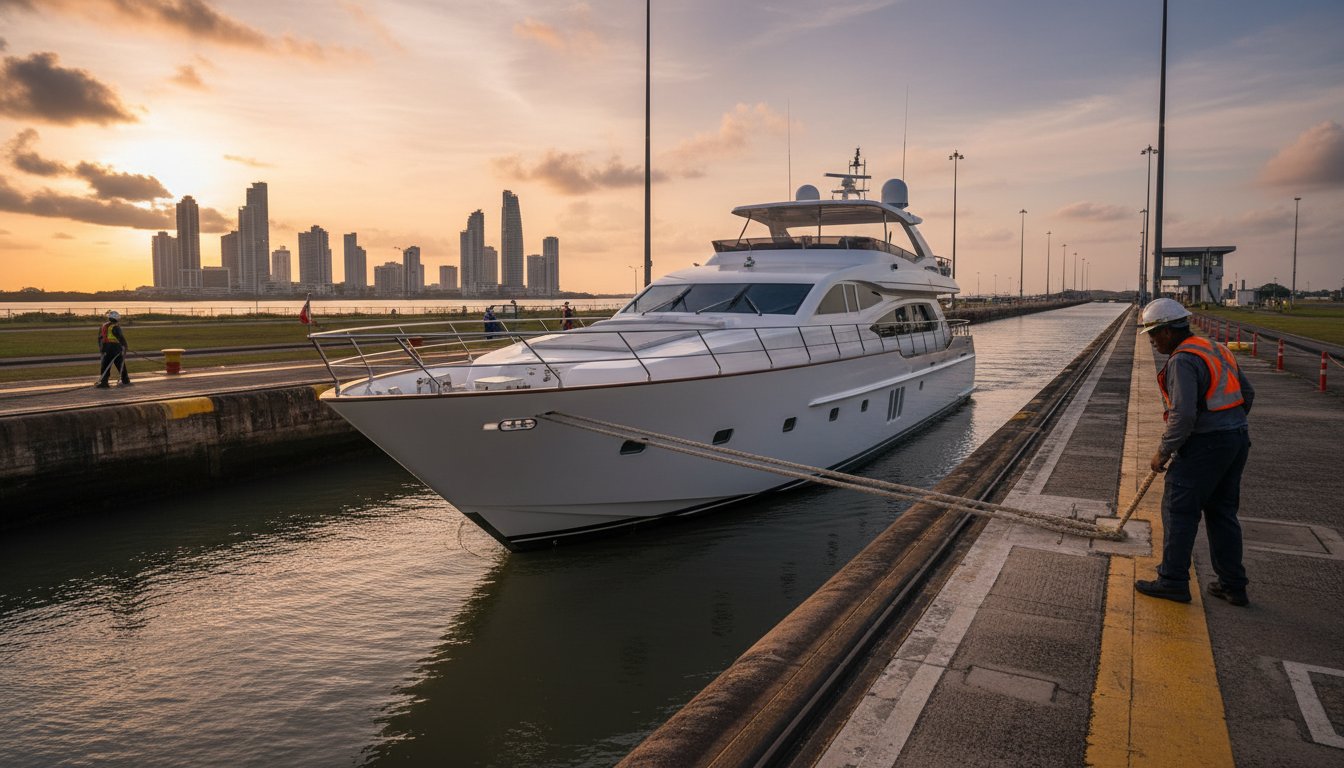
- Line Handler Charges: Specialized personnel are required on deck to handle the mooring lines that secure the vessel within the lock chambers. This service is arranged by the ACP and is a required cost.
- Security & ISPS Fees: The International Ship and Port Facility Security (ISPS) Code requires strict security protocols. Vessels are charged fees that contribute to the overall security of the canal and its port facilities.
- Other Variables: Depending on the transit, you may also face additional costs such as freshwater surcharges (during periods of drought), vessel inspection fees, and other ancillary charges that are impossible for an automated calculator to predict.
How to Get an Accurate Panama Canal Transit Cost Estimate
Given the limitations of automated calculators, a precise budget requires a more detailed and expert-driven approach. The most reliable method is to work with a local ship agent who can prepare a detailed quote based on your vessel’s specific characteristics and the latest tariff schedule.
Step 1: Gather Your Vessel’s Key Information
To receive an accurate quote, you must provide your agent with a complete set of your vessel’s particulars. Having this information ready will streamline the process. Create a checklist that includes:
- Vessel type (e.g., Bulk Carrier, Chemical Tanker)
- PC/UMS Net Tonnage
- Length Overall (LOA) and Beam
- Deadweight Tonnage (DWT) or Gross Tonnage (GT)
- Cargo details, including type and quantity (for laden transit)
Providing precise data is crucial, as even small discrepancies can affect the final cost calculation.
Step 2: Request a Proforma Disbursement Account (PDA)
Instead of relying on a calculator, ask your agent for a Proforma Disbursement Account (PDA). A PDA is a detailed, itemized estimate of all anticipated expenses related to the port call and canal transit. It is the industry standard for budgeting and financial planning for any voyage.
A PDA provides complete transparency, breaking down every single cost from tolls and tugs to agency fees and security charges. This detailed document eliminates surprises and allows you to fund the transit with confidence.
Why Trust Adimar for Your Transit PDA?
As your trusted partner at the Panama Canal, Adimar Shipping provides a comprehensive, all-inclusive PDA, not just a simple toll estimate. Our process is built on accuracy, transparency, and efficiency to protect your interests. With over 20 years of specialized experience, our team ensures every potential cost is accounted for, helping you avoid unexpected charges and manage your transit proactively. We are your eyes at the canal, dedicated to a smooth and cost-effective passage. Request Your Free, No-Obligation PDA from Our Experts and experience the peace of mind that comes with expert planning.
Frequently Asked Questions
What is PC/UMS and how is it calculated?
PC/UMS (Panama Canal Universal Measurement System) is a volumetric tonnage measurement used by the Panama Canal Authority. It is calculated based on a mathematical formula that considers the total volume of a vessel, and it is certified by an authorized ACP surveyor. It is distinct from other tonnage systems like Suez or Net Tonnage.
Are there any discounts available on Panama Canal tolls?
The ACP offers certain incentives and loyalty programs, particularly for container lines that commit to a certain volume of TEU transits per year. However, for most tramp vessels, standard tariff rates apply without discounts.
How much are tugboat and line handler fees on average?
These fees vary widely based on the vessel’s size, the locks used (Panamax vs. Neopanamax), and whether the transit is during the day or night. They can range from several thousand to tens of thousands of dollars and constitute a significant portion of the total cost.
What happens if there are water level surcharges?
During periods of extended drought, the Panama Canal Authority may implement a “Freshwater Surcharge” to manage water consumption. This is a variable fee added to the toll and will be included in any accurate PDA if it is in effect at the time of your transit.
How long is a Proforma Disbursement Account (PDA) from Adimar valid for?
Our PDAs are based on the current ACP tariff structure. We typically indicate the validity period on the document itself. If a transit is scheduled far in advance and the ACP announces a tariff change, we will provide a revised PDA to reflect the new costs.
Don’t leave your budget to chance with an incomplete online calculator. For a transit as critical as the Panama Canal, precision and expertise are paramount. By understanding all the cost components and working with a dedicated ship agent, you can ensure your vessel’s passage is both efficient and financially predictable. Get a Precise Transit Cost Estimate from Your Trusted Partner at Adimar Shipping today and let our experts handle the details.