
Did you know an LPG carrier recently paid a record $4.6 million in a slot auction just to bypass the queue? This staggering figure underscores the intensity of current Panama Canal transit challenges as we move through 2026. You’re likely feeling the mounting pressure of Gatun Lake’s unpredictable hydrology and the strict 14.78-meter draft limits for Neopanamax vessels. It’s stressful to manage complex VUMPA digital filings while facing potential cancellation penalties that can reach 250%.
We understand that in this high-stakes environment, uncertainty is your greatest enemy. This guide provides the clarity you need to master the 2026 regulatory landscape and technical mandates, ensuring your vessel moves through the Isthmus without costly delays or non-compliance fines. We’ll provide a clear roadmap for 2026 compliance, explaining the critical role of the PCSOPEP Authorized Person and offering strategies to secure predictable transit windows through better local coordination. By delegating these specialized tasks to a vigilant local partner, you can reclaim your operational freedom and protect your bottom line.
Key Takeaways
- Understand how Gatun Lake water levels dictate 2026 draft restrictions and how to adjust your payload to prevent costly transit rejections.
- Identify the mandatory 2026 technical standards for AIS and GPS equipment to ensure your vessel meets all ACP navigation requirements before arrival.
- Streamline your pre-arrival process by mastering VUMPA digital filings and adhering to strict reporting timelines to eliminate documentation errors.
- Ensure full compliance with environmental mandates by appointing a PCSOPEP Authorized Person, protecting your operation from fines that can reach $50,000.
- Learn how proactive ship agency representation can mitigate Panama Canal transit challenges by providing real-time monitoring and acting as your vigilant local office.
Navigating the 2026 Panama Canal Landscape: Hydrology and Traffic Volatility
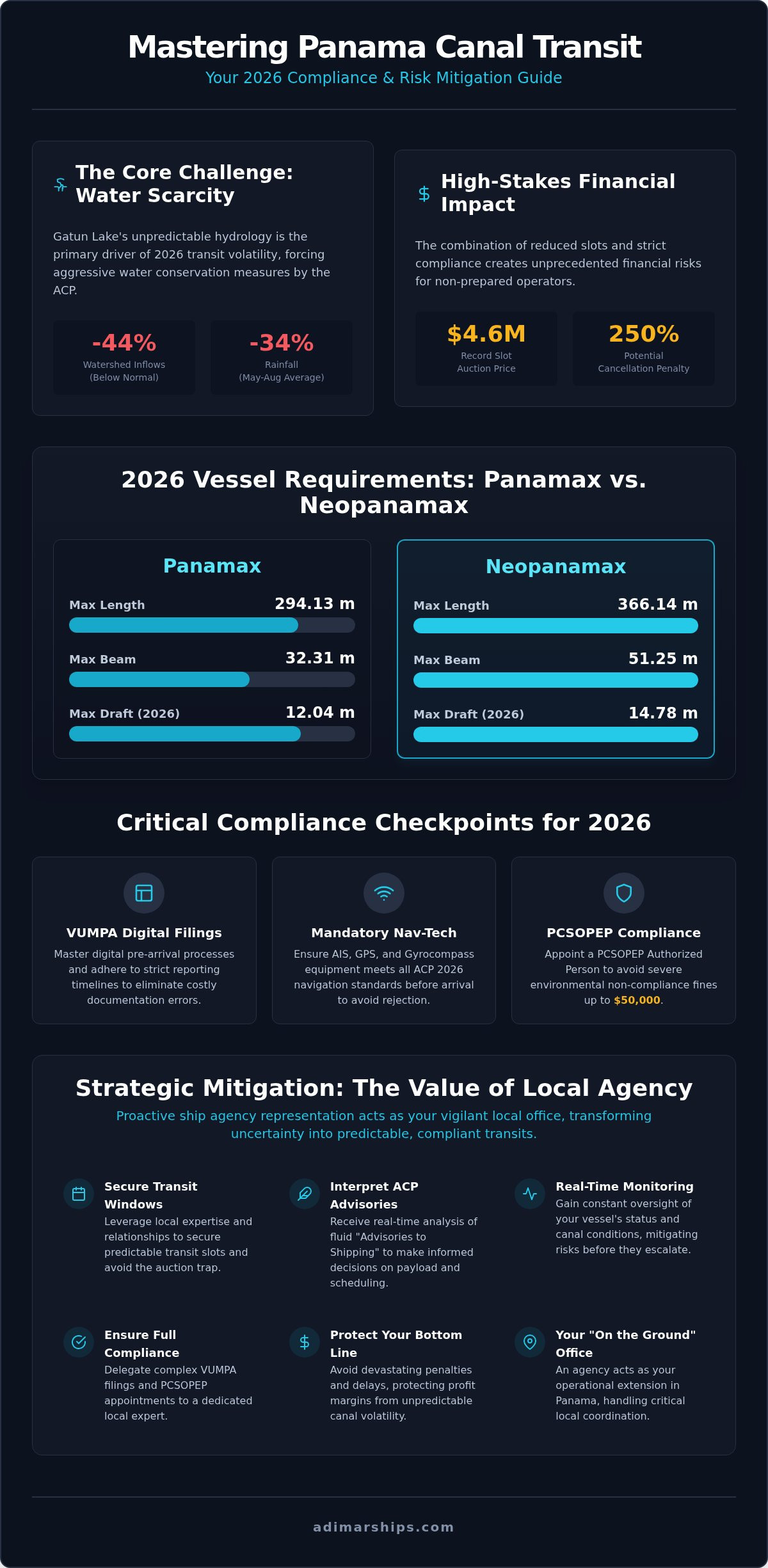
The Autoridad del Canal de Panamá (ACP) acts as the absolute regulatory authority over all vessels navigating through the Isthmus. To understand the scale of this operation, a Panama Canal Overview provides essential context on its design and recent expansion. In 2026, the ACP has moved beyond simple traffic control to implement aggressive water conservation measures. These shifts are a direct response to watershed inflows that have dropped 44% below normal levels. Transit is no longer a guaranteed service; it’s a strategic asset won through competitive auctions or long-term planning. The N-01 “Notice to Shipping” now serves as the mandatory technical bible for every master and operator aiming to cross safely.
The Core ACP Regulatory Framework
Operators must distinguish between permanent Maritime Regulations and the fluid Advisories to Shipping. While the regulations set the baseline, the advisories contain the critical daily updates that dictate your vessel’s viability. The 2026 landscape is defined by extreme volatility in Gatun Lake levels. The ACP’s regulatory authority governs every vessel in Canal waters, from engine room specifications to environmental compliance. Because rainfall between May and August 2026 was 34% below average, the ACP has tightened its grip on water management. This means draft restrictions are updated with very little lead time, often forcing operators to make difficult decisions about payload just days before arrival.
Consequences of Non-Compliance in 2026
The financial penalties for failing to adapt to Panama Canal transit challenges are devastating. If your vessel doesn’t meet the latest AIS equipment mandates or arrives with a draft exceeding the 14.78-meter limit, the costs mount instantly. Administrative fines for documentation errors are just the beginning. The real damage comes from missed slots. With daily transits dropping to 32 vessels by mid-September 2026, a single mistake can leave you waiting for weeks or facing a 250% cancellation penalty.
Draft restrictions also directly erode your profit margins. Each centimeter of lost draft represents a significant reduction in cargo-carrying capacity. Given that some carriers have paid up to $4.6 million in auctions just to secure a spot, the margin for error disappears. Relying on outdated data or failing to interpret an ACP advisory correctly can result in a rejected transit that costs millions in lost time and fees. A specialized ship agency acts as your local office in Panama, providing the vigilant oversight needed to interpret technical notices and adjust your strategy before a minor error becomes a financial catastrophe.
Physical Vessel Requirements: Dimensions and Technical Standards for 2026
Meeting the technical standards set by the ACP is a non-negotiable step in overcoming Panama Canal transit challenges. Your vessel’s physical readiness determines its eligibility for a transit slot. In 2026, the distinction between Panamax and Neopanamax requirements has become more rigid as the Authority optimizes water usage in the locks. Beyond mere size, your ship’s internal systems, from navigation to mooring, must align with the latest Official Vessel Requirements to avoid immediate rejection at the canal entrance.
Panamax vs. Neopanamax: Technical Comparison
The transition between lock systems requires specific hardware configurations. Neopanamax vessels face stricter mooring line requirements, often needing specialized high-tension winches and specific chock placements to handle the hydraulic forces within the larger chambers. The maximum authorized beam for Neopanamax vessels in 2026 is 51.25 meters. Failing to account for these dimensions can lead to costly delays or the need for emergency retrofitting in local shipyards.
| Metric | Panamax Lock System | Neopanamax Lock System |
|---|---|---|
| Max Length | 294.13 meters | 366.14 meters |
| Max Beam | 32.31 meters | 51.25 meters |
| Max Draft (2026) | 12.04 meters | 14.78 meters |
Navigation equipment is another area where the ACP has raised the bar. For 2026 transits, AIS, GPS, and gyrocompass systems must meet specific redundancy standards. Every vessel must also provide a clear “Pilotage View” from the bridge. This visibility mandate ensures that pilots have an unobstructed sightline to the water surface ahead of the bow. If your cargo configuration blocks this view, you may be required to install additional bridge wing indicators or auxiliary cameras before the ACP authorizes your passage.
Propulsion and Maneuverability Standards
Safe passage through the locks depends on your vessel’s ability to maintain precise control. The ACP evaluates engine power and bow thruster performance as part of its arrival inspection. You must ensure your ‘Canal Steering Lights’ and specialized whistle systems are fully operational. These tools are vital for communicating with tugboats and lock operators. Consulting with a local ship agency can help you confirm your vessel’s machinery meets these specific 2026 standards before you arrive at the breakwater. Proactive inspections of hull and machinery condition are essential to prevent administrative holds that can disrupt your entire schedule.
Mastering Digital Pre-Arrival Compliance: VUMPA and Documentation
Digital compliance is no longer a clerical afterthought. It’s a high-stakes synchronization of data that determines your place in the queue. The Panama Maritime Single Window, known as VUMPA, serves as the central digital gateway for all 2026 transits. Navigating this platform requires precision and a deep understanding of the ACP’s strict reporting timelines. You must submit your initial pre-arrival notification 96 hours before reaching the canal waters. A final update is mandatory 24 hours before arrival. Any discrepancy between your digital filing and the physical reality of your vessel can trigger immediate delays or significant administrative fines.
Digital Filing and the Maritime Single Window
The VUMPA system consolidates requirements from various Panamanian authorities into a single portal. You’re required to upload comprehensive data sets, including detailed crew lists, cargo manifests, and health declarations. Documentation errors are among the most common Panama Canal transit challenges facing international operators. A simple mismatch in tonnage figures or an outdated International Load Line certificate can stall your clearance. It’s essential to cross-reference your filings with the Panama Canal Authority’s 2026 Vessel Requirements to ensure every technical standard is met. For more detailed insights on managing these local requirements, consult our Ship Agency Panama: Your Guide to a Smooth Canal Transit.
Booking and Scheduling Strategies
In the 2026 environment, securing a transit slot is a strategic operation. With daily transits reduced to 32 vessels by mid-September due to drought, the competition for space is fierce. If you don’t have a pre-booked slot, you’re forced into the Transit Reservation System’s auction process. These auctions have seen record-breaking prices, sometimes exceeding $4 million just to bypass the queue. A local agent acts as your vigilant representative, monitoring the scheduling window in real-time. We manage your ETA updates and coordinate with the ACP to protect your position. This proactive oversight is vital when Gatun Lake projections shift, as any change in draft availability might require an immediate adjustment to your booking strategy. By delegating this coordination to an experienced partner, you ensure your vessel remains compliant and on schedule despite the volatile traffic conditions.
Environmental and Safety Mandates: PCSOPEP and MARPOL Requirements
Environmental stewardship is a cornerstone of the ACP’s operational philosophy. For any vessel exceeding 400 gross tons (GT), the Panama Canal Shipboard Oil Pollution Emergency Plan (PCSOPEP) is a mandatory legal requirement that must be verified before transit. Ignoring these environmental standards is one of the most avoidable Panama Canal transit challenges, yet it remains a frequent source of heavy penalties. In 2026, fines for violations related to PCSOPEP range from $15,000 to $50,000. These costs, combined with the potential for long-term delays, make proactive environmental compliance a critical priority for every ship master.
Steps to PCSOPEP Compliance
The PCSOPEP framework requires more than just a document on a shelf; it demands active local representation and readiness. To ensure your vessel is cleared for 2026 transits, you must follow a specific verification path:
- Step 1: Appointing a certified Authorized Person (AP) who resides in Panama and is available to coordinate with the ACP during an emergency.
- Step 2: Submitting your specific shipboard plan for ACP approval and verification through the digital portal.
- Step 3: Maintaining the approved plan on board and conducting mandatory drills to ensure the crew is prepared for immediate response.
By delegating this coordination to a specialized partner, you ensure that your documentation is pre-screened for errors before it reaches the authorities. For a deeper look at these requirements, see our PCSOPEP Authorized Person: A Complete Guide.
Environmental Protection and Fuel Standards
The ACP strictly enforces MARPOL standards and local fuel requirements within its jurisdiction. Vessels must switch to low-sulfur fuel before entering Canal waters to comply with air quality mandates. Ballast water management is equally critical; you must provide evidence of proper exchange or treatment to prevent the introduction of invasive species into Gatun Lake. The PCSOPEP Authorized Person is the legally designated individual residing in Panama who is authorized to act as a liaison between the vessel and the Panama Canal Authority during an oil spill response. This role is vital for maintaining the “local office” presence required by Panamanian law.
Safety standards also extend to the physical interaction between your crew and the Canal pilots. You must ensure that all boarding facilities, including pilot ladders and accommodation areas, meet the highest safety benchmarks. A pilot may refuse to board a vessel if the equipment appears poorly maintained, leading to an immediate loss of your transit slot. If you need a reliable partner to handle these legal mandates, our PCSOPEP Authorized Person services provide the vigilant oversight needed to keep your vessel compliant and moving. We act as an extension of your team, providing the peace of mind that comes from expert local knowledge.
Strategic Risk Mitigation: The Value of Local Agency Representation
The ship agent serves as the critical bridge between the Ship Master and the ACP. In a year defined by 2026’s strict water management protocols, having a local partner isn’t a luxury. It’s a strategic necessity. We act as your local office, translating complex advisories into actionable orders for your crew. This proactive stance is the only way to effectively manage Panama Canal transit challenges before they escalate into terminal delays or costly rejections at the locks.
Our team provides real-time monitoring of Gatun Lake levels to protect your interests. This isn’t just about reading raw data; it’s about anticipating how a sudden drop in watershed inflows will impact your specific transit. We help you adjust payload and draft strategies days in advance. This prevents the catastrophic scenario of a vessel being turned away for exceeding authorized limits. By delegating these technical interpretations to a specialist, you gain the operational freedom to focus on your global voyage.
Efficiency in Panama isn’t limited to the transit itself. Coordinating husbandry services requires expert timing and local knowledge. Whether you need crew changes, spare part deliveries, or provision replenishment, we synchronize these tasks within your specific transit window. We ensure that husbandry logistics don’t become the cause of a missed slot or an unnecessary stay at the anchorage. This level of coordination is what defines our ‘Vigilant Representation’ model for the 2026 season.
Proactive Coordination to Eliminate Delays
Adimar Shipping, Inc.’s model focuses on pre-screening and audit. We don’t just submit your documentation; we verify every entry to ensure 100% VUMPA compliance before the 96-hour window. By managing communication with pilots, tugs, and port authorities on the ground, we eliminate the administrative friction that leads to fines. Understanding Why a Panama Canal Ships Agent is Your Most Valuable Asset is the first step toward a stress-free operation in these complex waters.
Your Local Partner in Panama
We protect your interests through dedicated Owner’s and Charterer’s Nominated Agency services. Transparency is our core brand promise. You receive clear, itemized port costs and efficient logistics for every husbandry requirement. This level of oversight ensures that your vessel is never just another number in the queue. For a broader perspective on operational excellence, consult our Panama Canal Transit: The Complete Guide for Ship Operators. Our role as your vigilant representative means we’re on the ground, protecting your assets and your schedule throughout the 2026 transit season.
Securing Your Maritime Strategy for 2026
Success in the coming year depends on more than just vessel readiness; it requires a deep integration with local regulatory shifts. You’ve seen how Gatun Lake’s hydrology dictates draft limits and why VUMPA digital accuracy is non-negotiable. Mastering these Panama Canal transit challenges means moving from reactive scheduling to proactive, strategic coordination that protects your payload and your timeline. Managing environmental mandates like PCSOPEP and technical navigation standards doesn’t have to be a source of operational stress.
With 15+ years of local expertise and 24/7 vessel coordination, our team acts as your vigilant local office on the ground. We provide the security of an Authorized PCSOPEP Person to ensure your compliance is absolute and your interests are protected at every lock. Don’t leave your transit to chance in a volatile market. Partner with Adimar Shipping for expert Panama Canal transit coordination to secure your schedule and your peace of mind. We’re ready to guide your fleet through a seamless and efficient 2026 season.
Frequently Asked Questions
What are the maximum vessel dimensions for the Neopanamax locks in 2026?
The maximum authorized dimensions for Neopanamax locks in 2026 are 366.14 meters in length and 51.25 meters in beam. The maximum authorized draft is currently 14.78 meters, though this is subject to change based on Gatun Lake water levels. These strict limits are essential for managing Panama Canal transit challenges during periods of low rainfall. Shippers must verify the latest ACP advisories before finalizing their cargo loading plans.
Does my vessel need a PCSOPEP Authorized Person for a single transit?
Yes, every vessel exceeding 400 gross tons must appoint a PCSOPEP Authorized Person even for a single transit. This individual must be a resident of Panama and acts as the legal liaison between the vessel and the Panama Canal Authority during an oil spill emergency. They ensure that your Shipboard Oil Pollution Emergency Plan is verified and ready for immediate activation. This compliance is mandatory for all international operators entering canal waters.
What is the VUMPA system and who is responsible for the digital filing?
VUMPA is the Panama Maritime Single Window, a digital platform that centralizes documentation for all Panamanian maritime authorities. While the ship’s master provides the initial data, the ship agent is responsible for the final digital filing and verification. This collaborative process ensures that crew lists, manifests, and health declarations are submitted without errors. Accurate VUMPA coordination is the primary way to prevent administrative fines and unnecessary transit delays.
Are there specific low-sulfur fuel requirements for transiting the Panama Canal?
The Panama Canal Authority enforces strict MARPOL standards and local environmental mandates within its jurisdiction. Vessels must switch to low-sulfur fuel before entering the canal’s waters to comply with these air quality regulations. Your agent will provide the exact coordinates where the fuel switch must be completed. Failing to meet these standards during an arrival inspection can lead to immediate transit rejections and significant financial penalties for the operator.
How far in advance must I submit pre-arrival documentation to the ACP?
You must submit your initial pre-arrival documentation through the VUMPA system at least 96 hours before your vessel reaches canal waters. A final update or confirmation is required 24 hours before arrival. These deadlines are critical for pilot scheduling and slot allocation. Missing these windows is one of the most frequent Panama Canal transit challenges, often resulting in the loss of a reserved slot and high cancellation fees.
What happens if my vessel fails an ACP safety inspection upon arrival in Panama?
If a vessel fails a safety inspection, the ACP will issue an administrative hold until the deficiency is corrected. This usually results in the loss of your transit reservation and a 250% cancellation penalty. You’ll also incur daily costs for anchorage and potential extra pilotage fees. Your local agent works to coordinate immediate repairs with local technicians to resolve the issue and get your vessel back into the transit queue.
Can I perform crew changes or receive spare parts during the canal transit?
Yes, you can perform crew changes, receive spare parts, and take on provisions through husbandry services while at the anchorage or during scheduled stops. These logistics must be perfectly timed to align with your transit window. Your agent manages the transportation, customs clearance, and coordination with port authorities to ensure that all personnel and supplies are delivered efficiently without causing any delays to the vessel’s scheduled passage through the locks.
What is the role of an Owner’s Protective Agent (OPA) during a canal transit?
An Owner’s Protective Agent (OPA) acts as an independent representative to oversee the actions of the charterer’s appointed agent. Their primary role is to protect the ship owner’s interests, audit port costs, and ensure that all husbandry requirements are met to the owner’s satisfaction. This service provides peace of mind by offering an extra layer of vigilance and transparency, effectively serving as the owner’s local office during the complex transit process.