
Approximately 12% of Panama Canal transit delays stem from preventable equipment deficiencies, often involving the very gear needed for tugboat operations. When you’re managing a Neopanamax vessel, a single oversight regarding the panama canal tugboat assistance requirements can trigger disruption charges ranging from $15,000 to $250,000. It’s frustrating to face these unexpected costs simply because an ACP notice was updated or a chock’s safe working load didn’t meet the new 90-tonne threshold. You need a predictable transit, not a series of expensive logistical hurdles.
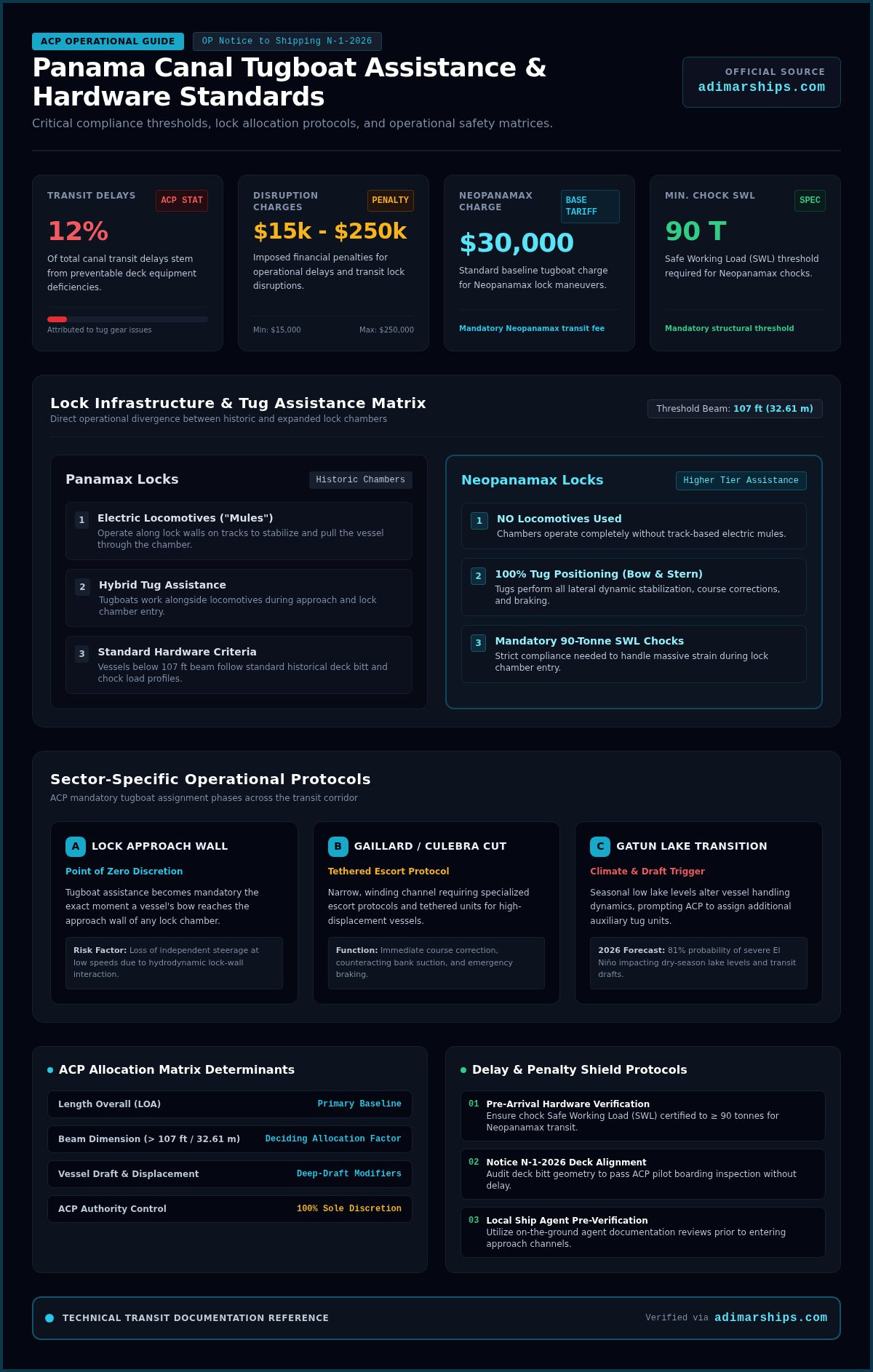
We understand that keeping up with the OP Notice to Shipping N-1-2026 feels like a full-time job. You shouldn’t have to guess whether your vessel’s deck configuration will pass a pilot’s inspection or if you’ve budgeted correctly for the $30,000 Neopanamax tugboat charge. This guide provides a clear roadmap to mastering current ACP tugboat allocations and structural equipment standards. You’ll learn exactly how to align your vessel’s hardware with 2026 regulations to ensure a seamless, fine-free passage through the locks. By the end of this article, you’ll have the technical clarity needed to maintain a predictable schedule without hidden operational penalties.
Key Takeaways
- Learn why tug assistance is a non-negotiable safety protocol for maneuvering through the Panama Canal’s narrowest channels.
- Understand how vessel length and beam thresholds determine your specific tug allocation to avoid scheduling errors.
- Master the structural standards for chocks and bitts to ensure your vessel meets all panama canal tugboat assistance requirements.
- Identify the Safe Working Load (SWL) ratings and 2026 tariff structures that shield your bottom line from unexpected disruption charges.
- Leverage a local ship agent as your eyes and ears on the ground to pre-verify deck hardware and documentation before arrival.
Understanding Panama Canal Tugboat Assistance Requirements: The Operational Baseline
The Panama Canal Authority (ACP) enforces strict panama canal tugboat assistance requirements to maintain the safety of the waterway. These aren’t just guidelines. They’re mandatory maneuvering protocols designed to protect your vessel and the canal’s infrastructure. In narrow stretches like the Culebra Cut, the margin for error is nearly zero. Tugs provide the lateral force and braking power that a ship’s engine and rudder simply can’t manage alone in confined spaces. Without this support, the risk of bank suction or collisions would be unacceptably high.
During lock entry, vessels often reach a point where they lose independent steering control due to low speeds and hydrodynamic effects. This makes dynamic positioning via tugboats essential. Meeting the panama canal tugboat assistance requirements ensures you avoid the steep disruption charges that the ACP imposes for transit delays. It’s vital to remember that the ACP maintains total control over all tug assignments. They decide how many units you need and when they attach, based on their real-time operational schedule and the specific needs of the day’s traffic flow.
The Crucial Role of Tugs in the Locks
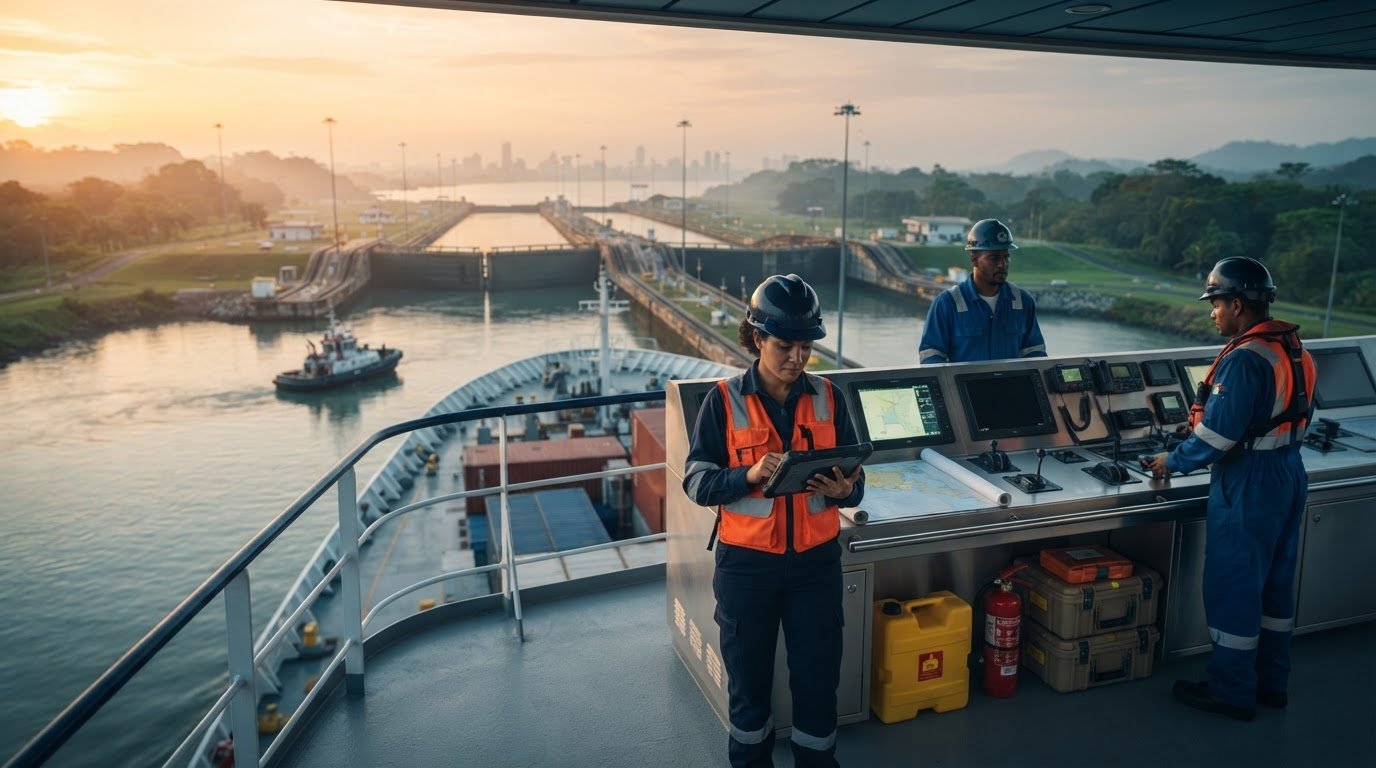
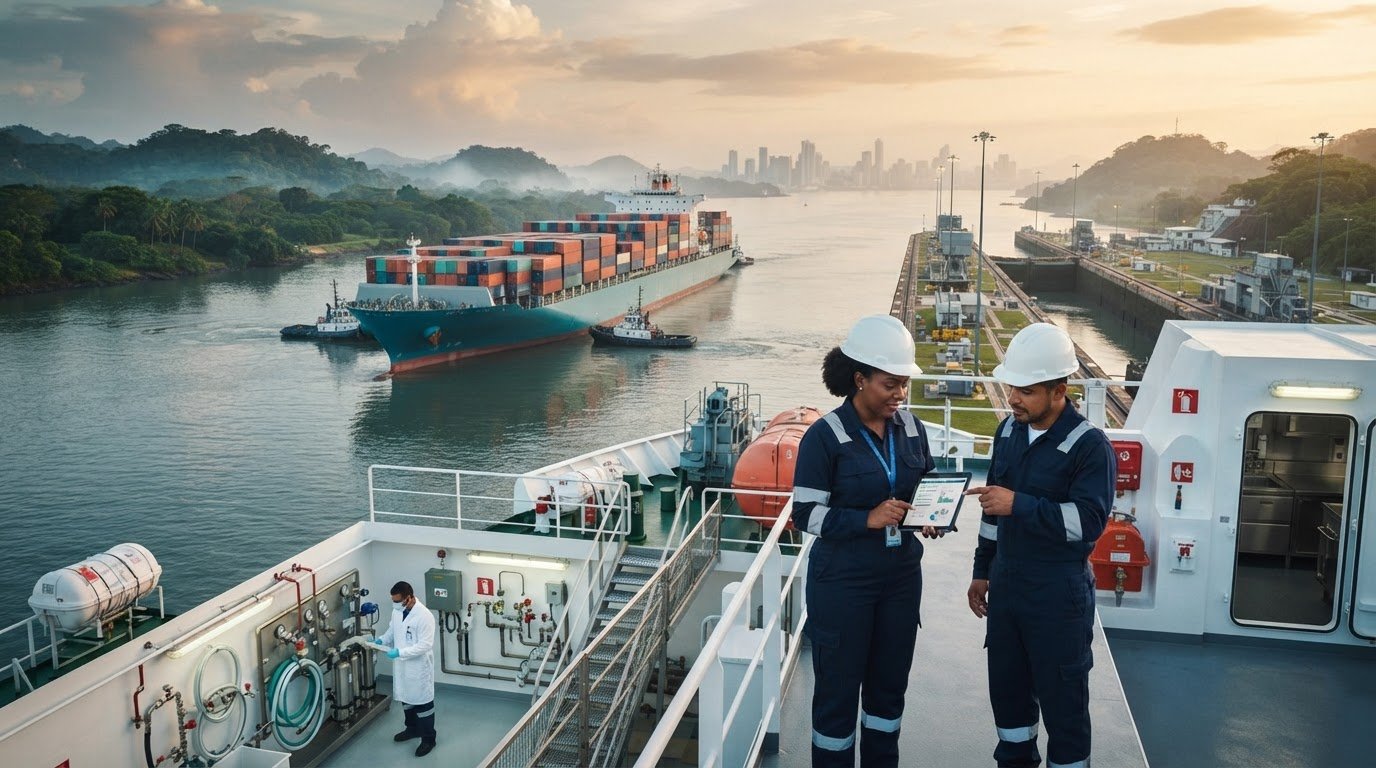
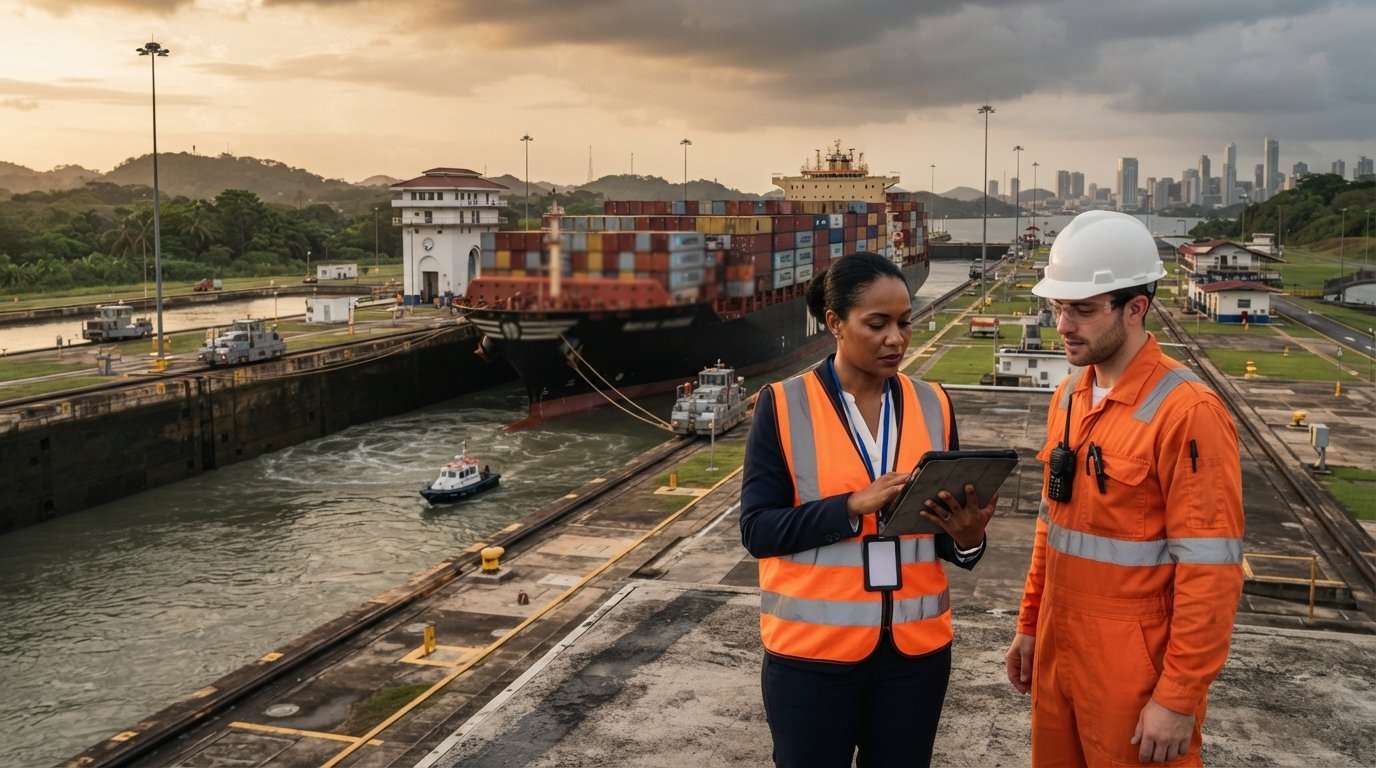
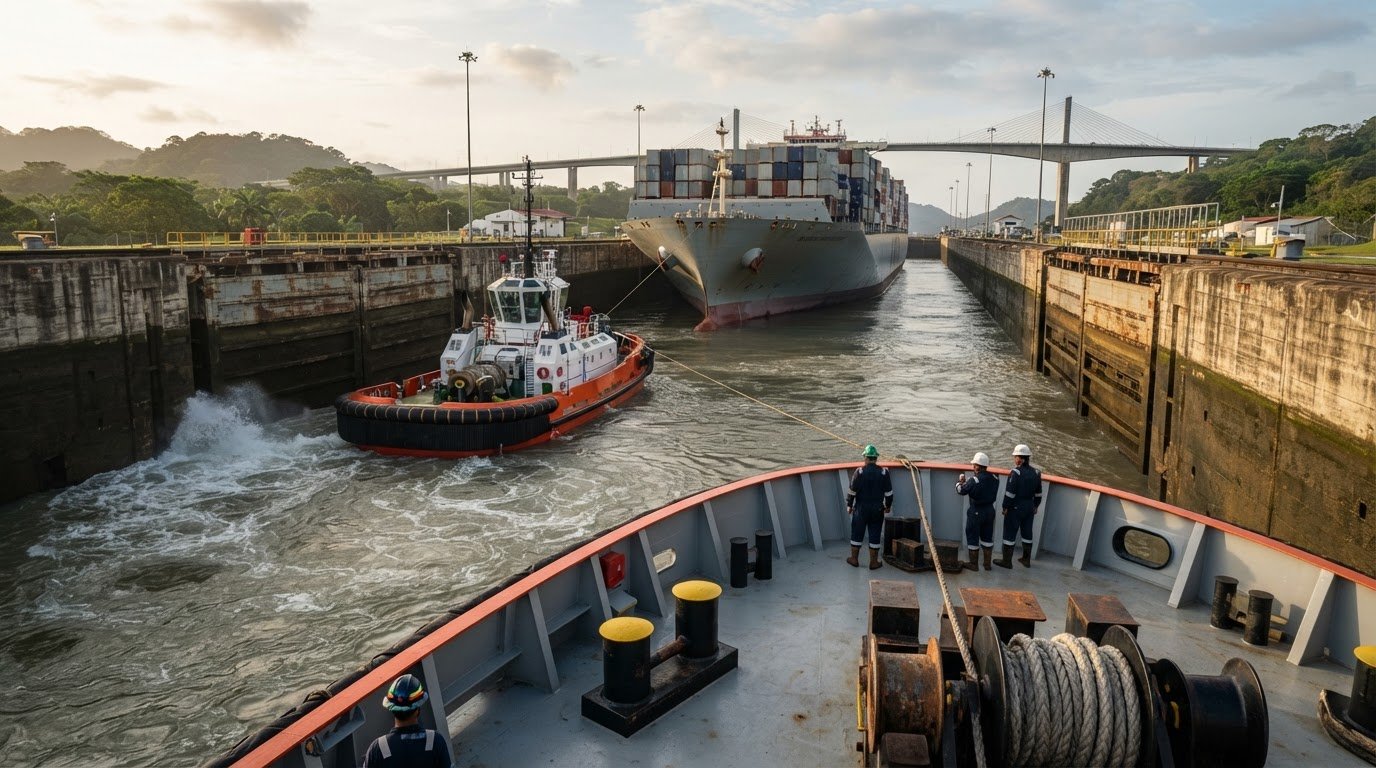
Tugboats serve different functions depending on which locks you’re transiting. In the historic Panamax locks, tugs work alongside electric locomotives, known as “mules,” to guide ships through the chambers. However, the Neopanamax locks operate differently. These larger chambers don’t use locomotives at all. Instead, they rely entirely on tugboats at the bow and stern to maintain the vessel’s position. Proper coordination here prevents hull contact with the lock walls. Tugboat assistance becomes mandatory the moment a vessel’s bow reaches the approach wall of any lock chamber.
Sector-Specific Assistance Rules
Different parts of the canal demand different levels of support. The Gaillard Cut, for instance, requires specialized escort protocols for high-displacement vessels. Because the channel is narrow and winding, tugs must remain tethered to provide immediate course correction if a vessel’s steering fails. This differs from approach channel assistance, where tugs might only be on standby until the vessel nears the lock entrance.
Environmental factors also play a role in these mandates. Seasonal water levels, influenced by events like the 81% probability of a severe El Niño in late 2026, can lead the ACP to adjust sector-specific requirements. When Gatun Lake levels drop, the handling characteristics of the water change, often requiring more precise tug intervention for deep-draft ships. Understanding these Panama Canal operations helps you anticipate why the ACP might increase tug requirements during the dry season.
ACP Tugboat Allocation Criteria: Vessel Dimensions and Tonnage Categories
Calculating the exact number of tugs for your transit depends on a specific ACP matrix. The Panama Canal Authority uses Length Overall (LOA) as the primary baseline, but beam width often acts as the final deciding factor. These calculations are a core part of the broader Panama Canal transit workflow. During the dry season, when Gatun Lake levels are under pressure, a vessel’s draft and displacement become even more significant. If a ship sits lower in the water, its handling characteristics change, often triggering a mandate for additional tug assistance to maintain control in narrow channels.
Panamax vs. Neopanamax Allocation Matrices
Standard Panamax vessels operate under a predictable allocation model, but Neopanamax classes face much stricter panama canal tugboat assistance requirements. The absence of electric locomotives in the Neopanamax locks means tugs must perform all stabilization and braking maneuvers. Any vessel with a beam exceeding 107 feet (32.61 meters) automatically enters a higher tier of tug assistance. To support these operations, your ship must adhere to technical chock and bitt specifications. For Neopanamax vessels, this typically means having chocks with a Safe Working Load of at least 90 tonnes to handle the immense strain during lock entry.
Special Risk Factors and Visibility Rules
Beyond physical dimensions, the ACP evaluates operational risks that can increase your tug count. Restricted forward visibility from the bridge is a common trigger for extra assistance. If your cargo blocks the pilot’s view, the ACP will assign a bow tug to serve as an additional set of eyes. Specialized vessels, particularly LNG carriers, are subject to the most rigorous escort protocols due to the nature of their cargo. You should also be aware that shipboard equipment failures, like a malfunctioning bow thruster, will lead to immediate emergency tug stand-by protocols. These unplanned assignments can be costly, often billed at $2,000 per hour for assistance not covered by standard fixed tariffs.
Proactive coordination is the only way to avoid these unexpected surcharges. You can partner with a local ship agency to verify your vessel’s specific tug requirements and deck configurations well before your scheduled arrival at the canal.
Equipment Specifications: Chocks, Bollards, and Towing Bitt Requirements
Compliance with panama canal tugboat assistance requirements starts with the steel on your deck. If your chocks or bitts fail under the strain of a high-power tug, the consequences are catastrophic for both the vessel and the waterway. The ACP inspectors look for specific Safe Working Load (SWL) ratings that exceed standard commercial expectations. For Neopanamax vessels over 294 meters in length, you must provide chocks with an SWL of at least 90 tonnes. Smaller vessels generally require a minimum of 64 metric tons. Don’t assume your current hardware is sufficient; the Canal’s unique towing angles place stresses on equipment that differ significantly from open-sea operations.
Safe operations also depend on the environment surrounding your hardware. Clear deck spaces are mandatory to allow canal line-handlers to work without obstruction. Tripping hazards or poorly maintained winch areas will lead to immediate flags during initial inspections. If an inspector identifies non-compliant deck hardware, the vessel faces transit delays and potential fines starting at $12,500. These penalties are entirely preventable through proactive maintenance and local verification of your deck layout before arrival.
ACP Approved Chock Configurations
The ACP specifies exactly which chock configurations are acceptable for transit. While closed chocks are the standard, double chocks are often required for the heavy-duty towing lines used in the Neopanamax locks. You must ensure these are strategically positioned along the bow, stern, and midship sections to allow for multi-directional tug control. Under ACP rules, all chock lips must have a minimum radius of curvature of 7 inches (180mm) to prevent line abrasion and premature snapping.
Bollard and Towing Bitt Standards
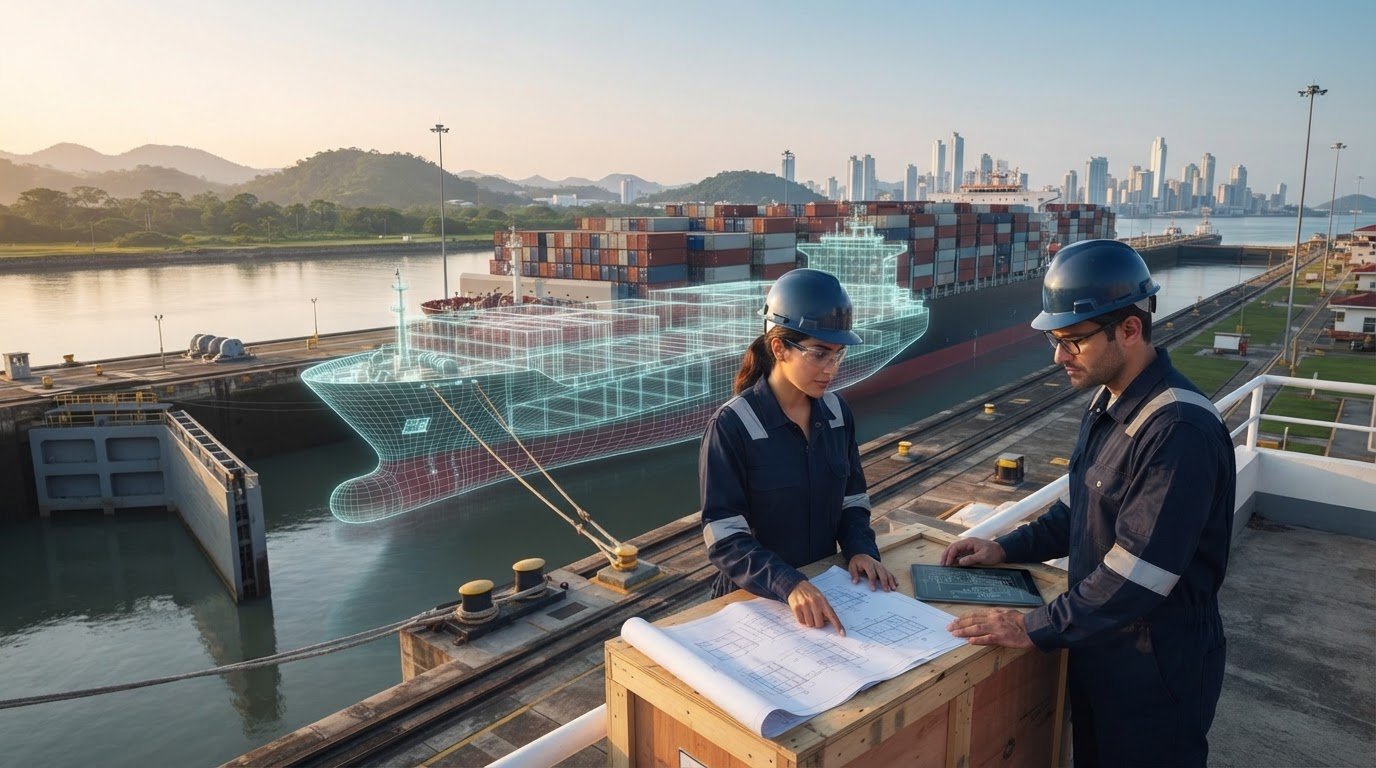
Alignment is the most critical factor for bollards and towing bitts. The lead between the chock and the bitt must be as direct as possible to prevent equipment shearing under heavy loads. Many standard commercial bitts require additional internal reinforcement before they can safely attempt a Neopanamax transit. The Panama Canal Authority serves as the final arbiter for certifying these hardware installations. If your vessel’s deck configuration doesn’t match the ACP-approved blueprints, the pilot won’t authorize the transit. We act as your vigilant eyes on the ground, verifying these technical details so your crew isn’t surprised by an equipment rejection at the locks.
Avoiding Costly Penalties: Managing Tugboat Delays and Tariff Adjustments
Failing to meet the strict panama canal tugboat assistance requirements triggers immediate operational and financial consequences. If an inspector discovers a minor discrepancy in your reported dimensions or non-compliant deck hardware, your transit stops. The ACP routinely imposes disruption charges ranging from $15,000 to $250,000 for unreported deficiencies that stall traffic. These penalties stack quickly on top of standard transit costs. Managing these risks requires a proactive approach to avoiding common compliance fines before your ship arrives at the anchorage. If you receive an unexpected tariff assessment, your local representative must immediately clarify the charges with the ACP. This process involves auditing the official pilot logs and submitting formalized technical evidence to dispute any unjustified extra asset billing.
The Cost of Unreadiness and Delays
The ACP declares a “vessel not ready” status when a ship cannot comply with its scheduled transit time due to crew unreadiness, mechanical failures, or equipment non-compliance. Missing an assigned tug slot is a costly mistake. Because the canal operates on a tight, automated schedule, a single delay at the anchorage ripples through the entire day’s transit scheduling, causing cascading backlogs for dozens of other vessels. To mitigate this risk, your bridge team must maintain continuous, transparent communication with canal traffic control. Real-time adjustments prevent the automatic booking cancellations that carry heavy financial penalties.
Navigating the Tugboat Tariff Structure
Base tug fees follow a strict structure calculated relative to vessel size, tonnage, and lock type. For example, Neopanamax vessels face a fixed mandatory tugboat charge of $30,000 for a full transit. However, operational triggers like sluggish maneuvering, defective winches, or poor bridge visibility can quickly result in “extraordinary tug assistance” surcharges. The ACP bills these additional tugs at a non-fixed hourly rate of $2,000. Maritime operators shouldn’t guess these expenditures or rely on outdated spreadsheets. Local verification remains the only reliable method to safeguard your voyage budget.
To secure an accurate financial forecast and ensure flawless compliance with all panama canal tugboat assistance requirements, you can appoint Adimar Shipping, Inc. as your local ship agent to manage your upcoming transit logistics securely.
Navigating ACP Tug Regulations with a Local Panama Canal Ships Agent
Managing complex maritime regulations requires local expertise and real-time oversight. Appointing a specialized local ship agent provides the ultimate safeguard against unexpected transit delays and equipment rejections. Instead of wrestling with frequently updated ACP notices from a distance, operators can delegate these complex coordination tasks to a partner on the ground. A knowledgeable Panama Canal ships agent acts as an extension of your own team, ensuring your vessel complies with all structural and operational mandates under the official panama canal tugboat assistance requirements. This professional oversight delivers the peace of mind and operational freedom needed to keep your fleet moving smoothly through the region.
Pre-Arrival Vetting and Documentation
The path to a seamless transit begins long before your vessel reaches local waters. Local agents manage the critical task of submitting all technical data through the Maritime Single Window of Panama (VUMPA) at least 96 hours before arrival. This system leaves no room for error, utilizing machine-level validation that flags even minor data discrepancies. Your agent pre-vets your shipboard blueprints and deck layouts to resolve hardware compliance questions before the vessel reaches Limon Bay. This proactive local coordination streamlines the scheduling of mandatory canal pilots and tugs, ensuring your vessel aligns perfectly with all panama canal tugboat assistance requirements and the current daily transit capacity of 32 ships.
On-the-Ground Crisis Management
Operational realities mean that unexpected issues can arise even with meticulous planning. If your vessel experiences a sudden mechanical failure or an inoperable winch nearing the locks, your agent provides immediate, on-the-ground crisis intervention. We step in to coordinate with the ACP, managing the logistics of emergency tug support to prevent the cancellation of your booking slot. As your vigilant local representative in Panama City, Adimar Shipping, Inc. works directly with authority inspectors to protect your financial interests and minimize the impact of non-fixed $2,000 hourly tug surcharges. You can secure a seamless, fine-free transit for your next voyage by contacting Adimar Shipping, Inc. for expert local ship agency representation.
Securing a Predictable and Fine-Free Canal Transit
Achieving a seamless voyage demands absolute precision when aligning your vessel’s deck hardware with the latest ACP matrices. Reviewing allocation criteria based on length and beam width is just the first step. True compliance requires verifying the structural integrity and safe working load of your chocks and bitts before your vessel ever arrives at the anchorage. Ensuring your vessel meets the strict panama canal tugboat assistance requirements protects your voyage schedule from sudden disruption and unexpected tariff surcharges.
You don’t have to navigate these complex maritime regulations alone. Partnering with a dedicated local expert removes the guesswork from scheduling and documentation. Our team provides on-the-ground expertise in Panama City, delivering comprehensive ACP regulatory compliance management and personalized service that eliminates transit confusion entirely. Let our seasoned specialists act as your eyes and ears on the water to guarantee operational peace of mind. Protect your vessel interests and secure a smooth transit with Adimar Shipping, Inc.
Frequently Asked Questions
How many tugboats are typically required for a Neopanamax transit?
Neopanamax transits typically require a minimum of two tugboats, with one positioned at the bow and one at the stern during lock entry. The exact number can scale up depending on the vessel’s specific displacement and prevailing environmental conditions. Because these larger chambers lack electric towing locomotives, the ACP dictates the final allocation to maintain absolute control. Operators pay a fixed $30,000 charge for this full-transit tugboat deployment.
What is the minimum Safe Working Load (SWL) for chocks under Panama Canal regulations?
The minimum Safe Working Load (SWL) for chocks is 90 tonnes for any vessel exceeding 294 meters in length. For smaller vessel classes transiting the canal, the structural requirement drops to a minimum of 64 metric tons. These parameters are strictly enforced under the OP Notice to Shipping N-1-2026. Failing to meet these hardware standards during initial inspection can lead to immediate transit delays and a $12,500 penalty.
Can a vessel transit the Panama Canal if its deck hardware does not meet ACP requirements?
No, a vessel cannot transit the Panama Canal if its deck hardware fails to comply with official ACP standards. Inspectors will flag non-compliant chocks or bitts at the anchorage, halting the voyage immediately. You won’t be allowed to proceed until the hardware deficiencies are fully rectified. This unreadiness triggers steep disruption charges between $15,000 and $250,000, underscoring the need for pre-arrival vetting by a local agent.
Are tugboat fees included in the standard Panama Canal transit toll?
No, tugboat fees are billed as distinct tariff items separate from your primary transit tolls. Neopanamax vessels incur a mandatory fixed tugboat charge of $30,000 for a full transit through the new locks. If your vessel requires extra units, you’ll face an hourly rate of $2,000. Understanding these separate line items is essential for mastering the panama canal tugboat assistance requirements and budgeting accurately.
What happens if a vessel experiences steering failure during canal transit?
If a vessel experiences steering failure, the ACP pilot takes immediate emergency command and deploys standby tugboats to stabilize the ship. This protocol prevents catastrophic grounding in narrow channels like the Gaillard Cut. The canal authority will log the incident as an unreported deficiency, moving the ship to a safe anchorage. The operator faces immediate disruption charges up to $250,000 plus a $2,000 hourly fee for each emergency tug utilized.
How does forward bridge visibility affect mandatory tugboat assistance requirements?
Restricted forward bridge visibility automatically increases your mandatory tugboat allocations under canal regulations. If cargo or ship structures block the pilot’s line of sight, the ACP mandates an extra bow tug to assist with navigation. This safety directive directly alters the standard panama canal tugboat assistance requirements for your specific dimensions. Working with a local ship agent helps pre-calculate these visibility blind spots to avoid unexpected scheduling adjustments.