
For anyone involved in global shipping, the terms “Panamax” and “Neopanamax” are fundamental. These classifications do more than just describe a ship’s size; they define its access to one of the world’s most critical maritime shortcuts-the Panama Canal. Understanding the critical differences between these two vessel classes is essential for planning efficient, cost-effective, and successful transits. This guide breaks down everything you need to know, from dimensions and capacity to the practical implications for your vessel.
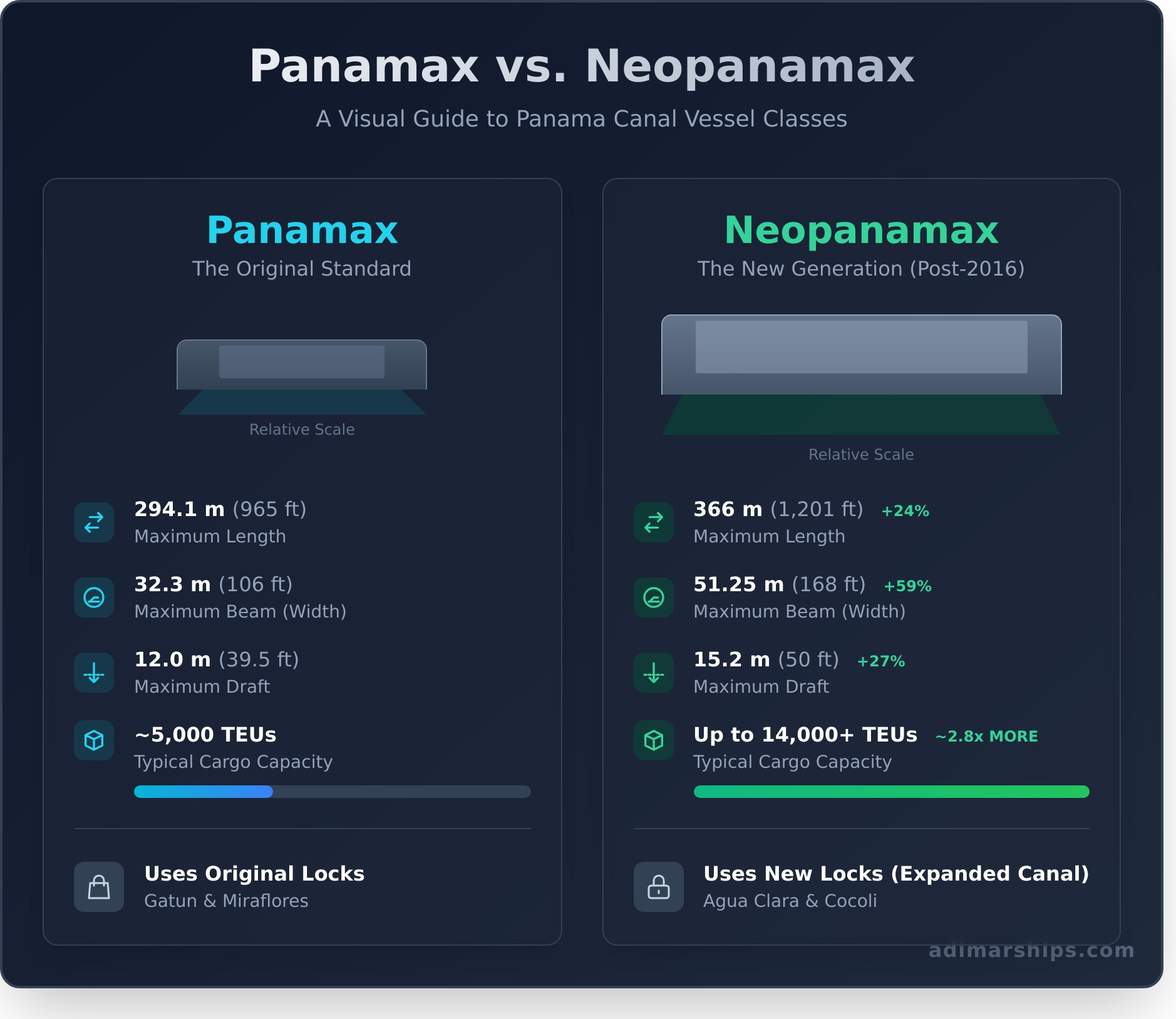
What is a Panamax Vessel? The Original Standard
The term Panamax refers to the size limits for ships traveling through the original locks of the Panama Canal. For nearly a century after the canal’s opening in 1914, these dimensions set the standard for vessel design and construction worldwide. If a ship owner wanted the flexibility to transit between the Atlantic and Pacific Oceans via Panama, their vessel had to be built within these specific constraints. These ships use the original, historic lock complexes at Gatun on the Atlantic side and Miraflores on the Pacific side. While still operational, Panamax vessels are becoming less common on major international trade routes as larger, more efficient ships dominate the seas.
Panamax Vessel Dimensions
The specifications for a Panamax vessel are dictated entirely by the size of the original lock chambers:
- Maximum Beam (width): 32.3 meters (106 ft)
- Maximum Length: 294.1 meters (965 ft)
- Maximum Draft (depth): 12.0 meters (39.5 ft) in Tropical Freshwater
- Typical cargo capacity: Approximately 4,500-5,000 TEUs (Twenty-foot Equivalent Units) for a container ship.
What is a Neopanamax Vessel? The New Generation
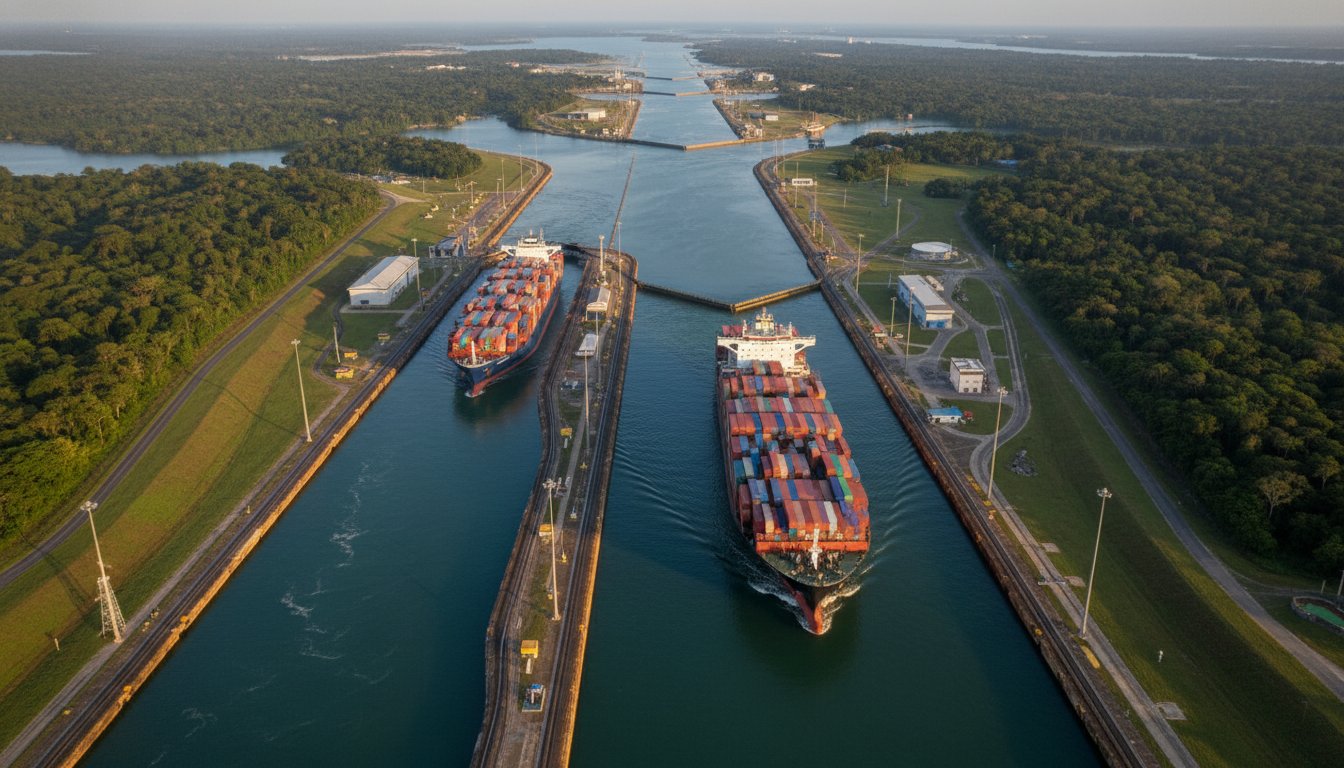
The Neopanamax classification was born from the historic Panama Canal Expansion project, completed in 2016. This monumental engineering effort introduced a new, third lane of traffic with much larger lock chambers, known as the Cocoli and Agua Clara Locks. These new locks were designed to accommodate the larger, more modern vessels that now form the backbone of the global fleet. The Neopanamax standard allows significantly larger ships-carrying more than double the cargo of their Panamax predecessors-to transit the canal, representing the modern benchmark for global shipping.
Neopanamax Vessel Dimensions
The increased size of the new locks created a new set of maximum allowable dimensions for transiting vessels:
- Maximum Beam (width): 51.25 meters (168 ft)
- Maximum Length: 366 meters (1,201 ft)
- Maximum Draft (depth): 15.2 meters (50 ft) in Tropical Freshwater
- Cargo capacity: Up to approximately 14,000 TEUs, depending on the specific vessel design.
Panamax vs. Neopanamax: A Side-by-Side Comparison Table
Seeing the numbers side-by-side is the easiest way to grasp the significant differences between the two classes. The following table breaks down the most critical specifications for ship owners and charterers planning a transit.
| Specification | Panamax | Neopanamax |
|---|---|---|
| Maximum Length | 294.1 m (965 ft) | 366 m (1,201 ft) |
| Maximum Beam (Width) | 32.3 m (106 ft) | 51.25 m (168 ft) |
| Maximum Draft | 12.0 m (39.5 ft) | 15.2 m (50 ft) |
| Typical TEU Capacity | ~5,000 | ~14,000 |
| Canal Locks Used | Original Locks (Gatun, Miraflores) | New Locks (Agua Clara, Cocoli) |
Dimension Limits Compared
The numbers clearly show a massive leap in scale. A Neopanamax vessel can be nearly 60% wider and over 70 meters longer than its Panamax counterpart. The significantly deeper draft is also crucial, as it allows vessels to be loaded with much more cargo, making each voyage more profitable.
Cargo Capacity (TEU) and Commercial Impact
The most significant commercial difference lies in cargo capacity. By accommodating ships that can carry nearly three times more containers, the Neopanamax locks provide massive economies of scale. This has fundamentally changed global trade, allowing shipping lines to move goods more efficiently and opening up new direct routes between continents that were previously not viable for the largest vessels.
Which Locks Do They Use?
This is a critical operational distinction. Panamax vessels are restricted to the original, smaller lock system. In contrast, Neopanamax vessels are too large for the old locks and must use the new, larger Cocoli and Agua Clara locks. The booking procedures, transit fees, and navigation requirements differ for each lock system, making expert knowledge of both essential for proper planning.
Why The Change? The Impact of the Panama Canal Expansion
By the early 2000s, it was clear that global shipping fleets were outgrowing the original canal’s limits. To remain a vital artery of world trade, the Panama Canal had to evolve. The expansion project was a direct response to this commercial pressure. The ability to handle larger container ships, Liquefied Natural Gas (LNG) carriers, and bulk carriers was crucial for Panama to stay competitive. The project, one of the largest and most complex engineering works of this century, has successfully secured the canal’s role in global logistics for decades to come.
How Vessel Size Impacts Your Canal Transit Strategy
The distinction between Panamax and Neopanamax is more than just a technicality; it directly impacts your transit strategy. Different dimensions mean different toll structures, booking requirements, and available transit slots. Larger vessels naturally demand more precise planning and coordination with the Panama Canal Authority (ACP), pilots, and tugboat operators. Navigating the specific regulations, documentation, and operational protocols for either class requires deep local expertise. A small miscalculation or misunderstanding in the planning process can lead to significant and costly delays. This is where a trusted partner on the ground becomes invaluable. Put your transit in our hands. Nominate Adimar as your trusted agent.
Frequently Asked Questions
What does TEU stand for?
TEU stands for “Twenty-foot Equivalent Unit.” It is a standard unit of measurement for cargo capacity on container ships, based on the volume of a 20-foot-long intermodal container.
Can a Panamax ship use the new Neopanamax locks?
Yes, smaller vessels, including Panamax ships, can use the new locks, although it is often more cost-effective for them to use the original locks for which they were designed.
Are there ships that are too big for even the Neopanamax locks?
Yes. The largest ships in the world, often called Ultra Large Container Vessels (ULCVs), exceed the Neopanamax dimensions and cannot transit the Panama Canal. These are sometimes referred to as “Post-Panamax” vessels.
How did the Canal expansion affect shipping fees?
The expansion led to a new toll structure. While larger Neopanamax vessels pay a higher total toll, the cost per container or unit of cargo is often lower due to the massive economies of scale, making the route more cost-effective.
What is a ‘Post-Panamax’ vessel?
Originally, Post-Panamax referred to any ship too large for the original locks. Today, the term is more commonly used for vessels that are too large for even the new Neopanamax locks, such as the world’s largest oil tankers and container ships.
Does Adimar Shipping handle both Panamax and Neopanamax vessels?
Absolutely. Our team has extensive experience coordinating smooth and efficient transits for all vessel classes permitted through the Panama Canal, from the smallest yachts to the largest Neopanamax ships.
Whether you are operating a Panamax or a Neopanamax vessel, a successful transit through the Panama Canal depends on meticulous planning and expert coordination. With over 20 years of experience serving as the eyes and ears for ship owners at the canal, Adimar Shipping ensures every detail is managed with integrity and efficiency. Ensure a smooth transit for any vessel. Contact Adimar today.