
Navigating the complex regulations of the Panama Canal can be a daunting task for any ship owner or charterer. Among the most critical requirements is the Panama Canal Shipboard Oil Pollution Emergency Plan (PCSOPEP). Understanding the role of a PCSOPEP Authorized Person is not just about compliance; it’s about ensuring a smooth, predictable, and fine-free passage through one of the world’s most vital waterways. This guide will explain everything you need to know to ensure your vessel’s full compliance and safeguard your transit.
What is PCSOPEP and Why is it Mandatory for Canal Transit?
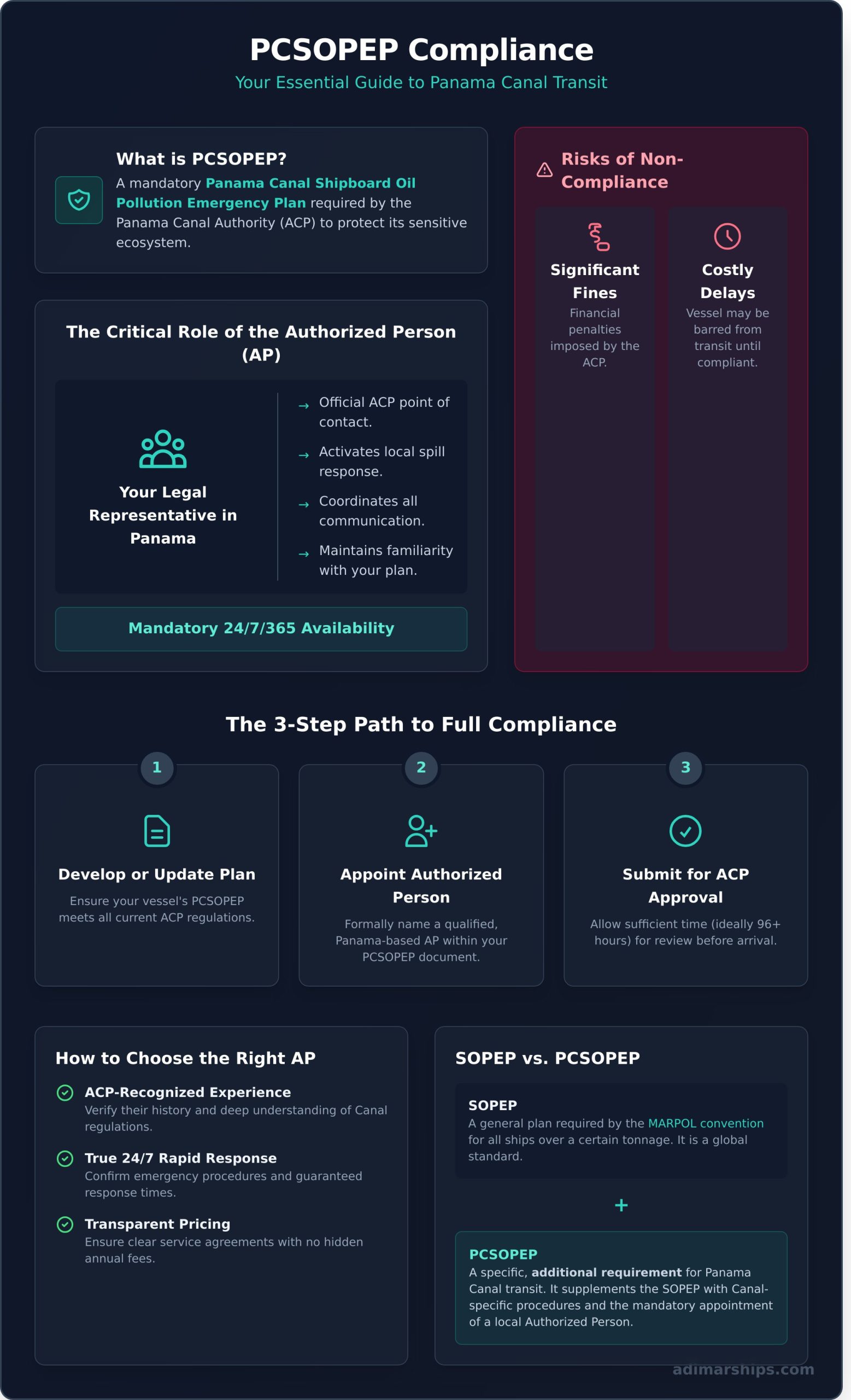
PCSOPEP stands for the Panama Canal Shipboard Oil Pollution Emergency Plan. It is a vessel-specific plan mandated by the Panama Canal Authority (ACP) for all ships transiting the Canal. Its primary purpose is to protect the Canal’s unique and highly sensitive ecosystem from potential oil spills. This is not just a formality; failure to have a valid and approved PCSOPEP, including a designated Authorized Person, can result in significant fines and costly operational delays that disrupt tight schedules.
Understanding the Role of the PCSOPEP Authorized Person (AP)
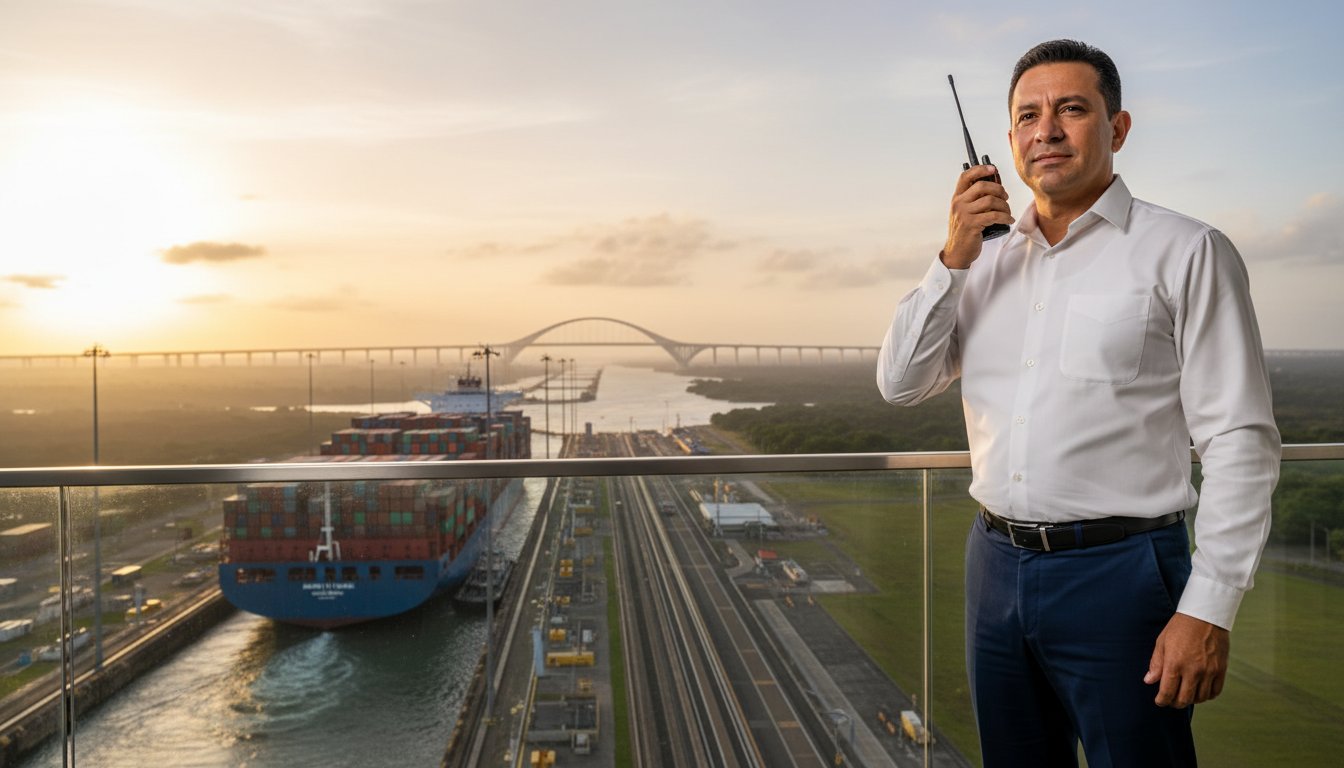
The Authorized Person is your legally required representative based in Panama. This individual or company acts as the crucial liaison between your vessel and the Panama Canal Authority for all matters related to your pollution emergency plan. A key requirement is that your AP must be available 24 hours a day, 7 days a week, 365 days a year, ready to respond immediately in the event of an incident.
Key Responsibilities of an Authorized Person
The duties of an Authorized Person are critical for both compliance and emergency preparedness. Their primary responsibilities include:
- Serving as the official point of contact for the ACP regarding all PCSOPEP matters.
- Activating and coordinating local spill response resources if an incident occurs.
- Ensuring seamless communication between the vessel’s master, the ship owners/operators, and the Canal authorities.
- Maintaining a thorough familiarity with your vessel’s specific PCSOPEP to ensure a swift and effective response.
How to Achieve Full PCSOPEP Compliance: A 4-Step Guide
Follow these essential steps to ensure your vessel is fully prepared for transit. Proactive planning is the best way to prevent last-minute stress, avoid penalties, and eliminate costly issues that can arise from non-compliance.
Step 1: Develop or Update Your Vessel’s PCSOPEP Plan
First, your vessel must have a PCSOPEP that meets all current ACP regulations. This plan details the specific procedures for preventing and responding to oil spills and is unique to your vessel’s construction and specifications. If you already have a plan, ensure it is up-to-date with the latest requirements.
Step 2: Appoint a Qualified Authorized Person in Panama
This is the most critical step for ensuring compliance. You must formally appoint an Authorized Person who is a resident of Panama. Your chosen AP must be officially named within your PCSOPEP document before it is submitted for approval. This is a legal requirement that cannot be overlooked.
Step 3: Submit Your Plan for ACP Review and Approval
Once your plan is complete and your Authorized Person is named, it must be submitted to the ACP for review. It is vital to allow sufficient time for this process before your vessel’s scheduled arrival. Once the ACP approves the plan, your vessel is officially cleared for transit under the PCSOPEP regulations. If you need assistance with preparing or submitting your plan, our team can help. Contact our compliance experts.
Checklist: How to Choose the Right Authorized Person
Your choice of an Authorized Person directly impacts the efficiency and safety of your transit. Not all providers offer the same level of expertise or reliability. Use this checklist to vet potential partners for this critical role.
Confirm They are an Experienced, ACP-Recognized Company
Always verify a provider’s history and reputation for providing PCSOPEP services. An experienced agent will have a deep, current understanding of Canal regulations and can often anticipate and solve potential problems before they arise, saving you time and money.
Verify True 24/7 Availability and Rapid Response Capability
Emergencies do not adhere to a 9-to-5 schedule. Ask potential providers about their specific emergency contact procedures and guaranteed response times. A reliable AP is your first and most important line of defense in a crisis, and their ability to act immediately is paramount.
Look for Transparent Pricing and Clear Service Agreements
Ensure you understand exactly what is included in the annual fee. A professional provider will offer a clear service agreement that outlines all responsibilities and costs, helping you avoid hidden fees or vague service descriptions. In high-stakes compliance, the cheapest option is rarely the best or most secure choice.
Adimar Shipping: Your Trusted PCSOPEP Partner at the Panama Canal
For over 20 years, Adimar Shipping has been the trusted partner for ship owners and charterers, ensuring seamless and compliant transits through the Panama Canal. We are more than just a name in a plan; we are your eyes and ears at the Canal, providing the peace of mind that comes from true expertise. Our dedicated team handles every compliance detail with the integrity and efficiency you expect, allowing you to focus on your business, not on complex local regulations.
Frequently Asked Questions
What happens if a vessel arrives at the Panama Canal without a PCSOPEP AP?
A vessel arriving without a designated and approved Authorized Person will be found in non-compliance by the Panama Canal Authority. This will result in significant fines and the vessel may be delayed from transiting until the requirement is met, causing costly disruptions to its schedule.
Can our existing ship agent in Panama act as our Authorized Person?
Yes, provided they meet all the specific requirements set by the ACP, including being a resident of Panama and having the expertise and infrastructure to fulfill the 24/7 response duties. Adimar Shipping provides both ship agency and PCSOPEP Authorized Person services, offering a streamlined solution.
How long does it take for the ACP to approve a PCSOPEP plan?
The review and approval time can vary. It is highly recommended to submit the plan well in advance of the vessel’s arrival-ideally at least 96 hours before-to ensure there is sufficient time for the ACP to process it without causing delays.
Is the PCSOPEP Authorized Person fee an annual charge or per transit?
The fee for a PCSOPEP Authorized Person is typically an annual charge per vessel. This ensures that the vessel remains in compliance for a full year and that the AP is available to represent it for any transits during that period.
What is the difference between SOPEP and PCSOPEP?
SOPEP (Shipboard Oil Pollution Emergency Plan) is a requirement under the MARPOL convention for all oil tankers over 150 GT and all other ships over 400 GT. PCSOPEP is a specific, additional requirement mandated by the Panama Canal Authority that supplements the vessel’s existing SOPEP with Canal-specific procedures and the appointment of a local Authorized Person.
Ensuring your vessel complies with PCSOPEP regulations is a non-negotiable part of transiting the Panama Canal. By choosing an experienced and reliable partner like Adimar Shipping, you are not just fulfilling a requirement; you are investing in a smooth, efficient, and worry-free passage. With our dedicated 24/7 response team and a reputation built on over 20 years of integrity, we stand ready to be your trusted partner at the Canal. Appoint Adimar as Your Authorized Person Today and experience the confidence of having an expert on your side.