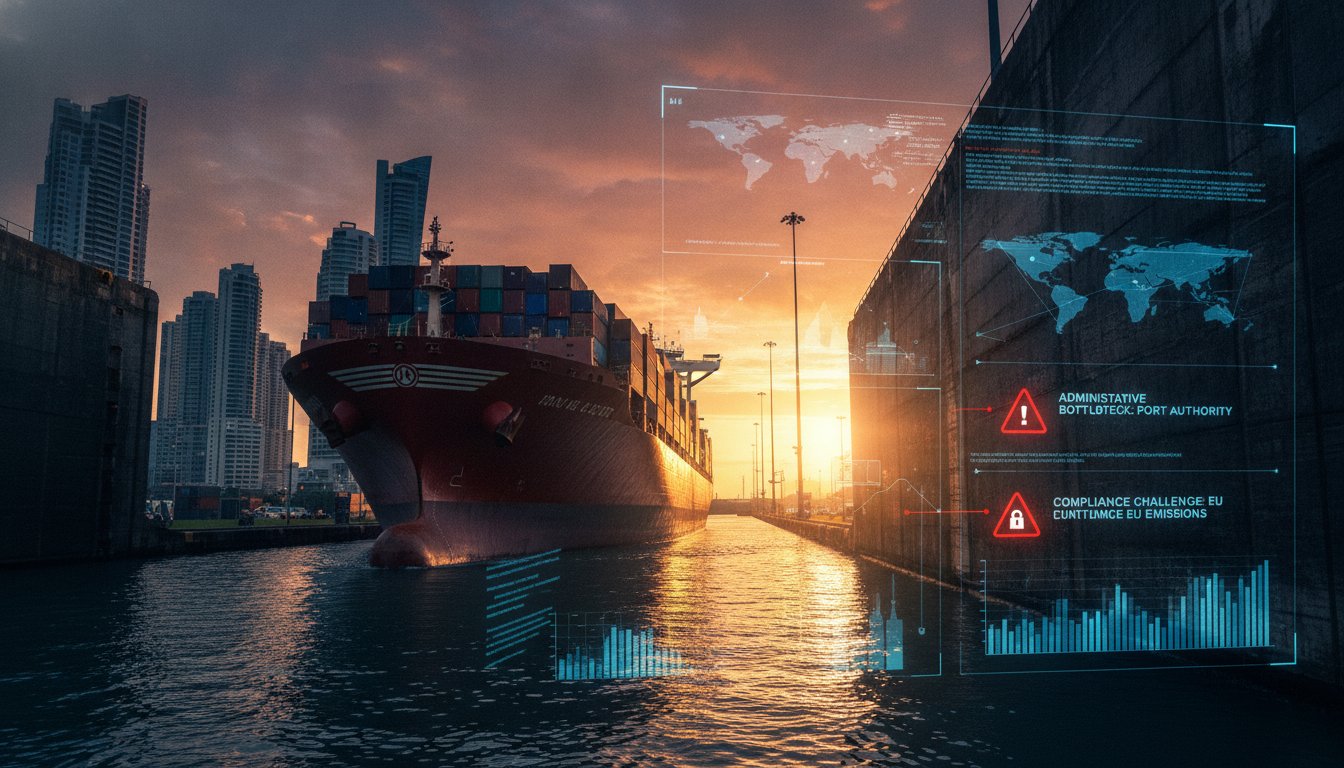

The true PCSOPEP authorized person cost Panama isn’t found in the initial service fee; it’s found in the thousands of dollars lost to avoidable transit delays and clerical errors. We understand that maritime compliance often feels like a maze of hidden fees and overlapping regulations. It’s frustrating to manage international MARPOL requirements while worrying if your specific Panama Canal plan will satisfy the mandatory 96-hour notification rule. You deserve a transit experience free from the threat of $15,000 fines or unexpected hold-ups at the Miraflores locks.
This guide provides a clear breakdown of the 2026 cost structures and demonstrates how selecting a vigilant, local Authorized Person (AP) secures your bottom line. We’ll examine the latest ACP tariffs based on oil-carrying capacity and explain why a Panama-resident representative is your best defense against administrative sanctions. By the end of this article, you’ll have a predictable budget for your 2026 transits and the peace of mind that comes with expert local oversight on the ground.
Key Takeaways
- Identify the residency requirement for the Authorized Person to ensure legal compliance and 24/7 liaison with the Panama Canal Authority.
- Analyze how vessel tier classifications dictate your per-transit pollution tariffs and the complexity of your response plan.
- Evaluate the total PCSOPEP authorized person cost Panama by weighing commercial service fees against the high risk of non-compliance fines.
- Avoid the critical 96-hour notification error that triggers immediate administrative sanctions and expensive transit holds.
- Streamline your 2026 operations by combining specialized pollution coverage with local husbandry expertise to eliminate coordination gaps.
The Financial Realities of PCSOPEP Compliance in 2026
The financial landscape of Panama Canal transits is increasingly complex. Ship operators must look beyond basic toll fees to understand the total cost of compliance. Central to this is the Panama Canal Shipboard Oil Pollution Emergency Plan (PCSOPEP). The Panama Canal Authority (ACP) mandates this localized pollution plan for all commercial vessels with an oil-carrying capacity of 400 metric tons or more. This requirement applies whether the oil is carried as cargo or used as fuel for propulsion.
While your fleet likely complies with the International Convention for the Prevention of Pollution from Ships (MARPOL), an international SOPEP isn’t sufficient for a Panama transit. The PCSOPEP is a distinct, supplementary requirement with its own set of financial obligations. The most critical component of this regulation is the appointment of a Panama-resident Authorized Person (AP). This isn’t just a recommendation; it’s a legal necessity. Your AP serves as the 24/7 link to the ACP, coordinating response resources and managing financial guarantees. When calculating the PCSOPEP authorized person cost Panama, you’re investing in a specialist who prevents your vessel from becoming a financial liability.
Mandatory vs. Optional Compliance Costs
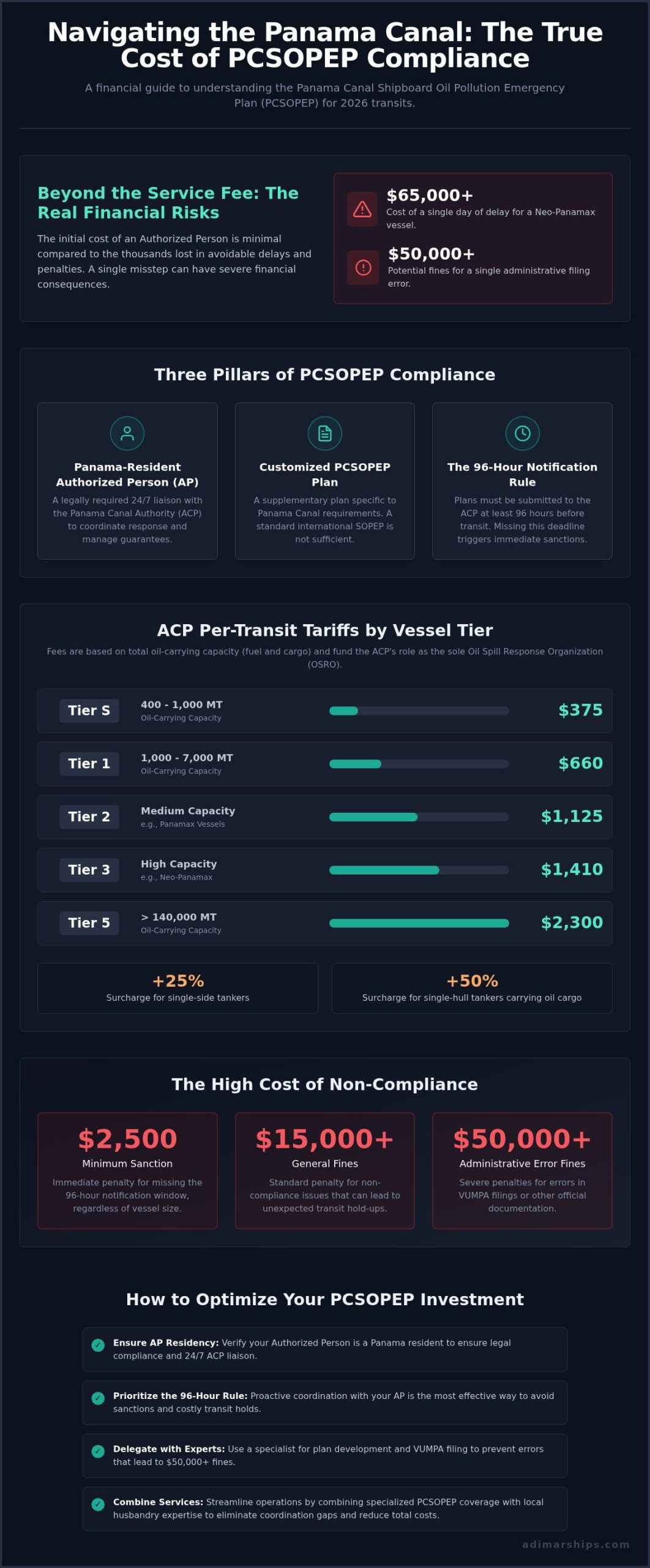
The total investment for compliance involves three primary pillars: plan development, official submission, and ongoing AP representation. Many operators try to cut corners with generic plan templates. This is a high-risk strategy. A single administrative error in your VUMPA (Ventanilla Única Marítima de Panamá) filing can result in fines starting at $50,000. By delegating these tasks to an expert, you ensure every document meets strict ACP standards.
In 2026, the ACP continues to utilize a tiered tariff system based on oil-carrying capacity. These fees range from $375 for Tier S vessels to $2,300 for Tier 5 vessels. These tariffs fund the Canal’s role as the sole Oil Spill Response Organization (OSRO). However, these fees only cover the use of ACP equipment. All manpower, disposal, and contractor costs remain the vessel’s responsibility. Choosing a reliable AP ensures these variables don’t spiral out of control.
The 96-Hour Rule: A Hidden Cost Driver
Timing is everything in the Panama Canal. The ACP strictly enforces a 96-hour notification rule for plan submissions. If you miss this window, you face an immediate sanction of at least $2,500. The true cost, however, is often much higher. Missing your slot can lead to a compliance hold, forcing your vessel into expensive auctions or causing massive demurrage fees. For a Neo-Panamax vessel, a single day of lost operation can exceed $65,000. Proactive coordination with your Authorized Person is the most effective way to eliminate these hidden cost drivers.
Breaking Down PCSOPEP Plan Costs by Vessel Tier
The Panama Canal Authority uses a structured tier system to determine pollution response tariffs. These tiers are based on a vessel’s total oil-carrying capacity, which includes both fuel for propulsion and any oil carried as cargo. This classification system ensures that the response readiness matches the potential environmental risk of each transit. Your PCSOPEP authorized person cost Panama depends partly on these tiers, as higher-capacity vessels require more complex response coordination and carry greater administrative responsibility.
According to the Panama Canal Authority PCSOPEP Regulations, the tier dictates the per-transit tariff paid to the ACP. These fees are standardized. Tier S vessels (400 to 1,000 MT) pay $375 per transit, while Tier 1 vessels (1,000 to 7,000 MT) pay $660. As capacity increases, so do the costs. Tier 2 vessels pay $1,125, Tier 3 pay $1,410, and Tier 5 vessels carrying over 140,000 MT pay $2,300. Tankers face additional surcharges; a 25% increase applies to single-side vessels, and a 50% surcharge applies to single-hull vessels carrying oil as cargo.
Tier 1 and Tier S: Cost-Effective Compliance
Vessels in the lower tiers generally benefit from simplified plan structures. Since the oil volume is smaller, the administrative burden for plan approval is often lower. Approvals for Tier 1 and Tier S plans typically move through the ACP system efficiently if the documentation is precise. Operators with smaller vessels can keep their PCSOPEP authorized person cost Panama predictable by maintaining consistent documentation and adhering to the 96-hour notification rule. Even for these smaller tiers, missing that submission window triggers an immediate $2,500 sanction, regardless of the vessel’s size.
Tier 2 and Tier 3: High-Capacity Requirements
Larger vessels, including Neo-Panamax container ships and tankers, fall into Tier 2, Tier 3, or higher. These transits require a more robust response plan because the potential impact of an incident is significantly greater. Your Authorized Person must maintain 24/7 readiness to coordinate with the ACP’s emergency resources. This level of vigilance is critical. For high-capacity vessels, the risk of a compliance hold is a major financial threat. A one-day delay for a Neo-Panamax vessel can cost upwards of $65,000 in lost revenue. Smart operators often choose to designate an experienced Authorized Person who can manage these complexities without risking expensive transit delays. The investment in expert representation is small compared to the potential cost of a botched VUMPA filing or a missed compliance deadline.
Compliance vs. Penalties: The Real Cost of PCSOPEP Failure
Navigating the financial risks of a Panama Canal transit requires a sharp eye for administrative detail. While some operators view compliance as a static expense, the reality is that the PCSOPEP authorized person cost Panama is an investment in risk mitigation. A single failure to meet Panama Canal Authority (ACP) standards can trigger a cascade of financial consequences that far exceed the price of professional representation. A $15,000 penalty is often just the starting point for a non-compliant vessel when you factor in administrative overhead and operational disruptions.
Anatomy of a PCSOPEP Penalty
Most fines aren’t the result of an actual spill but of clerical negligence. Common triggers include missing the strict 96-hour pre-arrival notification window or submitting a plan with outdated emergency contact information. The ACP rarely grants waivers for documentation errors. If your filing is rejected, your vessel is held at anchor. You’ll then face the high cost of emergency plan revisions and expedited re-submissions while your transit slot remains in jeopardy. Administrative sanctions start at $2,500 for basic notification failures, but cumulative errors in VUMPA filings can quickly push penalties into the five-figure range.
These visible fines are only one part of the equation. The invisible costs of a compliance hold are often more damaging. When a vessel is delayed at the locks, you incur port delay fees and demurrage charges that accumulate by the hour. For a Neo-Panamax vessel, these costs can reach $65,000 per day in lost revenue. Frequent compliance issues can also tarnish your reputation with the ACP, potentially affecting your relationship with Canal authorities for future transits. Reliability is a currency in the maritime industry; once lost, it’s expensive to regain.
Calculating the ROI of Professional AP Services
When you evaluate the PCSOPEP authorized person cost Panama, compare it against the cost of a single day of downtime. A dedicated Authorized Person acts as your vigilant local representative, reviewing every line of your documentation before it reaches the ACP. This proactive oversight is essentially a preventative insurance policy. By delegating these complex tasks to a specialist who understands the local regulatory landscape, you ensure zero delays at the Miraflores or Cocoli locks. This level of security is why many operators believe Why a Panama Canal Ships Agent is Your Most Valuable Asset when navigating the unique demands of the Canal. Investing in expert coordination isn’t just about following rules; it’s about protecting your operational freedom and your bottom line.
How to Optimize Your PCSOPEP Investment
Optimizing your PCSOPEP authorized person cost Panama involves moving beyond a transactional mindset. Instead of viewing compliance as a per-transit hurdle, savvy operators treat it as a strategic component of their broader fleet management. By consolidating representation and synchronizing documentation, you can significantly reduce administrative overhead and the risk of missed deadlines. This proactive approach ensures your budget remains predictable while your vessels move efficiently through the locks.
Ensuring your plan remains valid for the full four-year ACP cycle is also vital for cost control. Frequent, unnecessary plan updates add to your cumulative expenses. A well-written plan, managed by an experienced Authorized Person (AP), only requires updates when significant vessel changes occur or when ACP regulations shift. This longevity keeps your annual compliance budget stable. It allows you to focus on core operations rather than constant paperwork revisions.
Fleet-Wide Compliance Strategies
Managing a fleet requires precision. Synchronizing the renewal dates of your PCSOPEP plans across multiple vessels allows your team to handle documentation in batches. This reduces the risk of clerical errors that often occur when tracking individual, staggered deadlines. Consider these optimization steps:
- Bundle AP services with husbandry and ship agency requirements.
- Coordinate renewal cycles to reduce administrative touchpoints.
- Centralize all VUMPA documentation with a single local expert.
Many agents offer more competitive rates when you bundle these requirements with broader Owner’s Nominated Agency services. This integrated approach ensures that your local representative has a 360-degree view of your vessel’s needs, from pollution compliance to crew changes and bunkering.
Selecting the Right Authorized Person (AP)
The lowest price point often hides the highest operational risk. When evaluating the PCSOPEP authorized person cost Panama, you must test the responsiveness of your representative. A cheap agent who is unreachable at 2 AM is a liability during a 24/7 canal operation. If an incident occurs or a VUMPA filing is flagged by the ACP during the night, you need a partner who responds in minutes. Local knowledge is a tangible financial asset. A Panama-based AP who understands the nuances of the 96-hour notification rule can prevent delays that lead to massive lost revenue. Automated, web-based services often lack the on-the-ground presence required to resolve complex issues at the locks. Personalized representation means having a vigilant advocate who acts as an extension of your own team.
To secure a predictable budget and eliminate transit risks, you should partner with a specialized PCSOPEP Authorized Person who offers transparent, expert coordination.
Adimar Shipping, Inc.: Transparent PCSOPEP Solutions
Securing a predictable PCSOPEP authorized person cost Panama requires more than a standard service agreement; it demands a partner who understands the high stakes of every transit. Adimar Shipping, Inc. serves as your dedicated Authorized Person and pollution response coordinator. We act as your vigilant eyes on the ground, ensuring your vessel meets every Panama Canal Authority (ACP) requirement long before you reach the locks. Our team bridges the technical gap between international ship owners and the specific, localized demands of the Panama Canal. We don’t just manage documents; we protect your operational freedom.
Our commitment to your fleet is built on a foundation of reliability and speed. We understand that the maritime industry never sleeps, which is why our local representation in Panama City is available 24/7/365. By delegating your compliance tasks to our specialized team, you eliminate the confusion that often leads to expensive delays. We meticulously review every VUMPA filing to ensure that clerical errors never compromise your transit slot or your budget. This proactive oversight is how Adimar Shipping, Inc. maintains its reputation as a dependable regional expert.
The Adimar Shipping, Inc. Advantage for PCSOPEP
We provide a personalized service that treats your vessel as an extension of our own office. This level of dedication is essential for navigating the complexities of both Tier 1 and Tier 2 requirements. Whether you operate a standard bulk carrier or a high-capacity Neo-Panamax tanker, our expertise ensures your response plan is robust and ACP-compliant. We focus on eliminating the risk of sanctions, such as the minimum $2,500 fine for failing the 96-hour notification rule. For a deeper look at how we manage these requirements, consult our PCSOPEP Authorized Person: A Complete Guide.
Get a Professional PCSOPEP Quote for 2026
Onboarding your vessel into our compliance system is a straightforward and transparent process. To provide a precise breakdown of your PCSOPEP authorized person cost Panama, we only need basic vessel information, including oil-carrying capacity and current tier classification. Our team then conducts a gap analysis of your existing documentation to ensure everything aligns with 2026 regulations. This proactive approach allows us to secure your approvals well in advance of your arrival. Don’t leave your 2026 transits to chance. Request a PCSOPEP consultation from Adimar Shipping, Inc. today and experience the security of having a seasoned expert in your corner.
Securing Your 2026 Panama Canal Transits
Navigating the complexities of the waterway requires more than just administrative compliance; it requires a strategic partnership. Throughout this guide, we have examined how tiered tariffs and the critical 96-hour notification window define your operational success. While the PCSOPEP authorized person cost Panama represents a fixed line item in your budget, its true value lies in the elimination of the massive penalties and demurrage fees that arise from simple clerical oversights. By selecting a partner with deep local roots, you convert regulatory hurdles into a streamlined transit process.
Adimar Shipping, Inc. stands ready to act as your vigilant eyes on the ground, offering the security and reliability that only decades of local experience can provide. Our 24/7/365 presence in Panama City ensures that your vessel interests are protected at every lock, from Miraflores to Cocoli. Let us handle the specialized coordination required for 2026 compliance so your team can focus on the voyage ahead. Secure Your Professional PCSOPEP Representation with Adimar Shipping, Inc. and experience a seamless Canal transit. We are committed to your operational success in Panama.
Frequently Asked Questions
How much does a PCSOPEP plan cost on average for a single vessel?
The total expense includes the fixed ACP tariff and the commercial fee for your Panama-resident representative. ACP tariffs for transits range from $375 for Tier S vessels to $2,300 for Tier 5 vessels per transit. The commercial PCSOPEP authorized person cost Panama depends on the level of representation and plan management required. Operators should request a specific quote to ensure all administrative tasks are covered without hidden surcharges.
Is the PCSOPEP fee a one-time payment or an annual requirement?
The ACP pollution response tariff is assessed on a per-transit basis. However, the fee for your Authorized Person is typically an annual service charge that covers 24/7 representation and plan maintenance. This ensures your vessel remains compliant for every transit throughout the year. Maintaining a continuous relationship with a local agent is the most efficient way to manage long-term budget predictability and avoid the costs of emergency plan re-activations.
Does my MARPOL SOPEP cover the Panama Canal requirements?
No, a standard MARPOL SOPEP does not satisfy the Panama Canal Authority’s requirements. While it provides a foundation, the PCSOPEP is a localized plan that specifically addresses the unique environmental risks of the Canal watershed. It requires the designation of a Panama-resident Authorized Person and coordination with the ACP as the sole response organization. Relying on an international plan alone will lead to immediate transit holds and administrative sanctions at the locks.
What is the penalty for arriving at the Panama Canal without a PCSOPEP plan?
Arriving without an approved plan or failing the 96-hour notification rule triggers an immediate minimum sanction of $2,500. Beyond this initial fine, your vessel will be held at anchor, incurring massive demurrage and port delay fees. For Neo-Panamax ships, these costs can exceed $65,000 per day. In some cases, clerical errors in VUMPA filings have resulted in administrative fines starting at $50,000, making professional oversight a critical financial safeguard.
Can I change my Authorized Person (AP) if I am unhappy with my current service?
Yes, you can change your Authorized Person by submitting an updated plan to the ACP for approval. This process requires meticulous coordination to ensure there’s no gap in representation during a scheduled transit. Your new agent will handle the document revision and re-submission through the VUMPA system. It’s vital to complete this transition well before your arrival to comply with the 96-hour rule and avoid any administrative delays at the locks.
How long does it take for the ACP to approve a new PCSOPEP plan?
The ACP typically reviews and approves new plans within a few business days, provided the documentation is error-free. However, the mandatory 96-hour notification rule means your approved plan must be in the system at least four days before arrival. To avoid expedited processing risks, we recommend starting the onboarding process at least 7 to 10 days before your transit. This allows sufficient time for local experts to verify all technical details.
Are there discounts available for large fleets transiting the canal regularly?
Yes, many ship agencies offer competitive packages for large fleets to optimize the PCSOPEP authorized person cost Panama. By synchronizing the renewal dates of multiple vessels, you can reduce administrative overhead and secure better annual rates. Combining pollution compliance with broader husbandry or ship agency services is another effective strategy for cost control. This integrated approach provides a single point of contact for all your local regulatory and logistical needs.
What information must be included in the plan to avoid ACP rejection?
Your plan must include the vessel’s specific tier classification based on its total oil-carrying capacity, including fuel and cargo. It also requires the permanent contact details of your Panama-resident Authorized Person and clear procedures for spill notification. Any mismatch between your plan and the vessel’s physical specifications will trigger a rejection. Professional agents review these technical details against current ACP regulations to ensure your submission is accepted on the first attempt.